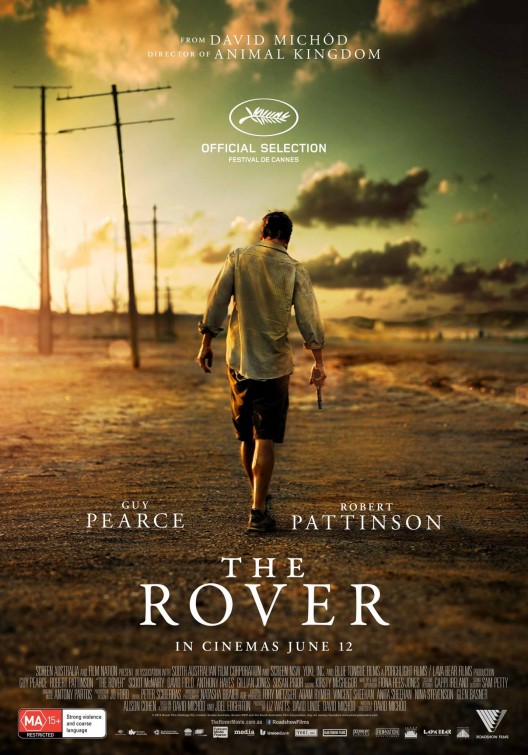
FAVORITES OF 2014 #10 The Rover (David Michod, dir.)
Bleak. Grave. Arid. Desolate. Angry. Internal. Methodical. Australian writer/director David Michod (the superb Animal Kingdom) has crafted a haunting companion piece to Cormac McCarthy’s The Road with The Rover, a gut-punch movie with streaks of jet-black humor for people who are fascinated by nihilistic, end-of-times scenarios. We’re not sure exactly what has gone down in society but life is on the downward slope in The Rover – nobody has gas or oil, while food and water seem to be in short supply. The streets are seemingly lawless except for military types roaming from town to town, and there’s a general air of despair that feels as if it’s there for good. Guy Pearce is yet again fantastic as a man on a mission and with one purpose in life – to get back the car that’s been stolen from him by a gang of dimwitted thieves. That’s all you need to know about the “plot” of The Rover, because it’s less about ticking off story points and more about the sun-scorched way this sad and introspective movie is unraveled from a normal-narrative-defying point of view. Pearce is raw, dirty, quiet, and doing some serious acting with only his eyes; you can’t look away when he’s on screen. His emotionally ravaged and quietly forceful performance as a man with literally nothing to lose is as haunting and affecting as anything I’ve seen in recent memory (Robert Redford’s legendary work in All is Lost comes to mind but that’s about it). His weathered face and sullen eyes, framed often times in close-up, dominate the widescreen space, conveying more than written words could ever provide. Michod knows that Pearce’s mere presence is enough, and the patience with which Michod tells his deceptively simple story is striking to witness. And there lies the genius of Michod’s storytelling technique – dole out just enough information verbally but allow the unspoken to fill in the blanks. Natasha Braier’s expansive yet controlled 2.35:1 widescreen cinematography captures Michod’s penchant for sudden, graphic violence with an unflinching eye, while also showcasing the dusty, dangerous, ominous vistas of the Australian outback. The aesthetically heightened shooting style is matched by the exacting editing patterns by Peter Sciberras, and the PTA-esque musical score, filled with discordant chords to keep you off kilter, allows for a constantly intense mood. And Robert Pattinson yet again proves he can act, playing a slow-thinking pseudo criminal who crosses paths with Pearce, after his brother (the always awesome Scoot McNairy) has left him for dead after a botched robbery. There’s nothing happy to be found with The Rover – this a film about bad, desperate people in tough, deadly situations. One gets the sense that Michod made exactly the film he set out to make, having to make no concessions to anyone, with nobody standing over his shoulder taking notes or offering suggestions. Stark and pare, The Rover is a great piece of contemplative cinema, with an absolutely devastating final shot that destroyed me for days.
 Podcasting Them Softly
One thought on “DAVID MICHOD’S THE ROVER — A REVIEW BY NICK CLEMENT”