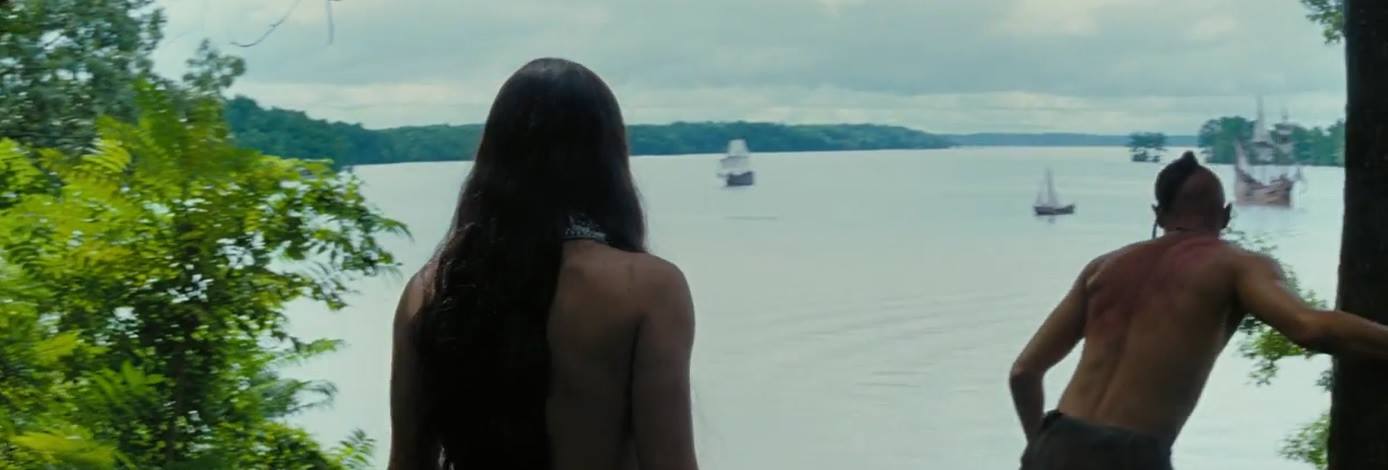
For some, the whispered, unconventional cinema of Terrence Malick is enough to put them to sleep or reach for the remote. Not me. I eat it up. I had the great fortune of viewing The New World four times theatrically back in 2005. The first time was that ULTRA-private 2 hour and 30 minute cut that was released in the last week of December, in order to qualify for the Oscars (at which Malick was disgustingly snubbed), and has never been released on DVD/Blu-ray, except for an Italian release. After one week in roughly five theaters, Malick, ever the perfectionist, asked theater owners to pull the film, so that he could re-edit it. What was then released a few weeks later on a semi-wide scale by New Line Cinema with little to no advertising dollars spent on promotion was a two hour and 15 minute version, which I then viewed three times. And for good reason: ANY version of this film is visionary, and it requires multiple viewings to unlock its many secrets.
The New World is a beguiling movie, a work that transcends beauty, a piece of art that feels organic and that is both at one with nature and at one with the soul of cinema. Malick’s sensitive, idealized version of the John Smith meets Pocahontas story is never exactly what you expect it to be; characters dart in and out of the narrative, the focal point shifts repeatedly, and information is doled out purposefully slowly in a somewhat oblique fashion. To some, this can be frustrating, and people have a tendency of quickly losing interest. For me, this is how I want to experience the unlimited joys that movies can provide. I love experiencing the world through Malick’s eyes; his understanding of light, texture, and atmosphere is second to none, and the pairing of him with genius cinematographer Emanuel Lubezeki was a match made in movie-heaven (their collaborations on The Tree of Life and To the Wonder have literally re-invented the wheel in terms of using images to tell a story; get here Knight of Cups). Utilizing only natural and available light and shooting entirely on location, The New World has a gorgeous yet realistic visual style that is positively transfixing yet never overly stylized. Malick relies on the inherent qualities of the natural world to fill the 2.35:1 widescreen frame and each and every shot is museum quality.
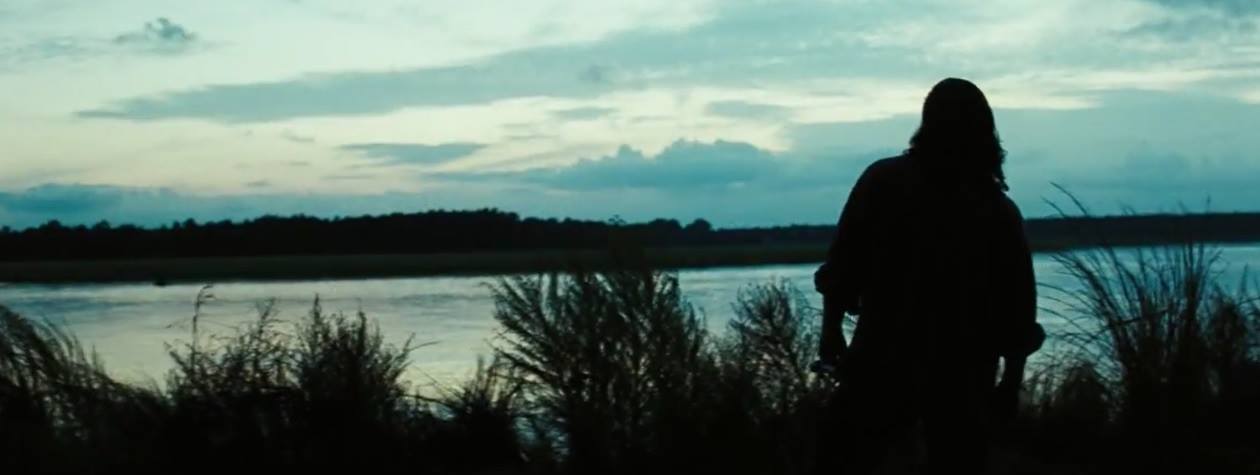
The performances by Colin Farrell, Q’orianka Kilcher and Christian Bale are extremely affecting and Malick’s dreamy, elliptical screenplay, which is rife with internal monologue and stream of conscious ramblings, adds to the tone-poem quality of the narrative. Farrell, in particular, is sensational in what amounts to a heavily internalized piece of acting. At times brooding and then sensitive, mysterious yet open, he allows the viewer in to his headspace only to a certain degree, never becoming a true Hollywood hero in the way that so many other filmmakers might have been tempted to craft. This performance was in the middle of that extraordinary run that he had in the mid 2000’s where he worked with Oliver Stone, Terrence Malick, Robert Towne, Michael Mann, and Woody Allen, in that order. Shit. Just think about that for a moment. The musical score is obscene, mixing classical pieces with hauntingly melodic offerings from a much compromised score from James Horner (those lettuce leaves never stop being tossed in the air!). The New World is a bold, quietly moving masterwork from a filmmaker shrouded in privacy who should be celebrated every time that he decides to unleash one of his works on the public.
 Podcasting Them Softly