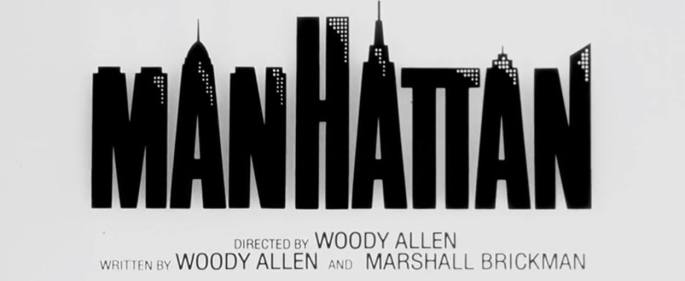
There are so many reasons why Manhattan is considered one of Woody Allen’s greatest films. The pitch perfect performances, the astute direction, the funny and self-reflexive screenplay, and maybe most of all, the dreamy photography, Manhattan is a cinefile’s dream. One of the silkiest black and white films ever committed to celluloid, the widescreen cinematography by Gordon Willis is some of the most impressive and shimmery work that the master craftsman ever produced. This is one of Allen’s most romantic films (albeit bittersweet), as the script that he co-wrote with Marshall Brickman covered the usual neurotic behaviors that came to dominate his oeuvre. Directed with a sense of grace by Allen, the film became an immediate classic, and through the high contrast photography that casts New York City as its own special character, Manhattan possesses a formidable sense of style that feels incredibly particular and nuanced. The unforgettable image of Allen and Diane Keaton sitting near the 59th Street Bridge is one of those iconic moments in film history, with Willis demonstrating an innate understanding of how to frame his actors within the anamorphic 2.35:1 compositional space, and it’s key to note how he favored spatial geography as a way of representing distance and comfort for the characters within the emotionally fragile narrative. It’s interesting to observe that Allen demanded that all home video copies of this film be released in letterboxed format only, thus preserving the original aspect ratio. Take that, philistines!
 Podcasting Them Softly