
It didn’t matter what film Terrence Malick released directly after The Tree of Life. He could have dropped the next best thing since sliced bread and people still wouldn’t have emerged from the powerful trance that The Tree of Life leaves you in. So, it’s no surprise that the overall critical reaction that met To the Wonder was as mixed as it was (an uncalled-for 46% at Rottentomatoes). This is an intense film experience worthy of multiple viewings, maybe too intense or impressionistic for some. It’s certainly defiantly uncommercial and esoteric in its minutiae. Even more challenging and narratively private than The Tree of Life, To the Wonder is less epic and even more intimate, focusing on Malick himself as a young man (embodied by a mostly silent and observational Ben Affleck), struggling over the various loves of his life (Rachel McAdams, Olga Kurylenko) while trying to determine where to plant his familial roots. Much of the expressionistic tone and story developments shouldn’t be considered “real” — this is a film that is more interested in feelings, textures, mood, atmosphere, and memories. Like The Tree of Life, the events of To the Wonder feel cut from a dream, like half-remembered glimpses into one’s own past, filtered through a cinematic landscape that allows for introspection and reflection.
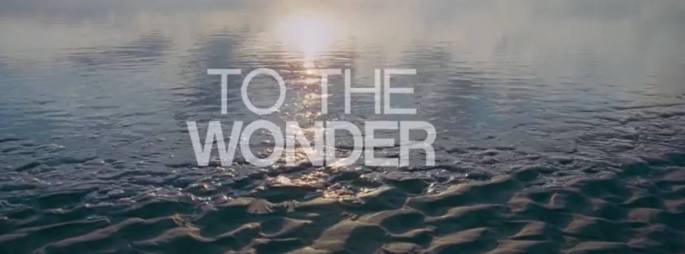
Almost half of what you “see” in To the Wonder is more a projection of each character’s thoughts and desires; the constantly swirling camera and lingering shots of the actors ensconced in deep, contemplative thought strikes me as more metaphorical than literal. Javier Bardem appears as an emotionally conflicted priest and it’s amazing how Malick wraps Bardem’s powerful and dark scenes into the rest of the film. This is an endlessly inquisitive and beguiling work, a subtly sexy and sensual film that will mean something different for every viewer. The incomparable cinematographer Emmanuel Lubezki captures natural light in ways that you’ve never seen in To the Wonder; each shot is worthy of intense artistic scrutiny because the images feel so alive and vital. Malick was interested in pushing the boundaries of cinema with both The Tree of Life and To the Wonder, but in this film, he’s asked the viewer to get engulfed in a mostly silent story, relying even more heavily on voice-over than in his previous films, and the results are positively dreamy and the very definition of unique. It’s that special breed of film that’s truly designed for the audience to ask themselves questions about what they’ve just seen, and it yet again underscores the fact that Malick is working on a level that’s above and beyond everyone else. Greatness is rarely immediately grasped by everyone all at once, and in the case of To the Wonder, time will allow this film’s gifts to grow and spread.
 Podcasting Them Softly