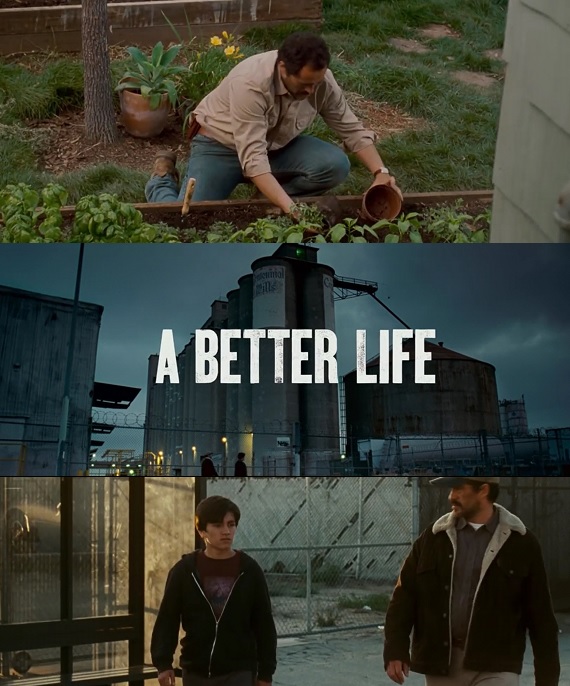
A Better Life is a wonderful film. Released to warm critical support in 2011, Chris Weitz’s poignant and frequently well observed film garnered lead actor Demian Bichir a much-deserved Oscar nomination for Best Actor. Loosely based on the classic Italian film The Bicycle Thief, Eric Eason’s intelligent, touching, and humanistic screenplay was based on the short story The Gardener, by Roger L. Simon, and concerns a Mexican gardener named Carlos (Bichir) living in Los Angeles and trying to provide for his impressionable son Luis, the excellent José Julián, a high school underachiever who is dating the sister of a local gang member. When Carlos’ new pick-up truck and tools are stolen by a devious day laborer, life begins to get even more complicated for the father-son duo, as they attempt to better one another in ways that only the two of them individually know how to do. This is a fairly devastating piece of cinema, and a rarity for Hollywood in that it features an almost entirely Hispanic cast, and concerns the realistic challenges that face immigrants in a city, that, for years, has thrived off of exploitation of the illegal day laborer market.
Weitz and Eason made changes to the script to reflect the various language differences and slang being used on the streets, consulting with gang members and local community figures in an effort to accurately portray this specific lifestyle, which is starkly contrasted with the comings and goings of a mostly indifferent city. Bichir’s performance is absolutely remarkable, conveying fear, love, and hopefulness for his son at all of the key points in the narrative, essentially allowing the audience to peer into his mind, soul, and heart. The ending stings with honest sentiment, never going “Hollywood” at any point, while reminding the audience of how hard it is for so many people to make ends meet for their family. Javier Aguirresarobe’s unfussy and golden-hued cinematography meshed perfectly with Alexandre Desplat’s contemplative score. Foolishly buried in mid-summer with a why-bother? release by Summit Pictures, the film completely died at the box office, grossing less than $2 million, thus making Bichir’s righteous Oscar nomination something of a tremendous surprise.
 Podcasting Them Softly