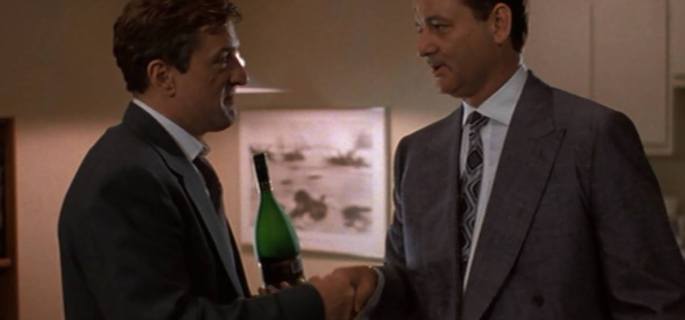
The 1993 oddball comedy Mad Dog and Glory is a truly fun and special little movie, but that’s been underrated director John McNaughton’s stock-in-trade for his entire career: Make films that fly just a tad under the radar but then become huge genre influences down the line. His brilliant and utterly startling 1986 debut Henry: Portrait of a Serial Killer is still one of the most chilling examinations of evil ever put on film, and which introduced the world to the amazing actor Michael Rooker. Five years later, he followed up with the sci-fi curiosity The Borrower, which I’ve not seen, but which sounds VERY interesting. Then, two years later, he dropped genre-bender Mad Dog and Glory, which really announced the mark of a majorly unique voice.

There’s only one problem; audiences aren’t receptive to the quirky mix of violence, comedy, and pathos. Despite strong critical support (Ebert and Canby were notable supporters), the film died in theaters, but has over the years found a well-deserved cult following. Executive produced by crime genre master Martin Scorsese and written with the usual sense of tough guy banter and attention to character and plot detail by Richard Price (Clockers, Ransom, Sea of Love, The Wire), the film tells the story of a lonely and depressed cop (Robert De Niro), who saves the life of a NYC gangster (Bill Murray), and who become unwitting frenemies through a variety of circumstances. Murray wants to repay De Niro for saving his life in the form of female companionship, so he offers one of his girls to him as a “gift,” the beguiling, radiant, impossibly young Uma Thurman, thoroughly lovely and exceedingly funny and pre-face-destruction.

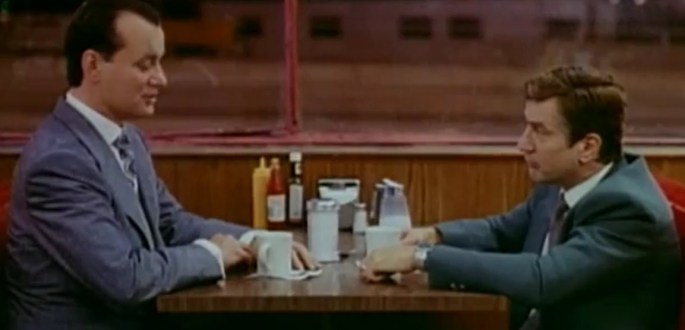
What follows is an unconventional romance between De Niro and Thurman, an unconventional friendship between De Niro and Murray, and scene after scene of inspired comedy and drama. The notion of casting De Niro as the hapless guy and Murray as the confident gangster was a stroke of genius, but for whatever reason, people didn’t buy into the idea. Which is a pity, because Mad Dog and Glory works so well, and would go on to inform later De Niro movies like Analyze This and the misbegotten Showtime, which paired him with Eddie Murphy. It’s a bummer that De Niro and Murray haven’t worked together since because the two of them shared great, natural, and easy-going chemistry, bouncing off one another with great comedic timing and scene-balancing generosity.
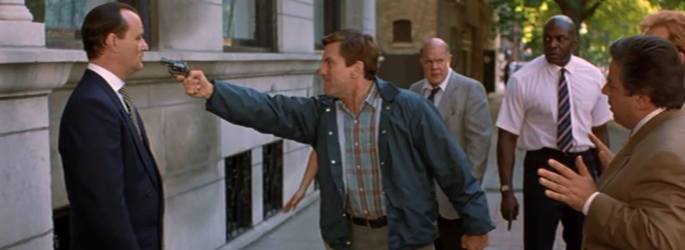
McNaughton deftly mixed graphic violence with big laughs in a way that few are able to do, and despite the film having a compromised finale (rewrites and reshoots were required which delayed the final product by a full year), so much of this movie comes up aces so often that it’s easy to look past the traditional ending to what was otherwise anything but traditional as a whole. The fantastic supporting cast includes David Caruso, Mike Starr, the recently deceased Tom Towles, Kathy Baker, Jack Wallace, and Richard Belzer, with screenwriter Price making a cameo as a detective. After Mad Dog and Glory slipped in and out of theaters, five years would pass with McNaughton working only in television before his next feature, the notorious and wildly entertaining neo-noir high-school-sex-romp Wild Things, which would reunite him with Murray, and still stands as a juicy, sexy, hot-blooded genre entry.
 Podcasting Them Softly