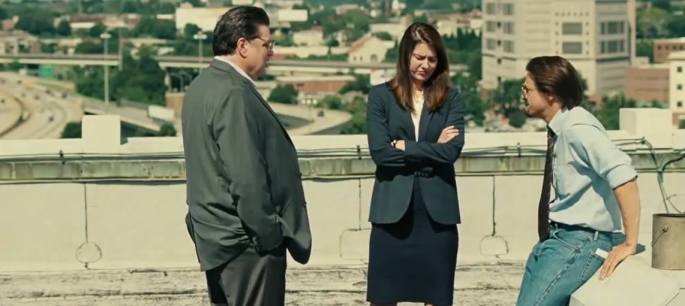
Disturbing, engrossing, and totally underrated, 2014’s political thriller Kill the Messenger should have shocked and appalled all who saw it, but due to a crummy release strategy with zero marketing support offered up by the releasing studio (Focus Features) who seemed disinterested in their own film, this scrappy, true-story journalism thriller got buried at the theaters despite solid critical notices. Jeremy Renner is Gary Webb, a reporter for the San Jose Mercury News, who back in the mid 90’s was responsible for writing a series of controversial articles which implied that the CIA ran a drug smuggling operation to support the Nicaraguan Contra rebel army in an effort to fund their war. The ghettos of America, South Central Los Angeles in particular, became over-run with crack-cocaine, creating havoc and instability and an alarming death rate. CIA officials were tasked with using informants to keep the drug trade going, even going so far as to renting an apartment to store all of the cash that was coming in from the drug sales. Webb begins his quest to uncover the truth after he’s handed some sensitive government-approved information and he’s off and running, heading down to Nicaragua to meet with potential sources, all the while trying, and failing, to secure one legit source from within the CIA to verify what he’s learned. The movie painfully displays how Webb’s family life began to suffer as a result of his dogged determination, and the unwanted advances of nefarious government types who routinely try to keep information suppressed and Webb off track with his story. One of the many unsettling messages that this film repeatedly drives home is that the notion that the CIA will do anything to protect their interests; the way they smeared Webb’s life and career was disgraceful, and it’s no surprise to learn that Webb’s life was effectively ruined as a result of him just doing his job.

Efficiently and energetically directed by Homeland’s Michael Cuesta and absorbingly written by Peter Landesman (the writer/director of the equally underappreciated Concussion), the film has a terrific supporting cast including Rosemarie DeWitt, Oliver Platt, Ray Liotta, Andy Garcia, Mary-Elizabeth Winstead, Michael Sheen, Barry Pepper, Tim Blake Nelson, and Michael K. Williams. But this is Renner’s show all the way and he’s absolutely fantastic in the leading role of Webb, displaying an idealistic yet never foolhardy approach to his job, all the while trying to maintain his home life and the demands of his profession. Sympathetic, doggedly determined, and always trying to make the best out of any potentially compromised position he’s in, this is easily one of the best performances Renner has delivered since his breakout turn in The Hurt Locker. It always seems like Renner gives juicy supporting turns but then gets overshadowed by the flashier performances that surround him. But not here. He owned every single frame of this movie. Sean Bobbitt’s ground-level camerawork kept a sense of intimate paranoia while Brian Kates’ fleet editing contributed to the quick but coherent pace by exuding nothing but forward momentum. And it has to be said – people should have been sickened by the revelations of corruption that Webb’s work brought about, and a movie like this one should have acted as a rallying call. Feeling very much like a product of the 70’s in terms of documenting social injustice and something tangible and topical without dipping into excessive melodrama or implausibility, it’s no real surprise that general audiences weren’t interested or shocked by what they saw, if they did see it. It’s a further reminder of how complacent we’ve become on the big issues, old or new, that surround us every day.

 Podcasting Them Softly