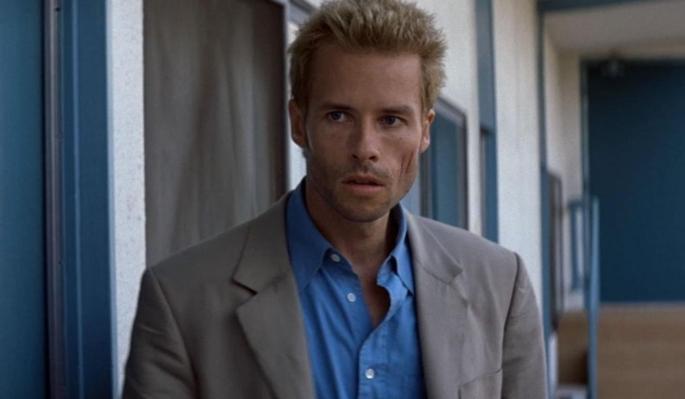
OUT OF ORDER: FIVE NONLINEAR FAVORITE FILMS

pearce-memento-wallpaper-1784482100.jpg 

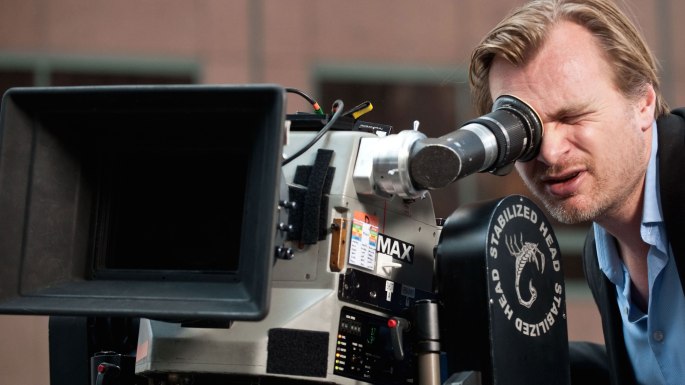
The art of storytelling has developed over the years and although there are only so many ways to tell a story, there are no rules as to how we as an audience witness a protagonist’s journey unfold.  D.W. Griffith experimented with nonlinear presentation with Intolerance in 1916, while Goddard branched out in the late 1950’s to this technique.  Quentin Tarantino modernized it with Reservoir Dogs and other directors have continued to expand the influence of in medias res to this day.  In celebration of Christopher Nolan’s Dunkirk, Ben and Kyle talk about five of their favorite nonlinear narrative films.

Pulp Fiction
1242911076001_3839236617001_hulu-et-pulpfiction-101414.jpg

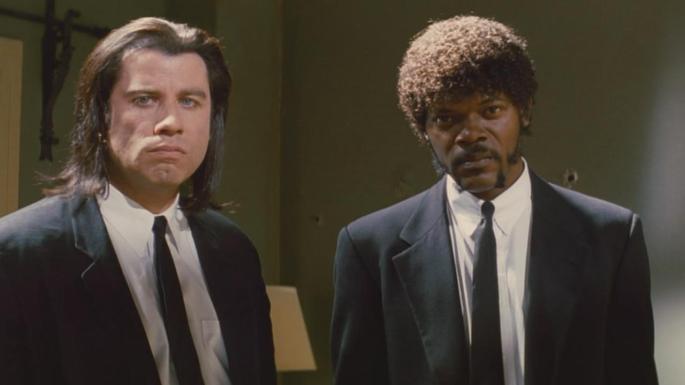
BEN: Though he introduced a modernized version of the nonlinear narrative with his first film, Quentin Tarantino’s Pulp Fiction cemented its revolution.  The year was 1994, just before the dawn of the World Wide Web (in today’s parlance, the Internet). Buzz about films traveled at a snail’s pace, which is funny considering that this film won the Palme d’Or at that year’s Cannes Film Festival.  Okay, the joke’s not that funny, yet Tarantino’s sophomore film, a black comedy and a modern neo-noir was responsible for not only reigniting John Travolta’s career, but also for changing the way stories could be told, something that he and writing partner Roger Avary won a Best Original Screenplay Oscar for in 1995.  It was the first film that Miramax fully financed and distributed, altering the way independent films were distributed.  And then there’s the nonlinear way that Tarantino tells his story.  The way the sequences are edited together, we’re never jolted out of the moment, which is why this film works so very well.  I think the key to his success here is in the characters and the settings.  I remember seeing the movie on VHS and in widescreen and being blown away by the change in perspective that it created.  At the time, it was one of the more unique movies that I had seen.  I think I’ll watch this again soon while enjoying a Royale with cheese.

KYLE: It’s an amazing film that has held up well over the years.  As you mention, the script, with respect to perspective is what has allowed it to endure.  Yes, there are endlessly quotable lines, but the magic lies in the well-defined characters and the unique presentation. Knowing the fates of certain characters increases the impact over other scenes when they transpire, which I think is one of the benefits of nonlinear storytelling and why so many carbon copy rip offs failed during the crime flick heyday of the 90’s.  Most auteurs tried to cash in on Tarantino’s ideas but failed to grasp the importance of the story as well as the characters.  There is a rotating door of VHS cult gems that each have memorable characters or scenes of violence, but they pale in comparison to Pulp Fiction because they don’t weave them together into a complete picture.  It also continued the tradition of building a stable of performers that Tarantino continues to use to this day.

The Usual Suspects
 the usual suspects.jpg

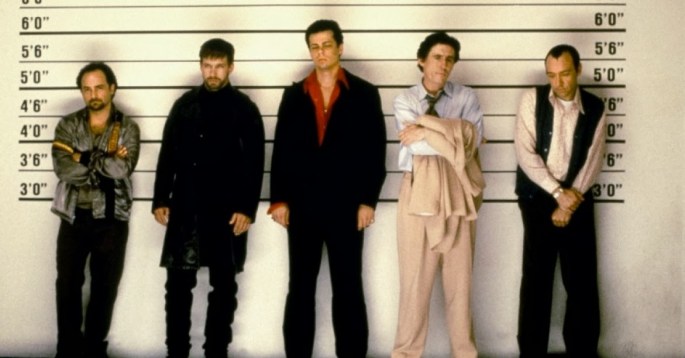
BEN: Bryan Singer’s sophomore feature film is the electrifying The Usual Suspects which took the world by storm with the famous ending and the line, “Who is Kaiser Söze?” Based on the Oscar-winning screenplay by Christopher McQuarrie who also wrote Public Access for Singer, would use the nonlinear format to tell “Verbal” Kint’s version of events that would lead to a drug deal gone bad for the police involving a severely wounded Hungarian mob boss.  Throughout the story, McQuarrie and Singer lay clues as to who the mastermind is, resulting in one of the most celebrated plot twists in cinematic history.  The film works because of the sublime cast including Gabriel Byrne, the cool and collected one, Stephen Baldwin, the balls-out nut job, Benicio del Toro, whose broken English plays well into this collection of misfits.  Kevin Spacey plays “Verbal” and his Oscar-winning performance is the highlight of the film.  Chazz Palminteri does an exceptional job grilling “Verbal” and Pete Postlethwaite is pitch perfect as the ominous courier.  This is another one of those films that I saw in college on home video (I didn’t get to the theater as much as I do today for obvious reasons.)  Seeing this film on VHS was an eye opening experience.  Interesting note:  the title came from an issue of ‘Spy’ Magazine which lifted it from a famous line spoken by Claude Rains in “Casablanca”.

KYLE: While I don’t think it has held up as good as some of the others on this list over the years, Singer’s film is a masterclass in narrative construction.  Yes, the clues are easy to parse and in plain sight, but the totality is a precise formula that toys with the neo-noir genre to ultimately produce an inverted whodunit.  Palminteri, and his scenes with Spacey are the main event, while the lovable cast of rogues moves the story from one point to another.  The infamous line-up scene is my favorite sequence, because not only it is continually quoted by film lovers everywhere, it’s evident that the cast are having a good time filming it, which always enhances the mood of a film.  While this one is not necessarily nonlinear in the same manner as Fiction, it uses the fractured narrative as a device to explore perspective and truth with narrators who may be unreliable, one of the best attributes for a mystery.

 Memento
memento_image_3.jpg

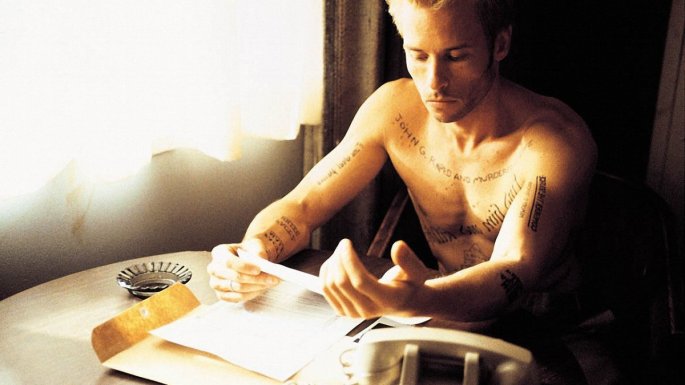
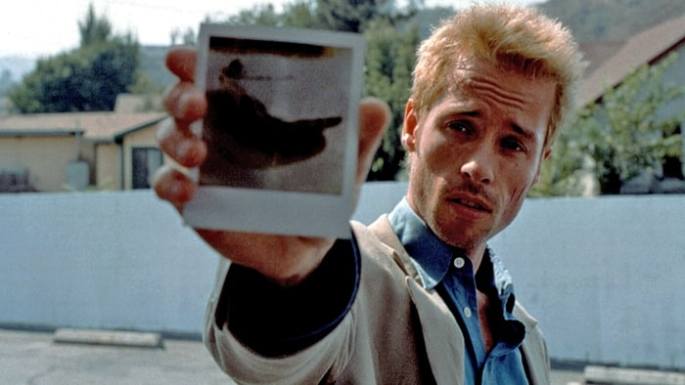
BEN: I think we’re on a role with sophomore directorial efforts.  Our third film is another sophomore effort, this time by Christopher Nolan.  Starring Guy Pearce and Matrix co-stars Carrie-Anne Moss and Joe Pantoliano, this film is a look at anterograde amnesia, where the protagonist is unable to form new memories while suffering from short-term memory loss.  The way Nolan visually interweaves and ultimately intersects the two side effects of the amnesia is breathtaking.  In addition to interweaving the various vantage points, he differentiates the two side effects with color and black & white images supporting the deteriorating condition of our protagonist and his world. The narrative is cohesive in its progression, no matter which way you go.  While Nolan had a clear direction, Guy Pearce did such an exceptional job at conveying the events he experienced that we suffer right along with him until the last minute.  I expect we’ll see a similar style of storytelling in Nolan’s upcoming Dunkirk.

KYLE: Let’s hope!  I know a lot of readers are saying, it’s just told in reverse!  While this is true, linear stories are about going from A to B.  Memento goes from B to A in a puzzlebox presentation that requires multiple viewing to grasp all of its intricacies.  I remember seeing it in the cinema and being blown away by the implications of the ending, as well as how disturbing the mood is for the duration.  This flirts with psychological horror, dipping a toe into Lynch’s end of the pool, but then quickly reverts into a gritty neo-noir. Speaking off, our first three films have all been neo-noir.  Ben, do we have films from a different genre on the list?

Solaris (2002)
 

lsn6ddg5cf.jpg

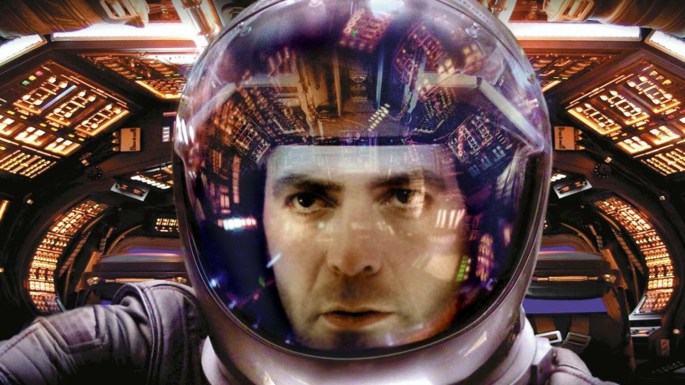
BEN: As a matter of fact, we do.  This is also where we end our sophomore directorial efforts; however this film’s director is linked with another director we’re celebrating.  Soderbergh who has been established in Hollywood since the late 80’s when he broke out with Sex, Lies, and Videotape worked with producer James Cameron to bring a reimagining of the celebrated Solaris to modern audiences.  Featuring one of his mainstay actors, George Clooney, the story is centered around Dr. Chris Kelvin, a clinical psychologist who is called on by the DBA to review a disturbing message from a colleague, who along with a crew of astronauts is on a space station orbiting Solaris.  Kelvin travels out to the space station to determine why they stopped communicating.  Soderbergh’s script remains close to the original novel where he uses flashbacks to create a nonlinear story.  Solaris is capable of something greater than the human mind, and it is this existentialism that allows Kelvin to reconnect with his dead wife.  Cited as a love story in space, which Stanislaw Lem didn’t agree with, the 2002 version failed to connect with audiences, which is a shame.  It is an exceptionally well done film where we get to see Viola Davis in as strong a performance as she gave us in last year’s Fences. Jeremy Davies was amazing as Snow, one of the scientists on the station and although he has a small role, Ulrich Turkur had a lot of fun as Gibarian.  McElhone lit up the screen as Kelvin’s doomed wife Rheya.  What I liked most about this is its ambiguousness.  Is it a love story?  Is it a Sci Fi film?  Roger Ebert, who loved it, called it “the kind of smart film that has people arguing about it on the way out of the theater . . . . it is essentially a psychological drama.” I still revisit it and long for the day it is released in high definition.

KYLE: I’m a huge fan of both this and the original by Tarkovsky.  I actually find myself returning to Soderbergh’s version more often because I think he strips away everything but the raw connections at the heart of the story.  Tarkovsky’s dreamlike masterpiece is a lifetime on film, while Soderbergh’s version is a fading memory, and both of them have merit.  With respect to the 2002 version, I think the nonlinear presentation is essential in order for the release of the finale to impact the viewer.  Themes of love are actually a large part of the science fiction genre and Soderbergh keys into essential, base human emotions in this film.  It’s devastating, terrifying, and ultimately unforgettable because the viewer is treated to the gambit of not only the cycle of grief, but how love and loss filter differently through different kinds of minds.  Davis (who I also love in this) plays against Clooney so perfectly, I often feel her performance is undervalued.  You have science vs. psychological theory and both are plagued by the inevitable baggage we all bring to the table.  Davies, in the middle, is the film’s best surprise, bringing home the startling actions of Clooney during the first act.  Soderbergh’s Solaris is an organism connected by the fabric of mankind and I hope more viewers give it a chance after reading this.

Arrival
 

16465387_1774490656212224_2951863673158631424_n.jpg

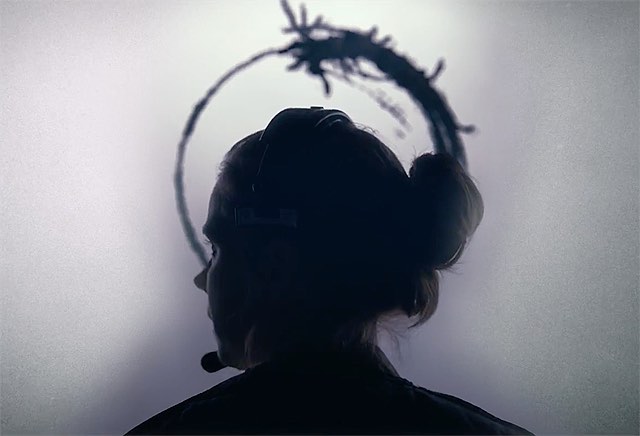
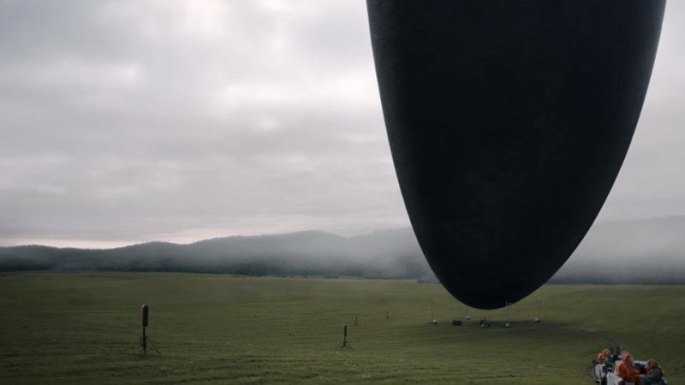
BEN: Denis Villeneuve, who always wanted to do a science fiction film, gave it to us in spades with 2016’s Arrival.  Based on Ted Chiang’s Story of Your Life, Eric Heisserer delivers a top notch sci-fi film featuring Amy Adams, Jeremy Renner, Forest Whitaker, Michael Stuhlbarg and Tzi Ma.  Part Solaris, part Contact, part The Day The Earth Stood Still, Heisserer uses the nonlinear narrative to sew together a story of grief, love, passion, and empathy as Adams’ Elizabeth Banks races to develop a language database that the military can use to communicate with an alien race whose spaceships have settled above our most populous cities.  The structure of the story keeps you guessing what the true nature of the film really is, which is a beautiful thing.  Adams gave an Oscar-caliber performance as the emotionally wrecked and passionately driven Elizabeth Banks.  Villeneuve’s direction is exemplary here, and is the key reason why Heisserer’s story works as well as it does.

KYLE: Could not agree more.  I was shocked Adams was overlooked for an Oscar nomination. This is another…non-traditional choice.  The nonlinear narrative is integral to the story, but its reason for inclusion is the film’s most challenging revelation.  One of my favorite aspects of this film is how the scientific and military sequences are interspersed with intimate scenes of familial life.  This sets the stakes for the viewer, reminding them of the countless souls that hang in the linguistic balance.  Communication is the central theme, both in how we interact with the extraterrestrials, but also with each other as a species.   Given the divisive last couple of years, Arrival was a breath of fresh air that showed (not preached) love, mutual respect, and most importantly, tolerance.  I think it’s important to mention that Bradford Young was the first African American to be nominated for the Oscar for Best Cinematography.  It was some of my favorite imagery from last year’s awards season.
 

ext.jpg

BEN: That’s about right, Kyle.  Oh!  I forgot to mention the connection that Soderbergh has to another of the directors we mentioned – he was one of the producers of Insomnia by Christopher Nolan.  We really do live in a small world.

KYLE: Most assuredly.  Thanks, once again for the engaging conversation.  I look forward to our next topic!

We hope you enjoyed this brief look at our linear list of nonlinear narrative films. As you’re venturing out to your nearest IMAX film to catch Dunkirk this weekend, what are your favorite nonlinear films?
rs-216690-MSDMEME_EC005_H.jpg

Christopher Nolan: Favorite Films

In honor of Christopher Nolan’s upcoming Dunkirk, Kyle and Ben sit down this week to discuss their Top 5 Nolan films.  We culled from his library of works our respective Top 5 films. In doing so, we included those films that he’s produced, written and/or directed.  We both had the same consensus about a large majority of Nolan’s body of work and we diverge on at least one film.

Christopher-Nolan-directing-The-Dark-Knight-Rises-323.jpg

Insomnia

insomnia_christopher_nolan_2.png

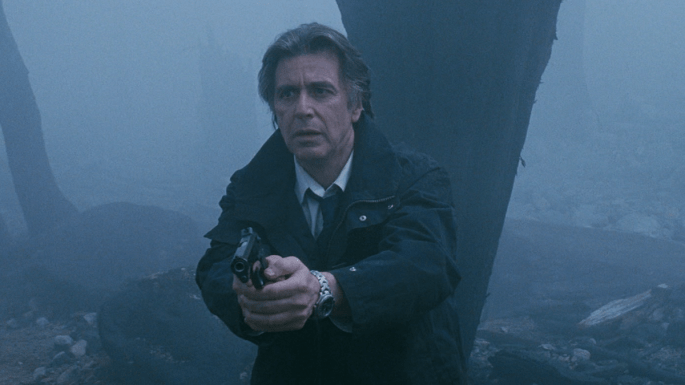
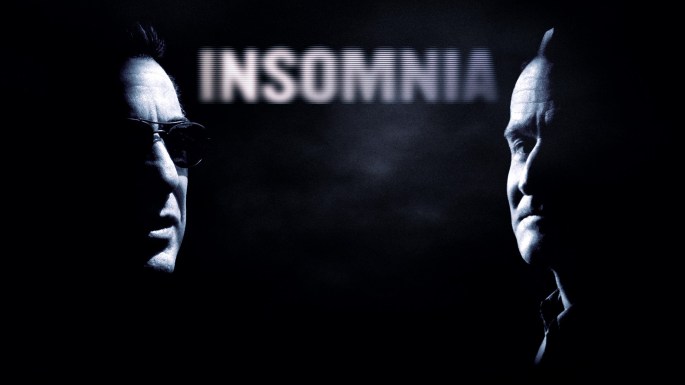
BEN: Nolan’s sophomore directorial effort, Insomnia is a remake of a 1997 Norwegian film featuring Al Pacino, Hilary Swank and Robin Williams in one of his few dramatic roles.  Set in a small Alaskan frontier town, two Los Angeles detectives are sent to investigate a grisly murder.  Eternally suffering from guilt over another case, Pacino’s performance is a familiar one where he’s driven to the edge while maintaining his sharpness.  Swank is a nice balance to Pacino’s descending manic-depressive insanity while Williams just absolutely chews every scene he is given.  Wally Pfister’s cinematography and Dody Dorn’s tight editing add to the tension of torn personalities trying to find peace.  After writing this, I might just need to revisit it!

KYLE: This is an amazing film.  While I absolutely love the 1997 original, I really appreciate Nolan’s take on the material.  While a few of the darker scenes are excised from the narrative, Nolan’s focus on endless torment is framed in a fascinating, psychological manner that really allows Pacino and Williams a lot of breathing room with the script.  As you mentioned, I think is one of Williams’ best performances and I’ve watched it several times since he left us.

insomniablu_shot42l.jpg

The Dark Knight

main-qimg-e75b65e75bd732070131d755e46aad14-c.jpg

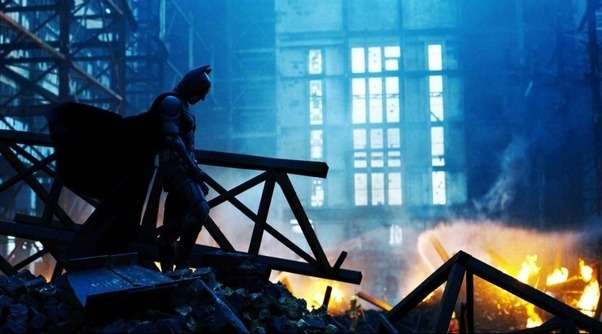
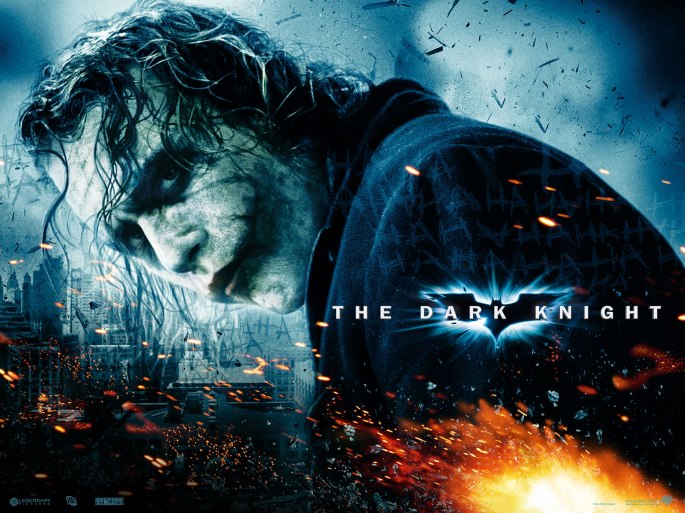
BEN: Following the immense success of Batman Begins, Nolan’s effort to build a modern Gotham City is rich with relatable characters and terror that mirror our everyday existence.  Christian Bale draws us in as both Batman and the torn Bruce Wayne, trying to find his place within his own demons.  Just as with Pacino in Insomnia, this is a character trait that Nolan has been able to tap into time and time again.  Gary Oldman as Commissioner Gordon is absolutely first rate.  This story allows him to portray a true detective, which is a key to this story.  Aaron Eckhart’s transformative performance as Harvey Dent only compliments the other characters as he struggles with his own demons.  Heath Ledger is the true star here as the Joker.  Maniacal and dangerous, Ledger’s final screen performance is near perfect and holds his own next to Bale.

This is in part to Nolan’s understanding of the psychological nature of each of the characters as well as their environments.  Nolan knows when to push his boundaries.  Wally Pfister was called to service again here and he answers the call of The Dark Knight with precision.  Hans Zimmer’s and James Newton Howard’s score help convey the beats and the lethality on the screen without ever overwhelming the action.

KYLE: It’s my favorite Superhero film and Ledger’s iconic performance is unforgettable.  I love how Nolan makes Gotham itself a character that lives and breathes around the larger than life personas that inhabit it.  There are so many iconic shots in this film it’s impossible to pick my favorite, but the scenes shot in IMAX, such as the initial bank heist are razor sharp proficiency.

I do think it stumbles, just a bit in the final act, but everything else is near perfect.  Nolan made a Michael Mann level crime epic inside of a DC comic book film before the term Cinematic Universe had been invented.  It’s definitely one of his greatest.

the_dark_knight_7.jpg

Inception

Secondkick.jpg

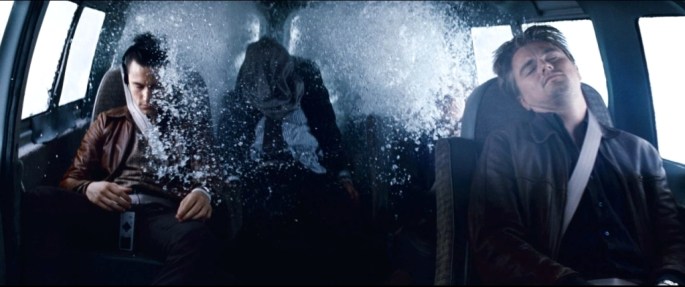
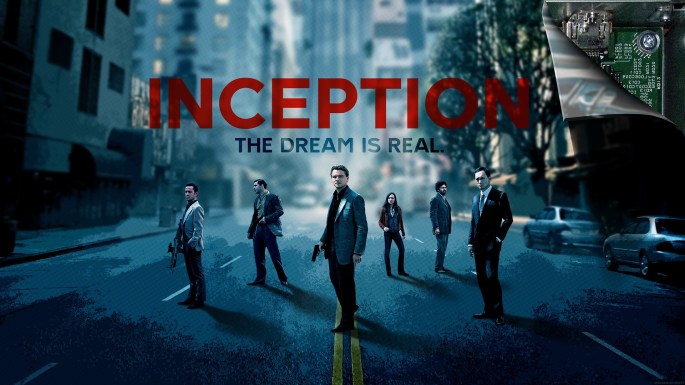
BEN: Following on the heels of his Dark Knight trilogy, Nolan began his foray into the realm of science fiction/fantasy with 2010’s Inception.  Part espionage, part thriller, Inception is the story of a troubled man (Leonardo DiCaprio) who has been trying to get home to be with his family, but because of a past transgression, he cannot.  He may have found a way home when he is presented with an opportunity to help a Japanese businessman with a corporate espionage job.  Full of wondrous special effects, Nolan’s efforts here are about smoke and mirrors, almost emulating Soderbergh’s Ocean’s Eleven from 2001.

Carrying on the theme of a torn soul, DiCaprio’s motives are always front and center, but the layers that Nolan puts on each of the characters is beyond belief.  This is not a simple movie and it never claims to be such, especially with the closing frame.  Ken Watanabe, Joseph Gordon-Levitt, Marion Cotillard, Tom Hardy, Cillian Murphy and Tom Berenger co-star.  Michael Caine, who was a staple of Nolan’s Dark Knight trilogy, and would also have a pivotal role in one of my Top 5 Nolan films, is along for this ride, as are his trusty cinematographer, Wally Pfister and Hans Zimmer, who creates yet another stunning score for the ages.

KYLE: I am in love with this film!  One of my favorite things about it is the layers.  There’s the main event tiered dream sequence, in which Joseph Gordon Levitt’s part is the whole ordeal, but for me, I really love how it gets into the concepts of perception and grief and how both alter one another in the flow of time.  Marion Cotillard’s specter is my favorite character and I love how her performance drifts between tragedy and horror seamlessly.

Also Pfister’s Oscar winning cinematography is breathtaking.  The slow motion scene where the van hits the water is a wonder to behold.  I also really enjoy the costuming and how it is vital to deciphering the mysteries of both the plot and its ambiguous ending.  While this is not my personal favorite Nolan, I think there is a strong case to be made for this being his most well-made feature.

1b5c10d82b892ba0f2c2e9b42d5df5fe-inception-1469000805.jpeg

Interstellar

interstellar-gargantua.jpg

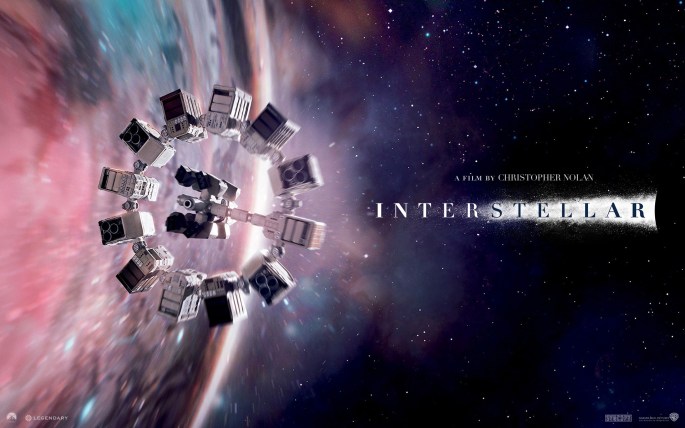
BEN: This is the film where Kyle and I diverge just slightly.  Partially an environmental tone poem, partially an homage to Kubrick’s 2001:  A Space Odyssey and very much in line with the emotional roller coaster that Nolan’s protagonists seem to undergo, this science fiction film about life and death is set in the near future where we have decimated our planet and a crop blight ravages the surface.  As a result, we now seek to find other worlds beyond our solar system such that they are suitable for human life.

Matthew McConaughey is Joseph Cooper, a widowed, former NASA pilot who is trying to cultivate the land his home is on along with a failing father-daughter relationship.  When “Coop” is called to duty, he must leave his daughter (Mackenzie Foy) and father-in-law (John Lithgow) behind, potentially forever.  Michael Caine plays the reassuring father figure, given to quoting Dylan Thomas, while Anne Hathaway plays Coop’s co-pilot, Dr. Amelia Brand.  The supporting cast is a who’s who with Casey Affleck, Wes Bentley, Bill Irwin, Ellen Burstyn, Jessica Chastain, Topher Grace, David Oyelowo and William Devane who plays the same role he played in Clint Eastwood’s Space Cowboys, another film that Interstellar mirrors.

The story by Nolan and his brother Jonathan is intelligent sci-fi at its finest.  Yes, it is a bit preachy with respect to its environmentalism, but the notion of being able to see your daughter’s life through a looking-glass and to have that image reflected back to you is priceless.  Much like Bud in Cameron’s The Abyss, Coop knows this is a one-way trip for him.  However, because our characters don’t necessarily understand the true nature of the universe, they are given opportunities to correct past transgressions, or so it seems.  Taking a page from Inception, not everything is as it seems.

Hans Zimmer’s score is second to none, taking the heightened emotionalism to the next level.  But, it is Hoyte van Hoytema’s stunning cinematography that truly blasts this movie into another dimension.  Shot with IMAX cameras in the 1.43:1 aspect ratio along with the 2.39:1 Cinemascope aspect ratio, the film was exhibited on IMAX screens with a blending of the two formats heightening the images while traditional theaters ran the 2.39:1 aspect ratio.  On Blu-ray, the mixed aspect ratio has been retained, which I think highlights van Hoytema’s composition.  Its preachiness hinders in it comparison to other films of its nature, but it’s a ride well worth taking.  Just ask Matt Damon.

int_wps_1920_worm.jpg

The Prestige

137199_orig.jpeg

KYLE: This is my favorite Nolan by a mile.  It not only a remarkable cinematic experience, it’s a puzzle that requires multiple viewings in order to work through all of the clues.  As a colleague wisely pointed out, the entire film is a magic trick like the one described during the first act.  This realization makes the surprise twists more impactful, distancing The Prestige from other magic related pictures.

Christian Bale and Hugh Jackman are wonderful as dueling magicians, fueled by vain composition and deadly vendettas.  Michael Caine and Scarlet Johannsen support with vintage appropriate turns that set up Nolan’s carefully planned bait and switch from the moment they appear on screen.  The great David Bowie has an esoteric turn as Tesla, whose electricity fueled pseudo-science is the key to one of the struggle at the center.

Nolan’s long time cinematographer Wally Pfister once again provides crisp visuals and haunting imagery, with the opening frame, a somber field of top hats sticking in the viewer’s memory for the duration.  It rivals The Dark Knight for atmosphere and world building, and for me, it takes top honors because it never falters and forms a perfect circle of deception and comeuppance.

Hugh_Jackman_in_The_Prestige_Wallpaper_1_1280.jpg

BEN:  I think we hit all the right notes here, Kyle.  I don’t know about you, but I am looking forward to seeing “Dunkirk” next week.  Despite the negative social media reaction to the film’s running time, I am a firm believer in Nolan’s story telling abilities.

KYLE: Once again, we’re in complete agreement!

We’ll see you at the movies.

nolan.jpg

Sofia Coppola’s The Beguiled

The Beguiled

2017.  Directed by Sofia Coppola.

06

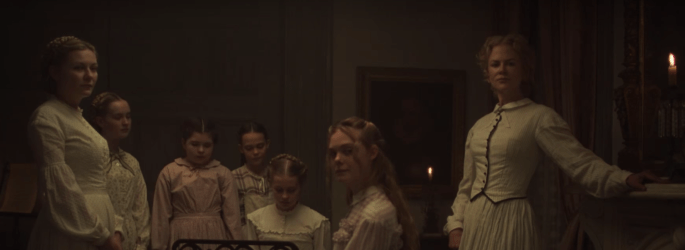
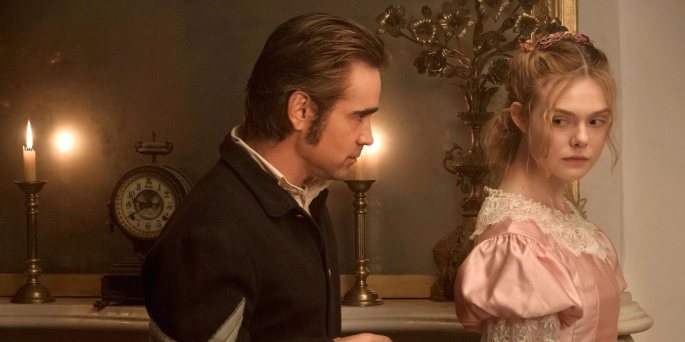
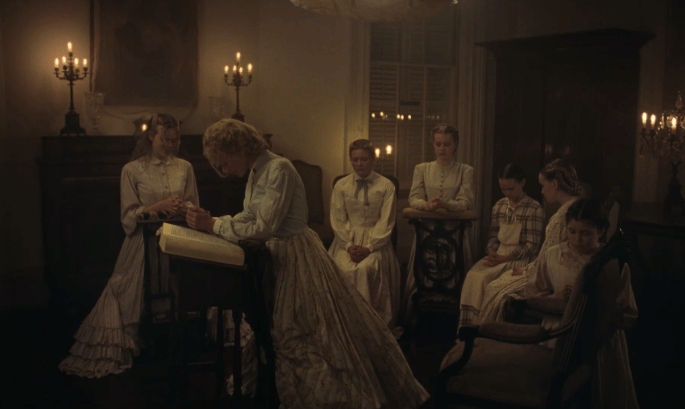
Sofia Coppola’s latest effort is an atmospheric pressure cooker steeped in sexual innuendo and madness. Fusing the Confederate origins of the original film with a Gothic, dreamlike presentation, The Beguiled presents a simplistic narrative of erotic vendetta that is enhanced with magnetic performances and ghostly cinematography that present a female focused incarnation of the iconic source material.

Wounded Union soldier John McBurney finds respite at a Southern academy for young women. In a crumbling manse enshrouded by Spanish moss, a dangerous game of amorous deceit plays out amidst a backdrop of a nation devouring itself. Coppola’s script trims every possible amount of fat from an already slim narrative to keep everything focused on the characters. Colin Farrell delivers another terrific performance as a lecherous victim of circumstance whose uses every possible advantage to ensure not only personal safety, but an unspeakable possibility. Nicole Kidman gives a restrained performance as the school’s headmistress that is the perfect counter, embodying a fierce protective spirit of lethal maternity that is not only a product of a nation gone mad, but a pragmatic force to be reckoned with.

The Beguiled

Kirsten Dunst gives an interesting turn as the school’s fractured teacher. She balances unrepentant desire and rigid etiquette with remarkable ease, bringing an intriguing angle to the social complexities on display. Elle Fanning does adequate work with what she’s given, however the narrative moves so quickly that the devious personalities often don’t have enough to develop and as a result, her performance suffers. This is a minor flaw that is quickly forgotten as the quiet nightmare of McBurney’s ordeal plays out in the mist. Stacey Battat’s period costume design is flawless, encasing each character in outfits that mirror the gender inequalities and high fashion of the time perfectly, which does an outstanding job are supporting each of the characters’ moments in the spotlight.

Philippe Le Sourd’s ethereal cinematography is the film’s strongest element. Beautiful wide shots of the exterior are sprinkled throughout, contrasting intrusive close-ups that dominate the bulk of the movie. Natural lighting is used whenever possible and Coppola’s intimate understanding of the material is always reflected in the muted imagery, perfectly emulating the fable-like story on display. This is made possible by understated editing and a haunting score by Phoenix that keep everything close to the chest.

the-beguiled-movie-image-sofia-coppola-7

In theaters now, The Beguiled is an excellent addition to Sofia Coppola’s woefully small filmography. While the final act undoes the terse foundations of the preceding acts, the cathartic release is well earned, if a tad uneven. If you’re interested a whispered passion play that explores gender politics and spins a harrowing tale of revenge, this will not disappoint.

Highly Recommend.

the-beguiled-movie-image-sofia-coppola-34

Kong: Skull Island

Kong: Skull Island

2017. Directed by Jordan Vogt-Roberts.

kong-skull-island-2

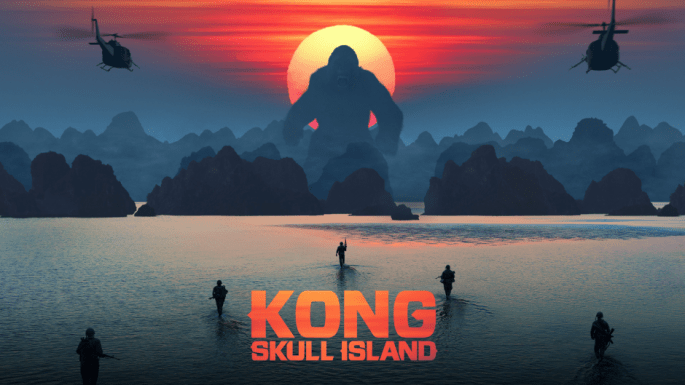
Sometimes you know virtually everything there is to know about a film before you view it.  Maybe it’s the title, the director’s previous films, the poster, or more often than not, it’s the trailer.  Despite these unfortunate truths of the information age, there are occasions where a film can still manage to not only surprise, but entertain you as well.  Jordan Vogt-Roberts’ Kong: Skull Island is a breath of fresh air to big explosion, big monster movie madness that has been experiencing a decline over the last year.  While there is absolutely nothing that reinvents the prescribed formula for a film like this, what it does, it does very well, signaling not only Vogt-Roberts’ love for the creature feature, but also his talent at using resources in creative ways to present a been there, done that story in a manner that consistently entertains for the duration.

In 1973, Scientists and soldiers set out to explore Skull Island, a place where monsters reputedly roam.  Their intrusion not only angers the legendary ape who rules the island, it awakens an ancient evil as well.  Tom Hiddleston stars as the tough guy navigator who is in no danger of dying.  Brie Larson stars as an activist photographer who is in no danger of dying.  They’re supported by a scene stealing John C. Reilly, Samuel L. Jackson playing Samuel L. Jackson, and a regrettably restrained John Goodman.  There are also legions of soldiers and scientists who are sacrificed on the altar of “story”.   The real star is Kong himself, made possible by unimaginable special effects that are volleyed throughout the film’s run time.  Vogt-Roberts uses a perfect soundtrack and puts his trust into the effects team to present a monster movie that is pure abandon without being a guilty pleasure.  It’s undeniable decent and even though its plot is paint by numbers, the viewer is having so much counting said numbers, they forget to worry about the endless cliché’s and predictability of the story.

kong-skull-island-image-25-600x251

Icon Larry Fong’s patient cinematography builds off of the Apocalypse Now ambrosia and captures the meeting of man and nature with blinding fulminations and intense colors that bloom across the screen in every sequence.  Acrid yellow smog and sunglass reflected fire are two impactful visuals that elevate the imagery far beyond the expected B movie trappings.  The makeup of tribal natives and the phosphorous gas of a battlefield combine into a potent mixture of untouched history with high powered weaponry, and it is this unholy union that pushes the film above mediocrity.  The divide between the two worlds comes crashing down within minutes of the humans’ arrival, but it is the aftermath that is done better than so many of its predecessors.  While there are rumors that this may be the first film in a shared cinematic universe, it is extremely clear that Pandora’s Box has been irrevocably opened and Vogt-Roberts embraces this with open arms.

Available now for digital streaming, Kong: Skull Island is an excellent way to spend a night on the couch, especially if you’re in the mood for playful extremity.  Large monsters, large explosions, and large guns are what await you in King Kong’s sanctum.  The best part is that nothing feels out of place and everything works in concert to achieve the most important goal for a film: to entertain.

Recommend.

kong-skull-island

Steven Spielberg’s Indiana Jones and the Last Crusade

Indiana Jones and the Last Crusade

1989.  Directed by Steven Spielberg.

Screen shot 2014-04-09 at 5.07.16 PM

“You lost today kid, but it doesn’t mean you have to like it.”

The Indiana Jones films and their architect, Steven Spielberg are household names, stitched into the fabric of modern pop culture with two-fisted pulp icons battling the forces of evil with brains and brawn, and always in a larger than life fashion.  The first two films are considered to be some of the greatest action epics ever committed to film and Spielberg chose to return to his beloved world of whips and relics with a fantastical epic steeped in themes of fatherhood and the power of knowledge over hatred.

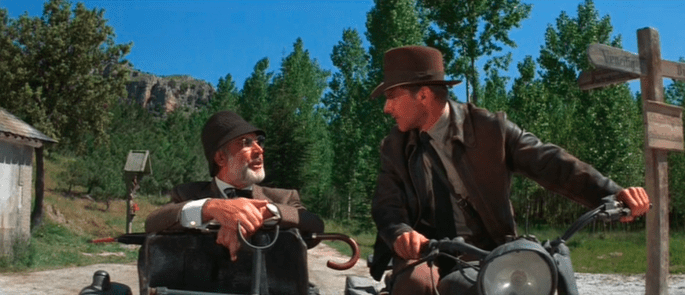
Indiana Jones sets off in pursuit of his father, who’s gone missing while questing for the Holy Grail.  Beset upon by wicked Nazis and greedy scholars, Jones and his father must overcome their differences and believe in the power of family and friendship to persevere over the forces of darkness.  Jeffrey Boam’s script begins with a childhood flashback to one of Indy’s first adventure, setting the tone for the familial morality tale at the center of Crusade’s larger than life story.    The intimate moments between the Jones’ and the action set pieces are perfectly balanced, never overtaking one another.  The dialogue is packed with endlessly quotable lines, allowing each of the cast to shine in their particular moments.  Harrison Ford’s solid embodiment of Indy is beyond reproach, but it is Sir Sean Connery’s brilliant turn as Indy’s father that is the highlight.  His wizened dedication to the Grail is only outdone by his emotional realizations of its cost on his life and still even these moments of depth pale in comparison to his legendary beachfront confrontation with a fighter plane and his pitch perfect, boyish charm in his scenes with Denholm Elliot’s hilarious sidekick.  His monologue about the importance of the quest for the Grail is one of the film’s best moments.

LastCrusadeChoosingWisely

Douglas Slocombe’s robust cinematography takes advantage of the lighting in sweaty close ups only to pull back into beautiful wide shots that encapsulate the wonders of nature and the incomprehensible malice of Nazi Germany.  John Williams brings his formidable harmonics to bear with the expected triumphs previously established and then surpasses them with unforgettable tones that clearly divide good and evil.  While there are betrayals and shifting motives, the heart of the franchise has always been about right and wrong, black and white, and Williams is perfectly in rhythm with this concept.

The final ingredient is the heart racing action that is the heart of the film.  Beginning with a dazzling chase sequence featuring the late River Phoenix and then transitioning into no holds barred rescue involving a tank, The Last Crusade takes its time getting to the next explosion and when it arrives, there is nothing but excellence to feast upon.  In a time of CGI saturation, action fans will always have classics such as this to return to, a powerful reminder of the power of practical effects and inspired creativity.

tlc_clifflook

Available now for streaming on Amazon Prime and Hulu, Indiana Jones and the Last Crusade is essential viewing for anyone who’s ever entered a theater.  Featuring a heartwarming story about fathers and son, hilarious exchanges amidst pulse pounding battles, and a golden age presentation, this is one of the all-time greats and a perfect example of how to do the blockbuster right.

Highly.  Highly Recommend.

indiana-jones-3-and-the-last-crusade-1989

John McTiernan’s Predator – 30th Anniversary

This week was the 30th anniversary of John McTiernan’s iconic science-fiction action film Predator.  For their next discussion, Ben and Kyle talk about their love for the film why it remains an important part of American action cinema.

predator-featured-e1485055357488 (1)

KYLE: Ben, can you give us the background?
BEN:  In the fall of 1985, there was a joke running around Hollywood that Rocky Balboa had defeated all of his earthly opponents in Rocky IV and he would have to fight an alien if a fifth Rocky film were to be made.  Based on that idea, the unknown brother-writer team of Jim and John Thomas would morph the joke into what became John McTiernan’s second directorial turn, Predator.

20th Century Fox optioned the Thomas’ script, then entitled Hunter and gave it to producer Joel Silver, who was also developing Lethal Weapon for Warners.  Silver brought on Lawrence Gordon and John Davis as his producing partners and they brought on Arnold Schwarzenegger, whom Silver had worked with on Commando, also for Fox.

200_s

KYLE:  I had no idea that the idea sprung from a Rocky joke!  Let’s dig into it.

BEN: Part Aliens, part The Thing, part Commando and full of machismo, McTiernan delivers a pulse-pounding action thriller that understands its purpose as both a sci-fi actioner and a military thriller.  It successfully blended both aspects together, dwelling on neither for too long.  From a story that reeks of the global socio-political situations in the mid-1980’s to an alien creature that is as well-hidden as its Xenomorph brethren from Alien and Aliens, they delivered something very unique.

KYLE: I love that it’s a merging three separate genres that unfolds over three unique acts.  It begins as a military thriller (love your term!) and then transitions into an And Then There Were None scenario during the second act.  Finally, it ends with a man vs. monster showdown that removes not only the established rules, but reveals the creature’s monstrous nature.   What about the amazing cast?

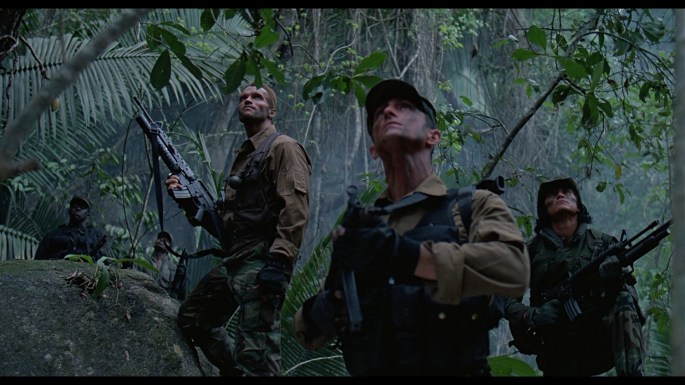
BEN: Schwarzenegger plays “Dutch” the leader of an elite group of soldiers who are tasked with retrieving a missing U.S. diplomat in the South American jungles.  Opposite him, in an ironic twist is Carl Weathers, who plays Dillion, an old friend of Dutch’s. The irony was that he played Apollo Creed in the-then four Rocky films.

While we all cheer for Schwarzenegger, the supporting cast really is the foundation of this film.  Bill Duke, who also starred in Commando with Schwarzenegger is beyond awesome, especially when he gets pissed off.  Sonny Landham, who starred in 48 Hrs. plays Billy, a ‘tracker’. Billy really resonated with Shane Black’s “Hawkins” raunchiness, which Billy only partially gets.  The gunner, Blaine is played by Jesse Ventura.  He looked like he had a lot of fun with this role, especially when he interacted with “Poncho” played by Richard Chaves: “I ain’t got time to bleed.”  “You got time to duck?”

arnold-schwarzenegger-as-dutch-in-predator

KYLE:  Yes!  I think it’s a testament to the script in how well each of the characters are distinctly developed.  It could have been easy to overdo the action and violence, but instead the story takes its time deliberately fleshing out each victim so their eventual death has more impact.  You mentioned machismo, and while I agree, there’s also a bit of deconstruction, such as Mac’s monologue to Blaine before the pig attack and Billy’s supernatural fear of the creature.  Speaking of, it was Stan Winston’s design right?

BEN: Interestingly, Richard Edlund developed the original creature, which proved unworkable in the jungle.  It was scrapped and redeveloped by Winston with the help of an unlikely source:  James Cameron.  R/Greenberg Associates, who received critical acclaim for their opening credits work on 1978’s Superman, were on board to help supervise the practical effects, giving us the now familiar infrared imagery from the Predator’s perspective.  The 1.85:1 aspect ratio that McTiernan and Donald McAlpine shot the movie in gave the film a visual intimacy, allowing the Predator to blend into the jungles, only revealing him late in the second act.

KYLE: I think that is one of the entire franchise’s best elements, how they weave together the POV’s of both the human characters and the alien.  McAlpine’s eye really captures some amazing shots, the intro of the team as they arrive in a helicopter in low light is fantastic, as is the wide shot of Poncho and Blaine underneath the hill as it explodes.  Every time the creature is revealed with that mask is both stunning and chilling.

BEN: Jean Claude Van Damme was originally signed to play the Predator, but it was thought that he was not menacing enough.  Kevin Peter Hall, who also played Harry in Harry and the Hendersons and would reprise his role in Predator 2 in 1990 filled the costume with his 7 ft 2 in frame.  He was the perfect size to play the behemoth.  Sadly, he died in 1991 at age 35.

Underscoring the onscreen action and the drama, was maestro Alan Silvestri.  His bombastic military themes, with deep brass expanded the stage while the brooding sci-fi themes underpinned the otherworldly nature of not only the Predator, but the jungle itself.

predator-dutches-team-2.jpg

KYLE: That is a great point!  From the second they repel down into the jungle, the viewer knows they’ve left the safety of the civilized world and entered a place of extreme danger.  The brotherhood building fantastic, because the characters (for the most part) work together against the threat, rather than it becoming a three-way dance between oppositions and I really respect that choice.  I think it’s one of the reasons the film remains a personal favorite for so many film lovers.

BEN: Watching the film on a big screen the other night was a treat.  The film’s looks hold up and its story is relevant today.  However, its pacing always felt just a bit off for me.  We go from longer sequences and typical sci-fi style edits to rapid-fire editing indicative of military films.  Oh, don’t mistake me.  The movie works because of its cast, the story, and for exactly the same reasons Alien, The Thing, and Aliens worked:  they all gave us relatable characters and a series of events building up to the big reveal.  They maximized the humanity while crafting the finite details and environment; and they weren’t worried about creating a world or a franchise.

KYLE: I can respect that.  I think I’d go 4 or 4.5/5 if I were pressed, but as a favorite, pure entertainment affair, this is one of the all-time greats for me.  I enjoy the pacing and the tonal shifts because I think it’s really Predator’s key to success.  The endless copies tried to emulate the formula and continually failed because they went to heavy on one of the themes rather than finding harmony, which McTiernan does with a great sense of style.  This was the beginning of his legacy.

BEN:  Jesse Ventura would go on to be governor of Minnesota and Schwarzenegger would go on to be governor of California (and he married Maria Shriver during this film’s production).  McTiernan went wide with this film and he would go even further with 1988’s Die Hard, setting up a solid track record of films with solid stories.  Joel Silver would go on to work on other big projects, giving us Lethal Weapon, of which Shane Black wrote the screenplay for, and would work with the Thomas brothers on 1996’s Executive Decision. Black, who caught a lucky break when Silver owed him a favor with his role as Hawkins, shadowed McTiernan and is writing and directing next year’s The Predator.

KYLE: The Thomas brothers would also write the script and Silvestri would score the second film as well.  You know I had to include a shameless plug for Predator 2!  What a fantastic franchise!  Highly recommended?

BEN: I respect the inclusion of Predator 2.  We are in agreement!

predator-title-card


Mel Brook’s YOUNG FRANKENSTEIN

Young Frankenstein

1974. Directed by Mel Brooks.

youngfrankenstein_slice

Achieving perfection in a comedy is arguably one of the hardest goals in cinema.  Scripts tend to fall flat at certain points within the narrative and for the most part, the art is confined to the dialogue and physicality of the cast.  There a handful of films that break this trend, using extremely articulate production design and masterful camerawork to combine with the talents of the actors to produce a genuine classic.  Mel Brooks’ directorial masterpiece Young Frankenstein is a one of kind film and arguably one of the greatest comedies ever made.

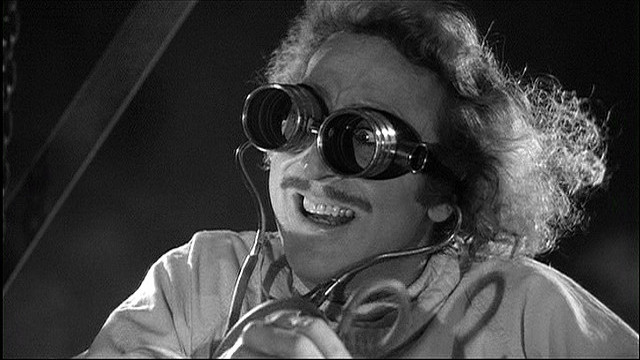
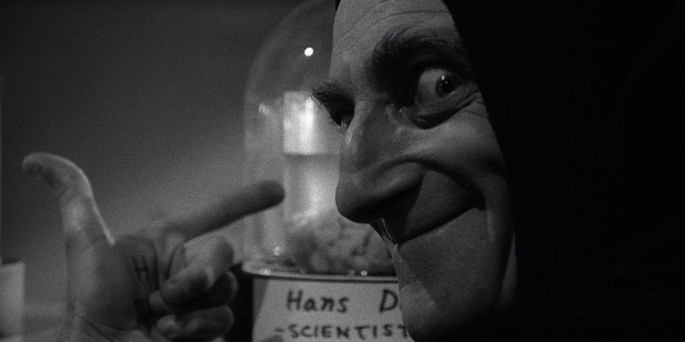
Screen legend Gene Wilder gives one of his best performances as Frederick Frankenstein, a New York physician desperate to separate himself from the notorious reputation of his grandfather.  Frederick inherits Victor Frankenstein’s castle after a relative passes away and elects to travel to Transylvania where he is soon caught up in rogue science procedures involving the creation of life with abnormally large endowments.  Brooks and Wilder collaborated on the script, seeking to both spoof the golden era of horror films while intimately praising their legacy.  Despite Brooks’ penchant for over the top, risqué material, Frankenstein stays carefully in bounds, a deliberate departure that only enhances the comedic impact.  No joke, no matter how lewd or crude ever feels forced, leaving the viewer with a sore stomach and a headful of quotable lines that remain hysterically potent to this day.

young-frankenstein-gene-wilder

Wilder also stars as Frederick, capitalizing on the fantastical elements of his performance in Willy Wonka and the Chocolate Factory three years early and mixing it with a level of absurd obsession that almost steals the show.  He’s supported by the amazing Madeline Kahn as his uptight fiancé, Teri Garr as the tempting lab assistant, Cloris Leachman as the mysterious groundskeeper, and Marty Feldman as the fish-eyed henchman, Igor.  Peter Boyle’s turn as the Monster is outright hysterical, taking all of the legendary creature’s most important scenes from Frankenstein and The Bride of Frankenstein and making them not only his own, but crafting each of them so that they blend seamlessly into Brooks’ dark playground of sexual magic and hilarious pronunciations.  Gene Hackman has a cameo as a blind monk and while this was Hackman’s first foray into comedy, his scene with Boyle is one of the film’s many, many iconic sequences, outdone only by Wilder and Boyle’s madcap rendition of Putting on the Ritz.

Brooks’ stern dedication to authenticity is one of Young Frankenstein’s most important attributes.  The studio attempted to shoot in color multiple times, however Brooks remained firm in ensuring the film was shot in black and white.  Gerald Hirschfield’s cinematography is so good; the viewer often forgets they’re watching a film, as the images transport them directly into the insanity.  There are numerous visuals that pay tribute to the Universal monster films, however, Hirschfield’s unique command of depth and tight compositions keep the focus on the gags and on the small, but enriched world of Brooks’ design.  Brooks used actual set pieces, such as the lab, from James Whale’s Frankenstein films of the early 30’s and took other approaches with production that would go on to cement the film’s well-earned reputation as being not only outright hilarious, but a perfect example of art via comedy.

e-t0Dzpjx7wx

Available now on Netflix, Young Frankenstein is one of Brooks’ best made movies and an essential piece of viewing for anyone who enjoys comedy.  Gene Wilder tragically passed away almost one year ago today and it was in his honor that many theaters chose to show this unabashed classic posthumously.   Whether you’re a lifelong fan of Mel Brooks or discovering him for the first time, Young Frankenstein is the pinnacle of American comedy: A brilliantly composed satire, masterfully directed by one of the true rebels of comedic cinema.

Highly.  Highly Recommend.

t21781

Wonder Woman

Wonder Woman

2017.  Directed by Patty Jenkins.

Wonder-Woman-2017-Movie-Wallpaper-10-1600x798

Patty Jenkins’ Wonder Woman is two films.  On the surface, it is the most Marvel-esque of DC’s cinematic universe, using all of the tried and true blockbuster clichés to present a feel good origin story in which love triumphs over evil.  However, beyond the expected trappings of the genre, Jenkins’ unique directorial style and Gal Gadot’s larger than life performance take the narrative beyond costumed mayhem into a thrilling exploration of sexual politics and morality that almost escapes the constraints of its three colored origins.

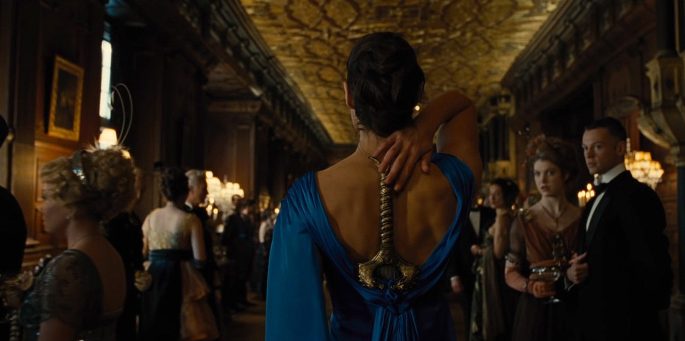
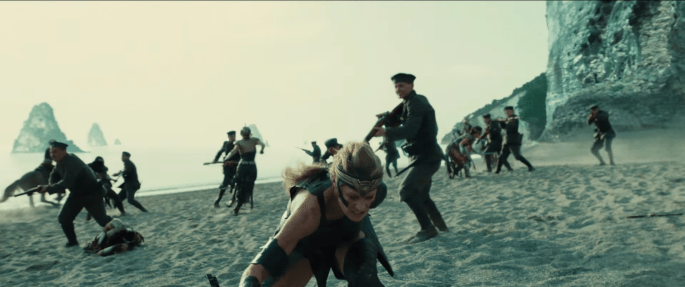
Wonder Woman is thrust into the Great War when a British spy crash lands on her island sanctum.  Believing that Ares, the god of war, is responsible for the carnage, she sets out with a group of unconventional soldiers to bring an end to his reign of terror and restore peace to the world.  Jenkins balances the fantastical elements of Wonder Woman’s origins with the plight of the trenches in a remarkable dance.  There are stunning scenes of otherworldly bravura mixed with gritty war sequences that conjure a feeling of epic adventure that never loses steam.  Gal Gadot’s emotional turn as the titular hero is one for the ages, bringing gravity and vulnerability to a role that could have easily misfired.  Although she is not mortal, her basic, possibly naïve, understanding of the heart of the human experience is what carries the film.

Vamers-FYI-Movies-Full-Length-Wonder-Woman-Trailer-is-Stunning-Screen-Shot-07

Chris Pine does an admirable job as the love interest, codifying the human experience through genuine exchanges with Gadot and outstanding scenes with the supporting cast of misfit soldiers.  One of the film’s best surprises is in its candid approach to the cost of conflict, both in the heart and soul.  Gadot approaches moral dilemmas with the benefit of not only being an outsider, but with a level of innocence that springs from never experiencing inequality.  The ramifications of this play throughout the narrative, both playfully and with serious intent.  While Wonder Woman plays to the Marvel formula with perfection, it transcends the entire MCU catalogue with conviction through its acknowledgement of these truths and its doubling down on the hero’s story.   While there’s nothing immediately new, what Wonder Woman does, it does exceptional well.

Matthew Jensen’s cinematography approaches the combat with an intriguing mix of gentile splendor and brutal omnipotence.  The bird’s eye capture of the No Man’s Land sequence is flawless, delivering an action extravaganza that builds upon the notion of hope in desperation that propels Gadot’s heroine into an iconic status.  While the slow-motion captures become tedious as the film winds on, there’s so much to digest that the painfully long running time isn’t a factor until the clunky, CGI bonanza of the finale.  Die-hard fans will not be able to unsee the glaring similarities with The First Avenger, however, the recipe is one that continues to prove, time and time again that it works and Wonder Woman simply does it better.

3099273-screen+shot+2016-07-23+at+2.27.18+pm

The importance of a female focused superhero film cannot be understated.   This is a unique film because of its treatment of the complex issues of gender, violence, and heroism.  However, as a sum of its parts, Wonder Woman stays regrettably in bounds, offering nothing fresh to the summer blockbuster and while this may disappoint viewers looking for the next best thing, it’s important to remember that films are meant to entertain, and Wonder Woman not only eclipses this humble goal, it also inspires.

Highly recommend.

wonder-woman_wp

Batman

Batman

1989.  Directed by Tim Burton.

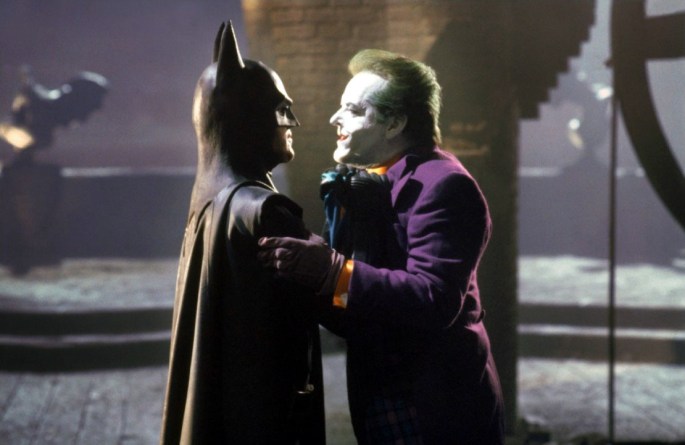
batman-1989-batman-confronts-the-joker

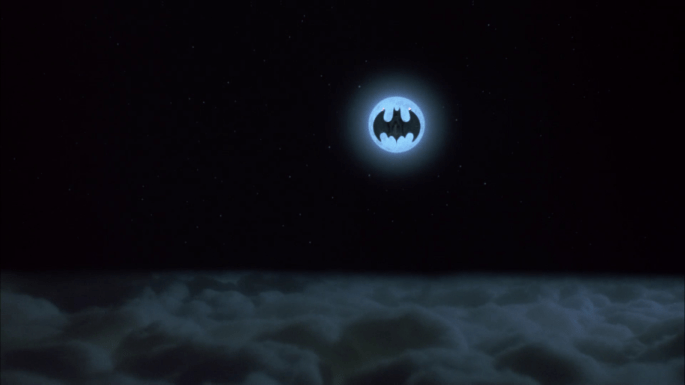
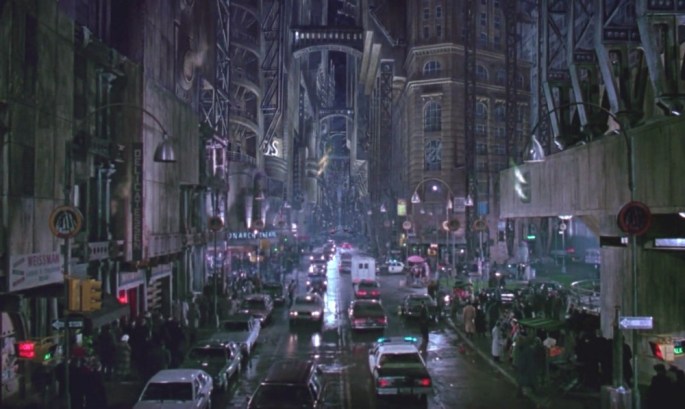
Paving the way for the cinematic age of the superhero, Tim Burton’s noir drenched take on the caped crusader is an intriguing film.  Batman was one of the darker entries into the comic book genre at the time, using Art Deco architecture and a Stygian color palette to present Gotham as a city of another time.  Jack Nicholson’s over the top embodiment of the clown prince of crime combines with Danny Elfman’s memorable score and Academy Award winning art direction to create a Gothic dreamscape where the terrors of the mind walk the streets and identity is the last battleground between good and evil.

On the surface, Batman hits all of the expected narrative points of a caped crusader epic.  The Bat battles the Joker, grapples with trauma from the loss of his parents, experiences emotional discordance with intimacy, and is initially rebuked by the people he is attempting to save.  However, Burton build’s on Sam Hamm and Warren Skaaren’s script by placing the story in an alternate Gotham, cut off from traditional reality.  Where later films, such as Nolan’s trilogy, would seek to weave the concepts of costumed vigilantes into plausible reality, Burton created not only an original take on the character, but an entirely unique world.  There are similarities to reality, but Gotham is very much its own universe.  The buildings emulate the sharp angles of Lang’s Metropolis, captured by Roger Pratt’s insightful cinematography, perfectly emulating the comic book experience.  Looming shots of the doomed metropolis are interwoven with bold compositions of Welles-like chemical factories and avant-garde gatherings of the elite.

53c47739c07a80799300001c_cine-y-arquitectura-batman-_02-1000x598

The thugs and police use antiquated weapons such as tommy guns while enshrouded in classic outfits designed Bob Ringwood.  Paul Engelen’s makeup design is another outstanding touch, particularly with respect to everything outside of the already astonishing Joker prosthetics.  While Nicholson’s demonic trickster is the centerpiece, Engelen’s devious designs align with Burton’s farcical realm of dread.  From grinning victims of Joker’s chemical poisons to beleaguered, unwashed News Anchors, physical appearance, not just costumes, is an important part of Batman’s dangerous hysterics.

The overarching divide between wealth and poverty is bridged by the criminal element, symbolized through Jack Nicholson’s unforgettable portrayal of The Joker.  The seminal character has had several incarnations over the years, with Nicholson’s being the most madcap of the bunch, harmonizing the gleeful insanity of Caesar Romero with the dangerous edge that Ledger would bring to the role years later.  Nicholson’s embodiment is so over the top that it outshines Keaton’s Bruce Wayne/Batman in every interaction and while this initially appears as a flaw, it is also a testament to Keaton’s quiet restraint that showcases his immense supporting talent.  Batman is a film about larger than life personas doing battle in a city of excessive dreams, a place directly responsible for their existence.  Where Nicholson is the criminal turned maniacal aristocrat, Keaton is the fallen noble, a man with expansive wealth who drifts from scene to scene in a calculating haze of aloofness, waiting for the call to action.  While both characters share certain qualities, each actors’ approach to the material beautifully conflict, carving out layers of subtext within their relationship and in their distinct views on the world around them.

onFCI202984005gt

Kim Basinger delivers an interesting turn as Wayne’s love interest, Vicki Vale.  Initially, her scream laden performance may repulse, however, after repeated viewings, there’s an edge to her character that reveals itself, particularly during her scenes with Nicholson.  Despite the facade of fear, Basinger’s physical cues are representative of someone who has looked death in the face and it is one of Batman’s few flaws that this concept wasn’t explored more fully, particularly her character’s experiences during a South American civil war.  Her scenes with Keaton are placid, perhaps due to reasons outlined above, but an understanding of Vale’s history puts some of the soapy pleadings in the final act into a more forgivable light.

Prince performed the soundtrack, lacing the golden age throwback with funky rock tunes that were in high rotation during the summer of 1989.  Party Man, the most memorable track is featured during the slapstick museum sequence, a scene that is the perfect summation of Batman’s theme.  What appears playful and eccentric from a distance masks murderous intent and it is here that the Bat and the Joker first lay eyes upon another.  Danny Elfman’s triumphant score outpaces the riotous soundtrack with an eclectic blend of inspiring anthems and shadowy undertones, simulating both Batman’s plight and the fallen metropolis of Gotham, a city living in the shadow of itself.

batmanf.jpg

Available now for digital streaming, Batman is one of the most important American films of the ’80s.  It created a blueprint that has been improved upon since its release and was the key to opening the floodgates of superhero related entertainment that continue to dominate the box office to this day.  Nicholson’s epic performance is the brightest gem; however it is the world of Burton’s design that is Batman’s hidden power, a corrupted place of elegance and predation that has inspired nightmares and dreams since the film’s debut.  If you’re looking to see where it all began, Batman is the caped patriarch, and it delivers on virtually every level.

Highly. Highly Recommend.

batman-movie-screencaps.com-

Guardians of the Galaxy Vol. 2

Guardians of the Galaxy Vol. 2

2017.  Directed by James Gunn.

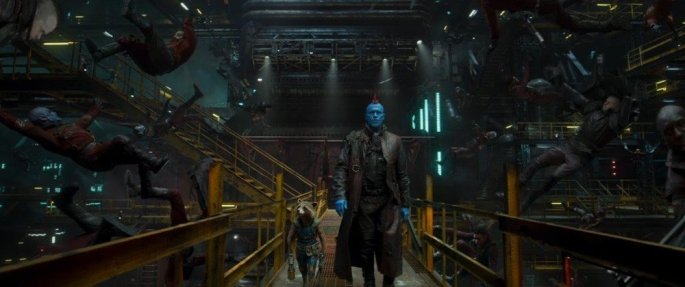
Guardians-of-the-Galaxy-Vol.-2-Rocket-and-Yondu-e1476895483196

Guardians of the Galaxy is often described as one of the best films in the Marvel Cinematic Universe.  As a result, expectations for James Gunn’s follow up, Guardians of the Galaxy Vol. 2 were incredibly high and the final result, while not perfect, is one of the best made superhero films thus far.  Featuring a scene stealing performance from Michael Rooker, uncharacteristically beautiful visuals, and an unexpectedly mature story, this is a film that showcases the limitless potential of superhero films as allegories to the struggles of reality as well as reveals the innate ability of comic book films to mirror the depth and artistic breath of their source material.

Peter “Starlord” Quill is found by his wayward father, Ego after a disastrous job that leaves the Guardians fractured and pursued by a ruthless alien civilization.  As Peter explores his relationship with father, terrible truths are revealed that test the bonds of friendship and family as each Guardian confronts the horrors of the past for hope at a better future.  Gunn’s script stumbles to achieve the same level of humor of the first film while presenting an action film almost devoid of action that almost entirely mimics The Empire Strikes Back.  However, as the story begins to unfold, dark sequences of mass executions, torture, and murderous narcissism are interwoven with one of the most sophisticated stories to be featured in a Marvel film.  Building on the first movie’s core of broken outsiders forming a ragtag tribe among the stars, Gunn’s second effort expands on the theme of family by examining fraternal conflicts and surrogate fathers. While the heart wrenching conclusion is telegraphed from one of the first frames, the emotional payoff works due to the chemistry of the cast.

download

Michael Rooker’s performance as Yondu is a tarnished, broken, and perfect super nova.  His vulnerable delivery of dialogue combines with moments of genuine menace and paternal empathy to form the foundation around which everything else orbits.  This is a story about love and its consequences distilled through a cosmic interpretation of Cat’s in the Cradle and none of it works without Rooker’s panache. Dave Bautista continues to impress, despite the clunky script, and his scenes with newcomer Pom Klementieff are comically awkward in one instant and then tear inducing in the next. Zoe Saldana and Karen Gillan continue to have weaker arcs, but this is more from the material than their performances.  Bradley Cooper’s Rocket continues to impress, with Cooper’s verbal torment unexpectedly overcoming continually stale jokes about his origins.  Kurt Russell is the perfect choice for his role, but to expound would spoil the pure joy of his introduction.  The Baby Groot-centric credits are outstanding, focusing on the childlike wonder of the character while ignoring a repetitive action scene that suggests a heightened awareness of the formulaic constraints of its colleagues.  Unfortunately, there are continuous efforts to double down on the character’s cute factor that are underwhelming.

Henry Braham’s ambitious cinematography is the savior.  There’s a remarkable shot of Yondu looking out onto a shantytown while red and green neon lights reflect against a dingy window that underscore the character’s inner turmoil and immediately sets the tone.  Another jaw dropping composition features Gamora sitting on an alien planet’s surface, surrounded by a psychedelic miasma of colors while the film’s centerpiece involves a beautifully shot sequence of musical mayhem aboard a pirate ship.  The poetic finale is a color infused sequence of reverence that is both a sublime capstone on a transitional story and a sensational homage to the era in which Guardians is forever submerged.  The soundtrack diverts from the first film’s grab bag of chart toppers to feature intimate songs whose symbolism (while blatant) mixes perfectly with the serious tonal shifts and will have even non-believers humming for days after.

download (1)

Ramsey Avery’s art direction is yet another unexpected surprise.   The Sovereign are an alien race that are introduced during the first act and with just a handful of precious scenes, the sheer scope of their home world is communicated through dazzling Art Deco throne rooms and Black Mirror-esque combat stations.  The planet on which the bulk of the story transpires is a LSD soaked sanctuary, mirroring the arrival of a child’s errant father who brings wondrous new toys as compensation for unreliability.  Dreams, impressions, and preconceptions are all at play both in the physical environments on display and the heady metaphysical conflicts within the characters’ hearts.

In theaters now, Guardians of the Galaxy Vol. 2 is not perfect, but it excels in areas that other Marvel films have just begun to explore.  Michael Rooker’s outstanding supporting performance anchors a film that could have easily gotten carried away into a vortex of CGI and Vol. 2 almost does.  It is brought back from the brink of forgettable action sequels by breathtaking visuals and adult oriented themes that combine to create the perfect remedy for the spandex fatigue that has gripped the box office.  If you enjoyed the first film, there is plenty here that will work, albeit with some rough patches of dialogue and crude humor, but underneath the expected mediocrity lies a passionate story about the definitions of family, traumatic abuse and its consequences, and most surprisingly a well-defined villain with a purpose, something that has been severely lacking in the bulk of the Marvel Cinematic Universe films.  Candy cane aesthetics and pure heart are what elevates James Gunn’s second pop-pulp space opera to front of Marvel’s cinematic stable.

Highly Recommend.

download (2)