Alien: Covenant

Alien: Covenant

2017.  Directed by Ridley Scott.
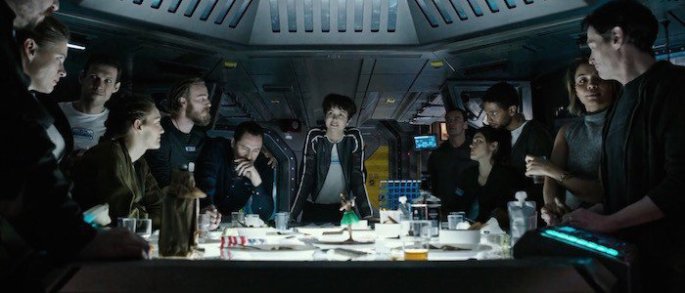
alien-covenant-prologue-700x300

Alien: Covenant is a tricky film.  Alien was the film that opened a realm of possibilities, both for the franchise and for the career of its creator, directorial legend, Ridley Scott.  Following from the extremely divisive Prometheus, Scott weaves an intricate story about the cycle of life and death masked in the guise of a prequel.  This is a deeply personal film made by a 79 year old artist.  What it loses with a shallow script and endless horror clichés is almost enough to derail what is quite possibly one of Scott’s most profound works.  While diehard fans will undoubtedly find many things to pick apart, it is entirely probable that Scott decided to plumb the existential limits of humanity via a return to his beginnings, and it is with that idea in mind that I left the theater with the understanding that this film is one for the ages, glaring flaws and all.

A colony ship intercepts a human transmission from a mysterious planet.  Desperate to find a new planet to call home, the crew decides to investigate and happens upon the most terrifying experiment in the history of creation.  Fusing elements of the Island of Dr. Moreau, the spiritualism of Prometheus, and Blade Runner’s creation vs. man bravura, John Logan and Dante Harper’s script stumbles, falls, and then revels in the gutter of rogue philosophy in which it lands.  The first act features the standard character building staple of the franchise, however there is not enough to go around and it’s immediately apparent whom will die and whom will persevere.  Danny McBride is a surprising standout, emulating the blue collar roots that made the initial film so endearing.  The banter between the crew is cringe worthy at best and when death does come, surviving characters are instantly resilient, eschewing Veronica Cartwright’s unforgettable paranoia in favor of soldiering on.  While this may appear as a weakness, it is a slick alignment with Scott’s overall message.  The reaper always wins and life always goes on, leaving the memories of the fallen behind.

alien-covenant-movie-trailer-screencaps-4-1075x442

Michael Fassbender’s dual turn as the loyal android Walter and the devious rebel David has to be seen to be believed.  The first scene of the film does not work without his subtle ferocity, setting the stage for what follows with a poise that likens his electronic birth to a toddler with a high caliber pistol, questioning his existence and his maker’s intent with ominous innocence.  His scenes with both versions of himself are the meat of the story and when taken separately from the paltry characterization of the humans, they are truly something to behold.  Katherine Waterston’s archetypal turn is adequate, but ultimately pales under the weight of the story.   Yes, characters make bad decisions, possibly even worse than forgetting to run horizontally, however, unlike its predecessor, Covenant has so much going on, there’s barely enough time to complain.

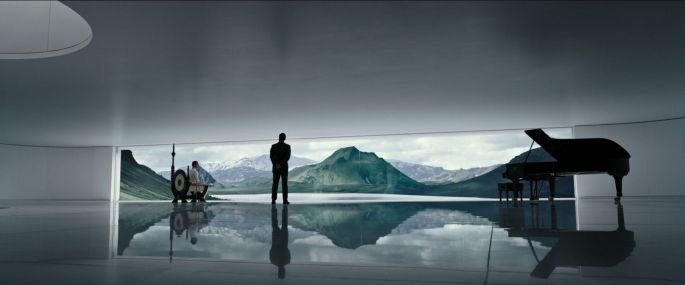
Dariusz Wolski’s cinematography, from the stunning first frame is a visual bacchanal of gory aftermaths and alien architecture.  David’s insidious lair conjures thoughts of Kurtz’s sanctum in Apocalypse Now while the CGI scenes in space command the gorgeous touch one would expect from Sir Scott.  There are dozens of Easter eggs strewn throughout Chris Seagers’s titanic production design, featuring impossible compositions of alien civilization, blending incomprehensible science with low tech accoutrements to bring the high gloss feel of the new films together with the low-fi grit of the classics.
Alien-Covenant-Teaser-Trailer-029

In the end, Alien: Covenant is a remarkable film for what it is saying underneath the carnage and ill-advised choices of its stable of victims.  The evolutions of the creature are symbolic of the series, beginning with small terrors in claustrophobic environs that soon spin out of control as technology, budget, and popularity demand more and more, ultimately consuming the creative fires of design.  The search for meaning in the creation of life and dissenting against the inevitability of death are everywhere in Covenant’s beautiful set pieces and their presence will either intrigue or repulse.

In theaters now, Ridley Scott’s bridge building film creates more questions than answers for one of the most popular science fiction franchises of all time.  Derailing the audience’s concept of timeline and progression, Alien: Covenant breaks all of the established rules to present a blood soaked Genesis in the stars.  Scott made the film he wanted to make, and while there are elements which will placate general expectations for an addition to the Alien pantheon, it’s my belief, that Scott almost forgot there would be an audience watching.  This is his story and while it may not entirely work, it is something terrifyingly genuine and sincere.

Highly Recommend.
maxresdefault

Body Heat

Body Heat

1981.  Directed by Lawrence Kasdan.

bodyheat

Film noir is wonderfully eclectic genre.  While there are certain aspects each of these films share, directors have been bringing their unique perspectives to each offering over the decades since its creation.  Neo-Noir films evolved the concept by placing murky detective stories into futuristic locales and sleepy Midwestern towns, showcasing the idea that the darkness of man can exist anywhere.  Lawrence Kasdan’s scorching directorial debut, Body Heat initially appears as a well-crafted homage, intimately aware of its predecessors’ influence.  However as its complex web of deceit begins to unravel, any sense of safety slowly erodes under a flood of sexual power and unrepentant violence to reveal an intelligent and diligently constructed narrative.

Inept lawyer Ned Racine falls for the wrong woman, leading him into a series of perilous decisions. Unseen consequences and chilling revelations then threaten to destroy not only his freedom, but his relationship with the woman for whom he has risked everything.  Kasdan’s script borrows heavily from Noir staples.  The dialogue brims with potboiler pastiche, but never crosses the line into parody.  Some of the best exchanges are between William Hurt’s Ned and his compatriot’s: A surprisingly loyal Ted Danson and J.A. Preston’s dedicated detective.  Hurt’s brilliant performance highlight’s his uncanny ability to strip away a character’s armor to reveal vulnerability and is instantly spellbinding.  Ned is the perfect mark, competent enough to perform, but ultimately outdone by his libido.  Mickey Rourke’s turn as an arsonist client contains some of the film’s best lines, a stark reminder of the Noir trope that there is not only honor, but brutal truth among thieves in the shadows.

body-heat11

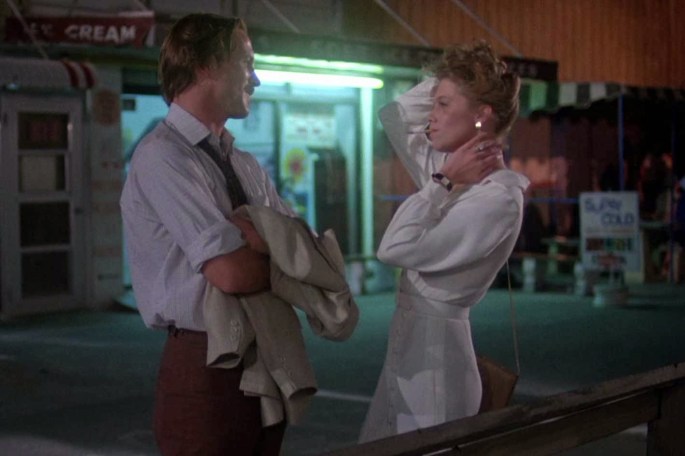
Kathleen Turner’s steamy debut as the predatory seductress Matty Walker balances raw sexual mastery with wicked intent.  Body Heat is a film that rests entirely on its villainess’s ability to captivate the audience, and Turner delivers.  Ned is the surrogate, blindly following his heart (and other anatomy) into moral oblivion due to Turner’s sultry delivery and her uncompromising command of the material.  Her chemistry with Hurt is intoxicating, to the point that the viewer is carefully reminded of a time when they made bad decisions for a bad thing that never felt so good and this is the film’s essence.

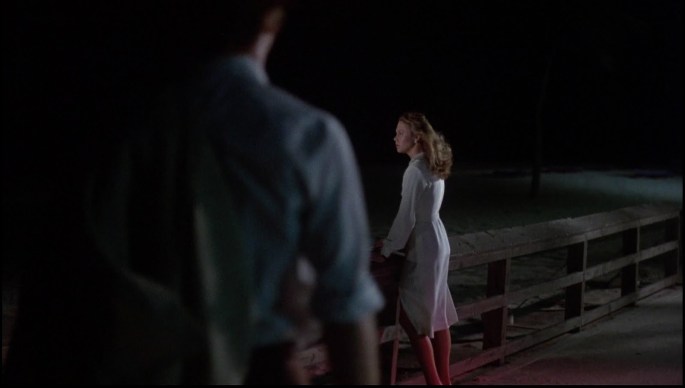
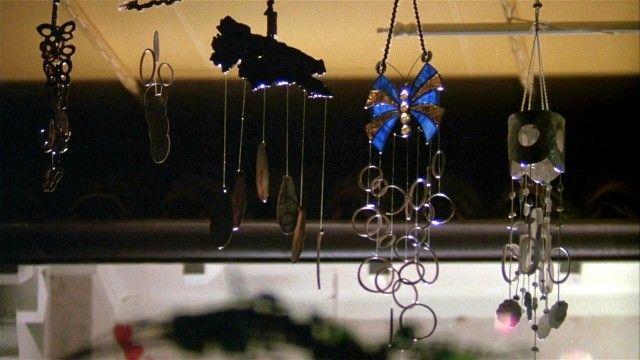
Set during a relentless heat wave in Florida, the color red is intrinsic to the happenings, blissfully captured by Richard Kline’s devious cinematography.  This is a soiled, pessimistic world and an air of deception haunts every perfectly constructed frame.  Maury Harris’s sound design, particularly during the infamous wind chimes scene perfectly captures the Noir vibe with ominous tones that preclude Ned and Matty’s first illicit coupling.  What begins as an explosive convergence of corruption and passion tumbles head first across a moral Rubicon in which murder and love are strange bedfellows, tying Hurt and Turner together in a wicked dance of fractured dreams and shadowy manipulation.

wp-1485438607781

Available now for digital streaming, Body Heat is a unique debut from a legendary writer.  While it features the expected dialogue of a true master, it excels due to top notch production design and a brave performance by a woman in a time where women were not expected to be center of attention.  Kasdan’s bold casting choice and respectful take on the Noir genre ensured that his debut effort would be remembered for decades to come.  If you’ve never experienced this classic tale of sordid conspiracies and fevered entanglements, Body Heat is a sensational late night affair.  Come for Turner’s heart racing performance, leave with the knowledge that Kasdan’s first time in the director’s chair was something exceptional.

Highly Recommend.

body-heat-hd-movie-title

Remembering Jonathan Demme: SOMETHING WILD

The world of cinema was shocked by the tragic passing of Mr. Demme at the end of April.  In honor of his memory, this week Kyle and Ben discuss Something Wild, his underrated romantic thriller that has been given a stunning blu-ray release by the Criterion Collection.

hero_EB19861107REVIEWS611070304AR

BEN: As I delve into the world of cinema, I come across films that are so mind-bending they stop me dead in my tracks.  As the film opens, we meet Charlie Driggs played by a very roguish Jeff Daniels in a café.  We don’t know why at this point, but there is something fundamentally wrong with this relatively successful finance wizard and he makes a decision that attracts the attention of a very dynamic Lulu, played by Melanie Griffith.  From this opening frame, we can tell that Demme, whose shooting style would be considered “open,” is going to have fun with the audience.  After a rather humorous confrontation, Lulu encourages Charlie to get into her car, where she takes him on a ride of debauchery and mayhem.  Along the way, they steal, they abandon; Charlie comes to terms with his rebellious side and falls in love with Lulu, who has a dark secret in the form of Ray Sinclair played by a very young and vibrant Ray Liotta in his second theatrical role.

KYLE: One of the things that instantly grabbed me upon revisiting this was how colorful it was.  Demme uses a bohemian aesthetic that’s both distinct, and somehow….normal?  I read in an article that Demme and the crew handpicked the bulk of set decorations and props.  It’s an intimate story and you can feel Demme’s deep affection for it in every frame.

sw-dangrif2

BEN: This is going to sound cliché, but E. Max Frye’s Edgar Award-winning screenplay is typically 1980s:  the young successful banker is looking for an escape from his successful life, falls in love with his sinful, polar opposite with a secret past which eventually results in a murderous ending coupled with the ultimate 1980s bad boy who spells trouble for the young lovers.  With Demme’s deft direction, solid acting, and the fun atmosphere created by Frye’s screenplay, it works.

KYLE: I love how it’s this neo-Odyssey by way of the cliché road trip.  You can see Ray being the cyclops and Lulu in her three different personas reminded me of the Sirens, luring Daniels away from safety and into harm’s way that would ultimately lead to a greater understanding of self.

BEN: Daniels was the perfect young actor to play the yuppie seeking freedom while Melanie Griffith plays to her sinful strong suits.  Ray Liotta comes into himself as the violent, aggressive type.  The three leads lent such credibility to their roles that they were all nominated for Best Actor, Actress and Supporting Actor at the 1987 Golden Globes, respectively.

Something-Wild-1

KYLE: I could not believe that this was Liotta’s second role.  He’s completely magnetic from the instant his character enters the story.  I really enjoyed his chemistry with Daniels and Griffith.  It has this sophisticated, but primal quality that I think is essential for the tonal changes in the second half.  I really enjoyed how Demme was sort of playing on the expectations of the audience with respect to 80’s rom coms and essentially pulls a bait and switch and ends up with something resonant.  It’s about confronting the dangers of the world in the name of love and Demme uses his trio of talent along with some outstanding technical work to bring his bloody, but beautiful valentine home.

BEN: As I mentioned at the beginning, very few movies stop me in my tracks.  Driggs’ comment at the end of the movie hit home the most:  “It’s better to be a live dog then a dead lion;” a common theme to movies of the era, but it serves also as a warning to future generations:  live a little.  Perhaps we could all heed Driggs’ sage advice.

KYLE:  Highly Recommended for me.

BEN: We are in agreement!

Title Card Something Wild

Michael Mann’s Heat

Heat

1995.  Directed by Michael Mann.

heat-1200x520

Recently re-released with a stunning 4K transfer, Michael Mann’s acclaimed L.A. crime saga Heat is arguably not only one of the greatest films in his formidable filmography, but also the pinnacle of full throttle storytelling.  Featuring a duo of searing performances by screen icons Al Pacino and Robert DeNiro, Mann’s trademark urban visuals, and one of the greatest action sequences ever filmed, Mann’s epic treatment of professional thieves and the dedicated lawmen who hunt them transports a Samurai mindset into the modern world in a hail of bullets.

Neil leads a crew who takes down high profile scores.  After a job goes wrong, Neil is put into the crosshairs of Vincent Hanna, an obsessive detective whose life is dedicated to the pursuit, that culminates in a daring day time heist and a subsequent shootout in which no one is safe.  Expanding upon his script from a failed TV pilot, Mann builds a straightforward world of good and evil before pulling the lines uncomfortably close.  Packed with memorable dialogue and unforgettable confrontations, Heat dances around the inevitable showdown of its two leads before annihilating any sense of predictability in the climax.  The diner scene between Pacino and DeNiro is remarkable, forgoing the ease of tension by focusing on the basic similarities between two souls who are mirrored, yet set apart only by circumstance.

Heat_UnPopular-Opinion_1

This is the brilliance of the film.  Mann weaves an outstanding ensemble across multiple storylines, some of which are purposefully left hanging to give the viewer a grounded sense of the playing field, complete with sidewalk demons and lost souls looking for meaning from friends, family, and personal ethics.  Discipline and the adherence to code, both tangible legalities and metaphysical ideals, are the marrow of Mann’s exposition.  Val Kilmer, Tom Sizemore, Danny Trejo, William Fichtner, Henry Rollins, Ashley Judd, Mykelti Williamson, Dennis Haysbert, Tom Noonan, Jon Voight, Diane Verona, Amy Brenneman, Hank Azaria, Jeremy Pivens, and Xander Berkely fill out the supporting cast, but it is Natalie Portman who shines with a handful of scenes.  Her performance is the ultimately casualty, the real world consequences for the actions of those who live beyond the law and those who are consumed by it.  Relationships are a key component, given an ample amount of time to establish that both sides of the coin are people, despite their choices, adding an undercurrent of humanity that strengthens the narrative by presenting the characters as flawed, but genuine souls with dreams waiting to be shattered under the LA sun.

Eliot Goldenthal’s score, combined with a fantastic soundtrack musically narrate the drama, using Mann’s patented masculine deconstructionism to create an entity unto itself.  Moby’s God Moving Over the Face of the Waters in the finale is both beautifully tragic and perfectly applied, an auditory summation of the ultimate neo-tragedy that Mann has created.  Deborah Lynn Scott’s costume design has a vintage, minimalist quality, presenting both cop and robber as natural affixtures to the world on display.  Heat is a free range compound where killers and flawed saints play cat and mouse games while reality perseveres, unaware of the dangerous stakes being sought out and the way that each character is perfectly accessorized is a welcomed conspirator.

heat-02

Dante Spinotti’s cinematography has a wonderfully layered quality, capturing the moments between the action with Mann’s trademark blue hues and fevered close ups.  Los Angeles is portrayed as a metropolitan Gemini, a twinned persona of complicated domesticity and unrelenting violence.  This idea is constantly explored, but the payoff is in the legendary shoot out that begins the final act.  There has never been a more technically proficient display of gunplay ever committed to film.  The sound design and mixing are a blessed mixture of panic and fury.  The actors, particularly Kilmer’s unrestrained focus, show military tactics that are perfectly executed in a manner that affects the viewer on a base level.  These are dedicated experts of their trades, challenging one another over a lifetime of personal devastation in the name of said commitments and the result is simply unforgettable.

Ultimately, Heat is a stalwart member of top tier American cinema. The new release is available on Amazon for less than eight dollars and is without a doubt worth every cent.  Heavy on exposition, grandiose on the action, this is everything a crime thriller should be.

Highly.  Highly Recommend.

heat-title-1995


The Lure

The Lure

2017.  Directed by Agnieszka Smoczynska.

Screen-Shot-2017-01-12-at-13.22.26

A sublimely bizarre horror musical, The Lure blends kaleidoscopic visuals with an ’80s pop sheen to present a delirious, female focused coming of age tale.  Flittering between genres, Smoczynska’s euro glitz bonanza unleashes a plethora of themes into its carnival of flesh; however, this is a film that is having far too much fun to be world altering.  Featuring uncomfortable sexual truths beneath blood tinged fish scales; this is currently one of the most unique offerings of 2017.

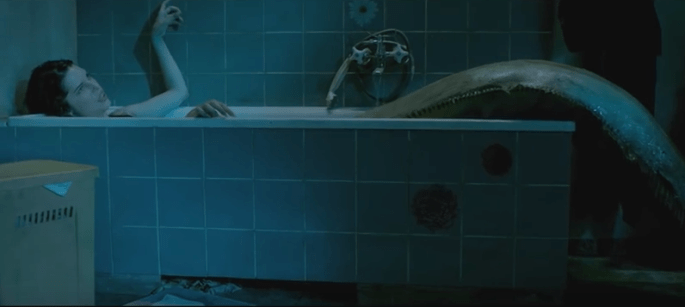
Carnivorous Mermaids Silver and Golden become enamored with a rock band they encounter on a beach.  They return with the group to a strip club where they become exploited performers, causing the sirens to drift apart, one towards embracing her predatory nature while the other longs for humanity.  Robert Bolesto’s script is purposefully shallow; however, the direction elevates the material into an euphoric trip through the development of female sexuality as an allegory for the mistreatment of immigrants.  Young women as objects of lust for salacious old men is nothing new, but the presentation defies any sense of surrender to the tropes that often trap a film like this in rehashed mediocrity.  The weakness of the lyrics, in which the girls communicate their fledgling desires, would easily rebuke, yet the viewer is helplessly enraptured by the pastel world to which they’ve been submerged.

the-lure-banner-1

Marta Mazurek and Michalina Olszanska deliver a pair of entrancing performances.  While their respective arcs are telegraphed, they do solid work with each side of their aquatic yin and yang.  Their committal to the lyrical abandon is both uncomfortable in a John Waters way (hat tip to a colleague) and intermittently hilarious.  The choice of the ’80s time period initially seems awkward, but once the musical numbers begin, the framework of parasitic indulgence and material obsession becomes perfectly clear.  While there are no doubt some cultural touches foreign audiences may miss, viewers can no doubt commiserate on a decade of cocaine fueled abandon.

Jakub Kijowski’s cinematography is elegant through its instability, perfectly emulating the raw kinetics of puberty through dazzling shots of the night club and its denizens.  Warm blues and reds flood the interior while the outside world is framed in an alien, institutionalized manner to extrapolate on the girl’s curiosity with their new surroundings.  The Lure is a story about extremes, where the blood is bright crimson and the villains are especially sleazy and it mostly works.  Marcin Charlicki’s visual effects bolster over the top antics with intriguing displays of body horror and abrupt violence, entwining the soft terror with Smocynska’s refutation on committal.  The end result is something unique, but undoubtedly divisive.

the-lure-slice-600x200

Available now for digital streaming with a looming Criterion Collection release to come, The Lure is an inverted Alice in Wonderland head spinner.   Its immediately apparent lack of depth is overcome through outlandish visuals and bristling compositions of musical ardor.  If you’re looking for a truly unique film that eschews subtlety in favor of jackhammer presentation, The Lure Will not disappoint.

Highly Recommend.

The-Lure-Header

Classic Films: GONE WITH THE WIND

F6C958BBF538394F1E5FF56102D9B0F4

For the first article in this series, Kyle Jonathan and Ben Cahlamer revisit one of the greatest American films of all time: Gone with the Wind in an attempt to explore not only the film’s undeniable impact, but to perhaps discover if the film has held up throughout the decades.

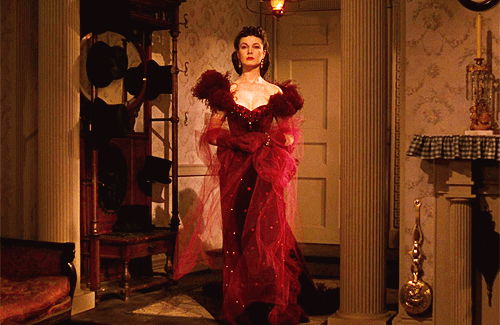
BEN: It took me a few nights to get through, but I finally watched Victor Fleming’s Oscar-winning epic, Gone with the Wind.  I was not completely familiar with the story, but I’d been aware of several key sequences and the tale of Scarlett O’Hara (Vivien Leigh).  As we follow her tragic story, we learn that the South is preparing for its part in the Civil War, that the men of the South such as Ashley Wilkes, whom Scarlett is very much in love with is a man of words.

KYLE: Being a southerner I grew up with the film and my fraternity watched it once a year as a tradition, so I was deeply familiar with the story, but I was eager to revisit it with a critic’s eye.  What were your initial impressions of the film?

gonewiththewind2_758_426_81_s_c1

BEN: Margaret Mitchell created very strong characters in a time when women were very demure, where men were chivalrous, yet they knew how to speak.  Victor Flemings’ direction is tight for a film that runs nearly four hours.  He displays both the gentile Southern plantation life in contrast to the frequent struggles during the war.  Most importantly, he framed the romance and the final sequence with a sensitivity that is rarely seen.   Max Steiner’s score was a fine match to this epic as was Ernest Haller’s cinematography.  There was quaintness in his use of the Academy 1.33:1 aspect ratio, yet he used the frame to its fullest, especially in wartime scenes.  His use of silhouettes created thought-provoking scenes which will live on.

KYLE: The absolute pageantry of the film is perhaps its boldest attribute.  From the sprawling, almost whimsical opening sequence which is then contrasted with Atlanta’s destruction, the viewer is put directly into the past by way of gorgeous costuming, hand drawn backgrounds, and Ernest Haller’s unusual cinematography.  This is an epic film about the darkest time in American history and yet, every frame pulses with life and possibility.

tumblr_inline_mieq08iPgy1qz4rgp

BEN: I couldn’t help but notice the foundation was laid for many future characters and stories, most notably  in George Lucas’s sprawling space-epic, Star Wars where Ashley is very much the idealist that Luke would be, willing to serve, yet not completely understanding his place; Rhett Butler, very much like Han Solo:  “I am neither noble nor heroic.  But you are a blockade-runner.  For profit and profit only.  I don’t believe in the cause.  I only believe in Rhett Butler.  He’s the only cause I know”; finally, the fiercely independent Scarlett O’Hara, whose world crumbles before her, only to see her stand up and become the very thing she understood, yet abhorred:  someone who would have to stand on her own two feet, who could not be loved by a man of similar character as she.

KYLE: I think one of the things that struck me while on this revisit was that both Scarlett and Rhett are…not good people.  This is a story about how two potent personalities come together out of inconvenience and sheer will that plays out amidst a war.  The notorious rape scene was particularly jarring, as is the treatment of slavery and slave characters; however, these controversies have been discussed and dissected for years.  For me, it was the idea that these are two selfish souls whose ultimate failure of a relationship makes them confront the consequences of their uncontrolled hubris and gives a glimmer of hope for their futures.

3_21

BEN: I found myself shocked by the last frame of the film, because somewhere within the character of Scarlett O’Hara, she cared.  She cared for her children, she cared for Rhett.  I don’t think she was capable of showing that emotion, lest her steel shield of independence crumble.  As much as it shocked me, I am certain this is why she won the Academy Award that year.

I am recommending Gone with the Wind.

KYLE: We are in agreement!

gone-with-the-wind

Southland Tales

Southland Tales

2007.  Directed by Richard Kelly.

Kıyamet-Öyküleri

“This is way the world ends…”

Generally considered to be the 21st century’s Heaven’s Gate, Richard Kelly’s second feature film was critically annihilated at Cannes and went on to be labeled as one of the worst films of 2007.  In the decade since its release many film lovers have returned to Kelly’s sun washed dystopia to discover a flawed, but brilliant piece of storytelling.  A drug fueled fever dream by way of Bush Era Vonnegut, Southland Tales is a sprawling science fiction epic whose sly predictions for the future are sporadically overshadowed by its wildly creative presentation.

Action star Boxer Santaros is a wanted man, both for an ominous script he possesses about the apocalypse and for his political value to various factions fighting for control of the American dream in the midst of a nuclear tragedy that has sparked World War III.  Kelly’s mammoth script weaves several complicated story lines together to present an all too possible future in which the final days of reality play out in the heart of a new age Los Angeles.  Borrowing heavily from Brazil, Doctor Strangelove, Kiss Me Deadly, and Harrison Bergeron, Kelly’s satirical framework is constantly evolving, never resting on a single point for too long and never settling into a comfortable classification.  The dialogue is packed with odd exchanges and wooden comedy that at first appears unsettling and out of place.  However, as the story expands to reveal the terrible knowledge at its center, the awkwardness becomes both hilarious and terrifying.  This is the end, with the volume turned up to eleven.

southland-tales-5

Kelly’s cast is packed with pop culture icons and cinematic fixtures, blending the elements of the past he seeks to homage with the stars of the future he seeks to warn.  Dwayne Johnson gives the best performance of his career as Santaros, the cardboard tough guy who immediately folds at the slightest hint of violence, a complete reversal of his wrestling personality.  Sarah Michelle Gellar’s turn as a porn star turned talk show host is a loving condemnation of the electronic generation that dovetails with Miranda Richardson’s devious establishment matron.  Seann William Scott plays twin brothers, one a corrupt cop the other a rebel in the fight against the system and his final scene with these characters is one of Southland’s many guilty pleasures.  Justin Timberlake rounds out the cast as an omnipotent narrator, a wounded veteran who watches over the Southland through the lens of a high powered rifle, using temporal narcotics to induce surrealistic musical sequences and heartbreaking emotional connections.

Southland Tales is a convergence of thematic ideals in which Kelly dabbles, but never commits.  It unabashedly criticizes the war on the terror and the patriot act while taking its time to comment on the pursuit of energy and its irreparable consequences for our men and women in uniform.   Timberlake and Scott’s unique portrayals of PTSD, supported by outlandish visuals from Steven Poster are both haunting and uniquely respectful.  Police Violence and domestic terrorism are ever present specters, looming in the azure sky above a city that lost itself long before nuclear calamity, while religion; both the worship of spiritual and mundane idols is perhaps Southland’s strongest theme, using T.S. Eliot and passages from Revelations to sing its lollipop dirge of an inconvenient Armageddon.

southland_tales

The soundtrack is one of the film’s strongest attributes, blending perfect song choice with sharp editing to present the City of Angels’ final days as an intoxicating collision of violence, love, and hope.  Hope that we’ll maybe we’ll get it right the next time around.   There are a handful of strange films that have stolen fire from the gods and flew too close to the sun.  Southland Tales is among these flawed titans, presenting a universe filled with colorful insanity, unforgettable personas, and outlandish (but undeniably relevant) ideas.

Available now for digital rental, Southland Tales is a remarkable effort.  Its lack of focus and refusal to explain itself will undoubtedly be a turn off for many; however, this is a film that deserves a chance.  No matter whether its ideas resonate with you or not, it will have you pondering its mysteries and inconsistencies long after its levitating ice cream truck conclusion.

Highly.  Highly Recommend.

224

Ken Russell’s THE DEVILS

The Devils

1971.  Directed by Ken Russell.

screen-shot-2013-10-01-at-9-39-50-am

Ken Russell’s magnum opus, The Devils, is one of the most audacious films ever made.  Banned in several countries and edited for release by the studio, The Devils has become a modern legend for film lovers and fans of transgressive cinema.  Featuring a pair of unbelievable performances, acid trip visuals, and a scathing commentary on the intermingling of religion and politics, this film is a cornerstone of renegade cinema.

Louis XIII is being influenced by Cardinal Richelieu to destroy various fortifications across France to prevent a protestant uprising.  The city of Loudun is protected by Father Urbain Grandier; a deeply flawed but honorable rebel, and as a result of his defiance, his downfall is obscenely orchestrated by both the Crown and the Church.  Russell’s screenplay was based on the novel The Devils of Loudun by Aldous Huxley and the stage play by John Whiting.  What begins as a psychedelic exploration of corruption and faith gradually evolves into an apocalyptic odyssey into the darkest corners of humanistic constructs.  Sexually repressed nuns, counterfeit saviors, and hedonistic priests populate the feverish world of The Devils, imprisoned in a hell designed from the inside out by violent supplication and archaic denials of primal instinct.  The final result is an unforgiving conglomeration of profane imagery that continues to shock the world today.

Devils_04

David Watkin’s cinematography captures two distinct worlds.  On the surface, the stinking streets of Loudun are crowded and unforgiving, presided upon by hulking Baroque temples whose white fresco walls are yellowed with the decay of time and indicative of their occupants’ self-prescribed righteousness.  The porcelain walls of the Ursine convent present as an asylum in waiting, where endless, alien like chambers await unspeakable acts of contrition.  Beyond the filth of reality, Watkin’s eye captures nightmarish vistas in which profane orgies are carried out under the unlidded celestial orb of a wasteland of the soul.  Fever dreams are interwoven into the narrative in a seamless, almost conspiratory manner that caresses the viewer’s sensibilities before utterly annihilating them by turning the mirror outwards into the theater.

Oliver Reed’s iconoclast Grandier is the fabric of cinematic excellence.  It’s fitting that one of Britain’s “bad boys” would deliver his greatest performance with a role about a fallen priest whose final act of resistance not only defines the very nature of faith but also sees him dissent whilst fully knowing the gravity of the choice.  His utter destruction in a Kangaroo court is not only some of Reed’s best acting, but it is the film’s defining centerpiece, championing the ideals of humility and grace, even in the face of true evil and apathetic idols.  Vanessa Redgrave’s turn as the deformed Sister Jeanne eviscerates the sexual arteries of Russell’s dung caked purgatory and baths in the humors of a world undone by self-baptizing her treacherous hunchback in a storm of rumor and accusation.  It is a true testament to Redgrave’s immense power that even Reed’s seminal work could not out shadow her unforgettable performance.

devils12

Derek Jarman’s ethereal production design is one of the most overlooked elements, creating a world that is familiar and yet distant, harmonizing with Russell’s razor sharp critique of the time period.  Shirley Russell’s costume design follows this trend, offsetting the poverty of the small folk with gaudy ensembles worn by their self-appointed saviors.  Everything swirls around Peter Maxwell Davies’ arcane score that ominously flows within the confines of Russell’s endless nightmare in which the fantastical and mundane hideously intertwine.

Available now on region 2 DVD or for streaming the edited US release version (this version does not feature certain elements of the orgy sequence or the extended final scene involving Redgrave) on Shudder, The Devils has garnered a reputation throughout the years that, in the age of cynicism, initially appears at first to be overblown and perhaps even misplaced.  However, upon witnessing this remarkable, and extremely relevant masterpiece, it becomes clear that not only is The Devils one of the most important films ever made, it also a once in a lifetime convergence of artistic ingenuity, shocking violence, and unbridled passion for the subject matter.  The Devils is an essential experience for connoisseurs of the vulgar who delight in films that expose the horrors of the past in a brilliantly risqué marriage of bacchanal abandon and uncommon fortitude.

Highly.  Highly Recommend.

The Devils 1971 08

Once Bitten

Once Bitten

1985.  Directed by Howard Storm.

bitten

Howard Storm’s only feature film, and Jim Carrey’s first leading role, Once Bitten is a libidinous romp through 1985 Los Angeles.  Featuring riotous levels of sexual camp supplemented by a surprisingly fresh take on the male coming of age convention; this is ’80s cult trash of the highest order.

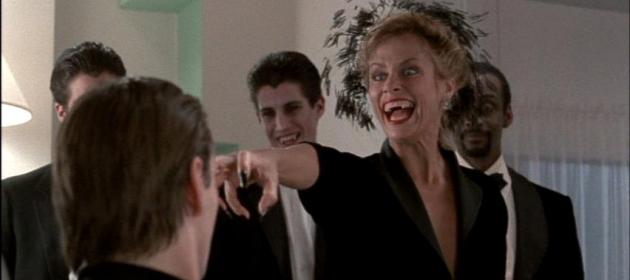
Carrey plays a good natured teen desperate to consummate his relationship with his longtime girlfriend.  Relationship frustrations send him and his friends on a nightclub crawl in which he encounters a ravishing 400 year old seductress with designs on his virgin blood.  The script bounces between the comedic irreverence of the decade, the inevitable sexual changes of puberty, and the ramifications losing one’s virginity.  Carrey’s odyssey, punctuated with subtle makeup effects by Richard Arrington, uses Vampirism as a simulated STD while commentating on how the loss of innocence serves as a transition.  Once Carrey’s Mark is in the Vampire’s grasp, everything, from his wardrobe to his relationships changes, and Carrey does a remarkable job at harnessing the subtleties of the plot and the slapstick antics of the action.

Once-Bitten-Jim-Carrey

Adam Greenberg’s fluid camera work captures the gothic interior of the vampire’s lair with sweeping shots of whitewashed rooms that are offset by the vibrant colors of the city.   Lauren Hutton’s turn as the sultry Countess boasts some memorable lines; however she is eclipsed by Cleavon Little’s turn as her dapper Renfield, Sebastian, bringing a genuine laugh every time he’s on screen.  Jill Ohannsen’s costume design is the highlight, showcasing the vampires in gaudy black ensembles and the humans in abysmal conglomerations of the MTV era.

There are cringe-worthy moments of pure machismo that may offend sensitivities, but these are sprinkled throughout a film that generally wants to have fun with its material.  The film was critically maligned by most upon its release.  Thankfully, the years have been kind, with Shout Factory doing a stellar blu ray release in 2015.  Once Bitten is a unique film because it hovers just beneath the excess of other sex comedies and never slips into the violence of other ’80s vampire films that would become icons of the genre.

394864-1_1920x1080_534872131647

Available now on STARZ streaming or on blu ray from Shout Factory, Once Bitten takes a simple premise and revels in its absurdity, exploring serious themes of casual sex, disease, and social expectations and twisting them into the realm of melodramatic satire.  If you’re looking for a fun trip down memory lane or merely looking to waste some time with a low commitment comedy that boasts a handful of hilarious sequences and a scene stealing performance by Little, Once Bitten won’t disappoint.

Recommend.

once-bitten-blu-ray-movie-title

-Kyle Jonathan

Star Wars Episode III – Revenge of the Sith

Star Wars Episode III: Revenge of the Sith

2005.  Directed by George Lucas.

LB-Star-Wars-Revenge-Of-the-Sith-(1)-1

The final entry into the often maligned prequel trilogy, Revenge of the Sith is a Shakespearian tragedy interwoven with a sly exploration of the cultural phenomenon of the Star Wars universe.  Featuring one of the greatest duels in cinematic history, refreshingly dark subject matter, and evocative visual compositions, this is Lucas’ swan song.

The final episode chronicles the downfall of the Jedi at the hands of The Emperor and a pre-Vader Anakin Skywalker.  On the surface, Lucas’s script features everything you would expect.  Corny romantic dialogue and puzzling character decisions abound, however, Revenge of the Sith is an epic story that aims to overcome the space opera camp of its origins through exploration of seemingly just actions and their unforeseeable consequences.  Lucas conceived the story during the Vietnam War and the inner turmoil of a nation undone is everywhere; from the dying Republic to the stagnant Jedi temple.  Lucas weaves threads of political domination throughout the final chapter of the Jedi, creating a noose of self-destruction out of their carefully constructed mantras.  At its core, Star Wars is a story about extremes, both the presence of extreme passion with the Sith and the extremities of stoic servitude of the Jedi.  More so than any other film in the franchise, Sith dissects this concept, never shying away from the ultimate results of good natured hubris and the power of personal tragedy.

Yoda-vs-Sidious

These concepts are given finality in a thrilling confrontation between Anakin and Obi-Wan.  The saga has always been about families, fathers and sons and how these relationships color the search to find ones place in the universe.  Revenge of the Sith comes full circle, meeting Luke’s loss of Obi-Wan with Obi-wan’s loss of Anakin, forcing the viewer to confront not only the deaths of their favorite characters but also the myths that pervade the innocence of childhood that are conjured with every reference to the trilogy to come.  Revenge of the Sith darkens the lightsaber parable, presenting Lucas’s magnum opus as a digital fury of kinetic action and near hopeless defeat.  David Tattersall’s unbelievable cinematography harnesses the film’s impossible scope with intense close ups and breathtaking shots of the aftermath of the fall, scenes whose ramifications would not be fully appreciated until years after their inception, with the highlight being a funeral procession in the final act.

Peter Russell’s art direction houses the events in a plush mixture of digital voodoo and sublime practical effects.  Trisha Biggar’s costume design returns to the glory of The Phantom Menace, while Nikki Gooley’s makeup design continues the franchise’s gold standard of extraterrestrial presentation.  Ewan McGregor and Hayden Christensen work well within the confines of Lucas’ often derided dialogue, dancing around one another’s secrets until the blade becomes the only option.  The original trilogy is a fixture of the American subconscious because it created a world of approachable wonder.  Dinged and dirty, broken and forgotten, Star Wars is a universe populated by dusty rogues and second hand samurais that grabs the imagination with its deceptive candor and larger than life personalities; all of which made by possible by the downfall of the republic. Lucas recreates the end with a focused, almost cathartic presentation that ultimately is a love letter to the legions of fans and the dreams of a new generation that will inevitably find these films and treasure them in a way both familiar and alien to those of us who lived through their creation, the ultimate legacy for one of the most iconic generational stories ever conceived.

Frontfuneral

Available now for digital rental, Star Wars Episode III: Revenge of the Sith is George Lucas’s finest film.  While it does not eclipse the sentimental hold of A New Hope, it is a film that displays an artist who has honed his craft, lovingly ending on the highest notes of a storied career.  Unparalleled sci-fi visuals blend with a classic story of the student versus the teacher amidst a backdrop of galactic oppression to remind the fan (both old and new) that movies are made not with big budgets, sound, or fury; but with magic.

Highly Recommend.

picep3rots

-Kyle Jonathan