SPLIT (2016) – A REVIEW BY RYAN MARSHALL

1200[1].jpg

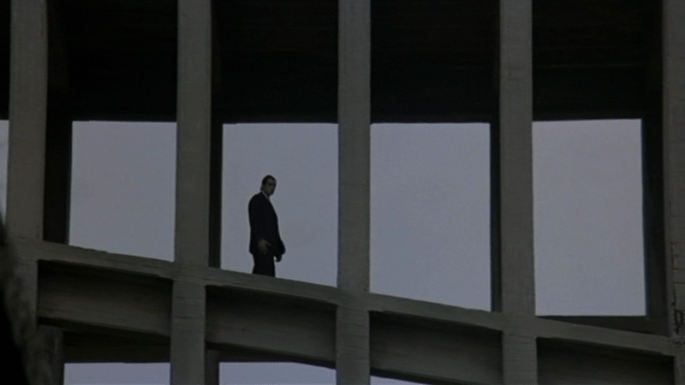
The cinema of M. Night Shyamalan has always been marked through thick and thin by the embrace of warmth where exploitation and cynicism would simply be an easier alternative. With one foot planted firmly in reality and the other in the prospect of paranormal phenomena (and even more specifically, its application in our daily lives), the Philadelphia native’s latest endeavor is simultaneously a sign of purest artistic reinvigoration and a most welcome return to form; magnificently erratic form at that, and most remarkable of all is how the man who was once dubbed “The Next Spielberg” balances his own conflicting muses amidst the deliberate chaos.

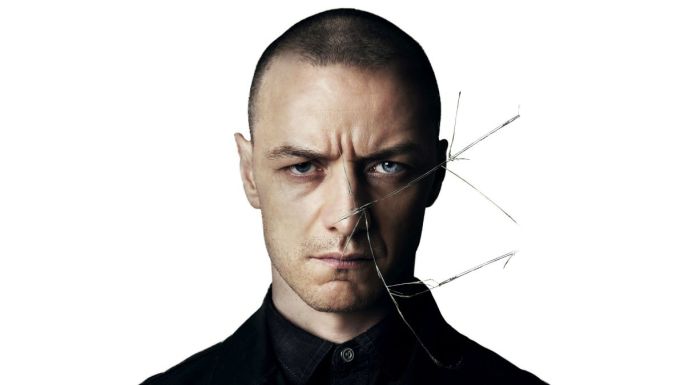
James McAvoy is absolutely intoxicating as Kevin Wendell Crumb, a man suffering from dissociative identity disorder who kidnaps a trio of teenage girls – Claire (Haley Lu Richardson), Marcia (Jessica Sula) and Casey (Anya Taylor-Joy) – after a particularly awkward birthday party and keeps them confined to a single locked cell underground for some undisclosed higher purpose, revealing more and more about his intentions through his various alter egos – including but not limited to a nine year old boy, an obsessive compulsive psychopath, and a woman with protective instincts not unlike a mother – which are constantly competing against one-another for dominance.

12001

Due in no small part to the exquisite precision of “It Follows” cinematographer Mike Gioulakis, the walls, floors, closed and opened doors of Kevin’s seedy lair never breathe easy; in fact, they retain an intensely suffocating, sleazy ambience throughout that fits Shyamalan’s intentionally alienated (and perhaps alienating) direction like a glove. The director has always displayed a knack for manipulating the frame in unorthodox ways, and it serves him well for the purpose of immersive claustrophobia.  Even the open air of the outside world feels tainted by palpable pulsating paranoia, as if escapism is utterly inexcusable in this disturbed domain.

A few of the more gleefully over-the-top indulgences in the film’s delightfully demented third act might prove to be slightly problematic, especially in regards to how seriously the connection between mental illness and childhood abuse is treated on a whole, but it makes for an unusually compelling spectacle. Only the final moments, which clumsily attempt to meld the preceding events with the enduring legacy of an earlier Shyamalan joint similarly about harnessing supernatural abilities, feel out of place in an otherwise exceptional example of exercising restraint and boundless, off-kilter ingenuity in equal measures.

brody-split-12001

As much as he goes for the jugular when he wants to get weird, it’s Shyamalan’s intuitive empathy that makes his best work utterly unforgettable. “Split” doesn’t claim to have all the answers to some of its bigger problems, and one suspects at times that its tongue may be planted firmly in its cheek, but it nevertheless stands as a satisfying exploration of inhuman actions and their potentially horrific repercussions; a mostly successful attempt to envision “monsters” inherent in our society as something more than that. It’s true that we’ve been here before, and so has M. Night, but what can you say? He’s damn good at what he does and it’s rather exhilarating to see him get in touch with the same unique gifts – as a storyteller, a preserver of perversion and perception alike – that he exhibited at a more tender age and elaborate on them in such a thoroughly satisfying way.

THE LOVE WITCH (2016) – A REVIEW BY RYAN MARSHALL


the-love-witch1

Anna Biller may be one of the cinema’s last truly exceptional auteurs. Sure, the term itself is thrown around a lot, and sure, it’s particularly challenging to register as one when dealing almost exclusively in homage. Somewhere and somehow, Biller – born and raised in Los Angeles – finds a way, but regardless of the individual viewer’s tolerance for the director’s unabashed parading of influences and intent, her voice is positively one-of-a-kind.

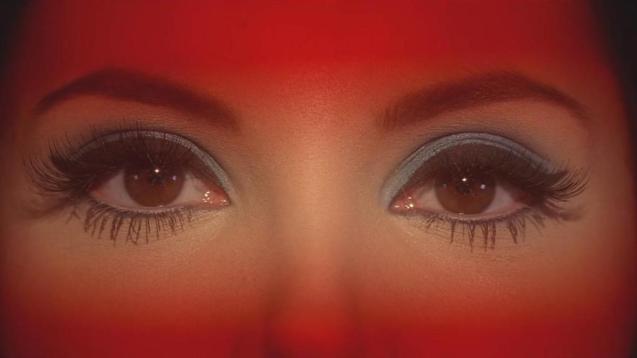
Nearly an entire decade may have separated Biller’s feature debut (2007’s VIVA) and her latest oddball offering, but the same powerfully progressive voice remains unmistakably in-tact. THE LOVE WITCH concerns, as you could probably guess, a contemporary (?) witch Elaine (Samantha Robinson) pursuing a suitable male companion by means of black magic. Holed up as the new tenant in a gorgeous Victorian-style mansion, she practices making potions, but as we learn from her voice-over narration in the coastal cruise intro, Elaine’s still got a lot to learn.

The heroine’s quest is initially driven by the desire to be desired – preferably by all who should happen upon her but more specifically by men. The trail of gullible bastards she leaves in her wake – including but certainly not limited to suave University professor Wayne (Jeffrey Vincent Parise), a police inspector (Gian Keys) perplexed by the prospect of a tampon submerged in a bottle of piss, and even her own ex-husband – ultimately leads the witch on a path to reclaiming individuality that is as hysterical as it is genuinely insightful.

elaine_wayne[1].jpg

Firmly rooted in a bygone era (or several), the film features, among other seductive delights, exceedingly over-the-top performances, vintage costumes and décor, music borrowed from the likes of classic gialli A LIZARD AND A WOMAN’S SKIN and THE FIFTH CORD (both scores courtesy of Ennio Morricone), and M. David Mullen’s photography is spot-on in recreating even the most seemingly insignificant ticks of 60’s/70’s occult-sleaze cinema to a tee. It’s a seamless evocation of everything it claims to be, but there’s much more to this beatific brew than an ornate toast to the silver screen of yesteryear.

A great artist is always flourishing, and flourish is precisely what the writer/director/set and costume designer/composer/etc. has done in her absence. True to such developments, this is perhaps the furthest extension of Biller’s vision that she’s graced us with yet; more interesting than the obvious parallels between a witch and the contemporary female is, well, just about everything else regarding the patriarchy that the film dares to challenge under the guise of an amusing, consistently vibrant entertainment.

elaine_tearoom[1].jpg

Biller would rather her indignant criticisms fester on the surface, which allows for a remarkably articulate confrontation of gender stereotypes that feels empathetic where it could have just as easily been perceived as preachy. THE LOVE WITCH neglects to give off the impression of a work influenced too much by invasive contempt, instead seeking to explore equality by way of humility. A medieval-style wedding late in the game, complete with faux duels and a puppet-toting jester, holds the key to the filmmaker’s stance on both passion and passiveness alike. Elaine’s maturation, twisted as it is, is hardly glorified; in fact, she’s just as damned as her predominantly male victims. Nevertheless, the argument appears to be that it’s time the sorceress had her day as well, however demented and morally conflicting it may be.

It’s easy to surrender to the film’s campy, hallucinatory charms but Biller’s decision to balance her immanent cinematic fetishisms with such a biting, subversive critique is the true stroke of genius. Getting lost in WITCH’s candy-colored ocean is one thing, extracting individually invaluable observations is another. Once again, the filmmaker reaches into the past in order to look to the future – that of man, woman, and our relationship with one another – and the culmination of this particular excursion speaks for itself, loud and clear. It announces its spectacular existence until it knows that it doesn’t have to, and if this is indicative of where we’re headed, we might just be in good hands.

elaine_rug_011

THE CRAZIES (1973) – A REVIEW BY RYAN MARSHALL

vlcsnap-2017-01-27-16h36m23s083

The most obvious point of comparison that could be made between THE CRAZIES and anything else from George Romero’s early catalogue is to the quintessential NIGHT OF THE LIVING DEAD, and though such connections are mostly apt on a surface level, the former is more or less its own hypnotically horrific beast. Romero’s obsessions lie in the ramifications of claustrophobia – in both smaller communities and the country at large – and communication breakdown; he possesses a natural talent for melding characters with their respective environments. Here, that very relationship seems more detrimental than ever, as if regressing to animal instincts is our only hope of escaping from a grotesquely testosterone-fueled reality.

Coming out the gate with a bang, this allegorical tale of small-town terror begins with a pair of young siblings running around the house, trying to scare one-another, only to discover that their father has gone mad and killed their mother. This is soon revealed to be the first case of a virus, known by government officials as “Trixie”, which has spread throughout the town (Evansville, Pennsylvania to be precise) via its water supply and turns all those infected into hollow, bloodthirsty shells of their past selves.

vlcsnap-2017-01-27-16h37m08s471

Generally speaking, two narratives unfold simultaneously, and they rarely overlap in the more obvious and expected ways. The first concerns firefighters David (Will McMillan) and Clank (Harold Wayne Jones), the former’s nurse girlfriend (Lane Carroll), father and daughter (Richard Liberty and Lynne Lowry, respectively) as they attempt to make it out of town alive. The second oversees the military’s arrival, take-over, and subsequent research into the origins of Trixie. Everyone’s just trying to survive in their own way(s) – and as can be expected, desperate measures often lay bare the ugliness of the human spirit for all to see.

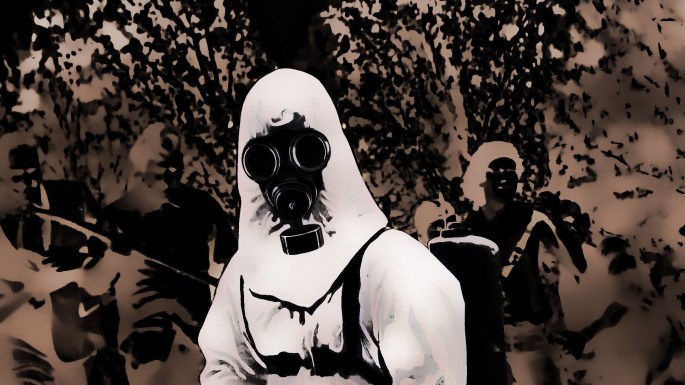
This motif is compelling in its own right, but Romero has enough intuitive gifts as a storyteller to understand that it shouldn’t – and doesn’t – make up the whole of the film’s thematic backbone. Even so, the way in which the tight-knit community receives this mysterious outbreak is genuinely chilling; with farmers, a priest and even a grandmother embracing the hysteria in their own madcap way. Hazmat suit-wearing soldiers burning a wife directly on top of her husband says as much as civilians hiding their infected loved ones in the upstairs of their houses.

vlcsnap-2017-01-27-16h40m15s654

Of course, it’s the precision and ardor with which the Pittsburgh native stages the chaos that makes it so utterly unforgettable. Romero cut everything from his legendary debut in 1968 to 1982’s CREEPSHOW himself, and his unmistakable eye for borderline experimental editing serves his apocalyptic visions well. At first sight, it’s just messy; and yet, manic as it ultimately is, Romero (with the aid of DP Bill Hinzman, who fans might know better as the first zombie in the cemetery from NOTLD) maintains steady tension throughout on a relatively low budget, never surrendering to his own more illogical indulgences. Sure, there’s some shoddy lighting during the nighttime scenes, and those edges are arguably rough, but it seamlessly achieves the ambiance of a terrifying, wholly unpredictable anxiety attack – a considerable feat, indeed.

The so-called Godfather of the Dead is seldom very subtle in regards to who, what, and where his social critiques are aimed at, but when he feels the need to be louder (the on-and-off patriotic score) in certain respects, he knows when to simmer down in others. THE CRAZIES excels as much in unapologetic anger as it does in individually compelling moments of near-absolute silence, soaking in its surroundings so thoroughly to the point where one feels that it is truly inseparable from the human life is sustains. As can be expected, it isn’t devoid of the Romero’s typically pitch black sense of humor, but its lingering paranoia has aged like wine; mighty fine. If nuclear holocaust is in the cards, we can’t say we weren’t warned – so explicitly, exquisitely warned.

vlcsnap-2017-01-27-16h35m59s787

CAT SICK BLUES (2016) – A REVIEW BY RYAN MARSHALL


There’s an audience out there (make that far out there) for contemporary exploitation cinema of the most unadulterated variety – I like to believe I fit in there somewhere and somehow – and it’s easy to imagine that there are those who go for this kind of stuff based purely on unorthodox spectacle. This is the market that Dave Jackson’s demented CAT SICK BLUES seems to be best suited for, and while it’s certainly not devoid of merit for merely curious parties, it can be inferred that for most, it bumps up against established limits a bit close for comfort.

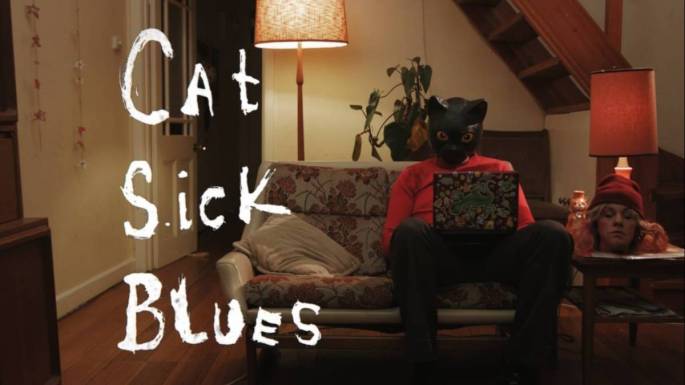
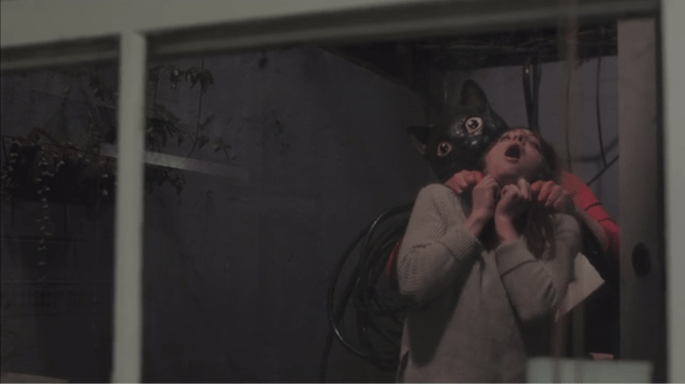
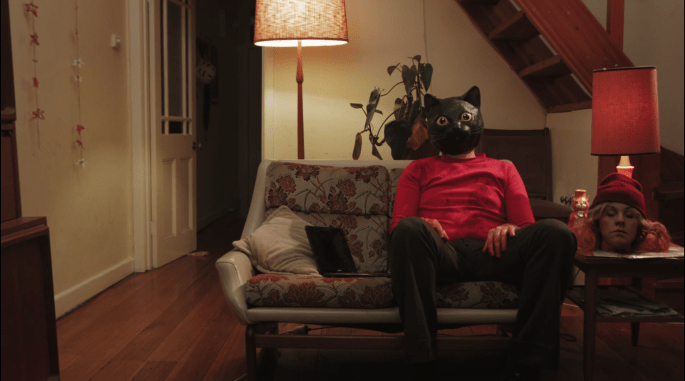
That’s of course by design, as this bizarre cinematic concoction concerns a sleazy serial killer who runs around wearing a black cat mask as well as a grotesquely long strap-on dildo while suffering from frequent seizures; you see, he’s attempting to collect the blood of nine female victims so that he may resurrect his recently deceased feline friend. It’s an inspired and often amusing premise, and though Jackson seems to embrace the humor inherent in its dark heart, it nevertheless walks a fine line between fluff and ferocity.

505


Take, for instance, the case of Claire (Shian Donavan), a young woman who the psychotic anti-hero Ted (Matthew Vaughan) takes a shine to after learning that they share similar grief over an absent pet in their respective lives. Soon after she’s introduced, the poor woman is subjected to a particularly fateful afternoon when an unstable fanatic intrudes on Claire’s privacy; killing, an internet sensation, by twisting its neck on accident before raping her on camera.

Much like the majority of the more affecting sequences, this is mostly just exceedingly uncomfortable, and then Jackson dares to show the animal being thrown out of the apartment window and hitting the pavement; initially bordering on unbelievable, and it more or less stays that way, but the sight of the corpse/doll rebounding off the bike racks on its way down brings to mind fond (and hilarious) memories of the infamous suicide from Euro-trash classic ZOMBIE HOLOCAUST, in which some sorry son of a bitch flings himself out a hospital window and loses his arm in the end, only to have it reattached in the next shot.

3130.PNG


The experience on a whole wears this kind of conflicted emotional pallet proudly, inspiring almost as many uneasy laughs as prolonged cringes. There are attempts at blatant social commentary (regarding the relationship between technology and the people) which remain almost remarkably one-note throughout and Claire’s potentially poignant sub-plot is unfortunately undercooked at best and genuinely tasteless at worst, with Jackson’s script failing to explore her trauma in any sort of subtle or satisfactory way. Sure, one could argue that the sleaze aficionados of old were hardly any more enlightened (in the traditional sense), but they certainly had more going on, and acknowledged that some semblance of humanism has to be brought with them into such transgressive terrain. The world the film envisions is neither condensed nor elaborate enough to support this kind of weight, and so it simply collapses under it; reveling in its own ugliness until it achieves only tedium.

The narrative essentially moves full speed ahead until it hits the home stretch. Jackson, a native Aussie, delivers the icky goods in spectacularly over-the-top fashion, generously rewarding viewers for their patience, and to his credit it’s impressive what unsavory horrors the writer/director and company are able to achieve on a low budget. This applies to the rest of the film as well; it looks nice most of the time and Jackson is able to get decent performances from his main cast. Nevertheless, it’s a film of several severe tonal and moral miscalculations, most of which are clearly intentional but no less debilitating. The brutal murders committed at the hands of Ted become increasingly more visceral as his spree goes on, resembling music videos at a certain point (what with slow-motion and insane amounts of hyper-stylized bloodshed) and let’s not even get into the synth score, which seems to imply heavily nostalgic undertones.

630.PNG


It’s just not a good look for a film that constantly prides itself on how utterly distinctive it is, though mileage may vary based on one’s tolerance for this specific brand of pandering – which, to be fair, doesn’t necessarily define the experience, but it would be better off without it. It’s all a bit exhausting in the end, though not necessarily in the way(s) that its makers intended. There’s enough ambition here to garner interest in whatever Jackson has in store for the foreseeable future – in hopes that perception and perversion balance each-other out in the next outing and that the brain need not be checked at the door.

MANCHESTER BY THE SEA (2016) – A REVIEW BY RYAN MARSHALL

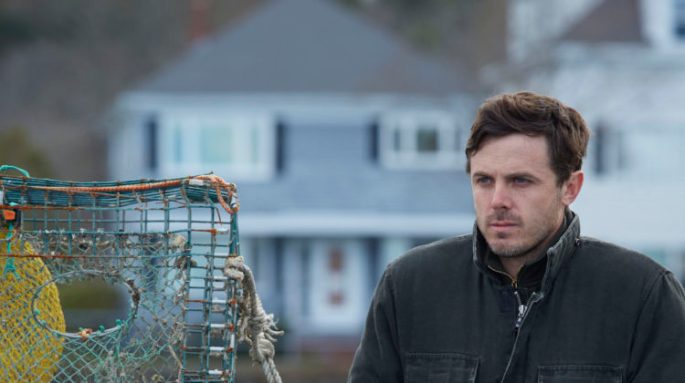
The finest films tend to engage fervently with their specific time and place; entertaining the bigger picture as well as those more effectively intimate spaces. For Lee Chandler (Casey Affleck), the solitary sad sack at the heart of Kenneth Lonergan’s devastatingly beautiful MANCHESTER BY THE SEA, the coastal Massachusetts town of the film’s namesake – which he is summoned to upon the death of his brother Joe (Kyle Chandler) – represents the abode of old bones, a wretched abyss from which he never truly escaped.

This painfully resonant examination of grief has the tendency to feel almost operatic – due in no small part to Lesley Barber’s unforgettably somber score – but it is perhaps even more indebted to the director’s history as a successful playwright. With this being his third feature at the helm, it would appear Lonergan has established a comfortable middle ground between naturalism and artifice; conversations and evocatively-lit interiors evoking the essence of a hang-out flick at times, but without the same redemptive tranquility, and the most ample truths are recouped from awkward silence.

manchester-by-the-sea-1[1].jpg

Lee seems to carry the weight of the world on his shoulders from the moment he’s introduced, serving the unappreciative tenants of the apartment complex where he works as a janitor. On top of that, his relationship with the bottle proves somewhat detrimental, and agonizing flashbacks bleed into everyday reality so seamlessly, and constantly, that the transitions tend to appear rather subtle at first. It’s only when Lee returns to his home town and discovers that he is to become the legal guardian of his brother’s teenage son Patrick (Lucas Hedges) that the most painful memories of all permeate his psyche once again.

This extended flashback is as close to a revelatory moment as the viewer is going to get, but granted a better understanding of Lee’s history, it’s much easier to empathize with his plight. He’s simply a man attempting to subvert his sins, stuck in his own moderately self-imposed limbo. For him, Manchester signifies suspicious stares, possibly seeing Randi (Michelle Williams), Lee’s ex-wife who shares in his suffering, on the streets, and having to confront several decades worth of honest failures; it’s no longer just a picturesque setting.

854full-manchester-by-the-sea-screenshot

One look into Affleck’s cold, inconsolable eyes inspires immediate compassion; everyone here is marvelous, but he’s never been better, and in less capable hands the character could have been a one trick pony. His world is a deeply disturbed one, and though there’s plenty of comic relief on the road to redemption, it remains a carefully crafted crescendo of melancholy. If it’s even there to begin with, the happy ending is well out of reach, but what Lonergan provides in its place is even more enduring. As a celebration of the little moments that can either make or break who we are – like, for instance, a panic attack brought on by frozen meat – and who we’re meant to be, MANCHESTER BY THE SEA is an invaluable testament to inordinate darkness giving way to understated wisdom as well as progress in its many, obscured forms.

THE HEROES OF ARVINE PLACE (2014) – A REVIEW BY RYAN MARSHALL

There’s solace to be found in an engaging, down-to-earth drama rich with the sort of essential humanism that seems all but lost in the current cinematic climate, and that’s precisely how one might describe Damian Lahey’s frequently endearing THE HEROES OF ARVINE PLACE. At just 74 minutes, it’s akin to a warm hug from a close friend or relative following a considerable absence and is equally as delightful.

Cullen Moss is marvelous as Kevin, a single father of two young girls who’s just trying to make it through the holidays after losing both his job and his car on the same day. He adopts an attitude of impressive tenacity, and over the course of the next few days, the immensely likable widower does everything in his power to make something – anything – work. Between a Christmas party at his place, a sister in the psych ward, a meeting with one of his literary idols which could determine the future of his hopeful future as a successful children’s book author, and the promise of presents for his daughters; Kevin’s got a lot on his plate, and there’s more to come.

cullen1

Sure, there’s little here that will challenged a seasoned viewer but this doesn’t appear to be Lahey’s priority, instead honing his energies towards painting an effective portrait of a down-on-his-luck guy during one of the most stressful seasons. There are hints of a deeper underlying sadness here, but it’s kind of admirable how Lahey avoids discussing these things in thorough detail at any point; much like the charming character at its core, the film is just trying not to dwell.

Considering its restricted budget, THE HEROES OF ARVINE PLACE could be seen as a testament to the individual and collective talents on both sides of the camera, and how sometimes a decent feel-good yarn is just fine when crafted with such obvious care. Lahey’s direction and script are assured, and he’s able to get some excellent performances from his cast; Tarina Reed’s photography is simple but not lacking formal depth; and Craig Moorhead’s editing is consistently efficient.

489089306_640[1].jpg

The score, from Brian Jenkins and Naarah Strokosch, is decidedly of a whimsical variety and sometimes threatens to sour the experience ever so slightly; it can feel, at times, almost as if the film is unsure of just how much it wants to indulge in fantasy and/or reality. It’s a middle ground that can feel too close for comfort, but given the material, it feels appropriate. There’s an intuitive empathy and sense of humor here that drowns out these little blemishes, and though the film may wear its heart on its sleeve to a fault, the pull of warmth reigns supreme in the end. It’s fairly easy to surrender to the film’s undeniably uplifting energies when one is in such positively personable company as this.

ZEDER (1983) – A REVIEW BY RYAN MARSHALL

Circa 1956, young Gabriella is brought to the estate of Dr. Meyer, who believes that the girl harnesses supernatural powers and intends to put them to good use during one fateful night. After accompanying her to the basement, where she begins writhing about on the dirt-covered ground and is then attacked by something unseen when left alone, Meyer deduces that the area they’ve stumbled upon is what is known as a “K Zone” upon realizing that the man who infamously studied them, Paolo Zeder, was buried underneath the house some years ago.

vlcsnap-2017-01-06-12h48m02s515.png

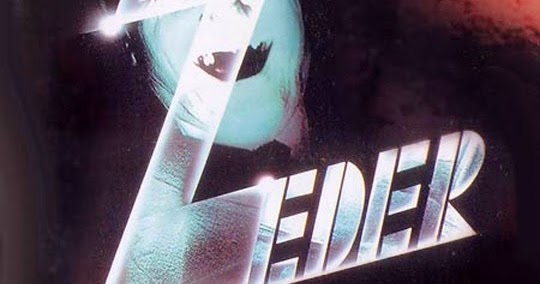
Favoring petrifying ambiance over surface-level schlock, though impartial to entertaining the latter when apt, Pupi Avati’s horror films are characteristically infused with a kind of sinister, otherworldly energy; as if the man responsible for them always has one foot in reality and the other in the spirit world. In this sense, ZEDER (aka REVENGE OF THE DEAD) is straight from the heart of its maker, being (among other things) a film that deals directly with those disconcerting voices from beyond and why they are necessary to a superior understanding of our surroundings.

Following such a uniquely enigmatic opening, we are introduced to Stefano (Gabriele Lavia), a young novelist living in present day (1983) Bologna. He comes home one day to a surprise anniversary gift from his wife Alessandra (Anne Canovas) in the form of an old typewriter which he can’t help but test drive that same evening. Upon closer inspection of the ribbon housed inside the apparatus, he discovers an essay written by the aforementioned Zeder and becomes increasingly obsessed with the man’s studies.

vlcsnap-2017-01-06-12h49m50s260.png

Similarly to Avati’s masterful giallo THE HOUSE WITH THE LAUGHING WINDOWS, the unlikely hero often feels alone in the world. Whenever Stefano attempts to inquire about Zeder and his finds, even the most reputable members of society turn him away; and when he decides to take matters into his own hands, they tend to get a bit dirty. He must be careful who he talks to, for their lives may be endangered if he does so.

vlcsnap-2017-01-06-12h48m38s711.png

Without showing too much, Avati manages to get deep under your skin; take the K-Zones, for instance, which have something to do with reanimation, and yet that specific “something” is never explored in explicit detail. However, it’s undoubtedly better off this way. The horrors of ZEDER, beautifully rendered as they are, seem rooted in paranoia and guilt on a profoundly national scale; the film is like an exorcism for all of Italy, albeit one where the cleansing of body and soul is secondary to the painful possession of Avati’s fellow countrymen and how they attempt to evade it. While Stefano pursues the mystery at hand, Gabriella (now an adult) and Meyer scheme – it would be unwise to trust that anyone, even those closest to you, are not in on it in some way. It’s an angry, poignant, and indeed genuinely frightening state of affairs – assuming one is enticed by implication.

European horror films tend to wear their imperfections on their sleeve, and ZEDER is no exception. Franco Delli Colli’s (RATS: NIGHT OF TERROR, MACABRE, STRIP NUDE FOR YOUR KILLER) cinematography is luscious, Riz Ortolani’s score is typically fierce, the make-up effects – particularly for the undead – are refreshingly subtle, and yet there are flaws to be found in Amedeo Salfa’s editing. On a whole, the film flows exquisitely – but once in a while there’s an abrupt transition which threatens to soil an otherwise divine experience; and although this is easily redeemed, it can’t help but pale, if only slightly, in comparison to its aforementioned cinematic brethren as a result.

vlcsnap-2017-01-06-12h49m37s733

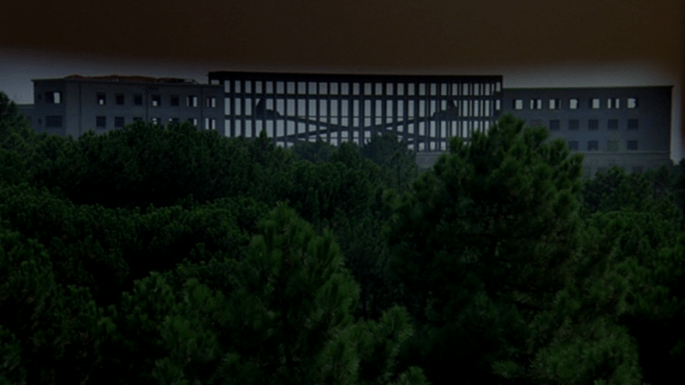
But oh, what sights Avati has to show you. From the abandoned soon-to-be-hotel which marks the high point of Stefano’s journey and the dusty tunnels running underneath to the young couple’s sleek, secure apartment, it’s remarkable how distinctive each location feels and how well the director utilizes them throughout. One feels alienated regardless of where they find themselves; the world is wired by phantoms. As is the case with some of the best, this is a film about man’s relationship with time and place in unison with his personal affairs; while the romance at the center of the story gives it a much-needed emotional backbone, it’s ultimately a vision of our ever-changing landscape and how we choose to confront those sudden transitions.

Admittedly, this could potentially disappoint viewers expecting a gorier, more straight-forward zombie yarn, but what a thing to behold. Avati has contributed something that goes far deeper than exceptional genre cinema, knowing all too well that mystery and tragedy alike account for many of the things in life which are most difficult to swallow. Some questions cannot be answered, or so the director seems to conclude at the end of this macabre tale. We can only seek so much truth before we bump up against our own limits.

vlcsnap-2017-01-06-12h52m16s121.png

ANTIBIRTH (2016) – A REVIEW BY RYAN MARSHALL

vlcsnap-2017-01-05-15h06m12s248

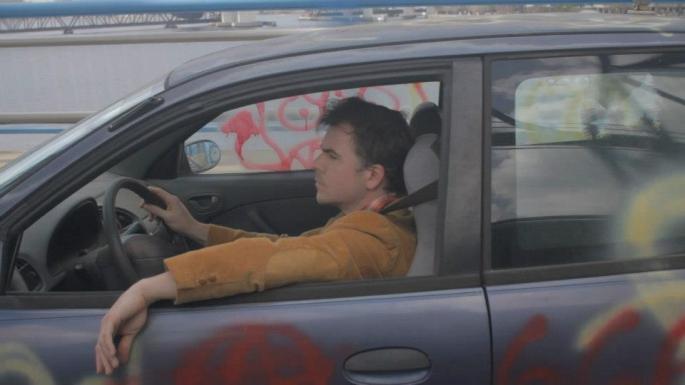
It wouldn’t be impractical to compare ANTIBIRTH, the messy (in more ways than one) feature debut from accomplished visual artist Danny Perez, to the unexpectedly PCP-laced joint or to the scatter-brained B-side to a profoundly psychedelic experience. Indeed, it’s precisely this kind of abnormal out-of-body ambiance that the film aspires to; evoking heavy shades of David Lynch, Cronenberg and many others as it stretches its admittedly thin concept to grotesque, kaleidoscopic extremes.

Brimming with all sorts of hazy, shamelessly abrasive potential from frame one, this grungy yarn concerns the plight of wayward trouble-maker Lou (Natasha Lyonne), who wakes up one morning after a night of heavy hedonism to the most sickening sensations. These are later discovered – first, by Lou’s best friend Sadie (Chloe Sevigny) – to be the symptoms of pregnancy, but neither of the two can recall the events which transpired that previous evening.

vlcsnap-2017-01-05-15h06m45s708.png

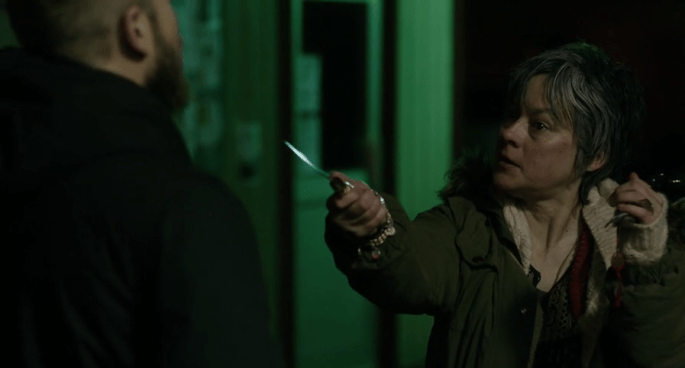
There are at least a dozen movies attempting to co-exist here, but taking precedence over most others – at least for a while – is the hang out picture. The viewer assumes a sort of sleazy fly-on-the-wall perspective for roughly the first half of the surreal narrative, watching as Lou’s situation get worse and the she engages in mundane daily routine. Suddenly, disturbing visions of obscured memories begin to plague the poor party-goer’s mind, and upon the arrival of a peculiar old woman (Meg Tilly, delightfully bat-shit) in the small mid-west town, things take an unexpectedly twisted turn.

Perez is probably best known for his collaborations over the years with Animal Collective, in which he provided the band’s heady tunes with an appropriately imaginative visual companion (see the excellent and often overwhelmingly terrifying  “visual album” ODDSAC from 2010), so it’s no secret that his first foray into more grounded narrative work would be an ambitious one. Like that earlier film, ANTIBIRTH dabbles almost exclusively in gross body horror and Perez certainly has the means of dishing it out when the time comes, which is – rather unfortunately – too late in the game.

vlcsnap-2017-01-05-15h03m52s457.png

Allowing for a better understanding of his past work, one might get the sense that Perez is more interested in exceedingly strange ideas and imagery than he is in people. This doesn’t always have to be a bad thing, but when the anti-heroine of the director’s abstracted world is one-dimensional at best and insufferable at worst, and those around her aren’t much better off, a gory good time then becomes an unnecessary struggle to locate anything of genuine substance. One could argue that the film’s indifferent attitude is embedded in its punk DNA, but when it accumulates to something as frequently unfunny, off-putting and shoddily constructed as this, it can be best chocked up to sheer ineptitude.

As expected, Perez is able to cook up some spectacular moments throughout – the idea of a quiet Michigan town teeming with experimental military activity and extraterrestrial conspiracy is an enticing one, and that sound design is pretty neat – but his stylistic flourishes end up being more debilitating – and, dare I say, amateurish – than exhilarating (the sequences set in the “Fun Zone”, a family-friendly pizzeria seemingly converted from an aging dive bar, are a fine example of this). Where it clearly wants to revel in oddity and excess, the film remains stagnant and can barely stay afloat, meandering on an already fairly weak foundation. It’s a leisurely, sedated, albeit colorful descent to whatever lies beneath the bottom of the barrel; you’re free to take that as you will, but the effort it requires to find something even vaguely inspiring isn’t really worth it.

vlcsnap-2017-01-05-15h06m06s710.png

CHRISTMAS EVIL (1980) – A REVIEW BY RYAN MARSHALL

vlcsnap-2016-12-22-11h36m22s546.png

There are more than a few sleazy stocking stuffers out there for those who prefer to take their holiday-themed cinema with a dash or two of unadulterated dementia, but few are as distinctive and genuinely unnerving as Lewis Jackson’s CHRISTMAS EVIL aka YOU BETTER WATCH OUT. Often (understandably) mistaken for a slasher pic and perhaps even better known for being championed by John Waters as the infamous trash connoisseur’s favorite Christmas movie, one might innocently stumble upon this gem and be pleasantly surprised when it turns out to be equally perceptive and perverted rather than simply the latter.

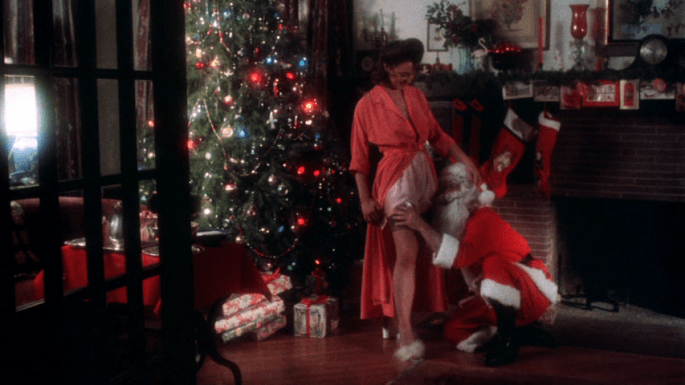
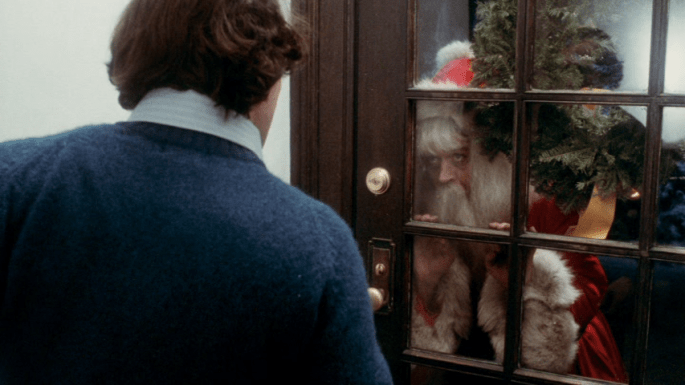
Harry Stadling (Brandon Maggart) saw mommy kissing Santa Claus once as a young boy and hasn’t been the same since; understandable, seeing as immediately following the incident, Harry runs up to the attic and cuts his hand on the glass from a broken snow globe. This fateful night gives way to an adulthood that could be described as unconventional at best and utterly unmanageable at worst. Harry finds it difficult to balance his public and private lives, working an often demoralizing position at a local toy factory by day and counting down the days until Christmas whenever he’s at home.

vlcsnap-2016-12-22-11h34m20s241.png

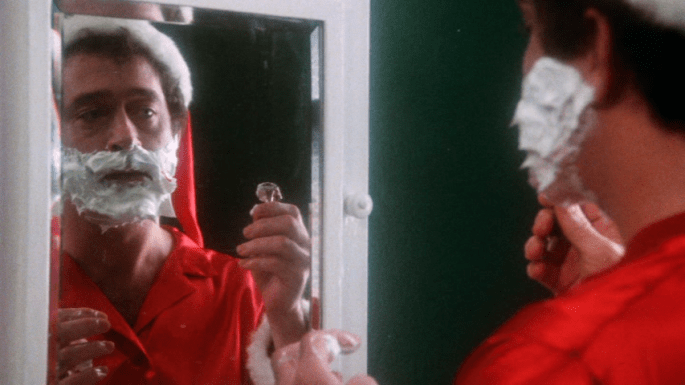
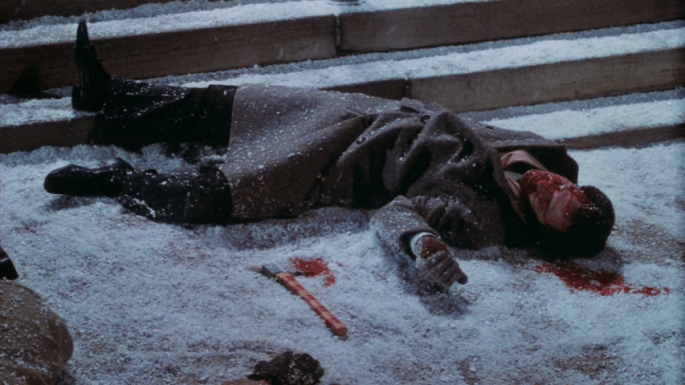
This is soon proven to be far, far more than merely a vice for the deeply disturbed introvert. Harry seems to envision himself as Santa Claus in the flesh, and as such, he not only works hard to perfect his costume before the big night but also keeps detailed records of the good and bad kids on the block. It all gets to be more than a bit creepy real quick, and when Christmas Eve comes around, Harry has slipped out of reality and into the deepest depths of decline, completing his transformation into Saint Nick in order to spread holiday spirit far and wide. What begins as an odyssey built on good cheer soon descends into a bloodbath as Harry finds himself unable to cope with the general (adult) public’s apathy toward his favorite holiday, culminating in an intense closing act straight out of FRANKENSTEIN.

Jackson’s film is a decidedly peculiar one; imperfect, for sure, especially when indulging in the kind of grotesque theatrics that have led viewers to label it as a “slasher” film over the years. But when one considers genre trappings, it is perhaps the film’s ability to transcend them which makes it so genuinely bewildering. Above all else, this is a character study – a sad and scary one at that – and we’re trapped inside of Harry’s sick, delusional head for the entire duration. It’s so close to our waking reality (or at least up until the bat-shit insane finale), that there’s no shame in squirming when Jackson wants us to.

vlcsnap-2016-12-22-11h33m59s402

Exploitation films – and even better, intimate studies of the fractured human psyche disguised as exploitation films – are undeniably at their best when supported by a great deal of talent both in front of and behind the camera, and this is where CHRISTMAS EVIL is at an advantage. The weight of Harry’s off-kilter world is one of intricate pleasures thanks to the gorgeous cinematography of Ricardo Avonovich (Murmur of the Heart, That Most Important Thing: Love, Missing), which renders the character’s madcap gift-giving and murder spree as previously internalized phantasmagoria and provides all that came before with the distinct savor of morbid normality. There’s also some clever editing on display throughout, and Jackson’s direction is both efficient and composed; only in a few brief moments do we get a glimpse of a film from a man who isn’t completely in control of his vision.

This mostly refers to the more visually horrific sequences, which include but are not limited to a toy soldier’s sword skewering a human eyeball (enough to make Lucio Fulci blush) and throat slashing by way of the golden star at the top of a Christmas tree. It could certainly be argued that these moments succeed in enhancing the film’s “weird” factor, which is already way off the charts to begin with, but in context they are not only abrupt but over-the-top in a way that would suggest they were hardly the first thing on Jackson’s mind. The conclusion to this macabre tale, in which Harry burdens his poor brother Phil (Jeffrey DeMunn) and his family while on the run from an angry mob, also feels slightly rushed. Luckily, the director’s heart is in the redemption of his dysfunctional misfit, and he finds the perfect way to cap it all off.

vlcsnap-2016-12-22-11h36m33s143

While CHRISTMAS EVIL will hardly be everyone’s cup of spiked eggnog, it comes equipped with more than enough heart, humor, horror, and genuine pathos to hold its own even against the inevitable naysayers. It is a fine film with an ambitious concept, one that it does not always execute tastefully, but one that is nevertheless explored in a consistent, satisfactory manner. Maggart is so good here that you find yourself surrendering to his solitary psycho; as ugly as his actions may be, we know Harry only has the best intentions deep down, which in itself inspires quite the palatable moral dilemma. Jackson’s film may unabashedly deal heavily in steaming coal, and its exterior may at first appear to be a needlessly nasty one, but through its own unique cocktail of extremism and empathy it achieves a kind of strange humanity, one that allows it to thrive beyond the realm of mere curio. For all the talk of it being an anti-Christmas picture, it certainly does its best to keep the spirit alive in its own wacked-out way. Quite the exquisite feast of discomposure, and a terrifically twisted treat for all sorts of adventurous parties.

vlcsnap-2016-12-22-11h36m02s658

UNDER THE SHADOW (2016) – A REVIEW BY RYAN MARSHALL

UNDER THE SHADOW, the eerie slow-burn chiller that marks the directorial debut of Babak Anvari, indulges in a particularly dangerous dance. It’s a dance of many genres, many aspirations, and many roadblocks, and to be fair, Anvari almost gets us to a point where everything comes together to initiate a satisfying whole. In this sense, he’s already ahead of the game, even if the Iranian-born filmmaker doesn’t always seem content to be playing the field.

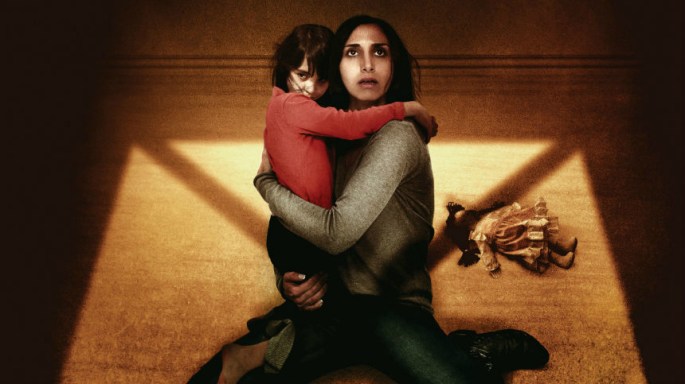
Set in post-revolution Tehran during the 1980’s, this macabre tale begins as former medical student Shideh (Narges Rashidi) is denied the opportunity to continue her studies as a result of being involved with Leftist activists in the past. At home, Shideh has plenty to worry about as it is – her husband Iraj (Bobby Naderi), a doctor, tends to openly undermine his wife’s achievements and their daughter, Dorsa (Avin Manshadi), often retreats to a fantasy world that she believes in a bit too much – while the war rages on outside.

undertheshadow1-1600x900-c-default1

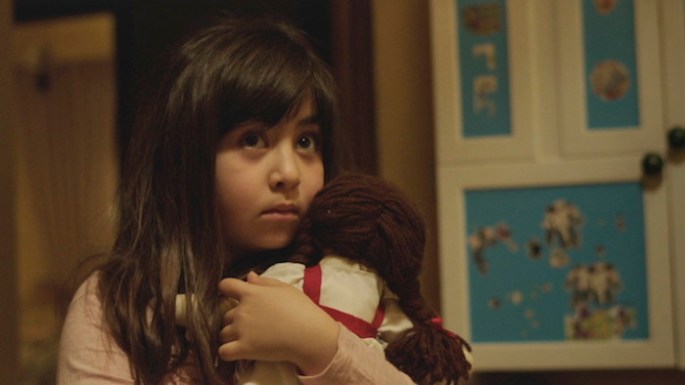
Iraj’s medical assistance is needed in the heart of the combat zone and he must leave his family in the city for an extended period of time. Soon after his departure, a missile lands on the apartment directly above theirs, resulting in the death of one of its elderly tenants. Following the incident, Dorsa’s behavior becomes slightly erratic. She loses her favorite doll and constantly searches for it inside and outside of the apartment, believing that its disappearance is linked to a malicious spirit known as a “Djinn”, which may have possessed their home.

Shideh’s initial reaction is to chalk it up to an over-active imagination, but then terrifying visions begin to plague her fragile psyche during both night and day alike, and she finds herself, much like her child, no longer able to discern reality from fantasy. Anvari handles her struggle to reclaim individual strength and identity with grace, crafting an at times clever and never less than engaging feminist parable. In terms of social-political context, it uses its monster as an obvious metaphor for the ramifications of war, and it’s in this realm of lingering, impactful terror that UNDER THE SHADOW exceeds.

under-the-shadow1

It’s also here that it tends to stumble. The film is at its brooding best when embracing the power of implication, patience, and silence all at once, but its alternating concepts of fear seem, at times, contradictory. On one hand, it makes a conscious effort to be intelligent genre fare, seldom resorting to cheap shock tactics and utilizing the widescreen compositions to their maximum, anxiety-ridden potential; but there are also far too many instances in which initially effective sequences amount to little more than underwhelming jump scares. It’s as if whenever Anvari has something beautiful he feels the need to destroy it. This unfortunately also goes for the (thankfully few) glimpses the viewer is granted of the “Djinn” itself, which – mostly due to some pretty lame CG effects – are more ridiculous than blood-curdling, save for a genuinely ominous moment involving an old man and the colossal cracks in the apartment ceiling.

This isn’t a bad film, in fact it’s mostly a pretty good one, but it clearly wants to be so much more than that and there’s absolutely no reason why it shouldn’t be. It’s well made, performed, conceived, overall well-intentioned but one can’t shake the feeling that it’s the work of a director caught up in certain contemporary genre trappings, the kind that tend to obscure a poignant message. Anvari wants to have his cake and eat it too, which doesn’t always have to be a bad thing. It’s a sign of clear ambition and, especially in his case, talent. But next time he’d be best to count his blessings and roll with them rather than drive himself into such a dark, discouraged corner as this.