By J.D. Lafrance
After his debut film Strictly Ballroom (1992), writer/director Baz Luhrmann never looked back, creating lavish, ultra-stylish musicals William Shakespeare’s Romeo + Juliet (1996) and Moulin Rouge! (2001), and let’s not forget that $5 million Chanel commercial starring his cinematic muse, Nicole Kidman. With, Australia (2008), he decided to take national pride to a whole new level by creating a sweeping romantic epic about his home country that takes place between the World Wars and was made by and starring Australians. With a budget in the neighborhood of $130 million, the pressure was on Luhrmann now more than ever before to deliver at the box office and, while underperforming in North America, it went on to gross $200 million worldwide despite a lukewarm critical response.
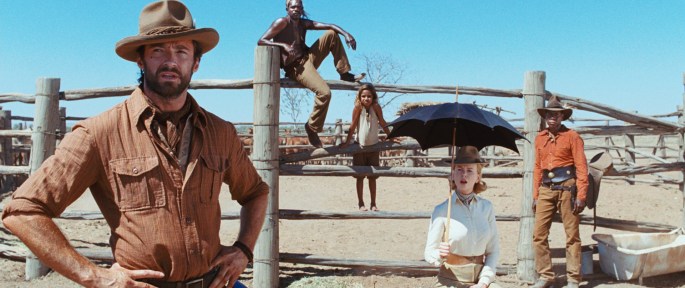
Lady Sarah Ashley (Kidman) is a headstrong English aristocrat who travels to Northern Australia in 1939 to meet her husband at their ranch Faraway Downs. Within a few minutes of arriving, she meets her guide to this strange new land, a man known as the Drover (Hugh Jackman), a hard-drinking, two-fisted Australian version of a cowboy. They take an instant dislike to each other: she thinks that he’s crude and uncultured and he thinks that she’s too prim and proper.
They arrive at Faraway Downs to find her husband dead (apparently at the hands of an Aboriginal) and the ranch in disarray and in danger of being foreclosed. Mr. Carney (Bryan Brown), the local tycoon with a monopoly on the local economy, has his right-hand man, Mr. Fletcher (David Wenham) try to sabotage Lady Ashley. In order to save Faraway Downs, she has to drive 1,500 head of cattle to Darwin and so she enlists the help of the Drover. Along the way, they befriend a young Aboriginal boy named Nullah (Brandon Walters) whom she protects from being taken away and forced to assimilate with white folks.
As with his previous films, Luhrmann populates Australia with broad, stereotypical characters and tells a classic story. The film revels in archetypes: Ashley is a pure, upstanding woman, the Drover is the rugged western hero, Fletcher is the dastardly villain, and Nullah is the adorable child who narrates the story. As he proved with is previous films, Luhrmann has an uncanny knack for casting. Who can forget the undeniable chemistry between Leonardo DiCaprio and Claire Danes in Romeo + Juliet and the sparks that flew between Ewan McGregor and Nicole Kidman in Moulin Rouge!? He’s at it again with this film with the casting of Hugh Jackman and Kidman as the romantic leads.
Jackman finally fulfills those early comparisons to Clint Eastwood, playing the Drover as a tough, dependable hero who’s not afraid to show his vulnerable side. He’s never been more charismatic as he proves to be equally adept at the physical demands and the emotional range that the role requires. No one knows how to photograph Kidman quite like Luhrmann. She looks stunning, even covered in a layer of dirt and dust from a cattle drive. At first, her stuffy English aristocrat comes off as a cartoonish stereotype but as her character becomes acclimatized to the country and she develops a bond with Nullah, she becomes warmer and more empathetic.
Beginning in 1939 and climaxing with the Japanese bombing of Darwin in 1942, Luhrmann’s Australia mixes the larger-than-life melodrama of Gone with the Wind (1939) with the exciting cattle drive in Red River (1948) and with a dash of The Wizard of Oz (1939). His film clearly harkens back to the kind of cinema that they just don’t make any more with very little CGI used and everything built from scratch and on location. Australia is the kind of ambitious Technicolor epic that might have been made by John Ford or George Stevens. It is a marvel of absolutely stunning cinematography – only Luhrmann could make the desolate outback look vibrant and alive. He alternates between sun-drenched day scenes and night scenes that appear to be impossibly illuminated by the stars.
One should not go into Australia expecting realism. Luhrmann presents a mythologized take on his country. Love him or hate him, you have to respect Luhrmann for not being afraid to wear his heart on his sleeve. He’s arguably the most romantic filmmaker working today with the possible exception of Wong Kar-Wai. And with Australia, he has made an unabashed love letter to his homeland on a grand scale.
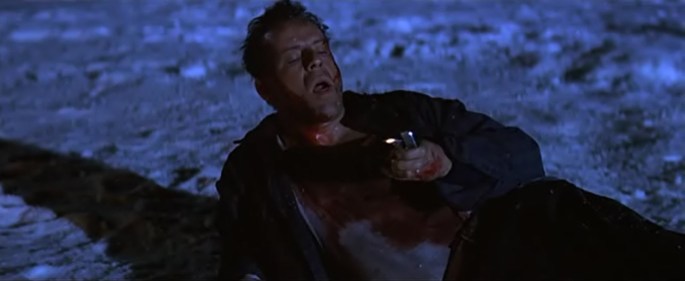
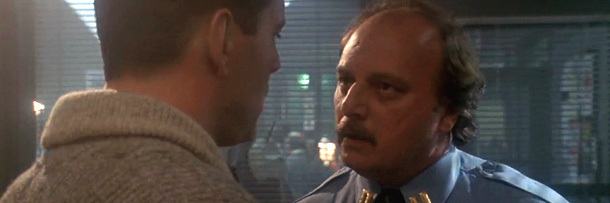
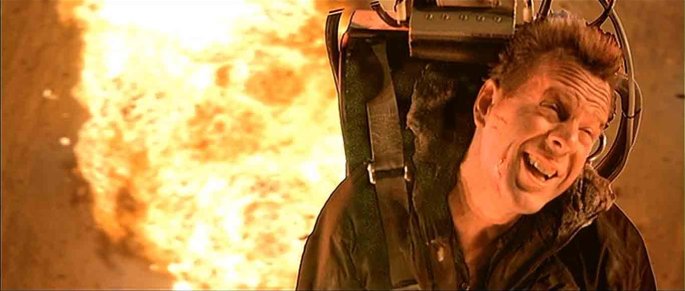 Watching Die Hard 2 again is a potent reminder of a time when Willis still cared about acting and didn’t phone it in like he’s done in the last two movies in the franchise that don’t deserve the Die Hard moniker. Most fans agree that they should have stopped with Die Hard with a Vengeance (1995), which was a fitting way to end things on a high note but as long as they make money and Willis is up for it there will be another installment in this tired franchise.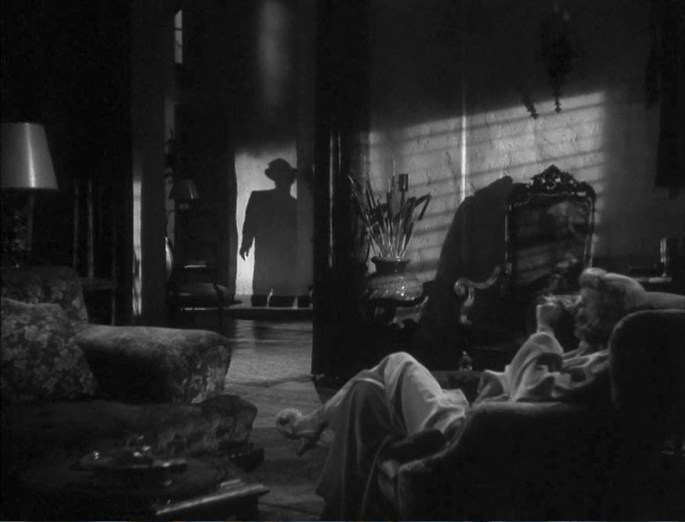
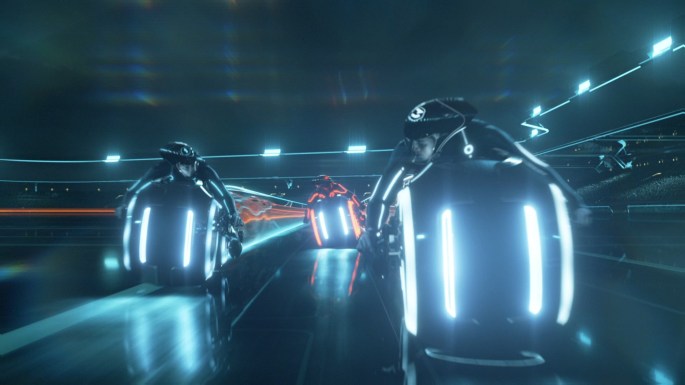
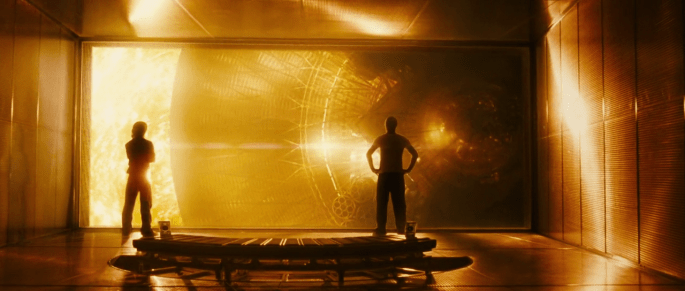
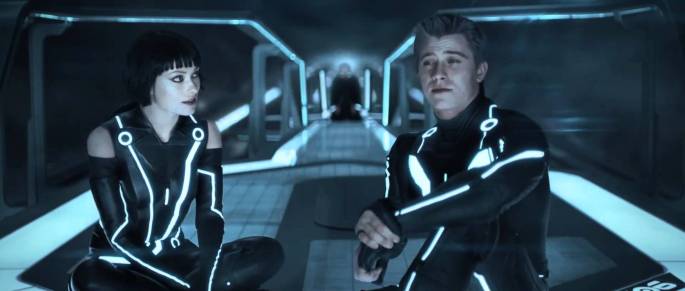 Tron: Legacy replaces the “information just wants to be free” message of its predecessor with a “sins of the father” theme as Flynn attempts to stop Clu, his Frankensteinian creation, and repair the damage done between him and Sam. Tron: Legacy manages to make this world and its characters accessible to those not familiar with the first film by basically rehashing its plot, blow-by-blow, which may disappoint fans. However, it does feel like a continuation of the first film with all kinds of references to things that happened in it. There is also a rather nifty cameo by a notable character actor that hints at a possible villain for the next film, if this one makes enough money. Of course, there is the usual criticism that the dialogue is weak, the story is formulaic and there is a real lack of characterization – all issues critics had with the original film. Tron: Legacy certainly lacks in these areas also, but like the first film, the visuals are so impressive, so captivating in the way they immerse you in the computer world, that you tend to ignore the flaws, relax and enjoy the ride.
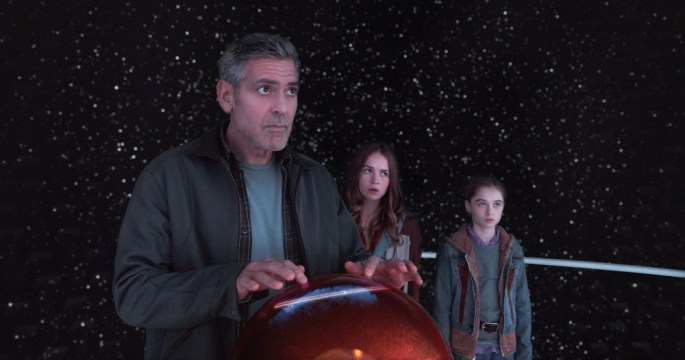 That being said, Bird and his collaborators should be commended for getting this passion project made. Tomorrowland exists and will have the chance to outlive its detractors, where its box office failure will eventually mean little, and go on to inspired like-minded dreamers that find themselves identifying with Casey as opposed to the Nixs of the world. Bird’s film is a rare wakeup call against the negativity that permeates our culture, from the doom and gloom headlines that dominate any given news cycle to fashionable pessimism that permeates our culture.
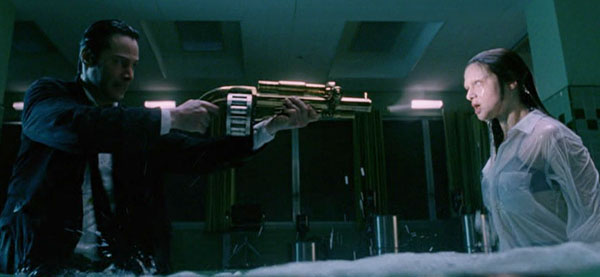
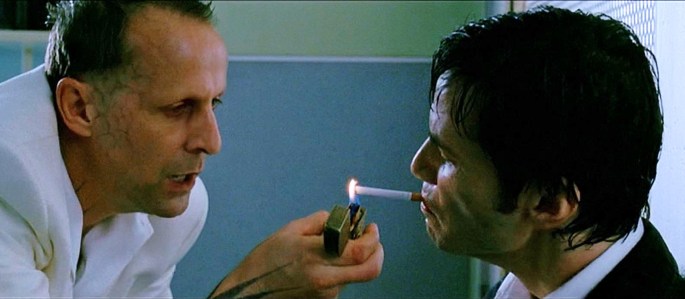 Despite the miscasting of Reeves and Weisz in the two main roles, Lawrence’s take on Constantine is actually quite entertaining, even more so if you haven’t read the comic book. However, fans of the series will have problems with the major liberties the filmmakers have taken with the characters – especially Constantine and Chas. Like most comic book adaptations, this film only sprinkles certain elements from the source material, just enough to vaguely resemble it while watering it down for mainstream consumption. It’s a shame because in the right hands, Constantine could have been more like Hellboy (2004) instead it’s closer to the flawed, missed opportunity of The Punisher (2004).
 Podcasting Them Softly