M. NIGHT SHYAMALAN’S SPLIT — A REVIEW BY NICK CLEMENT

3

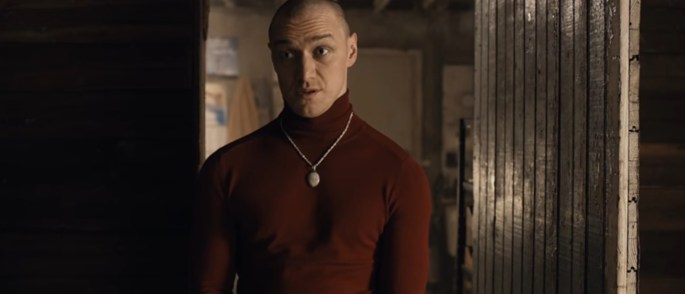
Split is creepy genre skewering from writer/director M. Night Shyamalan, and without spoiling the movie for those who haven’t yet had it spoiled, it’s the sort of picture that works as one thing for most of its running time, before morphing into something else by its conclusion; was this always the intention?  James McAvoy is totally wild and completely on fire in the leading role, or should I say, multiple leading roles as a guy battling intense multiple personality disorder, and possibly something else, while the trio of young actresses playing the captured girls are all excellent. There’s some great use of cramped-quarters camera placement by the inventive cinematographer Michael Gioulakis, and West Dylan Thordson’s unnerving music sets a hostile atmosphere that’s maintained all throughout the picture, despite it being a bit too long in the tooth; had this been a lean and mean 90-minuter I think it might’ve been more effective. But this is another low-budget success for Shyamalan, who seems to have recaptured his early-career groove.

2

I’m also not sure how smart or classy it was of Shyamalan to use sexually/emotionally exploitive content within the parameters of a silly genre flick; aspects to this film are sort of icky and surprisingly crass and ultimately unnecessary when thought about in retrospect. At least for me. Because this is another trick-narrative from the king of modern trick narratives, there could have been multiple ways for the story to develop, and I’m sort of at a loss to understand why he felt that certain thematic elements were necessary, especially when there’s  very little emotional payoff in these instances. Still, it’s lots of mostly ridiculous fun (if not as enjoyable overall as Shyamalan’s previous picture, the superb and totally wicked black comedy/horror item The Visit), Haley Lu Richardson continues to be extremely photogenic, and the reveal during the final scene will certainly make lots of people giddy with excitement over the various possibilities of what’s in store for this particular cinematic universe…
1

BEN WHEATLEY’S FREE FIRE — A REVIEW BY NICK CLEMENT

3

Thoroughly inconsequential and better off because of that, Ben Wheatley’s wickedly entertaining Free Fire is a film of no redeeming social value, and completely awesome fun during all of its extra-tight 85 minute run time. This film is EXACTLY as advertised: 15 minutes of set-up, and 70 minutes of violent, trigger-happy action with loads of black comedy thrown skillfully into the mix. Feeling like a Quentin Tarantino film stripped of his occasional pretension and bloat, this scuzzy, morally bankrupt little flick operates in guns-blazing mode with a massive smile on its face, with a bevy of colorful characters spouting off vulgarity-laced one-liners at each other. The premise is simple: an arms sale has gone awry due to a rather ridiculous but compelling off-screen incident, the two parties open fire on each other inside of an abandoned and derelict warehouse, and nobody is truly safe at any point during the raucous narrative.

1

Wheatley co-scripted with his wife, Amy Jump, and it’s obvious that they are a terrific creative team. Armie Hammer and Sharlto Copley steal the show, Brie Larson has fun kicking some ass, and everyone else clearly had a ball with the down and dirty material. Laurie Rose’s excellent widescreen cinematography opts for inventive camera placement with a sense of heightened reality, with Jump and Wheatley’s razor-sharp editing never wasting a moment. While not as thought provoking as Wheatley’s A Field in England, as downright twisted as Kill List, or as subversive as last year’s descent into societal hell High-Rise, the boisterous and purposefully obnoxious Free Fire exists simply because its creators wanted it to exist, and sometimes, cleverly made throwaway items like this can be both enjoyable for the audience and important for the filmmakers as a way of pushing towards something more substantial or groundbreaking.

2

LAURENT BOUZEREAU’S FIVE CAME BACK — A REVIEW BY NICK CLEMENT

1
From where I sit, this is essential viewing. Currently streaming on Netflix and based on the best-selling book by Mark Harris, the mega-engrossing three part documentary series Five Came Back traces the valiant efforts of John Ford, William Wyler, John Huston, Frank Capra, and George Stevens and their front-line, balls-of-steel filming of WWII and its many battles and facets. Director Laurent Bouzereau assembled some of our finest modern filmmakers, including Steven Spielberg, Paul Greengrass, Francis Ford Coppola, Lawrence Kasdan, and Guillermo del Toro to narrate the episodes, all of whom bring intelligence and reverence to the material and these extraordinary men who put their lives on the line to show the world what was going on during one of the most life-changing events in the history of humanity.
2.jpg
Meryl Streep’s elegant narration is a natural fit with the info-packed material, while Thomas Newman’s thoughtful musical score hits all of the right emotional marks. The filmmakers reviewed over 100 hours of newsreel and archival footage, as well as over 40 documentaries and training films which were created by the Big Five who are up for discussion. I’m fascinated by Hollywood’s relationship with war-time narratives, and this documentary was illuminating, sobering, and extremely entertaining. Extra tidbit: there are 13 WWII-era documentaries discussed by name during Five Came Back, and Netflix is also streaming all of those works as well. For history buffs, cinema buffs, and anyone who values the world around us, this is a MUST SEE.
3

SHAWN LEVY’S REAL STEEL — A REVIEW BY NICK CLEMENT

1

High-concept yet made with a refreshing lack of cynicism, the 2011 should-have-been-blockbuster Real Steel operates as a slickly designed fighting-robot movie that actually pauses for a real and honest story about a father and son trying to reconnect; this is old-school Amblin territory and producer-director Shawn Levy (Stranger Things) really nailed the tone. Written by John Gatins (Flight) with previous drafts done by Dan Gilroy (Nightcrawler), Les Bohem (Dante’s Peak), and Jeremy Leven (The Notebook), the film was adapted from Richard Matheson’s short story, and I really respected how this wasn’t yet another excuse to “blow shit up real good,” but rather, the creative team told an engaging narrative with fleshed-out characters and included an emotional pull that’s undeniable. It also helps when Hugh Jackman is your star; this guy is never not “on,” and in Real Steel, he dropped one of his best performances as a father who knows he’s capable of being a better person but still wants to be a total bad-ass.

2

On a technical level, this movie is utterly seamless, with photo-real and totally eye-popping visual effects that were spliced with practically built robots on-set, with an end-result that’s truly spectacular on a conceptual level. The robots fights were inventively shot by cinematographer Mauro Fiore (Avatar) and not over-cut by editor Dean Zimmerman (Stranger Things). And what makes this movie really work is that the filmmakers never overstuffed their plot with needless scenes of idiotic destruction and pointless time-wasting. The action scenes pop but they don’t overtake the scenario, and again, Jackman is so wining in this role that it becomes a movie that’s hard not to root for. Costing $110 million, Real Steel grossed $300 million worldwide, with only $85 million of that coming from American ticket buyers, which is a massive shame as this film is SO much better than so many of the other four-quadrant offerings that have been barfed up on screen of late. I actually wouldn’t bemoan a sequel.

3

ANDREI KONCHALOVSKY’S RUNAWAY TRAIN — A REVIEW BY NICK CLEMENT

1

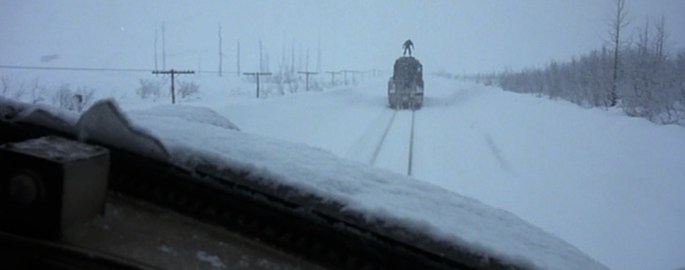
Directed with iron-fist intensity by Andrei Konchalovsky, the 1985 actioner Runaway Train is easily one of the best films to bear the Cannon Films/Golan-Globus logo. There’s just as much devastating personal introspection as there is macho bluster and bloody fisticuffs, with the narrative combining aspects of the prison and train film with a story about friendship, sacrifice, honor, and living life by your own moral code. Starring Jon Voight and Eric Roberts as escaped convicts who board a runaway train that’s careening towards the remote and snowy wilds of Alaska, both actors were Oscar nominated for their wildly passionate performances, and were matched by Rebecca De Mornay as an unlikely railroad worker caught up in the madness.

2

Everything about this movie feels real and dangerous and forbidding, with the busy yet focused screenplay never taking a rest for a moment; Djordje Milicevic, Paul Zindel, and Edward Bunker got writing credit, having adapted an original screenplay by Akira Kurosawa. Look for Danny Trejo (Heat, Machete) and Tommy “Tiny” Lister (No Holds Barred) in their feature debuts. Alan Hume’s rough and muscular cinematography made terrific use of open and closed spaces, with all of the action centered on the train delivering high-adrenaline excitement that will make your palms sweat, while an early prison riot gets up close and personal in the melee. Trevor Jones’ thundering and operatic musical score is the cherry-topper. The final moments of this film are lump-in-your-throat perfection.

3

CANNABIS CINEMA — BY NICK CLEMENT

1

Marijuana and the movies have had a long, mostly potent relationship. Cannabis has inspired any number of cinematic artists, and it’s important to note how public perception of pot has changed throughout the years, with evolving laws and a recent explosion of smoker-friendly content. The social hysteria that greeted the infamous 1930’s exploitation film Reefer Madness can now of course be laughed at as an overreaction to a plant that has progressively become less demonized.

4

The Cheech and Chong films will forever be seen as stoner comedy gold, providing inspiration for modern efforts like Harold & Kumar, Half Baked, and Dude, Where’s My Car? Easy Rider is the definitive counter-culture item that opened the doors for more square viewers, while the 1970’s ushered in a new crop of pot movies, including Milos Forman’s American debut Taking Off, Ralph Bakshi’s animated Fritz the Cat, Cisco Pike with Kris Kristofferson, and the more obscure Dealing: Or the Berkeley-to-Boston Forty-Brick Lost-Bag Blues, a heady mix of paranoid thriller and laconic romance featuring an early John Lithgow performance.

8

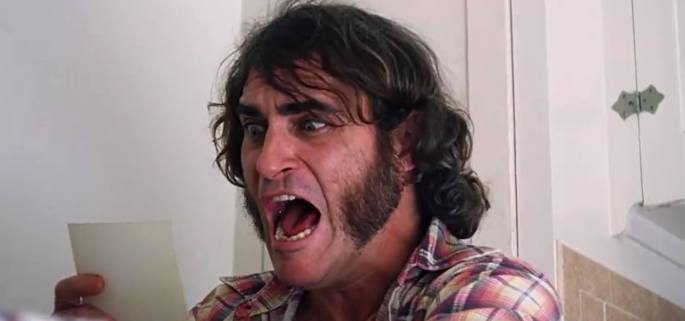
Marijuana has been used in an erudite fashion by filmmakers, woven into the narrative like a character in Curtis Hanson’s masterpiece Wonder Boys, the iconic Coen brothers sensation The Big Lebowski, and the underrated Leaves of Grass. Oliver Stone’s entire cannon feels especially indebted to ganja, as does Terry Gilliam’s psychotropic adaptation of Hunter Thompson’s Fear and Loathing in Las Vegas. Self-professed cannabis enthusiast Robert Altman left a misty haze over much of his work, most notably The Long Goodbye, California Split, and M*A*S*H, while his protégé, Paul Thomas Anderson, crafted a pot-infused ode to private eye cinema with Inherent Vice. And F. Gary Gray’s sly, smart, and hilarious pot comedy Friday still stands as one of the most influential cannabis narratives.

5

The Seth Rogen/Judd Apatow connection has helped to legitimize marijuana to the masses, with box-office hits Pineapple Express and Knocked Up majorly emphasizing marijuana, treating it like a character as much as any of the leading actors. Musical biopic spoof Walk Hard: The Dewey Cox Story has some hilarious moments concerning reefer, the two Neighbors movies nearly give off a contact high, and the meta-comedy This Is The End carried a lit-joint torch of pro-pot components. And let’s not forget Danny McBride getting stoned with some sheep in Your Highness, which shared the skunky whiffs of 80’s cult-classics Krull and The Beastmaster.

6

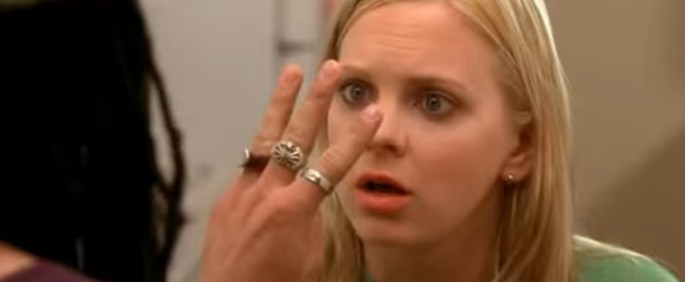
High school comedies have consistently thrown marijuana into the equation, with Amy Heckerling’s Fast Times at Ridgemont High and Richard Linklater’s Dazed and Confused standing as cultural touchstones. Nearly all of Kevin Smith’s films seem to have been born out of a cloud of bong smoke, with the Jay and Silent Bob characters feeling like zeitgeist-tapping creations of cannabis-happy comedy. Greg Araki’s Smiley Face with Anna Faris is one of the more perceptive and giggle-inducing movies to feature a stoner at its center, while Jonathan Levine’s unique 90’s time capsule The Wackness painted a portrait of people’s lives fully dictated by marijuana, and how it can be used both for good and bad.

2

JOHN MCTIERNAN’S THE THOMAS CROWN AFFAIR — A REVIEW BY NICK CLEMENT

3

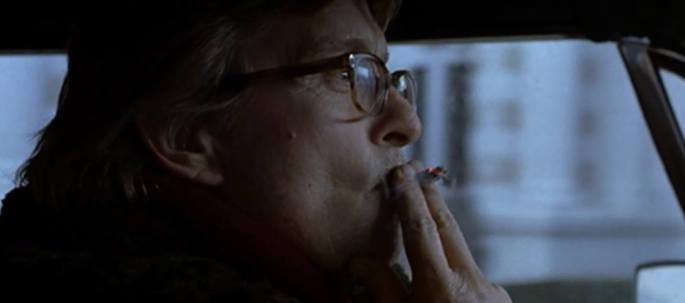
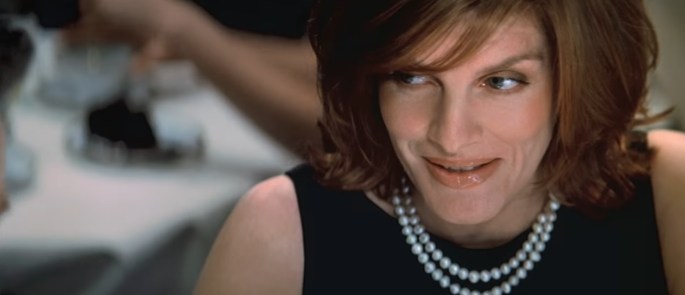
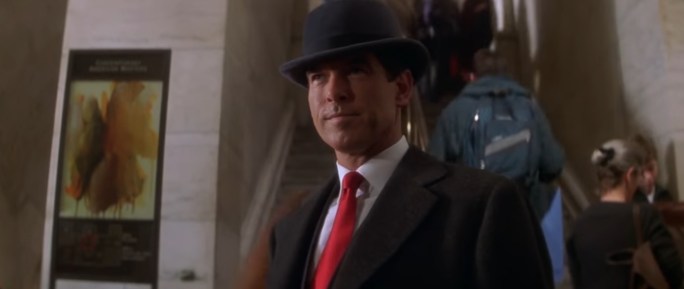
John McTiernan’s supremely entertaining and exceedingly stylish remake of The Thomas Crown Affair is a film that I saw multiple times in the theater, and absolutely love revisiting multiple times per year. I remember seeing this picture with my then-girlfriend-now-wife back in 1999. and the zest and sizzle that this film emits never ceases to amaze me. Pierce Brosnan was icy-suave perfection in the title role and Rene Russo was real-woman sexy in ways that Hollywood actresses rarely achieve; what a ridiculous run of movies she had in the 90’s. Brosnan and Russo shared tremendous on-screen chemistry in this glamorous, high-end romance, with Pierce looking lethal in his finely tailored suits, and Rene never more beautiful on-screen than she was here, with a wardrobe to die for and hair/make-up design that took her already wonderful physical attributes to the upper stratosphere. This is a movie about surfaces, and how attractive people are drawn to each other thru the thrill of the chase, always on the prowl, always primal, and always ready to pounce.

2

At the time, their much-buzzed-about sex scenes became a public talking point; in retrospect, it’s a further reminder of how crass on-screen lovemaking has become, as what’s show in The Thomas Crown Affair is steamy without ever being needless. And on a visual level, the film is just marvelous. The simplest of scenes are made to be extravagant by Tom Priestley’s muscular widescreen cinematography, with various shots that are souped-up to the max, and which absolutely pop on Blu-ray. The terrific finale with all of the lookalikes in bowler hats with Sinnerman on the soundtrack is the film’s final ace up its sleeve, and the tempo that McTiernan and editor John Wright set during this sequence is positively electric. There can be no debating that McTiernan’s visual style was one of the most influential when his career was in full swing, as he always brought a big-budget luster to all of his work, which was all stylish in its time but still holds up and never feels dated. Especially this movie.

17

The Thomas Crown Affair also has a stellar supporting cast including Denis Leary (so awesome here!), Fritz Weaver, Frankie Faison, Ben Gazzara, Mark Margolis, and Faye Dunaway, slyly cast as Brosnan’s therapist in a sultry, wink-wink performance that never felt tacky due to her legendary ability to hold the camera’s attention. Leslie Dixon and Kurt Wimmer’s screenplay was a perfect blend of character dynamics, action, suspense, and adult sexuality, with McTiernan no doubt bringing his own ideas into the mix, while Bill Conti’s jazzy and energetic musical score keeps the film’s pulse moving at an elegant pace. The Thomas Crown Affair hums along like a fine-tuned luxury ride, and many people (including myself) find it superior to Norman Jewison’s 1968 original, which is a totally fine piece of entertainment in many respects. There’s just something different about McTiernan’s version that has kept me engaged for nearly 20 years and I suspect that I’ll continue to enjoy watching this one for many years to come.

1

JOE CORNISH’S ATTACK THE BLOCK — A MINI-REVIEW BY NICK CLEMENT

2

I’m a huge fan of this slick and gritty urban sci-fi item with British flavor and lots of energy courtesy of director Joe Cornish.  Released in 2011 and starring John Boyega, Jodie Whittaker, Nick Frost, and many others, Attack the Block is an equal parts funny and nasty alien invasion movie that stays intimate rather than opting for the epic, telling a self-contained story that is fresh and original despite being a part of one of the most traveled genres imaginable. The practical effects and creature design are especially cool (love those mouths!) and cinematographer Tom Townend gave the flick a strong sense of visual style. The filmmakers also valued their R-rating while never going too far over the top.

3

WALTER HILL’S WILD BILL — A REVIEW BY NICK CLEMENT

1

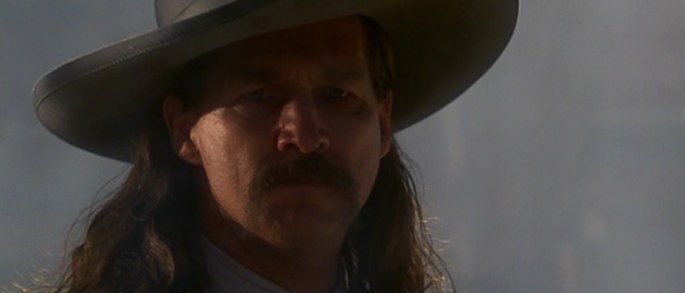
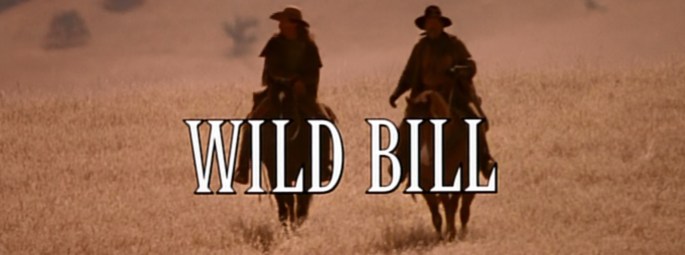
Despite an embarrassing theatrical roll-out where it grossed a dismal $2 million off of a $30 million production budget, Walter Hill’s 1995 oater Wild Bill is a damn fine piece of old-school western filmmaking, and while recently revisiting, it’s clear that the creative team on HBO’s Deadwood were paying attention in retrospect, as Hill’s sturdy and masculine work on this film would clearly pave the way for him being recruited to direct the pilot to one of the pay cabler’s greatest dramatic series. Featuring the perfectly cast Jeff Bridges as the titular hero, there’s a wonderful supporting ensemble including a fiery Ellen Barkin as Calamity Jane (should’ve been Oscar nominated), John Hurt, Diane Lane, Keith Carradine, James Gammon, Bruce Dern, Christina Applegate, James Remar and a sketchy and sweaty David Arquette as the trigger man who turned the legend’s lights off for good. Lloyd Ahern Jr.’s dusty cinematography captured the essence and lethality of the old west, while Hill’s poetic yet terse screenplay nailed the various, grizzled voices from the ensemble. Both Barry Levinson and Sydney Pollack were attached to direct at various stages in the film’s development, and the film was produced by Richard and Lili Fini Zanuck, and distributed by United Artists. Available on DVD; wish there was a Blu!

2

PHILIP KAUFMAN’S THE WANDERERS — A REVIEW BY NICK CLEMENT

3

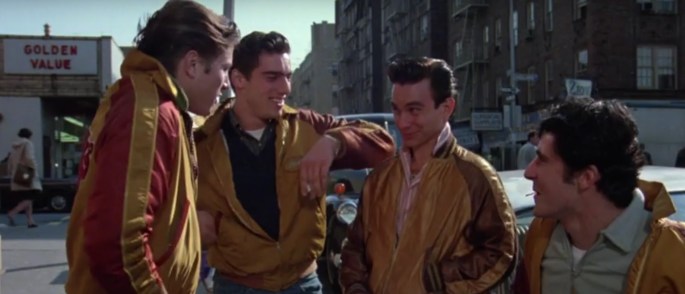
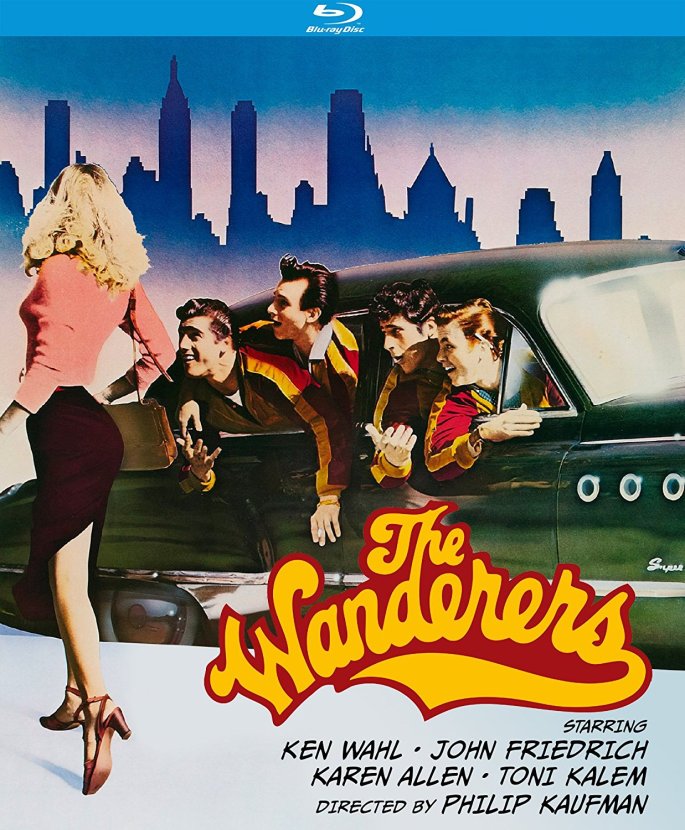
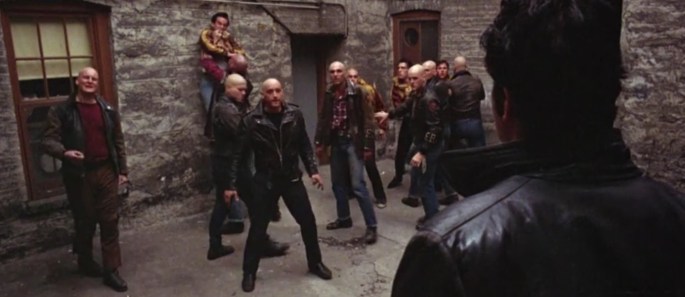
Philip Kaufman’s The Wanderers, financed by Orion and released in 1979 by Warner Brothers, is a special movie, and special for so many reasons. It defies genre, it’s got a live-wire spark that few other movies could ever match, and the blast of young, hot-blooded talent that this film featured in front of and behind the camera would be very hard to replicate. Grossing $23 million worldwide and receiving mixed reviews at the time of its release, this is the type of movie that just seemed to be born as an immediate cult classic, as it’s one of those idiosyncratic efforts that can’t really be compared to too much else, though intentionally or not, it did seem to set the stage for Walter Hill’s Streets of Fire. Co-written by Kaufman and his wife Rose, the film stars Ken Wahl, John Friedrich, Karen Allen, Toni Kalem, Jim Youngs, Alan Rosenberg, Dolph Sweet, and Linda Manz, and is set in the Bronx circa 1963, with the action revolving around a gang of Italian-American teens who go by the name the Wanderers, and how they butt heads with rival groups, including the Ducky Boys, Del Bombers, and the Fordham Baldies.

4

Based on the novel of the same name by crime scenarist Richard Price, the film had a long journey through development, with Kaufman finally able to get The Wanderers made due to his previous box office success, Invasion of the Body Snatchers. The depiction of American youth through the prism of the coming-of-age narrative was a perfect way to stage the passionate material, with multiple romances taking center stage of the story, which was peppered with wild and woolly bouts of fisticuffs-laden action and beat-downs. Cinematographer Michael Chapman stressed fluid, lateral movement, bold and vibrant color, and a shooting style that maximized energy at every turn. Stuart H. Pappé and Ronald Roose’s sharp editing kept a faced pace and was in perfect synch with the dynamic, pop-vintage soundtrack that was selected by Kaufman and Price, while Robert De Mora’s fabulous costumes were characters in and of themselves. John Hay Moore’s evocative production design is the icing on this particularly sweet piece of cinematic cake.

1

Kino-Lorber went all out with their two-disc special-edition of The Wanderers, presenting the theatrical cut of the film in 1.85:1 widescreen via a 2K scan, while a second disc includes Kaufman’s “preview cut,” which runs roughly seven minutes longer, and is featured in 1.78:1 and looks expectedly rough considering a likely obscure source. The main platter offers superb overall picture quality, with bright whites, deep blacks, and punchy reds, and always retaining that shot-on-celluloid texture that can easily be lost during digital conversions of older films; purple and gold look positively velvety here. The audio pops at every turn, with a 2.0 DTS-HD sound mix that feels especially well balanced during the various scenes of multiple audio sources being utilized. Special features include two commentaries, interviews, various featurettes and trailers, and a wonderful two minute text intro written by Kaufman that plays before the film begins, and which clearly demonstrates his love for The Wanderers.

2