ALEX LEHMANN’S BLUE JAY — A REVIEW BY NICK CLEMENT

3

Out of nowhere, the little gem Blue Jay has come along, and now making a top 10 list for 2016 is getting harder and harder to do. This is an extremely funny and poignant film that eagerly mixes tones, shot in silky black and white and utilizing the walking-and-talking format, essentially operating as a coyly sexy yet surprisingly sad two-hander with Mark Duplass (who also wrote the terrific script) and Sarah Paulson (fabulous, yet again). Certainly reminiscent of Richard Linklater’s Before Trilogy but definitely its own thing, this story of two, long-ago lovebirds who randomly reconnect moves in some surprising directions, and always allows for the narrative to be born out of the characters and the generous performances from the well-matched co-stars. Duplass is one of the busiest people in Hollywood, and this film is his first production to hit Netflix streaming in a multi-film deal; I’m so excited that he’s found an outlet for his particular brand of low-key cinema because there’s been very little (if anything) that he’s been creatively involved with that I haven’t enjoyed. Blue Jay ranks up there with Cyrus as the most accomplished item on Duplass’ resume.

1

Directed with grace and simplicity by first-timer Alex Lehmann, Blue Jay moves through its 80 heartfelt minutes with a great sense of atmosphere and casual style; Lehmann also served as his own cinematographer and camera operator, making great use out of the chilly California mountain locations. And look out for Clu Gulager in a rather wonderful scene at a convenience store that underscores the humanity at the heart of Duplass’ tricky script. Because the film revolves around two characters, there has to be something at the center of the narrative that’s important to the both of them, and because the final act involves confessions and realizations from their past (none of which I’d spoil), all that has come before it takes on even more meaning. When they first see each other, it’s clear that there’s something unfinished between the two of them; both Duplass and Paulson do a great job conveying emotion through casual facial gestures and awkward body language. And throughout the sometimes painful and often times very funny story, there’s an eternal bond that re-emerges between the two characters, becoming nearly unbreakable, even if their futures are uncertain.


MIKE MITCHELL’S SKY HIGH — A REVIEW BY NICK CLEMENT

1

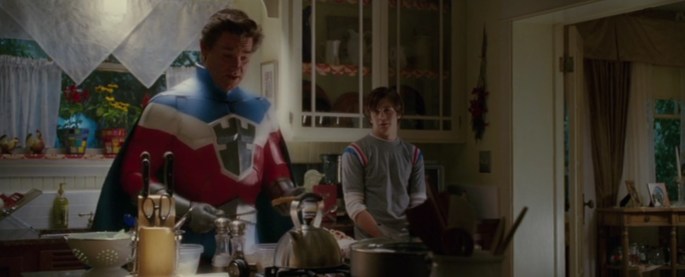
Sky High is a total blast of fun. Released in the late summer of 2005, this is basically a live-action version of Pixar’s The Incredibles, with Kurt Russell starring as a Super Dad whose entire family consists of various superheroes. Conceived in the 90’s by Paul Hernandez and fleshed out by Disney animation staff writers Robert Schooley (Hotel for Dogs), and Mark McCorkle (Monsters vs Aliens), the film was energetically directed by Mike Mitchell (Deuce Bigalow: Male Gigolo), and has an incident-packed narrative that doesn’t skimp on quirky character beats or wise-ass humor. It’s colorful, it’s witty, and all of the performances are in on the joke and totally earnest in all the proper ways. This is easily Russell’s most underappreciated performance as an actor, while Michael Angarano, Mary Elizabeth Winstead, Kelly Preston, Danielle Panabaker, Steven Strait, Cloris Leachman, and ex-Wonder Woman herself, Lynda Carter all offered great support.

2

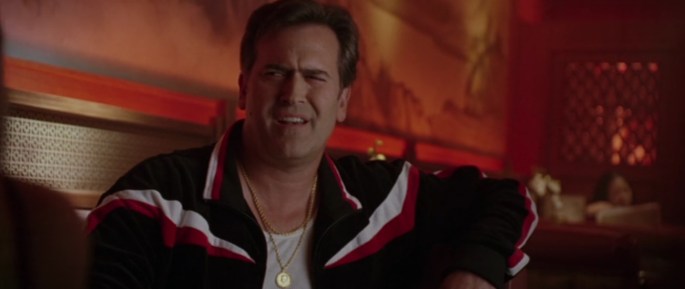
Oh, and Bruce Campbell basically runs away with the entire film. Shelly Johnson’s vibrant cinematography is a huge plus, while the score by Michael Giacchino hits all the proper notes of familial triumph. Sadly, Sky High didn’t blast off at the domestic box office, as it probably seemed too quaint for our current in-your-face society; it grossed roughly $65 million in the states. But there’s something about this film that makes it special in a sea of family-oriented content, as it’s got a genuine sense of gee-whiz fun running all throughout its core, with a playful script and spirited sense of direction. Currently streaming on Netflix, this is a delightful PG-rated entertainment that is perfect for everyone as it offers a little bit of everything to be enjoyed.

3

TERRY GILLIAM’S 12 MONKEYS — A REVIEW BY NICK CLEMENT

1

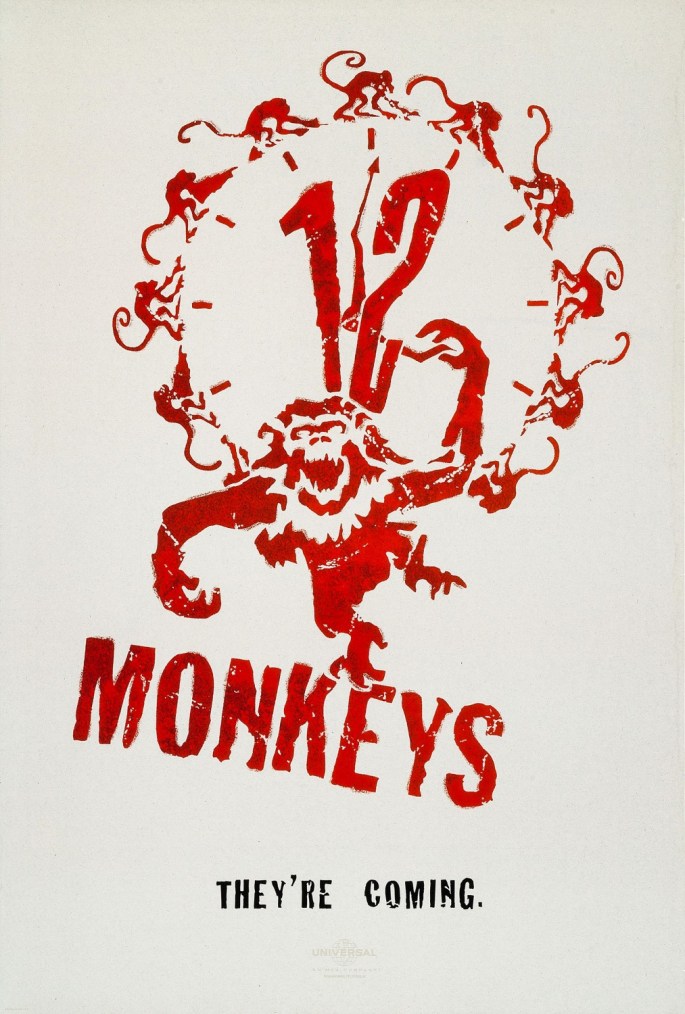
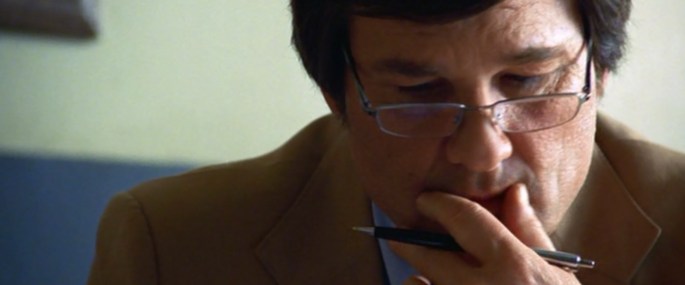
There are few modern science fictions films as accomplished as Terry Gilliam’s complex and hugely entertaining head-trip 12 Monkeys. It’s easily in my top five from Gilliam. He’s made so many great, wildly fun movies that peer into pure madness that it’s tough to rank them. But this one is easily one of his most accomplished, and it represented that rare time where his incredibly unique, independent minded vision meshed with a somewhat generous studio budget and the rigors of a corporate funded project that was far from a surefire hit during its early conception.Gilliam is a filmmaker of eccentric wit, both of the verbal and visual variety, who also loves to push things as far as he can go with this go-for-broke style, which is borderline lunatic at times if not downright surreal and nightmarish. Looking like it cost twice as much as it actually did (an impossible to imagine $30 million!) and hurtling the viewer through time and space and all manner of various settings and distinct atmospheres, 12 Monkeys is a wonderfully convoluted tale of potentially hazardous time travel, affecting romance, paranoid fantasy, and sketchy virus thriller.

2

The script’s ingenious final moments on board that plane along with that haunting final line – “I’m in insurance” – it still chills to the bone, and I loved how Gilliam took the brilliant screenplay (co-written by David and Janet Peoples; David Peoples also wrote or co-wrote Unforgiven and Blade Runner), which was an epic take on the phenomenal short film La Jetée, and fine-tuned it to his personal taste and form-pushing aesthetic. Sometimes, when a filmmaker is as wildly original as Gilliam, and they are working with material not authored by them, you get the sense that their talents aren’t being fully utilized. Not here. Everything in this film hits its mark, and in most cases, the performers and department heads went above and beyond the call of duty. Bruce Willis, rarely better, wasn’t the confident, normal “Bruce Willis” we’d been accustomed to seeing on screen when this film was first released. Constantly sweating or drooling or bloodied, massively vulnerable, possibly delusional, always volatile, and incredibly nervous, it’s his “out-of-control” moment as an actor, and it’s fascinating to see Gilliam pick and prod at his big Hollywood star, throwing him through the ringer, and ultimately getting one of the most emotionally accessible pieces of work from the actor.

1

Brad Pitt, who had a banner year in 1995 with his twitchy, psychotic work in this film as a ranting and raving mental patient and his slick, star-making turn in David Fincher’s Se7en, brought a diseased humor (“Drrruuuggsss!”) to his role of guy with serious daddy issues and some interesting notions regarding animal freedom. Madeleine Stowe was still looking hot and it’s yet another reminder of how good she was on screen, sympathetic from the moment we meet her, and involved in the narrative not just as “the pretty girl,” which was a quality that followed her in many of her acting jobs. David Morse and Christopher Plummer also offered, as per usual, memorable support, with Morse cutting an especially scary portrait of the calm and calculated antagonist. I’ve been fascinated by this movie ever since my dad picked me up early from school (last two classes were ditched as I recall due to a “family event” lol) about two weeks into its wide release (it was his second time seeing the film), and over the years, I’ve utterly abused my DVD with countless re-visits, and it’s amazing to see the film on Blu-ray after all of these years. Roger Pratt’s varied and incredibly stylish cinematography is constantly arresting and a treat for the eyes, while Paul Buckmaster’s never-leave-your-conscience original score still gives me the willies. Mick Audsley’s editing is miraculous when it’s all boiled down; there’s so much depth to the storytelling and imagery and themes and yet the film moves at a beautiful pace. 12 Monkey’s has aged gracefully and rather compellingly over the last 20 years, with its political and social message still firmly intact, and offering cinematic glories that easily match the trippiest, most daring offerings of recent years.

3

JOEL & ETHAN COEN’S THE BIG LEBOWSKI — A MINI-REVIEW BY NICK CLEMENT

3

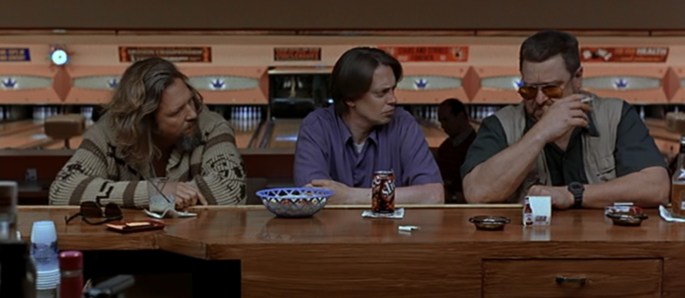
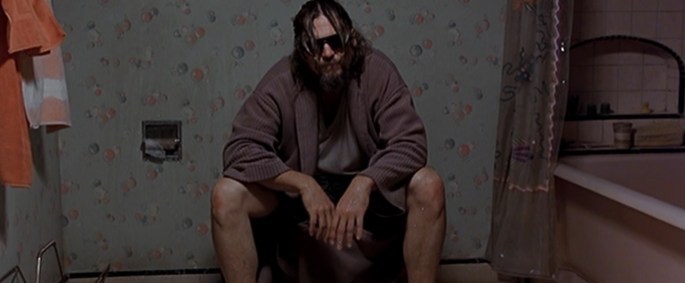
The Big Lebowski is a favorite comedy for so many people because it speaks to everyone’s inner “Dude,” and it balances various forms of comedy – physical, verbal, visual, spiritual, existential – in a way that few other films have successfully pulled off. This was the last movie I think anyone would have expected from the Coen Brothers after they crafted their homespun crime thriller Fargo, and despite the fact that it wasn’t warmly received by theatrical audiences, most critics enjoyed it at the time despite some feeling perplexed by the endeavor. But over time, and because of the influence of DVD, stoner culture, and social media, The Big Lebowski has taken on an entirely new and different life of its own, and can be seen as so many things all at once.

2

It’s nearly pointless to rehash the uniformly excellent performances from the ridiculously stacked cast; Jeff Bridges has been brilliant so many times throughout his career but this is the film that he’ll be most remembered for. Roger Deakins’ work behind the camera on this film is spellbinding and dreamy, the laughs are nearly constant, John Goodman is outrageous, the soundtrack is impossibly great, and the amount of quotable lines and now-iconic scenes that this film contains is almost embarrassing. I can still vividly remember seeing this on opening night, and it’s one of those films that I’ve viewed so many times that it feels ingrained in my soul. I look forward to another thousand viewings in the future. Strong men also cry, POWER.

1

ALEX PROYAS’ DARK CITY — A REVIEW BY NICK CLEMENT

3

It’s a miracle that this movie ever got made, especially when considering it was released in 1998. Dark City is Alex Proyas’s masterwork as a filmmaker, a concoction so startling and unique which has helped to set it apart from so many other genre efforts from throughout the years. So few films are allowed to blend science-fiction and noir in the same package, and this one did it with love and care for both milieus, telling a smart, captivating story without resorting to cheap violence or nonsensical special effects; everything is earned and warranted here, and when the stage is set for the climactic battle, there are stakes to the action and the effects served the narrative. Roger Ebert’s glowing, four-star review has stood the test of time; also worth checking out is his audio commentary track on the DVD/Blu-ray, as this was his #1 film of that year.

2

Rufus Sewell and Keifer Sutherland were both excellent, Jennifer Connelly was lit like a noir-Goddess, all of the baldies were menacing and intriguingly off-putting, and you have William Hurt playing a detective named Baumstead – what’s better than that? The ingenious screenplay by frequent Steven Soderbergh collaborator Lem Dobbs and DC-movie-maestro David S. Goyer packs enough emotional punch to go along with the various narrative tricks, and Proyas’s visual style and design choices, in tandem with MASSIVE early Dariusz Wolski POWER, makes this $27 million dollar production look a helluva lot more expensive and grand. The plot is as dense as the Blade Runner and Metropolis-inspired production design, while the underlying themes centering on dreams and reality feel tied to the surreal leanings of Terry Gilliam in some spots. I’ve seen this spectacular work of art countless times, and it’s a great film to show to the uninitiated.

1

GAVIN O’CONNOR’S MIRACLE — A REVIEW BY NICK CLEMENT


3

The 2004 sports drama Miracle craftily and persuasively recreated the famous United States vs. Soviet Union hockey game where the Americans pulled one of the greatest upsets in Olympic history, beating their heavily favored opponents in the medal round, which would send Team USA to collect a rather unexpected gold medal. Kurt Russell delivered one of his best and most undervalued performances as head coach Herb Brooks, evoking the fiercely competitive nature and the fatherly instincts that helped to make Brooks one of the more revered coaches to work the frozen ponds. Directed by Gavin O’Connor with the appropriate grit and determination that the story called for, Miracle easily contains some of the better done-for-the-movies ice-hockey footage that’s ever been captured; this is a lightning-fast and extremely rough sport to physically play, and the filmmakers did an excellent job in stressing how hard and intense the on-ice fury can get. Dan Stoloff’s sharp cinematography got in close and tight with the action, with John Gilroy and Daric Loo’s fast-paced but never chaotic editing helping to keep the film moving at a brisk pace.

2

Eric Guggenheim and Mike Rich’s well-researched screenplay stuck with the facts, and with a story like that, there’s no real need to embellish much, as the story of “The Miracle on Ice” is exciting enough without any phony grandstanding. All of the actors did a commendable job especially considering that most were hired for their hockey skills and less their acting abilities. Patricia Clarkson and Noah Emmerich both delivered excellent supporting work. Mark Isham’s score hits some big, blustery notes of personal triumph that feel well-earned, and it’s hard not to enjoy a film that features Russell wearing plaid pants and sporting that awesome early-80’s haircut. A hit with both critics and audiences, Miracle if definitely one of the better hockey movies that I can think of, on the list with the masterful Slap Shot, underrated and hilarious Goon, and the lightweight but still enjoyable Mystery, Alaska. I guess I need to track down Idol of the Crowds, from 1937, with John Wayne as a hockey player!

1

DAMIEN CHAZELLE’S LA LA LAND — A REVIEW BY NICK CLEMENT

1

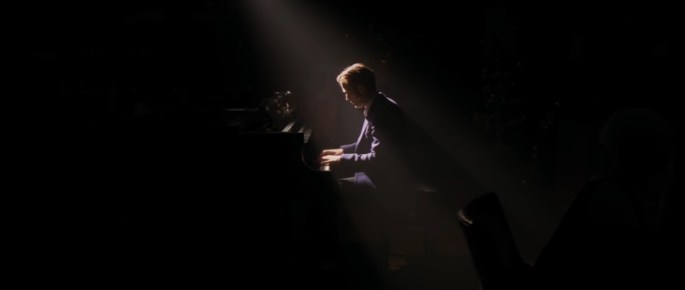
La La Land is a giant burst of primary color fun, a widescreen musical that marries romantic comedy with aspirational drama, and if it’s not quite the movie I was expecting overall, it’s certainly a bold and memorable motion picture. Writer/director Damien Chazelle, working in a totally different tempo than his previous film, the razor-sharp Whiplash, clearly didn’t want to repeat himself, but obviously has a thing for narratives that involve music and the power that music can bring to other people. Ryan Gosling and Emma Stone have superb chemistry together (they previously co-starred in Crazy, Stupid, Love) and the characters that they inhabit feel like real people thrust into a surreal movie-movie world where the song from inside their hearts guides them from moment to moment. Cinematographer Linus Sandgren (Promised Land, American Hustle, Joy) does extraordinary work that at times is distractingly amazing; I was constantly aware of how many long takes were being employed and quickly became totally consumed by the visual dynamism on display.

2

The camera swerves, pivots, Stedicams, and floats, with a luscious color palette and impeccably designed sets matched with perfect art direction and costumes. The songs are creatively written, catchy, appropriately melancholy in spots, and uplifting all throughout, while the final 20 minutes are well considered, with the movie operating as a massive love letter to Los Angeles to the millions of dreamers who head out to the concrete jungle in search of stardom. Rosemarie Dewitt, John Legend, JK Simmons, and Tom Everett Scott provide solid support, but this is the Gosling-Stone ticket all the way, with the two of them projecting big-time movie-star appeal and turning in very likable performances.  Movie like La La Land don’t get made very often, and in the same way that the story celebrates the history and future of jazz music, Chazelle’s film feels like the ultimate ode to the cinematic musical, taking classical elements and splicing them with something new and exciting, especially on a visual level. This is exuberant filmmaking.

3

KENNETH LONERGAN’S MANCHESTER BY THE SEA — A REVIEW BY NICK CLEMENT

1

Manchester by the Sea is everything you have heard it to be and more. The back-flips done by critics are totally warranted, and while this won’t be a film that everyone will appreciate, for this viewer, it represents the finest that storytelling can offer, and a complete confirmation that its writer/director, Kenneth Lonergan, is the most unsung voice of his generation. There have only been three films that he’s written and directed over 16 years; he needs to work more but I understand that geniuses require whatever amount of time they need in order to create.   In its broad strokes, the film is all-encompassing and entirely brilliant, and when broken down into its small parts, Manchester by the Sea hits those sublime notes when a piece of fiction feels inherently real and candid at every turn. Lonergan’s writing is so effortless and so believable that there’s never a moment where you feel like you’re being given anything less than a snapshot of people who we either know or have heard about, and while the narrative goes to some extraordinarily upsetting places, there’s a tenderness and compassion to the story and a genuine sense of love for the characters, however flawed they may be, so that the viewer is able to get through all of the emotional heavy lifting.

2

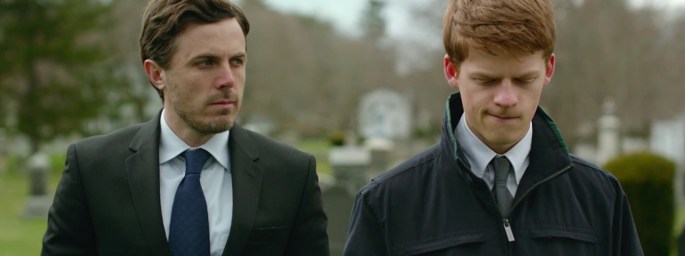
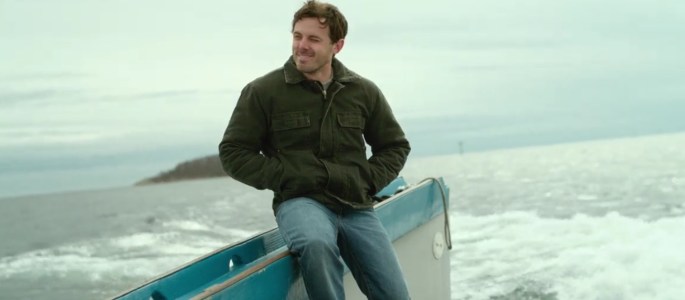
Casey Affleck channels the best of Marlon Brando, giving a complex and incredibly lived-in performance as a man shattered by the past, and barely able to look to the future. With his gravelly mumbling and off-in-the-distance stare, Affleck is able to convey insecurity and pent-up rage better than most other actors, and during the film’s most devastating sequence, he gives new meaning to the phrase slow-burn acting, delivering a passage of haunting dialogue that becomes unforgettable by its conclusion. When circumstances beyond his control force him to re-evaluate his life and take some familial responsibility for the first time in a long time, the cracks in his withdrawn façade start to show, and it’s because Affleck is so smart with his eyes and the way he moves his head and presents himself physically that you’re able to become consumed by both his grief, love, and hesitation. It’s Affleck’s show all the way, but he’s given wonderful support by a mega-talented ensemble, including a show-stopping Michelle Williams, who goes all-in and all-out during one of the film’s emotional set-pieces; tremendous up-and-comer Lucas Hedges, who evokes shades of Matt Damon, so poignant and able to convey impending maturity with a dash of vulnerability; one-time “It Girl” Gretchen Mol doing strong work in a very tricky and layered performance; authoritative and awesome Kyle Chandler who can literally do no wrong as a performer; and sly Matthew Broderick in a quiet bit of scene stealing during the film’s most realistically awkward sequence.

3

Lonergan’s sense of comedy is smart and always grounded in honesty, as no joke ever feels forced or like he’s trying to sell you on anything; as with life, humor can be found in the most unexpected of places, a notion that Lonergan clearly subscribes to. He enjoys straddling various tones, always allowing for wit and melancholy to co-exist, often in the same scene, and I’m continually interested in the fact that he’s seemingly obsessed with giving every single character who appears in his stories, no matter how important or tangential, something to say on camera; this is a dense piece of work in the same way that his previous film, 2008’s miraculous Margaret, was a tapestry of people, places, and the relationships that bind and separate. His visual style is appropriately plain and chilly and never self-conscious, the classical music selections befit Lonergan’s sense of class, and the film’s ending is so perfectly timed and considered as to be the final masterstroke from this most erudite and confident of filmmakers.
4

There’s so much that Manchester by the Sea gets correct, from the down-in-the-basement hooking-up on the part of the teenagers, to the overall New England atmosphere conjured up by the creative department, all filtered through Lonergan’s unique sense of style, which incorporates a nearly Altman-esque use of background chatter and ambient noise as to suggest realism and sonic depth; while not as intensely obsessed upon as it was in Margaret, the sound work in Manchester by the Sea is subtly powerful. If we’re lucky, the world gets a movie like this every once in a while, a piece of work that has the ability to move anyone, with universal themes that speak to our core values of humanity. It’s been a rich a provocative year with films like Arrival, Moonlight, Sully, and Manchester by the Sea all presenting specific yet inclusive glimpses of every-day people trying to move through life with communication as their guiding and motivating torch. Manchester by the Sea is an overwhelming picture, and while it may not be everyone’s idea of what constitutes “entertainment,” for those of us who want the cinematic experience to make us FEEL something, look no further than this spellbinding achievement.

5

FRANK CAPRA’S IT’S A WONDERFUL LIFE — A REVIEW BY NICK CLEMENT

wonderful

It’s A Wonderful Life remains a stone cold classic of American cinema. Masterpiece goes without saying; the very definition of timeless. Frank Capra knew how to mix true sadness with true uplift, and when you look back on the film now it’s sort of easy to understand why it wasn’t met with universal acclaim and audience popularity, as it received mixed to negative critical reviews and it didn’t recoup its production costs at the box office. James Stewart’s heartfelt and agonized lead performance is one of the best of all-time and Donna Reed photographed pretty darn well. This is a movie that needed time to show us all how special it was and still is; the themes explored travel with all of us, and they inform us all at every turn.

It’s not so much a “Christmas movie” as it is a movie about the human spirit. The big dance sequence is still one of the great tour de force set pieces in the medium; it’s a marvel to study. And I love how the narrative gives the viewer as much of a choice as it does the characters. The Blu-ray transfer is stunning, preserving the 1.33:1 Academy ratio in all of its boxy glory, with nary a stain or print scratch in sight. However, the people at Paramount should be BEATEN for offering this glorious movie in a colorized version; the idea that there are people out there who would want to watch this movie in color makes me sick.

its_a_wonderful_life

TED DEMME’S THE REF — A REVIEW BY NICK CLEMENT

1

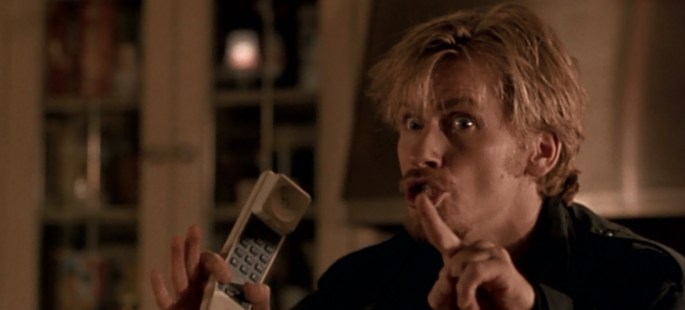
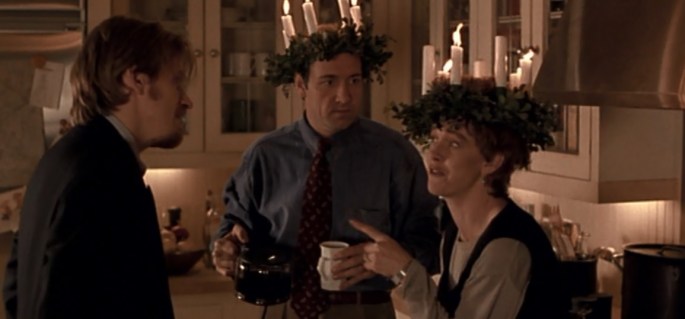
This is one of my favorite Christmas-themed movies. It’s extremely underrated, totally cruel, and aggressively funny, and is easily the most off-beat item to carry the Don Simpson and Jerry Bruckheimer seal of approval (but why no lightning bolt logo?) Directed by Ted Demme, whose career and life were sadly cut way short when he tragically died in 2002, this was the first big project for comedian/actor Dennis Leary just as his legendary No Cure for Cancer stand-up tour was winding down; it’s a shame that the studio buried it without ever seemingly believing in it. Starring Kevin Spacey and Judy Davis as a wildly bitter and constantly bickering married couple who are taken hostage by a desperate criminal (Leary) on Christmas eve, this is one of those bile-spewing dark family comedies where everyone is an asshole and everyone loves telling everyone how much of an asshole they all are. Richard LaGravenese and his sister-in-law Marie Weiss wrote the caustic screenplay, which has lots of fun with the casually nasty scenario, while Leary painted a priceless portrait of a bumbling criminal who gets mixed up with the wrong family on the wrong night. Demme’s direction was on-point, the supporting cast thoroughly ace, and the coal-in-your-stocking attitude is the perfect antidote to all of the phony-happiness that this crass commercial season brings about. If only the film’s original, darker ending could see the light of day on a Special Edition Blu-ray…

3