BRAD BIRD’S THE IRON GIANT — A REVIEW BY NICK CLEMENT

3

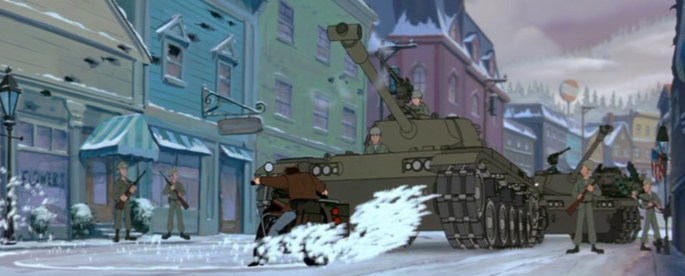
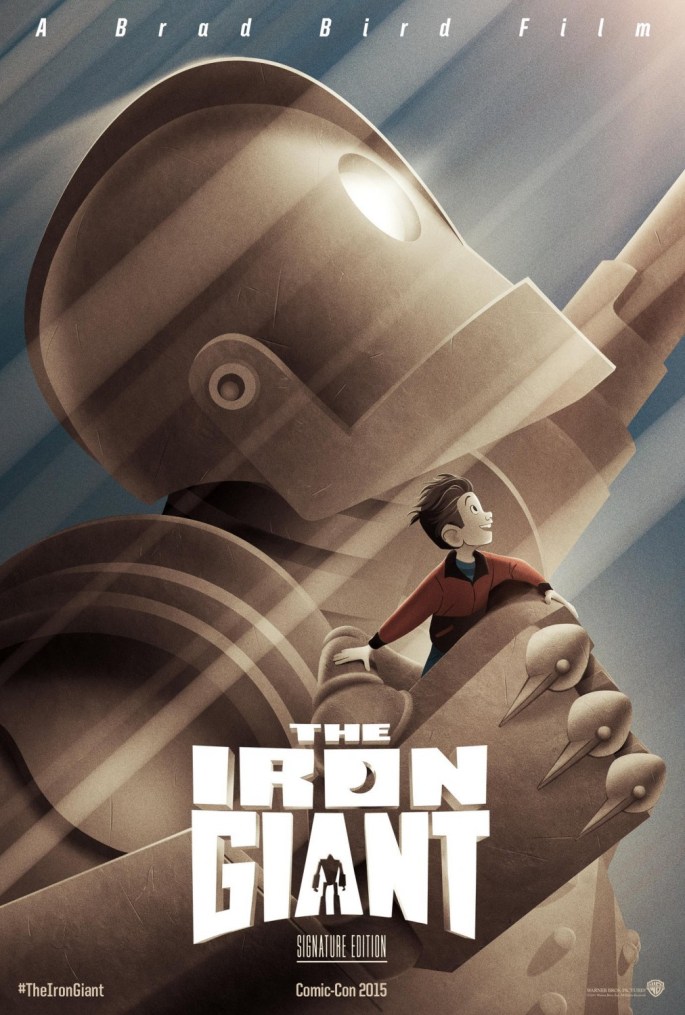
Brad Bird’s wonderful film The Iron Giant has a ton of honest and genuine heart to match its retro animated style, and despite not finding a blockbuster theatrical audience, has become both a cult and family favorite for those looking for a film with a serious message and that still packs prime entertainment value. Released in 1999, The Iron Giant’s thoughtful screenplay by Tim McCanlies (based on the novel The Iron Man by Ted Hughes) is its greatest asset, and when combined with Bird’s astute visual sense, this Cold War-set fable about a boy who meets and saves a giant robot from outer space really takes flight as one of the more memorable hand-drawn pictures of the last 20 years.
iron_giant_ver3_xlg

The voice-work is fabulous, with Vin Diesel’s imposing voice work a perfect match for the titular character, while Elie Marienthal, Jennifer Aniston, Christopher McDonald, Harry Connick, Jr., John Mahoney, M. Emmet Walsh, James Gammon, and Cloris Leachman all delivered fantastic vocal support that never felt at odds with the vintage aesthetic that Bird and his collaborators presented to the audience. Michael Kamen’s superb score pulls on the heartstrings and provides sonic adventure in equal measure. Filmmaker Joe Johnston assisted in the design of the robot.
2

There’s a sense of innocence to both the narrative and the aesthetic that I’ve always found refreshing, and it’s no surprise that Bird’s live-action features (Mission: Impossible — Ghost Protocol and the underrated Tomorrowland) feel like films that embrace the anything-can-happen vibe that an animated film brings to the table. I’ll never understand why Warner Brothers would have spent the amount of money that they did on this film (reportedly between $70-80 million) to then just half-heartedly release it with a minimum of advertising outside of the key summer weekends or closer to the holidays.

1

SEAN ELLIS’ ANTHROPOID — A REVIEW BY NICK CLEMENT

anthropoid_ver2_xlg

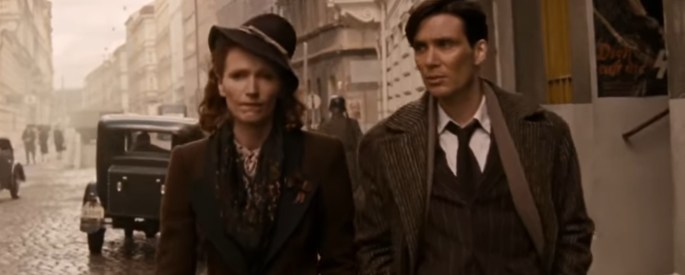
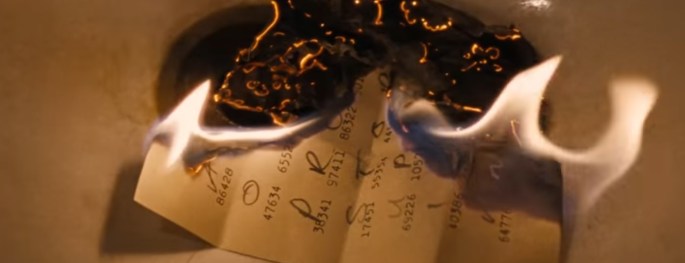
Released in limited theatrical markets last August, the rather stunning WWII espionage thriller Anthropoid deserved a much higher profile. Co-written, produced, and directed by Sean Ellis (the brilliant Metro Manila), who also served as his own astute cinematographer and nimble camera operator, this riveting piece of work tells the true story of Operation Anthropoid, which centered on the assassination of Reinhard Heydrich, one of the chief architects of the Nazi’s Final Solution, and the harrowing battle that took place in the immediate aftermath. The always focused Cillian Murphy and fast-on-the-rise Jamie Dornan (similarly gruff and commanding in Netflix’s The Siege of Jadotville) are both excellent as the Czech soldiers who are sent into their occupied homeland with a dangerous mission in tow, and because I didn’t know anything about this particular story, I was continually left guessing as to how it would all play out, and if the dangerous plan would be successful.

1

And from what I’ve been able to read about the production, Ellis and his creative team went to great lengths not to fudge the facts, making this story even more remarkable and sobering. Every film that’s based on actual events has to consider how to balance authenticity with poetic license, and in this sense, Anthropoid feels extremely well-calibrated. Ellis and co-writer Anthony Frewin keep the action moving for a tight two hours, with expert editor Richard Mettler’s judicious cutting keeping a fast but coherent pace, ratcheting up the intensity during the film’s bloody and forceful action sequences, especially during the protracted finale. The final 20 minutes amount to something of a tour de force of filmmaking, showcasing a large-scale shoot-out that gets up close and personal with the combatants on both sides, never shying away from any of the grim truths that the situation presented.

2

Reportedly shot for $9 million and looking like it cost much more than that, Anthropoid’s production values are very robust, with Ellis’ tactile, hand-held camerawork producing the appropriate amount of necessary anxiety to heighten the already precarious mission, while the musical score by Robin Foster never overplayed anything, instead subtly ingratiating itself into the proceedings. The strong supporting cast includes Toby Jones, Charlotte Le Bon, Harry Lloyd, Anna Geislerova, and Bill Miner. Shot entirely in Prague and in many cases at the actual locations of the events depicted, Anthropoid never feels anything less than extremely confident about itself, with immaculate production design and art direction courtesy of Morgan Kennedy and Radek Hanak, respectively. Currently available on Blu-ray and via HD On Demand streaming options, it’s a shame that Anthropoid has quietly slipped by so many viewers, as it’s well worth checking out.

3

MATTHEW ROSS’ FRANK & LOLA — A REVIEW BY NICK CLEMENT

3

Matthew Ross, a former reporter for Variety and editor of Filmmaker magazine, has crafted an intense psychosexual drama with Frank and Lola, a film that might not necessarily be as believable as it wants to think that it is, but at the same time, features extremely strong performances from Michael Shannon and Imogen Poots, with an interesting and sturdy supporting cast filling out the edges, including Michael Nyqvist, Justin Long, Rosanna Arquette (fantastic!), and Emmanuelle Devos. Currently available via HD Video On Demand platforms and playing in extremely limited release, Ross’ downbeat and provocative film hits some disturbing notes of male jealousy and female rage, all filtered through a seductive visual style thanks to bold lensing by Eric Koretz and drum-tight editing by Jennifer Lilly and Rebecca Rodriguez.

2

The story centers on a hot and heavy relationship that builds between Shannon and Poots, and then comes crashing down when she strays, but for reasons that aren’t exactly so clear. I’m not sure if all of the story ingredients meshed perfectly; the film takes an interesting detour into revenge territory that was more emotionally interesting than logistically plausible. But Shannon is such a magnetic actor, with the ultimate thousand-yard stare that it becomes impossible to look away when he’s on screen. The sexy and alluring Poots yet again demonstrates range as an actress, giving a heavily internalized performance with moments of cathartic explosion that propels the sad and potentially dangerous narrative forward. This is a film that explores a relationship that becomes defined by infidelity and tragic events from the past, and how two people attempt to look to a better future together, all the while knowing that permanent damage has likely already been done.

1

STEVEN SODERBERGH’S OUT OF SIGHT — A MINI-REVIEW BY NICK CLEMENT

2
Out of Sight remains one of eclectic filmmaker Steven Soderbergh’s most entertaining films, with all sorts of humor and sexiness and crime movie genre tropes running up against each other and culminating in a tasty brew of artistically-minded commercial cinema. Released to outstanding reviews but lukewarm box office back in June of 1998, Scott Frank’s hilarious and beautifully constructed screenplay (an adaptation of Elmore Leonad’s novel) was a perfect match for Soderbergh’s jazzy directorial style, with Elliot Davis’ darting camerawork and the sharp editing patterns of Anne V. Coates in complete aesthetic harmony. George Clooney’s magnetic lead performance was bolstered by a supremely awesome supporting cast including a never-better Jennifer Lopez, Dennis Farina, Michael Keaton, Don Cheadle, Luis Guzman, Steve Zahn, Ving Rhames, Isaiah Washington, Catherine Keener, Nancy Allen, Viola Davis, Paul Calderon, and the rather brilliant Albert Brooks. The soundtrack by David Holmes is an all-timer, the chemistry between Clooney and Lopez was palpable and juicy, and the film’s mixing of comedy and violence is smart, artful, and sophisticated.
1

MIKE NEWELL’S DONNIE BRASCO — A MINI-REVIEW BY NICK CLEMENT

2

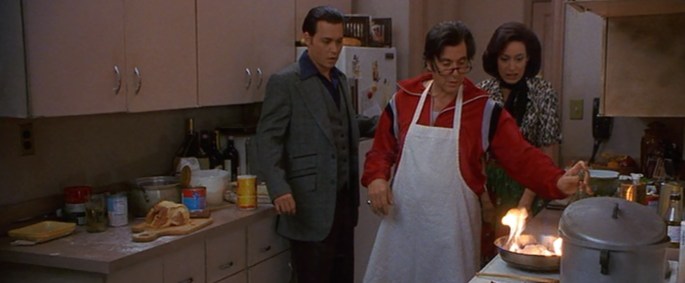
Released in 1997, Mike Newell’s gritty and superb organized crime drama Donnie Brasco features a top-flight turn from Al Pacino as an aging, low-level, worker-bee gangster with sadness behind his tired eyes, and Johnny Depp in one of his better performances as an undercover FBI agent who gets in too close for comfort with a particularly nasty set of violent mafia-men. Paul Attanasio’s intelligent, fact-based, and propulsive screenplay wasted not a moment in kicking the story off in high fashion, with Newell never overtly trying to replicate any other genre entry that has made this milieu one of the most popular in cinema history. A hit with critics and a solid box office performer, this is the type of movie that has gained an even more solid footing in the years since its release, as it’s a non-nonsense and very sturdy piece of filmmaking with some zesty supporting performances (Michael Madsen and Bruno Kirby in particular) and a few extremely memorable sequences, with an ending that leaves an emotionally conflicted lump in your throat.

1

BARRY SHEAR’S ACROSS 110th STREET — A REVIEW BY NICK CLEMENT

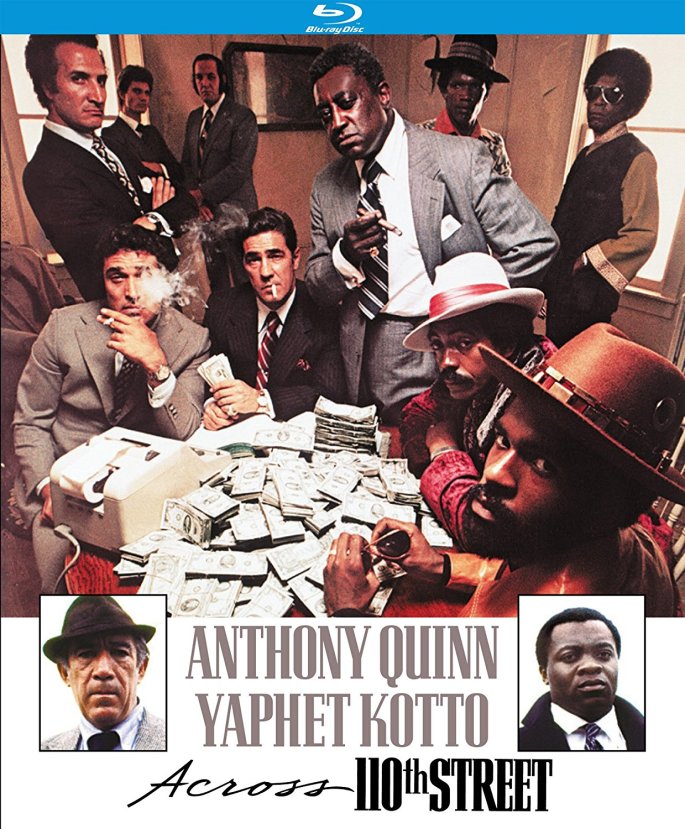
across_one_hundred_tenth_street

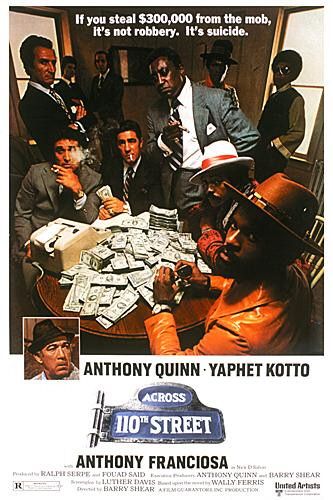
Across 110th Street is a nasty piece of business, directed with gritty verisimilitude and intensity by Barry Shear, and sporting an extremely focused screenplay by Luther Davis which maximized violence, attitude, and down and dirty action. Based on the novel by Wally Ferris and released in 1972 to both acclaim and controversy, the amazing team at Kino-Lorber made it a point to include this overachieving Blaxploitation gem in their tremendous catalog of titles, and it’s easy to see how the aesthetics utilized by the filmmakers would go on to inspire many other directors in countless films that would be released after this game-changer saw the flicker of movie projectors. Set in Harlem and chronicling a rather brutal back and forth between honest and corrupt cops, gangsters, mafia hoods, pimps, drug dealers, prostitutes, and general city scum, this is the sort of movie that makes you want to take a long, hot shower after watching it, as it was clearly shot on real locations that were very dangerous, with little set-dressing probably required. And the fact that there aren’t easy to root for characters makes the film an even richer experience than it might otherwise have been.

The in-your-face cinematography by Jack Priestly rubbed your nose in the muck and sleaze, Byron Brandt’s viciously tight editing kept the pace moving at a fast clip, the morally and ethically questionable characters all operate by their own sense of internal code which may or may not be a good or bad thing, and the general level of grim fatalism on display is rather bracing to behold; this is a picture that must’ve seemed very ahead of its time when it first was released. An amazing cast was along for the sordid ride, including a steely Anthony Quinn, Yaphet Koto doing understated, slow-burn work, Anthony Franciosa in a hugely entertaining performance, and Paul Benjamin, Antonio Fargas, Ed Bernard, Richard Ward, Gilbert Lewis, Norma Donaldson and many others rounding out the colorful supporting cast. Bobby Womack and J.J. Johnson’s influential title song would later be sampled by Quentin Tarantino during his hugely memorable opening to Jackie Brown, and by Ridley Scott in his excellent crime opus American Gangster. Across 110th Street operates as a unique early buddy-narrative while dipping its toes into true exploitation waters, supremely delivering on both fronts.

1

MARY HARRON’S AMERICAN PSYCHO — A REVIEW BY NICK CLEMENT

2

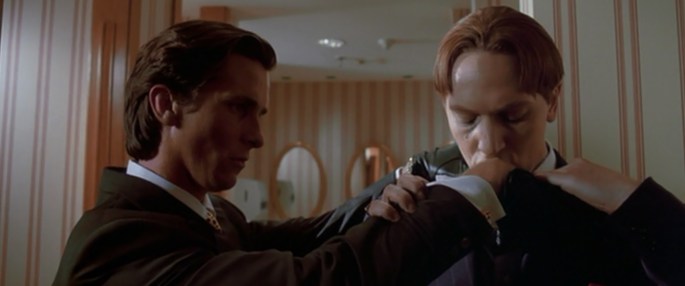
A stinging indictment of a particular way of life at at very particular time and place in America, Mary Harron’s go-for-the-jugular adaptation of Bret Easton Ellis’ incendiary novel features scalpel-sharp satire, upended expectations, hilarious performances from an absurdly deep ensemble, and a sleek visual style that speaks to the various themes of loneliness, isolation, identity, and mental anguish being explored in the multilayered narrative. Christian Bale’s towering performance as the now-iconic Patrick Bateman anchors this deranged tale of obsession, jealousy, and high-end business cards, with Jared Leto, Josh Lucas, Willem Dafoe, Chloe Sevigny, Justin Theroux, Matt Ross, Bill Sage, Reese Witherspoon, Samantha Mathis, and Cara Seymour all offering terrific supporting performances while all individually getting one or two big moments to shine. This film has so many quotable lines of dialogue and so many genuinely funny sequences that it’s no surprise that it’s become a cult favorite in the years since its in-and-out theatrical release. And considering how phenomenal and beloved that this film is and has become, it’s shocking that Harron hasn’t worked more than twice since American Psycho was released in the spring of 2000.

3

TREY PARKER & MATT STONE’S TEAM AMERICA: WORLD POLICE — A REVIEW BY NICK CLEMENT

1

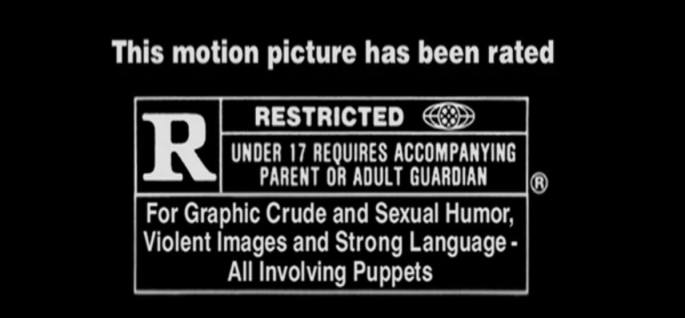
Trey Parker and Matt Stone are geniuses. They don’t give a fuck what you think of them and that’s one of the biggest reasons why I love their work so much. Listen – they dropped acid, dressed as women, and attended the Oscars, at which they were nominees. For this fact alone they’ll be heroes until the end of time. And Team America: World Police is easily one of their finest achievements in foul-mouthed satire, a film so ballsy and made with provocation so firmly on the mind, that I’m still left a tad slack-jawed by the overall combination of absurdity and smarts that they so skillfully mixed together in this celebration and skewering of action movies, Hollywood, the political landscape, and humanity in general.

4

I love how they got Harry Gregson-Williams to score the movie with his typical Bruckheimer/Scott bombast, and hiring Bill Pope as your cinematographer demonstrated that they gave a shit how their marionette-based film would look on a visual level – this movie is absolutely artful at times which makes it even funnier to behold. The level of social commentary and the evisceration of the modern action picture and hypocrisies of the movie industry were consistently brilliant and still hold up to this day (“No Gary, I’m not from Hollywood, I’m not gonna fuck your mouth, my time is VERY valuable…”), Parker and Stone’s sense of musical theater is always fascinating, inspired, and jubilant (“Everyone has AIDS!”), and the digs on North Korean lunatic Kim Jong-Il are wildly amusing.

3

The film also serves as a fairly devastating critique of American foreign policy while still keeping its head almost completely ensconced in the toilet, with a wild barrage of creatively composed obscenities on display. Also, anyone who spends the amount of time that these clowns did showing puppets in various sexual positions deserves some sort of award for just that bit of lunacy alone. This is easily one of the most off-beat studio productions imaginable, with super-producer Scott Rudin coercing Paramount to spend $35 million on a film that nobody could have had any serious expectations from. The fact that this movie was a hit in theaters, a massive hit on cable/disc, and was warmly embraced by the critical community still makes me smile.

2

BARRY LEVINSON’S THE YOUNG SHERLOCK HOLMES — A MINI-REVIEW BY NICK CLEMENT

1

Out of all of the underrated movies that Barry Levinson has made, and there’s been lots of them, The Young Sherlock Holmes might just be his most unsung, as it’s an affectionate love letter to the classic character while going to great lengths to inject its own distinct personality into the proceedings, with a smart and playful script by Chris Columbus that’s much darker than I initially remembered it being. The cast was excellent, with Nicholas Rowe and Alan Cox making for a great team as Holmes and Watson, while Sophie Ward, Anthony Higgins, Freddie Jones, Susan Fleetwood, and Roger Ashton-Griffiths rounded out the classy and authentic ensemble. The film looks absolutely beautiful, with gorgeous widescreen lensing by Stephen Goldblatt, who stressed smoke and shadows, and evocative art direction and costumes which bolstered the Amblin production. While not a massive box-office hit, I’d like to hope that this movie has found a healthy life on video, and I think it’s totally worthy of the Blu-ray treatment.

2

DAMIAN K. LAHEY’S THE HEROES OF ARVINE PLACE — A REVIEW BY NICK CLEMENT

1

It doesn’t matter how expensive, inexpensive, fancy, or plain a movie might be. Does it have a good story, with characters you care about, and has it been crafted with intelligence and an eye to accomplish the goals that it has set out for itself? Those are the questions I tend to ask myself when viewing cinema, and after watching Damian Lahey’s warmhearted yet melancholy holiday drama, The Heroes of Arvine Place, I was reminded how some of the better items arrive in smaller packages. Lahey is an indie movie specialist, with various award-winning short films under his belt, while 2014’s The Heroes of Arvine Place was his second feature film; let’s hope that we don’t have to wait much longer for his next effort. Lahey’s natural filmmaking instincts are apparent, from his use of space within the frame, to his penchant for believable dialogue, and a story that feels organic, and at times, sadly all-too-believable.

6

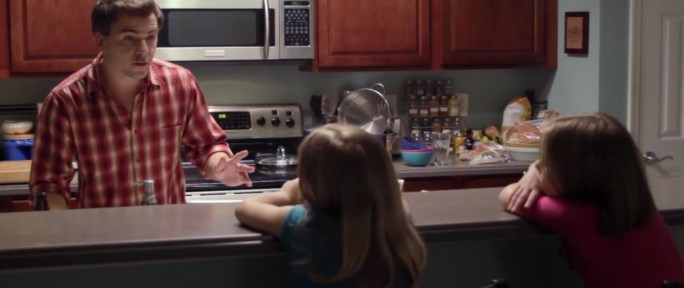
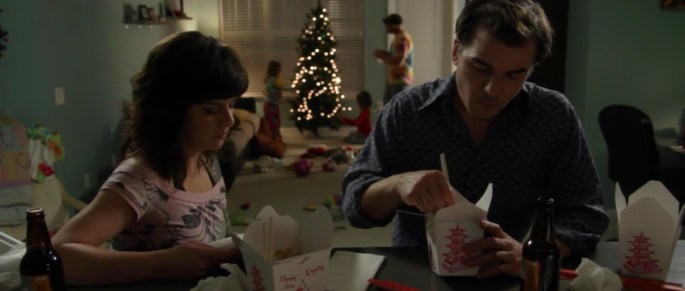
Set in Jacksonville, Florida around the time of the Christmas holiday, the narrative centers on a nearly down-and-out single dad who is trying to make ends meet for his two young daughters. Still reeling for the recent death of his wife, Kevin Hedges, played by the excellent Cullen Moss, is a man at a mental and spiritual crossroads; how can he keep everything afloat when so much seems so far out of reach? A struggling children’s author, Kevin is, way deep down, a good dad and a good guy, so it’s a bummer to see him rely on so many other people in order for him to call the day a success. He’s entered his newest book into a competition which might provide a financial leg-up, and wouldn’t you know it, but a new romantic possibility might be lurking around the corner. But The Heroes of Arvine Place is more about a particular type of person who is learning as they experience, rather than contrived plotting and needless distraction. When people don’t have all the answers to their problems, they can find themselves in situations beyond their grasp or control, and they have a tendency to get desperate, acting in ways that they might not benefit from in the long run. The Heroes of Arvine Place looks at exactly this idea, and does so with humor, pathos, and a believable sense of the here and now.

3

Lahey smartly juxtaposes the expected wintry holiday vibe with the sticky-heat of the American south, generating some nice visual humor out of his choices in locations and Jon Bosworth’s art-direction, while cinematographer Tarina Van Den Driessche shoots in unfussy and intimate set-ups, stressing people and their natural reactions over anything unnecessarily gussied-up. Craig Moorhead’s smooth editing keeps a fast but never frenetic pace to the 75 minute runtime; short and sweet is the name of the game, here. But it’s all in the writing with this one, as Lahey’s script sensitively observes a family in a unique form of stasis, with rational questions being explored by the two precocious but never annoying daughters, who, like most kids, are just interested in the life that’s going on around them, whether they understand everything or not. It’s in these smaller, more emotional moments that The Heroes of Arvine Place truly finds its place as a piece of micro-budget but maximum-heart cinema.

2