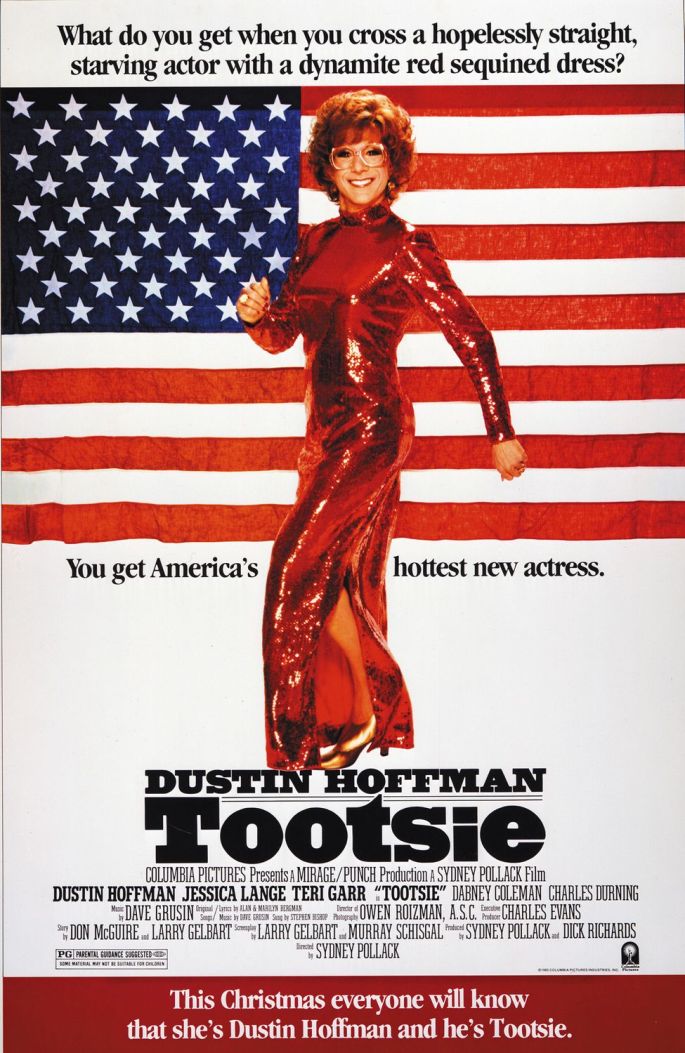
SYDNEY POLLACK’S TOOTSIE — A REVIEW BY NICK CLEMENT

tootsie_xlg

This is such a delightful piece of work, a movie that just wants to have fun at nearly every moment, with energetic direction by Sydney Pollack and lots of honest humor in the story/screenplay by Don McGuire, Larry Gelbart, Murray Schisgal, Barry Levinson, and Elaine May, the latter two going uncredited. Dustin Hoffman’s lead performance of a frustrated actor who dresses as a woman in order to land a role on a soap opera is both over the top yet somehow movie-world believable, as nothing was pushed too far or felt overly strained by the contrivances of the busy plot. Co-starring with Hoffman in this film meant you had to enter his orbit and find the proper ebb and flow; Bill Murray, Teri Garr, Jessica Lange, Dabney Coleman, Charles Durning, Doris Belack, Pollack, and Geena Davis (in her screen debut) were all up to the task. Terrific physical comedy abounds, there are pointed observations made about the entertainment industry, and every single performance is in perfect harmony with the rest of the spirited ensemble.

Dave Grusin’s peppy and chart-topping score/soundtrack is a major bonus, while Owen Roizman’s smooth cinematography never called attention to itself, instead capturing the action with clear focus, allowing for the amazing cast to nail every single joke or comedic moment without feeling overburdened by aesthetics. Peter Sellers and Michael Caine were at one point considered for Hoffman’s role. Dick Richards was the film’s original director, before departing over the usual “creative differences,” with Hal Ashby becoming his replacement. But Ashby was forced to leave the production, as the editing duties on his previous film, Lookin’ To Get Out, weren’t contractually completed; final director Pollack would step in and steer the ship forward. Released on December 17, 1982, Tootsie became an immediate smash hit at the box office, with a final gross of $177 million domestic, off of a $21 million budget, and this was back when money was real.
JOHN FRANKENHEIMER’S THE CHALLENGE — A REVIEW BY NICK CLEMENT

1

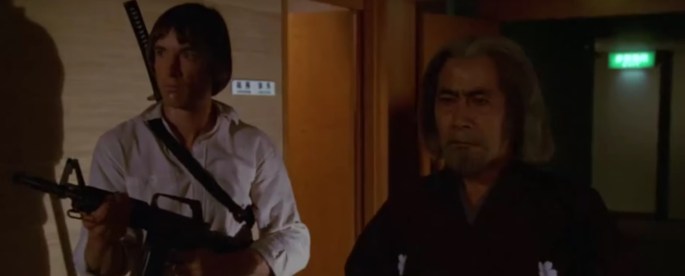
By all accounts, this movie should be a total disaster. And it’s not. Not even close. It’s a wild blast of hard-boiled fun. Directed by John Frankenheimer, co-written by Richard Maxwell and John Sayles, and starring Scott Glenn as an American boxer turned swordsman who gets mixed up in a family feud between rival brothers (Toshiro Mifune and Atsuo Nakamura) who are battling over possession of two sought-after samurai swords, The Challenge defies expectations in more ways than one, putting a unique spin on a long-standing genre. This is a rather violent and nasty film, with Glenn playing the stoic man of action who needs to learn a thing or two before being fully combat ready, while Mifune’s inherent sense of gravitas added a layer of seriousness to an otherwise over the top but no less entertaining scenario. Frankenheimer was always well suited when it came to filming action, and in The Challenge, he was able to mix in a wild chase through crowded Japanese streets, decapitation-friendly sword fights, and all sorts of general mayhem that genre fans will righteously enjoy.

2

Cinematographer Kozo Okazaki, who also shot The Yakuza for director Sydney Pollack, did a great job capturing all of the set-pieces with a clear sense of spatial awareness and a clean sense of style; Jack and John Wheeler’s editing remains punchy all throughout. And because Frankenheimer never knew a milieu he wasn’t interested in tackling, this film feels even more accomplished, made by a filmmaker who had already made a number of masterpieces, instead here just churning out a rollicking and unpretentious flick. Steven Seagal served as the film’s choreographer during the aikido-based action sequences, while The Challenge features a tremendous musical score by Jerry Goldsmith. The last 15 minutes are an absolutely amazing full-on battle, with swords, machine guns, and all sorts of martial arts being thrown around, with a crazy body-count and tons of humor to match the bloody action. Shot entirely on location in Japan, the film would certainly make for a great double feature with Ridley Scott’s underrated and very stylistically moody actioner Black Rain. The Challenge is available on a beautiful looking and sounding Blu-ray from Kino-Lorber.

3

WARREN BEATTY AND BUCK HENRY’S HEAVEN CAN WAIT — A REVIEW BY NICK CLEMENT

3
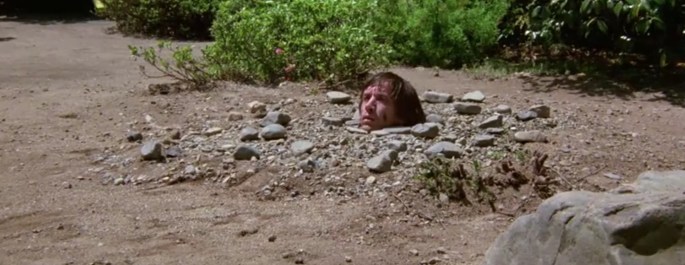
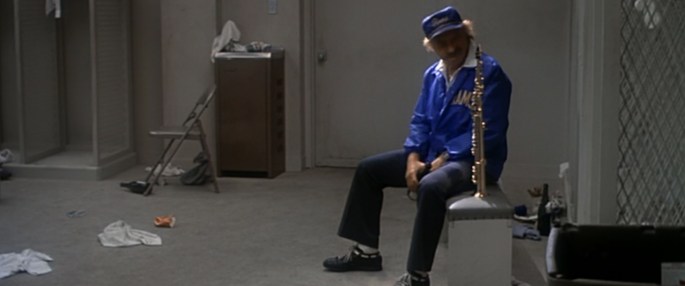
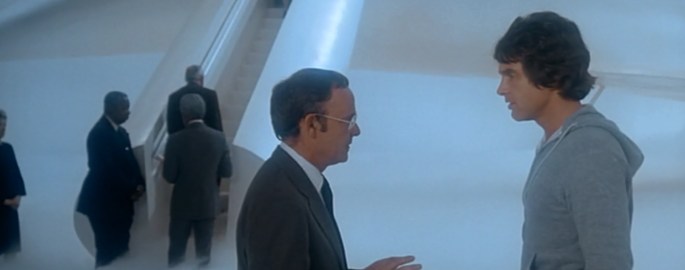
Heaven Can Wait is a totally charming piece of work, a film that successfully mixes tones, filled with self-reflection, playful screwball comedy, sly social commentary, with a romance that is both emotionally affecting and rewarding on a narrative level, and a bit of light suspense added in to keep you slightly on edge. Co-directed with grace and class by Warren Beatty and Buck Henry and co-written with compassion and sharp wit by Elaine May and Beatty who based their script on Harry Segall’s play of the same name, Beatty took the lead role and created one of his most memorable roles, and when you combine that with his chemistry with screen goddess Julie Christie, it’s easy to fall under the sweet spell that this film casts over the viewer.
2
The supporting cast is too good to be true: Jack Warden, Dyan Cannon, Charles Grodin, James Mason, Buck Henry, Vincent Gardenia, and so many other bit players all came to play but knew full well that it was the Beatty-Christie show. Dave Grusin’s romantic yet melancholy music was in perfect tandem with William A. Fraker’s sunny-hazy images (both of their filmographies are totally ridiculous), while the disciplined and tight editing by Don Zimmerman and Robert C. Jones left not an ounce of fat on the running time. Nominated for nine Oscars and winning one for Best Art Direction, Heaven Can Wait grossed $82 million at the box office in 1978, there are many reasons why this one is a beloved classic, not the least of them being that it’s just so effortlessly entertaining and it never stops enjoying itself.
1

ROBERT DE NIRO’S A BRONX TALE — A REVIEW BY NICK CLEMENT

1
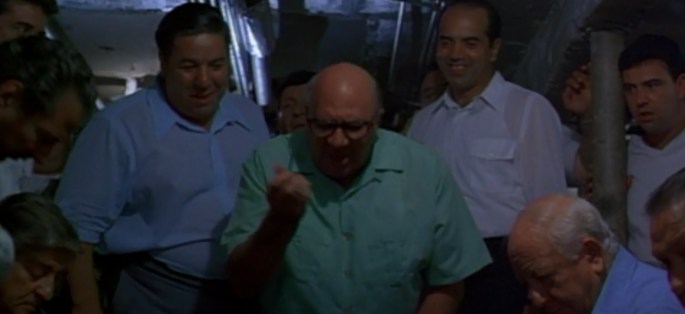
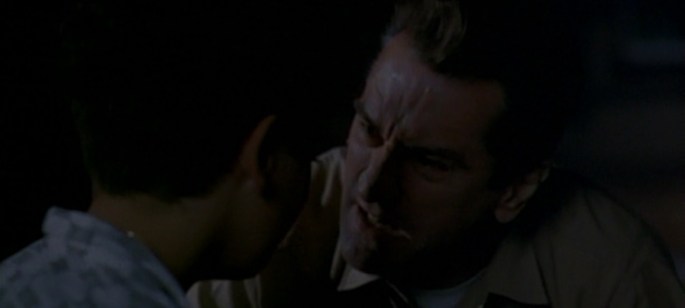
A masterwork of modesty and a stirring portrait of family love and fiery friendships, Robert De Niro’s sensitively observed directorial debut A Bronx Tale may not have found the theatrical audience it so richly deserved, but over the years, it has become a mostly unsung classic with true fans of cinema, as it’s a work that wears its influences on its sleeves yet never feels indebted to anyone or anything else other than its own hot-blooded and fully-bleeding heart. With powerful performances from De Niro, Chazz Palminteri, Francis Capra, Lillo Brancato, Jr., Katharine Narducci, Taral Hicks, and a perfect cameo by Joe Pesci, the film features a slew of Italian-American “face-actors,” all of whom brought authenticity, humor, and menace (when called for…) to their background roles.
3
Based in part on experiences that Palminteri had as a young boy and teen growing up in the Bronx, there are so many brilliant scenes, small moments between characters, and individual lines of dialogue to cherish in this passionate and emotionally draining film, with themes that speak to a parent’s desire for the best for their children, and how children nevertheless become their own adults, making decisions that will inform the rest of their lives in ways that they can’t expect. Palminteri’s screenplay is an absolute gem. This is the sort of film that leaves you with a lump in your throat from all that has transpired, with shocking acts of violence that counterbalance the softer, more intimate moments between family members and lovers and friends.
4
Everything in A Bronx Tale feels lived-in, organic, and honest, and I attribute the believable verisimilitude to the on-point costumes, perfect production design, and energetic cinematography that knew exactly when to show-off and when not to. I adore this movie and have viewed it at least 20 times, and I look forward to showing this film to my own son when the time is appropriate. And I wish De Niro would direct more, as his second film, The Good Shepherd, is wildly undervalued as both a chronicle of a changing America, and as a piece of riveting, historical-based entertainment. But there’s something special about A Bronx Tale, with De Niro seemingly taking so many nuggets of knowledge that he must’ve picked up from his collaborations with Martin Scorsese, but never trying to fully approximate that master filmmaker’s particular style. The film also has a dynamite soundtrack. A Bronx Tale is available as a UK Blu-ray release (which actually turned out to be region free when tested on multiple players) and as a snapper-case American DVD.
3

WILLIAM WELLMAN’S BATTLEGROUND — A REVIEW BY NICK CLEMENT

3

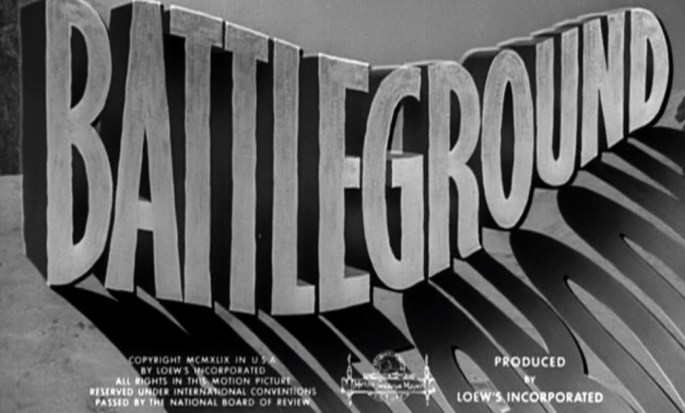
Released in 1949, William Wellman’s Battleground is considered to be one of the first major American films to center on World War II, with Robert Pirosh’s script covering the events of the Siege of Bastogne during the Battle of the Bulge and told through the POV of various members of the 327th Glider Infantry Regiment, 101st Airborne Division, with a large cast including Van Johnson, John Hodiak, Marshall Thompson, George Murphy, James Whitmore, Don Taylor and Ricardo Montalban. The realistic tone and approach was probably startling to audiences, as the narrative showed wartime life to be as hellish and unpredictable as it most likely is, with characters that are flawed, scared, desperate, and potentially damaged. Paul Vogel’s matter-of-fact camerawork got in close to the action, while the tight editing by John D. Dunning kept a face pace. You can see how this film has inspired any number of big-time Hollywood war films from various generations, as Wellman never went for the cheap and easy, instead presenting his vision of War As Hell in a square and blunt manner, excising anything overtly sentimental in favor of rigorous aesthetics and hardened themes.

2

RKO were the original producers of the film, which had been going by the title of Prelude to Love in order to keep a low profile, but backed out of the shoot when head of production Dore Schary left the studio. Schary got a job at MGM, purchased the rights to the film from RKO, and continued the production, much to the reported chagrin of studio chief Louis B. Mayer, who apparently felt that war films were out of favor with the public. Shot on location in California, Oregon, and Washington in two months for just under $2 million (the production cut costs by editing while shooting was occurring), Battleground would become MGM’s highest grossing film in five years, grossing nearly $6 million worldwide, making it the most profitable release of its year. The film was nominated for Best Picture, Best Director, Best Film Editing, and Best Supporting Actor (Whitmore) at the Oscars, and won two Academy Awards, one for Vogel’s stunning black and white cinematography, and one for Pirosh’s screenplay. Pirosh would go on to direct MGM’s 1951 film Go For Broke!, which also starred Van Johnson. For me, there’s an aesthetic/thematic progression that can be traced from Battleground to The Battle of Algiers to Full Metal Jacket to Black Hawk Down.

1

WALTER HILL’S UNDISPUTED — A REVIEW BY NICK CLEMENT

1

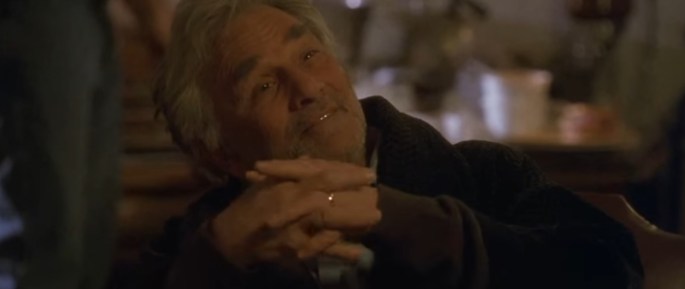
This is the sort of film that just oozes testosterone, made by a super-macho filmmaker interested in super-macho themes and taking absolutely no prisoners. Released in late August of 2002, Walter’s Hill’s grossly underrated Undisputed skillfully combined two genres – the boxing and prison picture – into a totally ass-kicking combo of intense character dynamics and bloody fisticuffs. Starring the jacked-up duo of Ving Rhames and Wesley Snipes as convicts who also happen to be fierce pugilists, the scenario concocted by co-screenwriters Hill and frequent collaborator David Giler is tough, smart yet over the top, and completely entertaining from beginning to end. It seems that the high-security prison that the two men find themselves in is home to an underground and very violent boxing syndicate, with brutal fights gripping the compound and fetching potentially lethal paydays. It’s all so ridiculous and yet totally entertaining because of that fact.

3The rough-house supporting cast included Michael Rooker, John Seda, Wes Studi, Master P, Ed Lover, Fisher Stevens, and Peter Falk in an unnecessarily amazing performance as a mob boss who helps to organize the jailhouse bouts. Lloyd Ahern’s muscular camerawork got in close during the boxing matches and set an ominous tone in conjunction with the location shooting at High Desert State Prison in Indian Springs, Nevada, and blunt-force editing by Freeman Davies and Phil Norden. I love a movie like this – it’s unpretentious, gets down to business fast, and because Hill is such a guy’s-guy craftsman, it all feels mean and surly. Despite mixed reviews from critics and totally bombing at the box office, Undisputed has certainly attained a cult status, paving the way for multiple DTV-sequels (which I’ve not personally seen) and a solid spot on Hill’s thoroughly righteous and exceedingly masculine filmography.
2

JOSEPH SARGENT’S WHITE LIGHTNING — A REVIEW BY NICK CLEMENT

3

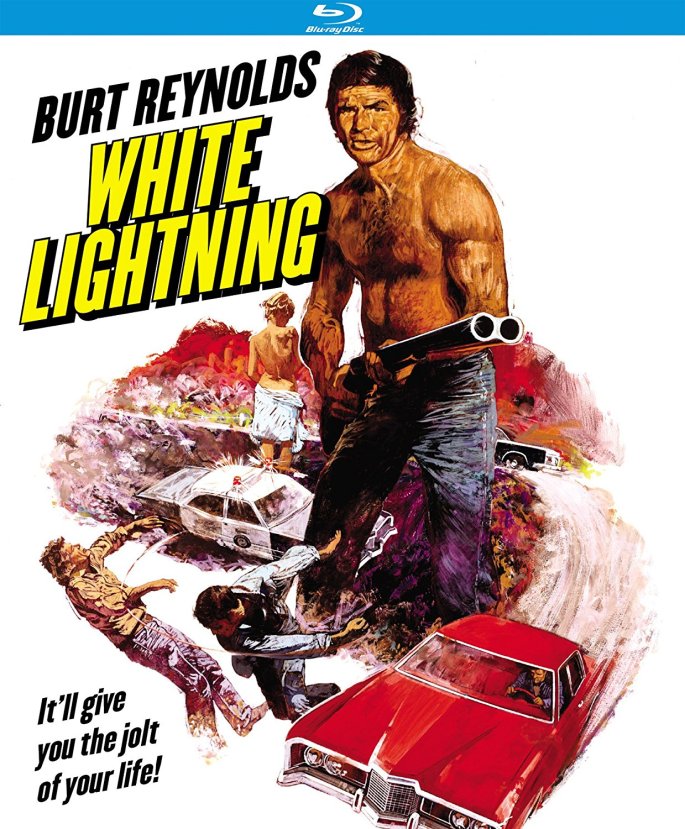
It might be hard to imagine now, but back in the day, Burt Reynolds was one of the biggest stars of his generation, appearing in a string of massive box office hits that cemented him as one of the most consistent big-screen draws of the 70’s. Released in 1973, Joseph Sargent’s hilarious and rowdy Southern-tinged action flick White Lightning was a wild and woolly introduction to the Robert “Gator” McKlusky character, giving Reynolds the perfect opportunity to project his patented brand of laconic cinematic sexiness, playing a man of action in every sense of the word. Written with pep and a penchant for idiocy by scribe turned illegal arms dealer William W. Norton (Brannigan, Gator, Sam Whiskey, The Man Who Loved Cat Dancing), White Lightning revolves around “Gator” McKlusky, an Arkansas prison inmate who was thrown in the slammer for running moonshine. Complications arise when he learns that his younger brother has been killed by a corrupt local Sheriff, who happens to be in cahoots with other rival moonshiners. He’s then removed from prison and sent undercover in a joint sting operation to bring down the crime ring.

2

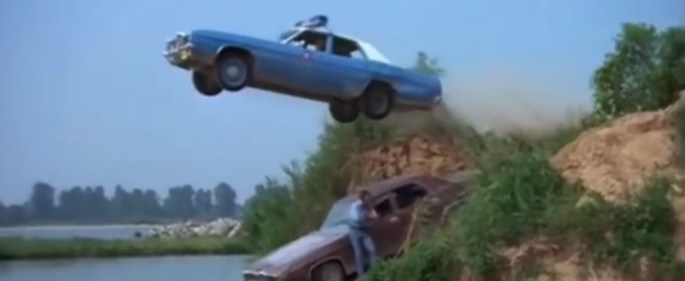
All hell breaks loose, there are numerous car chases, and an absolutely rip-roaring finale goes down with a car launch that is truly crazy. Jennifer Billingsley, Ned Beatty, Bo Hopkins, Diane Ladd, and Laura Dern in her screen debut (she went uncredited) populated the solid supporting cast, with Beatty giving a particularly fun performance as the chief baddie. Cinematographer Edward Rosson shot with what appears to be mostly natural or available light, with a particularly moody opening sequence depicting an ominous canoe excursion through the bayou that evokes nature in an unpredictable fashion. The twangy soundtrack perfectly fit the milieu, with Charles Bernstein’s original score later getting sampled by the cinematic kitsch-pop icon Quentin Tarantino in Kill Bill: Volume 1 and Inglorious Basterds. The legendary Hal Needham handled second unit direction and stunt coordination duties; his list of credits in various capacities is absolutely outrageous.

wlSargent, who also directed Colossus: The Forbin Project, The Taking of Pelham One Two Three, and the disasterpiece Jaws: The Revenge, wasted no time with the lean screenplay, and injected some sly social commentary into the proceedings; watch for a rather phenomenal long-take that incorporates various characters into a quick mosaic of Southern life. At one point, Steven Spielberg was set to make his feature directing debut with White Lightning, and you can even see some similarities between the film and his eventual big-screen introduction, The Sugarland Express. Kino-Lorber’s Blu-ray release looks and sounds excellent, with a picture quality that likely reflects the original release print, as nothing looks artificial, with that sense of shot-on-true-celluloid still intact. The film’s priceless original trailer and an new and funny interview with Reynolds are included as special features. A sequel, simply titled Gator, would be released in 1976 to similar success with audiences if not critics.

1

ROBERT WISE’S THE SAND PEBBLES — A REVIEW BY NICK CLEMENT

1

Robert Wise’s epic 1966 action adventure The Sand Pebbles, from a screenplay by Robert Anderson (who adapted from Richard McKenna’s book), stars the extra-manly Steve McQueen as a headstrong Navy officer working as a machinist on the fictional USS San Pablo in 1926, which is patrolling the Yangtze River while fighting rages between communist rebels and Chinese warlords. With the ship under threat after taking civilians aboard, the situation changes when McQueen shows that patented rebellious streak, taking matters into his own hands when he and his crew are ordered to protect American lives at all costs. Shot on location in Hong Kong and Taiwan over the course of seven months, The Sand Pebbles feels absolutely huge on all levels, boasting truly epic production values and a sense of scale that feels rather awe-inspiring considering our current day and age of create-everything-in-the-computer-laziness, while the narrative clearly doubled for a rather potent anti-Vietnam war statement.

2

Jerry Goldsmith’s brash and adventurous musical score is a major bonus, while the super-widescreen cinematography by Joseph MacDonald is positively eye-filling, with both large and small details. The deep supporting cast included Richard Attenborough, Richard Crenna, Candice Bergen, Mako, Larry Gates, Simon Oakland, and Marayat Andriane. A critical favorite and hit with audiences, The Sand Pebbles received eight Oscar nominations (including McQueen’s only Best Actor nod), and has remained a cable TV favorite for years. McQueen became physically exhausted after the extensive production, requiring a one year break from any filming, and dental work needed to repair an abscessed molar which he refused to have fixed while out of the United States. Originally released as a 182 minute feature, with a 196 minute roadshow version also screened after 14 additional minutes were discovered years after it premiered. The Sand Pebbles is available on Blu-ray and DVD in various releases.

3

PETER HYAMS’ THE STAR CHAMBER — A REVIEW BY NICK CLEMENT

1

Peter Hyams made a career out of crafting extremely entertaining studio actioners, and one of my favorite efforts from this underrated helmer is the 1983 mystery crime thriller The Star Chamber, which stars Michael Douglas as a paranoid and pissed-off Judge who gets too close to a shady group who may or may not be responsible for a series of murders, with the kicker being that their targets are those who have abused the criminal system, escaping on technicalities in cases where it’s obvious that they’re guilty. Written by Hyams and Roderick Taylor (The Brave One) from Taylor’s original story, the film has fun playing games with the audience, while the plot is just over the top of enough without becoming totally absurd, allowing you to slip into “movie-land” for two hours and take a wild ride. It’s also interesting to note that The Star Chamber shares some thematic and stylistic elements that were explored in David Fincher’s criminally underrated 1997 film The Game (both films are visually obsessed with finding the appropriate shade of brown), with the main linkage between the two clearly being Douglas and his patented brand of stressed-out and volatile dramatics.

2

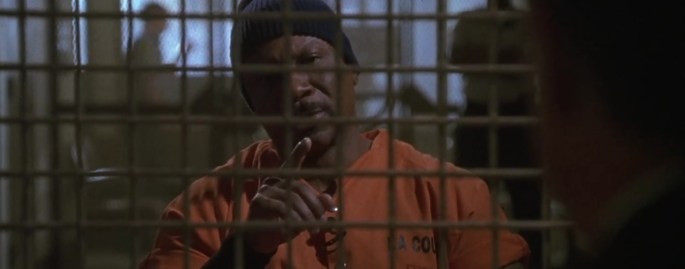
The superb supporting cast includes an ominous and sketchy Hal Holbrook, Yaphet Koto, Sharon Gless, James B. SIkking, David Faustino, Joe Regalbuto, Don Calfa, Larry Hankin, and David Proval. Hyams, who typically served as his own director of photography, teamed up with cameraman Richard Hannah to achieve The Star Chamber’s shadowy and burnished widescreen visual style. Michael Small’s unnerving score added intensity and suspicion to nearly every scene. Some interesting questions of morality are thrown into this pulpy genre stew, while Hyams’ sure hand behind the camera made for an extremely entertaining concoction that finishes up on an intriguing note of possibility for all of the key players. This is a shifty and nifty little actioner that is worthy of rediscovery, especially by those who are fans of Hyams’ unpretentious and rather awesome filmography.

3

ARI FOLMAN’S WALTZ WITH BASHIR — A REVIEW BY NICK CLEMENT

2

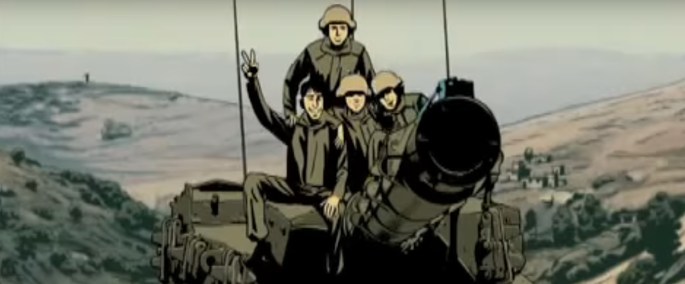
Ari Folman’s tour de force Waltz With Bashir is a mesmerizing visual experience that also packs an intense emotional wallop. Taking the form of an animated documentary, Folman narrates this searing portrait of war-time life with fellow veterans of the 1982 invasion of Lebanon in order to reconstruct his own memories of his military involvement during the conflict. The hallucinatory nightmarescape that Folman and his technical crew have created is nothing short of astonishing, and it’s truly unlike any film that you’ve ever seen. This isn’t rotoscope animation like Richard Linklater’s stunning neo-noir/sci-fi mash-up A Scanner Darkly, nor does it have the rounded-edge, glistening sophistication of a Pixar film. Waltz With Bashir is visceral, rough, demanding, and shocking; it’s a vision of “war as hell” in a manner that’s never been captured before, and that could likely never be repeated.

1