MICHAELANGELO ANTONIONI’S THE PASSENGER — A REVIEW BY NICK CLEMENT

1.jpg

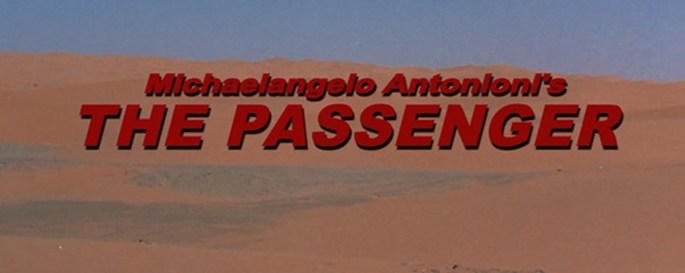
The Passenger is in my top 50 films of all time and is an absolute masterpiece of cinema. Jack Nicholson has never been more enigmatic or casually paranoid. Released in 1975, the quietly sinister narrative cooked up by screenwriters Mark Peploe, Peter Wollen, and director Michaelangelo Antonioni keeps you guessing all throughout, as nothing is as it seems in this picture. The impossible to understand tracking shot towards the end of the film still makes no sense even after you’ve seen how it was done – TRUE MOVIE MAGIC. Cinematographer Luciano Tovoli’s work on this film is nothing short of awe-inspiring. Nicholson plays a journalist who assumes the identity of a dead businessman while he’s on assignment in Africa, without realizing that he’s inadvertently posing as an international arms dealer.
2.jpg

Things get even more complicated when the beyond-sexy Maria Schneider appears. There’s a sense of the unknown to this film that keeps inviting me back for multiple visits per year. Seeing this on the big screen in Los Angeles, with a very stoned audience, was a major highlight; I can remember people blazing-up in the NuArt on more than one occasion. Antonioni made some truly breathtaking films (Blowup, Red Desert, La Notte, L’Eclisse, L’Avventura, Zabriskie Point) but this one is likely my favorite. All of his films require the proper state of mind before delving in, but once you’ve “gotten there,” there are few places more heady and exciting. Immediately engrossing and hugely ambitious, this is an existential drama like no other, a piece of introspective cinema that gets richer and richer with each experience.

3

ROBERT ZEMECKIS’ ALLIED — A REVIEW BY NICK CLEMENT

3

Allied is an old-school entertainment made with new-school aesthetics, a film that feels refreshingly out of step from the constant demands of the studios: a star-driven, non-franchise, and thoroughly polished piece of filmmaking for adults that carries the express purpose of providing a good night out at the movies. Directed by Robert Zemeckis (one of our last true movie-magic showmen) and written by Steven Knight (Locke, Dirty Pretty Things, Peaky Blinders), this extremely well-crafted film benefits from an excellent third act, luxurious production values, and nearly blinding star wattage from the extra-glamorous duo of Brad Pitt and Marion Cotillard. The two of them play spies who meet up on a job in Casablanca in 1942, looking to assassinate a high-ranking Nazi commander while posing as husband and wife. The opening passages of the film certainly evoke all of the movies from yesteryear that the filmmakers so obviously are in love with, while Knight’s script stays intimate with the two main characters for the entire piece, allowing for playful banter and unexpected surprises. But the hook of the film rests on the juicy notion that the wife might really be a German spy, making things all the more complicated as the two lethal love-birds have gotten married and moved back to London during the height of the war. If she’s in fact a spy, Pitt has been given orders to execute her on the spot. Is she or isn’t she, and will he or won’t he?

2

When I first saw the trailer, I figured that the overall effectiveness of the film would rest in the finale, and how the ultimate reveal would be treated and dealt with. And while I’d never risk spoiling anything that goes down in this confident and glossy confection, I’ll allow that the third act is genuinely riveting, with Zemeckis ratcheting up the suspense thanks to supremely tight editing by the team of Jeremiah O’Driscoll and Mick Audsley. The gorgeous widescreen cinematography by Don Burgess is aided immensely by the seamless integration of some sensational CGI/special-effects and the evocative production design from Gary Freeman, while Pitt and Cotillard both look too sexy for words, costumed to an inch of their lives by designer Joanna Johnston, with Pitt digitally scrubbed into Golden Boy Adonis mode, and Cotillard radiating sensuality and potential duplicity at nearly every turn. Knight’s sharp and smart script features strong dialogue, sensible plotting, and nothing that felt over the top or unnecessary. Alan Silvestri’s score hits all the proper notes no matter the scene. And for Zemeckis, his work on Allied marks yet another surprise effort after so many intensely CGI-driven spectacles, pairing extremely well with his Denzel Washington collaboration, Flight, in that they’re both decidedly R-rated endeavors that will appeal to an older audience and likely to nobody else. I loved how this film felt like one of those vintage studio programmers from back in the day, except gussied up with sex/nudity, bloody violence, and salty language.  This is a robust piece of work from everyone involved.

1

STANLEY KUBRICK’S THE KILLING — A REVIEW BY NICK CLEMENT

1

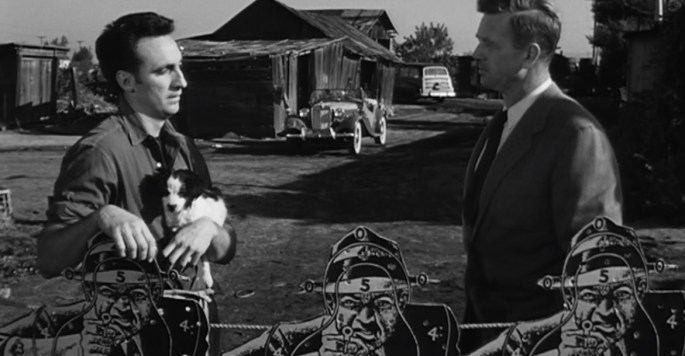
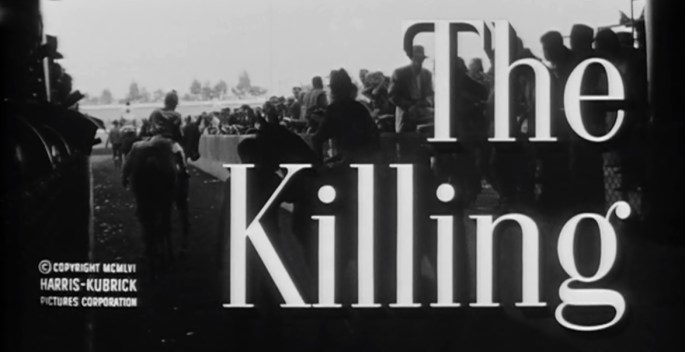
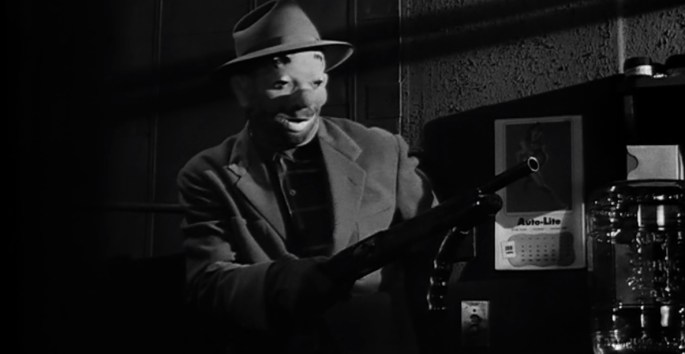
The Killing is quite possibly Stanley Kubrick’s most outright entertaining film, and it’s definitely at the top of my list in terms of favorite noir crime thrillers. Released in 1956, this was Kubrick’s third feature film, and was based on the Lionel White’s novel clean break; Kubrick and Jim Thompson co-wrote the adaptation. The plot centers on a complicated robbery during a horse race and the various double and triple crossings that occur due to everyone in the narrative being extra-duplicitous. Sterling Hayden was super manly, fronting a terrific ensemble which included Coleen Gray, Vince Edwards, Elisha Cook Jr., Marie Windsor, Jay C. Flippen, Ted de Corsia and Timothy Carey.

2

The stark black and white cinematography by Lucien Ballard was a perfect match for the pulpy material, while the dialogue zings, zigs, and zags with punchy grit due to the stern line readings. The ending is appropriately tragic, never letting anyone off the hook. Despite excellent critical notices at the time of its release, the film failed to secure a traditional release from a major studio, and quickly died with audiences. But many people consider it to be the first film to truly show off some of his more trademark aesthetic touches, and would pave the way for Paths of Glory, which would follow the following year.

4

MABROUK EL MECHRI’S JCVD — A REVIEW BY NICK CLEMENT

2

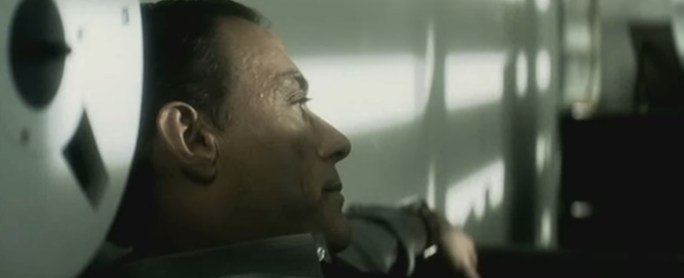
JCVD is an extremely stylish, witty, and clever send-up of action movies and of the kickboxing superstar Jean-Claude Van Damme, with a unique meta-narrative that folds over on itself in more than a few ways. Energetically directed by Mabrouk El Mechri from a script he co-wrote with Frédéric Benudis, JCVD stars Van Damme playing a slightly exaggerated version of himself: burnt out, broke, desperate, and clinging to his last remaining grips at sanity. The plot gets complicated when Van Damme is framed for the robbery of a postal office, with a Dog Day Afternoon-type scenario taking place outside. The film is a comment on the direct-to-video action movie genre, Van Damme’s celebrity status, and what it’s like be past your prime in a young man’s game. Two major highlights are the opening sequence (all one, bewildering hand-held camera shot) and a scene at the film’s mid-point where Van Damme speaks directly to the camera, delivering an apology of sorts for all of his lurid and destructive behavior, both personally and professionally. It’s oddly moving, it’s funny, it’s sad, and it’s all very well done. This will be a major surprise for most people who give it a viewing.

1

KELLY REICHARDT’S WENDY & LUCY — A REVIEW BY NICK CLEMENT

1

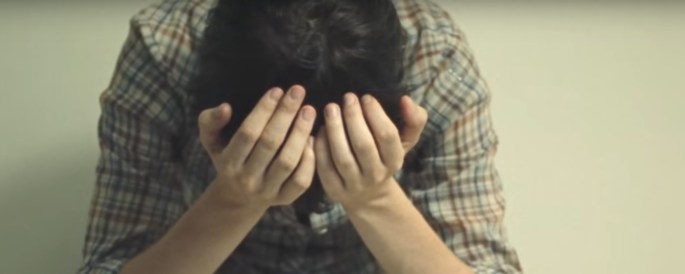
Kelly Reichardt’s emotionally felt and deeply poignant Wendy and Lucy is a masterwork of modesty, a film filled with nuance, subtlety, and intense compassion for the human (and animal) condition. Michelle Williams, who was robbed of an Oscar nomination, gave a deeply committed performance as a loner-type woman searching for her lost dog in small-town Oregon, etching a startling portrait of a woman who is literally at the end of her mental and physical rope. Reichardt’s unsentimental, extremely honest and affecting narrative offers multiple glimpses into the soul of a person, and how they process regret, loss, and acceptance, all over the course of 80 minutes. Sam Levy’s beautiful, naturalistic cinematography never did anything else other than capture each moment with quiet simplicity, which allowed Williams the free-range to inhibit a volatile character who is always searching for meaning in nearly every on-screen moment. There’s literally nothing wrong with any part of this film; I see no way that it could have been made better, and I usually reject the notion of being so concrete when it comes to art, because, after all, movies are a very subjective experience for everyone. But here I can firmly state that there’s not a fault to be found in Wendy & Lucy. Reichardt has unassumingly become one of cinema’s most vital voices, with unique gems such as Old Joy, Meek’s Cutoff, Night Moves, and the upcoming Certain Women (can’t wait to see it…) on her phenomenal filmography.

2

LAWRENCE KASDAN’S THE BIG CHILL — A REVIEW BY NICK CLEMENT

1

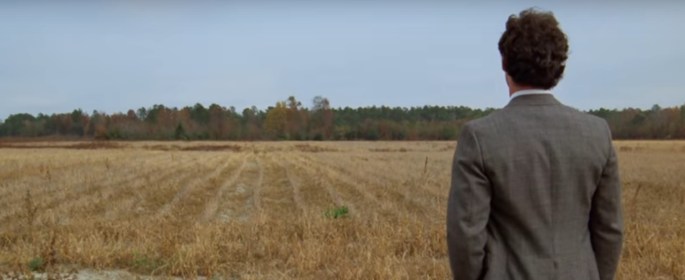
This is an absolutely wonderful movie, filled with warmth, compassion, sensitively drawn characters, and real life situations that cut to the core of friendship and love. Released in 1983, Lawrence Kasdan’s The Big Chill has endured throughout the decades because, despite being over 30 years old, it doesn’t feel dated, as the themes that are discussed and explored can’t help but always feel relevant or important. Concerning a group of college friends who reunite after 15 years after the suicide death of one of their classmates, the star-studded cast is nearly unconscionable to contemplate in retrospect: William Hurt, Glenn Close, Tom Berenger, Jeff Goldblum, Kevin Kline, JoBeth Williams, Mary Kay Place, and Meg Tilly were all superb, creating a group dynamic that feels electric to observe. There’s an incredible sense of organic friendship all throughout the film, with everyone feeding off of one another in the ensemble, never trying to show each other up, but rather allowing for a mosaic quality to overtake the humble proceedings. This film truly was a showcase for all of the acting talent.

2

Kasdan’s sad, humorous, intelligent, and introspective narrative allowed for scenes to play out in a very naturalistic fashion, with friendships and romantic relationships tested and rekindled over the long weekend that the story comprises. The film’s casual visual style also never intruded on the actors or the words, as everyone knew that the power of the material was contained in the delicate strands of the narrative. Kevin Costner’s scenes were famously deleted from the final cut; Kasdan has stated that there’s no “director’s cut” floating around with the additional footage. The prolific Michael Shamberg (Pulp Fiction, A Fish Called Wanda, Gattaca) was the film’s main producer. Filmed on location in South Carolina, the production used the same house that was showcased in The Great Santini. A short-lived television adaptation called Hometown was attempted by CBS but was quickly cancelled. The film’s robust classic rock soundtrack includes cuts from The Rolling Stones, Credence Clear Water Revival, Three Dog Night, The Temptations, Marvin Gaye, and Aretha Franklin. The Criterion Collection offers an immaculate Blu-ray with ample special features.

3

JASON REITMAN’S THANK YOU FOR SMOKING — A REVIEW BY NICK CLEMENT

2

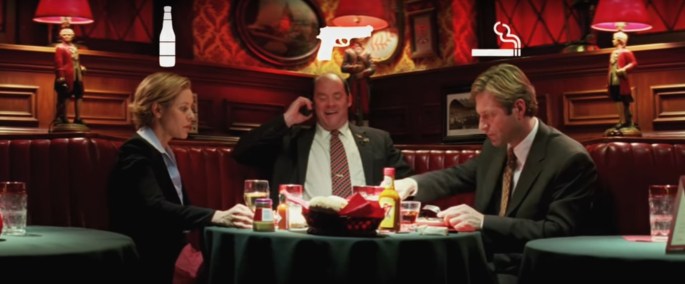
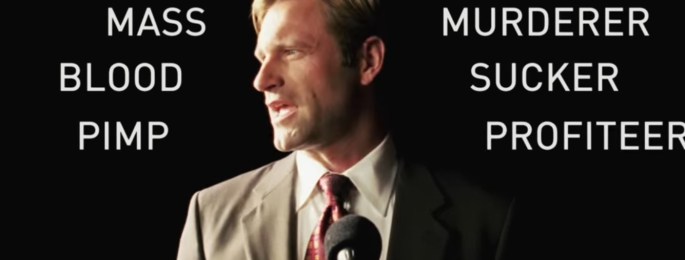
Thank You For Smoking was Jason Reitman’s first film, and it’s still his best, though Up in the Air comes close. This is a razor-sharp satire featuring Aaron Eckhart in a totally blazing performance as a cigarette lobbyist who will do anything to protect the product that he knows is killing lots and lots of people. Based on the book by Christopher Buckley, Reitman’s adaptation is witty in both a verbal and pictorial sense, with not one wasted scene, while every character is excitingly drawn, and the fascinating comments that it makes about a variety of topical subjects still feels very fresh despite just hitting its 10th anniversary this past March.

3

Maria Bello, David Koechner, JK Simmons, Sam Elliot, William H. Macy, Katie Homes, Cameron Bright, Robert Duvall, and the absolutely hilarious team of Adam Brody and Rob Lowe all added terrific support, while Eckhart was given his richest performance since In the Company of The Men, which is still one of the iciest movies I’ve ever seen. The film also boasts very stylish technical work, thanks to cinematographer James Whitaker’s bold visuals and film editor Dana E. Glauberman fleet pacing. Cynical, mean, and all-too-true, there are big laughs in this dark comedy, and everything is coming from a place of intelligence all throughout.

1

COURTNEY HUNT’S FROZEN RIVER — A REVIEW BY NICK CLEMENT

1
Courtney Hunt’s quietly electrifying debut Frozen River was everything cinema should be – thought provoking, risk-taking, strange and new, and extremely powerful. So why has it taken Hunt nearly a decade to get a second feature up on movie screens? Anchored by Melissa Leo’s Oscar nominated and totally blistering performance as a woman nearing her emotional breaking point, Frozen River subverts its genre roots (it’s a thriller but uniquely so), and by its conclusion, provides a strange tableau of hope amidst a grim and excessively cold background of despair. The plot revolves around the smuggling of illegal immigrants over the Canadian/NY border in Mohawk territory, with shades of Wages of Fear/ Sorcerer thrown in for good measure. What transpires is unpredictable, believable, and hugely cinematic, with every creative contributor nailing their role so that the entire piece feels tightly contained, economical, and exacting.
2
 
Co-starring Native American actress Misty Upham as the woman who brings Leo’s character into the smuggling ring, Frozen River takes it time mounting an intricate, intimate story that reflects upon the problems of these two women, who while coming from very different social circles, are very much alike. There is a distinct feeling of tension running throughout every scene of Frozen River; you never know what’s going to happen from moment to moment. Simple plot strokes become major developments, and Hunt’s expertly conceived original screenplay (which was Oscar nominated) never sags for a second, allowing all of its characters to come full circle, and for the plot to connect all of its dots in a richly satisfying way. The desolate cinematography by Reed Morano truly conveyed a bitterly cold landscape that sends a reflexive shiver down your spine. The ending packs a serious punch and it’s something you’ll want to discuss right away.
3

ROBERT ALTMAN’S THE PLAYER — A REVIEW BY NICK CLEMENT

the-player

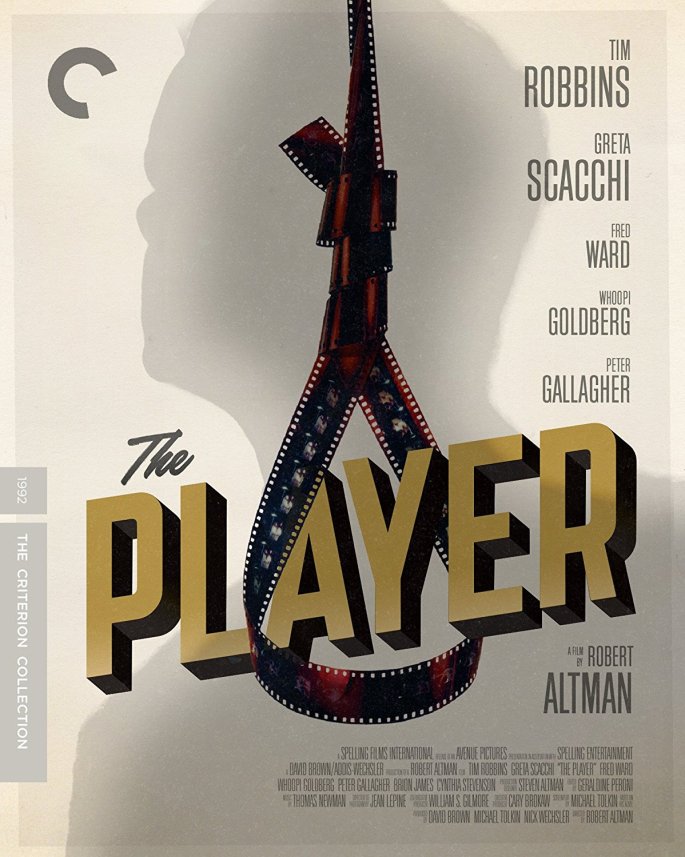
The Player is my favorite film by Robert Altman. It was also the first film I saw by this cinematic master, and I became instantly fascinated at the ripe age of 14 by this super-smart satire of Hollywood and the various entanglements that make up a day in the life of a big time studio executive. Tim Robbins was perfectly cast as a paranoid producer that kills a fledgling screenwriter who he things has been stalking him; this movie frays the nerves while retaining a sly comedic vibe, a tone that’s nearly impossible to pull off. But that’s what Altman and his creative team did, picture after picture – subvert your expectations, play around with genre, and toy with your feelings while delivering a totally unique viewing experience. Michael Tolkin’s acerbic, keep-you-guessing screenplay (based on his book) knew exactly how to nail all of its satirical targets while still providing the viewer with an emotionally complex piece of storytelling with flawed characters who explore genuinely intriguing moral territory.
The cameos are endless and rather hysterical at times, the use of overlapping dialogue is completely brilliant (par for the course with Altman), the sex scene between Robbins and ultra-hot Greta Scacchi is the epitome of steamy, and the roll-call of supporting players is too long of a list to mention here; no stone was left unturned by the casting department. Thomas Newman’s sublime score is both ominous and playful, which is no easy feat, while cinematographer Jean Lepine provided a casual sense of heightened style that’s very much worth studying; the use of zooms are rather remarkable. Geraldine Peroni’s adroit editing juggled multiple characters, endless speaking parts, simultaneous plot threads, and did it all with grace and relaxed confidence. The opening tracking shot is a thing of intricate beauty. Impeccable timing, and unforced humor, while the finale stings in that special way that has made Tinsletown one of the most famous places to dissect and mock – the smart ones get away with it. The somewhat recently released Criterion Blu-ray is perfection.

the-player

ANTHONY MANN’S WINCHESTER ’73 — A REVIEW BY NICK CLEMENT

2

One of my favorite Westerns and containing one of my favorite performances from James Stewart, the 1950 film Winchester ’73, from director Anthony Mann, is a hugely entertaining saga of cowboys and Native Americans and while not as thematically dense as some of the other genre efforts from that decade, still stands as a robust piece of escapism that has sturdy re-play value and a great sense of humor. Starring a terrific ensemble including Shelley Winters, Dan Duryea, Stephen McNally, Millard Mitchell, Charles Drake, Will Greer, and with early performances from Rock Hudson, Tony Curtis, and James Best, the trigger-happy narrative centers on highly prized rifle and the various people who come into contact with it, with potent adventure subplots that up the excitement all throughout the fast paced 90-minute run-time. This was the first Western that Stewart and Mann would team up on, with the director taking over the film from initial director Fritz Lang, who left the project over creative differences with Universal Pictures. The witty and incident-packed screenplay by Borden Chase and Robert L. Richards (from an original story by Stuart N. Lake) never stopped for a moment, and with Stewart fronting the film with total gravitas and authenticity, the entire film is just too good to resist.

1