ANTOINE FUQUA’S TRAINING DAY — A REVIEW BY NICK CLEMENT

2

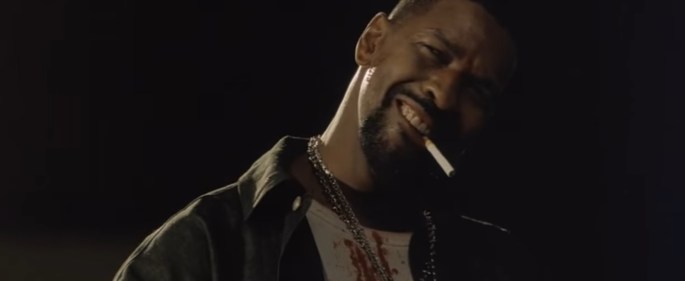
Training Day continues to be one of my favorite modern cop films. It smartly balanced entertainment value, social commentary, and genre expectations, with David Ayer’s superb script feeding into director Antoine Fuqua’s muscular visual style, aided by polished yet gritty camerawork from Mauro Fiore, and razor sharp editing courtesy of Conrad Buff. Denzel Washington delivered a massive lead performance as a morally bankrupt and wildly corrupt Los Angeles narcotics officer, with Ethan Hawke providing extremely strong and emotionally engaging support as a relative newbie who is taken under Washington’s volatile wing for a 24 hour period, where literally anything can (and will) happen. Some people complained that Ayer’s highly quotable original screenplay was too contrived, and yes, I’ll submit that much has to happen in a very specific way for the story to arrive at its destination. But I don’t care about any of that. This is a movie, not real life. And as presented by the creative team, this is a thrillingly cinematic tale of both sides of the law, and I respected how Ayer and Fuqua went for the hot-blooded jugular in all instances. The dynamic ensemble cast added colorful support, with Scott Glenn, Tom Berenger, Dr. Dre, Snoop Dogg, Nick Chinlund, Peter Greene, Cliff Curtis, Raymond Cruz, Macy Gray, Noel Gugliemi, Harris Yulin, and an especially sultry (and fully nude) Eva Mendes as one of Washington’s various women on the side. Tough and violent but never over the top or too loud for its own good, this is easily one of the very best of Fuqua’s efforts, duking it out with the even more ambitious policier Brooklyn’s Finest for top prize honors.

1

GELA BABLUANI’S 13 TZAMETI — A REVIEW BY NICK CLEMENT

2

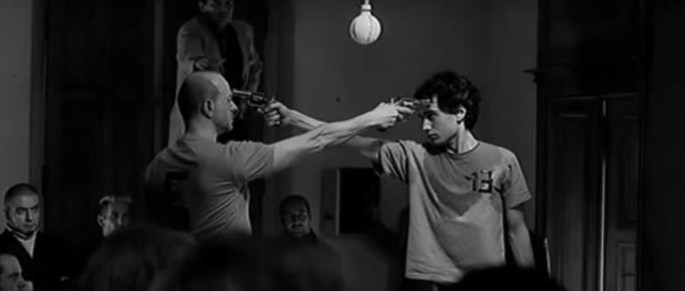
13 Tzameti, from director Gela Babluani, is a riveting piece of filmmaking that I’ve only needed to see one time, as I remember each and every moment, and honestly, I think my palms might still be a tad sweaty from the experience. Shot in shadowy and smoky black and white by cinematographer Tariel Meliava, the plot concerns a young immigrant worker (Georges Babluani, the director’s younger brother) who lucks his way into a Russian roulette tournament via a series of mysterious notes, but I guess that would depend on your definition of the word “luck.” The tension in this film is nearly unbearable, you never know what’s going to happen, and because the film is comprised of actors you’ve likely never seen, it becomes all the more engrossing and scary; there’s no movie stars here to save the day. Babluani was unfortunately coerced by Hollywood producers to remake his own film, and while I’ve never seen it, the fact that it sat on the shelf for a long period of time probably speaks to the overall quality; he’s also yet to issue a follow up effort which seems a shame. But beyond the needless remake, this is one of the more unnerving foreign language films I can think of, presenting a sinister, suspenseful world with deep swaths of mordant black comedy to match the visceral nature of the high-stakes “games” being played.

1

TODD HAYNES’ I’M NOT THERE — A REVIEW BY NICK CLEMENT

1

When one really takes a hard look at all of the films released in 2007, you really start to form the idea in your head that more great movies came from that year than possibly any other since the beginning of the 2000’s. Yet another superb piece of cinema from that year was Todd Haynes’ experimental, eclectic film I’m Not There, a willfully strange and bold work that strenuously avoided the routine conventions of the Hollywood musical biopic. Bob Dylan’s diverse career and life was the subject at hand, and Haynes, who had previously directed the colorful and piercing satire of 1950’s melodramas Far From Heaven, took his audience on a trippy, surreal, occasionally frustrating ride through the many moments of Dylan’s impressionistic life. Abandoning the traditional three act structure and casting six different actors to play versions of Dylan, Haynes’ film is unique and fresh in ways that seem almost impossible for the genre. Starting with the film’s title and continuing on with its defiance of a conventional narrative, I’m Not There is about how Dylan was/is, essentially, a vapor of an individual. Representing different things to different people and different points in time, Haynes’ nervy decision to cast multiple actors as the singer was an audacious move, a stunt that repeatedly paid off. It allowed the audience to indulge in a multitude of feelings and sensations about the legendary singer, and the actors he chose were more than up to the task.

2

And what a roster of talent he assembled: Christian Bale, Cate Blanchett, Richard Gere, Heath Ledger, Ben Whishaw, and youngster Marcus Carl Franklin all took on their roles with gusto and passion. All of them did splendid, varied work, with Blanchett leading the pack, followed closely by Ledger and Bale, and though I initially felt that Gere was miscast, multiple viewings have slightly quelled that first impression. They all brought a distinct style to their interpretation, and when melded all together, the result became mildly trippy to experience, as the various performances all help to bridge the film’s desire to marry the expected with the unexpected. I’m Not There was an artistic expression first and foremost, with entertainment running second in the goals department. It’s personal and uncompromising in its vision and design, and it’s unlike any other musical biopic I’ve ever seen. And if you’re a fan of Dylan (which I assume anyone who will take the time to watch this film will be), the music is predictably smashing, with a wide range of the master’s songs on display.
3

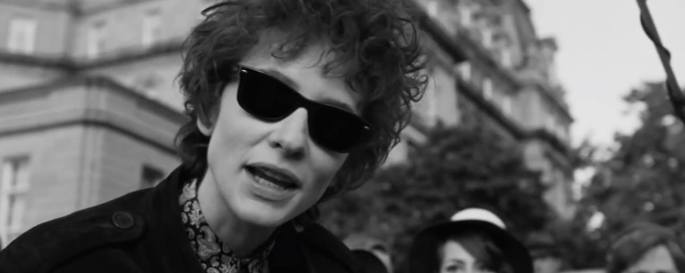
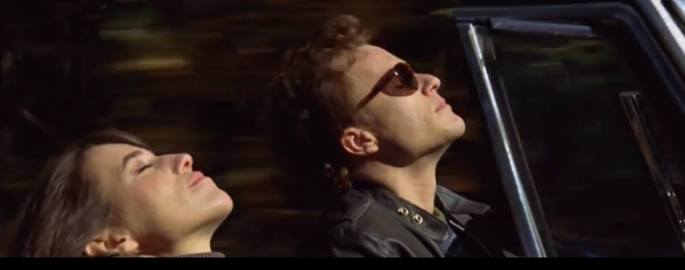
Haynes, who co-wrote the film with the supremely talented writer/director Oren Moverman, cut back and forth between the various actors, forming a kaleidoscope effect of emotions, styles, and moods. Blanchett (brilliant) is the drugged out Dylan, unable to respond adequately to the press and critics, stumbling around in a stony daze. Ledger is a famous actor playing a role in a film that is Dylan-esque; he’s married (to the lovely French actress Charlotte Gainsbourg) and has a kid and shows zero desire to be a part of the family dynamic. Bale is Dylan as innovator and creator; one of the best scenes in the film is the infamous Virginia Beach concert where Dylan went electric for the first time, much to the anger of his loyal fans. Whishaw, who was phenomenal in the criminally underrated Perfume: The Story of a Murderer, was a bit underused as the talking-head Dylan, spouting off lines of psychological assessment that work as links between the segments. Franklin, who has a natural screen presence despite his young age and relative lack of acting experience, is Dylan represented as naive child, and the tender moments with Franklin singing with some train hobos is lyrical and sweet. And Gere, who roughly approximates Dylan when the singer took a role in Sam Peckinpah’s classic Western Pat Garrett and Billy The Kid, plays Dylan as a lost soul, drifting around a Fellini-esque circus-setting that contains all manner of magical realism with direct homages to 8 1/2.

4

I’m Not There was crafted with love, passion, and reverence for Dylan by Haynes and Moverman, and it’s a film for anyone who considers themselves a true Dylan fan. The beautiful texture and diverse multi-format cinematography by the estimable Ed Lachman (Far From Heaven, The Limey) is a pleasure for anyone who considers themselves a cinematography buff. And as I mentioned earlier, the music is dynamic. I’m Not There is a private, challenging film that will certainly frustrate viewers who go into it looking for easy answers and clear-cut ideas. Haynes, who has established himself as a singularly idiosyncratic filmmaker (aside from the brilliantly conceived Far From Heaven his work includes the stunning glam-rock expose Velvet Goldmine, the creepy domestic “thriller” Safe, and last year’s achingly romantic Carol), is an artist working overtime in artist mode, never interested in playing it safe or capitulating to the studio suits. This is an epic yet intimate film that works up a full, heady stream of images, sound, and ideas, and culminates with an exceptional final shot that beautifully wraps the film up.
5

M. NIGHT SHYAMALAN’S THE VISIT — A REVIEW BY NICK CLEMENT

3

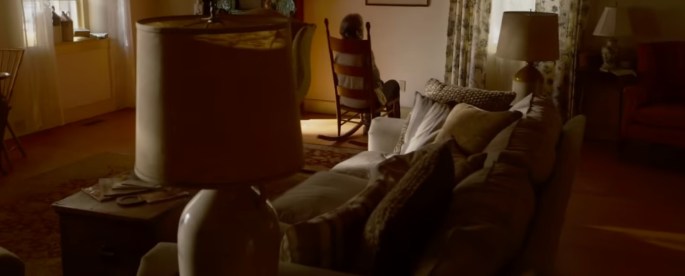
The Visit is a hoot. Combining odd humor and effective doses of familiar horror tropes, writer/director M. Night Shyamalan dropped this film in theaters just about a year ago, and it did strong business and was met with favorable reviews. And I can see why. It’s a fun movie. Nasty, clever, silly, and funny in equal doses, the narrative pivots on the sadistic notion that your otherwise pleasant grandparents might be up to some really bad stuff in their seemingly comfortable country home. Working with the brilliant cinematographer Maryse Alberti (Creed, The Wrestler, Velvet Goldmine), Shyamalan actually created a legitimate reason for the found-footage presentation that he offers up, and as a result, the jittery camerawork coupled with fast edits can’t help but unnerve the viewer in more than one instance, even if a few lapses of logic prevent the film from feeling truly air-tight. The performances are all extremely well done by the two annoying-on-purpose kids (Olivia DeJonge and Ed Oxenbould) and the sinister elderly couple (Deanna Dunagan and Peter McRobbie), with everyone getting their own individual moment(s) to shine while creating a hostile and potentially dangerous vibe as a group. Kathryn Hahn bookends the piece and is her usual awesome self. But it’s the level of humor in The Visit that really took me by surprise, as I’m always a big fan of movies that mix tones and aren’t afraid to be a little different. I hope the solid success of this film is merely a warm up to Shyamalan’s upcoming chiller, Split, because just from the trailer, that one seems loaded with promise.

2

DAVID ANSPAUGH’S RUDY — A REVIEW BY NICK CLEMENT

2

I could cry just THINKING of this movie, let alone watching it from start to finish or in bits and pieces or for just 30 seconds. The amount of personal triumph that is explored and honored in this rousing true life football story can never be underestimated; underdog stories are rarely this emotionally rewarding and dramatically effective. Directed with heart and soul by David Anspaugh (Hoosiers) and written with grace by Angelo Pizzo, the film features a splendid performance from Sean Astin as the titular hero, a guy deemed too small by so many, but who had the courage and determination to never back down from any challenge. The final scene of this film leaves a massive lump in my throat, and I can’t help but cheer and sob when Rudy leads his fellow teammates out of the Notre Dame dressing room and onto the field, in front of thousands of screaming fans. There’s a ridiculous cast featuring then-up-and-coming actors like Vince Vaughn and John Favreau, with old pros Ned Beatty, Robert Prosky, Jason Miller, and Charles S. Dutton providing solid anchors for everyone in the robust ensemble. Oliver Wood’s naturalistic cinematography hits all the perfect notes on the field and off, while the tremendous musical score by Jerry Goldsmith goes beyond inspiring and into realms of the sublime. The film states in a text crawl that as of the time of the film’s production, no other Fighting Irish team member has been carried off the field since that happened to Rudy Ruettiger – I hope that this is still the case.

1

SYLVESTER STALLONE’S RAMBO — A REVIEW BY NICK CLEMENT

3

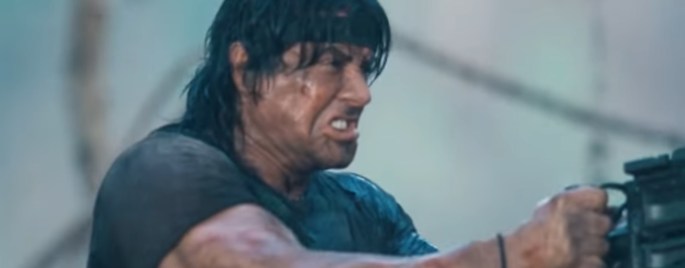
Sylvester Stallone’s blood-soaked 2008 Rambo reboot is an ultra-violent, nearly pornographic action flick that has very little else on its mind other than showing what happens when human beings are ripped apart by an assortment of small, medium, large, and extra-large fire arms, and in one particular instance, a rather famous knife. Seriously. There is an obscene amount of combat violence in this movie, all of it rather stunning to be hold, and if it becomes sort of computer-gamey because of all of the CGI blood-hits (what happened to good old fashioned squibs?), it’s no less rip-roaring and absurdly entertaining. The story that Stallone presents makes it easy to enjoy the carnage, as the baddies are beyond grotesque, rooted in some form of reality, and truly deserve what’s coming to them. The narrative hinges on Rambo being hired by a church pastor in an effort to save innocent missionaries who have been taken hostage by corrupt Burmese military units. And of course, there’s only one man who can save the day, and he’s more than ready for action.

2

You must give Stallone credit where credit is due – he refuses to give up as an actor and director and seems to be having genuine fun every time you see him up on screen. The plot of Rambo might be threadbare, but the action scenes are ridiculously gory and beyond over the top, at times begging to be immediately replayed as some of the individual moments of bloodletting are jaw-dropping. As captured by cinematographer Glen MacPherson, the film has a rough and tumble visual aesthetic, with lots of shutter retention and shaky-cam, which gives it a visual immediacy to match the insanity of the action scenes, which allows it to stand apart from the mostly PG-13 competition. People are SHREDDED in this pissed-off and hot-blooded actioner, with Stallone taking out his creative (personal?) aggressions on an enemy that more than deserves what’s coming. Whenever this one pops up on the HD movie channels, I can’t help but stop for a moment and check it out, as this is a movie that talks the talk and walks the walk.

1

OREN SHAI’S THE FRONTIER — A REVIEW BY NICK CLEMENT

1

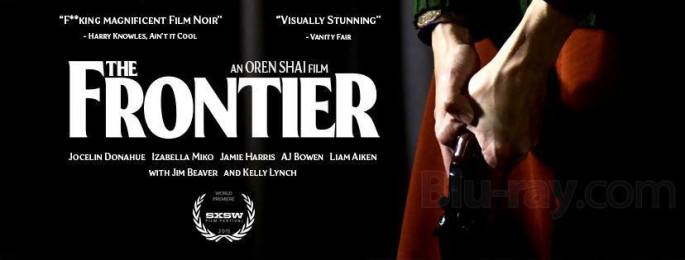
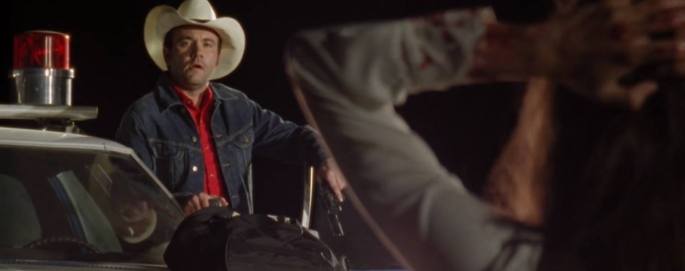
Sometimes, a film sneaks up on you and takes you completely by surprise. That’s what happened when I viewed The Frontier, a very stylish neo-noir/contemporary western mash-up from director Oren Shai. The less you know about this crafty, twisty, and totally terrific gem the better, as it offers up narrative surprises to match its extremely sharp sense of aesthetics. Clocking in at an extra-tight 83 minutes, the screenplay concocted by Shai and Webb Wilcoxen tips its hat to various genre staples while presenting its own brand of down and dirty atmosphere and attitude. The story pivots on the actions of Laine (the excellent and striking Jocelin Donahue), a loner who drifts into a desert town and stumbles into a plan to rip off some cash from a group of volatile thieves who have taken up refuge at a sketchy motel run by a potentially duplicitous owner named Luanne (Kelly Lynch in an out-of-nowhere performance of complete control and command).

4

What happens next I will leave for you to discover, but I will allow that the juicy scenario cooked up by Shai and Wilcoxen is thick with danger and potential violence, while various characters shuffle in and out of view, resulting in a film that feels compact yet bursting with possibilities. The supporting cast of Izabella Miko, Jim Beaver, Jamie Harris, A.J. Bowen, and Liam Aiken all turn in solid performances that perfectly fit the menacing milieu. On an aesthetic level, The Frontier is nearly impeccable, with extra-precise lensing coming from cinematographer Jay Keitel, who chose to shoot the project on 16mm film, and a creepy yet eclectic musical score composed by Ali Helnwein. The spare yet efficient production design by Lindsey Moran stresses open space and confined quarters, making great use of physical locations that project a sense of unease which adds another layer to the piece. Shai also co-edited the picture with Humphrey Dixon, and as a result, you get the sense that every single shot came out as fully intended by the director.

3

And I really enjoyed observing how Shai and Wilcoxen subverted numerous expectations all throughout, starting with having a female lead in a role that 99% of the time might have gone to a male; the film is all the more successful and enjoyable because of this one simple decision. The film keeps you in its grasp all the way until the absolute final shot, and feels uncompromised at every turn. After making its premiere at the 2015 South by Southwest Film Festival, indie specialist Kino Lorber acquired the film for release in cinemas and on physical media. The Frontier is currently playing in limited theatrical release, and will be available to stream via iTunes, Amazon, VUDU, and Hulu starting November 8th. The Blu-ray and DVD are available for pre-order, with a December 6th street date. This is a fantastic piece of pure cinema that casts its spell immediately, never looking back, and staying true to its convictions all the way until the cut to black.

2

LUCA GUADAGNINO’S A BIGGER SPLASH — A REVIEW BY NICK CLEMENT

3

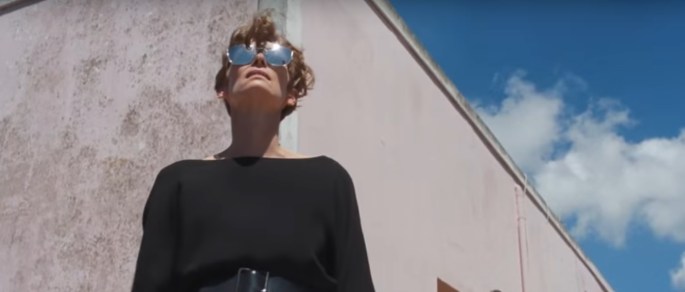
A Bigger Splash is one of those films where the primary interest is in exploring mood, atmosphere, and style before anything else. This is a movie about textures, surfaces, and bodies, and how people give off vibes (positive or negative) just by occupying the same space as others, without having to say much at all. In fact, the absolutely mesmerizing Tilda Swinton turns in a nearly wordless performance as a laryngitis afflicted rock star that is hiding away with her hunky photographer/filmmaker boyfriend (Matthias Schoenaerts) off the gorgeous coast of Italy, looking to escape the madness of her exhausting profession. But then, coming on like a gale force hurricane, a rowdy and rather obscene friend from the past (the incredible Ralph Fiennes) shows up looking for a place to crash with his sexy daughter (Dakota Johnson). What all goes down is less important from a plot stand point and more interesting and involving on an aesthetic level; while I didn’t see the darkly funny final scene coming whatsoever, I found the script by David Kajganich to move in surprisingly expected fashion, never truly offering up any major surprises, but remaining fully engaging all the same. All of the performances are extra delicious, with Fiennes portraying one of the most obnoxious cinematic creations that I’ve come across in a while, while Swinton loses herself, yet again, in another transformative performance that takes on a variety of interesting angles due to her uniqueness as a human being; this is her ode to David Bowie. Schoenarets and Johnson both make for sexy eye-candy, while it’s interesting to note just how many individual shots linger on exposed flesh; there’s an earthy, sensual quality to the film that feels almost tangible, with an open sense of sexuality that was refreshing.

2

So what it might lack in originality from a story stand point, the director, Luca Guadagnino, makes up for when it comes to his high sense of style. This is a work that’s completely aware of the fact that it’s a “movie-movie,” which allows it some creative freedoms not normally seen. I don’t think I’ve seen a movie in recent memory that willfully breaks the 180 degree rule as often as A Bigger Splash does, while it was interesting to note how Guadagnino and his exceptional cinematographer Yorick Le Saux (The Clouds of Sils Maria, Only Lovers Left Alive, Swimming Pool) placed the actors directly in the middle of the frame, often looking straight into the camera, thus providing a sense of heightened artificiality that’s bracing to observe and tonally adventurous. His previous film, I Am Love, was another collaboration with Swinton, and while I preferred that effort to A Bigger Splash, his newest feels like a logical extension, as it’s yet another film with a dreamy and seductive atmosphere that feels as if it’s been painted in vivid brushstrokes. Kajganich’s script also revels in black comedy, and the actors are all up the task, playing characters that move to the beat of their own drums, never fully understanding anyone else but themselves, which results in a mildly detached feeling while observing all of the action, which has the potential for violence and suspense.  The film is based on the 1969 movie La Piscine, and derives its title from the famous David Hockney painting from 1967. A Bigger Splash is now available on Blu-Ray, DVD, and various streaming platforms.

1

NANCY BUIRSKI’S BY SIDNEY LUMET — A REVIEW BY NICK CLEMENT

3
The immediately engrossing documentary By Sidney Lumet is going to be best appreciated by serious fans of his large and impressive body of work. Similar to this year’s more exuberant filmmaker study, De Palma, director Nancy Buirski wisely puts the focus on the director himself, but instead of being a blow by blow account of each film on Lumet’s distinctive resume, the documentary explores the various recurring themes that can be found in nearly all of his films, and how his upbringing shaped him into the storyteller that he would become. Despite never having won an Oscar for Best Director, his films amassed 46 nominations, with six wins, while Lumet would work tirelessly into old age, with 2007’s Before the Devil Knows You’re Dead being the final of 44 movies over 50 years in the business. And if he didn’t hit a home run every single time he released a picture, you could count on his efforts to be intellectual and serious-minded, never intentionally playing for the cheap seats, and always interested in character and story before sensation or artifice. In fact, Lumet might have been one of the more pragmatic and realistic big-screen directors of his day, less flashy than other “New York filmmakers” like Martin Scorsese and Spike Lee, but no less impassioned about that special city that never sleeps and the various people, places, and things that make it up. He got the city, and the city got him.
2
Lumet was a filmmaker with the sights and sounds and smells of New York City running through his veins, with a large number of his films taking place in and around the state, always knowing how best to capture the daily grind of one of the most iconic cities on the planet. Shot in 2008 before Lumet’s death, By Sidney Lumet smoothly cuts back and forth between fascinating talking-head footage of the legendary director recounting his life and work, with smartly chosen film clips from some of his better and slightly lesser known (and appreciated) pieces of work, which results in a brisk hour and 40 minutes of wise discussion, personal and professional introspection, and info-packed entertainment.
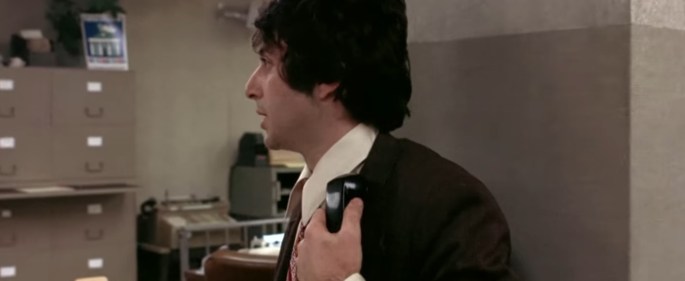
Some of my personal favorite efforts from Lumet would include Dog Day Afternoon, The Hill, The Offence, Before the Devil Knows You’re Dead, Power, Fail-Safe, 12 Angry Men, Prince of the City, Night Falls on Manhattan, and The Verdict. There are films of his that I’ve not yet seen, and titles that beg to be revisited. When someone leaves behind this many cinematic offerings, it can become rather daunting when trying to track down each and every movie. But when you consider Lumet’s output (nearly a film per year since he got his start in 1957), it’s a body of work that deserves the fullest sense of recognition and respect. In 2005, the Academy would rightfully bestow him with an Honorary Oscar for his life’s work. By Sidney Lumet, which was produced by RatPac Entertainment, is currently playing in limited theatrical release, and is set to air on the PBS program American Masters on January 2, 2017.
1

TED KOTCHEFF’S NORTH DALLAS FORTY — A REVIEW BY NICK CLEMENT

3

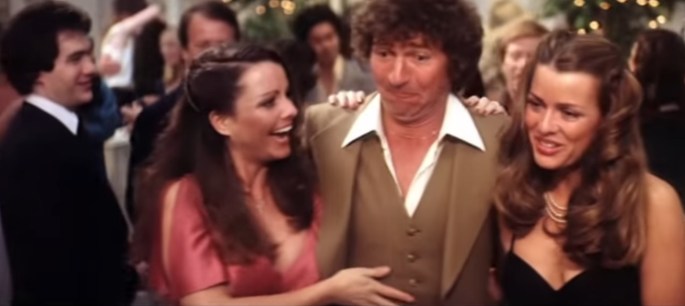
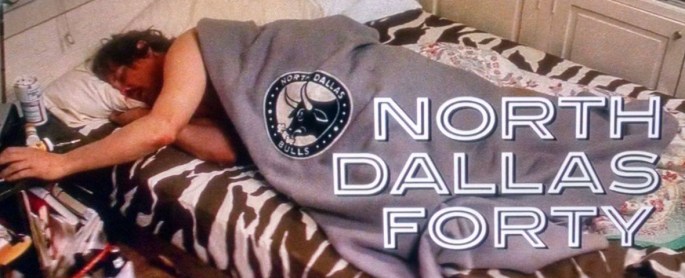
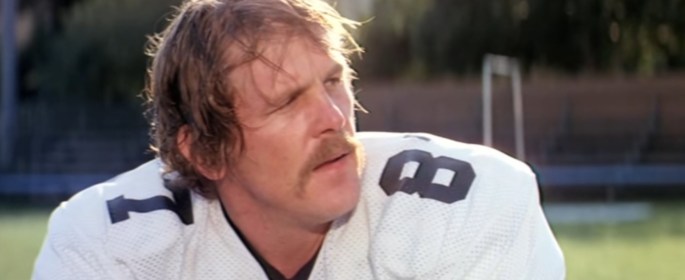
I had completely forgotten how stinging, funny, and sharp the 1979 film North Dallas Forty is, and how macho director and co-writer Ted Kotcheff (First Blood, Uncommon Valor, Wake in Fright) really captured a very specific tone that’s hard to pull off. Combining biting satire, themes of male bonding and friendship, and an observant eye for the game of football, this is definitely one of the better gridiron movies that I’ve seen, up there with Friday Night Lights, Any Given Sunday, and Rudy. Nick Nolte was fabulous as a broken down wide receiver and shared great chemistry with country star Mac Davis, playing a womanizing quarterback prone to the various excesses of the night life that accompanies a professional football player’s career. I was not surprised to learn that screenwriter Nancy Dowd did uncredited rewrites, as the anarchic spirit of her previous sports opus, Slap Shot, can be felt in numerous instances.

2

Paul Lohman’s naturalistic cinematography recalls some of his breezy collaborations with Robert Altman with that same sense of capture-it-in-the-moment grace, and I love the priceless final shot, which really sticks it to the man true and good. This is as much of a “football movie” as it is an indictment of an entire system and particular mode of thinking. Charles Durning, G.D. Spradlin, Bo Svenson, scene stealer John Matuszak, Dale Haddon, and an oily Dabney Coleman rounded out a very solid supporting cast, and despite the screenwriters apparently making significant departures from the source material (the project was based on Peter Gent’s bestselling novel), the film hits all of its intended targets and presents a fairly scathing critique of the greed and rowdy lifestyle that accompanies professional sports, and how the men on the playing field are sometimes left out to dry when it comes to their overall health and well-being.

1