KAREL REISZ’S SATURDAY NIGHT AND SUNDAY MORNING — A REVIEW BY NICK CLEMENT

6

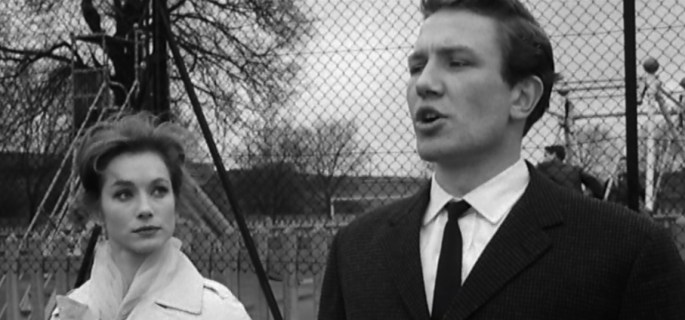
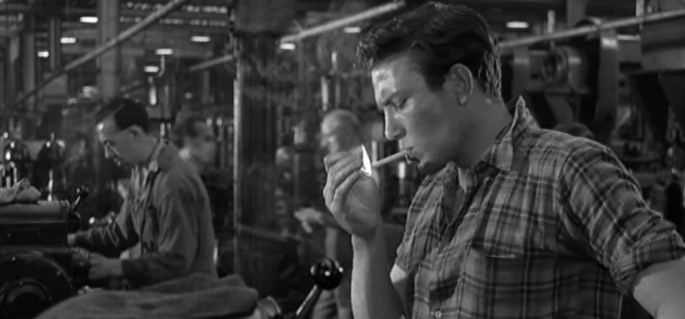
Directed by Karel Reisz and adapted from his own novel by Alan Sillitoe, the 1960 British film Saturday Night and Sunday Morning features the great Albert Finney in an absolutely phenomenal lead performance, playing a hard-working and even harder partying factory worker who spends most of his free time engaging in an affair with a married woman (Rachel Roberts, superb), getting involved with a sexually reluctant pseudo-girlfriend (the excellent Shirley Anne Field), and frequenting his favorite pubs in an effort to avoid the married middle-class lifestyle that he so firmly rejects. Things get very complicated when the married woman he’s seeing ends up getting pregnant, thus putting him in a very interesting spot, given that her husband also works with him at the machinery, and takes rather violent exception to the infidelity.
2

Issues of class distinction, sex, abortion, marriage, and the notion of what constitutes a “traditional lifestyle” are explored in a very intelligent and layered manner. Freddie Francis’ silky black and white cinematography meshed perfectly with John Dankworth’s pensive musical score. The film became a sizable hit in British cinemas, and is seen as one of the early efforts of the British New Wave of filmmaking. Reisz’s eclectic resume includes the grotesquely underrated Who’ll Stop the Rain, The Gambler, Everybody Wins, Sweet Dreams, and The French Lieutenant’s Woman. Prolific and influential producer Tony Richardson oversaw the production of Saturday Night, Sunday Morning, and also directed, amongst other films, the amazing Jack Nicholson film The Border, The Hotel New Hampshire, Blue Sky, Tom Jones, Ned Kelly, and The Entertainer. Available on DVD.
1

ROB ZOMBIE’S THE DEVIL’S REJECTS — A REVIEW BY NICK CLEMENT

3

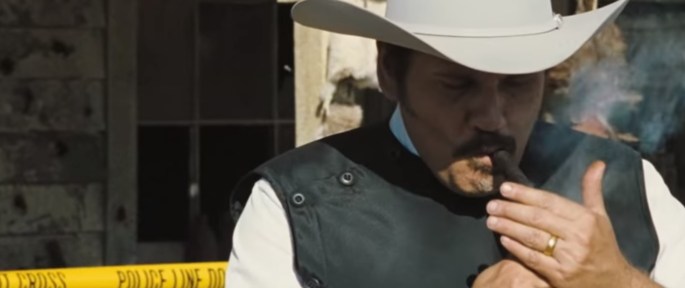
This is a disgustingly brutal and rather amazing film that never backs down or pulls any punches, going to some truly extreme places on a narrative and thematic level, resulting in an overall stunning piece of aesthetically ruthless exploitation cinema. I can still remember the first time I saw The Devil’s Rejects, and how utterly gob-smacked I was by the level of carnage, intensity, and general horror that greets nearly every scene and character in this disturbed actioner from cult-favorite filmmaker Rob Zombie. The performances are high-pitched, in your face, wildly cruel, and designed to repel; there’s not one “good person” to root for in this dangerous little flick, only evil and super-evil. When William Forsythe’s unhinged and deranged cop is your protagonist, well, you sort of know what you’re dealing with. And the fact that Zombie makes you spend so much time with the hideous Firefly family, allowing you to get to know them as individuals, regardless of his fucked up they are, it speaks to his intention of throwing the audience into a cesspool of mental and physical filth without ever offering any sense of relief.

2

Zombie knows what he’s doing as a director, at least in this film (I’ve not seen any of his other movies), and includes some smart homages to a few classic pictures (the Bonnie and Clyde-esque finale is riveting, and I’ll never think of the song Free Bird the same way again) while defiantly playing by his own, fully stacked and ultra-bloody deck of cards. The Devil’s Rejects almost dares you to look away or turn it off in a few spots; there’s a level of sadness to most of the on-screen behavior that keeps the necessary sting intact. Phil Parmet’s grungy cinematography projects clear-eyed menace in every moment, while the entire film will likely make you want to take a shower after you’re finished viewing. And yet, I think it’s absolutely incredible, wholly succeeding on nearly every level in which it aspires to, and is a work that feels so resolutely excited about the amoral hell-hole that it’s showcasing. This is a “strong-stomach” movie if there ever was one, and I think that was Zombie’s directorial motive all throughout conceiving, filming, and finishing this sick-puppy of a flick.

1

ALAN J. PAKULA’S PRESUMED INNOCENT — A REVIEW BY NICK CLEMENT

3

It’s no secret that I’m a big admirer of Alan J. Pakula and his brand of morally complex dramatic storytelling, and upon a recent revisit of his 1990 legal thriller, Presumed Innocent, I was reminded, yet again, how smooth and classy of a filmmaker he was, and how a film like this is basically non-existent on movie screens these days; material like Presumed Innocent has been sent to the ever-expanding realms of cable/premium television. This is a shame. Because sometimes, a solid potboiler is all you need when you’re searching for a piece of unpretentious cinematic entertainment. Starring Harrison Ford as a slick and successful prosecutor who is charged with the rape and murder of his mistress (the fabulously photogenic Greta Scacchi), you know from the start that not all is what it seems, and that the duplicitous characters might be holding secrets very close to the vest. Pakula and Frank Pierson co-adapted the shifty and involving screenplay which was based on the novel by bestselling author Scott Turow, and because the creative entities kept the film focused and tight, they never allowed the material to spill over into cartoonish histrionics or cheap plotting. The twists are true to the story, and felt tethered to an emotional core that you can understand if not accept; crimes of passion takes on multiple meanings in this film.

2

Prince of Darkness cinematographer Gordon Willis gave the film an appropriately crisp and clean visual sheen, never overplaying any one scene on an aesthetic level, instead allowing for a casually sinister vibe to creep to the surface. Evan Lottman’s brisk editing kept the pace steady and was in perfect synch with the unobtrusive yet dramatically effective musical score from John Williams and Richard Wolf. The rock-solid supporting cast consisting of John Spencer (in his debut!), Raul Julia, Brian Dennehy, Paul Winfield, and Bonnie Bedelia all provided excellent turns, while Ford got the chance to play a character who is at once a suspect and a victim, and as a result, delivered one of his more atypically conflicted performances. He’s not the usual man-of-action that many people had come to know him as from his previous films, and because of that, the material is all the richer for having him as the lead. A massive box office smash at the time of its summer release, this is one of those sturdy films that has played on cable forever, and recalls a simpler time in Hollywood where not every single picture was designed to either win 10 Oscars or sell lunch pails off of the back of a $250 million mega-production with endless CGI nonsense.

1

ADRIAN LYNE’S UNFAITHFUL — A REVIEW BY NICK CLEMENT

3

I’m a huge fan of Adrian Lyne’s sexy, stylish, and provocative work in general, and Unfaithful is easily one of his best films, filled with probing psychological underpinnings and juicy star turns from Richard Gere and Diane Lane, who likely delivered career topping work with her simmering and extremely erotic performance as a suburban housewife who is tempted by the tall, dark stranger. The thematically layered screenplay by Alvin Sargent and William Broyles Jr. never let anyone off the hook, peering into an abyss of jealousy, deceit, guilt, and temptation that felt honest and just as upsetting as it is enthralling. Casting Gere as the schlub was a sly touch, the film’s sleek visual style was movie-star glossy thanks to the superb talents of cinematographer Peter Biziou, and that dynamite sequence with Lane on the train, recounting her steamy indiscretions with the alluring Olivier Martinez, is an absolute all-timer in terms of hot-blooded cinematic sexuality featuring an actress unafraid to let it rip in a primal and absolutely passionate moment of nonverbal acting. The final scene is a true stinger in that it feels totally appropriate with its implications, allowing the audience to do a bit of thinking after the credits have rolled, while feeling organic and plausible. With only eight feature credits on his resume, I really wish Lyne had become even more prolific, as I’ve always found his work to be consistently entertaining and almost always underrated.

2

JAMES B. HARRIS’ COP — A REVIEW BY NICK CLEMENT

3

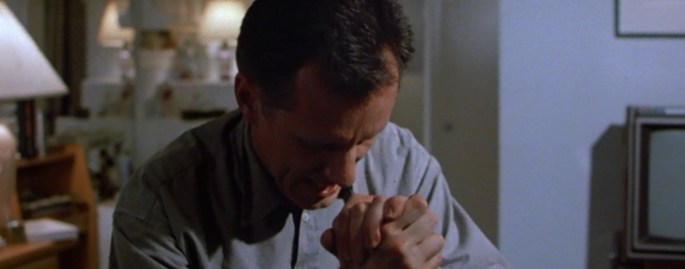
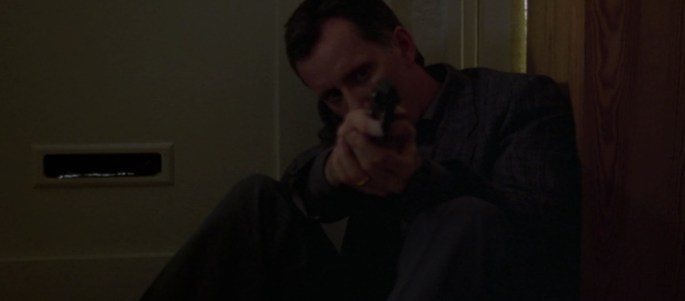
COP. The title says it all – blunt, upfront, and bold. This is a hugely entertaining film that goes over the top without ever becoming absurd, thanks to the loose-cannon ferocity of leading man James Woods, who delivered a powerhouse performance as a Los Angeles detective obsessed with piecing together the clues to a potential serial killer’s 15 year reign of terror, preying upon unsuspecting female victims. Adapted for the screen with vulgar wit and directed with an iron fist by journeyman multi-hyphenate James B. Harris, Cop is based on James Ellroy’s novel Blood on the Moon, and takes the viewer on a hellish trip through the sleazy nocturnal and just-as-sketchy daytime streets of the city of Angeles. This film has balls of steel and doesn’t care that it’s extreme and in your face and violent and downright nasty at times.

2

Woods was akin to an open-wound in this film, totally on fire all throughout, while Steve Dubin’s appropriately gritty and grimy cinematography bolstered the entire piece, and the final confrontation between Woods and his chief nemesis is an absolute stunner in all respects. The excellent supporting cast includes Lesley Ann Warren, Charles Durning, Raymond J. Barry, and Charles Haid, all of whom deliver sturdy performances. I absolutely loved every single second of this unsung diamond in the rough, which was released in 1988 and barely made a blip on the theatrical box office radar. But thanks to the amazing film enthusiasts over at Kino Lorber, Cop is available on Blu-Ray and DVD, and available as a DVD-in-the-mail from Netflix.

1

JOHN CARPENTER’S BIG TROUBLE IN LITTLE CHINA — A REVIEW BY NICK CLEMENT

3

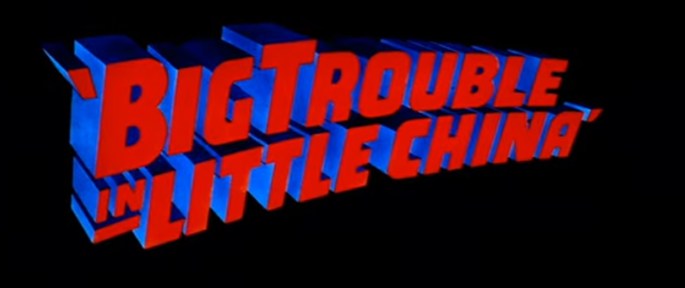
Big Trouble in Little China is an awesomely goofy movie that has a pleasure zone a mile wide, and because it’s so bonkers without ever looking back, it’s nearly impossible not to be fully entertained by the spirited, comic-book inspired antics on display. Despite bombing in theaters when it was released in 1986, John Carpenter’s action romp has found a massive cult following thanks in large part to the VHS-era and the huge cable movie boom of the 80’s and 90’s. Gary Goldman and David Weinstein’s original script (set in the old West circa 1880) was completely re-worked by Buckaroo Banzai helmer W.D. Richter, with the final result splicing martial arts, Asian sorcerery, genial comedy, big stunts, and lots of cheesy-awesome special effects into a tongue-in-cheek package that feels as audacious as it does harmlessly silly. Kurt Russell was absolute gold as beefy truck driver Jack Burton, all cocky swagger and macho bluster, while Kim Cattrall, Victor Wong, Dennis Dun, and James Hong delivered robust supporting performances.

2

The plotting is totally ridiculous and all the more enjoyable for being positively over the top; movies like this are a tough nut to crack on a tonal level but all of the creative parties knew exactly what they were doing. Dean Cundey’s shimmery widescreen cinematography is absolutely gorgeous in that old-school celluloid fashion, while the adventurous musical score from Carpenter and Alan Howarth set the perfect mood. And the sets and production design by John Lloyd were totally remarkable, resulting in a film that feels twice as big as its reported $25 million budget. After the lukewarm critical reception and box office failure of the film, Carpenter took a more independent direction with his filmmaking career before settling into lower-budgeted studio offerings with mixed success. While my favorite film of his continues to be Starman, and Escape from New York is a bonafide classic and The Thing a fan favorite for so many, there’s something rambunctiously exuberant about Big Trouble in Little China that really allows it to stand out in the crowd as an extremely memorable and offbeat piece of work.

1

ROBERT MONTGOMERY’S RIDE THE PINK HORSE — A REVIEW BY NICK CLEMENT

2

Ride the Pink Horse. I had never heard of this film until my father purchased the Criterion disc for me, but I’m not surprised that this esteemed purveyor of fine cinema decided to include this underrated and fantastic film noir in their extraordinary catalog. Released in 1947, the film was directed by actor Robert Montgomery, who also starred, and was adapted for the screen by Ben Hecht (Scarface), who based his devilish script off of the novel by Dorothy B. Hughes. Co-starring Wanda Hendrix, Andrea King, and Thomas Gomex in an Oscar nominated supporting performance, the narrative centers on a war veteran who descends upon a small town in New Mexico, looking to kick some ass and take some names over the death of one of his friends. This film has a shady and shifty narrative, juicy performances, magnificently stark cinematography, and a devilish musical score to tie everything together. Montgomery was incredibly commanding in the lead role, knowing exactly how to direct himself and take full advantage of the rest of his cast and pulpy material. This is a little cinematic gem that I’m glad that I finally got around to seeing.

3

M. NIGHT SHYAMALAN’S UNBREAKABLE — A REVIEW BY NICK CLEMENT

3
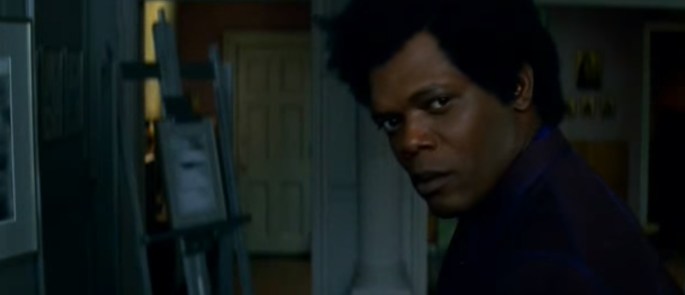
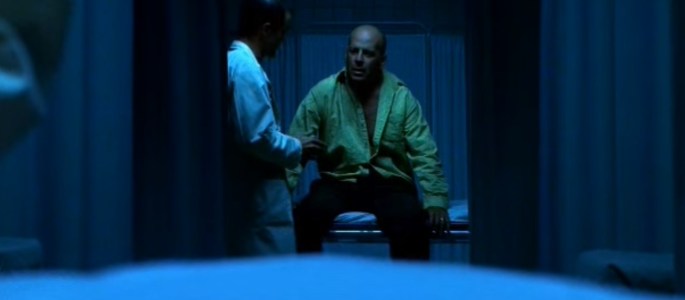
Unbreakable is easily my favorite film from writer/director M. Night Shyamalan, who has had, without a doubt, one of the most fascinating, frustrating, and fantastic careers that any filmmaker has ever had. After taking the world by storm in the late summer of 1999 with his superb ghost movie, The Sixth Sense, he unleashed his masterpiece, Unbreakable, at Thanksgiving the following year, and while it left many people cold and confused, I was completely floored by this ambitious film when I first saw it in theaters, and over the years, I’ve found myself revisiting it quite often. From the cool-blue-gray visual aesthetic that Shyamalan and cinematographer Eduardo Serra used to convey the murky moral underpinnings of the crafty and suspenseful narrative to the magnificent score by James Newton Howard, everything in Unbreakable felt like it was from another world yet strangely familiar.
2
And I can’t help but feel that the film contains two of the best performances that Bruce Willis and Samuel L. Jackson have ever dished out; the two of them have great on-screen chemistry, and I’d love to see them paired up in something worthwhile and fun. There’s a sense of genuine danger in this film, with a home invasion sequence shot and cut in an imaginative way so as not to wallow in the sequences’ implied level of heavy violence, while notions of vigilantism and revenge are explored in a thoughtful manner. This is easily one of the most unique superhero films ever made, paying subtle and sly tribute to a genre that was just about to explode on screen, and subverting expectations at nearly every turn, with a great sense of humanism to match its otherworldly ideas and provocations.
1

WARREN BEATTY’S BULWORTH — A REVIEW BY NICK CLEMENT

3

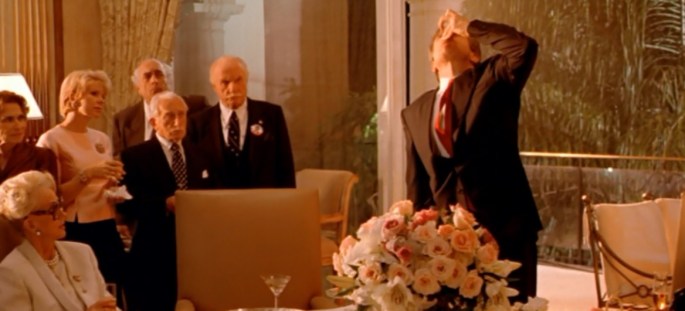
Bulworth remains just as funny and incisive now as it did back in 1998 when it scorched movie screens. Directed with verve by Warren Beatty and co-written with obscene ferocity by Beatty and Jeremy Pikser, the film stings with blunt truth, outlandish yet cogent satire, and an eerily prescient vibe that feels more and more bracing as the years have progressed. Beatty was absolutely hilarious in the lead role, playing a burnt out California Senator who is up for re-election but facing stiff competition, and who tips over the edge in every possible manner. Oliver Platt stole the show as his beleaguered campaign manager, delivering a hyperactive performance of intense comedic force; his cocaine bits are priceless. Halle Berry appeared as the unlikely love interest with a twist, while the assassination-for-hire subplot gets more amusing the more times it’s viewed. Vittorio Storaro’s edgy, tactile cinematography made smart use of physical locations, swerving in one direction for a moment and then the opposite the next, while projecting a jittery visual atmosphere that meshed perfectly with the emotionally and politically charged material and overall unpredictable tone.

2

Don Cheadle, Jack Warden, Paul Sorvino, Amiri Baraka, Sean Astin, Isaiah Washington, and Christine Baranski as Bulworth’s constantly annoyed wife were all superb in supporting roles, especially Cheadle, who really grabbed his character and went for it. And I absolutely LOVE the final scene and shot and lines of dialogue and what it implies and leaves open for the viewer to interpret. Rumor has it that Aaron Sorkin and James Toback helped to write the script, and that the film was shot mostly in secret (only an outline was shown to studio execs), and released by 20th Century Fox who were fearful of a lawsuit stemming from their backing out of producing Beatty’s Dick Tracy. With hardly any major promotional efforts and only appearing in limited to medium theatrical release, the film grossed nearly $30 million domestic, and received Oscar and WGA nominations for Best Original Screenplay. Aggressively humorous, socially astute, and more timely than ever, Bulworth is long overdue the Blu-ray treatment, and is ripe for rediscovery as its message still feels sharp as a tack and wholly resonant.

1

JOHN IRVIN’S HAMBURGER HILL — A REVIEW BY NICK CLEMENT

3

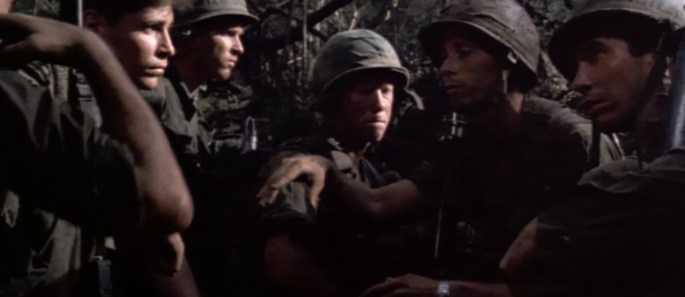
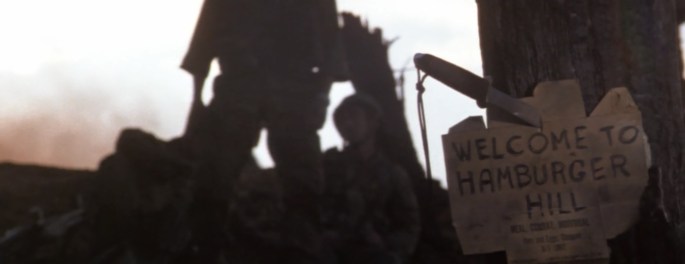
War films are rarely as harrowing or as gritty as Hamburger Hill, which is easily one of the more underrated entries in this most venerable of genres. Released in 1987 to strong reviews but small box office returns, this is a movie that has gained a considerable reputation throughout the years, and is ripe for rediscovery after films such as Black Hawk Down, Saving Private Ryan, Lone Survivor, We Were Soldiers and 13 Hours have all subscribed to the same sort of cinematic aesthetic of absolute bombardment by way of on-screen combat. Directed with solemn integrity by macho director John Irvin (The Dogs of War, Next of Kin, Raw Deal, City of Industry, Shiner) and written with a strict sense of discipline by Vietnam veteran James Carabatsos, the film details the bloody and exhausting battle for the Ap Bia Mountain in 1969 between the U.S. Army and the Vietcong, near the border of North Vietnam and Laos.

2

Starring a roll-call of then-fresh-faced acting talent including Dylan McDermott, Steven Weber, Courtney B. Vance, Don Cheadle, and many others, Hamburger Hill stays focused on the horrific event while also providing a strong sense of political and social context, given that strategic military incompetence, racism within the ranks of soldiers, the treatment of Veterans at home after serving tours of duty, and the cavalier attitude of superiors who weren’t in harm’s way are explored and dealt with in a blunt and forceful manner. Peter Macdonald’s intense and documentary style cinematography never shied away from any of the battlefield brutality, while Philip Glass supplied the mournful musical score. Peter Tanner’s editing did a tremendous job of keeping all of the action coherent, while giving the film a fast and purposeful pace. This is a heavy duty piece of filmmaking that spares no emotional or visceral expense in terms of highlighting a hugely sad and ferocious conflict.

1