JOE DANTE’S EXPLORERS — A REVIEW BY NICK CLEMENT

1-3

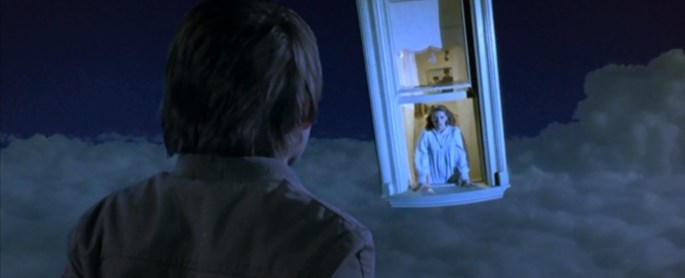
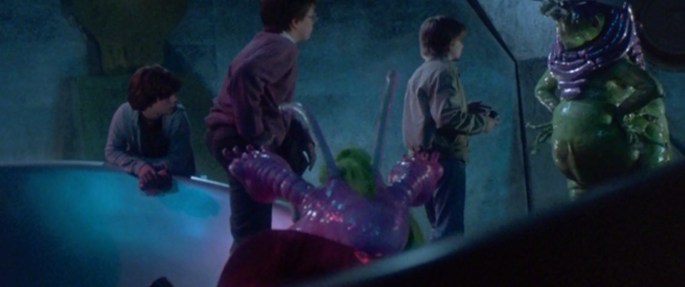
There’s a key moment in Joe Dante’s heartfelt children’s adventure film Explorers when an extraterrestrial utters the iconic cinematic phrase: “The stuff that dreams are made of.” That sentiment essentially applies to Explorers as a whole; the film feels as if it were born from my childhood dreams, and I’ll bet that many others share this same emotion. This is an all-time favorite from my formative years, and a film that has held up so well through the decades because of the honest sense of love it conveys in all departments. I have heard and read the stories that Dante wasn’t happy with the final cut due to a rushed schedule and studio interference. And I respect his comments. I’m not a filmmaker, so I can’t imagine what it must be like to see a film you’ve worked so hard on to be sent out in a compromised state. But his sentiments have done nothing to diminish how much this movie means to me on a personal level.

3-3

There were a core group of films for me as a child that truly spoke to me, films like D.A.R.Y.L., Flight of the Navigator, The Last Starfighter, The Monster Squad, My Science Project, The Goonies, Cloak & Dagger, Dragonslayer, Legend, The Dark Crystal, Harry and the Hendersons, and so many others. But there was something so unique, so truly special about Explorers that it’s rather hard to sum it up into words. There’s a graceful sense of uncynical, gee-whiz-wonder in Eric Luke’s perceptive and wise screenplay, and because Dante has always known how to blend amazing special effects with stories that have a lot of heart, this is the sort of film that qualifies as total movie magic. If you’re addicted to something like Stranger Things, or really enjoyed this year’s absurdly underrated Midnight Special, do yourself a favor and check out Explorers.
5

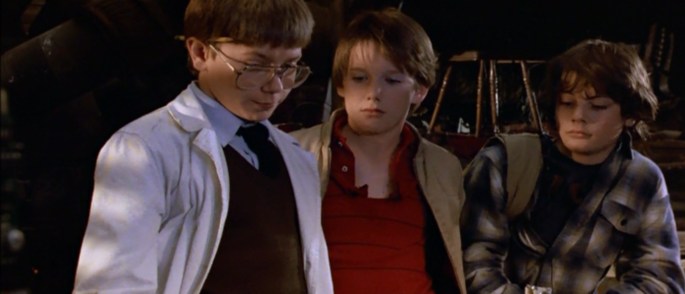
The plot centers on a trio of extremely adventurous young boys, played by Ethan Hawke, River Phoenix, and Jason Presson, all of whom are obsessed with computers and inventions and sci-fi movies and video games. They all start to have the same interconnected-dreams, which inspires them to build a homemade spaceship, which they then use to blast off into outer space, where they’re greeted by some pop-culture loving aliens who have some interesting ideas about what’s going down on planet Earth. John Hora’s phenomenal, Amblin-esque cinematography busted out the lens flares and made everything look casually stylish if never ostentatious. Look out for James Cromwell, Dick Miller, Robert Picardo, and Mary Kay Place in supporting roles.
7

Nothing is forced, the film has an innate understanding of what it’s like to be a 12 year old boy, the sense of discovery is palpable all throughout the narrative, and it absolutely nails those feelings of your first crush (lovely Amanda Peterson was the object of affection for Hawke on-screen, and whose attention was apparently competed for by Hawke and Phoenix off-camera, or so the rumor goes). Released in 1985 and featuring imagination-stirring special effects work by ILM and extremely fun make-up effects for the aliens, which were designed by cinematic legend Rob Bottin, Explorers didn’t catch on at the box office, slipping in and out of theaters before becoming a massive cult favorite due to the explosion of VHS in the 80’s. The masterful score was composed by Jerry Goldsmith.

2-4

ROBERT ALTMAN’S CALIFORNIA SPLIT — A REVIEW BY NICK CLEMENT

3

Breezy, funny, and feeling almost cinematically stoned, Robert Altman’s genial yet somehow distressing gambling comedy California Split is a film that has a deceptive undercurrent of sadness to match its potent study of male bonding while exploring the importance of true camaraderie. Centering on two life-long casino-junkies, one a bit more slightly involved than the other initially, the playful and observant narrative pivots on Charlie Waters (Elliot Gould in one of his loosest performances) and his buddy Bill Denny (George Segal, amazing as always), as we watch them search for the biggest jackpot of their lives in Reno. Ann Prentiss and Gwen Welles were both extremely funny in supporting roles as Charlie’s prostitute roommates, and the film features an early screen appearance from Jeff Goldblum. I loved the naturalistic cinematography by Paul Lohmann, who had just previously shot the iconic Blaxploitation movie Coffy and would become a frequent Altman collaborator, while the editing kept a very quick pace without sacrificing any sense of heft or dramatic importance. The script was written by Joseph Walsh (who also appeared as Bill’s bookie, Sparkie), who reportedly worked on the script with Steven Spielberg for close to a year during the earliest stages of the script’s life.

1

Steve McQueen, Peter Falk, and Robert De Niro were all attached at various points during the film’s lengthy development process (it changed studios from MGM to Universal), and at one point while the film was at MGM, the studio wanted to position it as a Dean Martin-led project with a mafia flavor. Reviews were extremely positive and the film did solid box office despite not having a long theatrical life; various rights issues, mostly stemming from musical inclusions, have prevented Altman’s original cut to hit the physical media market. Former world champion poker player Amarillo Slim appeared as himself during the climactic match. The film is also famous for its pioneering sound techniques, as it’s the first movie ever to use the eight-track sound system, which allowed for eight separate audio channels to be recorded, which of course fed directly into Altman’s personal obsession with overlapping dialogue and ambient sounds. Last year’s fantastic and vastly underseen Mississippi Grind, with Ben Mendelsohn and Ryan Reynolds, was essentially a very smart updating of this timeless material. Available on DVD from Mill Creek, sans extras/special features, but showcased in 2.35:1 widescreen.

2

PAUL GREENGRASS’ CAPTAIN PHILLIPS — A REVIEW BY NICK CLEMENT

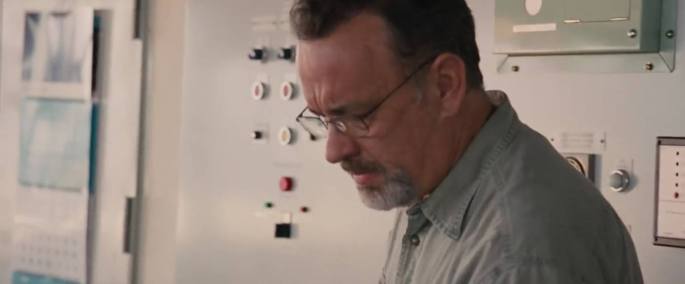
3To say that I’m a fan of the visceral filmmaking aesthetic of director Paul Greengrass would be a massive understatement. I think he’s a genius, and he’s one of my absolute favorite directors. From the stunningly realized recreations of real-world tragedies as depicted in masterpieces like Bloody Sunday and United 93 to his fantastic studio-based work on the Bourne franchise and the supremely underrated Iraq war thriller Green Zone, he employs a certain degree of cinematic verisimilitude that I find thrilling and immediate to experience. 2013’s Captain Phillips found him working with a nearly-career-best Tom Hanks on the true story of a freight ship captain who is taken hostage by Somali pirates on the open seas. Newcomer Barkhad Abdi was terrific as Hanks’s main nemesis, projecting both desperation and anger in an extremely vivid, unpredictable performance. \

2

Billy Ray’s compressed and tight screenplay fed very well into Greengrass’ inherently stripped down storytelling instincts. Ace cinematographer Barry Ackroyd (The Hurt Locker, United 93) kept the camera swerving and ducking, and in tandem with the staccato editing patterns of Chris Rouse, the film maintained a break-neck momentum for two, extremely tight hours, demonstrating nearly unrelentingly intensity. And then, when those final five minutes arrive, with Hanks pulling out all the stops and shattering the screen in an emotional juggernaut of acting – it’s not only his character’s catharsis but that of the audience, too. One of the best “ripped-from-the-headlines” thrillers of all-time, this is a crisp and clean actioner with important topical overtones, and produced with a phenomenal sense of the here and now.

1

LENNY ABRAHAMSON’S FRANK — A REVIEW BY NICK CLEMENT

3

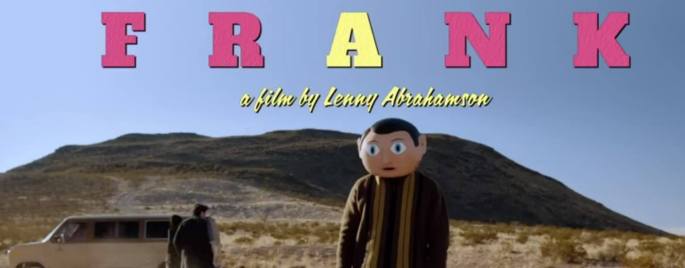
Lenny Abrahamson’s odd, willfully eccentric little movie Frank, starring the brilliant Michael Fassbender under a massive paper mâché mask, is a sneakily poignant study of mental illness and our desire to be noticed and recognized. It’s not until the final act of this bizarre black comedy that you fully realize what’s been going on, and the initial frustrations that you may have had with the narrative fade away because everything has come into strange but clear focus. Co-written by the team of Jon Ronson and Peter Straughan (The Men Who Stare at Goats), the film has a tone that constantly juggles many dimensions, hinting at so many things and presenting a story that feels strangely familiar despite the odd visual flourishes and eccentric character beats. Domhnall Gleeson is very good as a regular guy sucked into a unique life situation, Scoot McNairy continues his amazing run of character actor work, and Maggie Gyllenhaal is all bottled rage and passion (as usual).

1

But it’s the Fassbender show all the way, with this most intense of actors giving a highly internalized performance, and even under this big, goofy head-piece, elicits empathy and sympathy despite being very hard to read on a physical level. There’s definitely a hint of Wes Anderson-flavored whimsy meets sadness that pops up in the narrative at times, but Abrahamson’s worldview and aesthetic style aren’t as dollhouse-precious as Anderson, and while surreal at times, Frank feels very much rooted in the here and now. James Mather’s sharp cinematography never calls massive attention to itself, while the extremely fluid editing by Nathan Nugent keeps a pace that feels almost dreamlike at times; this film has an internal rhythm that’s very hard to accurately describe. And of course, for a movie about music, the tunes heard all throughout are excellent, with an offbeat, punkish spirit that feels perfectly suited to the fragile story. I can almost guarantee you that you’ve never seen a music-movie quite like this one.

2

FRANCOIS TRUFFAUT’S JULES AND JIM — A REVIEW BY NICK CLEMENT

3

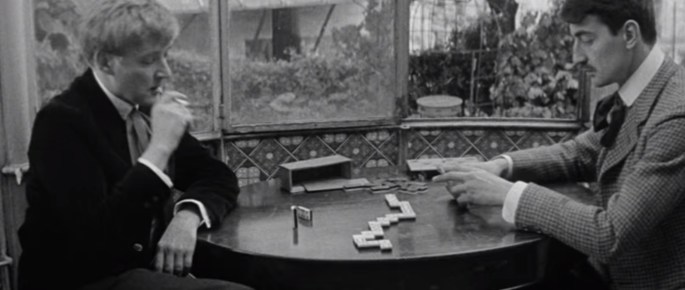
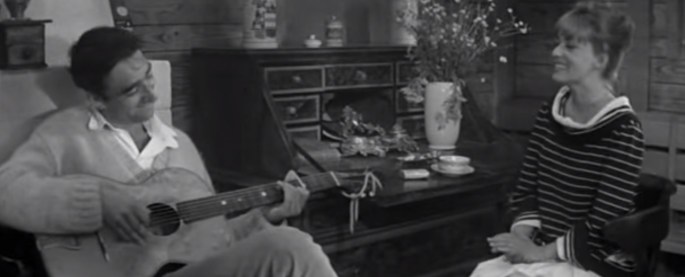
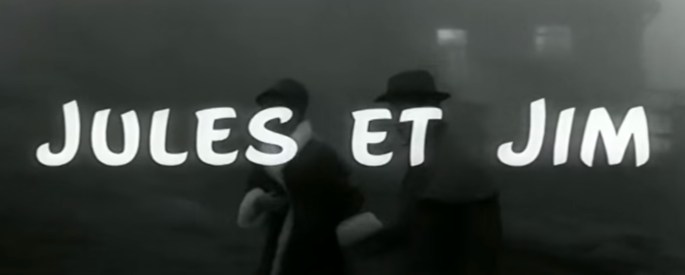
At this point, what can one really add to the discussion concerning Jules and Jim from legendary director Francois Truffaut? A movie of this sort is a product of its time, as this was made by a filmmaker exploring the medium with the zeal of a child, and telling a story that’s uniquely European and a clear reflection of a different era and society. It’s remarkable to observe Truffaut’s camera style in Jules and Jim; his aesthetic is a textbook example of the French New Wave movement in cinema, very ahead of its time, seemingly obsessed with momentum and kineticism, as fully alive as the passionate characters that consume the narrative. The various forms of imagery that Truffaut incorporated into his storytelling during Jules and Jim sort of feels like a precursor to the more extreme, kaleidoscopic aesthetic of 90’s-era Oliver Stone, with Truffaut opting for stock/newsreel footage, freeze frames, rapid-paced dolly shots, voiceover, and a seemingly freewheeling style. Jeanne Moreau, Henri Serre, and Oskar Werner basically projected every single emotion on screen during the course of this film; there’s vulnerability about each one of them that makes them all so empathetic despite some of the decisions that they all make throughout the poignant, funny, and finally tragic story.

1

The film’s energetic cinematographer, Raoul Coutard, had previously worked with Jean-Luc Godard, and was famous for using the lightest cameras possible at the time, in order to approximate a very organic and loose filmmaking approach. And because of this, there’s a nimble quality to the aesthetic, with the camera bouncing from one place to the next, and in tandem with the jaunty editing patterns provided by cutter Claudine Bouché, Jules and Jim radiates with a fizzy sense of life that runs up against honest sadness and moments of personal uncertainty. The gorgeous swirls of music came courtesy of master composer Georges Delerue; this film wouldn’t be all that it is without his uncanny melodic sense. The story, which involves a passionate love triangle between two men and one very free-spirited woman, is timeless romantic material, with an appropriately downbeat ending that feels justified and emotionally cathartic. The Criterion Collection Blu-ray is as crisp and clean as one could ever ask, with the beautiful black and white film stock perfectly capturing all of the emotions and thematic shadings on display. I’ve never seen a movie that feels as lighthearted as this one while still exploring deep, intimate, very dramatic life challenges that could hardly be described as easy-going.

2

PETER BERG’S DEEPWATER HORIZON — A REVIEW BY NICK CLEMENT

1

Deepwater Horizon is an absolute tour de force of action filmmaking, and one of the most gargantuan physical productions that I’ve ever witnessed on a movie screen. Seeing this film in the IMAX format is a must; the experience is damn near overwhelming. I am predisposed to being interested by true life, topical stories that define our lifetime, and the BP oil spill is one such event. There are any number of ways that one could fashion a story around this monumental disaster, but what director Peter Berg, screenwriters Matthew Sand and Matthew Michael Carnahan, director of photography Enrique Chediak production designer Chris Seagers, and the rest of the insanely committed crew and cast did was put the audience on the middle of an exploding oil rig for nearly an hour, after some very effective character intros coupled with almost unbearable tension building. Berg, a director mainly drawn to projects either based in truth (Friday Night Lights, Lone Survivor) or inspired by the world around us (The Kingdom), has been one of the most continually underrated filmmakers for the last 15 years, inspired by the work of cinematic greats like one-time mentor Michael Mann, Tony Scott, and Michael Bay, and seemingly always hard at work on something new and exciting. Deepwater Horizon has been made on a scale that would make James Cameron blush, and is a testament to heroism, and the idea of sudden, catastrophic loss, and similar to this year’s superb Clint Eastwood film Sully, a study of doing one’s job and doing it extraordinarily well, and in some instances, going above what could ever be expected.

3

After setting some quick and skillful character introductions into motion during the first 25 minutes, Sand and Carnahan’s script gets right to business, showing the formation of the rig’s various crew members that span multiple companies, with a handful of them being taken away to the station off the Louisiana coast, to commence their work. Ever reliable Mark Wahlberg, who really shines in these types of roles, is our entry point into the story, a rig technician named Mike Williams who experienced first-hand the incompetence being demonstrated by BP officials and other station members. His boss, played with true salt-of-the-earth grittiness by the great Kurt Russell, is revered by the rest of the crew for his commitment to safety; in an ironic twist, on the night of the devastating explosion, he was honored with a corporate safety award by his callous superiors. John Malkovich sports an amazing accent and excels as the chief villain of the piece, Donald Vidrine, a man who clearly could have cared less about anything other than the bottom line and making a profit at any cost. In a sly cameo, Berg even shows up during the first act, as a BP exec who relays important information to his workers under the deafening whirring of helicopter blades; this is a film that nobody at BP is going to appreciate on any level, as it took smart measures to crush them as an organization while still staying focused on the riveting events on board Deepwater Horizon. Gina Rodriguez is also excellent as one of the few women on board; it’s insane to think that anyone survived this event but without her actions and the actions of Harrell and others, the death toll would surely have been higher than 11 souls.


2

Berg and his team recreated the Deepwater Horizon to 85% scale, and in doing so, produced a film that feels 100% authentic at every turn. Had this film been shot on a closed stage with wrap-around green screens, it would be nowhere near as effective. Whatever CGI that was used has been brilliantly and seamless integrated into each shot; there are so many moments of “How they do that?” movie magic that a second viewing is definitely in order. Chediak’s breathtaking hand-held cinematography is appropriately rough yet extremely coherent, with the camera trying to make sense of the devastation, but no more so than how any member of the crew would have experienced it. The individual acts of heroism are too frequent to list in a review; let’s just say that a huge number of people are still alive because of the sacrifices of a few. And even at a relatively lean 100 minutes, Berg and his screenwriters rather hauntingly suggested at the environmental devastation that took place in one horrifying sequence that will make you cry so long as you have a heart. This is an utterly massive film to take in as a viewer, as the visual are overwhelming in their ferocity and power, and the dialogue took great pains to accurately depict the on-the-job jargon that these people have to spew while operating some extremely dangerous equipment. And the sound work should also be mentioned as it’s truly electrifying, amplifying every moment with extreme intensity. Deepwater Horizon is the sort of film that produces dread one moment, excites the next, crushes you emotionally for a long period, and then sends you out of the theater angry and disturbed by the actions of one of the world’s biggest and most profitable companies. The film is an action masterwork for Berg, and easily one of his grandest, most fully realized pictures to date, and while it might not have the intimacy or societal examination of Friday Night Lights, which for me is still my favorite work of his, it’s the epitome of a “big-screen experience” and it’s not to be missed.

4

PHIL ALDEN ROBINSON’S SNEAKERS — A REVIEW BY NICK CLEMENT

3

Spy capers are rarely as charming or as light on their feet as the 1992 film Sneakers. I’ll never understand why writer/director Phil Alden Robinson didn’t have a more prolific career (maybe he did lots of uncredited rewrites?) This is the guy who wrote All of Me for Carl Reiner, and then later went on to craft one of the finest American sports and family movies of all-time, with the utterly magical Field of Dreams. And then a few years later, he finally got his long gestating project, Sneakers, out to the public, a film he co-wrote with Walter Parkes and Lawrence Lasker (the duo behind WarGames). And despite the fact that the film was a box office hit and well received critically, he essentially fell of the movie planet, only directing 2002’s underrated The Sum of all Fears and episodes of the HBO program Band of Brothers before helming the (apparently) misbegotten Robin Williams starrer The Angriest Man in Brooklyn. He’s a smart filmmaker, typically attracted to classy material, and I’ll never get it why his output just ceased. In Sneakers, Robert Redford slyly played the leader of a team of security specialists who are drafted by the NSA to do some covert work for them, the catch being that Redford’s character has been on the run since 1969 for a politically motivated crime.

2

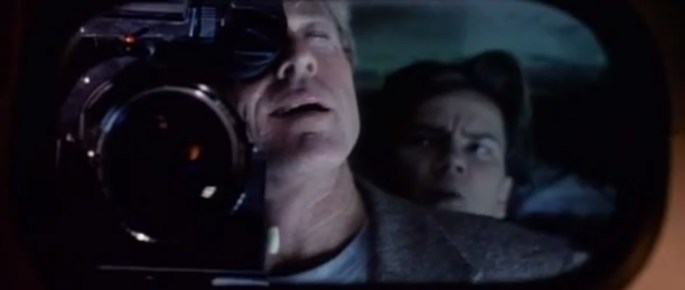
The cast in this movie is just…I’m not sure what the word is…it’s just really damn cool. Redford, Sidney Poitier, Dan Ackroyd, Ben Kingsley, Mary McDonnell, River Phoenix(!), and David Strathairn are all part of Redford’s crew, with Timothy Busfield(!) as one of the NSA agents who may have more up his sleeve than we first expect. The breezy style complimented the snappy screenplay, while Robinson’s graceful and stylish direction kept everything moving at a perfect hum. This is a film with multiple red herrings, Macguffins galore, and all sorts of shadowy spook-speak that all adds up to create a heady brew of sensible, intelligent excitement. James Horner’s playful score was one of his best, and John Lindley’s smooth cinematography added immeasurably to the proceedings. Sneakers is the sort of movie that gets lost over time, overshadowed by flashier tales of skullduggery with more lavish special effects and action set-pieces; it’s a true “thinking person’s action film,” and a further reminder that as a filmmaker, Phil Alden Robinson has been sorely missed.

1

ANTOINE FUQUA’S THE MAGNIFICENT SEVEN — A REVIEW BY NICK CLEMENT

1

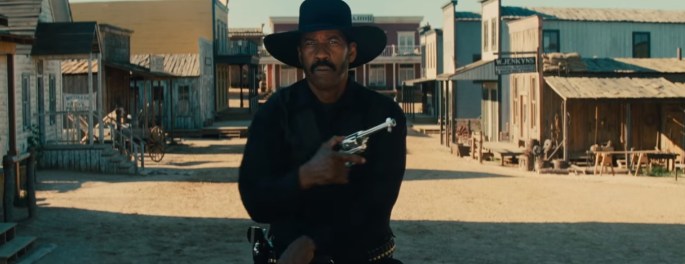
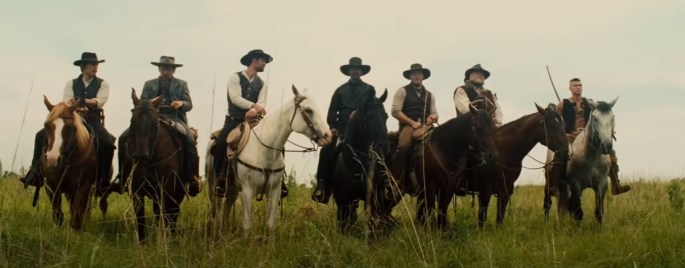
Antoine Fuqua’s solid updating of The Magnificent Seven is a good time at the movies, an easily digestible modern Western that isn’t interested in anything else other than providing two hours of comfortable, great-looking entertainment. Denzel Washington is excellent, as usual, and leads a very sturdy ensemble cast, with Ethan Hawke, Chris Pratt, and a nearly unrecognizable and absolutely hysterical Vincent D’Onofrio as the standouts. Peter Sarsgaard twirls his literal and figurative mustache as the slimy, happily vicious baddie, and Haley Bennett makes for an extremely fetching frontierswoman who isn’t afraid of picking up a gun and getting down and dirty. The conventional screenplay by Nic Pizzolatto (True Detective) and Richard Wenk doesn’t offer up anything in the way of surprise but works fine enough; their rendition is content to be serviceable and traditional, with some punchy one-liners thrown in for good measure. But what impressed me the most about this film, other than James Horner’s final, rousing score (with an assist from Simon Franglen), was the fantastic cinematography by long-time Fuqua collaborator Mauro Fiore (Training Day, The Island, Avatar). Every smoky, dusty, and burnished image in this big-budget oater looks splendid, with Fuqua and Fiore trading off of classic cinematic Western iconography, and it was refreshing to see a film shot and cut with a classical eye for coherence and space.


2

The explosions were all noticeably free of unnecessary CGI, and for a PG-13 film, it must be said — this new Magnificent Seven is wildly violent with a massive body count, including the graphic killing of a woman in a key dramatic moment. Yes, all of it is relatively bloodless, and nothing is lingered upon for too long, but holy WOW a lot of people got shot to bits in this film. The final act is essentially one massive battle, with the destruction of an entire balsa-wood town, and it’s in these moments that Fuqua and his surly cast clearly had a ball. Some of the action beats felt reminiscent of Fuqua’s underappreciated King Arthur, which, for my money, still features one of the coolest battle scenes in recent memory (the fight on the frozen lake). There’s nothing revelatory or overwhelmingly amazing about this new incarnation of the classic material, and yet, it all goes down smooth and sports an itchy trigger finger, and is likely the best overall effort from Fuqua since his superb and deeply underrated policier Brooklyn’s Finest. This is a film where the commanding performances and the phenomenal aesthetic package rule the day, and for fans of this longstanding milieu, the fact that there’s a gorgeous looking new widescreen Western up on the big screen should be reason enough to smile.

3

PETE TRAVIS’ DREDD — A REVIEW BY NICK CLEMENT

1

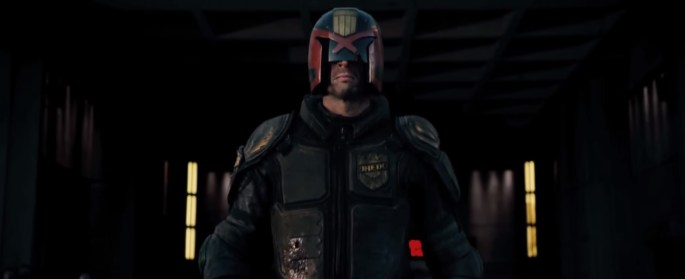
Dredd is a nasty action movie, supremely stylish at all times, unexpectedly funny (though in a very dark fashion), unrelenting with its pyrotechnics and blood-splattering, and for the better part of its quick yet lethal run-time, the film reminds you that sometimes it’s possible for an ultra-violent, hard-R endeavor to be both artistically fascinating and consumer friendly. Flamboyantly directed by Pete Travis (Vantage Point) and crisply written by Alex Garland (Ex-Machina, Sunshine, Never Let Me Go), this is an explosive piece of filmmaking that continually shreds on repeated viewings, dipping into exploitation realms and subversive genre-busting sometimes in the same scene, with the all-forward-momentum plotting involving Judge Dredd (the perfectly cast Karl Urban) taking on an army of drug-dealing goons, all of whom work for a psychopathic boss named Ma-Ma (wonderfully vile Lena Headey), inside of a 200-story high-rise living space where the only law is death. There are some seriously gnarly bits in this film, all of it gruesome yet strangely beautiful in a dark, grungy, tripped-out fashion.

2

That’s because the real star of Dredd is the film’s bold and brilliant cinematographer Anthony Dod Mantle (Slumdog Millionaire, Rush, Trance, Snowden, Antichrist); this movie is eye-popping to such a degree that numerous shots require immediate rewind POWER because of how insane they are. The drug-induced slow-motion sequences are transfixing, and to be honest, visually intoxicating; I had never seen anything like it before I had experienced what they did in Dredd. Olivia Thirlby was also very memorable as Dredd’s rookie-partner with a special secret; Garland is adroit in layering surprises into his narratives. Released in 2012 to surprisingly excellent reviews yet anemic box office results, there’s been talk of a sequel by this film’s rabid fan base, with some signs pointing to a follow-up potentially happening in the near future. Original Judge Dredd creator John Wagner served as a consultant on the film, despite the fact that the filmmakers took an all-new approach to his iconic material. Comparisons to The Raid are inevitable and apt.

3

PETER BERG’S HANCOCK — A REVIEW BY NICK CLEMENT

2

Peter Berg’s unique and oddly enjoyable superhero movie Hancock is one of the more idiosyncratic $150 million summer movies that has ever been released. It’s a film that completely divided critics, but one that audiences seemed to enjoy, as it grossed $650 million worldwide (its relatively small 47% decline in its second weekend is interesting to note, but the film was released essentially at the apex of star Will Smith’s box office popularity). This is a tough film to discuss without divulging any spoilers, and there is a “twist” that shouldn’t be revealed or even hinted at, even if the misleading trailers did their best to ruin it. And while the film is certainly flawed and not all that it might have been had certain things not changed from the original, genre-busting script, Hancock still scores big points in an overcrowded genre, and stands apart from all of the Marvel clones due to its scrappy attitude, edgy tone, and rambunctious visual personality. Vy Vincent Ngo’s original screenplay that served as the basis for Hancock was called Tonight, He Comes, and was at first a directing project for Tony Scott; i can still remember reading the script when I worked in his office and being thoroughly blown away. But because the project was so offbeat and massively original (a drunken superhero falls for a suburban housewife and ignores everyone’s cries for help), the film never got off the ground in its original form; directors like Michael Mann and Jonathan Mostow would also step up to the plate before moving on. But then Mann, who stayed on Hancock as a producer (and who also makes a sly cameo during the opening act), recruited Berg, who had taken over the directing reins on the action-thriller The Kingdom (another project nearly directed by Mann), and brought Breaking Bad writer/creator Vince Gilligan on for some rewrites. What ended up being released on screen was something that really hadn’t been attempted before, and it was because Berg and his creative team rooted the film in the real world, complete with jittery, hand-held cinematography (which proposed a challenge for the CGI artists) and satirical humor that Hancock feels unlike any other man-with-special-powers movie that’s been released.

3

The tech package to this film is really extraordinary, with Tobias Schliessler’s dynamic and gritty camerawork catching stuff on the fly, and while the film does suffer from swirling CGI-vortex in the sky syndrome, the effects work is generally witty and snazzy, with some cool flying effects, and nifty location shooting that was seamlessly blended with the mostly photo-real digital additions. And for once, the impact that a flying supherhero would make when they land on the ground is actually addressed(!) Smith brought the perfect sense of cocky-swagger to the role of Hancock, who happens to be a drunk, a womanizer, and a foul-mouth. He thinks it’s funny when he breaks things and doesn’t have much regard for personal property or the city he’s supposedly protecting. He behaves in the way that a superhero would probably behave if there really were such things as superheroes in real life. What Berg and his writers craftily did was set the film in the real world and treat the narrative almost like a dark comedy.

Not so much concerned in satisfying the more obvious conventions of the genre (again, at the risk of spoiling anything, I hesitate to reveal too much about the film’s plot), the filmmakers were more interested in the character of Hancock, and two people who cross his path: Ray, an idealistic PR executive (played with zeal by scene-stealer Jason Bateman) and his ultra-sexy wife, Mary, played by Charlize Theron. After saving Ray’s life, Hancock employs Ray to help him make over his image. The public is sick of Hancock destroying stuff, even though he is a good crime fighter. They’re sick of his boozy shenanigans, and Los Angeles, his home city, is tired of paying the clean-up bill after he does things like hang a couple of gangsters on the Capitol Records building by the front end of their SUV or smash traffic signs on the 405. Hancock goes to prison in an effort to show people that he knows he’s been bad, but once inside, he’s compelled to leave when the city needs his help yet again.

And while there is certainly a big twist that changes the film in a major way, it’s what Berg didn’t do with this film that excited me the most. After an amazing opening act, the middle section is a bit of a mixed-beast, but damn do I love act three, which apparently is the spot where people have problems. I admired the decision to down-play the typical superhero/super-villain climactic battle and make the film more about intimate character moments and emotional decisions rather than wanton destruction. That’s not to say that Hancock doesn’t deliver in the typical action-movie smash ’em-up fashion that you’ve come to expect from a Will Smith 4th of July blockbuster; lots of shit gets blown up and thrown around and all of it is done with polish and skill. It’s just that there is more going on in Hancock on a thematic level than you’d ever expect from a film like this.This is easily one of the more subversive and original blockbusters that’s been put together, and if it’s not all that it might have been, I’d rather see something like this than another vanilla-flavored rehash of the same-old same-old.

1