MATTEO GARRONE’S GOMORRAH — A REVIEW BY NICK CLEMENT

1
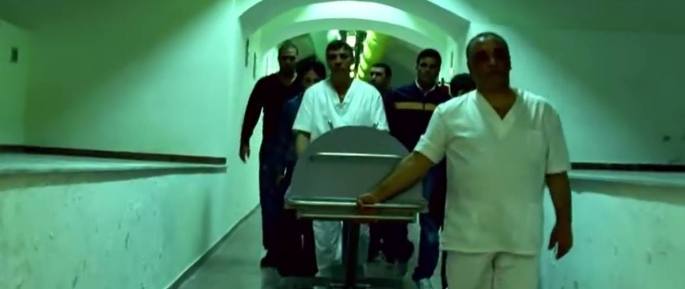
Matteo Garrone’s Gomorrah is tough and totally brilliant. It’s a nasty, unflinching piece of filmmaking, and because it stays so focused and refuses to ever get sentimental there’s a hardened quality to the storytelling that’s unique for the genre. Now, is it an “entertaining” mafia saga along the lines of Goodfellas or Casino or The Godfather? Not remotely. As impeccably made as it is, Gomorrah is a punishing and depressing look at real-deal organized crime in Naples, Italy. Based on a bestselling and highly controversial true-crime novel which ended up requiring the author (and members of the eventual film production) to go into witness protection, Gomorra is essentially the Italian version of City of God, in that it takes you on a hellish journey to a very violent corner of the earth and rubs your face in vicious behaviors and unremorseful killing. And that, really, is the essence of Gomorrah: The act of killing and how it affects so many different people. Death, as it is in all gangster tales, hangs over this film like the Grim Reaper itself, and as the narrative progresses, you slowly realize that there’s no hope for anyone in the story.
2
You half expect any of the characters to get bumped off at any moment while the riveting action unfolds; the phrase “always looking over your shoulder” is a sad reality for everyone in Gomorrah. The film effortlessly weaves five separate storylines together. Two young punks who love reciting dialogue from Brian De Palma’s bloody classic Scarface are anxious to become real-life hoodlums, and are blissfully unaware of the real dangers that they face. An illegal garment maker who has perfected his trade through various crime circles starts trading his knowledge to the Chinese in exchange for cash; you can imagine how pissed the Italians will be with this. Two youngsters are drafted into a life crime after doing petty jobs for the higher-ups, and here, you get a look at the organization’s money-man, who becomes increasingly conflicted with his job as the film progresses. And finally, there is the toxic-waste disposal element to the narrative, which is equally as troubling as any of the other segments.
gomorrah_xlg
The hand-held, down and dirty aesthetic is reminiscent to that of The Battle of Algiers, as director Garrone immerses you in the scummy, crime-filled environment and forces you to see everything at ground level and face value. There is immediacy and sad impact to the violence in Gomorrah, which features a bracing level of coldness on display from the various killers, which is rather startling. It’s all part of the business – killing just comes with the territory. And even though almost all of the characters are unlikable, you watch with a growing sense of dread as it becomes all but certain that everyone will end up meeting their maker before the end credits start to roll. This isn’t an easy or commercial gangster movie like the films I referenced earlier. Instead, it’s a brutal look at a real-world scenario that’s going on right now, one that’s been going on for years, right under our noses. Gomorrah takes you to hell and back, and there is an uncompromising sense of inevitability and visceral impact in the film that forces the viewer to take notice.
3

WARREN BEATTY’S REDS — A REVIEW BY NICK CLEMENT

1

Warren Beatty’s towering historical drama Reds is one of the grandest achievements in cinema, a film that matches its epic scope with poignant intimacy on a character level, resulting in a work that has genuine grandeur and a sense of sweep that immediately engrosses the viewer. The often-imitated faux interview structure is marvelous to look back upon in retrospect, as it’s informed so many other filmmakers on so many diverse projects, and the way that Beatty was able to shape this sprawling yet always coherent narrative into something fully cohesive is a testament to both his innate understanding of filmmaking, and to the astounding work done by the film’s editors, Dede Allen and Craig McKay. The dense and info-packed screenplay by Beatty and co-writer Trevor Griffiths was based on the John Reed novel Ten Days that Shook the World, focusing on Reed’s life as a journalist during the Russian Revolution, and with Beatty assuming the lead role. Co-starring Jack Nicholson and Diane Keaton, both absolutely superb, the film had a deep supporting cast, including Paul Sorvino, Jezy Kosinski, Gene Hackman, Nicolas Coster, M. Emmet Walsh, Maureen Stapleton, Ramon Bieri, Edward Herrmann, and many others.

2

There’s a tremendous sense of romance running all throughout this big and volatile motion picture, with history and Hollywood colliding in the best sense, while the filmmakers stressed intelligence in all departments, resulting in a film made by adults and for adults. Master lenser Vittorio Storaro’s burnished and elegant cinematography worked in perfect tandem with the nearly overwhelming and astonishingly detailed production design by the legendary Richard Sylbert, while the evocative costumes from Shirley Russell reveled in period authenticity. After a year long shoot, in which Beatty and Keaton’s personal relationship apparently greatly suffered, the post-production process reportedly lasted close to two years, as this behemoth of a movie required various teams of editors to sift through nearly two and half million feet of film and the constant supervision of Beatty to bring it all home. Released in December of 1981 and garnering glowing reviews from critics, the film preformed solidly at the box office, grossing $40 million domestic; the over three hour run time definitely limited the number of screenings and likely dissuaded some people from seeing the film on the big screen. Beatty won the Oscar for Best Direction, Storaro for Best Cinematography, and Stapleton for Best Supporting Actress, with nine other nominations.

3

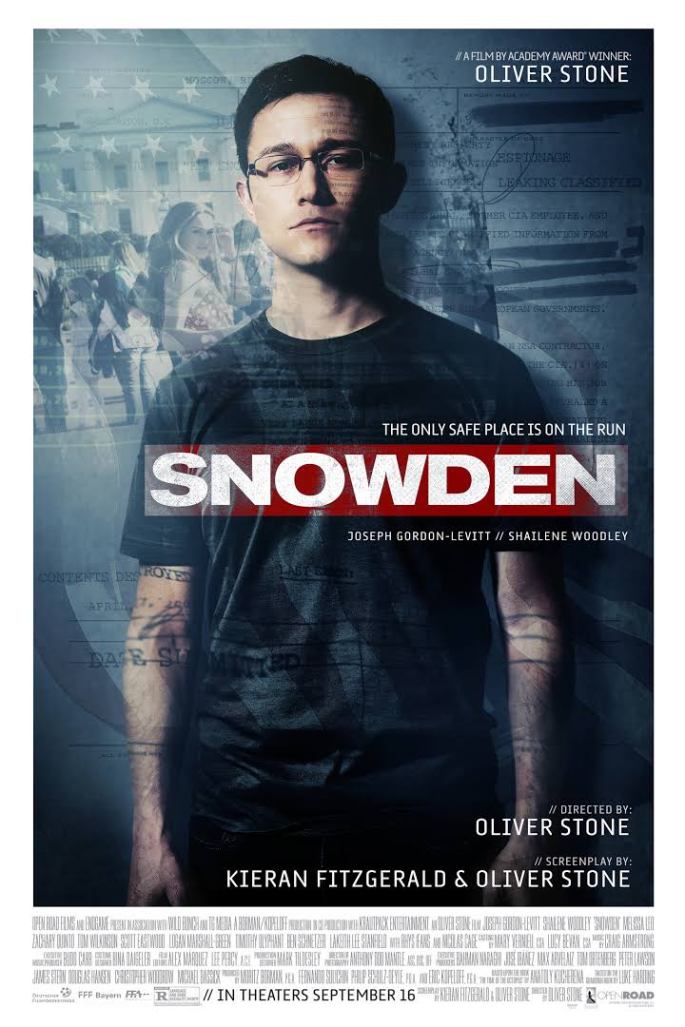
OLIVER STONE’S SNOWDEN — A REVIEW BY NICK CLEMENT

1

Regardless of what your stance is on mass data collection supervised by Uncle Sam, Oliver Stone’s engrossing political thriller Snowden raises some extremely provocative and timely questions about our right to privacy, the ever evolving war on terror, and how trustworthy our government has been and can be in the future in regards to these types of surveillance programs. Joseph Gordon-Levitt is very strong as Edward Snowden and there isn’t a performance in the entire cast that’s not well rounded and effective; Rhys Ifans has a casually chilly demeanor which he exhibits to maximum effect as Snowden’s boss, Nicolas Cage is perfectly cast as the old spy who has been sent to the basement, and Shailene Woodley is both natural and extremely easy on the eyes as Snowden’s long suffering and always-in-the-dark girlfriend. The film uses the Citizenfour interview by doc filmmaker Laura Poitras (motherly Melissa Leo) and Guardian newspaper writer Glenn Greenwald (easily angered Zachary Quinto) as its entry point, folding back in time to Snowden’s discharge from military service, his journey through various governmental branches, and eventual hiring as a data analyst. Working for various subcontractors, he got a bird’s eye view of what our post-9/11 espionage world is like, and even had the chance to build some of those systems. It’s totally wild to see how far the government has progressed with the digital monitoring of its citizens and everyone else across the rest of the world. Starting out as an uptight conservative and ending up a liberal defector, Snowden saw things he wished he hadn’t, and for various reasons, felt that he had to tell the world what was going on, thus resulting in his permanent exile in Russia. The busy narrative uses Snowden’s complicated relationship with his girlfriend as an emotional through line, presenting a compelling portrait of a man caught between what he thinks he needs to do and how others are expecting him to act.

2

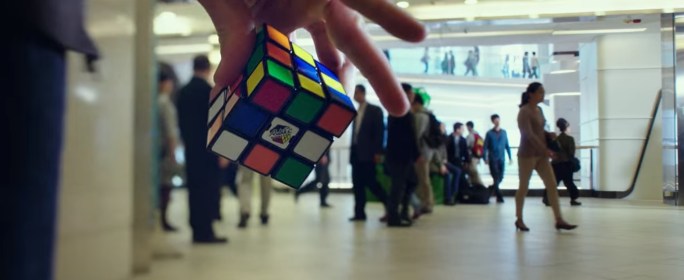
The thing that I noticed the most while watching Snowden was how eerily prescient the 1998 film, Enemy of the State, from producer Jerry Bruckheimer and director Tony Scott, has become. Researched and written in the mid to late 90’s and three years before the Twin Towers would fall, that film imagined a scenario where the U.S. government is ready to employ a far-reaching and questionable policy called the Telecommunications Security and Privacy Act, which is essentially what the Patriot Act would become a few years down the road. The technology shown in Enemy of the State is EXACTLY THE SAME SORT OF STUFF being used in real life today, as depicted in films like Snowden, which actually break down the official programs being used by big brother. Even some of the stuff glimpsed at during Scott’s sci-fi genre-bender Deja Vu feel like they have been sampled from reality. By the end of watching Snowden, and due in no small part to the dynamic if measured camerawork by digital ace Anthony Dod Mantle (Slumdog Millionaire, 127 Hours, Rush), you’ll have a great sense of what is capable due to the work being done in various underground compounds and secret spy bases all over the world. One of the best sequences in the film is a visual approximation of what it’s like to put a trace on a phone call to one person, and how that one person can spiral into millions of people by the end of the digital process. With whiz-bang ease, so much information can be culled at a moment’s notice, that it’s hard not to be equal parts impressed and alarmed by what’s able to be achieved.

1

Stone’s film, which he co-wrote with Kieran Fitzgerald, is engaging at all times, frequently incensed by the story being told, and yet, it never went for the jugular in the way that the best, most long-lasting films from this proudly defiant and trouble-making auteur have done in the past. Which is fine. Stone has become a different filmmaker over the last 10 years, which apparently, many people cannot accept. Stone hasn’t “lost it,” but rather, after his sensational and aesthetically groundbreaking run of films during the 1980’s and especially the 1990’s, he’s become more sedate, especially after the grand ambitions of his tour de force historical epic Alexander back in 2004, which for my money, is still one of the best achievements in the sword and sandal genre that’s ever been mounted. World Trade Center, which I feel is his John Ford movie, is wildly underrated, celebrating a country that he so often took to task on a variety of issues; in this film he paid tribute to the notion of sudden heroism, resulting in an emotionally resonant motion picture that scaredy-cat viewers dismissed as “too soon” when it was first released. And while I thought W. could have been better and different and more scalpel-sharp, over repeated viewings, I’ve come to find it a delicious black comedy of political buffoonery. Wall Street 2 was a bit of a let-down but still entertaining, but I absolutely loved his sexy and stony marijuana actioner Savages; he made his Tony Scott adventure with that one, even hiring Scott’s longtime cinematographer Daniel Mindel to call the shots, resulting in one of the slickest looking films of his career. And with Snowden, Stone is clearly conveying a ton of anger towards both the Bush and Obama administrations, while reminding audiences that he’s incapable of making an uninteresting movie. I’d actually wager a guess and say that this is one of the most anti-government movies that has been released in years, going beyond the term liberal and entering into its own new realm. It’s no surprise that indie distributor Open Road were the ones to take this on and that there are about 20 people listed as producers from various overseas entities in various capacities; no major studio would have the balls to put their logo on this one.

3

SPIKE JONZE’S WHERE THE WILD THINGS ARE — A REVIEW BY NICK CLEMENT

1

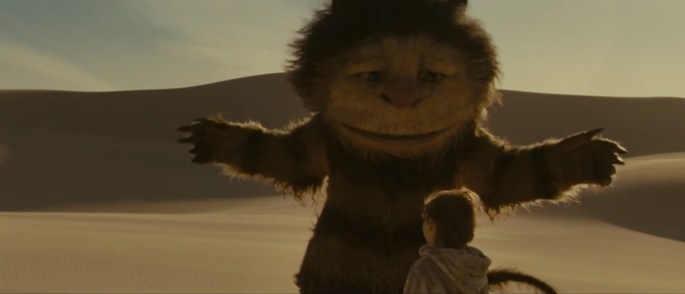
With Where the Wild Things Are, idiosyncratic genius Spike Jonze tapped his inner Kubrick and his inner Malick, and made a $100 million art film, a project not necessarily for children, but centering on a child, told in a mature, intelligent, creative, and singular way. I was expecting something grand when I first encountered this film on the big screen roughly six years ago, and I definitely got that. It’s just that I wasn’t sure what the end result was going to be, what with all of the fighting between Jonze and Warner Brothers during production, and the troubled shoot and endless post-production process. The film is definitely “the book,” so anyone who was afraid that Jonze and crew wouldn’t remain faithful to Maurice Sendak’s original source material can stay calm. But for me, it’s much more than the book; it’s a painful movie about the effects of divorce and how it shapes children, and in the case of the film’s hero, Max, how it informs an awkward boy as he starts to understand his uncertain familial future. This is as bold of a “kids” movie as I’ve ever seen, but again, I hesitate to really call it a “kids” movie. For a film that went through years of production and creative turmoil, you’d never know it. Where the Wild Things Are is, above all, a visual marvel; the creatures themselves are some of the most beguiling cinematic creations that have ever been imagined. The idea to go man-in-suit with the Wild Things was a great idea. This low-tech, old-school approach has been perfectly mixed with state of the art visual effects for the eyes and mouths, and the results are nothing less than stunning.

2

Lance Acord’s gorgeous, hand-held, and totally engrossing cinematography was some of that year’s best shooting, and the driving, upbeat yet melancholy score brought everything together. And one must credit director David Fincher, for showing Jonze the technology he was using at the time on Benjamin Button, as that gave Jonze the confidence to use a blending of CGI and men-in-suit performances. And I haven’t even touched upon the performance of Max Records as Max; in short, it was an auspicious debut. The entire movie hangs on his performance, and he really was captivating. But it was the interactions between the Wild Things that will keep me coming back to this film in years to come. Where the Wild Things Are was one of the best films from 2009, but it’s not going to be loved by all; it’s too specific and too artistic to garner universal love. I think little kids, by and large, will be scared by it, and will probably be turned off by the lack of major action set-pieces and cheap and easy cutesy-humor bits. This isn’t a whiz-bang CGI creation with bright colors and easy to digest themes. It’s a potentially damaging film that is more likely to be appreciated by adults, and by people who loved the book as a child. And maybe most impressively, few other films have conjured up fever-dream images quite like the way Wild Things does. Despite receiving warm critical embrace, the film failed to achieve blockbuster status. But that doesn’t mean that the movie is uniquely special in ways that money can’t describe.

22

PAUL THOMAS ANDERSON’S THE MASTER — A REVIEW BY NICK CLEMENT

6

When I first viewed The Master, Paul Thomas Anderson’s scathing critique of Scientology and blind hero worship, I didn’t know what to make of it. His previous film, There Will Be Blood, was a towering work of American cinema; how would he follow up one of the most acclaimed of modern films? Released in 2012, the film confounded some critics initially, with many others leaping to sing its praises; for me, this is the first and only PTA effort that took a few viewings for me to totally fall in love with rather than be head over heels upon first sight. And I think, the big reason for the personal disconnect at first, was that I didn’t realize that, at heart, the film is a bitter black comedy, designed to make you laugh over events that are outrageously absurd.

1

But the more I revisit the film, the harder and harder I laugh and the more brilliant I realize it to be, with each performance informing the rest of the ensemble, and PTA’s deliriously bleak worldview on caustic display, spinning a story about psychologically fractured people and the way that one’s own self can become transformed by the power of thoughts and words and repeated actions. It’s also interesting to note that PTA based this film from some unique sources, including the “work” of Scientology founder L. Ron Hubbard, portions of early drafts from There Will Be Blood, drunken Navy stories that were told to him by Jason Robards during the filming of Magnolia (the draining of the torpedoes for their ethanol, for instance), and the life events of iconic author John Steinbeck. Boogie Nights and Punch Drunk Love still remain tied as my favorite works from PTA, but this is a filmmaker who only knows how to craft masterworks.

2

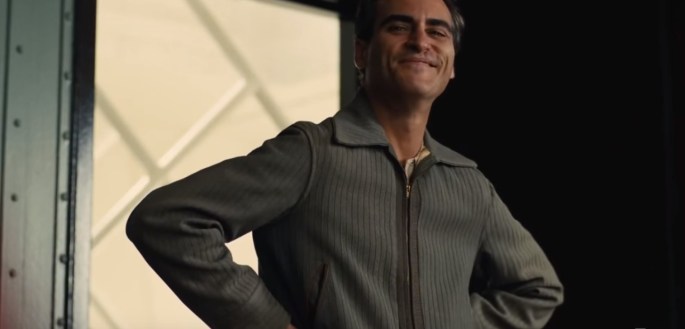
Starring Joaquin Phoenix in a slippery-serpent performance of total animalistic rage, The Master takes a piercing and highly critical view of a fictitious “religious movement” called “The Cause”, which is a not-so-thinly-veiled reference to “The Church of Scientology.” Phoenix is Freddie Quell, a PTSD-afflicted WWII veteran who is having severe difficulty adjusting to life post-combat. After some aimless and wasted drifting, he crosses paths with an enigmatic man named Lancaster Dodd (Philip Seymour Hoffman in one of his best, most hysterical performances, all pure hostility and empty bravado) who purports to be a religious leader, ready to unleash “The Cause” upon the American masses. He’s a fraud, of course, and over the course of the narrative, Freddie will learn all about how Lancaster is nothing more than a cheap salesman with a twisted agenda.

4

Amy Adams’ is Dodd’s strange and brainwashed wife, who likely knows that her husband is full of hot-air, but blindly goes along with his ruse and emotional deception. And as per usual with a PTA picture, the film has a stacked deck of amazing character actors and pitch-perfect faces, all of whom bring a distinct level of class to the entire production. As the story unfolds, you watch various levels of madness unfold all around each person caught up in the story, with Phoenix’s performance becoming something completely surreal by the end. And as you watch the relationship between Phoenix and Hoffman evolve, a sort of kinship can be seen between the two actors; they clearly loved working with each other as they both brought out something special from each other.

3

The Master boasts some immaculate production values, from the pristine and gorgeous cinematography by Mihai Mălaimare Jr., who shot the film in 65mm, producing an image that had a pristine quality on the big screen, and resulting in a Blu-ray transfer that is beyond spotless. Johnny Greenwood’s pensive and entrancing musical score is yet another distinguished collaboration with PTA, and the dreamy editing patterns by Leslie Jones and Peter McNulty only amplifies the surreal nature to the entire piece. The evocative and politely sinister production design by Jack Fisk and David Crank, especially in Dodd’s compound, only ups the level of anxiety (both physically and emotionally) felt by everyone in the film, especially Freddie. On an aesthetic level alone, the film is a marvel, and when combined with PTA’s heady and provocative themes, not to mention his subtle sense of comedy, the film becomes something rather dense and brilliant.

7

And none of this – NONE OF IT – would have happened without the financial backing of producer Megan Ellison, who for the last few years has utterly dominated the auteur-driven independent filmmaking space, with credits such as Inherent Vice, Zero Dark Thirty, Killing Them Softly, Spring Breakers, True Grit, Lawless, The Grandmaster, Her, American Hustle, Foxcatcher, Joy, Everybody Wants Some!, Wiener-Dog, Sausage Party, and upcoming films from PTA (a 50’s fashion world drama with Daniel Day Lewis), Kathryn Bigelow (an untitled but sure to be masterful Detroit riots drama), and Alexander Payne (the corporate satire Downsizing). Fucking-A. Without her, we’d be NOWHERE as film lovers. The Master made its premiere at the Venice Film Festival, where it won the FIPRESCI Award for Best Film. It was released on September 14, 2012, and was met with excellent if curious reviews, and despite not bringing in a big haul at the box office, it would end up receiving three Oscar nominations: Best Actor for Phoenix, Best Supporting Actor for Hoffman, and Best Supporting Actress for Adams.

11

JOHN D. HANCOCK’S LET’S SCARE JESSICA TO DEATH — A REVIEW BY NICK CLEMENT

lets_scare_jessica_to_death

I am very picky with my horror movies, especially when it comes to revisiting them throughout the years. But one film that’s always gotten under my skin is the Connecticut-set chiller Let’s Scare Jessica to Death, from eclectic filmmaker John D. Hancock (Bang the Drum Slowly, the underrated Nick Nolte prison drama Weeds), which was released in August of 1971 and made terrific use of the unique locale and rural setting. Centering on a woman named Jessica (Zohra Lampert) who has just been freshly released from a stint at a mental institution, the narrative charts her attempts at regaining control of her life, and returning to a fully functional state of mind. Jessica and her husband and friend decide to take residence in a farm-style country house, but upon arrival, they uncover someone (or something…?) potentially deadly, which results in Jessica becoming unhinged again. Will she spiral back into total madness, or can she be saved? Operating simultaneously as a freaky psychological thriller and eerie pseudo-vampire story, Let’s Scare Jessica to Death remains unnerving precisely because it’s multiple things all at once, while Lampert’s performance has the instant ability to gain your sympathy and suspicions in equal measure. I’m a big fan of movies that mix tones and do things differently, and that’s why I think I’ve responded to this particular film throughout the years.

Hancock and his co-writer Lee Kalcheim (working under respective pseudonyms of Ralph Rose and Norman Jonas) were able to craftily layer their story in multiple levels of ominous behavior, and instead of being totally upfront with every single plot move and story development, they allowed the viewer to make some guesses as to where things will end up, but in the end, if you’ve not seen this movie, the art of the surprise is likely inevitable. Lampert’s performance steals the entire show, as she was able to project fear and emotional hostility to an alarming degree. The eerie cinematography by Robert Baldwin (McBain, Frankenhooker) suggests casual menace at almost every turn, relying on terrific camera angles and smart blocking, and when combined with the sharp editing by Murray Solomon and the ominous, early-synth score by Orville Stoeber (Weeds, Hancock’s 2015 indie The Looking Glass), the film feels even more impressive considering its extremely low budget and probable fast production schedule. But when a film in this genre works as well as this one does, it becomes a genre mainstay, as Let’s Scare Jessica to Death has become. The film conveys an incredible sense of time and place, with the carefully chosen locations continually subverting expectations, and when the narrative gets down and dirty, it suggests bits and pieces from future works like Carrie and many other films that have come to define the genre.

STEPHEN FREARS’ DIRTY PRETTY THINGS — A REVIEW BY NICK CLEMENT

2

Writer/director Steven Knight has a list of aggressively amazing credits in either capacity (Locke, Eastern Promises, Peaky Blinders, Pawn Sacrifice, Burnt, Closed Circuit, creator of TV’s Who Wants to be a Millionaire) but his script for the 2002 thriller Dirty Pretty Things might be his best overall effort. Combining his writing with the effortless direction from Stephen Frears, this is a creepy and unsettling story of the illegal organ/body-parts trade on the black market, and how two very different immigrants living in the UK (Chiwetel Ejiofor as a cab driver/hotel desk clerk and Audrey Tautou as a hotel maid) get mixed up in some decidedly dangerous and potentially fatal criminal activities, while trying to figure out just what the hell is going on around them. With sinister cinematography by the incredible Chris Menges, extremely fluid editing by Mick Audsley, grubby-gorgeous production design by Hugo Luczyc-Wyhowski, and a devilish musical score by Nathan Larson, the film seriously scores as a majorly stylish and always clever thriller that benefits from Knight and Frears’ inherent intelligence as storytellers, and from the committed performances by a great, ethnically diverse cast of characters who amp up the unknown factor into some very sketchy realms of unpredictability.

1

RICHARD LINKLATER’S BERNIE — A REVIEW BY NICK CLEMENT

1

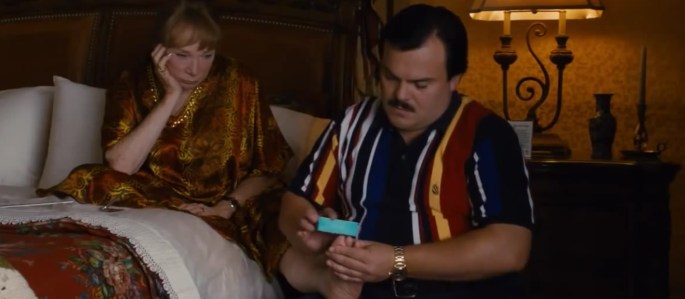
Bernie is one of those movies that not enough people have seen. Richard Linklater often makes under the radar gems, and I think this is one of his best feature films, which also happens to contain Jack Black at his absolute best.  Pitch-black-dark and viciously funny, this is an inventive piece of true-crime cinema, filled with tons of incredible supporting performances, and spotlighting a story so bizarre and twisted that no screenwriter could have ever conjured it up. Co-written by Linklater and Skip Hollandswoth, the film centers on a quirky assistant funeral director named Bernie Tiede (Black), who happened to be one of the most well-loved members of a small Texas community called Carthage. The film pivots on his strange relationship with an older widow, a truly nasty piece of work named Marjorie (an amazing Shirley MacLaine), and how Bernie is literally the only person in town who can tolerate her. But things get crazy when Marjorie turns up dead (and folded into a freezer) and Bernie is prime suspect number one. It can’t be stressed enough how brilliant Black was in this film, and while I’m typically more of a fan of him when he’s in a supporting capacity (Tropic Thunder and The Cable Guy are faves), this is easily his greatest overall on-screen effort.

2

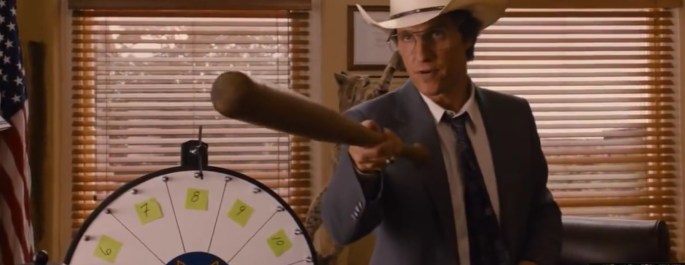
Released in 2011 to mostly supportive reviews but not much in the way of box office receipts, Bernie becomes something strangely hilarious through the use of a faux-interview framing device, with all of the townspeople rallying to support Bernie, even if they truly know he’s guilty. Linklater’s sense of the satiric along with just general ha-ha comedy is in full effect all throughout, with moments that are both laugh out loud funny and slyly hilarious. Matthew McConaughey was superb as the local district attorney trying to make sense of the chaotic mess, sporting an awesome cowboy hat and total laconic charm, while all of the naturalistic performances from the various Carthage residents sealed the black comedy with a devious kiss. How this film is able to shift back and forth between tragedy and comedy is also extremely interesting, as Linklater always employs a subversive touch to whatever material he tackles. Dick Pope’s unassuming but extremely effective camerawork never intruded on anything, while the fleet editing by Sandra Adair kept the comic timing sharp and the pacing brisk; the films feels modest yet still consistently creative. I have long been a fan of Linklater, and this is definitely one of the best movies of his unique, varied, and often underrated career.

3

CLINT EASTWOOD’S SULLY — A REVIEW BY NICK CLEMENT

1

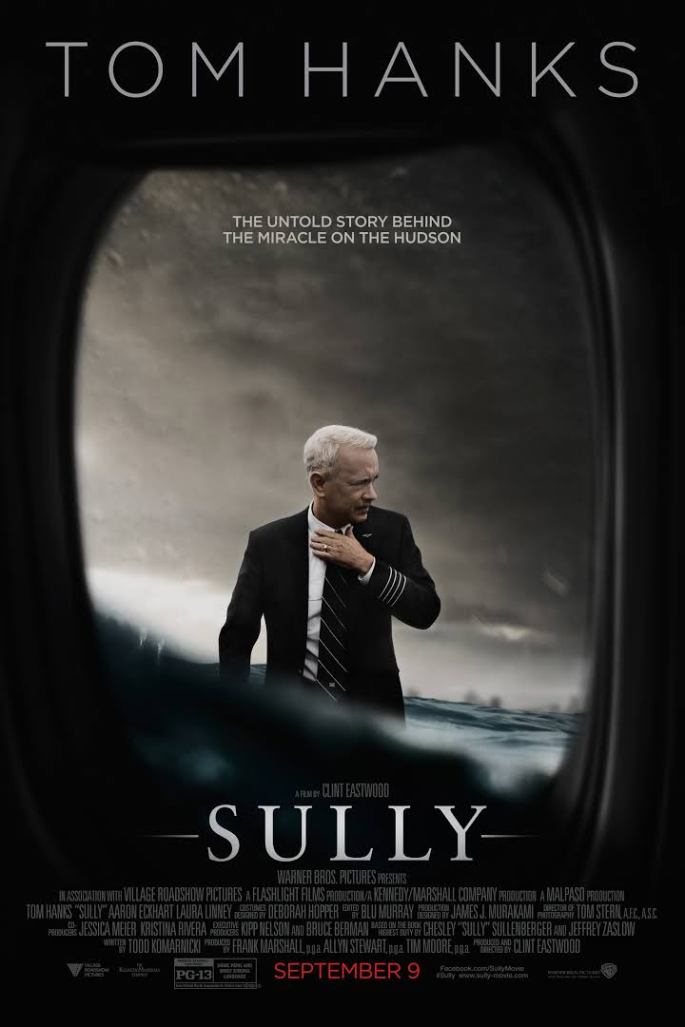
It’s too good to be true, the mere notion of what Captain Chesley Sullenberger did on that particular day in January 2009, but due in large part to pure movie magic, we’re now able to get a first-hand glimpse of the terror, confusion, heroism, and stroke of miracle that took place on the Hudson River. Clint Eastwood’s bold new film, Sully, is a monument to humble American professionalism, a tribute to a man and to a city in general that feels both modern and old-fashioned in equal and appropriate measure. As written by Todd Komarnicki, the film wisely places a narrow focus on its narrative, never overreaching, concentrating mostly on the immediate aftermath of the event, while allowing for some smart uses of flashbacks in order to bolster the notion that Sullenberger was just about the only man fit for this particular emergency. And of course, the entire film is anchored by the amazing Tom Hanks, who yet again crafts a compelling portrait of a regular man thrust into circumstances beyond his control; this is a companion piece, of sorts, to his intense performance in Captain Phillips, and similar to that great piece of true-story entertainment, Hanks’ confident work informs every aspect of the film, allowing himself to become consumed by the material. What is it like to have 35 seconds to make a decision that will affect the lives of 155 people? What’s it like to sit in that cockpit and see the Hudson River a few feet underneath the gear of the plane? What is it like to be faced with the unprecedented, the seemingly impossible? That’s what’s at the heart of this emotionally gripping and soul-stirring film, and because the ending is a happy one, we’re able to bring that knowledge to the cinema as a comforting device. And yet the film still destroys you on an intrinsically human level, because when you boil it down, any one of us could have been on that plane on that day, making one last phone call or sending one last text message, and coming to terms with our fate.

2

Komarnicki’s tight script keeps a sense of discipline that feels in line with its subjects; he was able to balance the humanism of the story while still respecting the miraculous nature of the entire event. We’re not hard wired to wake up in the morning, and be expected to glide-land a commercial airliner on a massive body of water. So, it was smart of Komarnicki to let his script document the incredulous responses that waited for Sully after the event. Eastwood’s no frills directorial style is actually more visually flamboyant than usual, with some incredibly bold individual shots, while it’s very clear that he wastes no time with any aspect to the process. And I wish I could understand how the CGI was done in this film. Taking a page out of the Michael Bay playing field of the photo real image, the audience is treated to numerous shots of the plane that you know just can’t be real. And yet in every sequence, it never looks anything but thrillingly tangible; why does this movie look flawless at $60 million when every week some lumbering $200 million+ CGI-laden monstrosity is thrown up on screens looking like Playstation 2 leftovers? And the way that the technicians recreated that chilly morning on the water with wrap around green screens while filming in a flooded parking lot in Burbank with the hull of a plane dropped in the water – utterly spellbinding while feeling totally authentic. I am a firm believer in only doing this sort of effects work if you’re going to pour over each element, each detail. This is something that was clearly done by Eastwood, his estimable cinematographer Tom Stern, and many other visual consultants.

1

And when it comes to the cinematography of Sully, Stern and Eastwood did something nobody had done before, by shooting in 65 mm IMAX for the duration of filming. The depth of field and striking level of clarity in certain moments is breathtaking. The overcast January skies were perfectly recreated, with an excellent use of desaturated color. This is one of those movies that just grabbed me by heart and mind from the opening seconds (which are startling and absolutely horrifying to consider…) and had me in its grasp for 95 minutes. The fleet editing by Blu Murray, a longtime Eastwood associate, keeps a pace that’s quite different from recent Eastwood efforts; there’s a bracing and direct quality to Komarnicki’s script that’s amplified by the measured directorial style and the extremely precise timing of each scene and moment. And to end the film on the note that it does, well, that moment of levity really hits hard and is a welcome relief from all of the stress and anxiety experienced by all of the characters. It should be noted that Aaron Eckhart is quietly fantastic in his role as the co-pilot; I was amazed by the grace under pressure that both men exhibited during the ordeal, and because this film was clearly designed around lots of research, it all feels totally believable. Hanks should be considered a national treasure at this point, always bringing a steady and sturdy level of gravitas to his roles. Of late, by taking on high profile men of action in films that aim to report the facts, he’s become the go-to-guy for unassuming efficiency with a dedication to doing one’s job. It’ll be a while before I can totally shake this movie out of my system, as the images have seared themselves into my cerebral cortex, and the feeling of overwhelming compassion that one feels for all of the first responders who came to the rescue is something I wasn’t prepared to take on. Recalling Oliver Stone’s vastly underrated World Trade Center, Eastwood’s film pays tribute to everyone who came together on that day, and who helped to save a group of strangers that never expected to be in the position that they found themselves in. Sully is a film that feels vital and important, and a reminder that human beings are still capable of greatness in ways that could never be predicted.

3

MARTIN CAMPBELL’S THE MASK OF ZORRO — A REVIEW BY NICK CLEMENT

3

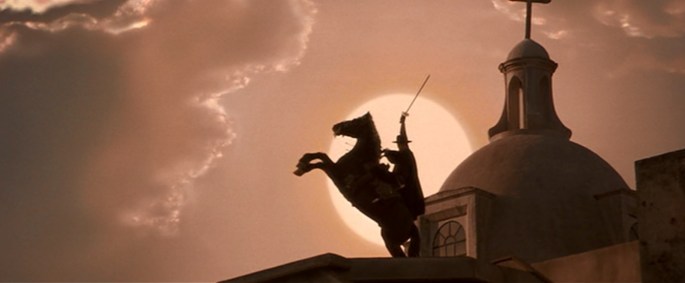
Real-deal swashbucklers are hard to find these days, and outside of the Pirates of the Caribbean franchise and a few period pieces with some sword-play elements, I can think of few recent efforts from this most venerable of genres. That’s why Martin Campbell’s rousing and fully entertaining The Mask of Zorro should be rediscovered, as it provided a welcome blast of widescreen fun in the theaters during the summer of 1998, becoming a big worldwide box office hit, and has really yet to be replicated since (the lackluster sequel didn’t come close to matching the charms of its predecessor). Starring Anthony Hopkins as the original and now retired Zorro/Don Diego de la Vega, the incident-packed narrative cooked up by credited screenwriters John Eskow, Ted Elliot, and Terry Rossio finds Hopkins trying to track down his long lost daughter (Catherine Zeta-Jones), while training his hot-headed successor (the perfectly cast Antonio Banderas), and trying to foil the villain (Stuart Wilson), a devious politician who has one too many delusions of grandeur. Shot with a striking sense for action in bold and beautiful 2.35:1 widescreen by the great cinematographer Phil Meheux (The Long Good Friday, Campbell’s Bond reboot Casino Royale), the film’s numerous set-pieces are absolutely dazzling and remarkably CGI-free, stressing real stunts, real explosions, and some seriously superb sword fights.

2

The road to the big screen for this particular incarnation of the character was a long one, with producer Steven Spielberg at one point considering the helming duties, before courting directors Robert Rodriguez and Mikael Salomon for the job, with Sean Connery initially cast in the role that eventually went to Hopkins. Campbell was then offered the film, who ended up passing on the Pierce Brosnan Bond adventure, Tomorrow Never Dies (he had rebooted the series with Goldeneye a few years before). Producer David Foster and writer/director David S. Ward were both brought in for uncredited rewrites. Shot on location in Mexico City, the film conveys an epic sense of sweep while still retaining the proper intimate moments between the characters, mixing action and romance in equal measure, and allowing for Banderas to totally steal the show with his patented brand of roguish charm. Zeta-Jones, who was lit like an absolute goddess in tons of soft light, is nothing less than radiant in her part, which was written with zest and wit and with plenty of opportunity to surprise. James Horner’s robust musical score supplied terrific accompaniment in every scene, while the physical production itself is truly a marvel to look at, with production designer Cecilia Montiel and costume designer Graciela Mazón both delivering hugely impressive work in their departments. Bottom line: This is just a really, really fun movie. An Amblin Entertainment production.

1