TONY SCOTT’S DAYS OF THUNDER — A REVIEW BY NICK CLEMENT

3

Days of Thunder is basically Top Gun with race cars, and while it didn’t do nearly the same box office as the Naval aviation saga, it returned director Tony Scott to the chair of a big-budget studio action picture after his more artsy effort, Revenge, and showcased his clear eye for visceral intensity within his action sequences. Again collaborating with iconic producers Don Simpson and Jerry Bruckheimer, Days of Thunder is shamelessly corny and ridiculously entertaining in equal measure, a movie with some of the best race car scenes ever captured on film, truly demonstrating to the viewer just how dangerous stock-car racing can be.  Cruise essentially replicated the character of Maverick but instead of being in a cockpit for most of the movie he’s in the driver’s seat of his car, taking a character that the audience is familiar with and shaping it with some new and interesting beats and flavors.  Scott shot the hell out of every single racing sequence and all of it is 100% real (remember – CGI was still a few years away).  And it truly feels it.  There is an authenticity to the race sequences that feels vital, and the blunt-force impact of Ward Russell’s classically masculine widescreen cinematography cannot be ignored, as it conveys the grit, smoke, and fire of the track, as well as the richly textured, sun-dappled, and heavily atmospheric imagery that Scott would become so famous for. This is a gorgeous film in nearly every instance.
days-logo

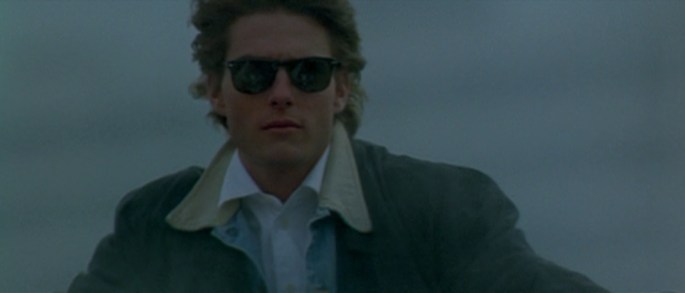
The film also marked the big American break out performance of Nicole Kidman, who would hook up with Cruise off-screen, resulting in one of the most celebrated Hollywood couples of all time; their chemistry in Days is palpable and their courting sequences are genuinely cute. The dynamite sound work on Days of Thunder is a sonic clinic on the process of layering effects, dialogue, and music, mixing the revs and roars of the engines with the screams of the crowd and the interaction of the race teams.  One of the film’s signature moments has to be Cruise’s entrance to the race track; pulling up on a motorcycle, rocking a leather bomber jacket, and cutting through some classic Tony Scott fog-machine-produced-mist, Cruise was in pure bad-boy mode in Days of Thunder. And then there’s the opening credits, which are perfectly edited to Hans Zimmer’s pulsating musical score (his first solo feature job), with Scott and Russell’s camera catching quick glimpses of race track life, which really sets the stage. The macho supporting cast includes John C. Reilly, Robert Duvall, Michael Rooker, Cary Elwes, Fred Thompson, and J.C. Quinn, while legendary Chinatown scribe Robert Towne is credited as the screenwriter. Few movies have conveyed the same sense of speed and danger that Days of Thunder managed to achieve, and as a result, this is a great flick to watch with some friends while drinking some beers on a Saturday afternoon, with the surround sound cranked way up.
1

DAVID S. WARD’S MAJOR LEAGUE — A REVIEW BY NICK CLEMENT

11

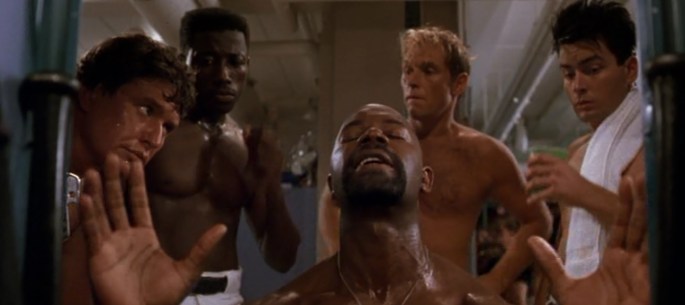
Major League is such an important film to me for so many reasons – it’s one of the funniest films ever made, it’s one of the best sports comedies ever made, and it was the first R-rated movie I saw on the big screen; I was eight years old. I can still remember my father telling me, “Son, this film has a word in it. A certain word that begins with the letter F. And I don’t want to hear this word out of your mouth after you see this movie.” Ha! To say that my mind was blown would be an understatement; I can still remember the feeling I had while watching the locker room blow out with all that fuckin’ cursing and hollering and feeling like I was privy to something extra-special, something adult, something that separated the little kids from the grown-ups.

77

I wore my viewing of this film like a badge of honor, proudly exclaiming to my buddies that I had seen this movie, Major League, and there was tons of swearing and things I could never understand at the time. And I love that when it hit TV, I could rationalize to my mother how it was OK for her to tape it for me, because I had already seen it despite the cussing, so what was the big deal if I viewed it again and again? I also love how my theatrical experience was my dad’s second viewing of the movie, having seen it the previous evening with my mother on opening night. He knew how funny it was, and he needed his kid to see it. I can’t wait to experience this with my own child and make it a regular occurrence.

2

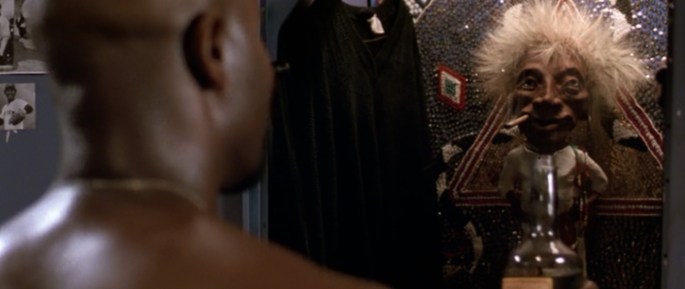
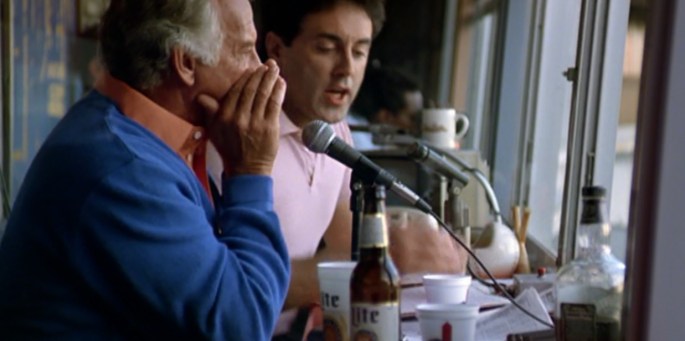
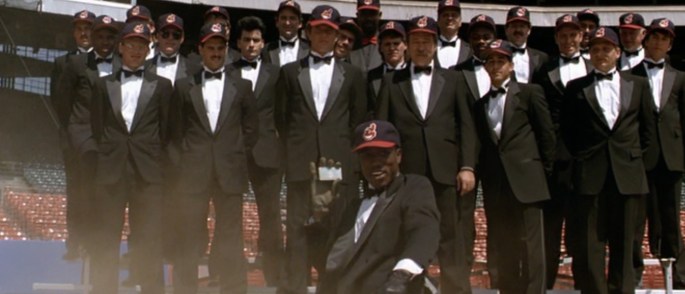
Written and directed by the prolific David S. Ward (screenwriter of The Sting, The Milago Beanfield War, and Sleepless in Seattle, and director of Cannery Row and The Program), the film’s all-star cast is really spectacular, with everyone getting a chance to round the bases: Tom Berenger as the old and tired catcher, Charlie Sheen as the hot-shot pitching phenom with a penchant for hit batsmen, Dennis Haysbert as the mysterious slugger with a special friend named Jobu, Corbin Bernsen as the slick but underachieving third baseman, Wesley Snipes as the flamboyant center fielder, the great Chelcie Ross as the veteran starting pitcher with a chip on his shoulder, bitchy Margaret Whitton as the nefarious team owner, the smarmy Charles Cyphers as Whitton’s henchman, crusty James Gammon as the salt-of-the-earth head coach, and the ridiculously funny Bob Uecker as the alcoholic radio announcer.

8

Everything about this movie works, from the big scenes on the baseball field, to the smaller, more romantic moments between Berenger and the radiant Rene Russo, who had one of the greatest runs during the 90’s that I can think of, appearing in a string of well-received blockbusters and always bringing her A-game. And I love the club house vibe in this film, as the screenplay really struck comedy gold whenever the action was set with the team as a group, with the entire cast conveying true chemistry with one another. Shot for $11 million and grossing $50 million, the film was a solid success with theatrical audiences, but REALLY found its footing on VHS and DVD, while neither sequel came remotely close to capturing the same sense of vulgar glee and smart comedic riffing. “This guy here is dead!” “Cross him off then!”

3

ROGER DONALDSON’S 13 DAYS — A REVIEW BY NICK CLEMENT

1

Thirteen Days didn’t deserve to bomb at the box office the way it did, as it’s one of Roger Donaldson’s best films, and a riveting true life tale that everyone should be familiar with. Released in 2000, the film was met with excellent critical reviews, but it was likely too talky to break out with the younger action crowd, and not sold hard enough to more adult minded audiences. David Self’s focused and extremely well researched screenplay was an adaptation of the book, The Kennedy Tapes: Inside the White House During the Cuban Missile Crisis, by Ernest May and Philip Zelikow, and showed a steadfast determination to historical verisimilitude as well as cinematic dramaturgy. And while some people took exception to the filmmakers beefing up the role that political consultant Kenneth O’Donnell played during all of this, Kevin Costner’s forceful performance was in perfect tandem with the two true stars of the movie, Bruce Greenwood as President John F. Kennedy, and Steven Culp as Attorney General Robert F. Kennedy. Greenwood and Culp clearly studied the mannerisms of the men they were portraying via archival footage and photographs, because they both seemed totally at ease and naturalistic while playing these towering individuals.

2

Everything about this movie, from a production standpoint, feels 100% authentic, from the fabulous production design by Dennis Washington and his entire art direction team, to the appropriately classical cinematography by ace lenser Andrzej Bartkowiak, who made good and clever use of black and white processing in some key historical segments, while never pumping anything up too visually, which was important as this film relied on the spoken word more than anything else. The fabulous supporting cast is too large to list; let’s just say that every single face sitting around all of the various board rooms and elongated desks feels weathered, tired, nervous, and perfectly cast. Conrad Buff’s extremely taut editing kept the film moving at a fast pace without ever sacrificing coherence, and considering that this is a film that consists almost entirely of men in suits speaking in large rooms and offices, the fact that it’s as energetic as it is speaks to Donaldson and Buff’s understanding of the fluidity to multi-character storytelling. The contemplative and hopeful musical score by Trevor Jones pulled everything together without any bombast, opting for quiet in all the right moments, while still feeling robust when needed. Thirteen Days is a movie I’ve seen countless times, and yet I look forward to each viewing as if it were the first.

3

MICHAEL POLISH’S THE ASTRONAUT FARMER — A REVIEW BY NICK CLEMENT

1

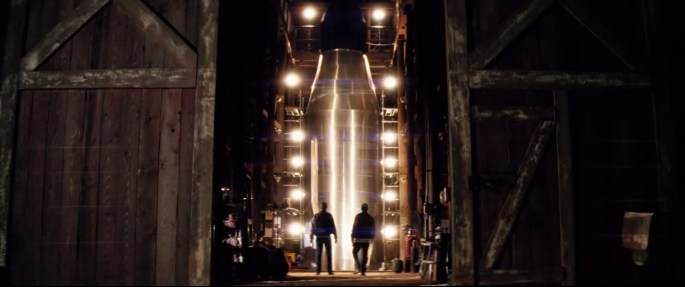
I absolutely LOVE this movie and I feel it’s a shame that more people haven’t seen it. It’s unclassifiable, it’s overwhelmingly gorgeous, it has a great message, Billy Bob Thornton was wonderful in the title role, and the directing from Michael Polish was straight-forward effective and extremely sincere. Was it the odd-sounding title or the barely noticeable advertising? I’m not too sure that people are into “honest charm” anymore – this is a movie that would have felt at home back in the 1950’s. But at the same time, it recalls such classics as Field of Dreams, telling a story of obsession, dedication, and perseverance against great odds, set against the backdrop of something totally fantastical yet oddly tangible. Thornton plays a daydreaming Texas rancher who decides to plunk all of his money into the construction, and hopeful launch, of his own private rocket up into outer space, thus realizing his life-long dream of becoming an astronaut. But once the government catches wind of a private citizen trying to procure rocket fuel, all hell breaks loose, a media storm is created, and a celebrity is created overnight. The Astronaut Farmer is one of the least cynical movies that I can think of, and it seems a minor miracle that it was actually funded by a major studio; it feels like the sort of movie that a writer would be laughed out of pitch over if they suggested it today.

2

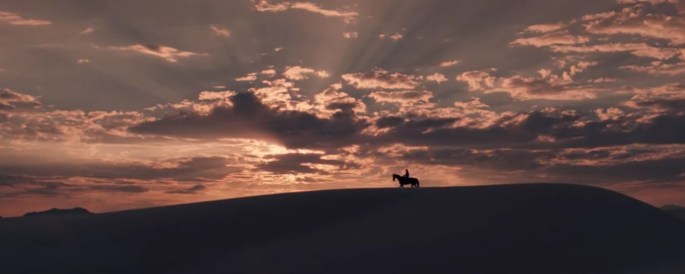
The supporting cast is superb – Virginia Madsen as Thornton’s loving and supportive wife, Bruce Dern, Tim Blake Nelson, co-writer Mark Polish, Jon Gries, J.K. Simmons, and an uncredited Bruce Willis – with everyone getting a chance to create a fully-fleshed character that contributes something important to the narrative. And on a technical level, the film is absolutely radiant, with Michael Bay-esque saturated colors being employed by Polish and his creative cinematographer M. David Mullen; the artists playfully subvert expectations and use the dusty backdrops in ways you might not imagine, while taking full advantage for the possibility or two for a glorious sunset in anamorphic widescreen. The slick and peppy editing by James Haygood keeps the entire film moving along gracefully, with scenes playing out for maximum emotional impact without ever becoming cloying. Toss in a warm musical score from Stuart Matthewman and truly spectacular production design by Clark Hunter and art director James F. Oberlander and the aesthetic package is completely sealed. Despite not making a dent in the box office and sort of being shrugged off by most critics, I think The Astronaut Farmer is one of the best family films that families have probably never seen together, and I absolutely can’t wait for my son Owen to experience this wonderful little movie. Hopefully a Blu-ray upgrade occurs in the future. It’s literally impossible not to smile after watching this gem.

3

JEAN-FRANCOIS RICHET’S BLOOD FATHER — A REVIEW BY NICK CLEMENT

blood_father_ver2_xlg

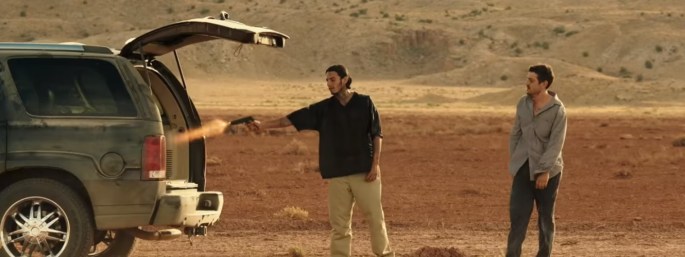
It’s too bad that the new Mel Gibson actioner Blood Father is getting buried by Lionsgate in terms of a full-on theatrical release, as it totally represents a return to ass-kicking form for star Mel Gibson, and would make for a tasty double bill with the late summer sleeper hit Hell or High Water. This is some seriously economical storytelling, with a no-fat and all-momentum screenplay from the writing team of Peter Craig (The Town, The Hunger Games: Mockingjay) and Andrea Berloff (World Trade Center, Straight Outta Compton), who based their lean and mean genre entry on Craig’s novel of the same name. Directed with gritty efficiency by French action maestro Jean-Francois Richet (the masterful two-part crime epic Mesrine, the underrated remake of Assault on Precinct 13), the story tracks an ex-con (Gibson) and his wayward, druggie daughter (sexy Erin Moriarty), who end up on the run from a ruthless set of drug dealers and other assorted baddies after she mistakenly shoots one of the higher ups.

3

Gibson finally got a meaty role to have some fun with, while his recent off-screen persona adds an interesting angle to the already edgy narrative; this is truly perfect casting when all things are considered. His paternal chemistry with Moriarty is palpable, so when the bullets start to fly, the story is all the more involving. And while the plotting may feel comfortably familiar, it’s the confidence in the material and the conviction of the performances that sell the entire picture. Sometimes being hard-boiled and exacting with a simple yet effective premise is all that’s required, as this sun-baked gem repeatedly delivers the goods.The nifty supporting cast includes a sneering Diego Luna, an especially nasty Michael Parks, prolific Dale Dickey, the super-dangerous looking Richard Cabral, and a clearly-having-fun William H. Macy as Gibson’s gun-toting buddy and AA-sponsor. Craig and Berloff’s stripped down writing allows for character beats to emerge out of body language and visual motifs, while the script is frequently funny in ways unexpected, with various call-outs (intentional or not…) to some of Gibson’s most iconic films.

2

And that’s part of the fun of Blood Father; it’s the type of movie that comments on genre while still respecting it, going through the process with violent ferocity and a straight-ahead sense of retribution. Gibson grabbed this role by the balls and never looked back, allowing his facial hair to convey backstory, while looking seriously buff without feeling overdone. And he still wields a pistol like few other action stars, with the various action scenes, most notably a hair-raising bike chase and super-deadly final shoot-out, benefiting from Richet and cinematographer Robert Gantz’s clear sense of visual form and spatial awareness. After premiering to very strong reviews at the 2016 Cannes Film Festival, it’s a bummer to see this sort of hard-nosed genre entry not attracting as big of an audience as it should. There are multiple factors at play with this film in terms of its lack of audience traction, make no mistake, but in the end, a good movie is a good movie, and this is that. Blood Father is currently in very limited theatrical release, and available on various streaming platforms such as cable providers, ITunes, and YouTube.

1

ROBERT BUDREAU’S BORN TO BE BLUE — A REVIEW BY NICK CLEMENT

3
If the musical biopic feels stale to you, then check out the defiantly non-traditional Born to Be Blue, which takes an impressionistic look at the troubled life of famed jazz musician Chet Baker, played by Ethan Hawke in yet another superb lead performance. Independently financed by multiple international production companies, the film was written, produced, and directed by Robert Budreau, who clearly took great pains to avoid anything remotely resembling a staid approach to his storytelling, instead opting for a unique narrative conceit and tricky overall construction to showcase a man and his turbulent yet incredibly successful and influential life. Because this film takes a very unique approach to the material, and because it doesn’t follow a customary trajectory, you might not learn a ton more about Baker than you already knew coming in. But in terms of cinematic information delivery, this is fresh stuff. In 1966, Baker was contracted to play himself in a Hollywood production that would’ve detailed his early years and the beginnings of his heroin addiction, so Budreau adroitly used this event as a way of presenting his film, bouncing back and forth in time, and showing Baker in various states of mental and physical harmony and despair. Most disturbingly, Born to Be Blue highlights the extremely tough period in Baker’s life after he was attacked and viciously beaten by thugs, who were upset over being stiffed on cash during a drug deal. The beating was so bad that Baker was left unable to play the trumpet any better than a beginner for an extended period of time, as his teeth and mouth were smashed into oblivion.
2
Co-starring the absolutely gorgeous Carmen Ejogo as a composite of multiple women that Baker crossed paths with, the film is really and truly the Ethan Hawke show, as he cuts a tragic portrait of a man unable to control his inner demons, while still pounding out one amazing musical number after another, all the while attracting a huge fan base and tons of female admirers. His intense rivalry with Miles Davis is also offered up in a few juicy bits; this was a cutting edge and extremely competitive world that these musicians found themselves in, with each artist looking to find their particular spot and role in history. The entire film almost carries the whiff of a dream, some sort of druggy remembrance that moves in strange ways.The film’s jazz score was composed by pianist David Braid, while the audio from the various trumpet performances was preformed by Kevin Turcotte, with Hawke taking lessons from musician Ben Promane and studying Turcotte’s recording videos as a way of learning how to appropriately mime all of the sheet music. His performance never once feels anything less than wholly committed and fully functional on a musical level, and totally engaged on an emotional one. After debuting at the 2015 Toronto International Film Festival in the Special Presentations section, the film found very limited theatrical release earlier this year thru IFC, and is now available to stream on various platforms, and is also available on DVD for rent thru Netflix and for purchase at numerous physical media retailers; no Blu-ray has yet been made available.
1

E.L. KATZ’S CHEAP THRILLS — A REVIEW BY NICK CLEMENT

1

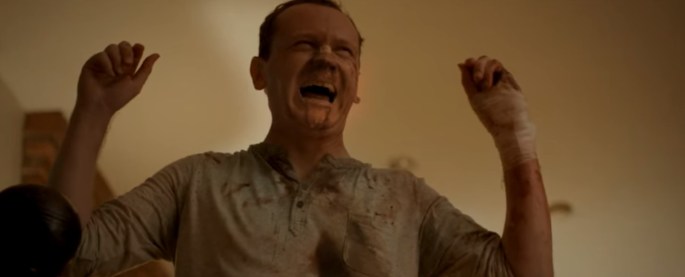
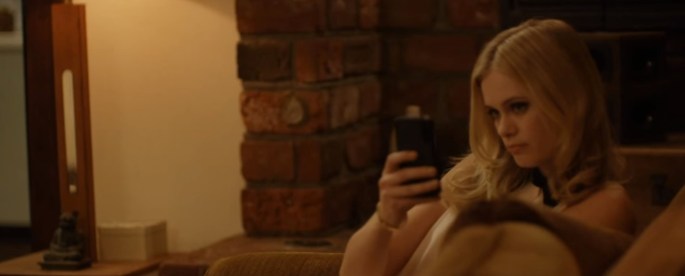
Pardon my French but the black comedy Cheap Thrills was fucking disgusting. And aggressively amazing. And never not fully entertaining. But fucking disgusting all the same. This is as nasty of a movie as I can think of – only strong stomachs need apply. The idea is simple: Two down on their luck guys (the go for broke Pat Healy and wild-man Ethan Embry) are suckered into a series of absurd, questionable, and violent dares for inordinate sums of cash by a rich married couple (the deranged David Koechner and super-hot Sara Paxton), with the idea being that these two desperate souls will debase themselves repeatedly while the couple gets off on the morally and ethically reprehensible antics. How far will people go before they essentially become thoughtless animals?

3

I’ll give first time director E.L. Katz and screenwriters David Chirchirillo and Trent Haaga some serious credit, as their film is totally diseased and fully demented, made with a striking conviction to the jet-black and deadly-serious material, never backing off for a moment and always approaching the taste police ready to riot. The performances are all full-tilt and extremely committed, which helps to sell the increasingly dangerous, transgressive, and ludicrous narrative. It also has one of the best final shots of any movie from in recent memory; it’s totally balls-out in its level of madness. A carnival of grotesqueries and a major slap to the cinematic face, Cheap Thrills will leave you wanting a long, hot, soapy shower, which I’d have to imagine was the intent from everyone involved.

2

DEREK CIANFRANCE’S THE LIGHT BETWEEN OCEANS — A REVIEW BY NICK CLEMENT

3

Films like The Light Between Oceans are a tough and tricky task for some moviegoers, as pure, heartfelt, cinematic melodrama seems to be mostly out of fashion these days. I am not sure what some people were expecting from this visually lush, overtly sentimental, yet extremely dark film. While I would have preferred that this two hour and 10 minute film had lasted closer to three hours in total, there’s lots to admire all throughout writer/director Derek Cianfrance’s newest and most polished motion picture, and it reinstates his inherent interest in family dramatics, passages of time, and the generational effects that major decisions and their consequences have on people’s lives. In his previous films, the destructive marriage scorcher Blue Valentine and the tragically underrated crime drama The Place Beyond the Pines, Cianfrance brought a Cassavetes-esque intensity to his stories and characters, allowing for moments of seeming spontaneity to bubble to the surface and inform the proceedings. In The Light Between Oceans, he’s telling a story that on the surface feels 1,000 miles removed from his previous studies of interpersonal discord and genre subversion, but when examined closely, there’s the same sense of tragedy and open-wound intensity to be found all throughout. And while The Light Between Oceans feels rushed in some spots where more time and discovery might’ve enriched the picture in general, there’s a sense of classical epic sweep mixed with delicate intimacy that hasn’t been seen on the big-screen all that much in recent memory.

4

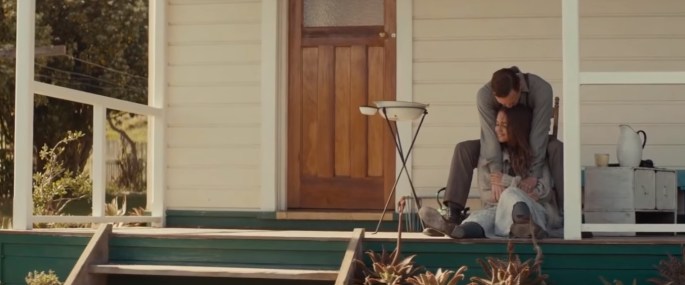
Adapted from the 2012 novel by M.L. Steadman, Cianfrance has two of the best current actors leading his overwhelmingly beautiful film, with both Alicia Vikander and Michael Fassbender doing excellent work as tortured souls who have to spend most of their life dealing with the ramifications of their morally questionable behavior. Tom (Fassbender) is a lighthouse keeper and war veteran living off of the coast of Western Australia, at the tail end of WWI. He meets and quickly falls in love with a local woman named Isabel (Vikander), with the two of them heading off to their private island in search of happiness. Unfortunately, tragedy and despair is all that they encounter, as Isabel suffers multiple miscarriages, while it’s clear that motherhood is the one driving force in her heart. But everything changes when, miraculously, an infant washes ashore in a rowboat, along with the dead body of what they presume to be the child’s father or other relative. Rather than report the incident, Tom buries the body, and the couple begin raising the little girl as their own child; Isabel’s happiness is beyond compare. But their familial bliss is cut short when the girl’s real mother, an anguished and despondent Rachel Weisz, crosses paths with the illicit family, thus setting into motion a serious case of guilt for Tom, who starts to feel compelled to tell the truth.

2

The production values on this film are extraordinary. Every single shot is museum quality. Cinematographer Adam Arkapaw (last year’s deliriously photogenic Macbeth) bathes a good portion of the movie in a golden hue which gives off a warmth which challenges the sad subject matter; it’s an interesting and unique dichotomy of aesthetics and thematics, reminding of the work done on the similarly gorgeous study of human suffering, The House of Sand and Fog. Jim Helton and Ron Patane’s velvety editing has a graceful spirit that, when in tandem with the luscious photography, recalls the artistic freedom of recent Terrence Malick pictures; there’s an internal hum and rhythm to this movie that’s interesting to observe. The production design by Karen Murphy and costume work handled by Erin Benach evoke a simpler time without ever calling attention to the period trappings. Alexandre Desplat’s alternately mournful and soulful musical score supplies dollops of sonic accompaniment, all but consuming Arkapaw’s eye-melting imagery. And of course, the entire film is firmly anchored by the impassioned acting, which hits numerous notes of raw emotion which is now a customary expectation for any film from Cianfrance. And as usual, Cianfrance has gravitated towards flawed characters who aren’t easily likable at times, which is always more interesting to observe on screen. I just wish that the film had been given more time to breathe and ruminate upon its many internalized threads, as there’s nothing easy about the challenges that the characters find themselves in during the course of the story. But in the end, this is another forceful piece of work from Cianfrance, who clearly has an affinity for his actors and the unpredictable nature of life itself.

1

F. GARY GRAY’S THE NEGOTIATOR — A REVIEW BY NICK CLEMENT

3

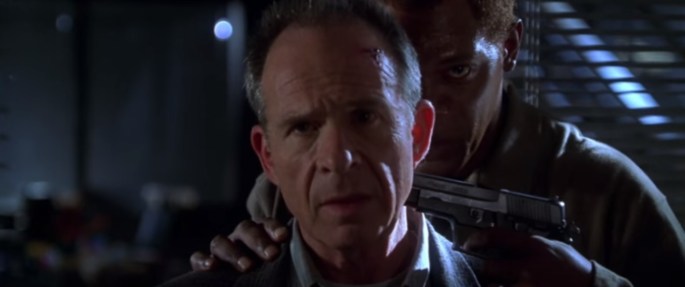
F. Gary Gray’s well above average late 90’s thriller The Negotiator remains a solid chop off the Dog Day Afternoon block, telling a riveting story of police corruption, mistaken motives, shadowy conspiracies, and high-pressure bits of action. Exciting and tense direction, smart writing from James DeMonaco and Kevin Fox, crisp editing by Christian Wager, and classically shot by the great cameraman Russell Carpenter – this film really was the total genre package back in the day, and it deserved a higher profile during the summer of 1998, where it was released to solid reviews and solid if unspectacular box office. It’s the sort of movie that I’d love to see get made these days; tough-guy cinema like this is always in short supply.

1

Yes – Samuel L. Jackson and Kevin Spacey delivered showy and terrific star turns, but this movie BELONGS to its AMAZING supporting cast, which is essentially a roll-call of the A-1 best character actors and “faces” that ever graced a policier potboiler of this sort. Hear me now: David Morse, Ron Rifkin, John Spencer, J.T. Walsh, baby-faced Paul Giamatti, Michael Cudlitz, Dean Norris, Nestor Serrano, Carlos Gomez, and Jack Shearer just to name a few. You have to wonder how Henry Czerny didn’t make it on the cast list as well. Seriously – these names may not all be familiar, but take a moment and do a Google image search and you’ll realize how incredible these guys were in SO MANY MOVIES throughout the 90’s.

negotiator

Gray has had a solid career directing slick and disposable Hollywood entertainment, but last year’s Straight Out of Compton and this juicy, exceedingly entertaining ensemble piece rank as his best. I should also revisit Set It Off, as I remember really enjoying that as well. And of course, Friday is an all-time stoner classic, a film that “gets it” in ways that few other films do; it’s as sly and subversive as it is in-your-face-funny. But with The Negotiator, he dared tread in the same waters as genre masters like Sidney Lumet did before him, and he ended up crafting a movie that has some nice edges to go along with its smooth sense of style. This is the definition of a Sunday afternoon matinee that could be joined at any point in the narrative.

2

WALTER HILL’S 48 HRS. — A REVIEW BY NICK CLEMENT

3

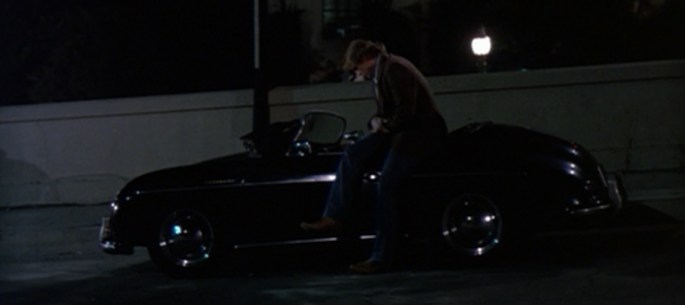
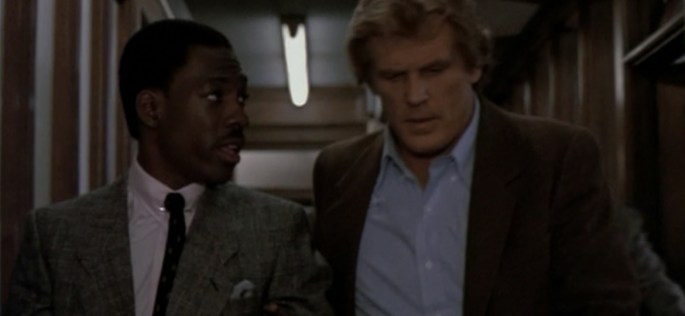
Truly great “buddy movies” are very hard to find these days, so I find myself often returning to the classics of the genre, with the totally terrific 1982 action-comedy 48 Hrs. continually leading the way. With dynamite chemistry between Nick Nolte and Eddie Murphy (in his big-screen debut), macho-man director Walter Hill was armed with a superb screenplay that he co-authored along with Roger Spottiswoode, Larry Gross, Steven E. de Souza, and Jeb Stuart, and he brought the same sense of hard-charging action to all of the set-pieces that he had become known for during the 70’s with his prolific output. Marking the producing debut for future genre overlord Joel Silver, the narrative was fast and loose, with big laughs running parallel to big stunts and shootouts, while the interplay between Nolte (as a crusty cop) and Murphy (as a convict) really helped to elevate the film beyond what it might have been with different actors in the lead roles. The great supporting cast includes an oily James Remar, Annette O’Toole, David Patrick Kelly, Sonny Landham, Brion James, and Jonathan Banks(!). James Horner’s score was big and magnificent, Ric Waite’s cinematography appropriately rugged and gritty, and the tight editing by Bill Weber, Mark Warner, and Freeman Davies kept the film moving at a fast clip.

2

Helping to revitalize the “buddy cop” genre after films like Busting, The Super Cops, and Freebie and the Bean exploded on the scene in the 70’s, the excellent work done by all of the creative parties on 48 Hrs. would go on to inspire future efforts like Lethal Weapon, Midnight Run, Beverly Hills Cop, and Rush Hour, with many imitators coming and going along the fringes. The film spent a while in development, with various writers and directors all taking shots at the material before Hill settled down to roll cameras; Clint Eastwood was attached to star for a while as well. This is a timeless film. Sure, it was made with an 80’s aesthetic, but because the script is genuinely witty and there are actual stakes to the plot, you become immediately invested, while truly liking the leads and wanting to see them succeed. Nolte and Murphy knew exactly how to play off of one another, resulting in an unlikely pairing that has now become something of cinematic legend. And for Hill, it’s yet another reminder of how sturdy a filmmaker he was in his heyday; his entire body of work is worthy of reconsideration. A critical success and box office hit, this is one of Hill’s most overtly entertaining films, and a true call-back to a different type of action blockbuster.

1