This movie is tons of fun from start to finish. I love the busy plotting and frenetic vibe, and count me in for any successful attempt at screwball comedy from any year; these types of movies would clearly never be made today and thanks to the people at TCM, their programming slate has been on fire of late. Peter Bogdanovich obviously had a total blast with this wild and crazy little movie, one that seems to be in love with the fact that it exists solely to entertain; there isn’t a pretentious bone in this film’s charming body. The inspired absurdity, which pays reference to Bringing Up Baby and various Bugs Bunny cartoons, revolves around four strangers who all happen to be carrying the same piece of plaid luggage and staying at the same hotel, with everyone getting their belongings mixed up, and hijinks ensuing.There’s a gleeful sense of madcap to most of this movie, which always puts a smile on my face, and I love how the entire film felt like an escalating series of nonsense that everyone took just seriously enough to make it all work.

Ryan O’Neal and Barbara Streisand were both superb, while Madeline Kahn stole the film in her first big-screen outing. Kenneth Mars, Michael Murphy, Austin Pendleton, John Hillerman, and many others all contributed to the sterling supporting roster. Released in 1972, What’s Up, Doc? grossed nearly $70 million domestic on a $5 million budget, making it a massive financial success while receiving warm critical embrace. The cinematography by master of the era László Kovács paid tribute to films that had come before, while still staying zippy and displaying a sense of visual energy that bolstered the entire production. Verna Field’s brisk editing kept a fast pace which felt appropriate for the material. And despite not being a traditional musical, there’s a harmonious vibe to the entire movie that is very pleasing, with the WGA-winning screenplay by Buck Henry, David Newman, and Robert Benton hitting one hilarious beat after another. Bogdanovich made some absolutely brilliant movies and this is one of his loosest and most purely enjoyable on a simple but never stupid level.


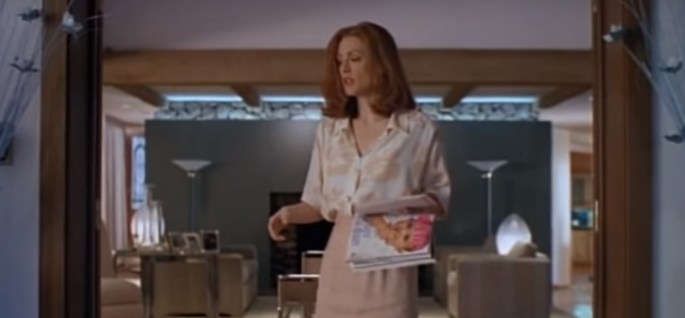
There aren’t many films like the extra creepy “environmental allergy” movie Safe from unpredictable and eclectic filmmaker Todd Haynes (I’m Not There, Far From Heaven, Carol). Released in 1995 and featuring a then rising star Julianne Moore in what amounts to a powerhouse performance of internal anguish, the film was unjustly overlooked by many in favor of splashier projects, but still cuts very, very deep and close to the bone. A psychological horror film of the first order, Moore plays a wealthy Los Angeles homemaker who develops multiple and unexplained allergies to everything around her – smells, sounds, sights, and the overall environment start to make her physically sick and mentally unstable. Apparently, it’s called Multiple Chemical Sensitivity, and her husband, played by an at first concerned and then by the end totally exasperated Xander Berkeley, is at a complete loss for words and understanding, her friends can’t comprehend any of it, and worst of all, she can’t figure any of it out for herself.
Providing no easy answers for any of his characters (or the audience), Haynes and the adroit cinematographer Alex Nepomniaschy (Narc) used compositional space to suggest isolation and loneliness and mental despair, while the complicated sound mix, which utilized multiple layers of sound in order to distort and augment reality for Moore’s emotionally fragile character, never allowed the viewer to know anything more than any of the characters at any point in the narrative. Movies rarely get as underrated or as unsung as something like Safe; it’s a small film with big ideas and it’ll mess with your head long after the final shot fades to black. And as always, Moore was mesmerizing to watch, dropping a tour de force piece of acting that registers as one of her best and most unhinged portrayals of a damaged soul on screen. Available on Criterion Blu-Ray.

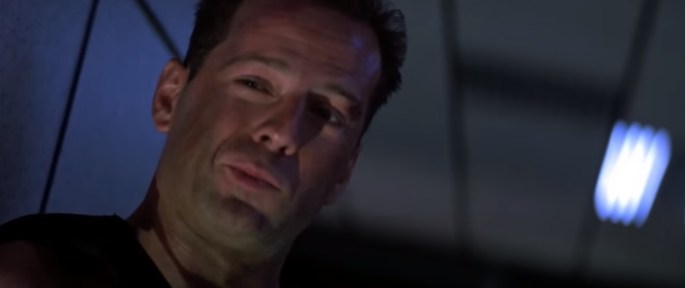
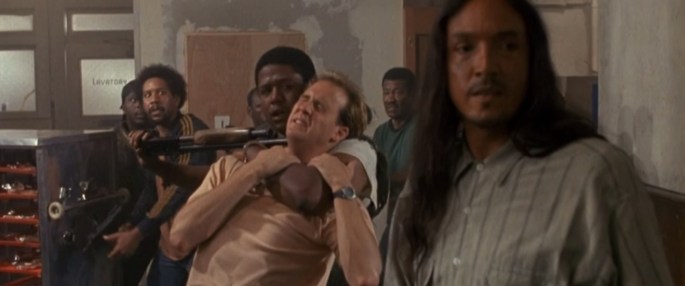
Remains a stone cold classic of American cinema. Masterpiece goes without saying. The very definition of timeless. I find so few flaws – if any – in John McTiernan’s Die Hard. Many, many imitators and copycats have tried to replicate the brilliance of this film and almost all have failed. From the air-tight plotting to the muscular direction this was an action movie that literally shattered the genre; Joel Silver would never be the same as a producer and it forever changed the landscape of the Hollywood action picture. Jan De Bont’s silky yet robust 2.35:1 cinematography stretched the frame to the max; his work as a cinematographer was always fantastic. Bruce Willis was both a credible “every-man” hero and the projection of something more – it’s an underrated performance that he nailed in every single respect. The historic screenplay by Jeb Stuart and Steven E. de Souza stressed narrative economy, logical plotting, and ironic humor that never, ever delivered its jokes with a tongue in cheek vibe. The first blast of bloody violence doesn’t happen for nearly 40 minutes, and it’s close to 20 minutes before the “plot” kicks in. Instead of immediately clobbering the audience over the head with a sensory blast, McTiernan, ever the craftsman, ummm, you know, told a story with actual characters and dialogue that was witty and smart and THEN he let the bullets fly and the explosions rip. He knew that none of the violent mayhem would matter if the audience didn’t care. Die Hard also marked the birth of Bruce Saving the Day in a stained undershirt POWER and Look at Bruce Make that Grimaced Face POWER and look at all of the sleazy Hart Bochner POWER. This is an unassailable tour de force of thrilling pop corn entertainment that never, ever gets old. It’s a firm example of what I call Grade A Entertainment.


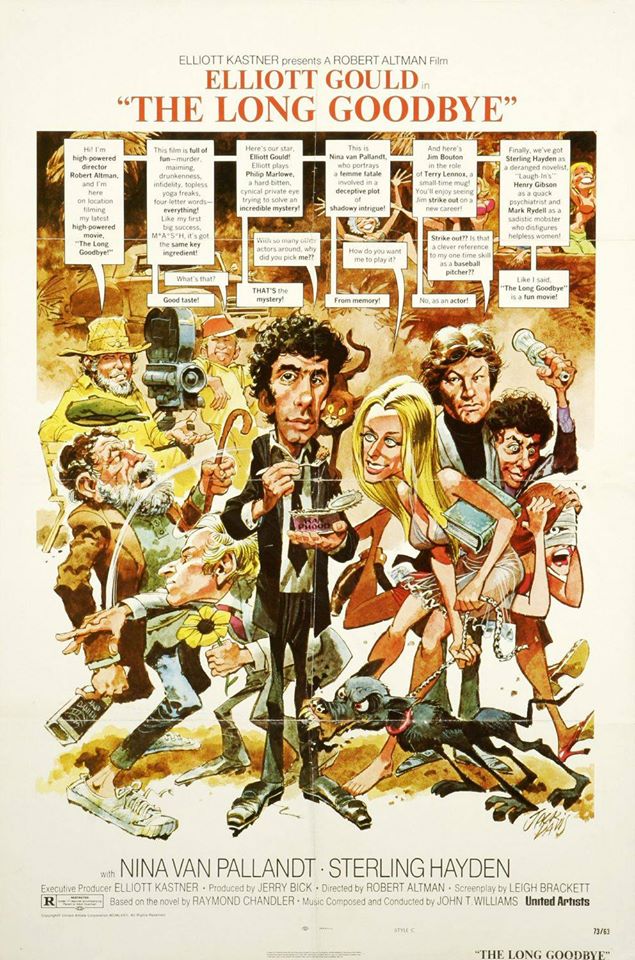
There are very few Robert Altman movies that I’ve seen and not enjoyed. The man was beyond prolific, and I’m still not 100% caught up with his genre-hopping filmography, but he made so many great, unique, and all-together interesting motion pictures that it’s no wonder he’s been the inspiration for so many of our best current filmmakers. The Long Goodbye is one of my absolute favorites from Altman, an overstuffed shaggy-dog detective story that is more interested in people and their eccentricities rather than concrete plot points. Written by legendary screenwriter Leigh Brackett, this film served as an updated companion piece to Brackett’s decades earlier The Big Sleep, with both taking life as original novels by Raymond Chandler; talk about loving the art of being convoluted! The tone that Altman achieved in The Long Goodbye is exactly why I respond so favorably to its many distinct charms; the film is a cool customer, and feels like it could only have come from that glorious decade of 70’s cinema.
Elliot Gould did some of his best and funniest work as laconic detective Philip Marlowe, with the entire supporting cast delivering very tasty and memorable performances; Nina van Pallandt, Sterling Hayden, ex-MLB pitcher Jim Bouton, Henry Gibson, David Arkin, and filmmaker Mark Rydell were all fantastic. Altman’s trademark use of overlapping dialogue was in full swing in The Long Goodbye, and in tandem with the super-wide 2.35:1 cinematography by the legendary cameraman Vilmos Zsigmond, the film has an effortlessly cool, hazy-stoned, and oh-so-raggedly-beautiful aesthetic which is very well complimented by the Kino Blu-ray release. The final scene is all sorts of amazing, wrapping everything up but still retaining that loosey-goosey vibe, while the film sports a jazzy John Williams musical score. Apparently, Brian G. Hutton, Howard Hawks and Peter Bogdanovich were potential directors before Bogdanovich passed on the project, and recommended Altman. “I even lost my cat” POWER.

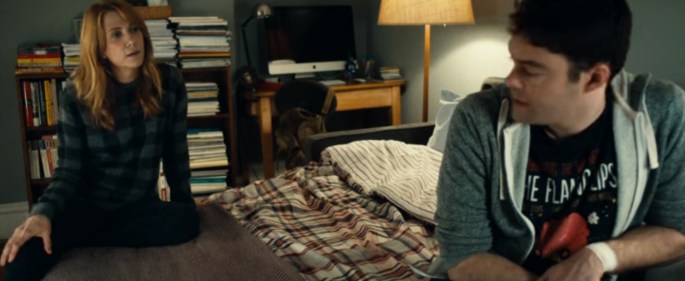
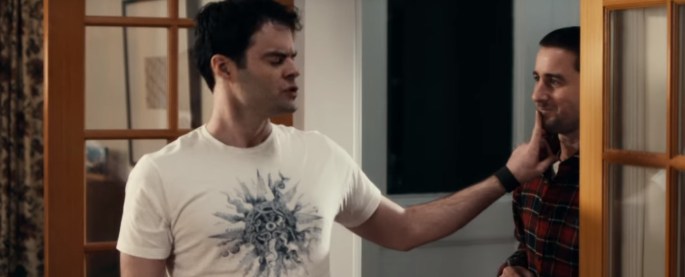
Bill Hader and Kristen Wiig are both absolutely fantastic in the poignant and hilarious black comedy The Skeleton Twins. Any movie that’s able to wring laughs out of the topic of suicide knows a thing or two about sly, subtle, dangerous humor; this is a film that goes to some tough places and asks for serious commitments from its two leads, who are more than up to the dramatic challenge. This is a wonderful brother-sister movie, filled with terrific scene after terrific scene, and even if there’s one narrative misstep that keeps it from being extra-tidy, there’s so much to enjoy and recommend about the storytelling. Hader and Wiig are estranged siblings, who crash back into each other’s orbits after both experience some scary life lessons. They are both broken souls, drifting through their respective problems, and the hope is that they might be able to bond once more in effort for some type of healing. Craig Johnson’s tonally perfect direction and character focused script (co-written with Mark Heyman) nails the sadness and the humor that’s necessary for a story like this.

Luke Wilson is a supporting actor MVP, stealing every single scene he appears in. But the movie belongs to Hader and Wiig, who both hit new heights as performers, with Hader in particular surprising in a big way. Never going over the top yet always bristling with emotion and outward feeling, his performance is perfectly in tune with the exceptionally dead-pan comedy style that Wiig excels at. Everyone knows that Hader can be a clown; here he’s able to get serious at a moment’s notice and I loved everything about him in this movie. Wiig continues her stellar big-screen run and adds another comical sad-sack to her repertoire, but this time, mixed in some serious grace notes as a dramatic actress. And in their numerous scenes together, Hader and Wiig radiate true sibling chemistry that’s a joy to watch. Painful one moment and then laugh out loud funny the next, The Skeleton Twins is one of those great little films that will surprise anyone who gives it a chance.


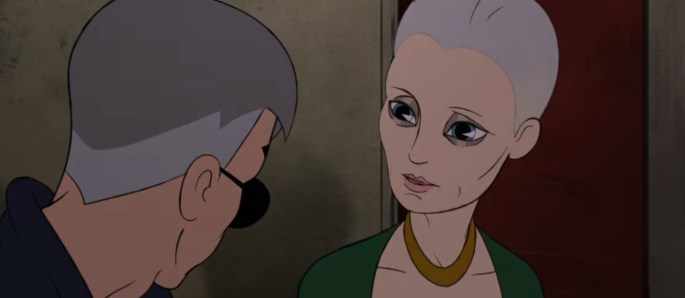
What can one really say about Ari Folman’s bold, breathtakingly alive hybrid movie The Congress? It’s like nothing you’ve ever seen, I can promise that much. Half animated, half live-action, all totally blazed to the extreme, this is a colossal artistic statement about Hollywood, art, culture, society, and our unending preoccupation with make-believe and hero worship. It’s also one of the headiest films in recent memory, operating on multiple levels of reality and surreality; this is the cinematic equivalent to 100 hits of super-charged acid. The purposefully sprawling and messy structure plays to the film’s wild and operatic strengths. This isn’t a movie to be taken 100% literally, as it is, at heart, an existential crisis story that begs to be viewed multiple times for maximum appreciation. My Blu-ray has been abused over the last year or so. The phenomenal Robin Wright plays a heightened version of herself, a mid-40’s actress who is about to be abandoned by the major studios, an actress beaten down by the pressures of Hollywood and the demands of the star system. Via her impassioned agent (an super-sharp Harvey Keitel) and an extra-slimy studio chief (Danny Huston, twirling his moustache), she’s given the chance to have her mind, body, and soul digitally transferred into a computer so that her likeness can be used and re-used throughout the years, preserving her “Princess Buttercup” good-looks and charm, thus transforming her into the ultimate movie-star for years and years and years.

The movie makes a 20 year jump cut at the mid-point and leaps head-first into a hallucinatory outpouring of odd and crazily unique Anime-inspired images during the second and third acts, resulting in a film that feels like Who Framed Roger Rabbit? on PCP. It seems that the only way that one can enter the movie studio of the future (playfully referred to as Miramount) is to drink a potion which turns you into a digital avatar of yourself, and then, once inside this madcap universe, you’re able to drink yet another potion which can literally turn you into whatever you want. This film plays by its own set of wild and wacky rules and because of that, anything can happen, and I love films that operate in this fashion; I’m always drawn to filmmakers who are interested in challenging themselves and the audience. To say that I grasped all of this mind-bending work of art upon first glance would be to out-right lie; this is a dense, packed-to-the-gills experience, one that shouldn’t be immediately shrugged off as just another esoteric artistic experiment. Folman is the real deal, a man with a singular vision, and now, after Waltz with Bashir and The Congress, he’s a filmmaker that I will actively anticipate each new film with baited breath. Visual art like this needs to be celebrated instead of ignored, and my hope is that this film finds a long and happy life on Blu-ray and streaming.


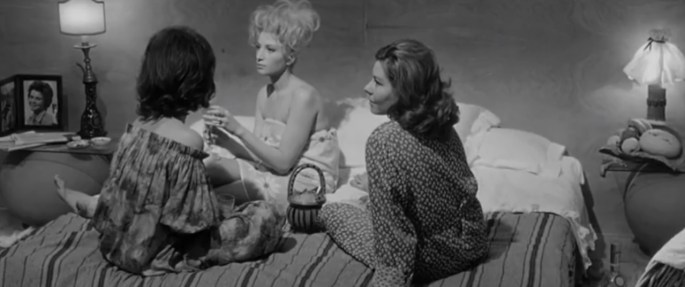
I could watch this stunning movie ever single day. Still as fascinating and as stylish as ever, the 1962 film L’Eclisse truly defies description. Monica Vitti was as alluring as it gets, and I am not sure if there has ever been a classier on-screen presence than Alain Delon. Michelangelo Antonioni made some all-time classics and this one has to be considered one of his best. The film feels like a poem, a glimpse into the life of a woman in flux, drifting from one encounter to the next, never fully sure of herself or the world around her. The final 10 minutes are beguiling in their strangeness and open-ended nature. The Criterion Collection, yet again, have delivered a ravishingly beautiful Blu-ray transfer; it looks like it was shot yesterday, with the sexy black and white images revealing untold depth and clarity. Gianni Di Venanzo’s illustrious cinematography is positively engrossing upon immediate sight, with every silky, dreamy image folding into the next, while always stressing open space and how people are placed within the frame. Everything about this movie screams pure cinema, and the trifecta of L’Eclisse, L’Avventura, and La Notte register as three of the most personal and fascinating films to explore similar themes and artistic motifs that I can think of. Blowup or The Passenger might be my overall favorite works from this extraordinary filmmaker, but there’s something so mysterious, so transfixing about L’Eclisse that I find myself returning to it on fairly regular basis. The film won the Special Jury Prize and was nominated for the Palm d’Or at the Cannes Film Festival.


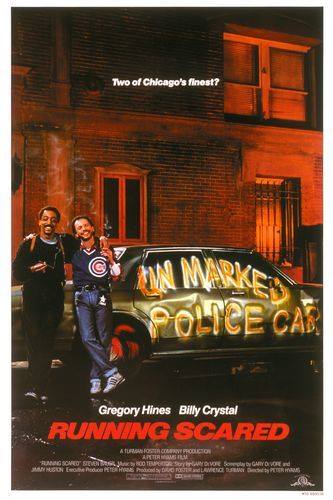
Riffing on material he had previously explored with 1974’s Busting, the 1986 buddy-cop comedy Running Scared found versatile filmmaker Peter Hyams back in familiar and comfortable genre territory, utilizing great physical location work, crisp action sequences, and the inherent charm and chemistry of his two fantastic leads, Gregory Hines and Billy Crystal, who truly made for an odd-couple pairing if there ever was one. Written with efficiency and genial humor by Jimmy Huston and Gary Devore, this film definitely enjoyed getting down and dirty, with Hines and Crystal as Chicago cops who cheat death on a daily basis, and decide that after a life on the streets chasing down bad guys, retiring down in Key West within the friendly confines of a new bar sounds like a great idea. But, in classic narrative tradition for this type of actioner, there’s one last big arrest that needs to be made, with the majority of the film centering on the action-adventure antics of the two officers as they run around the amazingly photogenic windy city, with Hyams, as per usual, serving as his own tremendous cinematographer. A great supporting cast was on hand, including Jimmy Smits, Steven Bauer, Joe Pantoliano, Dan Hedaya, Jon Gries, and it must be noted that the 80’s-accented soundtrack if pretty damn sweet. The final action set piece is outstanding. Released by MGM in June of 1986, Running Scared became a solid box office success, and would later become a staple item on HBO and cable.

Michael Ritchie’s 1975 quick-witted beauty pageant satire Smile is one of those casually deceptive films from that era, as it combined pitch black comedy and straight face observation over small-town American life and all of the intricacies that would surround an event like the one depicted in this timeless-feeling movie; it has aged extremely well, and clearly served as a blueprint for the more modern effort Drop Dead Gorgeous. Smile was part of that legendary run of films for Ritchie in the late 60’s and into the 70’s, which included Downhill Racer, Prime Cut, The Candidate, The Bad News Bears, and Semi-Tough, all classics in their own particular way. Starring Bruce Dern, Barbara Feldon, Michael Kidd, Geoffrey Lewis, Eric Shea, Nicholas Pryor, and future filmmaker Dennis Dugan, Smile also introduced some exceedingly beautiful and talented actresses, including Melanie Griffith, Annette O’Toole, Colleen Camp, and Caroline Williams, while also showcasing a variety of non-professional actresses who were cast because of their beauty queen experience. The comedy on display, which leaned on improv in some very funny spots, was all born out of situation, character, and real life, with Ritchie and screenwriter Jerry Belsen using their setting as a way of holding up a mirror to society and saying “Look how crazy we all are!” Conrad L. Hall’s naturalistic cinematography only sweetens the deal. Sadly, despite excellent critical notices, releasing studio United Artists didn’t have much faith in the film on a commercial level, and dumped into in the four theaters that it owned, so as a result, it became a cult classic before it could ever have the chance of being embraced by wider audiences. Almost 10 years after the release of the film, the material would be adapted for the stage, featuring songs by Marvin Hamlisch and Howard Ashman. Available on DVD.