RICHARD BROOKS’ LOOKING FOR MR. GOODBAR — A REVIEW BY NICK CLEMENT

looking_for_mr_goodbar_xlg

Wow. WOW. This is an intense film. I definitely wasn’t prepared for where this story would go. Richard Brooks’ bold and dark drama Looking for Mr. Goodbar had to have served as some sort of social wake-up call when it was first released in 1977. Embraced by critics and audiences, this cautionary tale of the singles scene offered up a period-appropriate glimpse at the changing sexual attitudes experienced by both sexes, but most strikingly, a free spirited female teacher who might not know exactly what she’s gotten herself into after a series of encounters with a variety of men. Featuring an absolutely blazing performance by Diane Keaton, in easily the most erotically charged work that I’ve seen from her as an actress, this rather nasty film sports a plethora of incredible supporting performances from Tom Berenger, Richard Gere, Howard Atherton, Richard Kiley, LeVar Burton, and Tuesday Weld. I had long heard of Looking for Mr. Goodbar and was super curious about it, so when it appeared on the TCM lineup this month, I totally flipped out.

I bet David Cronenberg loves this film, as it explores identity, the subversion of one’s true self, and how violence and sex are intrinsically linked. And because this film is not currently available on physical media or various streaming platforms and has become something of a talking piece among cinephiles, I am not going to discuss the plot any further for fear of any spoilers. What I will allow is that Keaton has nearly never been better, the cinematography by the great William A. Fraker conveyed casual menace in all of the best and most effective ways, and the startling opening title sequence, photographed in black and white by Kathy Fields was absolutely fantastic and immediately engrossing, bringing you into a sexy and shadowy world right from the start while the eclectic tunes of the era amped up the retro vibe. Uncompromising, startling, and more than a bit disturbing, Looking For Mr. Goodbar is certainly one of the more provocative films I’ve seen from any year in a long, long time.
SIDNEY LUMET’S THE HILL — A REVIEW BY NICK CLEMENT

1

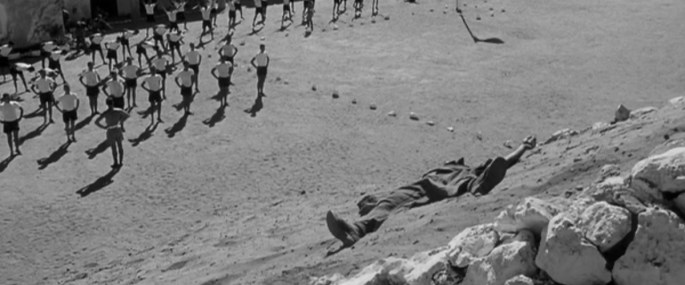
This is a fantastic movie and an extremely unique entry in the everlasting prison film genre. Rigorously directed by Sidney Lumet and released in 1965, The Hill is one of those “they don’t make ‘em like this anymore” type dramas, a true product of its time, and yet still totally relevant and exciting in this day and age. Starring a phenomenal Sean Connery in a decidedly un-Bond performance as a former tank operator who is sent to the stocks after assaulting his superior officer, The Hill centers on a British army prison stationed in North Africa during WWII, and evokes a sense of stark realism and fatalistic danger all throughout. Featuring a rock-solid supporting cast featuring Harry Andrews (absolutely brilliant), Ossie Davis (very memorable and scene-stealing), Ian Bannen, Ian Hendry, Roy Kinnear, Michael Redgrave and Alfred Lynch, everyone gave ultra-committed performances in what were clearly very hard working conditions; you feel everyone’s pain in this film. The lean and to-the-point screenplay by Ray Rigby, which was based on the play co-written by Rigby and R.S. Allen, never wasted a word, and Lumet’s precision-tooled filmmaking style allowed for a zero-fat narrative with an excellent sense of physical locations and the importance of conveying spatial distance between key portions of the massive, sprawling set.

2

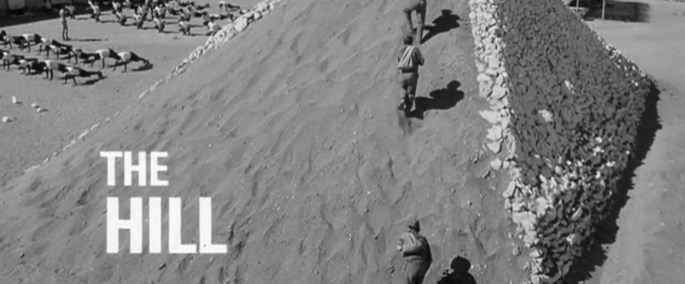
The title refers to the main form of punishment for the dishonorable soldiers, a massive sand hill that requires constant attention and which more than occasionally leads to someone collapsing from sheer exhaustion. The reality of the situation that these characters face is never lost on them, and the narrative allowed for some interesting interpersonal dynamics to take root. Shot with ultra-clarity in silky black and white by cinematographer Oswald Morris, The Hill looks magnificent on the WB Archives DVD; I can only imagine how it might appear on a restored Blu-Ray. This is a brutal, unflinching film, looking at an extremely grim aspect of war that is sadly unavoidable, and because Lumet’s focus was so sharp, every single moment hits very hard during this exceedingly tough piece of cinema. You feel the excessive heat in every shot, and because the film centers on rather unpleasant material, this might be an endurance test for some viewers. But in general, this is yet another motion picture that confirms Lumet’s master-status in the pantheon of great filmmakers.

3

PETER YATES’ BREAKING AWAY — A REVIEW BY NICK CLEMENT

breaking_away

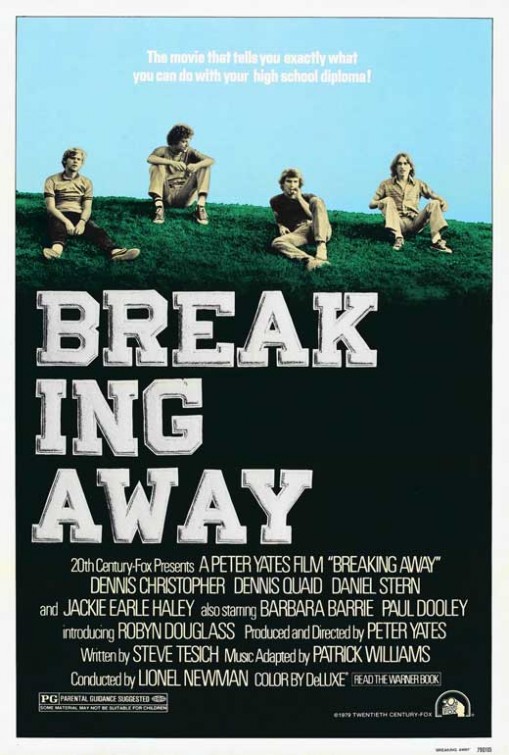
Inspiring, triumphant, and extremely well-observed, the 1979 Peter Yates drama Breaking Away features some great early performances from Dennis Christopher, Dennis Quaid, Jackie Earle Haley, and Daniel Stern as a group of friends who have recently graduated high school and are trying to figure out what path to take during the next chapter in their lives. Every moment of this naturalistic film feels unforced and organic, with the Oscar-winning screenplay by Steve Tesich hitting themes that were both universal and personal, all in an effort to evoke a very specific time and place and atmosphere for these young and searching individuals. Set in Indiana, the film has a wonderful sense of Americana without ever feeling cloying or overly sentimental, while Matthew F. Leonetti’s graceful cinematography captured all of the action, both big and small, with a humanistic edge and without a trace of artifice, while the biking scenes are all thrillingly shot without ever going over the top. The final act cuts to the heart of the message of the story — never give up and never underestimate yourself — and after watching it you feel as if anything might be possible. Grossing $20 million off of a $2.3 million budget, the film would become a hit with critics and audiences, and would receive multiple Oscar nominations in addition to Tesich’s win. Former Playboy bunny Robyn Douglass nearly shattered the camera lens with her exceedingly photogenic qualities, and there’s also some early John Ashton and Hart Bochner POWER for good measure. Yates was a unique helmer, capable of big action (Bullit), intimate drama (John and Mary), stoner-weirdo-fantasy (Krull), and seemingly everything else in between. A short lived TV series would follow in 1980-81.

HAL ASHBY’S THE LANDLORD — A REVIEW BY NICK CLEMENT

1

The Landlord was Hal Ashby’s first film, and it was based on the 1966 novel by Kristin Hunter, with an adaptation by Hunter and influential American writer/director Bill Gunn, whose film Stop is something of unreleased cinematic legend. Beau Bridges starred in the leading role as a moneyed landlord of an inner-city tenement, a man totally oblivious to the fact that his renters are low-income residents who value the rule of the street before anything else. He’s got an idea to have all of the residents evicted, thus allowing for the chance to overhaul the crumbling building with the plans of creating a luxury home for himself. Featuring a supporting cast which included Oscar nominee Lee Grant, Louis Gossett, Jr., Diana Sands, and Pearl Bailey, and shot by the legendary cinematographer Gordon Willis, The Landlord served as a clear launching pad for Ashby’s interest in class distinction, social values, and the unique ways that interpersonal relationships shape the world around us. The film was produced by Norman Jewison (Ashby had served as his editor on four previous pictures), and now seems like some sort of lost cinematic relic, overshadowed by bigger, splashier films on Ashby’s incredible resume. But it still packs an emotional and humorous punch, while also serving as a fairly scathing and satirical indictment of a particular type of person at a particular juncture in American history.

2

HAL ASHBY’S 8 MILLION WAYS TO DIE — A REVIEW BY NICK CLEMENT

8 mill

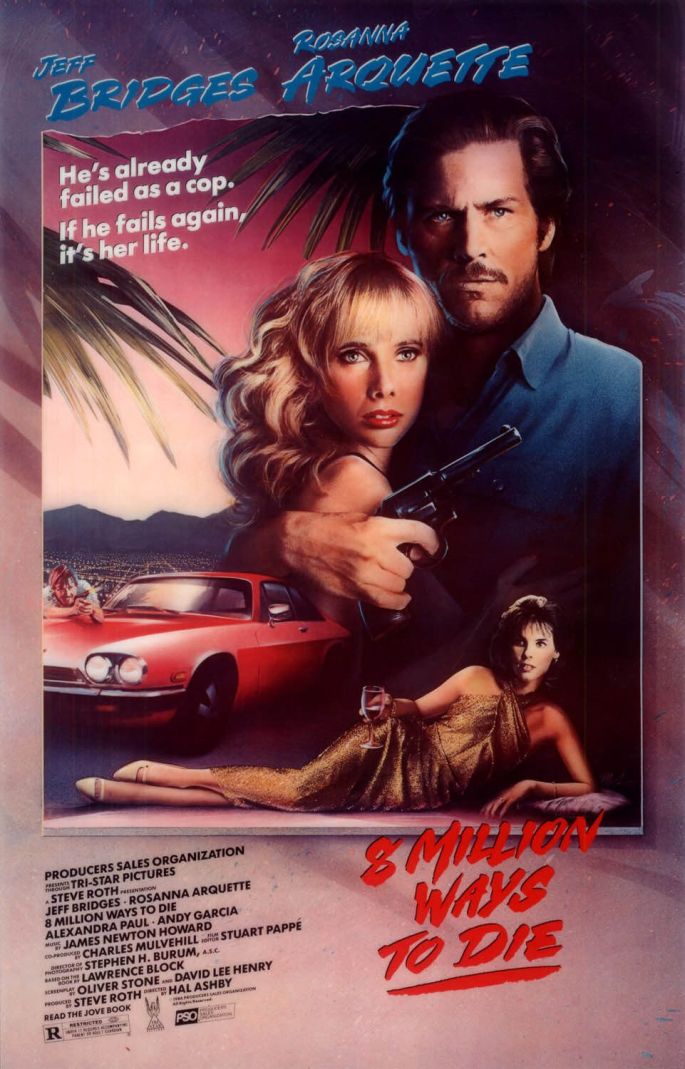
It took me a few viewings to totally appreciate Hal Ashby’s barely released 1986 film 8 Million Ways To Die, which was the eclectic helmer’s unique spin on the crime film, and would serve as his final major motion picture. This was the first attempt to cinematically adapt the Matt Scudder detective story series from author Lawrence Block, with a gritty screenplay coming from future auteur Oliver Stone, and uncredited rewrites taking place by Robert Towne and R. Lance Hill (who ended up using the pseudonym David Lee Henry). Starring Jeff Bridges, Rosanna Arquette in one of her best and sexiest performances, and an extra-volatile Andy Garcia in one of his first leading roles and in total scene stealing mode, the movie died a very fast box office death, and was met with savage reviews from critics. It’s still not even available on American DVD or Blu-ray, with only a Region B DVD currently available. The film has a scattershot narrative that’s both pulpy and energetic, and yet still feels compromised in some instances. But there’s still something fascinating going on within the narrative and with certain aesthetic choices made by Ashby. Stephen H. Burum’s sinewy and seedy cinematography stressed an alternatively shadowy and sometimes neon-inflected color palette, while the excellent music from James Newton Howard kept an appropriately shifty and dangerous sonic ambiance. The filmmaker was reportedly fired from the movie before it was finished, which might explain why the film feels so choppy in spots, as he wasn’t allowed to collaborate on the final editorial process. It’s an odd yet entertaining film, with some cool moments, but exists as a curious “What if?” on Ashby’s legendary filmography.

MICHAEL CIMINO’S SUNCHASER — A REVIEW BY NICK CLEMENT

1

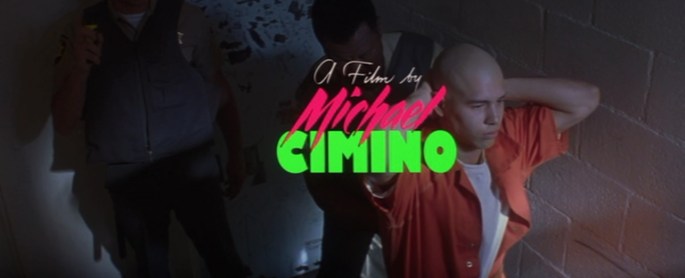
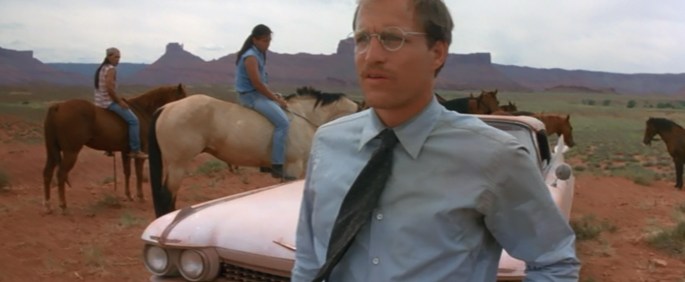
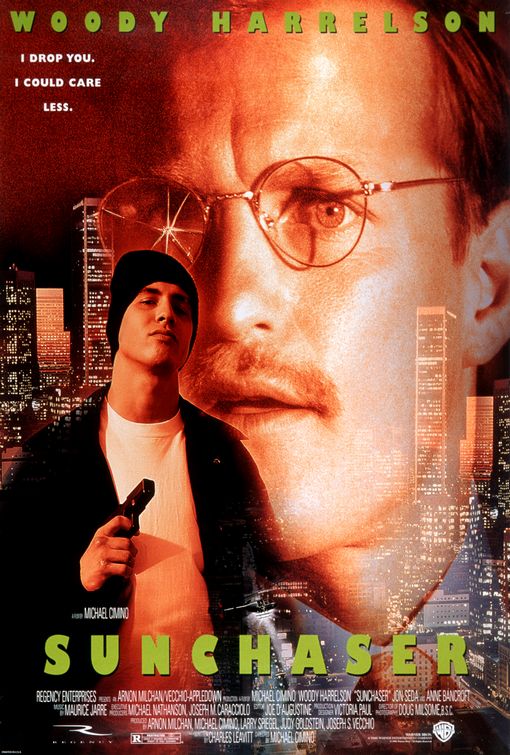
I’ve wanted to screen Michael Cimino’s last theatrical effort, 1996’s Sunchaser, ever since it went straight to video after playing for one week in one theater and grossing $21,508. So with the recent passing of this much discussed filmmaker, I figured it was finally time to experience his swan song as an artist. This is an ambitious film, and while I greatly preferred the first hour to the second, there’s no denying that a sense of pure cinema ran through Cimino’s blood, and that he was born to make movies, even if the extraordinary promise of his first three films didn’t lead to the totally exalted career that he might have otherwise attained. All of his features post Heaven’s Gate were mired in behind the scenes controversy, and yet he leaves behind such an eclectic and overall surprising body of work that it’s hard not to understand why he’s beloved by so many.

4

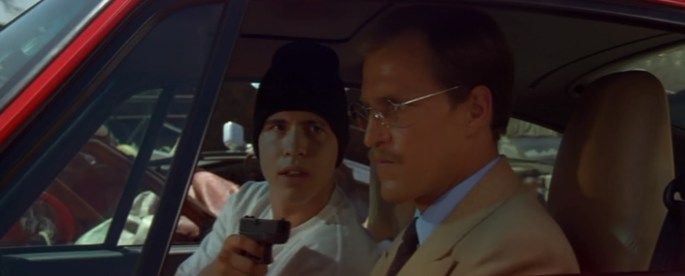
Starring Woody Harrelson as a yuppie Los Angeles doctor who is about to hit it big time at his current hospital with a big departmental promotion, the film centers on his kidnapping experience at the hands of a 16 year old juvenile convict (John Seda, who looked more like he was in his early 20’s), a street thug sent to the joint for the brutal murder of his abusive stepfather. The twist – the killer is suffering from terminal cancer, and once overhearing that he has one or two months left to live, decides to kidnap his good doctor with the plans of travelling to Arizona so that he can meet up with a Navajo Medicine Man at a supposedly sacred mountain lake. And even when the screenplay gets heavy-handed, as it frequently does, and strains logical credibility, as it frequently does, there’s something fascinating and hard to pin down about this unique yet frustrating effort.

3

Biting off more than it could properly chew, Charles Leavitt’s overheated and oddly constructed script was a strange if potent beast, with wild shifts in tone working in tandem with a half-predictable, half-unexpected narrative that certainly sacrifices logical honesty in favor of being outright cinematic, especially during the final act. Harrelson was smartly cast against type as a buttoned up man who slowly beings to unravel (this was a few performances after his seminal work in Natural Born Killers), while Seda, despite looking much older than what the story called for, was absolutely fantastic and beyond intense in his part, totally anguished and dangerous one moment and then strangely sympathetic the next. The bold and extremely dynamic 2.35:1 anamorphic widescreen cinematography by Douglas Milsome (Full Metal Jacket, Breakdown) stressed open spaces and went for the visceral at all times, with certain driving scenes recalling Friedkin and Mann, while the sequences at the Grand Canyon carried an immense sense of geographical splendor. I’d hate to see how this movie looks in the pan and scan format because they shot this film SUPER wide.

sunchaser

The overly bombastic musical score by Maurice Jarre was at times head-scratching in its decision making, but added a further level of creativity to the proceedings. At a price of $30 million, the film became such a financial wipe out that it clearly served as the final nail in the coffin for Cimino as a filmmaker, studio based or independent. And even if Sunchaser isn’t entirely successful (the quick glimpses of social commentary feel strangely tacked on, with lingering shots of second hand action by unimportant characters included here and there), it still contains that hot-blooded sense of inherent filmmaking that all of Cimino’s work possessed, which immediately makes it better and more interesting than a majority of the films that are being released today. Despite the negative domestic response, Sunchaser was nominated for the Palm D’Or at the 1996 Cannes Film Festival. Available on DVD to purchase or rent.

2

DAVID VON ANCKEN’S SERAPHIM FALLS — A REVIEW BY NICK CLEMENT

seraphim_falls_xlg

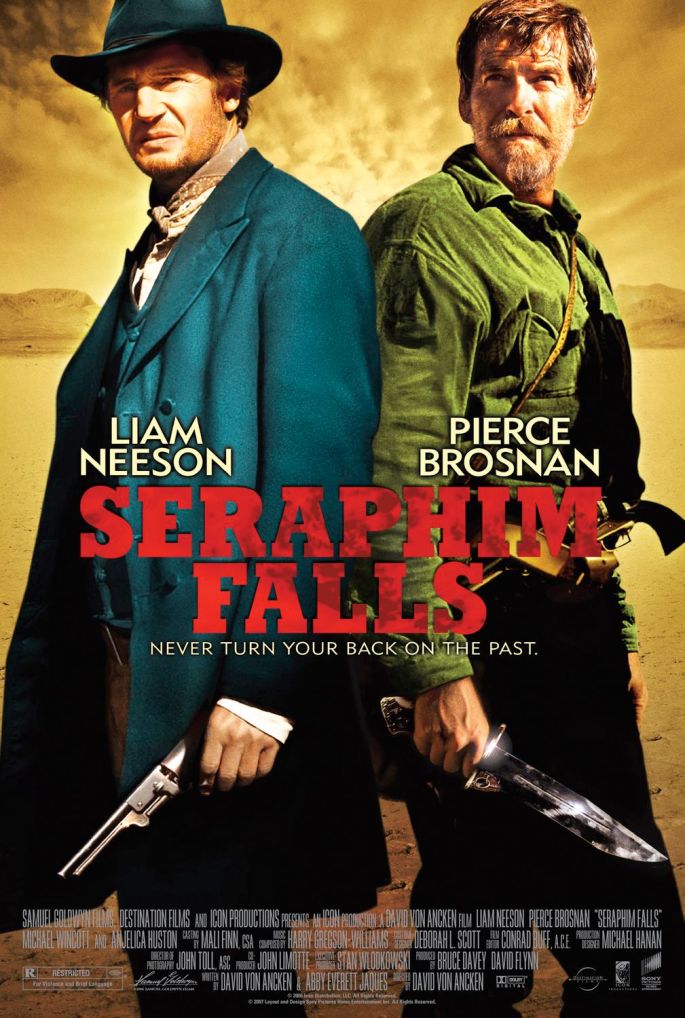
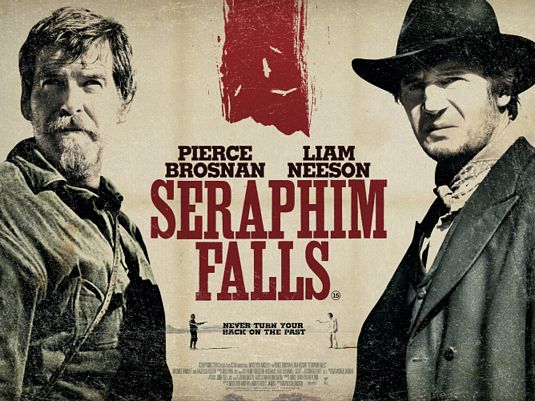
Tipping its hat to Clint Eastwood’s The Outlaw Josey Wales while recalling certain masculine aspects of Sydney Pollack’s epic adventure Jeremiah Johnson and portions of Man in the Wilderness from director Richard Sarafian, the 2006 films Seraphim Falls was ruggedly and forcefully directed by David Von Ancken, a TV veteran who made an auspicious feature debut with this rough and violent revisionist Western that benefited from contemporary production values while exploring time-honored themes of revenge, personal survival, and feverish bloodlust. While watching it, you can see how it might have set some sort of template for last year’s Oscar winning masterpiece The Revenant from challenging filmmaker Alejandro González Iñárritu. Von Ancken co-wrote the terse and effective screenplay with Abby Everett Jaques, with the action centering on two men pitted against each other in a bounty hunt to the death. The time is the late 1860’s, and a Union solider (Pierce Brosnan) has become the prey for a Confederate colonel (Liam Neeson), while the excellent supporting cast including Michael Wincott, Tom Noonan, Kevin J. O’Connor, Ed Lauter, Xander Berkely, Wes Studi, Angie Harmon, and Anjelica Houston filled the edges of the intense and sometimes physically overwhelming narrative. John Toll’s superb cinematography shot for the epic at all times, while still getting down-and-dirty personal when called for, while the tight and economical editing by Conrad Buff kept the film moving at a brisk yet coherent clip. The pulse quickening musical score by Harry Gregson-Williams accentuated every scene without ever becoming overbearing, while both Neeson and Brosnan were perfectly suited as mortal adversaries, with a narrative outcome that’s both surprising and satisfying in equal measure. After premiering at the 2006 Toronto International Film Festival, Seraphim Falls received a very limited theatrical release (I saw it at the Arclight in Los Angeles in a mostly empty theater), this is one of those rarely discussed films that certainly deserves to find a new set of fans, as it will certainly delight those who love a gritty, action-packed period piece with piss ‘n vinegar to spare. Seraphim Falls is available on DVD and on a UK-release Blu-ray that does happen to be a region free disc.

jobtitle_quad

HAL ASHBY’S LOOKIN’ TO GET OUT — A REVIEW BY NICK CLEMENT

4

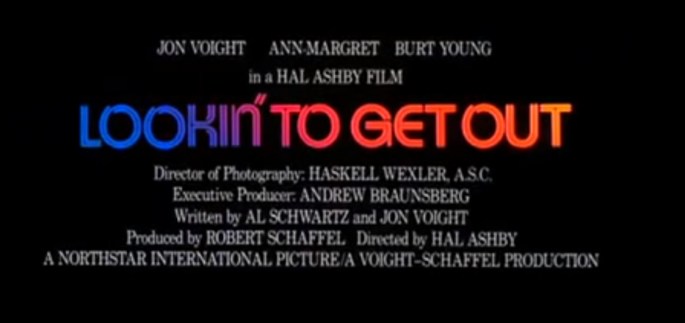
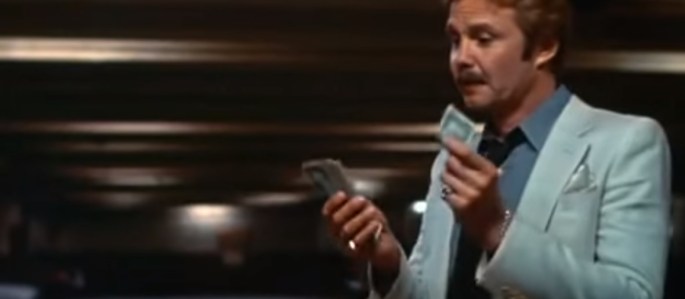
Released in a compromised form in 1982, Lookin’ to Get Out found Hal Ashby back in full on comedy mode, taking on a jaunty, semi-improvised project written by Al Schwartz and Jon Voight, who also starred as a degenerate gambler who heads out to Vegas with his partner (an extra affable Burt Young), in an effort to hit it big and avoid punishment from the hoods to whom they owe gambling debts. The film was loosely scripted and feels that way in many spots, and features a seven year old Angelina Jolie in her big screen debut as Voight’s daughter. The lovely Ann-Margaret made a colorful supporting turn, while the film has a tone that is mostly comedic but dramatic in a few key spots to keep it grounded. This was one of the last big movies of Ashby’s career, which was compromised by drug and alcohol abuse and repeated fights with producers and executives, resulting in a huge disagreement with the studio and loss of final cut over the picture. As legend has it, some years ago, Voight was at a speaking engagement at USC, and discovered that a version of the film being shown to students was somehow Ashby’s original cut, which had been considered gone, lost, or buried. Voight brought it to the attention of Warner Brothers, who then released Ashby’s director’s cut on DVD in 2009. While certainly not a bad film, it’s entertaining and frequently smart and funny, but it doesn’t have that special spark that made his films from the 70’s so unique. But for fans of this filmmaker, it’s most definitely worth seeking out.

1

NEIL LABUTE’S IN THE COMPANY OF MEN — A REVIEW BY NICK CLEMENT

in_the_company_of_men_ver2

This film is utterly poisonous. It’s totally cruel and it’s in love with the fact that it’s cruel. It’s happy to be mean, and it doesn’t care if you don’t like it. Neil LaBute’s first film, In the Company of Men, is still more than likely his best. This is a movie where two seemingly nice guys simultaneously romance a naive, deaf woman, with the express written plan to drop her like a sack of potatoes, thus destroying her as a person. Rarely do you get a glimpse of cinematic treachery on a level that this film provides. Some of this film is dangerously funny; portions of it will make you sick. It made a star out of Aaron Eckhart and it led to a fabulous chacter actor career for Matt Malloy. Stacy Edwards breaks your heart – it’s such a gutsy performance. LaBute’s extremely pessimistic worldview was on full display here, and without spoiling everything, you should know that this is a worldview where bad people often times come out on top. LaBute’s plain but subtle visual style gave off an icy, emotionally remote vibe that extends to the themes on display. I can remember being absolutely in awe of this movie as a high school senior; it’s the first film I reviewed for my school newspaper and it’s the movie that really spurred on my interest in discussing film in the written form.

HAL ASHBY’S THE LAST DETAIL — A REVIEW BY NICK CLEMENT

2

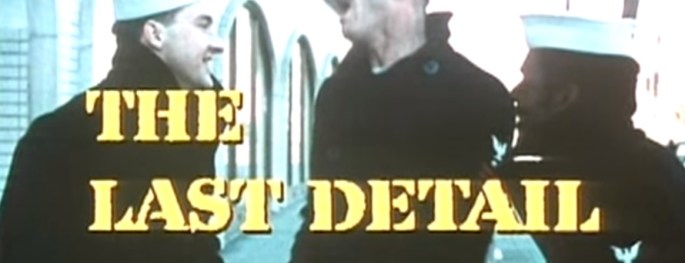
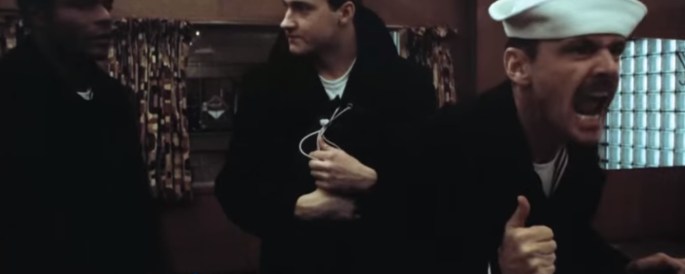
Released in 1973 and featuring an absolutely fantastic screenplay by Robert Towne, The Last Detail found Ashby doing some of his best mixing of comedy and drama, with results that are piercing and at times brutal. Starring Jack Nicholson and Otis Young as two sailors who are tasked with escorting one of their own (Randy Quaid, fantastic) to a military prison in New England, The Last Detail is one of those amazingly observed character studies that’s wholly interested in human behavior and how the bonds of friendship are tested in ways that the characters could never expect. The three men have all sorts of adventures along the way to their destination, and the final act involves some decisions that are as smart as they are sad, because you fully believe in the story and the people who populate it. Towne adapted the screenplay from the 1970 novel written by Darryl Ponicsan, which would became famous for a copious amount of “F-bombs,” and which would solidify Towne’s status as one of the premiere screenwriters of his generation. Shot in muted tones with a naturalistic sensibility by the great cinematographer Michael Chapman, the film has a terrific sense of time and place, with Ashby’s understanding of tone and pacing in full effect. Nominated for three Academy Awards (Nicholson, Quaid, and Towne), the film would become a critical and commercial success, and would also find Nicholson winning Best Actor at The Cannes Film Festival. Now available on Blu-ray from Twilight Time.

1