MICHAEL BAY’S BAD BOYS — A REVIEW BY NICK CLEMENT

1.jpg

Michael Bay’s feature film debut, 1995’s Bad Boys, still stands as one of his best, most purely enjoyable pieces of cinema, with a solid story, effective action sequences, and that famous chemistry between his two hilarious lead performers. The plot is no more or no less than what you’d find on a typical episode of Miami Vice. Two Miami cops are searching for a massive stash of heroin that’s been stolen from a secure police evidence vault. But it’s personal to them because the missing contraband was from the biggest bust of their professional lives. Was it an inside job? How could a crew have orchestrated such a brazen heist? Mike Lowrey (Will Smith, still best known as The Fresh Prince at that point in his career) is a smooth-talking, womanizing, Porsche-driving, trust-fund inheriting super-cop who loves to shoot first and ask questions later. Marcus Burnett, an impossibly thin Martin Lawrence who would later explode as a comedic force and was starring on his own hit TV show Martin at the time of the film’s release, is Lowery’s beleaguered partner, a married cop with kids and a house and a mortgage and responsibilities – the exact opposite of Lowrey. The insanely entertaining rapport that Smith and Lawrence shared on this film went a long in making it as successful as it was. There’s a hot chick thrown into the mix (Tea Leoni at her sexiest), a shady bad guy (Tcheky Karyo, best known at the time for his transcendent work in The Bear), and a deep supporting cast (always a Bay specialty), which included Michael Imperioli, Joe Pantoliano, Theresa Randle, Nestor Serrano, Marg Helgenberger, and ex-basketball great John Salley. It’s an A-to-B-to-C narrative, told in fast-paced fashion, with the inherent charm of Smith and the barbed hostility of Lawrence always shining through in every scene. Throw in Mark Mancina’s indelible original score and bam!
2

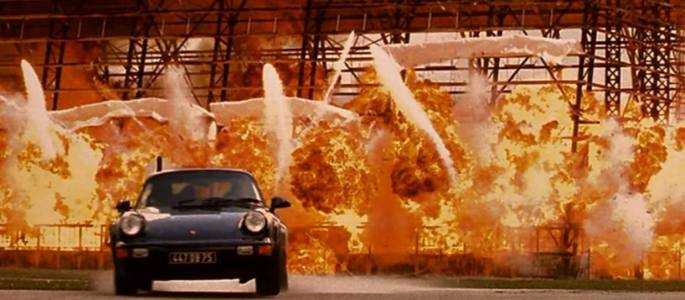
Bay was coming out of the world of music videos and commercials before tackling his first feature project, an arena that he had completely conquered, so it was inevitable that he would try his hand at directing a big budget movie. After catching the eyes of producers Don Simpson and Jerry Bruckheimer due to a music video that he had shot for them for Days of Thunder, Bay was recruited by the uber-producers, and his whiz-bang career got off to a fast, propulsive start. Originally conceived as a buddy-movie vehicle for John Lovitz and Dana Carvey(!), Bay ditched some of the older drafts, hired a new writing team, and went to work at crafting an unpretentious throwback to the 70’s & 80’s cycle of rambunctious cop films; think Freebie and the Bean for modern times. He even famously paid for the film’s elaborate and utterly amazing final explosion, telling the studio that he had to have it just-so because the image was “Trailer Ready.” After the film recuperated its costs, Bay was reimbursed by the studio for his out-of-pocket-fireball-expenses, or so the old story goes. Simpson and Bruckheimer were about to have their big comeback year in 1995, as along with Bad Boys they’d release Crimson Tide and Dangerous Minds, while the first Bad Boys would start an obscenely successful relationship between the director and the producers. Bay never allowed the action to sag in Bad Boys; right from the film’s priceless pre-credit opening bit, he made it clear that his film was going to be aggressive, vulgar, in your face, and lots of fun.

bad_boys_xlg

One of Bay’s premiere strengths as a popcorn moviemaker is that he genuinely knows how to make his films feel big, with striking clarity and depth of field, constantly opting for telephoto lenses and almost always shooting in full 2.40:1 widescreen (Bad Boys is the only film of his to be framed 1.85:1). And when it comes to CGI, he demands the absolute best from his technicians; if it’s not “photo-real,” he doesn’t want it included. His sun-bleached, primary color infused, overly saturated visual style got its start with cinematographer Howard Atherton calling the shots behind the camera, and when viewed in retrospect, it’s interesting to note how Bad Boys has that Bay feel, but it’s a decidedly “early” Bay feel, as his calling-card aesthetic would really take shape with The Rock, Armageddon, Pearl Harbor, and Bad Boys 2. Bay loves to create maximum impact images, almost always opting for shots with intense visual elegance and sophistication. The original Bad Boys feels like a student film when compared to the insanely over the top sequel and the complicated visual structure of Bay’s Transformers movies. Bay is has earned his status as an auteur because of his instantly identifiable style that matches his testosterone-fueled narratives of impossible heroics, mixed with that insane brand of visual mania that he’s become known for. I’d love to see him go back for a third helping of buddy-movie antics, as I really and truly feel that these were the movies he was born to make.
3

JOHN FRANKENHEIMER’S THE FRENCH CONNECTION II — A REVIEW BY NICK CLEMENT

1

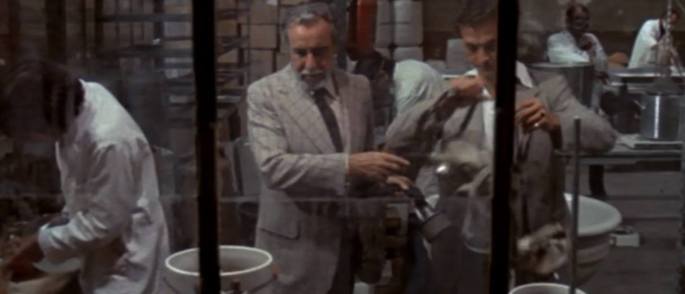
What’s so thrilling and unexpected about John Frankenheimer’s underrated The French Connection II is that at no point did the legendary filmmaker try to totally mimic the success of the Oscar-winning original. William Friedkin’s The French Connection is certainly a masterpiece of American cinema, one of the only “action movies” to win Best Picture with the Academy, and a film that holds up staggeringly well because of how ahead of the curve Friedkin and cinematographer Owen Roizman were with their mise-en-scene and the gritty realism of the fact based story, to say nothing of the gripping performances from Gene Hackman and Roy Scheider. In The French Connection II, Frankenheimer, himself no slouch to great action adventure movies (The Train, Ronin, Black Sunday, 99 and 44/100% Dead, Grand Prix), continued on with the same immediate and visceral visual style that Friedkin had pioneered with the first effort, but he opened up the scope of the story, both visually and narratively, setting a majority of the plot in Marseilles, which was only glimpsed in part one. What results is a film that, while never reaching the glorious heights of its predecessor, hits all of its marks with efficiency and toughness, and seems to be a work that’s been relegated to long-forgotten status.

5

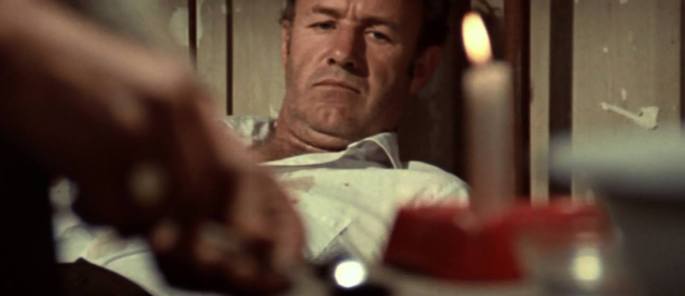
Hackman’s Popeye Doyle and arch nemesis drug kingpin Alain Charnier (the slippery Fernando Rey) were the only two returning cast members from the first installment, and the sequel finds Doyle following various leads to France in an effort to track down Charnier and his drug smuggling operation. Charnier memorably escaped capture during the final moments of The French Connection (you got to love that final freeze frame!), which still ranks as one of the ballsiest endings ever. Upon arriving in France, Doyle is greeted by inspector Henri Barthélémy (a fiery Bernard Fresson), who in typical fashion, resents Popeye’s distinctly American way of handing police business, with Popeye getting irritated upon realizing that foreign police officers on French soil aren’t allowed to carry guns. In classic fish out of water style, Doyle struggles with the customs, language, and people, and hates having to work with the French police. He ditches them, but is followed and attacked by Charnier’s goons, who then tie him down with restraints, and forcibly inject him with heroin in the hopes that he’ll either cooperate or die. Hackman is in a totally different zone in The French Connection II; he’s unsure of himself and paranoid and not confident, a major departure from his demeanor in the first film. You watch as Doyle is rescued, fights the symptoms of smack withdrawal, and then gets back on his feet to lead one last charge against Charnier, staging a massive gun battle and final chase.

3

Upon initial release, it seems that most critics were indifferent to Frankenheimer’s film, which feels nothing like the obviously more revered initial installment. The exotic setting set the film apart in atmosphere, and the film’s dark and depressing mid-section with Doyle addicted to horse in the shittiest of environments was probably too unrelentingly nasty for mass audience appeal. Also, the lack of a massive car chase or a truly substantial or genre-busting action sequence probably left some people feeling hoodwinked. But what I think makes The French Connection II worthy of re-assessment is because it took something that worked so well the first time, and instead of being lazy and trying to re-hash those elements, it used the material as a spring board to broaden the overall story and take the Doyle character to edgier, tougher realms. Hackman was fantastic here, never stopping with the full-blown intensity, consistently providing Doyle with a vital integrity that always made you care, no matter how harsh the character spoke or behaved. And it goes without saying that Frankenheimer, ever the reliable craftsman, shot the hell out of the film with his director of photography Claude Renoir, giving it that rough and tumble 70’s aesthetic that we all love so much in present day. Many, many people have seen The French Connection. Not enough people have seen The French Connection II. I’d like that to change.

2


MENAHEM GOLAN’S DIAMONDS — A REVIEW BY NICK CLEMENT

1

Out of all of the directorial efforts from former Cannon Films head honcho Menahem Golan that I’ve seen thus far, Diamonds is easily the best. This movie is exceedingly entertaining. The music by Roy Budd (The Wild Geese, Get Carter) is absolutely sensational, all 1974 funkadelic and ear-popping, and the cast is as amazing as it is eclectic – Robert Shaw, Richard Roundtree, Shelly Winters, and Barbara Seagull (aka Barbara Hershey) in her extra-hot early years. Shot in Tel Aviv and centering around a brazen diamond heist, Shaw turned in a dual performance as twin brothers who go up against one another over a massive cache of diamonds which are stashed away in a supposedly impenetrable vault, with results that are wildly fun to observe. Golan and co-screenwriter David Paulsen borrowed heavily from other popular heist films of the time, while peppering the script with some witty lines and a few nice action sequences. Seagull/Hershey, as one might expect from her work in this era, wasn’t afraid to disrobe, and it can never be discounted just how beautiful she was back in the 70’s – the camera REALLY loved her. Contains sharp early work from cinematographer Adam Greenberg (Terminator 2, Ghost) and editor Dov Hoenig (Heat, The Fugitive, Manhunter). Co-produced, as one might imagine, by Yoram Globus. Again – I must reiterate – the musical score by Budd in this film is extraordinary. Released in some corners of the world as Diamond Shaft, despite having no relation to Roundtree’s previous success. Currently available on DVD or as a streaming option via Amazon video.

JIM MICKLE’S COLD IN JULY — A REVIEW BY NICK CLEMENT

1

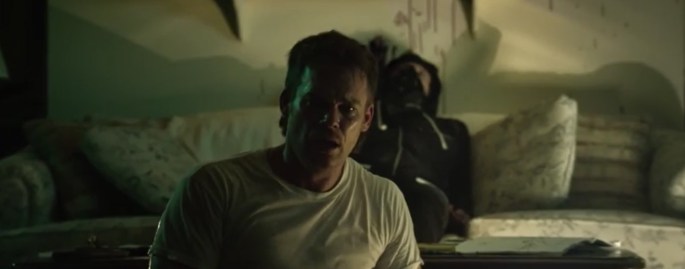
Jim Mickle’s twisted, darkly humorous, and all together exciting thriller Cold in July is one of those movies that tells one story for 50 minutes and then shifts gears into a second, almost completely new narrative that totally takes you by surprise. I love nasty little gems like this one, where you can’t truly predict where the wild plotting will take you, and by the end of it, you know you’ve watched something nifty and clever. I had read lots of comparisons to Blue Ruin, which I think are specious at best; this isn’t a locked-down genre-transcender like Jeremy Saulnier’s Coen-brothers esque effort. Rather, Mickle tells a juicy neo-noir story that aims to entertain rather than enlighten, with a beyond colorful Don Johnson supporting performance in the second act which compliments the already terrific work being done by Michael C. Hall and Sam Shepard. Also, will someone PLEASE give Vinessa Shaw the lead on a TV drama; she’s always so excellent and natural and unforced (and not to mention gorgeous) and you always want to see more from whatever character she plays. It’s criminal that she doesn’t have an HBO or Showtime series to call her own. She should have gotten a huge career push after her revelatory turn in James Gray’s deeply underrated romantic drama Two Lovers, which remains one of the best recent films that nobody has seen.

2

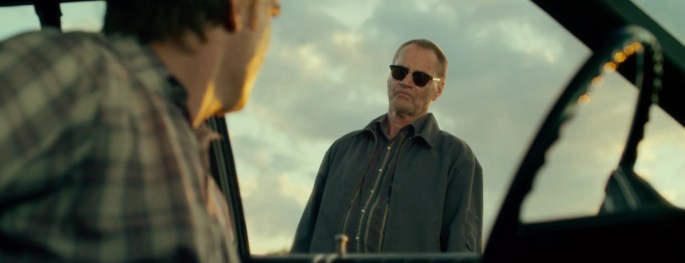
The sordid plot to Cold in July, which Mickle concocted with longtime co-writer Nick Damici) involves murder, revenge, and all sorts of general brutality, and the film packs a truly ultra-violent punch during the final 15 minutes. After a home invasion leaves the intruder dead, Michael C. Hall receives a visit from the slain baddie’s father, played by a menacing Sam Shephard, who isn’t so happy that his son has been shot and killed. What follows is a cat and mouse game of terror, which then leads down some even darker and more transgressive tunnels of human behavior, all before a final act that has bloodshed on its mind like few others. Mickle served as co-editor (with John Paul Horstmann) and the entire film stings like pin-prick, with fast yet coherent pacing, while cinematographer Ryan Samul stressed the deviousness of the night, with shadowy and gritty cinematography that accurately conveyed the violent desperation of the various characters. All of it is pulled together by Jeff Grace’s creepy musical score, which never gets bombastic, instead opting for low-key accentuations and a general sense of casual sketchiness. Despite grossing less than $1 million in theaters (off of a VERY limited theatrical release), Cold in July has become an instant cult favorite, and is currently streaming on Netflix, as well as available on DVD/Blu-ray. Mickle is clearly a filmmaker worth keeping tabs on; I need to check out both Mulberry Street, We Are What We Are and Stake Land.

3


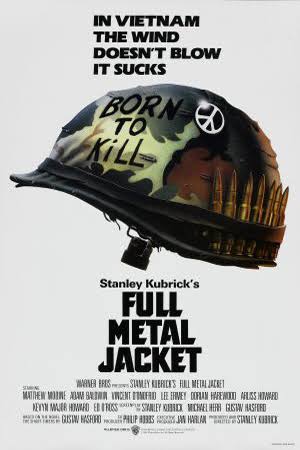
STANLEY KUBRICK’S FULL METAL JACKET — A REVIEW BY NICK CLEMENT

2

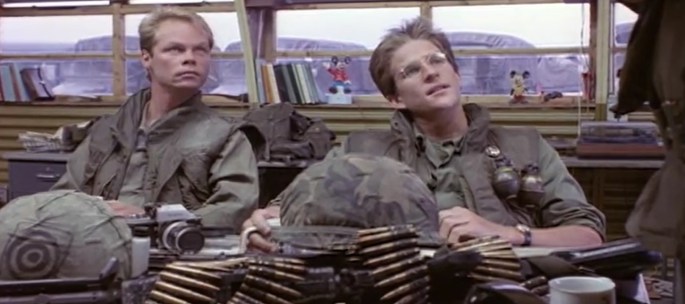
One of the more brilliant aspects to Stanley Kubrick’s shattering Vietnam War film Full Metal Jacket is how it’s both emotionally distancing yet almost impossibly intimate at the same time. This is a hellish film – literally, figuratively, and metaphorically – with everything from R. Lee Ermey’s sadistic verbal abuses to the strategically placed fiery debris in the final act suggesting an Inferno that can never be quelled. This is one of the first films that I ever saw with extreme graphic violence, and it made an immediate impact on me as a kid; it taught me how lethal a bullet can be. And over the years, as I’ve gradually become more and more desensitized to movie violence, if I return to Full Metal Jacket, I become instantly reminded of how visceral and powerful and sad it is.

3

Even after countless viewings, it remains affecting in ways that I can’t really describe. It’s on the short list of the finest Hollywood depictions of that terrible War and its aftermath, sitting next to Coming Home, The Deer Hunter, Born on the Fourth of July, Platoon, The Boys in Company C, Go Tell the Spartans, Casualties of War, and John Irvin’s rarely discussed Hamburger Hill, which would serve as a precursor to more modern efforts like Randall Wallace’s We Were Soldiers, and Ridley Scott’s Somalia-set benchmark combat film Black Hawk Down. And of course, the two distinct halves that comprise the narrative to Full Metal Jacket are unique in that it feels like a movie with two chapters, rather than the traditional three acts.

4

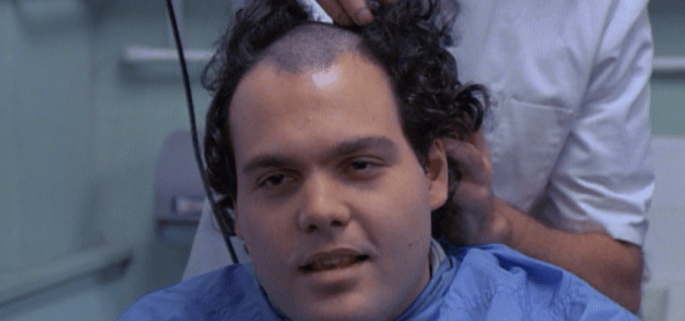
The action is intense in Full Metal Jacket, but in a fashion that’s very different from most films, because everything is so matter of fact. Douglas Milsome’s gliding, engrossing camerawork draws the viewer into each situation and conflict, never shying away from the gory details or pulling any punches. The purposefully rigid performances, a common practice in Kubrick’s films, stressed the satire in key spots, and everyone in the cast, especially Matthew Modine as an eager reporter and Vincent D’Onofrio as the infamous, dim-bulbed Private Pyle, projected a blank innocence which settles in with the viewer; their dignity is stripped from them and so is yours. The film is also caustically hilarious during many portions of the opening act, with Ermey spouting off all sorts of graphically barbed insults at the fresh recruits.

images

Kubrick never made an uninteresting film, and Full Metal Jacket, beneath its icy exterior, contains layer after layer of psychological examination that is tough to find in other films in this genre. Kubrick was a realist underneath it all, and although his films became more and more heightened and stylized as his career progressed, there was always a way to pin his work to something tangible, whether the atmosphere be psychological horror in The Shining, head-trip existentialism in 2001, or marital infidelity and sexual jealousy in his erotic odyssey Eyes Wide Shut. But one of the reasons that Full Metal Jacket has stood the test of time, and probably become even greater as the years have progressed, is because it blew open expected aesthetic doors, and boldly confronted a death machine that would shape America and the rest of the world for years to come.

1

ALEX ROSS PERRY’S LISTEN UP PHILIP — A REVIEW BY NICK CLEMENT

3

Listen Up Philip is a black-hearted pisser, a dark comedy that loves the fact that it’s gloomy, sour, and mean. I knew nothing about the plot or intent of this film before viewing it, but had noticed the high Rottentomatoes score and that it had appeared on numerous top 10 lists, with Dargis really giving it a rave review in the NY Times. And I have to say, it’s SO much fun to be taken totally by surprise by a film. This is a small, deeply misanthropic movie, seemingly shot on 16mm film (?), with a grainy, jumpy, boozy visual style that in some scenes I wished had been opened up a bit wider. Inspired by the Duplass-mublecore-shakiness aesthetic and graced with more than a pinch of Woody Allen, writer/director Alex Ross Perry (Queen of Earth) has an incredible talent with words, as his screenplay is verbose, witty, and incredibly sarcastic — it’s tons of fun on the ears. The film centers on Philip, an alarmingly cruel writer played with almost too much ease by the great Jason Scwartzman, and I don’t think I’ll be alone in saying that his character reminded me of Max Fischer gone REALLY bad.

2

His second novel is on the horizon, and he just can’t keep any part of his personal life in order. His girlfriend Ashley (the incredible Elisabeth Moss, who in one scene allows her face to do some of the best acting I’ve seen in a while), is sick of their troubled relationship, and Philip, in a fit of desperation, bolts out of their NYC apartment so that he can spend time at the summer home of his idol, the prolific author Zimmerman, perfectly portrayed by a slimy and dickish Jonathan Pryce, all scotched-up and bitter from a life filled with resentment. That’s all I’m saying about the story, as there’s a lot more that happens than just that, with multiple shifts in perspective which was very unique.

4

But what I will say is that both Schwartzman and Pryce play too amazing assholes, men who are so full of themselves yet so phenomenally wrongheaded about everything, constantly making poor decisions and saying terrible things to people, that it’s sad to realize that there are probably lots of real-life people like these two guys out there. Listen Up Philip isn’t afraid to be casually mean, and the way that Perry is able to dole out humor in the bleaskest of emotional circumstances speaks to his erudite sensibilites. And I loved how the film ends on such an uncompromising note of despair and personal anguish – it would have been a cheat to finish in any other manner. Also, the dryly hilarious voiceover provided by Eric Bogosian(!) really seals the deal on this playfully mean-spirited look at emotionally stunted men and one woman who can hopefully brake free from all the bull-shit that’s thrown her way.

5

MICHELANGELO ANTONIONI’S BLOW-UP — A REVIEW BY NICK CLEMENT

0

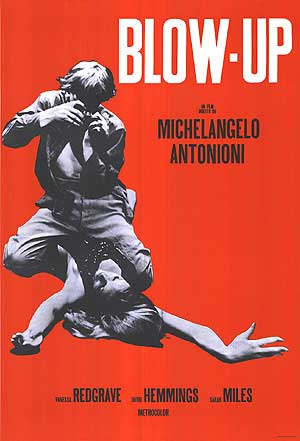
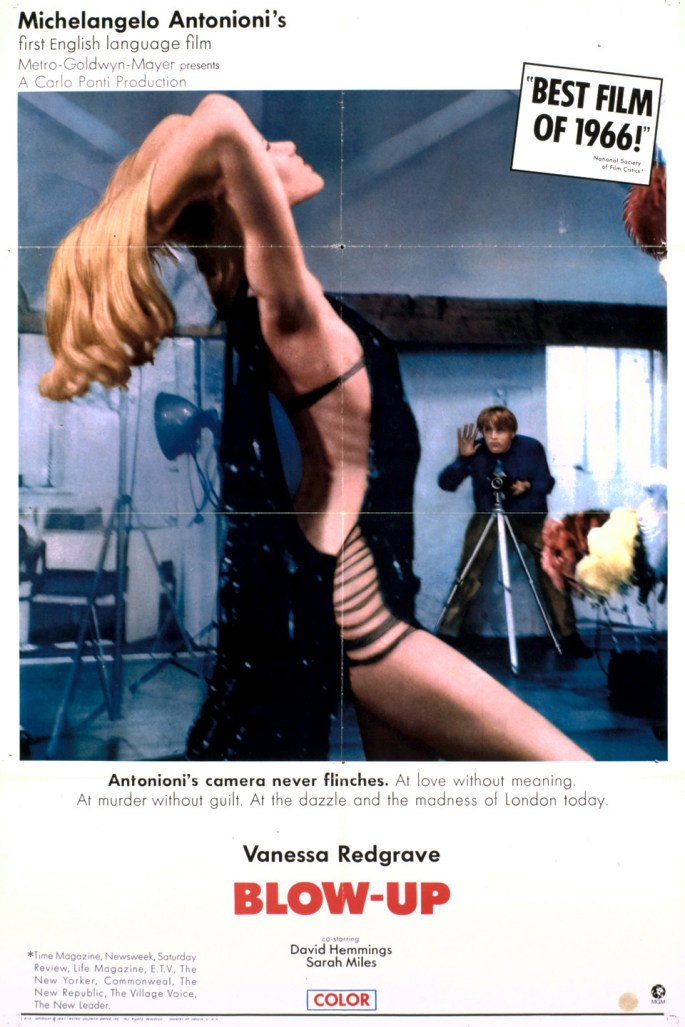
Blow-Up is the very definition of “cool.” It will always be one of my absolute favorite films. It radiates sex and style and class and sophistication and the way Michelangelo Antonioni primarily used images to tell his story will always fascinate me to no end. You get David Hemmings in one of the quintessential screen performances and Vanessa Redgrave in all of her radiant splendor, not to mention an absurdly talented (and photogenic…) supporting cast. This was the first of three movies that Antonioni made for MGM (Zabriskie Point and The Passenger are the other two), and it remains one of the most influential, form-busting movies of its era, a wild romp through London’s swinging 60’s, with the outsized exploits of famed fashion photographer David Bailey serving as a character influence.

8

The plot was inspired by the short story The Devil’s Drool by Julio Cortazar, and the film features Hemmings as a cocky, womanizing photographer, and revolves around a series of photos that he snaps out in the park one afternoon, which may or may not contain the identity of a killer and a murder in progress. Brian De Palma would do a riff on this material with his classic 1981 thriller Blow Out, which starred John Travolta in one of his best performances as a movie sound mixer collecting sound effects near a river when he inadvertently witnesses and records the sounds of a car crash which may be more than it seems. But back to Blow-Up; this is a film I’ve viewed multiple times, always with a few years in between each viewing, and I love how it’s come to mean so many different things to me as a person each time I encounter it. The film has a bewitching nature, a dreamy quality, not hallucinatory, and it sort of resembles a methodical thriller without the conventional ending that we’ve all come to expect after years of Hollywood shoving plot contrivances down our throats.

99

Antonioni, a master filmmaker who loved to subvert his audience at every opportunity (I fucking love The Passenger, too), was clearly fond of the open-ended finale, a storytelling device that can be extremely effective when properly handled, but can also feel amazingly cheap and artificial in the hands of lesser filmmakers. Here, because Antonioni has set so much up and given the audience so many tantalizing bits to examine, the fact that the film ends the way it does shouldn’t provoke anger, but rather, further mystery with the potential for more discoveries on repeated viewings. Herbie Hancock’s jazzy score punctuates the film in all the proper ways, but what Antonioni excelled at best was silence, and how it can be used in so many ways to evoke so many emotions. The cinematography by Carlo Di Palma is absolutely brilliant, each shot informing the one previous and the one following, with an expert sense of camera placement, color, and space within the frame.

b70-830

And then there’s the parade of gloriously beautiful women that are trotted out for Hemmings to flirt, photo, and party with, with one extremely memorable sex scene clearly ranking as one of the best ever put on film. Damn this movie must’ve pissed so many prudes off! Hemmings gives a fascinating performance, filled with self-assurance then self-doubt, all the while displaying a unique resentment towards women despite his glamorous job, with a stare that could cut glass and shake anyone off their guard. He’s a man who has become jaded by his lifestyle, but when he’s offered the chance to do something with true meaning, he becomes re-energized by the possibilities that his craft allows and by the random nature of life itself. Blow-Up isn’t a movie where you’re going to learn all of the plot points in an easy fashion, and in many instances, Antonioni leaves his audience to interpret what they’ve seen and what he’s shown. For me, that’ll always be the mark of a GREAT artist – the rare ability to create something rich and complete while still allowing for room to grow and rediscover.

p1268_p_v8_aa

JOHN IRVIN’S CITY OF INDUSTRY — A REVIEW BY NICK CLEMENT

city_of_industry

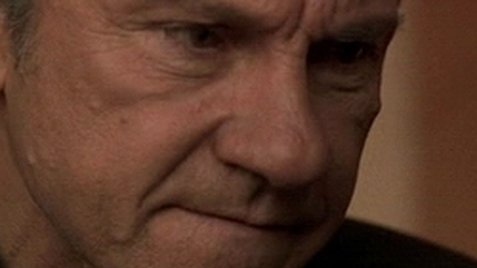
The crime genre is one of the most studied milieus in all of cinema, and in our rapidly changing Hollywood landscape, genuine genre fire-crackers like City of Industry are increasingly harder to find. Receiving an extremely small theatrical release before making its way to DVD and cable in 1997, John Irvin’s gritty, finely textured, and extremely seedy motion picture contains an oversized lead performance from Harvey Keitel as a career criminal who refuses to be taken advantage of by one his young underlings. After a viciously staged heist sequence where things actually go according to plan for Keitel and his crew (a nice spin on the classic idea of the robbery gone awry premise), the film switches gears into revenge territory, with Keitel looking to take down the menacing Stephen Dorff, a dangerous hot-head who tries to double cross Keitel and make off with the score for himself.

city-of-industry-movie-poster-1997-1010542729

Written by Michael Mann protégé Ken Solarz, the film does feel very much inspired by some of the plotting from Mann’s 1995 masterpiece Heat, taking the shape of a stylized, contemporary western where everyone is a shade of grey rather than simple black or white. A whiff of Reservoir Dogs can also be felt, but this distinctive film is definitely its own beast overall, and it serves as a reminder of how few down and dirty crime movies like these actually get made in today’s Hollywood landscape. Irvin, whose credits include The Dogs of War and Hamburger Hill, directed with an iron fist, but in the best sense of the phrase; there’s a no-nonsense quality to City of Industry that allows the bristling narrative to move with driving forward momentum, never pausing for extraneous or unnecessary beats. The rough and tumble outskirts of Los Angeles feel ominous and scary in this film, with Irvin and his astute cinematographer Thomas Burstyn never making any one image too pretty or overly manufactured, instead opting for a dank and murky vibe with flashes of red and blue.

1

City of Industry feels like a left over from the 1970’s, a crime film interested in character motivation as much as it is in showing off bloody shoot-outs or the expected explosive violence from a tale such as this. In fact, one of the best aspects to the film is how the script does a few things out of the norm, and it can’t be understated just how magnetic and powerful Keitel was in this role, which seemed tailor made to his sensibilities as an actor. The deteriorating industrial side of Los Angeles is also a major character in the film, with an atmosphere that suggests crumbling infrastructure and shady morals, which feels perfectly in tandem with the duplicitous characters. And because everything here was played straight and without a wink of self-conscious posturing or riffing, all of the developments in the story feel all the more tough and earned. Timothy Hutton was shrewdly cast against type, while Famke Janssen and Lucy Liu got some solid scenes as well. Elliot Gould made a colorful cameo appearance. An Orion Pictures release.

city_of_industry_ver2

FRANCIS FORD COPPOLA’S THE COTTON CLUB — A REVIEW BY NICK CLEMENT

1

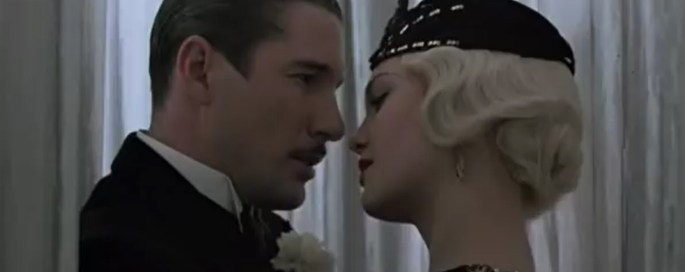
Despite being met with mixed critical response upon initial release and becoming a major financial wipeout, The Cotton Club is a massively ambitious epic, sprawling in its scope, and hugely entertaining, fusing the period gangster film with the movie musical in very unique ways. An absurdly plagued production on any number of levels (just head on over to Wikipedia…), this Francis Ford Coppola directed film has some of the greatest production design I’ve ever seen (courtesy of the legendary Richard Sylbert), and ludicrously photogenic cinematography from Stephen Goldblatt. Featuring an utterly insane cast including super suave Richard Gere, extra hot Diane Lane, Bob Hoskins, Laurence Fishburne, Lonette McKee, Nicolas Cage, Jennifer Grey, Gregory Hines, James Remar, Tom Waits, Diane Venora, James Russo, and tons of character actors from that era, The Cotton Club centers around Dixie Dwyer (Gere), a young musician who uses mob influence to advance his show-biz career, but ends up in a dicey situation when he falls in love with the sultry girlfriend of mob boss Dutch Schultz (Remar). Lane is the sexy object of desire, and she and Gere were both terrific. In fact, everyone gets a chance to shine in this expansive tale of friendship, love, rivalry, jealousy, murder, and betrayal.

2

The plot thickens when Dixie’s brother Vincent (Cage) decides to join in on the criminal antics, while various real life gangsters are intermingled into the busy plot which ratchets up the spectacle and suspense. The musical set-pieces are spirited and terrifically choreographed, with the smashingly authentic costumes by Milena Canonero lending the entire production a sense of gaudy splendor. And it goes without saying that the vibrant and jazzy musical score from John Barry is absolutely sensational, mixing show tunes and peppy musical numbers with somber melodies from the traditional score. When a film goes through as many difficulties as The Cotton Club did, by the time it’s ready for release, critics have already sharpened their knives, which is of course wildly unfair but pretty much standard operating procedure for those writing about film. Every movie is a struggle to get made, some more than others, so it always seems wrongheaded to bring any upfront negativity into a viewing when you’ve heard that things haven’t gone smooth on set. Judge the final product, not the process of getting the film made. Siskel and Ebert most notably included the film on their top 10 lists in 1984 and for good reason, as The Cotton Club is a celebration of all things cinematic, both large and small, and as always, the level of detail and craftsmanship that Coppola brought to the table was eye-opening to behold.

3


VOLKER SCHLONDORFF’S PALMETTO — A REVIEW BY NICK CLEMENT

1

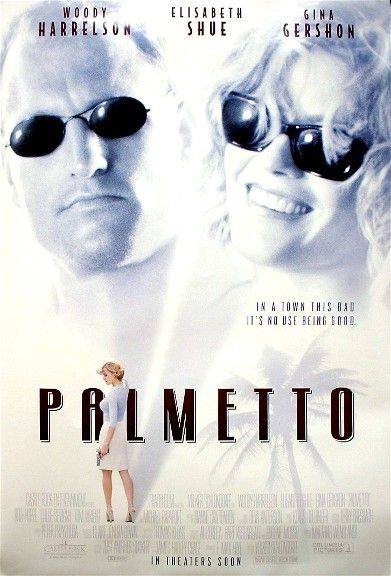
Palmetto is a twisty, lethal little neo-noir from 1998 that took familiar ingredients and threw them into a blender of Florida sunshine and juicy star-turns from a game cast who clearly had fun with the hot-blooded, morally treacherous material. Directed by the great filmmaker Volker Schlöndorff (The Tin Drum), the film failed to ignite a fire at the box office and received mixed to negative reviews, while serving as the director’s last American feature film. And while it’s hardly a brilliant film ,there’s so much fun stuff on display to remind you that Hollywood rarely makes them like this anymore. Taking a page from genre staples like The Big Sleep and Key Largo, the screenplay concocted by E. Max Frye, which was based on the novel by James Hadley Chase, concerns a falsely imprisoned journalist named Harry Barber (Woody Harrelson in one of his most atypical performances) who, upon release from the joint, crosses paths with the sexy but probably dangerous Rhea Malroux (the absolutely fantastic Elisabeth Shue in drop-dead sexy mode), a classic femme fatale who you just know is going to take poor Harry for a ride he’ll never forget. Rhea convinces Harry to help her in an extortion plot against her rich husband, but nothing goes according to plan, with multiple plot strands converging and everyone double and triple crossing each other without a moment’s notice. I still haven’t looked at a 55 gallon drum the same way since this film. Cinematographer Thomas Kloss took advantage of his lush surroundings, bathing the film in warm colors and sun-dappled imagery so that the audience felt the sticky humidity all throughout the constantly shifting narrative. A game supporting cast including sultry Gina Gershon, Michael Rapaport, Chloe Sevigny, Rolf Hoppe, Tom Wright, and the always awesome Marc Macaulay all contributed to the sweaty thrills. This overlooked item would make a nice double feature with the underrated Bob Rafelson crime-noir Blood & Wine with Jack Nicholson.