WERNER HERZOG’S ENCOUNTERS AT THE END OF THE WORLD — A REVIEW BY NICK CLEMENT

1.jpg

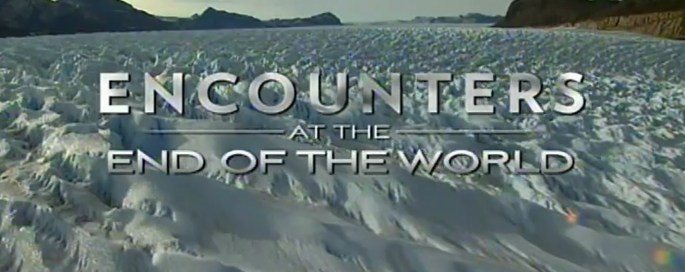
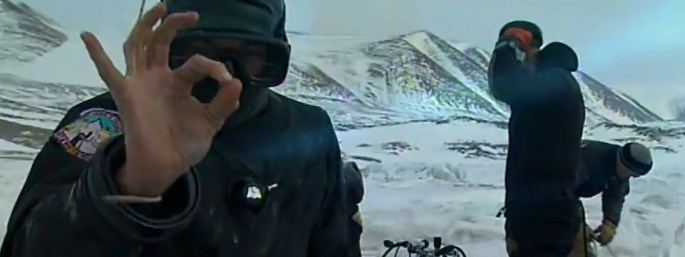
This is an endlessly fascinating documentary. Engrossingly directed (as usual) by the legendary Werner Herzog, Encounters at the End of the World is a film of stunning, haunting beauty, a picture that does something that so few films are capable of these days – it shows you something new and different. Herzog and a crew of less than five (including long time cinematographer Peter Zeitlinger) traveled to Antarctica and documented life on the South Pole. You get to swim under the frozen slabs of ice, which have been staggeringly captured by brave underwater cameramen, and what you get to see under the ice is nothing short of transfixing. Mixed with the eerie, otherworldly sounds of communicating seals, the footage provides an extraterrestrial quality; it’s like you’re looking at life on a completely different planet. You also get introduced to the many eccentric people (scientists, workers, environmentalists, cooks, etc.) that populate the South Pole. While there aren’t that many people who live there in total, each and every one of them interviewed by Herzog seems like a surreal piece of work.

2.jpg

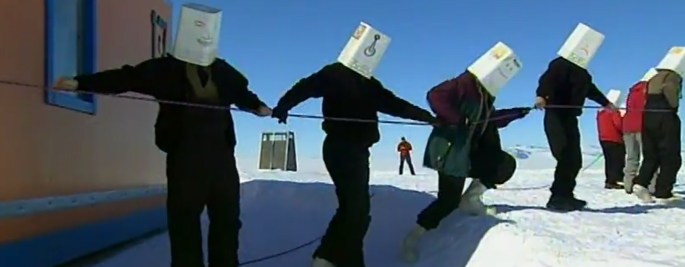
Herzog, a filmmaker known for his brazen sense of humor and a subversive sense of irony, is appalled by the presence of such commercial items as an ATM machine and a gym/spa on the icy tundra. He is a filmmaker, like Terrence Malick, who has always been interested by the ways that man and nature interact and intersect. Herzog has gone to great geographic lengths throughout his career. Whether it’s the Amazon (Aguirre the Wrath of God, Fitzcarraldo), Laos (Little Dieter, Rescue Dawn), Alaska (Grizzly Man), Kuwait (Lessons of Darkness) or at the McMurdo Research Station in this film, he seems entranced by the many exotic qualities that different regions can provide for him as a filmmaker. There are also visual and thematic references to two earlier Herzog docs, The White Diamond and The Wild Blue Yonder. Herzog, who operated one of the two high-definition cameras on the shoot, emphasizes how desolate, alone, and brutally cold the South Pole is. He didn’t go there to make a warm and fuzzy penguin movie ala March of the Penguins (he even states so at the front end of the doc) but yes, you do get some penguin footage. You also get to hear Herzog ask a penguin specialist about the potential existence of gay penguins. Trust me, it’s priceless.

3


ALEX COX’S WALKER — A REVIEW BY NICK CLEMENT

walker cc


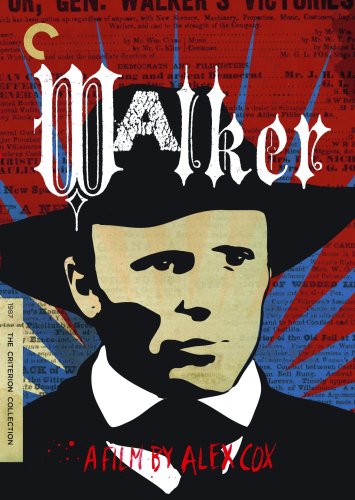
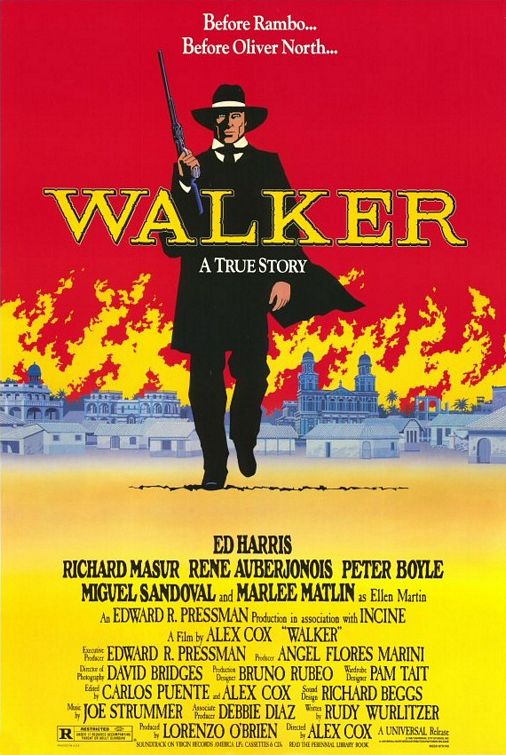
Walker is one of the most interesting and easily the most surreal biopic I can think of, still oddly topical and relevant to this day, directed with volatile energy and a shifting style by maverick indie filmmaker Alex Cox (Sid & Nancy, Repo Man, Straight to Hell). The film was an epic flop at the box office when it hit theaters in 1987, and it caused Cox to retreat into extremely personal filmmaking for the better part of the rest of his career. Starring Ed Harris as William Walker, an American mercenary/sociopath who took Mexico by storm in the 1850’s and eventually installing himself as President of Nicaragua before he’s overthrown and eventually killed, the film is extra unique and shreds the conventional notion of what should be expected from a biopic. Harris was absolutely stunning in Walker, with the fiery material playing to his extreme passion and intensity as an actor, and towards the final act most especially, you catch these glimpses of total madness behind his eyes that only a certain group of actors are able to deliver. With a script by Rudy Wurlitzer (Two-Lane Blacktop, Pat Garrett and Billy the Kid), the film takes on the style of an “acid-western,” with Cox incorporating Pekinpah-esque slow-motion during the explosive and often violent action sequences, and providing a tone that feels genuinely freewheeling and like nothing else I’ve seen for the genre. It’s also extremely funny in spots, but for reasons that aren’t typical or expected. The film was shot on location in Nicaragua while the Contra War was raging on, while the filmmakers included all sorts of details that defied period logic, including helicopters, magazines, weapons, a Zippo lighter, and even a car. Featured in the supporting cast are Peter Boyle, Richard Masur, Rene Auberjonois, Sy Richardson, Xander Berkeley, Marlee Matin, Miguel Sandoval, Blanca Guerra, filmmaker Alfonso Arau (Like Water For Chocolate), and musician Joe Strummer, who also provided the score.

walker

DAVID MICKEY EVANS’ THE SANDLOT — A REVIEW BY NICK CLEMENT

3

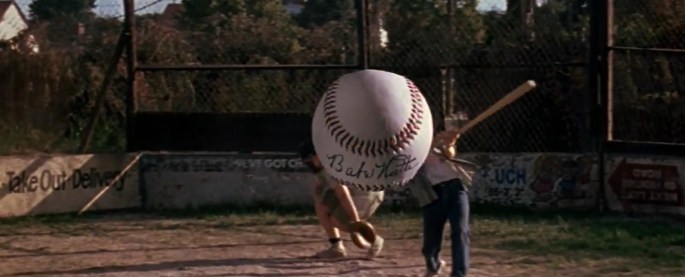
The Sandlot is an effortlessly charming family film. I can’t wait to show this film to my son, Owen, when he’s old enough to grasp it. It’s so wonderful on so many levels, and what’s so pleasurable about it, is that it’s one of those nostalgic items that you don’t feel guilty about still loving, because it holds up as solid, completely unpretentious cinema that has a heart and soul and passion. Written and directed and narrated by family movie specialist David Mickey Evans, the film is a loving period piece and a gentle friendship story, with just the right touch of mystery and childlike suspense to keep it always interesting. It’s also a beautiful coming of age story, told without forced nonsense on a narrative level, and never looking down on the child protagonists, all of whom are treated with respect and like adults. Which is why I think this film is so resonant and successful; it feels like a kid’s movie made by a person who completely understands the mindset of his characters, with zero pretense or judgement. Evans’ legendary original screenplay for Radio Flyer, along with his recent book The King of Pacoima, clearly present a man who is in touch with what it means to be young, and how various life experiences shape who we grow up to become. And when it comes to showing love for America’s greatest pastime, The Sandlot hits a grand slam, with some terrific baseball footage that was clearly pulled off by the versatile cast, and a clear sense of what makes the sport so fascinating and important for so many people.

2

The story concerns young Scottie Smalls (Thomas Guiry), an insecure kid who moves to a new neighborhood. He’s able to make some friends within a clearly bonded group of kids who practice   baseball at the local sandlot field. Baseball – it’s all these kids do – morning, noon, and night, eat it, drink it, and sleep it. Evans’s script charts one particular summer as Smalls ingratiates himself into the group, with mixed results, while all of the kids end up going on a series of adventures, both big and small, on and off the field. The big drama of the piece rests on the sketchy neighbor who lives on the other side of the fence near the field, and the reportedly monstrous beast that lives there, waiting to devour any baseball that lands in its yard. Evans got so much from his amazingly talented cast, and when revisiting the film just recently after a few years of not having seen it, I appreciated all of the performances that much more. Along with lead actor Guiry, Mike Vitar, Patrick Renna, Chauncey Leopardi, Marty York, Brandon Adams, Shane Obedzinski, Victor DiMattia, and Grant Gelt all provided memorable and in some instances incredible touching pieces of acting. Denis Leary and Karen Allen were smartly cast as Smalls’ parents, while James Earl Jones figures into the plot late in the game. Look out for an extremely young and cute Marley Shelton as an object of affection for the boys, and for Arliss Howard in an uncredited cameo during the final moments.

1

This is a film that I’ve seen countless times, and it’s one that will surely make the rounds for years to come on family movie night. The Sandlot feels like the type of movie that would be nearly impossible to get made in today’s moviemaking climate, as it’s a story that feels honest and real and never manufactured in order to hit focus-tested moments of expected action or plot developments. There’s a quaint feeling to the entire thing, with its leisurely yet never slack pacing, and a terrific emphasis on family dynamics and the importance of conversation and friendship. I love the unforced nature of Evans’ direction, and how he used snappy scene transitions with fun sound effects; this movie feels like it belongs playing on a double bill for all eternity with Joe Dante’s similarly underrated and heartfelt Matinee. A great baseball movie and a great family film all together, The Sandlot continues to be an audience pleaser after all of these years, and my guess is that it will continue to do so for years to come.

7

JEREMY SAULNIER’S GREEN ROOM — A REVIEW BY NICK CLEMENT

1

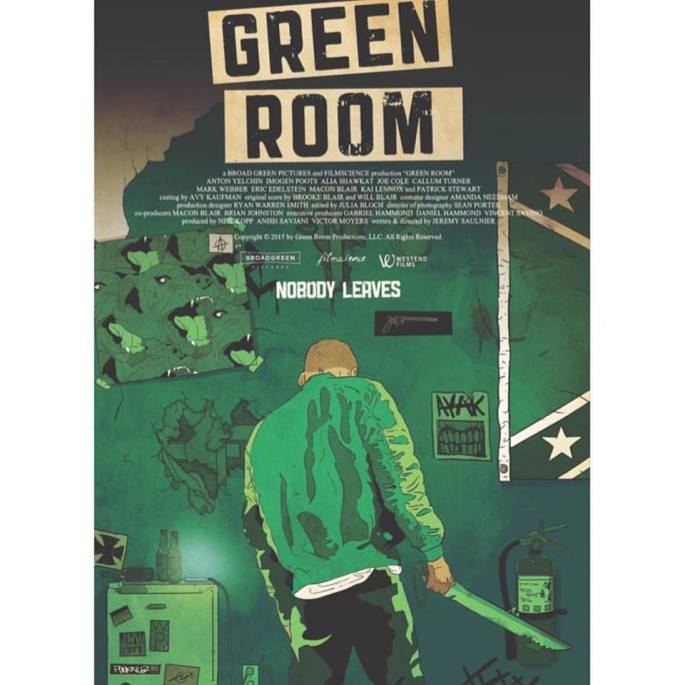
Jeremy Saulnier is a cinematic madman. His 2007 debut Murder Party announced a new, distinctive voice on the indie movie scene, while his follow up, 2013’s blistering revenge thriller Blue Ruin demonstrated that a tremendous new talent had taken a huge leap forward. And now, with his latest film, the pulverizing horror-thriller Green Room, he’s firmly staked his claim as one of the most exciting cinematic voices to hit the movie landscape in years. He’s not making films that are going to appeal to the old farts in the Academy, but rather, he’s embraced the idea of the unpretentious thriller, stripping his genre based elements to their bare essentials, and cruising through nihilistic narratives that only potentially offer catharsis or safe haven by the end. But, like the best filmmakers, be ready to have your expectations constantly subverted, as Saulnier clearly revels in the art of the surprise.

2

I don’t know anything about the punk rock scene in Seattle, but this movie feels like it knows this world intrinsically, so I believed every single moment in this compact bit of storytelling. Saulnier makes some subtle generational jabs by writing the band members the way he does, and one of the things that made this movie as effective as it is was that at no point did I feel that this couldn’t happen. As in Blue Ruin, there’s an escalating sense of tension and violence that permeates the entire film, and if I wasn’t as emotionally invested in the narrative in Green Room as I was in his previous picture, it takes nothing away from the continued formal precision and careful, air-tight plotting that almost begs to be scrutinized. There’s a nice twist that makes sense towards the start of the third act, and rather than the moment feeling contrived in order to advance the plot, it felt organic and logical.

3

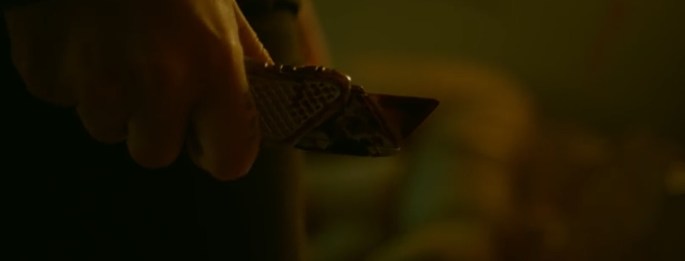
This is a grubby, grimy movie, with terrific production design by Ryan Warren Smith, and overall, it’s the sort of effort that Quentin Tarantino or Wayne Kramer would go nuts for (QT apparently has!), involving a punk rock band playing at the A-1 wrong venue, a hell-house run by skinheads. The band members inadvertently witness the aftermath to a murder, and before you know it, they’ve all been marked for death, with the head neo-Nazi played by Patrick Stewart in a bone-chilling performance that’s unlike anything I’ve ever seen from this most excellent actor. Casting Stewart in this role was a stroke of genius in and of itself, but the way that Saulnier continually builds dread all around his hapless characters helps to raise the stakes all throughout, with Stewart taking on an almost mythic quality. And then there’s the attack dogs – just you wait! Anton Yelchin continues on his terrific streak of quality projects with unique filmmakers, and for once, it was a pleasure to see a character in one of these movies that gets stabbed, and then actually feels the pain. How novel!

GR

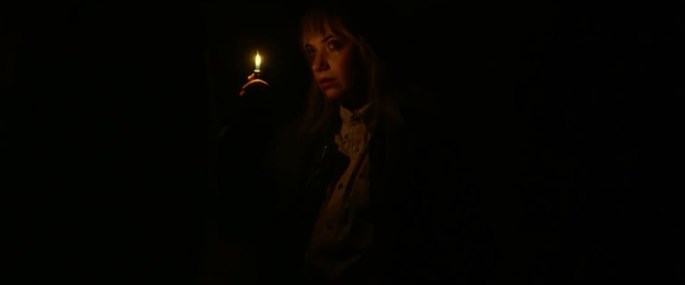
The lovely Imogen Poots strips away her cutie-pie looks and shreds her image with a gross hair style and an eerie sense of near-joy during some of the more nasty moments of bloodshed, with Saulnier delivering a sly feminist undercurrent to a portion of the film.  Macon Blair reteams with the filmmaker after their startling collaboration on Blue Ruin, here delivering a totally different and equally impressive performance. The always awesome Mark Webber also gets some choice scenes; there’s something about this actor’s face that suggests inherent engagement. Cinematographer Sean Porter bathes the film in dark greens and inky blacks, sometimes looking for that shade of brown that Fincher has been searching for of late, stressing strict camera placement and expert attention to visual space, so that each action scene stings with the necessary blunt force that the story demands. Gory, unrelenting, and totally nasty in every sense of the word, Green Room is yet another aesthetically exciting and formally bracing piece of work from Saulnier, who along with Ben Wheatley, has cemented himself as one of my new favorite cinematic voices.

2

MAGGIE CAREY’S THE TO DO LIST — A REVIEW BY NICK CLEMENT

to_do_list_ver3_xlg

How this little comedic diamond in the rough isn’t more well-known and widely loved I’ll never understand. Oh wait, I do understand – it’s yet another instance of a studio having zero faith in its product, and relegating it to unfortunate and undeserved also-ran status. Which is a crime, as The To Do List is easily one of the funniest, shrewdest teen sex comedies that I’ve ever seen, raunchy and heartfelt in equal measure, and possessing an extremely high joke per minute ratio. Operating as both a crass and sweet genre topper and a painfully observant 90’s period piece (shoot me…!), this is one of those movies that never got a fair shake from critics (52% at RT, what the hell…?) and is miles better than most of its competition. In all honesty, it destroys the likes of American Pie, which I’ll always have a soft spot for, and it really makes most other recent laughers look tame and mild in comparison, both in terms of graphic sexual content and honest-to-goodness guffaws. Written with extreme vulgarity but also extreme smarts and capably directed by Maggie Carey in her filmmaking debut, the film is the naughty story of Brandy Clark, the amazing Aubrey Plaza, and how she charts an epic sexual journey during the summer before she enters college. Plaza is such a gifted comedienne, and in scene after scene, her impeccable comedic timing is on display, while she clearly has no qualms with getting down and dirty.

She’s a virgin, but more than just that – she’s done NOTHING of any carnal consequence whatsoever. So, with the help of her more advanced friends (Alia Shawkat and Sarah Steele, both excellent), her always-having-fun sister (the adorable Rachel Bilson), and her boss at the town pool (an outstanding Bill Hader), she creates the ultimate sexual To Do List, in an effort to not become embarrassed as a college freshmen. She’s obsessed with a hunky lifeguard played by Friday Night Light’s Scott Porter, while she’s mostly oblivious to the charms of fellow employee Cameron (a perfectly cast Johnny Simmons). Also featured in the stellar supporting cast are Connie Britton and Clark Gregg as Brandy’s hysterical parents, who steal the film with a subplot that’s normally taken out of most movies. And speaking of scene stealing, Hader, as usual, absolutely owns the movie when he appears. Andy Samberg, Christopher Mintz-Plasse, Jack McBrayer, Donald Glover, and Adam Pally round out the deep cast of comedic performers. On a visual level, the film is nothing to write home about, but this isn’t a flashy exercise in style. This is a near constant stream of hilarity, with mostly fixed camera positions and simple set-ups, as Carey knew that her script just needed to be filmed as-is with a minimum of fuss. Sadly, The To Do List never played on more than 600 screens nationwide when it was released in July of 2013, and it grossed less than $5 million domestic. I can only hope and pray that this totally deserving little gem in hiding has started to find the audience that it truly deserves.

DAVID O. RUSSELL’S THREE KINGS — A REVIEW BY NICK CLEMENT

1I can still remember the first time I viewed David O. Russell’s blitzkrieg masterwork Three Kings, which for me, is my favorite of all of his terrific cinematic works (I Heart Huckabees is a VERY close #2). I was in college, working on my 16mm, black & white student film, and the entire crew went out to see it after a long day of working on our own little action romp. And I can still remember how the film ripped the tops of our heads off, and how it sent us out into the lobby with a serious cinematic buzz that would take weeks to get rid of. This was a theatrical three timer, and over the years, I’ve probably seen it 20 times, either in full or in bits and pieces. On an aesthetic level, Three Kings was a game changer and a mind-blower, with Newton Thomas Sigel’s eye-scorching images producing one phenomenally visceral moment after another, while the hilarious black comedy and pointed satirical elements of the script landed direct blows in every instance.

3

The chemistry between George Clooney, Mark Wahlberg, Ice Cube, and Spike Jonze was intense and palpable, their characters fully fleshed out as human beings and as a result capable of mistakes and lapses in judgement, each with their own strict sense of morality, with Russell’s usual brand of idiosyncratic humor sprinkled along the edges. The action scenes are violent and explosive, and still register strongly to this day, even in the face of countless blow ‘em ups that have come and gone throughout the overly CGI’d years. The amazing supporting cast included a very young and adorable Judy Greer, Cliff Curtis, Nora Dunn, Jamie Kennedy, Saïd Taghmaoui, Mykelti Williamson, and Holt McCallany. Noted for its turbulent shoot and controversy over scripting credits, this is one of those films that feels alive and essential, and is overdue for special edition treatment from a group like The Criterion Collection. The film’s trailer is also an all-timer, as well as Russell’s making-of video diary. I’ll never get tired of revisiting this film, because on so many levels and then as an entirely unique whole, I think it’s one of the best contemporary war films ever made.

2

MIKE LEIGH’S HAPPY-GO-LUCKY — A REVIEW BY NICK CLEMENT

4

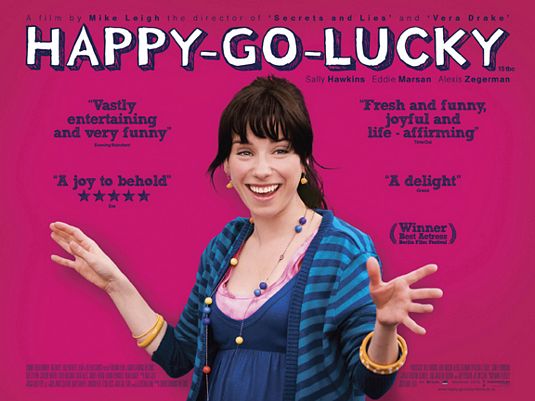
Happy-Go-Lucky is a deceptively simple British film from writer-director Mike Leigh that was easily one of my favorite films from 2008. In its own low-key and oddly charming way, this offbeat little movie engages the audience right from the start, but it’s hard to tell where the story wants to take you. With splendid performances from its entire cast, this is one of those small, talky films that might seem to be going nowhere but you realize how deep the narrative is cutting by the end. This isn’t a film with a “plot” per se, but rather, it’s about people, their relationships, and how the human spirit thrives in each and every one of us. There are no “bad guys,” no massive plot twists, no shoot-outs or car chases, as this is a movie about the human condition, and beneath its sunny exterior, rests some dark truths that everyone faces at one time or another in their lives. I’ve long been a fan of Leigh’s smart and stylish work, as he’s been one of the most dependable filmmakers over the last 20 years. This is one of his best films despite it not having as high of a profile as others in his phenomenal filmography.

2

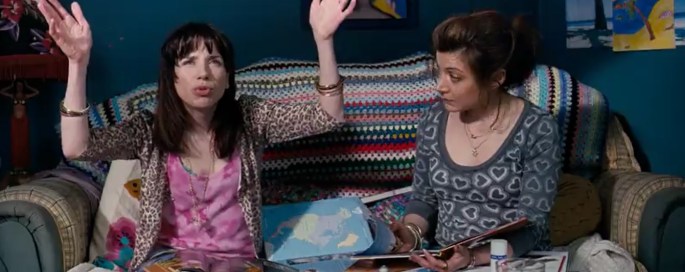
Sally Hawkins, in a tour de force performance, is Poppy, an eternally good-natured woman living in London with her friend and sister. She’s a teacher, a great friend, a caring sister, a party animal, and above all, a woman with the capacity to love, respect, and think positively about anything and anyone, no matter how flawed they may be. We see her in class, working with her students, trying to give them a better education. We see her with her friends, having a blast, and bringing joy to their lives. This must have been an extremely tough role to pull off for Hawkins, as she had to imbue Poppy with the sunniest of dispositions and never once stray from her upbeat spirit. Even when things around her aren’t quite properly working, she never loses her cool, and always remains optimistic. For instance, after her bike is stolen, the first thing that crosses her mind is sadness in that she wasn’t able to “say good bye” to her precious set of wheels. Never mind that some asshole has stolen it; that’s just part of life to Poppy. She’s upset that she didn’t get to say good bye. Some cynical viewers might find her character to be annoying, too upbeat, and too unrelenting. And they might be correct. But those people need to realize that there are plenty of people like Poppy out there in the real world. We just don’t often get a chance to spend time with them when we go to the movies, as storytellers tend to dwell on the depressing or the dark. Happy-Go-Lucky is that rare film about the celebration of life and how some people can raise the spirits of everyone around them, no matter how problematic their lives may be.

3

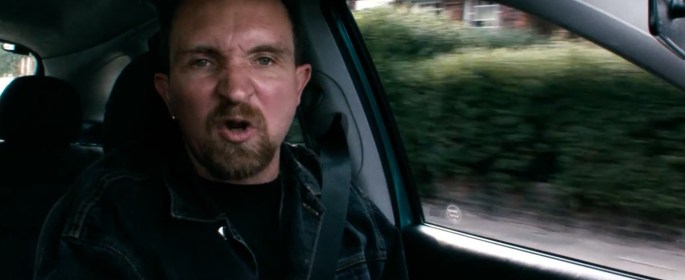
This theory is put to the test when Poppy starts taking driving lessons from a rather unpleasant driving instructor named Scott, brilliantly played by veteran character actor Eddie Marsan, who has made memorable appearances in a diverse range of films including Miami Vice, The New World, and Hancock. Scott is damaged goods and Poppy knows it. But she doesn’t let that deter her. Through their weekly lessons together, Poppy starts to work her happy-magic on Scott, who alternates between being receptive to her charms, and completely shut off from them. Scott’s got a whole series of rage management issues and through his interactions with Poppy, some of those issues become more troubling, and some are put to rest. Marsan got to unload in a fiery, explosive scene towards the end of the film that is the most emotionally hard-hitting moment of the piece; he’s absolutely terrific.

happy_go_lucky_ver3

And so is the film overall. I didn’t know too much about it before I walked into the theater and viewed it nearly eight years ago, and since then, I’ve seen it a few more times, and I always marvel at its humanistic qualities and how Leigh really wanted to present a lead character who had a lot going on under the surface. A film like Happy-Go-Lucky is rare in that it celebrates all that is potentially wonderful about people rather than focusing on the inherent flaws of human beings. And while there is a dark subtext to some of the narrative upon further reflection, you get swept up by Poppy’s unending love for life and her ability to make all those around her smile with delight. Leigh has always been a filmmaker interested in human behavior, and in films such as Secrets & Lies, Vera Drake, Naked, Topsy Turvy, and Mr. Turner, you fall totally under his smooth filmmaking spell, which gives way to the elegant manner in which in which people interact with each other. Happy-Go-Lucky is a pure delight from start to finish.

happy_go_lucky_ver2

MARK CHRISTOPHER’S 54: THE DIRECTOR’S CUT — A REVIEW BY NICK CLEMENT

1

I absolutely can’t believe how heartbreaking it must’ve been for writer/director Mark Christopher to see his disco party opus 54 get completely dismantled and released as a hodgepodge of his original vision back in 1998. Now, almost 20 years later, people are able to see the film as the filmmaker intended, as the Director’s Cut of this undeniably entertaining film has finally hit digital platforms, with a rumored Blu-ray release possibly in the cards in the near future. When this film first hit screens in late August of ’98, it was promptly attacked by critics who seemed all too eager to rip it to shreds. And after the bad buzz settled in, the film never stood a chance at the box office; it would gross less than $20 million before heading off to a second, slightly more robust life on VHS/DVD/cable. I can remember seeing (and enjoying) the film on opening weekend, and with no understanding of the trouble-filled production, there was no baggage for me to bring into the viewing experience.

2

But now, having seen the newly restored version in all of its glitz and glamorous glory, it’s absolutely ridiculous to compare the two films, as they are so totally different that it’ll make your head spin. And it sadly reinforces the notion that young filmmakers can become easy targets by the money people. This was a project that Miramax paid to develop based off of Christopher’s treatment and short films, with the studio then approving the material, and letting him shoot the film he wanted to shoot. But after disastrous test screenings that were held in all the wrong places suggested that audiences would hate the film en masse, producers the Weinsteins and honchos at Miramax asked for wholesale narrative edits, alterations in tone and character motivation, and the scrubbing of anything remotely salacious or homoerotic. And this, coming exactly a year after Boogie Nights busted down the normally puritanical doors of American cinema – it’s all so crazy that it almost can’t be believed.
3

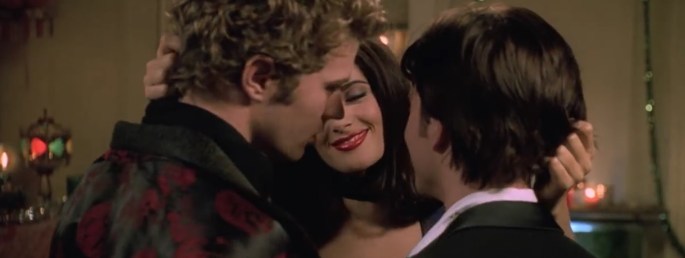
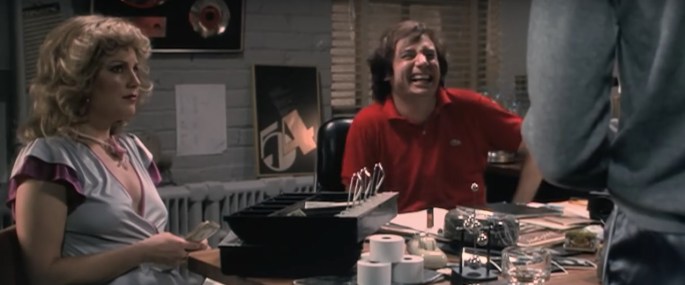
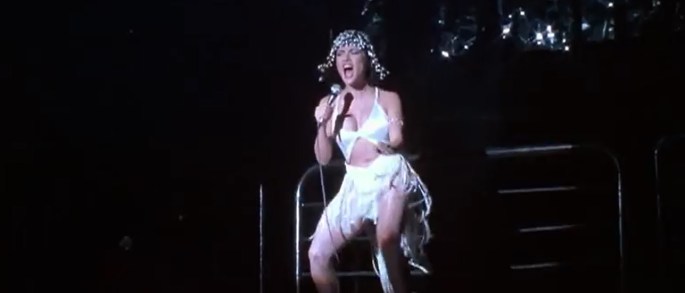
The plot is your traditional rags to riches/fish out of water narrative, concerning a young, sexy guy named Shane O’Shea (Ryan Phillippe at his most breezy and engaging) living in New Jersey with his dad and two sisters, who lucks his way into a coveted bartending job at the titular night club. In a very memorable bit, he’s admitted into the club by 54’s owner Steve Rubell, the fantastic Mike Myers, but only after taking his shirt off to expose his chiseled physique. Before you can say sex, drugs, and rock and roll, Shane gets in way over his head with his fellow employees (Breckin Meyer and Salma Hayek as a debauched couple), his boss (Myers absolutely steals every single scene), and himself.
4

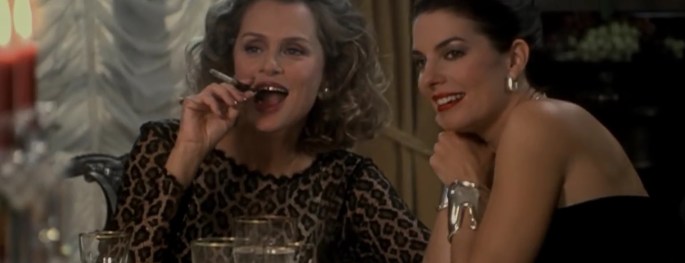
The film takes on the scope of a personal journey quest, centering on a guy who is still trying to figure himself out as a person, let alone attempting to navigate the extreme partying and emotional thrills of the era. An absolutely amazing supporting cast was along for the ride, including Sela Ward at her absolute hottest, Michael York, Neve Campbell, Heather Matarazzaro, Lauren Hutton, Sherry Stringfield, and Mark Ruffalo in a blink or you’ll miss him bit part, with various real life celebrities making walk-ons and cameos. Again, the differences between the two cuts of 54 are huge, with the director’s cut taking on a totally different edge and tone, while the theatrical release plays it much more straight, in all sense of the phrase. Phillippe’s character in particular is much more interesting in the director’s cut, with morally ambiguous decisions being made, with more of a sexual edge on display.
2

Skillfully edited by David Kittredge from the original version and 44 minutes of previously unreleased footage, this new cut of 54 moves more gracefully, with scenes feeling more organic, and relationships more fleshed out and multilayered. The big kiss between Phillippe and Meyer has been reinstated, along with a refocusing of Meyer’s character in general, with the romantic triangle of Hayek and the two guys producing even more dramatic heat. The film certainly takes a cue from Boogie Nights in that the narrative revolves around a slightly dim, wide-eyed pretty boy who enters into a world that he could never anticipate or predict, and while the film never hits the peaks that Paul Thomas Anderson’s picture did, it certainly displays its own sense of confidence and flamboyant style. Cinematographer Alexander Gruszynski shot the film with lots of close ups and neon, going full-tilt inside of the night club, with his swerving, observant camera picking up the various bits of sex and fun all happening inside the pleasure palace. The soundtrack, of course, pops with period authentic tunes that set the mood immediately, with the entire film feeling like a dreamy descent into bacchanalian excess that finally feels fully unleashed.
1

It’s amazing to think that this film ruffled so many feathers with its gay content 20 years ago, because when looking at it in retrospect, it feels quaint to a certain degree when compared with what’s recently been shown on screen. People weren’t ready to accept the themes that 54 explores, and didn’t want to see their latest heartthrob (Phillippe had just had the smash hit I Know What You Did Last Summer) making out with guys. If Christopher made this film today, it gets released 100% as is, and to a certain extent, he probably would have been able to take things further. But what’s exciting is that this filmmaker has been able to see his project fully realized, and as a result of the dedication of his technical and restoration team, has been able to silence those initial naysayers with a movie that proudly announces itself as a secret gem waiting to be rediscovered by an entirely new generation of movie lovers.

3

ANDREW NICCOL’S GATTACA — A REVIEW BY NICK CLEMENT

gattaca_ver5

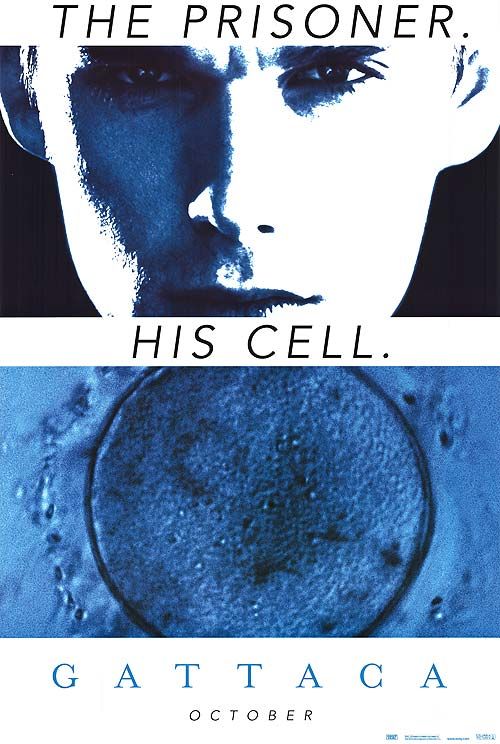
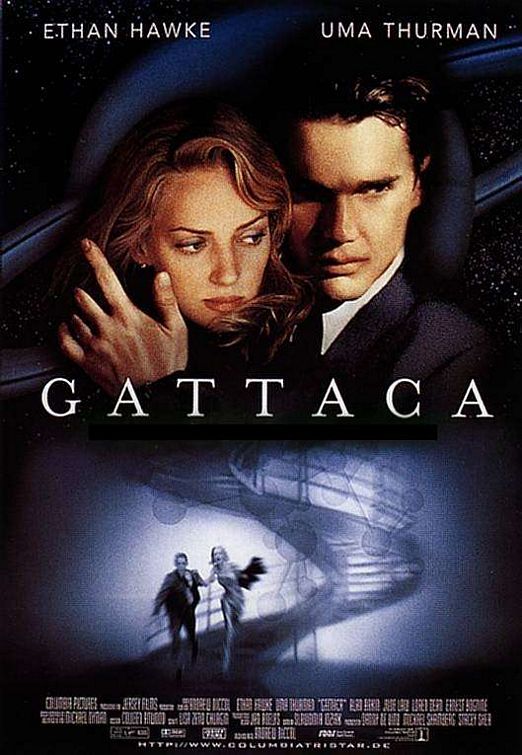
Gattaca is one of my favorite genre-benders, a unique effort that combines film noir and believable science fiction in a tight and sleek package that greatly benefits from writer/director Andrew Niccol’s supreme sense of style and his usual brand of topical, thought provoking storytelling. Niccol, who also wrote The Truman Show for Peter Weir and wrote/directed Lord of War, Simone, In Time, and last year’s underappreciated Good Kill, is a big ideas guy, prone to heady narratives with juicy hooks, and with Gattaca, he crafted a film that can now be seen as very much ahead of its time. Released to great critical acclaim but a box office debacle back in 1997, and featuring one of the coolest print ad campaigns of all time, the film foreshadowed the genetic testing onslaught of the 2000’s, with a story that involves a future society that’s become all but determined by work done in labs. Embryos are genetically engineered with imperfections all but eradicated, while the antiseptic environment stresses environmental reconstruction and stunning advances made in the field of science.

gattaca_ver1

The story pivots on a man who is born genetic flaws, and who can’t progress as far as he wants in society, so he tricks the system, in order to achieve his goals. The trio of Ethan Hawke, Jude Law, and Uma Thurman all did stellar work, the cinematography by ace shooter Sławomir Idziak (Black Hawk Down) is extraordinary, and Michael Nyman’s elegant and mournful score set an appropriately chilly and evocative tone, suggesting loss with a smidge of a hope. Gattaca is also a production designer’s dream come true, with each location and set perfectly chosen and art directed to the max, but never in a flashy or gaudy manner; Jan Roelfs deserved an Oscar nomination for his mesmerizing work. Niccol also smartly populated the cast with a bevy of excellent character actors, including Loren Dean, Elias Koteas, Xander Berkeley, Tony Shaloub, Blair Underwood, Dean Norris, Alan Arkin, Gore Vidal(!), and Ernest Borgnine(!) This is a film that gets stronger and stronger with each viewing, and I love how it can be seen as a detective story with sci-fi elements, or a science-fiction love story set against the backdrop of a mystery.

gattaca_ver3

IRA SACH’S MARRIED LIFE — A REVIEW BY NICK CLEMENT

1
Films like Married Life don’t come around very often. Ira Sachs’ sly genre bender was given a limited release in 2007 but I doubt many people are familiar with it, which is weird given its starry cast: Chris Cooper, Pierce Brosnan, Patricia Clarkson, and Rachel McAdams. A highly stylized cross of Todd Haynes’ superior Far From Heaven and the various work of Alfred Hitchcock, Married Life is a low-key entertainment with a script that bounces back and forth between noir-tinged thrills and cutting social satire. Set in 1949 in a suburb outside of Seattle, the film centers on Harry Allen (a tamped down Cooper), unhappily married to his wife Pat (Clarkson, solid as always), who decides to murder her in order to spare her of the humiliation of divorce. Harry has met the alluring vixen Kay (McAdams, scheming and dangerous) who he wants to run away with. The problem is that Harry’s debonair friend Richard (Brosnan, oozing sex-appeal) also has eyes on Kay. The script by Sachs and Oren Moverman (co-writer of Love & Mercy and I’m Not There, writer/director of Rampart, The Messenger, and last year’s brilliant homeless drama Time Out of Mind) is tight at 90 minutes with deft character work and an atmosphere that’s generally hard to pin down.
2
We get some satirical jabs about domestic life in the early 50’s and there’s a thriller element introduced about half-way through the narrative that definitely throws some surprises into the mix. I really have to give some credit to Sachs, as this was an independent film which probably had a limited budget but you’d never know it from the look of it. Beautifully shot by Peter Deming (I Heart Huckabees) with gorgeous period detail in the production design by Hugo Luczyc-Wyhowski (Dirty Pretty Things, Snatch), Married Life has a cinematic time capsule quality much in the same way that Mad Men brought to television. Evocative of wealthy suburban life from 60 years ago, the film is always visually impressive and all of the performances are top-notch, especially Cooper and Brosnan. Cooper has made a career out of playing the dour, put-upon schnook, and in Married Life, he was able to take his character in a few interesting psychological directions. And Brosnan, who will always have that James Bond twinkle in the corner of his eyes, was smooth as brandy and very likable even when playing a devious character. This is a very unique film and one that’s likely to surprise many people.
3