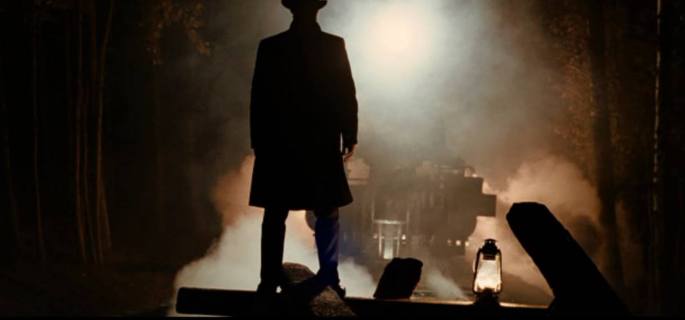
ANDREW DOMINIK’S KILLING THEM SOFTLY — A REVIEW BY NICK CLEMENT

5

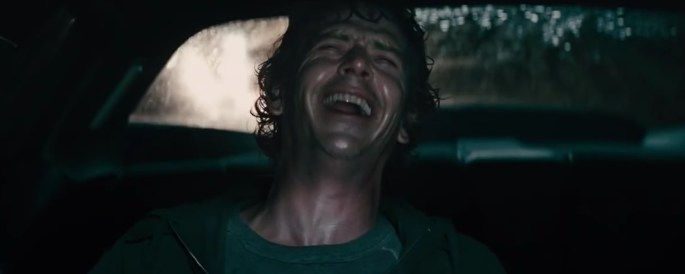
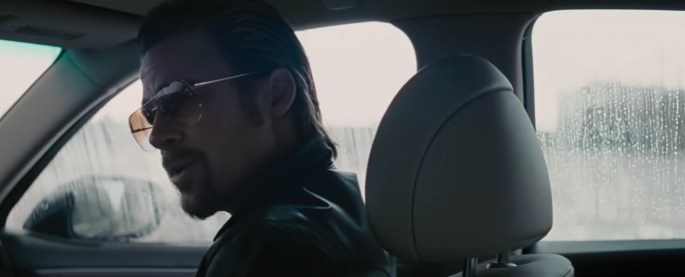
Lethal. Cold. Innovative. Andrew Dominik’s wildly underrated crime thriller Killing Them Softly was one of the best movies from 2012, and it stands as a personal favorite in this well-travelled genre. I love sleazy stories about disreputable characters and this film lovingly explores the criminal underworld with dark humor, graphic (and scary) violence, and a ruthless and impactful message about capitalism that perfectly serves the savage material. Based on the novel Cogan’s Trade by George V. Higgins, Dominik went for the throat with this spare and brutal piece of crime fiction, presenting a bleak worldview that feels appropriately cynical. Brad Pitt went extra mean in this film as a deadly mob enforcer who lives by a very strict code of conduct. His tack-sharp performance feels like a spiritual cousin to his work and character in Ridley Scott’s brilliant, diamond-cut thriller The Counselor; I love how Pitt seems unafraid to shred his pretty-boy image with degenerate scum such as these guys in these particular films, going with ungainly facial hair and allowing his great looks to be repeatedly upended. He’s been one of my favorite actors for the last 20 years for many reasons; I can think of so few films that he’s starred in that I haven’t enjoyed. And coming after The Assassination of Jesse James by the Coward Robert Ford, Dominik yet again switched gears and styles, but presented no less of an all-encompassing atmosphere and cinematic world.

8

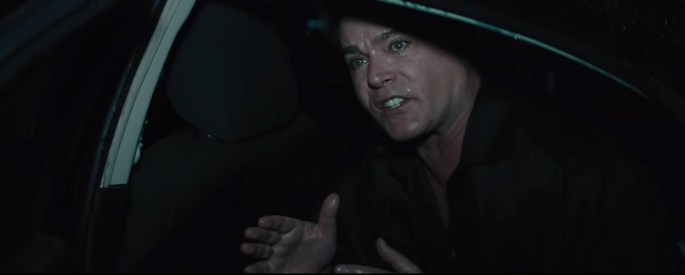
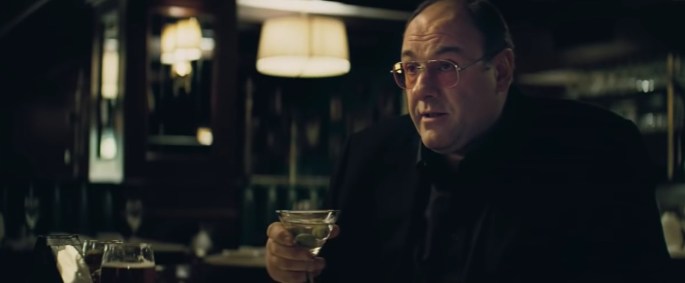
In Killing them Softly, Pitt is called in to handle a relatively straight forward situation after two drug-addict losers (the fantastic pair of Scoot McNairy and Ben Mendelsohn, grimy and glazed-over and lovingly desperate) knock over a mob-controlled poker game being supervised by a low-level hood (Ray Liotta, perfectly pathetic). Richard Jenkins lays on the smarm as Pitt’s casually funny criminal world contact who serves as the middle man, and James Gandolfini brilliantly subverts his own gangster visage with a sad and delicate portrayal of an alcoholic, depressed hit-man who doesn’t have the physical energy or mental strength to do what’s asked of him. The scene with Gandolfini, Pitt, and a tired prostitute who takes no shit is one of the sharpest, funniest bits of cinema in recent memory, totally vulgar and grotesque and beautifully acted by the trio; just watch Pitt’s genius facial expressions during this entire back and forth. This is a nasty movie about nasty people doing nasty things, with lots of vulgar discussions of sex by low-class hoodlums, and more than one instance of punishing, crushing violence. And I love the ferocious final moment of the movie with Pitt and Jenkins at the bar – it’s note perfect how this movie finishes up. Dominik’s terse dialogue is grim and masculine and poetic, and the obsessive detail he takes with each character makes for an extremely rewarding viewing experience. Greig Fraser’s dynamic, beyond stylish cinematography is always finding new and interesting ways to visually convey ideas and themes, with the wonderfully attuned editing in perfect synch with the style of the imagery. And the way Dominik uses sound is nothing short of show-stopping, as numerous scenes take on an extra, ominous edge due to the sonic quality.

15

At this point, I’ll happily follow Dominik anywhere he goes as a filmmaker. His searing debut, the Australian prison film Chopper, showcased a then-unknown Eric Bana in a performance that sits alongside Tom Hardy in Bronson, Michael Fassbender in Hunger, and Jack O’Connell in Starred Up. His second film, The Assassination of Jesse James by the Coward Robert Ford, was one of many masterpieces released in the crowded 2007 season, and it never truly got the attention it deserved. And much like Jesse James, Killing Them Softly was another effort that came and went with barely a mention from critics at zero attention from the Academy, a movie that was well received but that died a quick commercial death. Granted, it’s not a happy-go-lucky little movie or an easy to digest studio potboiler with at least one sympathetic character, but it deserved to do better at the box office, and it’s a movie that seems to have slipped by a great number of people. If you like your crime films to be unsentimental, menacing, and distinctly funny thanks to a sick sense of humor, look no further than this edgy, volatile effort that seems delighted by the sordid lives of low-class reprobates.

11

RICHARD LINKLATER’S FAST FOOD NATION — A REVIEW BY NICK CLEMENT

1


All Richard Linklater has done throughout his stellar if often overlooked career is make one excellent film after another. He’s worked in a variety of genres but always with that effortlessly casual style, and Fast Food Nation easily ranks as one of his best, and most curiously least discussed pieces of work. It’s sort of like The Insider in that, take something that a vast majority of the American populace is addicted to, in this case fast food instead of cigarettes, and nobody is going to really want to hear about it from a cinematic entertainment standpoint. This film is fantastic, topical, and purposefully alarming, featuring an insane cast of stars and character actors including Patricia Arquette, Luis Guzman, Bobby Cannavale, Bruce Willis, Greg Kinnear, Kris Kirstofferson, Wilmer Valderrama, Paul Dano, Lou Taylor Pucci, Ashley Johnson, and Catalina Sandino Moreno, with Linklater basing his scapel sharp screenplay on Eric Schlosser’s best selling novel, and taking no prisoners at any point during his tapesty style narrative. The bloody and disgusting sequences inside of the cattle slaughterhouse are painful to watch, Cannavale is absolutely fantastic as an evil letch taking advantage of a seriously corrput system, and the “There’s shit in the meat” sequence between Kinnear and Willis is absolutely hilarious. This is a very dark satire and all too honest indictment of American life and it’s ridiculous how low of a profile this film has.

BILLY RAY’S BREACH — A REVIEW BY NICK CLEMENT

1
I always thought this was an excellent piece of work, a topical and paranoid political thriller that valued character and logic over needless action and manufactured heroics. Billy Ray is a smart and talented storyteller, and as usual, Chris Cooper and Laura Linney were both absolutely great. Cooper in particular turned in an anguished performance, and was robbed of Academy consideration. Why was this film released in February and not in October or November? But the biggest surprise was how good pretty-boy Ryan Phillippe was at playing a sketched-out, low-level office clerk who gets in way over his head with his secrets-stealing boss. The film has an appropriately ice-cold visual atmosphere (the brilliant Tak Fujimoto was the film’s ace cinematographer) and fleet pacing due to Jeffrey Ford’s tight editing, while the crispness of Ray’s intelligent screenplay, which he co-wrote with Adam Mazer and William Rotko, favors words over bullets as the ultimate weapons.
2
Ray has had a great career as a writer, with the underrated WWII drama Hart’s War and creepy serial killer thriller Suspect Zero ranking as two cool screenplay credits, while recently, he contributed to the underappreciated State of Play remake by Kevin Macdonald and penned the riveting Captain Phillips for action auteur Paul Greengrass. He’s also responsible for writing and directing one of the best journalism thrillers of all time, the highly engrossing Shattered Glass, which is woefully undervalued, and features conclusive proof that Hayden Christensen is capable of a great performance. Breach tells a true story and does it with confidence and smarts, taking the audience into a shadowy world of government mystery and personal betrayal, and with Cooper’s sturdy performance anchoring the entire piece and an emotionally wrenching finale, this is a ripped-from-the-headlines thriller that truly deserves a Blu-ray upgrade – get on it Universal!
3

BENNETT MILLER’S FOXCATCHER — A REVIEW BY NICK CLEMENT

1
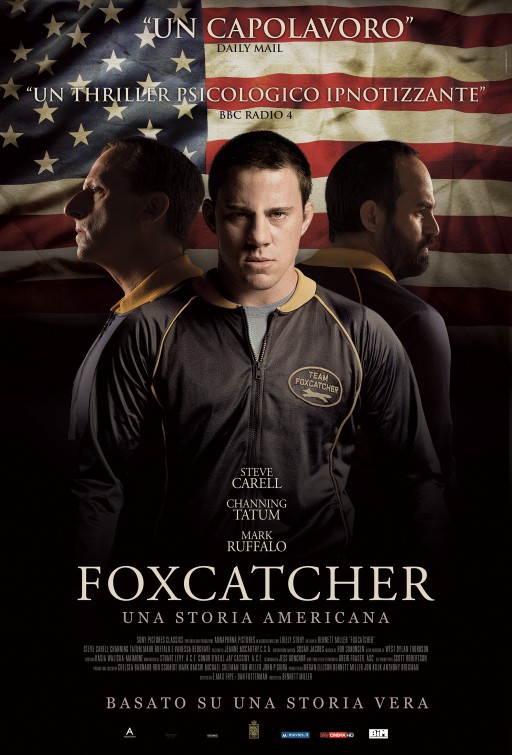
Foxcatcher is as chilling as true crime cinema can get. The vice-grip direction from the extremely erudite filmmaker Bennett Miller in tandem with a supremely cogent screenplay fashioned with scalpel-sharp dialogue from Dan Futterman and E. Max Frye creates a film that is unshakeable and grim. Funereal in tone and sad to the core, Foxcatcher is a richly textured masterpiece of filmmaking and storytelling, daring to explore America at its worst, never cheapening anything during its all-consuming, slow-burn runtime. This film will be massively off-putting for many people – a true bitter pill – but for those who have cinema running through their veins, this is the equivalent of a five course meal at a Michelin rated restaurant. With the clear and clean screenplay at his disposal, Miller captures the dark, rotted soul of the corrupted male psyche, utilizing a cold and detached directorial aesthetic that fully absorbs the audience. Greig Fraser’s quiet, measured, and totally unassuming cinematography unfolds in a deliberately patient fashion, and when paired with the creepy and subtle musical score by Rob Simonsen, this becomes a movie that uses its sly visual and sonic strengths to amplify the exactitude of its words.
2
Every time I watch the film I’m blown away by its power and ability to unnerve, as Fraser and Miller use empty visual space to convey the alienation of everyone in the narrative. The performances are astounding with the big-three trio of Channing Tatum, Steve Carell, and Mark Ruffalo providing transformative work, anchoring this exceedingly gripping tale of obsession, paranoia, ritualistic sport behavior, and blunt, psychological turmoil. Carrell imbues self-professed “patriot” John Dupont (ex-heir to the Dupont family fortune who hosted the 1988 wrestling team at his estate) with a staggering false sense of importance and pride; his consistent uttering that he’s “helping America” is one of the creepiest elements to the character of Dupont, and something that Carell does so well in the film. The fact that when you see Carell in this film and you never once think of Michael Scott from The Office – that’s a testament to how deep Carell went in his portrayal; the rest of his work as an actor will be judged against his menacing turn in Foxcatcher. He’s a sociopath to the extreme, bordering on outright psychopath. Yet, nobody calls him on it, none of his handlers or business managers or associates. Had they raised the obvious concerns than many clearly felt, they wouldn’t have gotten paid, but a life might not have been lost.
3
That’s one of the many key themes of Foxcatcher – how much is a person’s life worth? It’s a crime that Tatum wasn’t talked-up for Best Actor because, for me, he was Carrel’s equal in every way. Using his already physically intimidating body to maximum effect as 1984 Olympic wrestling gold medalist Mark Schultz, his jaw jutted out with a shuffle of a walk, Tatum forces the viewer to confront this socially awkward character head on. He’s a man in the shadow of his brother, the gold medal winning wrestler Dave Schultz, having never grown up with the love of a father, always looking for something – anything – to latch onto. Ruffalo plays Dave Schultz as a good and decent family man, and as always, is astonishingly natural, never hitting a false note, always nailing the little details just as much as the big scenes.
foxcatcher_ver11
As the film progresses, you watch as he begins to possibly understand the madness that he’s allowed himself to become a part of. The scene with Ruffalo being coached by the documentary filmmaker to say that he loved Du Pont and that Du Point was his mentor has got to be one of the more upsetting movie moments of the year. As Foxcatcher builds towards its inevitable conclusion, one is left with the impression that Miller wants us to examine the very fibers of what it means to be a “winner” and an American society obsessed and consumed with “winning,” and how people of high-net worth and little actual talent delude themselves into thinking that they are somehow entitled to greatness, without having to earn it. This is a phenomenally layered piece of work that cuts to the bone.
foxcatcher

GARETH EDWARDS’ MONSTERS — A REVIEW BY NICK CLEMENT

1

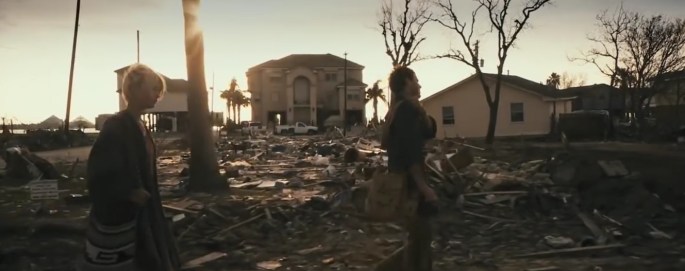
With a nifty premise and a low budget, the independent sci-fi drama Monsters plays around with the genre and has some serious fun, and clearly served as a major calling card for its creator. Written, photographed, designed (both visually and physically) and directed by then first timer Gareth Edwards (Godzilla, the upcoming Rogue One), Monsters is more of a romantic drama than the next Cloverfield or District 9, though the influence of both of those films can certainly be felt from time to time. But whereas Cloverfield was a hectic and adrenalin-pumping action picture and District 9 was a social and political allegory cleverly disguised as a buddy-action film, Monsters plays it quiet and small for the most part, allowing its two lead actors (the excellent Scoot McNairy and easy on the eyes Whitney Able) to develop solid chemistry and pull the audience into their predicament. What sets this film apart from the rest of the genre competition is that for as much excitement that was shown for the monsters themselves, the human side to the story was never skimped out on, and because of this, the emotional investment is that much richer.

2

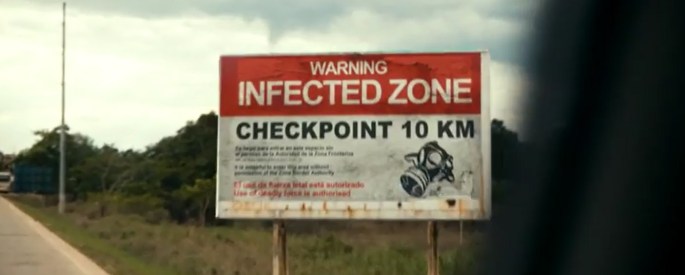
The narrative hook of Monsters is that a NASA space probe has crashed in Mexico and now there are various extraterrestrial lifeforms running amok all over the country, with the military fighting them to the death. Andrew (McNairy, one my favorite actors) has been tasked with delivering his boss’s daughter, Samantha (Able), back to the states, but in order to do so, the two of them have to risk their lives and trek through the “infected zone” where anything at any moment could pop out and eat them. Edwards was clearly working on a shoe-string budget for this type of material but was still able to deliver superb visual effects in a few key sequences; it’s amazing what home computers can do these days as most of this ingenious little film was crafted in his living room. But what made Monsters really stand out was its finale – I absolutely loved the final moments of this movie and where the story went and how it totally upended your expectations. Instead of going for the easy and the bombastic, Edwards went poetic and thoughtful, and in doing so, created a monster movie unlike any other.

3

ANDREW DOMINIK’S THE ASSASSINATION OF JESSE JAMES BY THE COWARD ROBERT FORD — A REVIEW BY NICK CLEMENT

jj2

Directed by Andrew Dominik, who had previously made the nasty Australian prison movie Chopper with that incredible performance from Eric Bana, The Assassination of Jesse James by the Coward Robert Ford, his second picture, was the complete antithesis of his first, an epic, lyrical, brooding, atmospheric western that distorted time and reality in a heightened fashion. Whereas Chopper was compact, tight, and extremely intimate, Dominik went in the complete opposite direction with this stylized drama, immediately showing that there was more than one layer to him as a filmmaker and artist. It might have been easier to expect a film of this power and force to come from a more established filmmaker; I just don’t think critics and audiences were prepared for what Dominik brought to the table with this grand effort. He must’ve gotten tons of big Hollywood offers after Chopper exploded on the scene in 2000, so it’s sort of telling that he waited seven years in between movies; he’s not a filmmaker to just go out and accept a “for hire” director’s assignment.

jj1

It’s obvious that he’s interested in telling stories that are personal, and I’m glad he waited for that length of time instead of rushing into something cheap and easy. And then to follow up this beyond underrated effort with 2012’s woefully neglected crime film Killing Them Softly?! The man’s work has been done no favors by skittish distributors and bean counting studio overlords. The Assassination of Jesse James by the Coward Robert Ford is a magisterial effort, the closest thing to a Terrence Malick movie that Terrence Malick never directed, echoing that legendary filmmaker’s glorious achievement The New World, while creating a striking ode to the lawless back country of Missouri and surrounding areas. There are stretches with no dialogue, a heavy emphasis on nature, and a poetic, meditative, lyrical tone complete with a “voice-of-god” narrator. Stark and crisp in its visual ideas, and always fascinating on an informational level, the film is languidly paced yet never boring or restless, with an overall aesthetic that begins to take the shape of an evocative dream.

assassination_of_jesse_james_by_the_coward_robert_ford

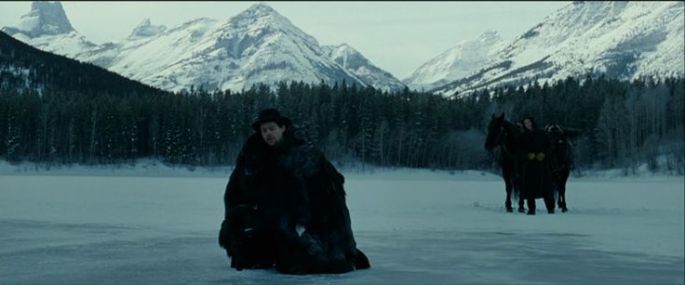
The Assassination of Jesse James by the Coward Robert Ford is essentially a psychological study of a murder and a murderer, and it doesn’t play to the many cliché western conventions that we’ve seen over and over again. Jesse James, played by an intensely focused Brad Pitt, is winding down his gun-slinging outlaw days in Missouri. His older brother, played briefly by Sam Shephard, has had enough of him, and James’s surly crew are growing tired and rightfully scared of their emotionally repressed boss, due to James’s increasingly erratic behavior. Local politicians and lawmen want James and his gang brought to justice, so they recruit the sketchy weasel Bob Ford (Casey Affleck, in a career making performance) to ingratiate himself into James’s gang with the hopes of bringing him down. James finds Ford awkward and odd, yet for some reason allows him into his life and home; the ideas of hero and celebrity worship are beautifully explored in many sequences. Meanwhile, the members of the James gang are all getting paranoid as they begin to feel that Jesse has them all in his sights; its house cleaning time and nobody will be spared. Not wanting to risk being ratted out, James sets out to kill every one of his followers so that nobody can double cross him. I am not spoiling anything to say that it’s too little too late, and by the time that Jesse’s fate is sealed, the audience is waiting with baited breath for the titular murder to take place on screen.
jj3

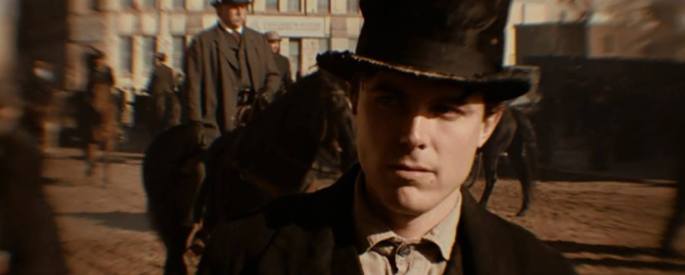
Affleck is absolutely amazing as Ford. It’s a highly specific, tightly coiled, slow burn performance that’s chilling to consider in all of its stratums. Before his work here, I didn’t know what to make of him as an actor, but that all changed while watching his magnetic performance in this film, and his other excellent performance from 2007 in Gone Baby Gone. He also did great work in the little seen Gus Van Sant film Gerry, which is absurdly undervalued. He had a very, very tough character to portray in The Assassination of Jesse James by the Coward Robert Ford, portraying a deeply unsympathetic man who the audience knows will end up killing Jesse James at some point in the narrative. Affleck brings a strung-out, beaten-down quality to the character of Ford, and as the movie progresses, you watch as he becomes more confident of himself, however false that sense of confidence may ultimately be, and how he starts to believe in his own madness and self-perpetuated lore. Just look at him as he spins stories and tall tales about Jesse James and his gang of outlaws; a quiet desperation seeps into the recesses of his eyes and it’s then you realize that Ford has been a lost soul for quite some time.
1

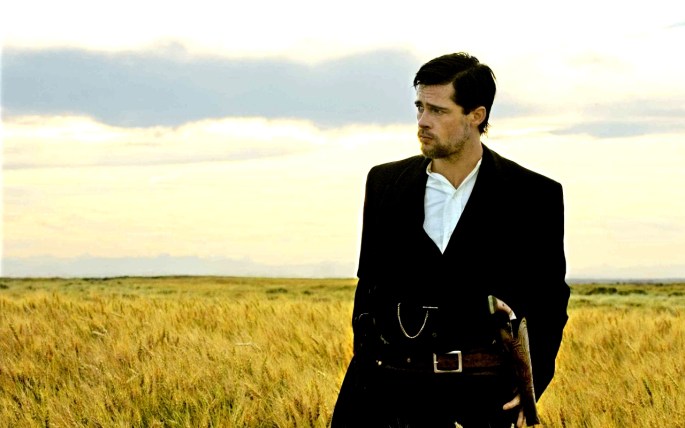
Pitt, owning the role of Jesse James totally and completely, brings a cocky swagger and a brutish masculinity to his performance that is awesome to behold. Prone to mumbling and not expressing his deepest thoughts, the character of James is a man of internal rage and sadness, and it’s easily one of Pitt’s most layered and interesting performances. For years, he’s been consistently underrated as an acting talent, with his overwhelming good looks having a tendency of blinding people from the fact that he’s got a reservoir of talent. And over the past few years, and sort of starting with his downtrodden work in this film, he’s been happy to subvert his pretty boy image in a series of down and dirty performances that keep pushing him further and further into character actor territory, despite the demands of the Hollywood star system. Just watch the way that Pitt slowly smokes his cigars and methodically moves his head and eyes from scene to scene in this film; it’s a wonderfully modulated performance that depends on silence just as much as it does explosive action. One scene, in which Pitt is seen sitting in a rocking chair in his back yard with a rattlesnake slithering over his forearm, is as creepy as it is profoundly majestic. There is a brazen, cavalier attitude to the performance; Pitt knows that Jesse was a psychopath and he doesn’t allow the audience the chance to warm up to him. Pitt is a movie star giving a totally un-movie star performance. In reality, Jesse James was a legend, a pseudo-celebrity before the era of tabloid magazines and paparazzi. So having an actor of Pitt’s stature playing him is a genius stroke of casting in and of itself.

007AJJ_Sam_Rockwell_022

The supporting cast is aces across the board, with Sam Rockwell registering best as Ford’s brother. This guy is so damn good—all the time—that it’s a crime he doesn’t get more attention. His work in Ridley Scott’s incredible conman flick Matchstick Men is still his finest performance, but he’s terrific here as well, providing sly comic relief and a sense of building anxiety that creates palpable tension within the gang of bandits. Mary Louise Parker, Paul Schneider, Jeremy Renner, Garrett Dellahunt, and a slew of excellent character actors round out the solid cast. What makes The Assassination of Jesse James by the Coward Robert Ford better than most films in the genre are the moral shades of gray that the characters exhibit. The film is basically about how one man comes to the decision to kill his idol, and in the crudest comparison, I guess maybe the movie is sort of like a stalker-thriller. Ford idolizes Jesse, wants to ride with him, wants to rob with him, and ultimately wants to be him. But the relationship that develops between the two men is awkward and volatile, giving off an un-easy feeling all throughout.
deakins

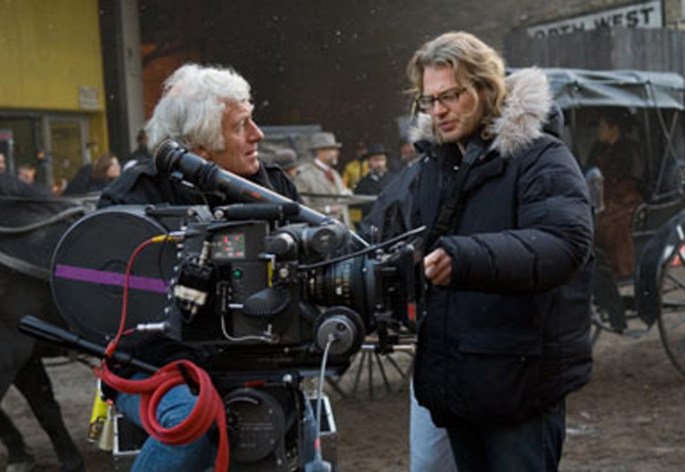
And then there’s the technical side to the film. The Assassination of Jesse James by the Coward Robert Ford has been put together with great style and tremendous atmosphere by the production team and crew. It’s a tone poem of sorts about a gritty, dark period in American history. It feels extremely intimate yet very epic due in large part to the stunning cinematography by Roger Deakins, who was double Oscar nominated in 2007 for his work here and on No Country for Old Men (he would lose the trophy to There Will be Blood’s Robert Elswit). Using what appeared to be natural light almost exclusively and an overall impressionistic shooting style composed of beautiful vistas, extreme close-ups, silhouettes, moonlight, train-light, and a gauzy effect similar to Robert Richardson’s brilliant cinematography in Snow Falling on Cedars, Deakins’s work here is simply astonishing. Every shot is perfect. No joke. I’m always attracted to the different ways that filmmakers can present their ideas through visuals rather than words, and with The Assassination of Jesse James by the Coward Robert Ford, Dominik and Deakins have earned their place in the company of some of the most striking visual teams to craft a major motion picture.

4

I fell in love with this film immediately. From the dry, matter of fact voiceover narration that runs over the entire movie to the obviously enormous attention paid to each and every shot, with moments of sublime beauty at almost every turn. It’s an art film set in the old west and when the story gets violent, it has moments of shocking brutality. In fact, one of the things that I loved about this film so much was the constant sense of dread and uncertainty that runs through each scene. Right from the start, you get the feeling that any character could meet their maker at any point. And that’s one of the things about the old West that made that time period so dangerous; people got killed in a heartbeat, over simple, mundane stuff. There are no big shoot-outs down at the corral and there are no crazily choreographed horse-chase sequences in this film. But when people get shot, it’s brutal and unflinching, not sensationalized or over the top, but rather grim and raw. Like what you’d see on HBO’s Deadwood. There are so many aspects to this film that I loved: the time Dominik took to tell his story, the gripping performances, the literate dialogue, the incredible scenery, and the breathtakingly perfect ending. The Assassination of Jesse James by the Coward Robert Ford is the kind of movie that makes me happy to be a film buff.
3


NOAH BAUMBACH’S THE SQUID AND THE WHALE — A REVIEW BY NICK CLEMENT

1

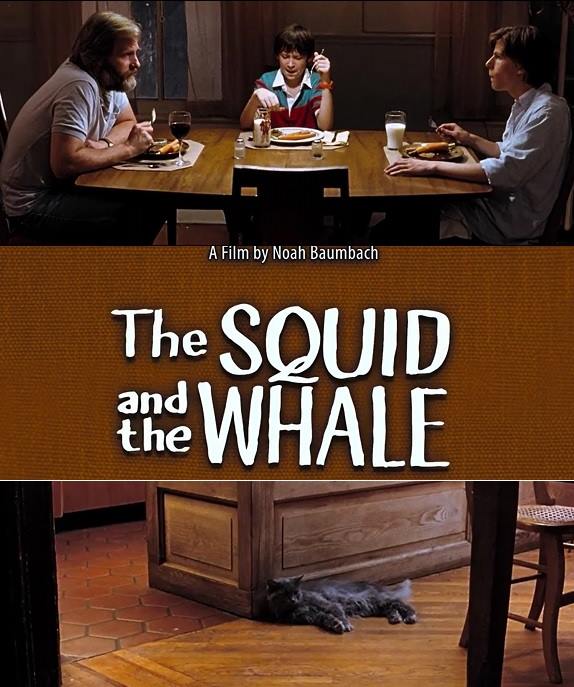
This film is a model of cinematic perfection. There’s not one wasted scene, one bad performance, or one false note. It all feels so heartbreakingly real and raw and honest. Noah Baumbach can sometimes be, especially in his earlier, darker films, an emotional sadist in disguise, and in The Squid and the Whale, he crafted one of the most painfully hilarious films I’ve ever seen. This is a work that I view at least once a year because it’s just so effortlessly brilliant, with an  acting ensemble that totally crushes the emotionally scarring material, and air-tight direction from Baumbach who clearly knew this story inside and out. Rumor has it that some of this script was informed by his real life upbringing, which if true, paints an even more distressing portrait of an artist working out his inner personal demons through his craft. Jeff Daniels was such a smart casting decision as the asshole father that it almost hurts to think about him in this film — he’s a monumental prick. Laura Linney was icy and incisive, painting a portrait of a woman fed up with all around her, longing for something that feels ever so slightly out of reach. Jesse Eisenberg as their oldest son was hugely effective here, and had terrific chemistry with Owen Kline, who played his fragile and damaged younger brother. The joke of casting William Baldwin as the tennis pro/lover to Linney was a stroke of comic genius (“My brother!” POWER), and the way Baumbach loaded every single scene with hostility, anger, and unexpected humor should be studied by all who are interested in black comedy and familial satire. This is a 100 Star Gem and a film that you should immediately track down if you’re unfamiliar. It is a masterpiece of filmmaking and storytelling.

JEAN-MARC VALLEE’S DEMOLITION — A REVIEW BY NICK CLEMENT

demo

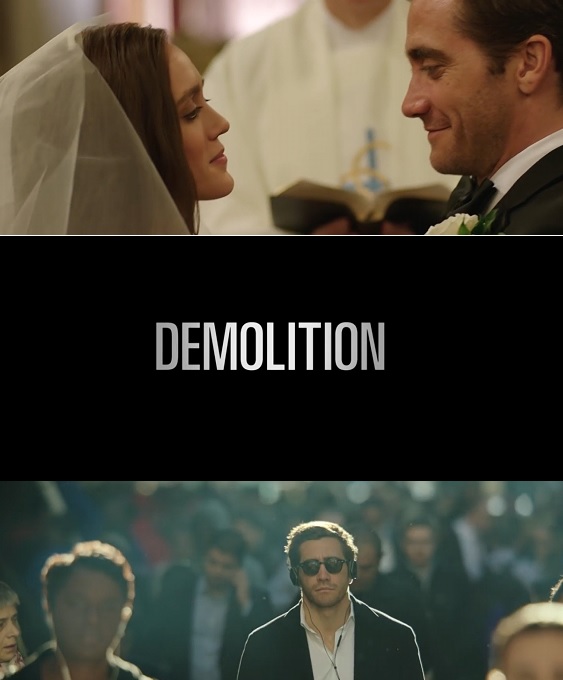
Demolition is “one of those movies.” I really admired this film, enjoyed it thoroughly, but only about as much as the filmmakers intended. This isn’t a happy or easy piece of work, which is probably why the critical response has been mixed, but I was struck by the honesty at play here, and how the screenplay presented an inherently flawed and rather unlikable lead character as the story’s entry-point, and how the film really centers on people in emotional flux, and how simple friendship can be the key ingredient to potential and hopeful catharsis. The more I think about the film, the more I really like it, but that’s not too surprising, because the director, Jean-Marc Vallee, has only made strong motion pictures (The Young Victoria, Dallas Buyer’s Club, and Wild) that are concerned with deep and complicated lead characters, and which allow for his actors to really cut loose and get invested in their roles. And in Demolition, the absolutely on-fire Jake Gyllenhaal delivers another robust, completely engaged and committed performance, this time as a young widower who has to actually learn to love his wife before he can begin to grieve. Bryan Sipe’s theatrical and movie-movie screenplay reminds in many instances of 21 Grams, and while not as overwhelming or pulverizing as Alejandro Gonzalez Inarritu’s picture, Demolition hits hard and often, with a tendency to show more than tell, which I really appreciated.

Vallee is a very visual filmmaker, given to quick-fire editing patterns in all of his work (the editing in Demolition reminds of the showier passages in Wild, which I loved), and here, by employing a very sleek visual aesthetic, he and his technicians were able to fully emphasize the money and the empty success that all of the characters have attained. Smoothly shot by Vallee’s regular cinematographer Yves Bélanger and crisply edited by Jay M. Glen who never allows a scene to go on too long, the film has a lightning-quick pace which is interesting considering the heavy dramatics that comprise the story. Chris Cooper is outstanding in his scenes with Gyllenhaal, and Naomi Watts is reliably effective as a woman who gets caught in Gyllenhaal’s orbit, and enters into a non-sexual, mutually beneficial relationship that helps the two of them get over some serious bumps in their lives. And in the film’s most surprising subplot, Gyllenhaal develops an interesting friendship with Watts’ son, played with sharp sass by Judah Lewis, which yields some unique laughs and moments of introspectiveness that were very surprising; all of this stuff could have served as the basis for an entirely different film. Demolition also contains one of the best and most subtle references to a likely college rapist in training, with the gross reminder that wealth and status can get you anything in this day and age. This is a purposefully frayed film with no easy answers, and because of that, I can certainly see how it won’t work for some. But for me, this is the sort of movie I’m always interested in experiencing.

LODGE KERRIGAN’S KEANE — A REVIEW BY NICK CLEMENT

keane_xlg

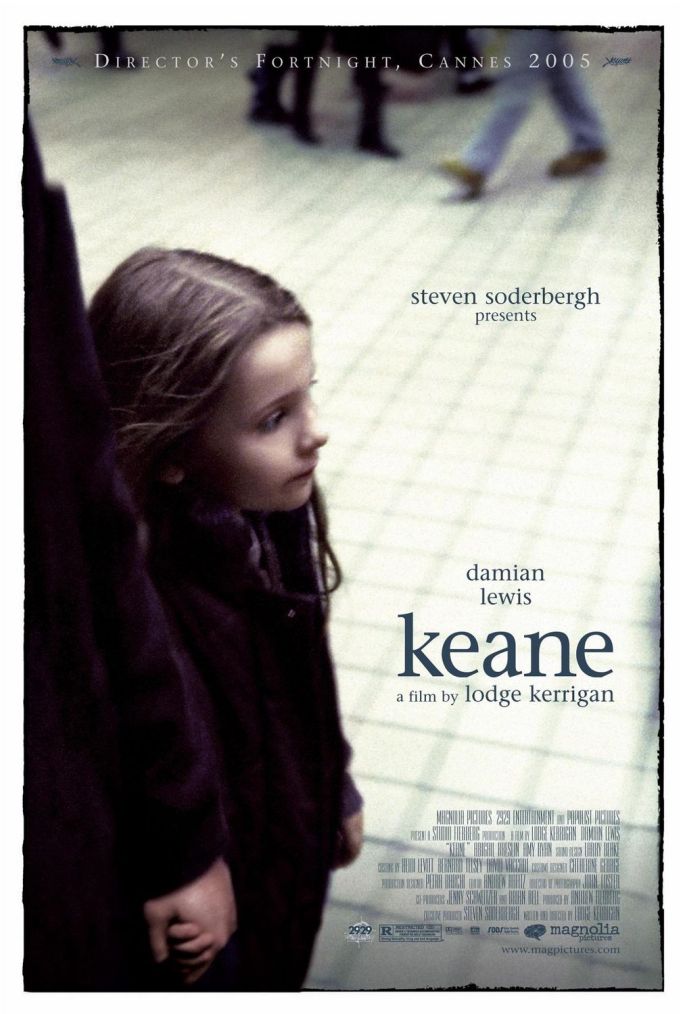
Unnerving doesn’t begin to describe Keane, a fascinating, immediately engrossing drama from 2004 that showcased an astounding performance from Damian Lewis as a schizophrenic man frantically searching for his lost daughter. Executive produced by Steven Soderbergh and written and directed by the erudite filmmaker Lodge Kerrigan (currently doing great work on the new Starz series The Girlfriend Experience, also produced by Soderbergh), the film is set in rather remote and unfamiliar NYC locations, and centers on a mentally fractured man who is attempting to piece together his life while trying to accep the fact that his daughter has been kidnapped. Complicating matters is a new and unique relationship that he forges with a seemingly despondent single mother (Amy Ryan) and her daughter (Abigail Breslin), which begins to push his emotional and psychological limits. This is a film of almost unbearable tension, with a central peformance by Lewis that amounts to nothing less than a tour de force. Kerrigan based the film on his own personal fear of having his daughter go missing, and in part on a movie he had filmed called In God’s Hands, with Maggie Gyllenhaal and Peter Sarsgaard, but which never got released due to technical difficulties with the film stock. Aesthetically, Keane is a remarkable achievement, with most shots lasting three to four minutes, and the entire picture being shot by cinematographer John Foster with hand held cameras that upped the immediacy factor. The lack of a muscial score also reinforced the seriousness of the entire piece. This is a shockingly low-profile item that is worth seeking out, but one that will challenge most viewers.

BARRY LEVINSON’S WAG THE DOG — A REVIEW BY NICK CLEMENT

wag

I can vividly remember the opening night for Wag the Dog – it was back in 1997, I was in high school becoming a budding film lover, and I went with a group of friends to see this bitter black comedy about Hollywood and politics and I can remember being one of the few people who outright loved it upon first glance. It was very topical material at the time, and still is today, with razor-sharp satire always at the forefront, and a whiff of pompous know-it-all-humor that probably alienated many people. Energetically directed by Barry Levinson and co-written by Hilary Henkin and David Mamet, Wag the Dog centers on a presidential sex scandal, and the Washington DC-based spin doctor (Robert De Niro, wonderfully affable and light on his feet) who is called in for crisis management by the White House. His idea? He’ll start a fake war with Albania and spread various media rumors and lies in an effort to deflect the country’s attention from the real scandal at hand. De Niro enlists the help of an aging, full-of-himself Hollywood mega-producer, perfectly played with smarmy glee by a bronzed and absurdly coifed Dustin Hoffman, who brings along his various production contacts so that he can “produce a war” that nobody will ever realize is fake. And one that he can, rather frustratingly, never tell anyone he had a part in creating.

The comic mileage that’s derived from this ironically painful fact for Hoffman is a constant source of hilarity all throughout this happy-to-be-mean little movie. An amazing supporting cast rounds out the brittle edges of this scathing media takedown, with Anne Heche, a diseased Woody Harrelson, rapid-fire Dennis Leary, Willie Nelson, Andrea Martin, John Michael Higgins, David Koechner, William H. Macy, and Kirsten Dunst all showing up for memorable cameos and bit performances. But the black heart and acidic soul of this punchy little movie belongs to the amazing team of De Niro and Hoffman, who both seemed to be in love with the idea of occupying the same space as one another, generating tremendous chemistry, and letting the zippy screenplay do most of the heavy lifting. Mamet and Henkin’s script throws out a variety of nastily barbed zingers, and Levinson’s snappy direction is in perfect tandem with Robert Richardson’s agile, hot-white cinematography. Also, the idea that this movie was released exactly one month before the Monica Lewinsky scandal broke is just too wild to contemplate.