NOAH BAUMBACH’S MISTRESS AMERICA — A REVIEW BY NICK CLEMENT

misstress america

After taking precise and damaging aim at family dynamics and interpersonal friendships in his early films (Kicking & Screaming, The Squid and The Whale, Margot at the Wedding), the astute and continually subversive filmmaker Noah Baumbach has recently switched gears a bit, with his acerbic sights set on wandering souls, millennial culture and societal expectations, with Greenberg, Frances Ha, While We’re Young, and most recently, Mistress America, forming some sort of thematically linked quartet. Co-written with co-star and wife Greta Gerwig, who knows how to play aimless, flighty and oblivious to an almost scary degree, the film charts the sideways struggle of a college freshmen named Tracy, played by the interesting actress Lola Kirke, who is seeking comfort and reassurance during an awkward, transitional period in her life. She’s a directionless student who has a hard time getting motivated, with her general apathy becoming challenged by her future stepsister Brooke (Gerwig), a free spirit and seeming jack-of-all-trades, a thirtysomething desperately wishing she was still a twentysomething, who jumps at any chance she can get to take an easy way out, clinging to anyone who might be able to help to continue keeping her afloat.

But at first, that’s not how Tracy views Brooke; she becomes emotionally smitten with her, looking up to her as a sort-of role model, until the picture becomes achingly clear: This is a person who hasn’t a clue how to live life. Baumbach loves to crush his targets with dry wit and harsh observation, and the way that he peels back the inherent phoniness of an entire generation of people with their constant “Me-Me” attitude speaks to his determination to portray cinematic millennial malaise in a way that few filmmakers have tried. Always critical of his characters and never interested in tying matters up with a neat bow, Baumbach and Gerwig’s script zeroes in on the situational aspects of the narrative (the screwball midsection is a highlight), and allows reflective character moments and dramatic beats to swim to the surface. This isn’t a flashy movie or attention getting from an aesthetic perspective, but rather, Baumbach wants his slim but potent film to rest confidently on its words and its message, which is often extremely funny in an all-too believable manner.

PTS PRESENTS: 15 QUESTIONS WITH OSCAR NOMINATED FILMMAKER LENNY ABRAHAMSON

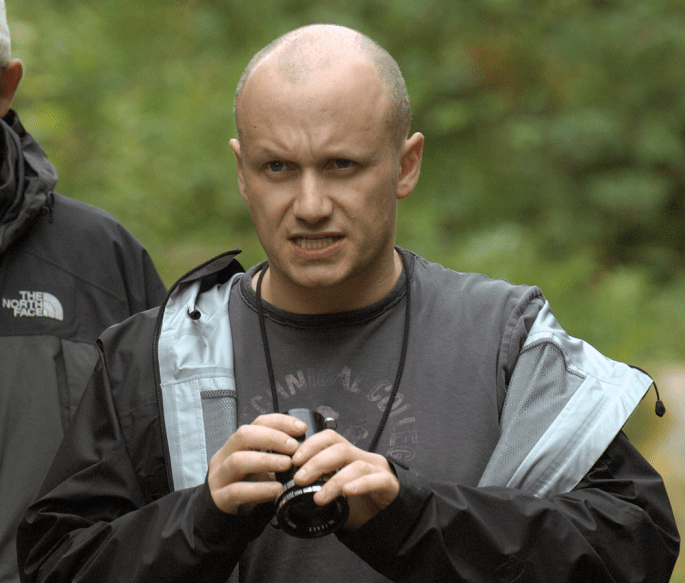
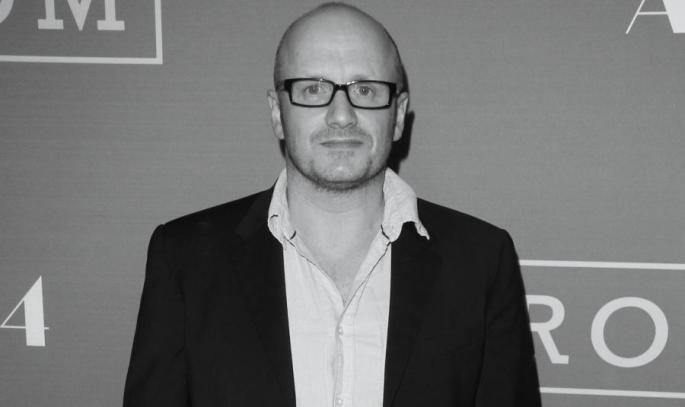
In a very short period of time, rising star filmmaker Lenny Abrahamson has crafted an exceptional and challenging body of cinematic work, with his most recent film, the Oscar winner Room (Brie Larson, Best Actress), becoming one of the most celebrated pictures from 2015, with Abrahamson receiving a nomination for Best Director. He recently spoke with Nick about his career, his inspirations, the success of Room and Frank, his Irish roots, and what’s in store for the future. We hope you all enjoy!
lenny banner

I just wanted to say, at the start, what a fan I am of the film Frank. That movie totally took me by surprise and to see your further cinematic progression with Room is really striking. I tell everyone I know to see Frank. It’s really not like much else I’ve seen.

Lenny-Abrahamson-directing-Frank

Thank you very much! Yeah, we got lucky with Frank, that was something that was very unique, and to have Fassbender involved meant that this challenging little film might get a proper audience. The script was perfectly balanced, and the material really resonated with me.

Lenny-Abrahamson

You rose through the ranks io the Irish film industry, which is a country having a major cinematic boom right now. What’s it like to be a part of this new wave of talent?

I’ve been very lucky to be supported by the Irish Film Board, the IFB, and because of them, myself and so many other filmmakers have been given a chance to make films and tell interesting stories that mean something to us personally. That’s what’s so interesting and I think real about Irish cinema – a lot of it seems to be coming from the heart, from an honest place. It’s increasingly harder to find proper financing for films and the most interesting filmmakers need outlets to tell their stories in their own personal way. The IFB is known to nurture and develop talent, allowing filmmakers to find their voice.

richard did

How important is Irish cinema to you?

Oh it’s very important. My first film was entirely made possible by the IFB, with my initial three films all being shot in Ireland. My filmmaking career was certainly born out of my experiences growing up in Ireland.
Lenny-Abrahamson

Were you a film buff growing up?

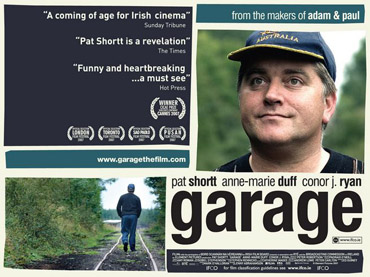
When I was growing up I had a lot of interests, and I came to film and filmmaking later than most. I guess I was most attracted to classic European films, filmmakers like Fellini and Bergman and then the big Hollywood blockbusters like Indiana Jones and Star Wars and Jaws, the films I’d watch with my friends. John Cassavetes was also of interest, and I can remember becoming obsessed with The Killing of A Chinese Bookie. That was a film that made a big impact on me when I started to take cinema seriously. 
garage370

Are there any filmmakers who made an impression on you when you first started to look at cinema in a serious way?

Absolutely, yes, Jim Sheridan and Neil Jordan – their work really spoke to me, and still does. They’ve been able to work in Ireland and in Hollywood, going back and forth between small and large projects, movies with big stars and big subject matter and then smaller films that clearly have felt more personal and organic. Those two have had fabulous careers.

Frank-Sidebottom-film-still-770

How do you feel about the longevity of the Irish film landscape?

We are in a great spot right now. We have a serious opportunity to create an even more substantial industry that’s already been put in place. The cinematic voices right now are strong and confident. I’m genuinely excited about it. I mean, you’ve got people like Terry McMahon on one end, and John Carney on the other. It’s a vibrant scene right now and it doesn’t seem likely to fade away anytime soon. And I think a crucial role to the success of our industry at home is the role of the Irish government.

Michael Fassbender as Frank

Jumping back to Frank for a moment — it’s such a startling film that hits a lot of interesting tonal notes and goes to some unexpectedly sad and dark places. What was it like when you discovered this project?

The script was so incisive without ever feeling preachy, and that was something that I loved about the project and attracted me to the material. It’s a sad movie but one with a big heart and my hope is that the idea of love and acceptance was conveyed. We always knew it’d be interesting, with Fassbender under that mask, so I guess my goal was to make it as emotional as possible.

room

What was your first reaction to Room?

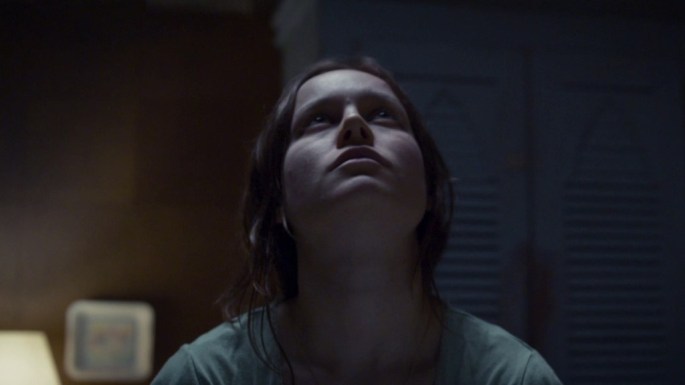
I was bowled over by it, totally emotionally on the hook and devastated. But in the best sort of way. It’s the type of project that could mean one thing to one filmmaker, and quite another thing to a different filmmaker. It’s how Emma O’Donaghue wrote it. The script afforded me the chance to get very visual, which is an area I am very interested in, how to communicate ideas visually, while still allowing for the performance to shine through.
room-brie-larson

Brie Larson is magnificent in this film, and after her incredible work in Short Term 12, feels like a true star in the making. What was it like working with her?

She’s just sensational. Really. She can do it all. I was in awe by her every day on the set, and her level of commitment and dedication to her character was so laser precise as to almost be scary. I am just so happy and surprised about the success of Room, and Brie was a huge part of everything positive with this project.

tremblay

And working with Jacob Tremblay – how did he respond to direction and the intensity of the material?

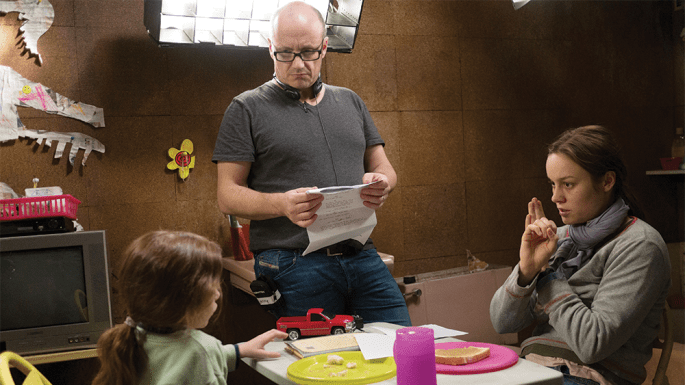
He’s an amazingly intuitive young actor, and he brought an incredible amount of maturity to the shoot. Watching him interact with Brie was fascinating on one hand, and sort of sad on another. I don’t think I was prepared to see them bond in the way that they did. If he decides to continue acting, the sky’s the limit for him.
1

Were you worried that, despite being based on a popular book, it would have a tough film to sell to large audiences?

Things rarely go this well with a movie this challenging. For Room to be found by a large audience I think speaks to the material and the performances and the universal quality of the story. Making a film that’s based on a popular book is an interesting proposition, and in this case, we were certainly embraced by those dedicated original fans.

A24_Films_logo

What was it like working with A24? They’ve established themselves as one of the premiere film companies right now, with a slate of movies that can be described as nothing less that tremendous.

A24 made a serious investment in all of us, before they even saw a finished script. With a company like them, one that’s young and energetic and hungry for great material, it was a match made in heaven. They kept plugging away, carefully building our audience.
 black and white

Given that you’re a filmmaker with intrinsic ties to the Irish film community, how do you feel right now, overall, about your home country’s film landscape?

Oh, I’m very excited by it. It’s a very vibrant scene right now, with tremendous storytelling talent being cultivated. I don’t think this upward trend is going to fade away anytime soon. I think there’s a big and crucial role that our government can play in the success of the industry back in Ireland, and right now, because of so many serious voices, we have a real opportunity to create a major and lasting industry. People are very excited because of the investments being made by the government in our industry.

room on set

Do you find yourself attracted to Irish stories or Irish material?

I gravitate towards anything that I find compelling on a human scale, whether that’s a story set in Ireland or one set elsewhere. I see myself as a filmmaker who is able to make films in the states and back at home. Irish stories tend to be a bit more intimate and small, sometimes more personal. And those are the Irish stories that interest me the most.

element-pictures1-300x71

What do you have coming up in the near future, anything you can share?

I’ve got another picture with Element Pictures, who I worked with on Room, that we’re developing. It’s an adaptation of a book that’s being written called The Grand Escape. It’s a WWI story, something very different than Room and my previous films, but a true story that I feel is very cinematic. I’m very excited about it. I’m also working on a boxing film called A Man’s World. I look forward to new challenges.

lenny banner

NICOLAS WINDING REFN’S VALHALLA RISING — A REVIEW BY NICK CLEMENT

VR

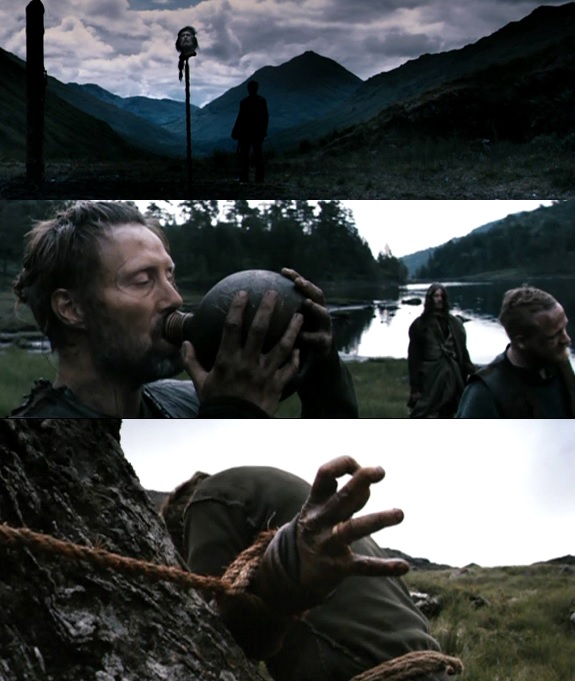
Meditative, head-splittingly violent, and narratively trippy, Valhalla Rising, from auteur in the making Nicolas Winding Refn (Bronson, Pusher, Drive), is not your grandfather’s Viking adventure. Centering on a one-eyed mute warrior-slave, stoically played by Refn’s go-to-guy Madds Mikkelsen in a tremendously forceful performance, who has to fight in order to stay alive while under capture, Valhalla Rising is like some sort of acid-trip nightmare come to life. It appears to have been filmed literally at the edge of the fucking earth, the musical score is brooding and unsettling, the violence is shocking, repulsively awesome, and at times very tough to watch, and the lyrical, loopy narrative takes any number of creative liberties and sojourns. This isn’t an A to B to C type endeavor with a concrete finale that ties everything up – far from it. Very similar in tone and spirit to Ben Wheatley’s black and white descent into madness A Field in England, this is challenging, and for some, frustrating cinema.

Refn isn’t out to coddle or make it easy for his audience, sometimes daring you to look away, and forcing the viewer to take this journey into hell along with a group of disgusting savages. But there’s also a beautiful poetry to his brand of ultra-violence, and when put into historical context (the Vikings weren’t a gentle bunch of explorers), one gets the idea that the brutality shown on screen would have likely been on par to what might have gone down back in the day. He wants you to think and while he makes you think he’s going to screw with your head while bashing it in with a smile. Valhalla Rising feels like a Terrence Malick film crossed with a little bit of Werner Herzog and then a dash of Jerry Bruckheimer thrown in with a sprinkle of psychological horror and a pinch of existential journey and a side order of hallucinogens. It’s like nothing you’ve ever seen and for that fact alone it should find its way into your viewing cycle soon if you’ve never experienced it. And trust me, experience is the operative term with this intense, harshly gorgeous, instant cult classic.

WALTER HILL’S THE WARRIORS — A REVIEW BY NICK CLEMENT

warriors

Walter Hill’s The Warriors is a fever dream action thriller, made at a very specific juncture in American pop culture history, as one radical decade of filmmaking was ending, with the start of something new forming in a period that would reinvent the expectations of the studio blockbuster and pave the way for more independent modes of filmmaking. The influence that Hill’s energetic and extremely entertaining film has had on filmmakers over the last 30 years can’t be ignored or denied; it’s been riffed on in numerous other films, and remakes have been proposed more than once, only to rather wisely fall apart (even with Tony Scott at the helm of one reimagining at one point). The streamlined plot played to Hill’s extreme strengths as a visual storyteller, as he’s always been a director obsessed by visual texture and the ways that a bold image can tell a story without the need for many words. Look at his body of work as a whole and just ponder some of the classics on his filmography; if there’s another once major American filmmaker deserving of career reconsideration it has to be Hill.

The Warriors rightfully sits near the top of his greatest accomplishments, if for no other reason than it served as a socio-political wake-up call in the form of filmed entertainment, taking the issue of gang violence and vigilante justice and tweaking the formula, with Hill taking bold chances with the terse screenplay he co-wrote with David Shaber, which favored forward physical momentum with the energy of rock and roll and comics. Andrew Laszlo’s muscular and endlessly stylish cinematography brought out an almost hallucinatory quality to the nighttime NYC streets, while the infectious musical score by Barry De Vorzon set a spirited yet dangerous tone right from the start. And the vintage cars and flashy costumes totally seal the aesthetic package. Hill would release an expanded Ultimate Cut in 2005 on DVD, which would include scene transitions done in the style of comic book panels, as this had always been his original intention. At the time of its release, critics came down harshly on the film, criticizing the violence and spectacle, but over time, the film has earned a massive and deserving cult following, despite actually being a box office hit to the tune of $22.5 million dollars.


TIM BURTON’S MARS ATTACKS! — A REVIEW BY NICK CLEMENT

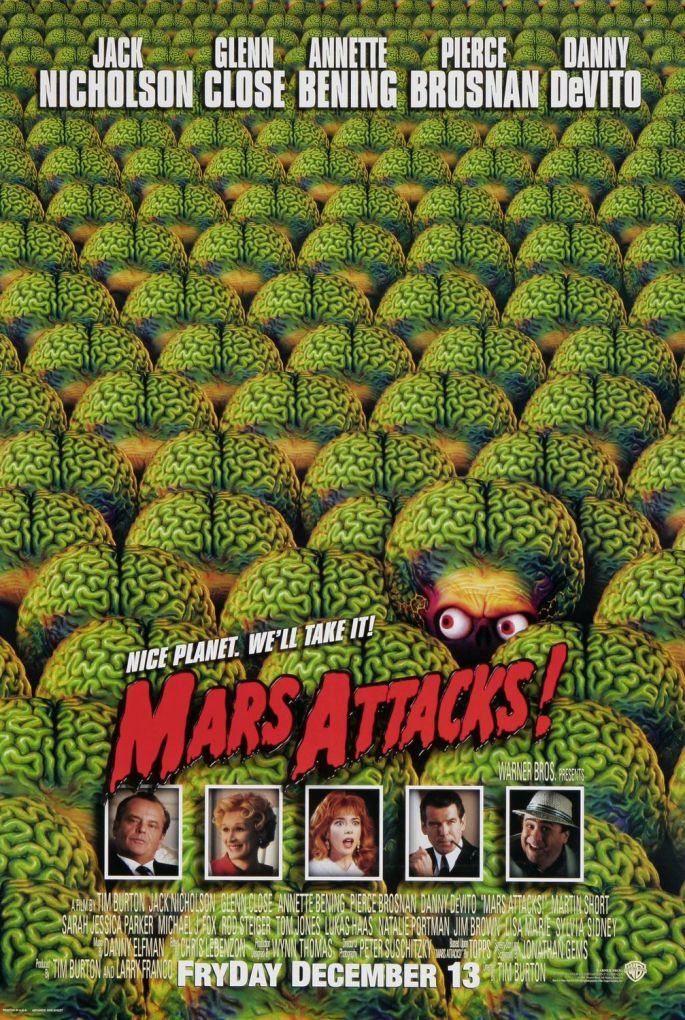
mars_attacks_ver1_xlg

This movie makes me happy. It makes me laugh. It leaves me with a fat grin on my face every time I see it. Jack Nicholson as POTUS and a sleazy car salesman in the same film! I can remember seeing this bit of craziness on opening night 20 years ago (this December!), hot on the heels of Independence Day, and holy moly this was NOT ID4. Laying a fat egg at the domestic box office, Mars Attacks! remains one of Tim Burton’s most underrated and underappreciated films. It’s a hoot and a holler, completely entertaining, with its tongue planted very, very firmly in its cheek. It’s silly, it’s reverential, and it looks absolutely fabulous in a purposefully low-tech and kitschy manner. The playful score by Danny Elfman is one of his best, the opening title sequence is an all-time classic, and the absurdly star studded cast is a roll call of the likes that is rarely seen outside of one of the old-school Irwin Allen disaster films.

The film had a very long development process, with names like Alex Cox and Martin Amis taking early and separate stabs at the property, which was famously based off of the 1950’s era Topps Trading Card series, before final screenwriters Jonathan Gems, Scott Alexander, and Larry Karaszewski put the finishing touches on this most ridiculous and clever and all together wild film. In retrospect, it’s very easy to see how this material must’ve set Burton’s world on fire, as it was a chance for him to make an outsized version of an Ed Wood movie, and given his love for that iconic filmmaker, seems almost like one of the most expensive personal love letters that a director has ever made.

The visual design of the aliens is aggressively awesome, I love the fact that they only say the phrase ACK-ACK, and when their heads explode inside of their space helmets – priceless! It’s a pity that critics couldn’t just embrace this film for what it was and have some fun, as they seemed eager and almost happy to pounce on this back in the day. And audiences weren’t likely expecting the light and breezy and absurdist tone, especially after the traditional heroics and bombast from Independence Day just a few months earlier. Mars Attacks! is a film that I could watch any day of the week, and whenever I come across it on the movie channels, I almost always have to pick it up in progress, as it’s never not a delightful pisser.

NOAH BAUMBACH’S WHILE WE’RE YOUNG — A REVIEW BY NICK CLEMENT

1

In film after film, writer/director Noah Baumbach continues to ask us to observe complicated, truthful, stressed out people who are looking for clarity in their lives and who make decisions that sometimes aren’t the best way to go. While We’re Young is incredibly funny without ever resorting to stupidity to earn those laughs, with a barbed screenplay that has one terrific line of dialogue after another, all of it witty and clever and all too knowing. The open contempt that’s ladled on our parent-child-obsessed society and the millenial generation was bracing and critical and hilarious. The final moments of the movie sting with the harsh truths of where the youth of today are headed. Without spoiling anything, this is the story of two couples, one in their early 40’s and the other in their early 20’s, and how their paths cross, and how everyone slowly realizes just how out of touch they all are with those around them. Ben Stiller is great here, doing more great work for Baumbach after his pained and stinging performance in the monumentally underrated Greenbergh, in total synch with the material, as was Naomi Watts, who delivered an emotionally complex performance which registers as one of her best. And Adam Driver continues to prove that he’s a reservoir of comic talent in so many unique ways, presenting a character that’s equal parts off-putting and weirdly engaging.

Cynical, intelligent, dry as the Nevada desert, and consistently funny both in a laughing-out-loud and LQTM manner, this is Baumbach’s finest overall effort since The Squid and the Whale (I’ve still not seen Mistress America but that disc is on its way from Netflix). I love how incisive his writing is, how he’s able to get great dramatic work out of Stiller, and how he loves to make us squirm in all the best ways. Oh, and it’s a total pisser to see Beastie Boy Adam Horovitz absolutely nail his supporting role. And it goes without saying, Charles Grodin POWER, as he completely steals every single scene he appears in. Thanks A24 for yet again providing us with another EXCELLENT movie that has something relevant to say, doing so with class and integrity. For me, this is a virtually faultless film, with one fantastic scene after another occurring, spiked with great writing and observant direction, a work that’s sad and funny in equal measure, with its finger on the pulse of a generation of people who don’t exactly know what to do with their lives.

ROGER MICHELL’S VENUS — A REVIEW BY NICK CLEMENT

1

Roger Michell’s Venus is a tender, beautiful little film featuring an exquisite performance from Peter O’Toole as an eternal ladies man who finally meets his match. Written with grace and sensitivity by Hanif Kureishi, who also collaborated with Michell on the similarly underrated Daniel Craig drama The Mother, O’Toole was provided with a terrific late career role as a veteran actor who spends his time hanging out with his buddy, played by Leslie Phillips. But when O’Toole meets his best friend’s grand-niece, the lovely if unrefined Jodie Whittaker, a spring snaps back into his step, as he spends his time courting her and trying to show her all that life has to offer. That this film examines a relationship, in all of its forms, between a very old man and a very young woman, some might question the intent of the storytellers, or the believability of the scenario being posed.

But because Kureishi’s screenplay was so compassionate and understanding of people’s inherent problems and desires, you’re able to relate to both O’Toole and Whittaker, and understand the mutual attraction that develops between the two people. Where it all goes is for you to discover, but I loved how this movie wasn’t content to play it fully safe, and I admired how it had the stones to present the story exactly how it was presented, seemingly unafraid by the idea that it might be deemed “icky” by some. Whittaker is excellent, sharing terrific chemistry with O’Toole, while communicating much with her expressive, soft face that amplifies her reactions to O’Toole’s numerous advances.

For comparison, one should really make this a double feature with 2003’s The Mother, as that film explores the shifting dynamics between a woman in her 70’s as she falls in love/lust with a man in his 30’s. I’ve long been a big, big fan of Michell’s filmography. Notting Hill is one of the better and more enjoyable romantic comedies of my lifetime, and Enduring Love is a totally brilliant piece of sinister work that far too few people have seen. Hyde Park on Hudson was naughty fun and Le Weekend was a total delight from start to finish, even if the narrative took a few dips into emotionally turbulent waters. And I’ve written in the past about my love for Changing Lanes, as morally complex, adult-minded, 70’s flavored dramas like that one are rare. And that’s why I’ve always responded to Michell’s work; he’s smart, he’s stylish, he’s thoughtful, and his movies don’t follow along the cookie-cutter dotted lines.

STARZ PRESENTS: THE GIRLFRIEND EXPERIENCE — A REVIEW BY NICK CLEMENT

GFE

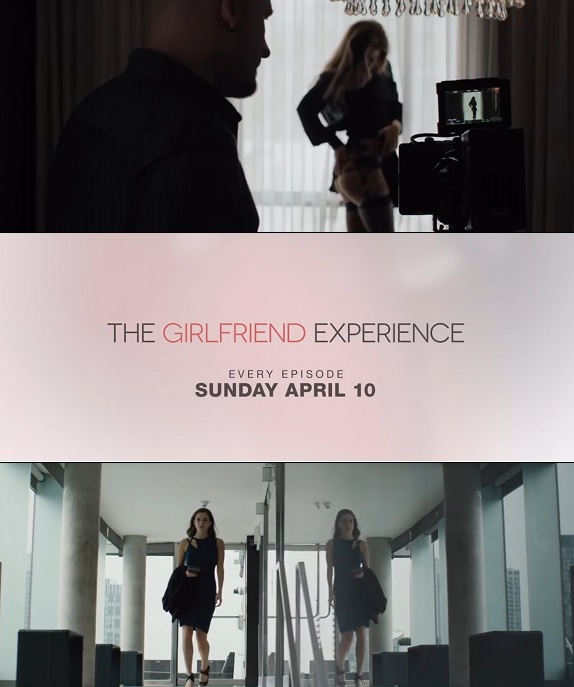
Based solely on the first two 30 minute episodes of the new Starz series The Girlfriend Experience, one immediately gets the sense that they’re watching the next super-hot television item. The TV landscape has changed drastically over the last 10 years, with an amazing amount of diverse creative talent headed for shows at  boundary pushing homes like AMC, FX, Showtime, and HBO, with Cinemax and Starz recently upping their game considerably, not to mention the various contributions from Netflix and Amazon and Hulu. So, it’s no surprise that when you have indie iconoclast Steven Soderbergh on board as executive producer (his 2009 film serves as the basis for this provocative new show) and the incredibly smart and talented team of Amy Seimetz (director of the excellent and vastly underrated Sun Don’t Shine, co-star of mind-bender Upstream Color) and Lodge Kerrigan (writer/director of the incredible film Keane) as show runners, that the end result is going to be compelling and stylish. Seimetz and Kerrigan have written every single episode together, and have alternated with the directing chores, thus preserving a unified vision. The preciseness to their storytelling is crystal clear, and because there aren’t too many cooks in the kitchen, my guess is that the show will have a uniformity akin to works like True Detective: Season One, The Knick, and Fargo: Season One.

The Girlfriend Experience is style informing its content, and vice versa, using its emotionally detached characters as guides through a twisty and morally shaded narrative which is all fueled by a minimalist visual aesthetic, all sleek surfaces and glistening edges. Riley Keough (Mad Max: Fury Road) is the very definition of alluring as Christine Reade, a gorgeous young law student who has just scored a major internship at a big city firm, but who also moonlights as a high-end escort, getting pulled into the scandalous world by her friend. As with any 13 episode series, so much is possible, and I’m betting that anyone who watches this sexy new show will get immediately engrossed by all of the elements at play. The way that Seimetz and Kerrigan consistently upend the audience’s expectations about power and sex and desire is clever and necessary, and because the show is told through the female POV, it acts as a form of liberation for the female viewer, and likely something close to male fantasy for a great number of guys at home. Watching an actress like Keough, who is both incredibly easy on the eyes and yet suggestive of something much deeper than outward great looks, should be quite rewarding, as she’s a relatively new talent, carrying zero baggage from other projects, and has been given a role that has serious dramatic potential. And the inspired choice of Shane Carruth (the enigmatic writer/director/composer of Upstream Color and Primer) as composer adds yet another key artistic ingredient, as the music fits snugly in line with that of Ross Godfrey, who handled scoring on the film that inspires this saucy new program, and that of the sounds from Soderbergh’s own show The Knick, which is scored by his long-time collaborator Cliff Martinez. Intriguing, sexually adventurous, and likely to generate worthy discussion after each episode airs, I can immediately tell this will be my next TV addiction.


MYROSLAV SLABOSHPYTSKYI’S THE TRIBE — A REVIEW BY NICK CLEMENT

1

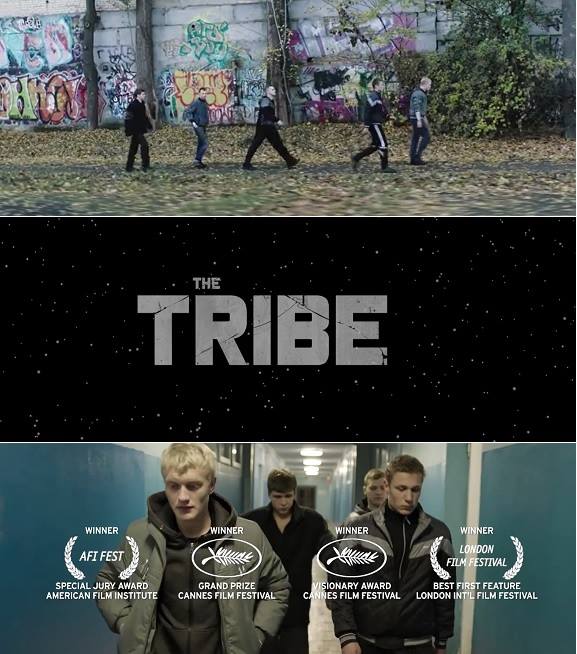
And the award for the Happiest Movie Ever goes to The Tribe, a two hour and 11 minute Ukrainian film told entirely in sign language with zero subtitles, all shot in piercingly clear 2.39:1 widescreen on 35 mm film, primarily on a stedicam in wide shot, and consisting of numerous, extremely protracted takes where time feels scarily infinite. This is one of the more disturbing films I’ve seen, casually cruel, extraordinarily hostile, and made all the more troubling because I really believed it. All of it. It’s sad, it’s dispiriting, it’s hugely challenging, and by the end, totally and undeniably fascinating and astonishing. Honestly, I’ve never seen anything like it before, I’m not sure I ever need to see it again, and in terms of taking me to a place that I’ve never been and plunging me into a story I could never anticipate, The Tribe succeeds in ways that few films rarely do.

The fact that this film is the debut for writer/director Myroslav Slaboshpytskyi sort of defies logic, as it’s a piece of work that feels beyond confident and suggesting a long and studied sense of storytelling. And for the film’s producer, cinematographer and editor, Valentyn Vasyanovych, it’s a piece of nearly peerless filmmaking, with shots that seem to last for an interminable amount of time, daring you to look away, and highlighting some of the most intense sequences of sexuality and emotional and physical violence that I can remember seeing outside of a Gaspar Noe film. After premiering at the Cannes Film Festival, The Tribe won the Nespresso Grand Prize, the France 4 Visionary Award, and the Gan Foundation Support for Distribution Award at the 2014 Cannes Film Festival’s International Critics’ Week.

Set in an unnamed and absurdly decrepit boarding school for deaf children (where adults are seemingly non-existent) and starring a group of unprofessional, mostly first time actors who don’t ever seem to be “acting” in the truest sense of the phrase, the narrative focuses on a new male student who quickly and shockingly learns about the hierarchal nature of the school’s social food chain, which involves any number of illicit and illegal activities carried out by various gangs, including prostitution, robbery, thuggery, and possibly worse. Things get very complicated when he falls in love with one of the girls that he’s been assigned with pimping, thus setting off a chain of events that escalate in intensity and degradation. If what I am describing sounds like some sort of endurance test, well, it is, on any number of levels.

Because the vast majority of people who will see this film won’t be deaf, watching a film told in sign language with no overt explanation forces you to observe the action and story in a very different way; the engagement level becomes more observational, especially when considering the rigorous aesthetic set in place by the filmmakers. And given that Slaboshpytskyi isn’t deaf himself, there’s a massive curiosity factor that arrives with this punishing film experience; what possessed him to tell this particular story in this particular fashion? There’s an abortion scene to rival the stuff show in 4 Months, 3 Weeks, and 2 Days, and the film’s final sequence, which, to my eye, was one extremely long and unbroken shot, involves a level and form of violence that’s so startling that it can’t help by elicit a dark laugh. You’ll just have to see it to believe it, and trust me, if you consider yourself a film buff, this film is the very definition of a must see. Available on Blu-ray from Drafthouse.

UNCOMMON VALOR — A REVIEW BY NICK CLEMENT

uncommon_valor

This is a real steak and potatoes action film, hold the romantic subplots, with a few side orders of testosterone and piss and vinegar on the side. Blunt, absurd, and frequently entertaining, Uncommon Valor is the sort of 80’s action film that would be tough to get made these days. The men-on-a-mission narrative centers on a retired United States Marine Colonel (Gene Hackman) who believes that his son is still being held as a POW in Laos after the Vietnam War has ended. After getting funded by a rich oil tycoon (Robert Stack) with a missing son of his own, Hackman enlists the help of a group of ex-military personnel and old war buddies of his son, including Fred Ward, Randall “Tex” Cobb, Reb Brown, Michael Dudikoff, Patrick Swayze in a very early role, Harold Sylvester, and Tim Thomerson. If that’s not one of the most masculine casts of cinematic beef then I don’t know what is. Directed with square-jawed efficiency by Ted Kotcheff (Wake in Fright, First Blood, and North Dallas Forty, to name just three) and written with predictable heroics by Joe Gayton (from a story concocted by Wings Hauser), the film features a rousing musical score by James Horner, and sinewy, slow-motion enhanced cinematography by the extremely talented and underrated Stephen H. Burum, who was Brian De Palma’s frequent collaborator behind the camera, and a truly versatile cinematographer, having dipped his cinematic hands into a variety of genres (Body Double, Snake Eyes, Mystery Men, 8 Million Ways to Die, The Shadow, Hoffa, and The Untouchables are just a few of his insane credits). Released in December of 1983 with Vietnam still visible in the rearview mirror, the film would become a solid box office hit, likely capitalizing on the inherently compelling scenario and the film’s numerous and extremely well handled action sequences. The opening act is a little choppy from a directorial stand point, but once this film finds its footing, it hits hard and often, and even if the entire film is just a tad over the top, it’s that special sort of 80’s over the top which feels downright quaint today. The U.S. military apparently refused to help the production due to the perceived anti-government slant to the script. Produced by John Milius, Michael Tolkin, David Brown, and Buzz Feitshans.