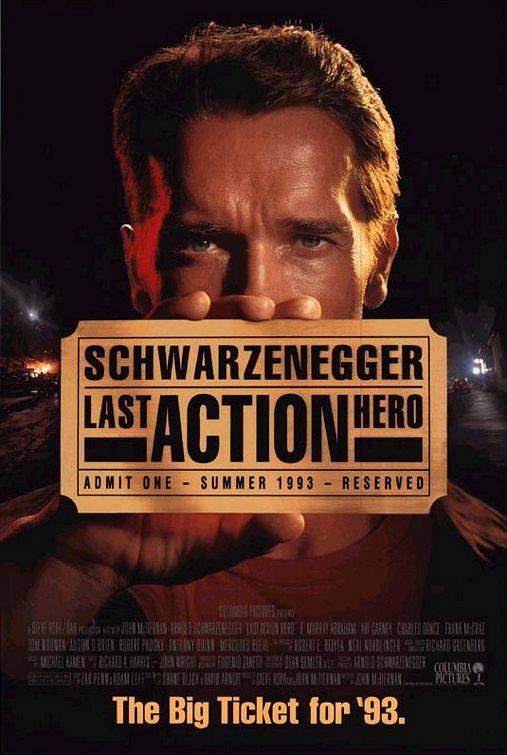
JOHN MCTIERNAN’S LAST ACTION HERO — A REVIEW BY NICK CLEMENT

1

I’ve seen this film 150 times. I can’t help but watch it whenever I find it playing on one of the HD movie channels. It’s never not hysterical and amazingly entertaining. Shane Black and David Arnott’s endlessly witty screenplay, which was based on an original script/story by Zack Penn and Adam Leff, was WAY ahead of its time. Back in 1993 people weren’t interested in satirizing the action movie genre; if this film got released today (and not up against Jurassic Park!) it does a lot better than it did. Critics waited with sharpened knives for this one, and never even tried to give it a chance. Fine, the kid is annoying, but I think that was part of the plan – the character is one of many constructs that the filmmakers sought to deconstruct. Arnold is VERY good here – sly, self-effacing, totally in on the joke. John McTiernan’s muscular sense of action (lensed by the great Dean Semler) is on display the entire time, with some really awesomely over the top stunts and sequences. There are so many wonderful throwaway lines and moments in this film, and the endless cameos and absurd supporting cast really sealed the deal. The ending is so meta it almost hurts, Tom Noonan POWER galore, and Arnold WIPING HIMSELF CLEAN WITH GENERIC PAPER TOWELS after falling into the La Brea Tar Pits. The absconding of Leo The Fart’s body is a great (and very funny) action set-piece, and Charles Dance and Anthony Quinn were both terrific. Silly, smart, and totally fun.

2

TOMAS ALFREDSON’S TINKER TAILOR SOLDIER SPY — A REVIEW BY NICK CLEMENT

tinker


Elegant. Cool to the touch. Brilliantly layered and carefully doled out. Possessing a quietly stylish veneer that stresses every single shade of brown imaginable. Tinker Tailor Soldier Spy is one of the more literate modern spy films, directed with classy panache and extreme intelligence by Tomas Alfredson (Let the Right One In), and adapted from John le Carre’s celebrated novel by Peter Straughan (The Men Who Stare at Goats). Released in December of 2011, the film wasn’t given the splashiest push by its distributor, and already feels underrated to a certain degree, despite excellent critical support. Set in 1970’s England, the dense narrative pivots on the actions of MI6 chief, Control (a magnificent John Hurt), who sends one of his best agents (Mark Strong, always persuasive and commanding) to rendezvous with a general from the Hungarian army who might possibly have information leading to the uncovering of a duplicitous Russian agent who has infiltrated the ranks of the British spy organization. Of course, the mission becomes compromised, leading to double and triple crossing, allegiance testing, and a general sense that anyone could be anything at any point.

An ex-British spook named George Smiley (a perfectly weathered Gary Oldman) is called in to weed out the potential mole, in an effort to stop leaked information finding its way into Soviet hands. Filled to the brim with fantastic supporting performances from a stellar ensemble cast including Tom Hardy, Colin Firth, Stephen Graham, Benedict Cumberbatch, Toby Jones, Ciarán Hinds, David Dencik, Kathy Burke, and the always potentially sinister Simon McBurney, Tinker Tailor Soldier Spy hums along without any sense of forced narrative conceits or extraneous plot developments, keeping everything tight and smart. Cinematographer Hoyte van Hoytema (Interstellar, Her) and composer Alberto Iglesias were in perfect aesthetic synch, with fleet editing provided by Dino Jonsäter. There isn’t one false step that this film takes, with everything leading up to a quietly powerful finale. Also, that scene at the airport on the tarmac with the plane landing in the distance and slowly taxiing its way up to the actors – ABSOLUTELY AMAZING.


JONATHAN MOSTOW’S U-571 — A REVIEW BY NICK CLEMENT

u_five_seven_one_ver2_xlg.jpg

Historical inaccuracies notwithstanding, U-571 is excellent in that old-fashioned, paying homage to the classics fashion. If you’re a fan of this well-worn genre, it’s a hard film not to watch when it turns up on cable or one of the HD movie channels. It’s got a fantastic, extremely masculine cast comprising of Matthew McConaughey, Bill Paxton, Harvey Keitel, Jon Bon Jovi, and a host of young hotshots and gruff veterans filling the edges. Confidently directed by journeyman Jonathan Mostow (the terrific Kurt Russell thriller Breakdown, the somewhat ill-advised Terminator 3), the film benefited from a lean screenplay (co-written by Mostow, David Ayer, and Sam Montgomery) that stressed forward moving action with just the right amount of character interplay and human drama. But the filmmakers knew that the star of their modestly scaled but no less thrilling film would be the ship contained in the title, and the numerous action sequences were expertly shot by master cinematographer Oliver Wood (Face/Off, The Bourne Identity) and cut with sharp precision by editor Wayne Wahrman (A Civil Action, I Am Legend). Released in the spring of 2000, the film was a solid box office success and received strong reviews overall, and it’s one of those unpretentious action films that is a perfect rainy Sunday afternoon matinee.


ROBERT TOWNE’S ASK THE DUST — A REVIEW BY NICK CLEMENT

ask

Back in 2006, the lovely yet sad romantic drama Ask the Dust came and went in theaters after being met with a muted critical response and a noticeable lack of studio publicity, despite a handful of passionate supporters (Ebert, Dargis, and Todd McCarthy most notably), not to mention a starry cast. Written and directed by cinema legend Robert Towne, the film is a honeyed, romanticized version of the 1939 John Fante novel, a clear labor of love and passion project for Towne, who used his clout to tell a uniquely personal story that few others would have likely attempted. I love movies about writers, and that’s what Ask the Dust primarily is – a love letter to the craft of writing and to the passionate spirit that is required to create. If the film is mildly awkward, that’s OK; there’s a traditional quality to the storytelling that feels quaint and old-fashioned, which may not feel modern enough for some viewers. Tremendously evocative of time and place (1930’s Los Angeles), the film was radiantly lensed by master of light Caleb Deschanel (The Natural, The Passion of the Christ, The Right Stuff), and each and every shot is a model of visual perfection, with a quality of light that’s stunning to behold. The Criterion Collection or Twilight Time should be looking into putting out this underrated item on Blu-ray because only a DVD is currently available.

This film was part of that amazing run for Colin Farrell (Alexander, Miami Vice, The New World) and he brought a restless quality to the role of Arturo Bandini, an Italian immigrant who is attempting to write the next great American novel while living in a rundown apartment in Bunker Hill. He unexpectedly falls in love with a Mexican immigrant, Salma Hayek, who has dreams of escaping the only life she knows. Hayek may have been too old for the role, but she brought a passionate sexuality that’s rarely been glimpsed on screen from her. It’s almost as if certain filmmakers have been scared to unleash her full, fiery potential, but in Ask the Dust, Towne got a performance from her that’s full of life and tenacity and zest. I love how Farrell and Hayek throw barbed zingers at each other during their courting process, and when it’s finally time for the two of them to take it to the next level, the inherent drama in the story creates speed-bumps that they don’t see coming. Ask the Dust feels like it HAD to be made by Towne, a movie that clearly was born out of a long-time admiration for the material, and a film that only a Gentlemen of the Cinema could have gotten made. Co-starring a sweaty, disheveled Donald Sutherland, and a pre-infamous Adelle Dazeem, errr, Idina Menzel.


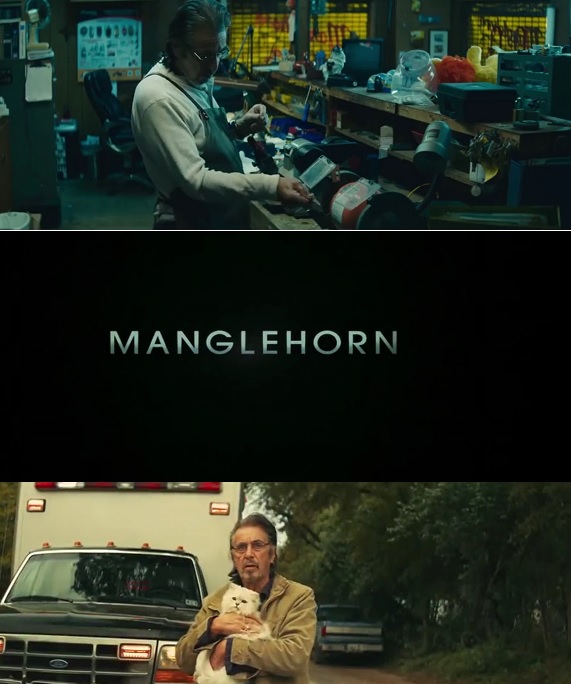
DAVID GORDON GREEN’S MANGLEHORN — A REVIEW BY NICK CLEMENT

manglehorn movie

Manglehorn continues the low-key trend of eclectic filmmaker David Gordon Green; I’m not sure if there’s a more restless, unpredictable talent out there directing major films. He’s been amazingly prolific over the last 10 years, dropping close to one film per year (sometimes two), and each one is different than the last, while still displaying some common stylistic and thematic trends from project to project. Teaming with acting legend Al Pacino must’ve been a huge draw for Green, and he was able to coax from this iconic actor a soulful and downbeat performance that ranks as one of the more memorable from Pacino in many years. Screenwriter Paul Logan’s intimately scaled story is small and simple and it’s the type of thing you’ve seen before in some form or another, but it’s the way that Green fills the edges of his film with quirky beats and strange flights of fancy that all seem to work despite the fact that, at times, you sort of wonder where the piece is heading.

Green is a master of tone, able to mix comedy, violence, dramatic pathos, and honest emotion throughout all of his films, and as the years progress, his name is one that I am always on the lookout for. Shot by his regular and versatile cinematographer Tim Orr, Manglehorn has a stylish but reserved style, smartly using the 2.35:1 widescreen frame, while the dreamy score by Explosions in the Sky and David Wingo fills the background with a perfect sense of despair, whimsy, and hopefulness. Co-starring Holly Hunter as a bank teller/romantic interest for Pacino’s cat loving, aging locksmith, the two of them have wonderful chemistry, while the film gets a lot of comedic mileage out of supporting player/filmmaker Harmony Korine as a spastic salon owner. After premiering at the Venice International Film Festival, Manglehorn screened at the Toronto Film Festival, before receiving an extremely limited theatrical release by IFC Films last June. It’s available on various streaming platforms and on disc.


RON SHELTON’S DARK BLUE — A REVIEW BY NICK CLEMENT

dark_blue

Kurt Russell gave one of his career best performances in Ron Shelton’s shamefully neglected cop film Dark Blue. Maybe it was because the film painted such an ugly, downbeat portrayal of the LAPD without any seriously commercial elements to balance the tone or resolution that it failed to connect with audiences (it grossed $12 million back in February 2003). Shelton’s twisty film, which was co-written by David Ayer (Training Day, Fury, Suicide Squad) and legendary crime novelist James Ellroy (L.A. Confidential, American Tabloid), involves police corruption, cover-ups, and murder, with the action set during the volatile final days leading up to the verdict in the Rodney King trial, with the narrative extending into the nightmarish rioting and looting that befell the city after the police officer’s controversial acquittal. Russell is fantastic as a morally corrupt cop who only knows how to play by his own set of rules, while the entire film carries a distinct whiff of retro cynicism and respect for 70’s cinema, all the way up to the grim finale. The supporting cast is phenomenal, with Scott Speedman, Brendan Gleeson, Ving Rhames, Jonathan Banks, Dash Mihok, Lolita Davidovich, and Michael Michele all offering vivid performances, while cinematographer Barry Petersen brought a gritty visual style that smartly utilized the hand-held camera aesthetic. Terence Blanchard’s serious, almost mournful score seals the deal. Less an action film and more of a character study, Dark Blue deserves to finally find a larger audience, and will likely be greatly admired by fans of this particular genre and the old-school stylings of Sidney Lumet when he was cranking out these scuzzy, visceral pieces of filmmaking.

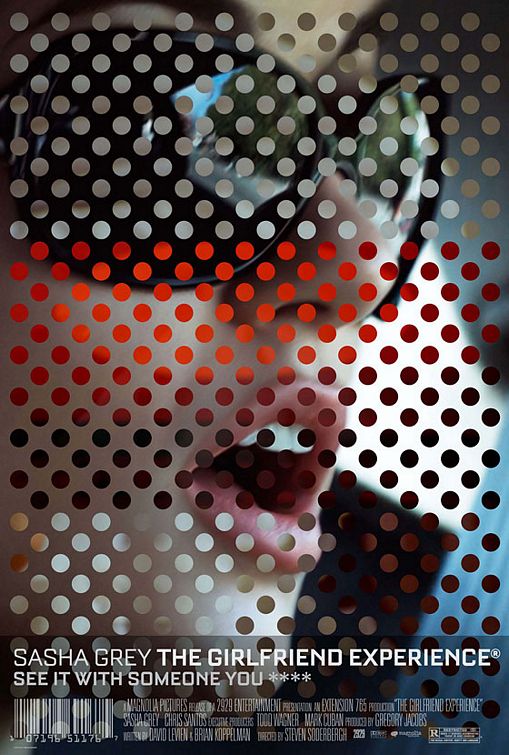
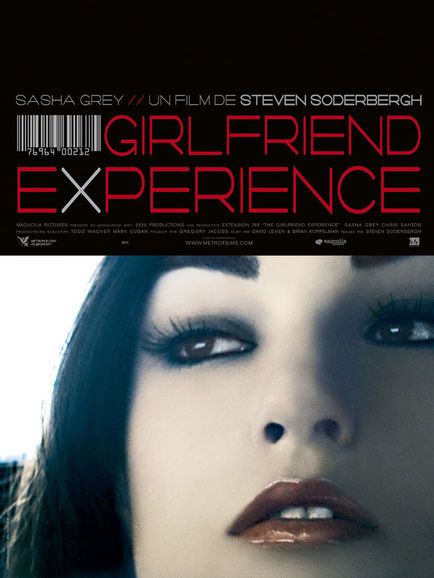
STEVEN SODERBERGH’S THE GIRLFRIEND EXPERIENCE — A REVIEW BY NICK CLEMENT

girlfriend_experience

I love the icy-cool precision of Steven Soderbergh’s The Girlfriend Experience. Clinically directed with a purposeful sense of emotional detachment, this is a socially piercing study of sex, rules, expectations, and dominance, with an explicit thematic angle on how our bodies can be used for maximum advantage in almost every situation that we encounter. Written by the fantastic team of Brian Koppelman and David Levien, the film gained a fair bit of notoriety when it was released in 2009 due to the fact that Soderbergh cast former adult film star Sasha Grey in the lead role as a high-priced call girl making the rounds with her quietly rich clients. She’s strong in the film, not because she’s asked to do much in the way of simulated sex or nudity, but because she understood the chilly and sometimes soulless aspects to the narrative, and because Soderbergh was wise to tailor the film to her non-verbal strengths as an actress. She’s got an intense visual presence, and because The Girlfriend Experience is a study of outward appearances and how people react to them, her hardened physical nature helped to define many sequences and worked to create a sense of strength and confidence. Shot digitally by Soderbergh under his usual alias (Peter Andrews) and clocking in at a brisk 80 minutes, the storytelling and filmmaking are as sleek and sexy as the chic production design by Carlos Moore, with everything accentuated by extra-sharp editing by Mary Ann Bernard (another Soderbergh alias), with the ambient, minimalistic musical score by Ross Godfrey hitting all the appropriate notes. Look for film critic Glenn Kenny in a small but extremely humorous role as an escort “reviewer.” Slammed by some as merely an experiment, this is one of the more under the radar Soderbergh efforts, and it’s likely to get some press again soon, as Starz has a TV series that’s based on the film launching in April, with alluring actress Riley Keough in the starring role.

girlfriend_experience_ver2.jpg

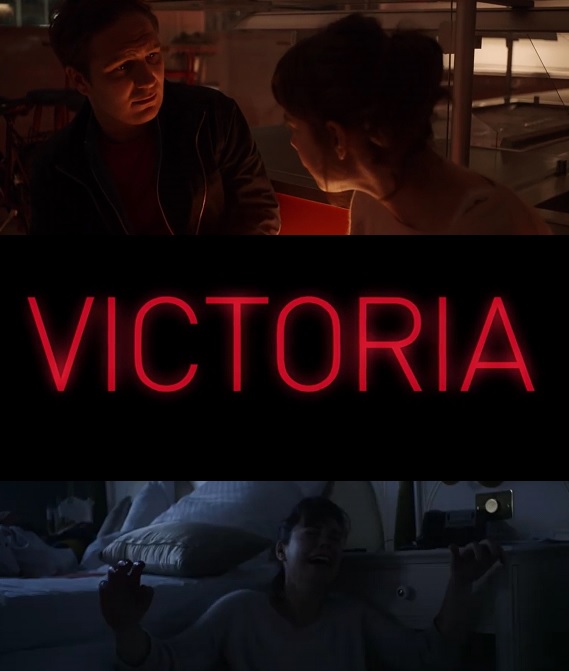
SEBASTIAN SCHIPPER’S VICTORIA — A REVIEW BY NICK CLEMENT

victoria

Astonishing on a technical level, the single-shot thriller Victoria is a high-wire balancing act of all the cinematic elements that keeps you guessing for two hours and 13 minutes. It’s all rather ridiculous and certainly contrived to within an inch of its life, but when the conviction of the filmmaking is this strong and when the wild-ride desire on the part of the storytellers is this evident, I’m able to set aside any thoughts of implausibility and just go along with it. And here, under the carefully planned and obsessively controlled direction of German filmmaker Sebastian Schipper, the audience is zipped off for a dizzyingly crazy night of crime and punishment, as we follow a young woman named Victoria (the fabulous Laia Costa) who somewhat reluctantly decides to partake in a bank robbery, only to see the heist turn south very quickly, with consequences that she likely never imagined. Set between the hours of 4:30am and 7:00am, the movie feels like an intoxicated blur right from the get-go, with Schipper plunging his audience into the madness of a techno-nightclub with strobe light-techniques that would likely give an epileptic some serious problems. From there, we watch as Victoria meets a random group of up-to-no-good guys, all of whom are wasted and horsing around in the street, some with criminal histories. After saying out loud, repeatedly, that she should just “go home for the night,” she lets her guard down, and joins the group for some unexpected life experiences.

Because Victoria was filmed in one, long, totally unbroken take, there’s a certain breathless quality to most of the film, while in spots, the pacing lags a bit, and you begin to wonder if some spiky editing might have punched up the ebb and flow of the aesthetic. But that was never an option here, clearly. This movie was designed as one of the ultimate one-take-wonders, and make no mistake, if you’re a fan of this sort of technical innovation, your mind will continually be blown over how it was all accomplished. And Costa, who gives a weirdly sympathetic performance despite making some questionable personal decisions, is absolutely mesmerizing to watch; just wait until her “big scene” occurs in the final moments — after all that running and physical exertion, her intense emotional breakdown feels even more pained and reflective. And, in an amazing and totally earned moment of generosity, the first credit to appear on screen after the fade to black was that of the film’s herculean cinematographer/camera operator, Sturla Brandth Grøvlen, who along with the rest of the determined crew shot three different takes of the entire film, with the filmmakers deciding to use the last attempt as the final version. Currently streaming on Netflix and available on DVD/Blu-ray.


RICHARD LESTER’S PETULIA — A REVIEW BY NICK CLEMENT

1.jpg

Daring. Surprising. Dreamy. Experimental. Challenging. Funny. Form pushing. Convention shattering. Most of all – beyond sexy. Richard Lester’s 1968 drama Petulia, from a screenplay by Lawrence B. Marcus who adapted John Haase’s novel Me and the Arch Kook Petulia, must’ve shaken up everyone who encountered it in the late 60’s. Being a child of the 80’s, I was more familiar with Lester’s Superman II & III, with my father also showing me Robin & Marian and The Three Musketeers, so Petulia and other earlier, more celebrated works from this idiosyncratic auteur have eluded me up until this point. Now having seen it, I can honestly state that one should never underestimate this film’s importance on the cinematic landscape at the time of its release. The seismic waves it must have made with other filmmakers and editors and cinematographers in relation to the overall aesthetic that Lester brought to the table with Petulia simply can’t be ignored. Steven Soderbergh has often cited Lester as a massive inspiration, and it’s not hard to see why; Sodgerbergh’s hilarious idea to have Marvin Hamlisch score his masterful satire The Informant! predominantly with a kazoo was a novel touch, and something that Lester would likely approve of.

The jagged narrative of Petulia is delivered in non-linear fashion, peppered with flash-backs and flash-forwards, and tells a San Francisco set tale of lust, passion, rage, and deceit, all revolving around a surgeon (the magnificent and rigid George C. Scott), his ex-wife (Shirley Knight), his sultry lover (the phenomenal Julie Christie as the titular character), her abusive husband (the fantastic Richard Chamberlain), and Petulia’s father-in-law (Joseph Cotten, terrific in a scene stealing supporting performance). There’s a lot of plot in Petulia, all of it jumbled, but all of it still coherent, which is a testament to Lester’s ability to tell a multilayered story with clarity and focus while still being able to indulge his wilder stylistic impulses. This film was made by a sly Brit, who appears to be looking down upon the American way of life that was unfolding at the time, dishing out scornful resentment, and as such, there’s a cold, almost condescending attitude to some of the interplay between the characters. But that’s partly a reflection of the societal mood at the time, and the way that people from other cultures view those who are different.

And because this film was the product of such a turbulent period in time, with Vietnam raging on in the background and upheaval on every corner, Petulia brims with a sense of immediacy and a filmic vitality that other works rarely ever achieve. And yet most critics, with some exceptions (Ebert most notably), seemed put off by the film, potentially not wanting to agree with the bold and upsetting points that Lester made with this strange and uncompromising film. It’s a movie that looks at the intricacies of romantic relationships, peeling them back, examining the ingredients, and daring to look at flawed individuals who make decisions that may not be the best. With amazingly jittery and at times hallucinatory cinematography by future filmmaker Nicolas Roeg and a jaunty musical score from John Barry that includes tunes from The Grateful Dead and many others, Petulia enlivens the senses and puts the viewer into a trance-like state at times. The hippie-flavoring of this film really makes it stand out in the sense that it has such a unique, spontaneous vibe that leaves you feeling hopped up and ready for action. Petulia has so much on its busy, seemingly tortured mind: Sex, violence, materialism, love, marriage, anger, and above all, the need to take action in a world that’s constantly at odds with itself.

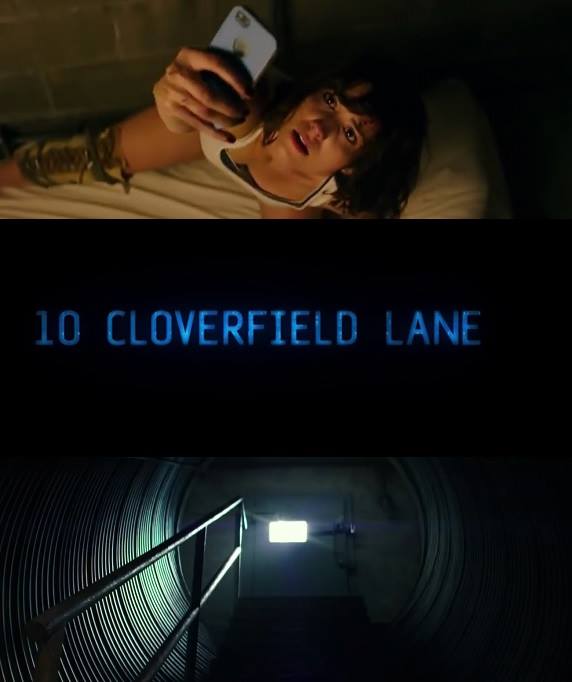
DAN TRACHTENBERG’S 10 CLOVERFIELD LANE — A REVIEW BY NICK CLEMENT

1
10 Cloverfield Lane is a fun and effective chiller that is disingenuously positioning itself as a sequel or side-quel or whatever you want to call it to Matt Reeves’ multiple genre-busting 2008 film Cloverfield. Much has been made about how Dan Trachtenberg’s 10 Cloverfield Lane originated as a totally separate project, having nothing to do with the JJ Abrams machine, but that execs caught wind of the financial implications that franchise branding brings to the table, and here you go — a nice little film that does a lot of things correct but that didn’t need to be tied to any pre-existing properties to remain fully enjoyable.
With that aside, the film features three very strong performances from the trio of Mary Elizabeth Winstead, John Goodman, and John Gallagher, Jr., all of whom give very distinct performances which complement each other’s work. Jeff Cutter’s cinematography is slick and smart, maximizing the cramped space that much of the film takes place in (you don’t leave that well-stocked bunker until the last 20 minutes), making great use of skewed angles to heighten the tension. The narrative rests on the idea that something may or may not be happening outside of Goodman’s farmhouse bomb shelter, with the potential madman being more dangerous than anything extraterrestrial that’s lurking in the cornfields.
There’s a TON of quick-thinking on the part of Winstead, and not that she couldn’t react to every situation in the manner that she did, but aspects of this movie were a bit too MacGyver for my tastes. And while certainly forceful and exciting, the musical score often times felt overbearing; sometimes, silence is the scariest possible thing imaginable. The highlight of the entire piece was the protracted opening sequence, clearly an homage to Hitchcock, in particularly Psycho, which set the ominous tone right from the start. I don’t want to say too much about the plot or where the story goes or who is who and what is what, but if you’re a fan of one-location thrillers this movie will do the trick, and if you’re looking for your next helping of monster-movie fun, you’ll likely leave satisfied, if you simply remember that this shouldn’t be treated, in any fashion, as a sequel to the found-footage original. Which, for my money, was a better, more innovative, far more biting piece of cinema.