SHANE BLACK’S KISS KISS, BANG BANG — A REVIEW BY NICK CLEMENT

kiss kiss

I can still remember seeing Shane Black’s wild and crazy genre bender Kiss Kiss, Bang Bang in the theater, at the Arclight in Hollywood, on opening weekend. I immediately fell in love with this film. It’s got great action, lots of pointed humor, terrific style from cinematographer Michael Barrett, with a satirical spin that allows for a unique tone to take over. The theater was packed and everyone loved it. There was a near constant stream of laughter, and all of the well-timed action and playful yet lethal violence was perfectly integrated into a smart, twisty screenplay that holds up remarkably well on repeated viewings. So it’ll always boggle my mind why, after premiering at the Cannes Film Festival, the film never broke out at the U.S. box office in the manner that it deserved; I don’t even think it got a fully wide release at any point during its theatrical life despite excellent critical support. It’s certainly become a recent cult item, which isn’t hard to see why. Predating the rapid A-list ascension for future Iron Man Robert Downey Jr. by three years, Black’s hugely entertaining shaggy-dog crime film involves a small-time criminal named Harry Lockhart (Downey Jr.) who accidentally stumbles into a movie audition while he’s being chased by the police after a botched robbery has left his partner shot.

A totally absurd set-up, but due to the near-whimsical way that Black stacks the deck from the opening sequence, the entire film feels pleasantly over the top if frequently quirky and always engaging. Much to his surprise, Lockhart gets the part after an impressed casting director mistakes him for a method actor, and once ensconced in Hollywood, he gets mixed up with a shady private eye (a hilarious Val Kilmer) and a sexy, potentially dangerous femme fatale (Michelle Monaghan) with ties to his past. A terrific and eclectic supporting cast including Corbin Bernsen, Rockmond Dunbar, Dash Mihok, Larry Miller, and Shannyn Sossamon all make memorable appearances. And as per usual for Black, there’s a Christmastime setting, thus continuing his tradition of writing actioners that take place over the winter holidays. This was Black flexing his witty and subversive neo-noir muscles, poking fun at a genre that he helped to shape and expand, with results that feel extremely knowing and well observed. And yet, it would take eight more years before Black would find himself back in the director’s chair, for one of the best Marvel offerings to date in Iron Man 3. But if you’re a Shane Black fan, don’t worry, because he’s about to bust loose with this summer’s hilarious looking The Nice Guys, and is hard at work with his Monster Squad co-writer Fred Dekker on The Predator. Fun tidbit: Black titled his film after film critic Pauline Kael’s 1968 film reviews and essay collection.
 

CHRIS WEITZ’S A BETTER LIFE — A REVIEW BY NICK CLEMENT

abl

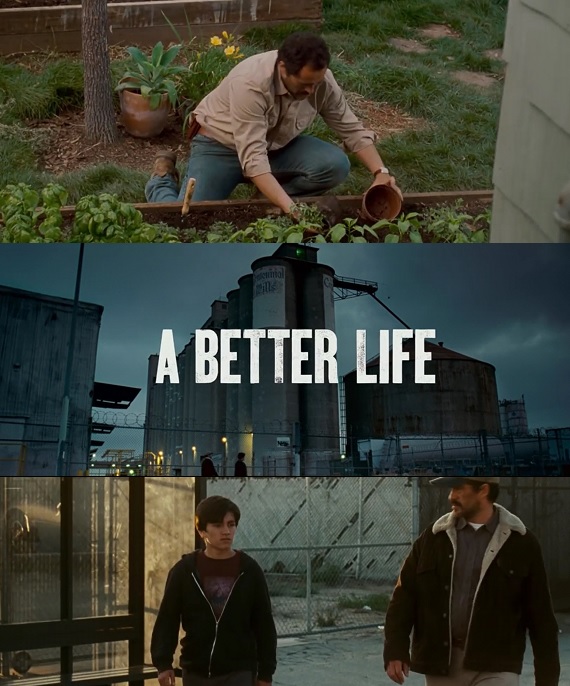
A Better Life is a wonderful film. Released to warm critical support in 2011, Chris Weitz’s poignant and frequently well observed film garnered lead actor Demian Bichir a much-deserved Oscar nomination for Best Actor. Loosely based on the classic Italian film The Bicycle Thief, Eric Eason’s intelligent, touching, and humanistic screenplay was based on the short story The Gardener, by Roger L. Simon, and concerns a Mexican gardener named Carlos (Bichir) living in Los Angeles and trying to provide for his impressionable son Luis, the excellent José Julián, a high school underachiever who is dating the sister of a local gang member. When Carlos’ new pick-up truck and tools are stolen by a devious day laborer, life begins to get even more complicated for the father-son duo, as they attempt to better one another in ways that only the two of them individually know how to do. This is a fairly devastating piece of cinema, and a rarity for Hollywood in that it features an almost entirely Hispanic cast, and concerns the realistic challenges that face immigrants in a city, that, for years, has thrived off of exploitation of the illegal day laborer market.

Weitz and Eason made changes to the script to reflect the various language differences and slang being used on the streets, consulting with gang members and local community figures in an effort to accurately portray this specific lifestyle, which is starkly contrasted with the comings and goings of a mostly indifferent city. Bichir’s performance is absolutely remarkable, conveying fear, love, and hopefulness for his son at all of the key points in the narrative, essentially allowing the audience to peer into his mind, soul, and heart. The ending stings with honest sentiment, never going “Hollywood” at any point, while reminding the audience of how hard it is for so many people to make ends meet for their family. Javier Aguirresarobe’s unfussy and golden-hued cinematography meshed perfectly with Alexandre Desplat’s contemplative score. Foolishly buried in mid-summer with a why-bother? release by Summit Pictures, the film completely died at the box office, grossing less than $2 million, thus making Bichir’s righteous Oscar nomination something of a tremendous surprise.

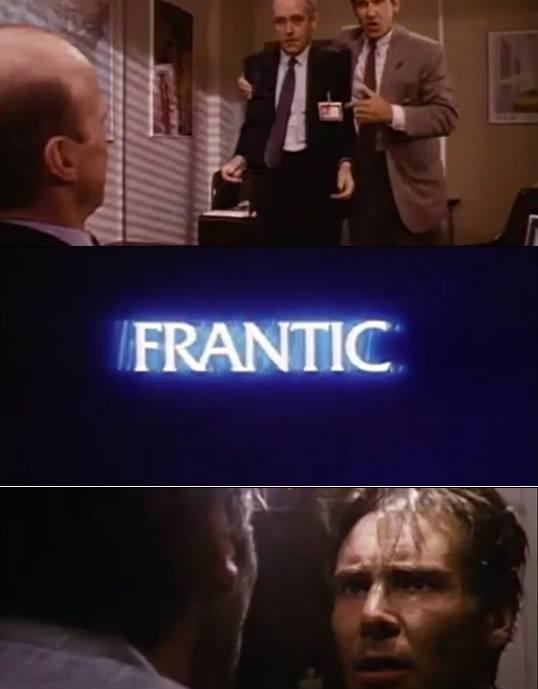
ROMAN POLANSKI’S FRANTIC — A REVIEW BY NICK CLEMENT

1

Roman Polanski’s Frantic was maybe his most overt nod to Hitchcock, and features a strong turn from Harrison Ford as a man who has his life turned upside down when his wife is kidnapped while on vacation in France. One thing leads to another, and before you know it, he’s caught in a game of international intrigue, with a potentially dangerous femme fatale waiting to muck things up. There’s a bit of some tonal inconsistency at times, but nothing to derail the picture, and you might question some of Ford’s actions in the final reel, but overall this is a fun mystery thriller that seems to be mostly forgotten in the realm of Polanski’s filmography. It’s got visual and verbal wit, Ennio Morriconne’s twisty score adds an extra layer to the entire piece, and Polanksi seemed to be delighted by throwing Ford through the ringer all throughout the piece. Look for a very young and gorgeous Emmanuelle Seigner (Polanski’s wife) as the mysterious woman who may or may not be more than she appears to be, while the eclectic supporting cast includes Dominique Pinon, John Mahoney, Betty Buckley, and David Huddleston. The film was well received by critics but did only moderate box office. Witold Sobocinski’s sharp cinematography keeps the vantage points smartly out of focus in crucial moments, while possessing an overall visual crispness at almost every other turn. Robert Towne did uncredited rewrites on the screenplay.

FICARRA & REQUA’S I LOVE YOU PHILLIP MORRIS — A REVIEW BY NICK CLEMENT

1

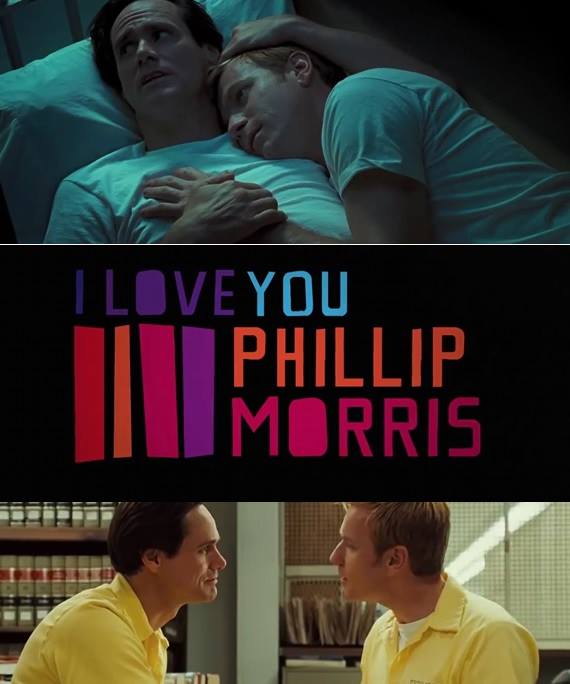
I Love You Phillip Morris is so under the radar it almost hurts. It’s a small gem, something unique and special and a film that doesn’t play by the normal rules. This movie sleighed me. The less you know about the real-life antics of Steven Russell and the plot of this darkly hilarious movie the better. This is a film containing constant surprises and frequent twists and turns. You’ll find yourself repeatedly saying “This can’t be true” or “This couldn’t have really happened,” but like the filmmakers state at the front of the film that it did. All of it. And then some (post-movie I read up online about the particulars and there’s even more that was left out of the wildly unpredictable narrative). I Love You Phillip Morris deals with Steven Russell (an amazing Jim Carrey in one of his best performances, if not THE best…), a family man living a secret life as a con-artist. Then, one day, after a life-changing moment, he finally admits to himself that he’s gay. He immediately gets a hunky boyfriend and moves down to Miami Beach, continuing the art of the con, and still maintaining a civil relationship with his wife and kids. Then, he gets pinched after a job goes awry, and he winds up in jail. And that’s when things get really complicated. Steven immediately falls in love with fellow jailbird Phillip Morris (wonderfully played by the always likable Ewan McGregor) and basically makes it his life’s goal to never be separated from him.

That’s all I am going to say. The rest is for you to discover and hopefully fall in love with. What I will allow is that there was a moment where I was in total tears, emotionally crushed by what I was watching, only to have the rug pulled out from under my feet, leaving me in a state of stunned hysterics. The film marked the directorial debut of Glenn Ficarra and John Requa, the duo who are best known for writing the black-heartedly brilliant Bad Santa, writing/directing the solid rom-com Crazy Stupid Love, and last year’s Hitch. They are natural born directors, with a quirky-stylish visual sensibility, while also possessing an amazing talent for mixing crude one-liners with believable and earned sentimentality which keeps their work grounded in reality, never pushing it into farce. I Love You Phillip Morris effectively juggles the tricky task of voicing multiple tones throughout the narrative, and while many sequences seem too crazy to be true, there’s always something real and honest about an individual moment or line of dialogue that brings everything back down to reality. It’s a shame that there wasn’t a wider release for this film because it’s so damn good and so surprising and enjoyable that it just goes to show you how pathetically homophobic our society really is. My assumption is that the graphic gay sex scenes/dialogue were a turn off for all of the major Hollywood studios (indie distributor Roadside Attractions handled the movie and Luc Besson’s French company Europa put up most of the production budget) because despite the name cast and accessible genre, nobody in Tinseltown wanted to deal with this film. Pretty bogus if you ask me. I Love You, Phillip Morris is the best movie you haven’t seen.

STANLEY KUBRICK’S EYES WIDE SHUT — A REVIEW BY NICK CLEMENT

1

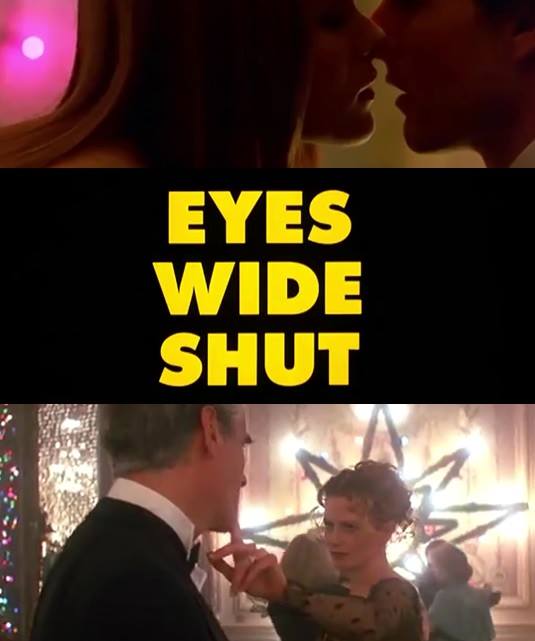
Eyes Wide Shut operates as a vivisection of a failing marriage, and is easily one of the most incisive and abrasive comments on the idea of monogamy and the modern family unit that’s ever been put up on screen. It’s also incredibly dreamy, more than a tad surreal, and highly erotic if never being truly sexy, except for the bit with Vinessa Shaw, because there’s no way that Vinessa Shaw couldn’t be sexy. Tom Cruise and Nicole Kidman took some serious personal and professional risks here, with those risks and challenges cinematically paying off, if not personally. I love that Todd Field is THAT piano player. Kidman’s final line of dialogue to close the film is absolutely perfect, summing up the psychological stance of the film in two succinct words. The now infamous orgy sequence is something of a tour de force (the notorious prudes at the MPAA still be damned!), while Larry Smith’s hot-light cinematography singes the eyes while repeatedly playing with your expectations. There’s also a stilted quality to portions of the film which always make me feel like I’m watching Kubrick’s idea of a waking dream (or nightmare), with Jocelyn Pook’s sketchy piano-dominated score pecking away at your nerves. Arthur Schnitzler’s highly influential Traumnovelle served as the basis for the narrative with the film being co-written by Two For the Road screenwriter Frederic Raphael and Kubrick. This is an endlessly debatable film and was designed to be so, and in retrospect, feels like an appropriately cryptic and final piece of work to come from one of the most legendary and of filmmakers. Kubrick, who started thinking about the project in the late 60’s, died four days after screening his final cut for Warner Brothers execs, and it’s truly a shame he never lived to see the reception that the film received.

RYAN COOGLER’S CREED — A REVIEW BY NICK CLEMENT

creed movie

Creed is rock solid. It doesn’t wish to reinvent the wheel, but rather, grease the ones that have been riding the track for years. Michael B. Jordan was thoroughly engaging in an extremely physical performance; I’ve liked him since Friday Night Lights and he showed in both Chronicle and Fruitvale Station that he’s got major screen presence. He more than holds his own with Sylvester Stallone, who drops a poignant bomb all over this movie, especially in the second half – you’d have to sort of have no heart not to be choked up or emotionally affected, even if your Rocky knowledge is cursory at best. The fight sequences are vigorously and creatively shot by the incredible French cinematographer Maryse Alberti (The Wrestler, Black Swan) who gave each bout its own distinct rhythm and personality, with lots of long stedicam shots and frequent use of medium and wide shots, thus showing the boxing matches in all their sweaty glory. In yet another ridiculously competitive year for cinematography choices, she made a strong case for a nomination, which regrettably didn’t happen. Ludwig Göransson’s musical score is appropriately triumphant, leaning on the old school flavor of Bill Conti’s rich and bold original theme, while still injecting its own distinct personality, and the ending is satisfying and pleasantly surprising, never going over the top or feeling forced. It’s a very good movie, extremely well told, and a fitting extension of one of the more storied franchises that Hollywood has created. Jordan probably should have gotten an Oscar nomination, as stepping into such an iconic series couldn’t have been easy, and as you watch him practically carry the entire film on his absurdly chieseled shoulders, you begin to wonder what the future has in store for him as an actor. The film makes excellent use of its hardscrabble Philadelphia locations, and the backstory that co-screenwriter/director Ryan Coogler cooked up for the offspring of Apollo Creed felt believable and just organic enough. Shrewdly packaged and very entertaining, Creed feels like it could be the start of a new series of films, or a sly farewell to one of cinema’s most popular series of movies.

WERNER HERZOG’S GRIZZLY MAN — A REVIEW BY NICK CLEMENT

1
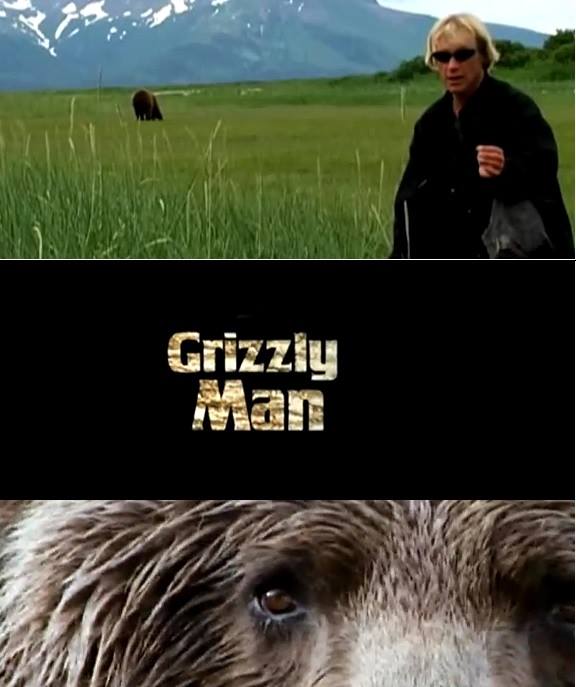
Grimly funny. Inadvertently ridiculous. Beyond compelling. Wholly strange. Dark. Very, very dark. Intensely sad on multiple levels. But weirdly optimistic at times. Grizzly Man is a documentary unlike any other. This is the wild and eccentric Werner Herzog peering into the deep abyss of psychological madness. There’s a deranged quality to the entire film and the events that it highlights and I’ve always marveled at the unintended hilarity of it all. Ghost the Fox POWER. Come back here with that hat, POWER. Tim Treadwell ate insanity sandwiches all day long but there was something honest and pure about his intentions, however misguided he was as an individual. This is the brilliant paradox that Herzog presents: Mental illness vs. unbridled empathy. Some of the talking heads in this film need to be preserved in wax – too odd to be real yet somehow they are. How does Herzog find these people? He provokes conversation with all of his films and this one is no exception, and at the end of the day, isn’t that what great art is supposed to do? Tabitha the Bear and Mr. Chocolate the Bear POWER; that you see a bear defecate mid brawl is another reason to be obsessed with this film. Nature, however skewed, is presented here in all of its glory.


NANCY MEYERS’ THE INTERN — A REVIEW BY NICK CLEMENT

intern movie.jpg

I’ve long been a fan of the work of Nancy Meyers. She knows exactly how to make her brand of films – they look fabulous, have top notch actors, splendid production values, and they favor character based stories in an effort to create something overtly entertaining with a minimal of fuss. Her films aren’t game-changers, but rather, comfortable pieces of storytelling that frequently delve into the sentimental and the romantic. She’s also interested in older protagonists, and is one of the only filmmakers consistently telling stories at the studio level about the 60+ set. And despite the fact that she’s a populist filmmaker, you can enjoy her films without feeling stupid afterwards (fine, she does tend to delve into sitcom-y territory every now and again). Her latest film, The Intern, is an extremely solid piece of craftsmanship, with a sensitive and highly effective performance from Robert De Niro at its center, with Anne Hathaway doing very strong work in one of her more engaging roles (she also looks great). Without overcomplicating matters with manufactured drama or unnecessary side developments, Meyers sticks to her core story, that of a 70 year old widower (De Niro) getting an internship at an e-commerce clothing company run by hot shot boss Hathaway, and allows her thoughtful screenplay to rightfully poke at the declining standards of the modern American male in ways that seem appropriately cutting and observant. Gorgeously shot by the great cinematographer Stephen Goldblatt (Meyers ALWAYS hires a premiere director of photography, just check the IMDB), The Intern is an optimistic film, with zero cynicism running through its warmhearted veins, and its central message is a strong one: Don’t forget about the past and the people who helped to shape the future.

There’s no contrived villain or lame plot device in the last act, but rather, Meyers allows her story to organically unfold, and while she’s always been prone to the neat and tidy ending, she allows for plenty of moments that reflect life’s messy possibilities; the worst character in this film is still operating from a believable and somewhat understandable position. Meyers has had an absurdly successful and prolific career as a screenwriter, producer and director; films that sport her name in some capacity include It’s Complicated, Something’s Gotta Give, What Women Want, The Holiday, The Parent Trap, Father of the Bride and its sequel, Baby Boom, Private Benjamin, Irreconcilable Differences, Protocol, Jumpin’ Jack Flash, and Once Upon a Crime. Her confidence as a filmmaker is never in question, and because she values a classical sense of mise en scene with shots that last more than seven seconds each, her films feel like throwbacks that still have modern touches; she can’t help but include a shot of hanging copper kitchen cooking pots and pans in each one of her directorial efforts. A $100,000 kitchen is her filmic signature in the way that a helicopter flying at sunset is the visual trademark of Michael Bay. And not that it should be any surprise, but De Niro is really damn good in The Intern, showing a gentle side without any forced or cheap mugging, playing the well intentioned guy who you just want to see come out on top. There’s a sense of professionalism every time you sit down to watch one of Meyers’ films, and with the Intern, she’s done some of her best work in a while. I’m not surprised that it quietly legged its way to $75 million domestic and close to $200 million worldwide during last holiday season, as it’s the sort of movie that people find in time, and one that many will enjoy.


TONY RICHARDSON’S THE BORDER — A REVIEW BY NICK CLEMENT

border

The 1982 film The Border, starring Jack Nicholson, Harvey Keitel, Warren Oates, and Miss Tessmacher, oops, I mean Valerie Perrine, feels like it could have been released last month, still as topical and as vital as it was upon first release. Directed by Tony Richardson (Blue Sky, The Hotel New Hampshire) and written by Deric Washburn (Silent Running, The Deer Hunter, Extreme Prejudice), Walon Green (The Wild Bunch, Sorcerer), and David Freeman (Street Smart), The Border is a slow moving and purposefully solemn film, one of grave consequences and ultimately desperate actions. Nicholson plays a tired and demoralized Texas border patrolman, who after years of viewing corruption of all forms from all around him in various posts, decides to do something good for someone else. He’s tasked with nighttime shifts looking for illegal immigrants trying to pass into the United States, and unfortunately, he’s allowed a front row seat to tragedy, dishonesty, and sadness all around him. The plot kicks into gear when the baby of a young Mexican girl is kidnapped with the intentions of being sold/adopted, and Nicholson decides to take a stand against his emotionally and spiritually bankrupt superiors, going up against them with the best of intentions but possibly not the best amount of resources.

Nicholson is constantly at odds with his bimbo wife (Perrine, perfectly annoying) and his morally corrupt coworker (Keitel, practically baby-faced here), and while there’s a simmering rage boiling from within the heart of his multi-layered character, he never goes over the top, letting everything come to him as opposed to attacking it with overt bravado. This is one of Nicholson’s more effective and unsung performances, and from what I’ve read, he’s long considered it one of his best contributions to cinema. And while he’s certainly gripping in an unusually low-key way all throughout The Border, I’m not exactly sure if everything about the film works, and I suspect that the ending went thru various discussions and versions, because it doesn’t necessarily play out as one would expect. The spirit of 70’s cinema is still very much in tact all throughout The Border, but the ending feels a bit soft for some reason. Richardson’s dry filmmaking style doesn’t bring a lot of visual spice to the proceedings, but I guess the dourness of the material suits the simple aesthetic. This is an angry, outraged film, with brutal violence during the climax, and it paints an ugly portrait of the harsh realities that await people of less fortunate status, and how people have more than likely continuously abused the faulty immigration system that’s been set in place for the last 30 years in America to maximize their own personal bottom line.


ED HARRIS’ APPALOOSA — A REVIEW BY NICK CLEMENT

a

I love westerns. I really do. From the classics (The Searchers, Red River, Winchester ’73, My Darling Clementine, hundreds more) to modern efforts (Unforgiven, The Assassination of Jesse James by the Coward Robert Ford, Open Range, 3:10 to Yuma), it’s a genre that never fails to intrigue and satisfy. I was obsessed with HBO’s brilliant show Deadwood and I still lament the early cancellation that it received. David Milch’s creation was as bold and unique as anything that has ever been aired on television, and I can only hope that the recent TV movie rumors are true. Appaloosa, which was co-written and directed by Ed Harris and released in the fall of 2008, is an extremely solid genre entry for anyone who’s a fan of this milieu. Harris stars as Virgil Cole, a gun/sherrif for hire who rides into the dusty town of Appaloosa with his shotgun-toting sidekick Everett Hitch (Viggo Mortensen, one of my favorite actors), looking to find work. They are hired by the town organizers to take out the human trash that has been infecting the area, chiefly, Randall Bragg (a sneering Jeremy Irons) and his gang of thieves and murderers. The set-up is perfect: Two men who are quick with guns are assigned to take care of business. But a wrench is thrown into their plan with the arrival of the saucy Allison French (Renee Zellweger, in one of her best roles), a seemingly dignified woman who comes to town looking to start her life over after her husband’s recent death. Cole falls in love with French almost immediately. He’s a man who has spent his life frequenting brothels rather than looking for a wife, and the notion that this Angel out of nowhere has appeared in an otherwise dangerous town, well, that’s enough for him to want to become lover and protector.

Appaloosa explores classic themes of honor and betrayal and machismo, which are filtered through the lens of a classical western, turning this old-fashioned story into something that never feels out of date. Cole and Hitch are best friends, and Appaloosa, at its heart, is a modern buddy movie, much like most westerns tend to be. There are some well staged and appropriately gritty shoot-outs, but this isn’t a modern day action movie spiced up by western locales like James Mangold’s exciting 3:10 To Yuma remake. Appaloosa is more of a character piece, taking its time to explore the friendship between Cole and Hitch, with everything hinging on character and motivation as much as it does bloody showdown. All of the bullets fired in this film count (and hurt), much like they did in Kevin Costner’s underrated Open Range, with the script smartly saving its violence for the perfect moments. The dialogue between Cole and Hitch has a witty, crackling quality and all of the performances are top-notch, most notably from Zellweger, who was utilized to great effect in this film. Harris, as always, was intense and focused, and Mortensen downplayed his role as Hitch, bring a level of mystery to his character. The film looks nice but isn’t overly “pretty,” with the cinematography by Dean Selmer (We Were Soldiers, Dances With Wolves, Apocalypto), possessing a traditional sense of genre classicism. Appaloosa is solid in every respect, and enjoyable on all levels.