JOHN CARNEY’S BEGIN AGAIN — A REVIEW BY NICK CLEMENT

1.jpg

Begin Again is a pure delight from start to finish, filled with laughs, catchy music, and a bright spirit. A tad melancholy to be sure, but like John Carney’s previous heartfelt musical-romance Once, his newest effort is long on charm and inherently likable. Mark Ruffalo, in one of his very best performances, is a sloppy, beaten-down, old school music executive who, after a night of heavy, depressing drinking, stumbles into a NYC bar and just so happens to hear the voice of a talented, equally-down-on-her-luck singer (the effervescent Keira Knightley, who should have been Oscar nominated for her work in this film). Ruffalo hears Knightley singing, and in one of the best sequences of the year in any film, he imagines the musical accompaniments that would pair with Knightley as she’s singing and playing solo guitar, with Carney playfully visualizing Ruffalo’s imagination. It’s mutual respect at first sight for the artist and the producer, but will it blossom into something more? The two music lovers decide to record an original album, preforming all of the songs all throughout NYC, out in public areas, in an effort to create something special and organic and long lasting. Carney is a heartbreaker with a smile, a guy who loves the tropes of the romantic dramedy but enjoys tweaking the formula just enough so your expectations are subverted at almost every turn. He’s also a massive fan of keeping his potential love birds apart from one another for as long as humanly possible, which will annoy some, but delight those of us who know that life isn’t as simple as “I do” and “I don’t.” If Begin Again isn’t quite the movie-miracle that Once was, well, that would have been impossible to replicate for a variety of reasons, but it’s still a hugely entertaining movie that will likely prove impossible to resist for anyone who gives it a chance.

JOHN MCTIERNAN’S DIE HARD WITH A VENGEANCE — A REVIEW BY NICK CLEMENT

2.jpg

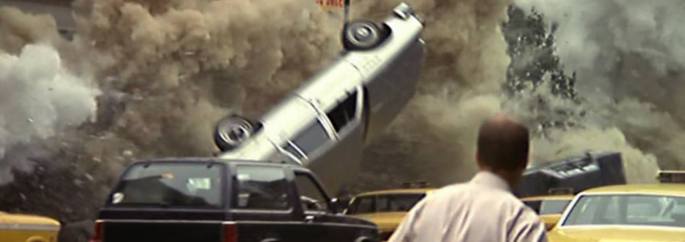
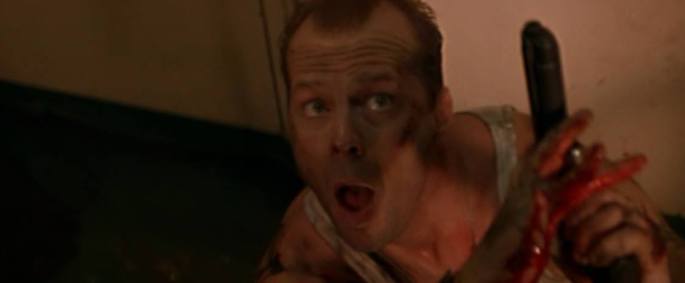
Make no mistake about it: John McTiernan’s original Die Hard is easily the BEST film of the franchise, and unquestionably one of the 10 best action movies of all time. However, my personal FAVORITE from the franchise will always be Die Hard: With a Vengeance. Taking the smart and credible plotting from the first entry and combining it with some of the over-the-top action of Renny Harlin’s icicle-in-the-eyeball sequel Die Hard 2: Die Harder, McTiernan returned to the series that made him famous with this brawny, beefy, explosive threequel, a film that over the last 20 years has stood the test of time as one of the most visceral, down and dirty, big-city action flicks ever produced. Shot on location in NYC, the verisimilitude of this movie is staggering, with a noticeable lack of blue-screen work, honest-to-goodness stunt-men doing their glorious, ballsiest best to defy the laws of gravity and physics for our personal amusement, with bravura hand-held camera work capturing all of the insane action, which brought an immediacy and danger to the proceedings. Shot by master action lenser Peter Menzies Jr., Die Hard: With a Vengeance is one of the roughest looking action movies ever shot. The camera is rarely not moving around (never chaotically though), always glimpsing here and there for some sort of visual information, with the anamorphic 2.35:1 widescreen space constantly filled with bodies and vehicles and bullets in motion. Willis is paired up with a reluctant buddy in the form of Samuel L. Jackson’s hostile and angry Zeus, a hardscrabble man living and working in Harlem who is sucked into McClane’s whirlwind of city saving escapades. The two of them have immediate chemistry and a natural rapport, with their abrasive lines of racially charged dialogue bouncing off of one another with the same intense fashion that the bullets leave McClane’s various firearms of choice. It seems that someone has a grudge against McClane and is setting off bombs all over NYC. Played with vile charisma to the extreme by Jeremy Irons, his villain is an East German terrorist with as much smarts as ruthless killing ability, and the narrative twist that the filmmakers serve up with Irons’ character brings the film full circle with the first effort.

5

In Die Hard: With a Vengeance, the audience is treated to one sensational action set-piece after another. After the spectacular morning rush-hour bombing of the old Bonwitt-Teller department store in downtown Manhattan, we’re treated to a live-wire chase through Central Park, we get a hair-raising car chase along a rain-soaked Saw Mill River Parkway, a variety of close-quarters (and extremely graphic) shoot-outs, any number of vicious hand-to-hand fight scenes, with one featuring Willis facing off against a hulking, heavily accented henchmen which has to go down as one of the best fights of all time. There are exploding shipping vessels, crashing helicopters, and cars that ram their way thru highway guard-rails in an effort to land on the road beneath. All of this is done with zero CGI, tons of fake-blood-filled-squibs, and a constant stream of vulgarity pouring out of the mouths of the two battered and bloodied lead heroes. This is pack-it-all-in action filmmaking at its finest, and a further reminder of the cinematic muscularity that McTiernan was tossing around in his glory days. I can remember my father picking me up from high school early on the Friday that this movie opened (I ditched the last two classes so we could see the first showing) and I can still remember sitting in the theater and watching this masterwork of pyrotechnics and entertainment, my mouth completely left in slack-jawed amazement. This is one I’ll continue to re-visit for years to come.

3

FERNANDO MEIRELLES’ THE CONSTANT GARDENER — A REVIEW BY NICK CLEMENT

h

After making a tremendous splash with his masterful debut City of God, it was a decidedly tricky and unexpected task to take on an adaptation of a John Le Carre novel, what with its dense sense of narrative and expectations stemming from the source materuial, but that’s exactly what the aggressively talented filmmaker Fernando Meirelles did, with results that are positively spellbinding. This is a lush yet gritty film, one that has a sensuous visual texture at times, with Meirelles and his incredible cinematographer César Charlone using light and color and hand held cameras to convey tons of visual information as well as a constant sense of unnerving tension all throughout. Claire Simpson’s expert editing went a long way in keeping all of the information coherent, while providing a sense of tragic grace to the flow of the narrative. Adapted by screenwriter Jeffrey Caine, the film centers on Justin Qualye (the always excellent Ralph Fiennes), a British diplomat living in Kenya, and trying to put together the pieces to the mysterious death his wife Tessa (a sensational Rachel Weisz), who was working as an Amnesty International activist. The film utilized a nonlinear structure to tell its story, showing flashbacks to Justin and Tessa’s intense romance, intercut with the present day, political thriller narrative. The strong supporting cast included Bill Nighy, Pete Postlethwaite, Donald Sumpter, a nasty Danny Huston, and Hubert Kounde, with portions of the film being shot on location in the seemingly dangerous slums of Kenya. The plot line to the film was loosely based on a real-life incident in Nigeria, thus amping up the film’s sense of moral outrage, as elements of the story include the illegal testing of unproven drugs on the poorest members of African society. The Constant Gardener would receive extremely strong critical support and would perform solidly at the box office, before receiving four Academy Award nominations for Best Adapted Screenplay, Best Original Score, Best Film Editing, and Best Supporting Actress for Rachel Weisz, who would go on to win the little gold man.

2


BARRY LEVINSON’S BANDITS – A REVIEW BY NICK CLEMENT

1

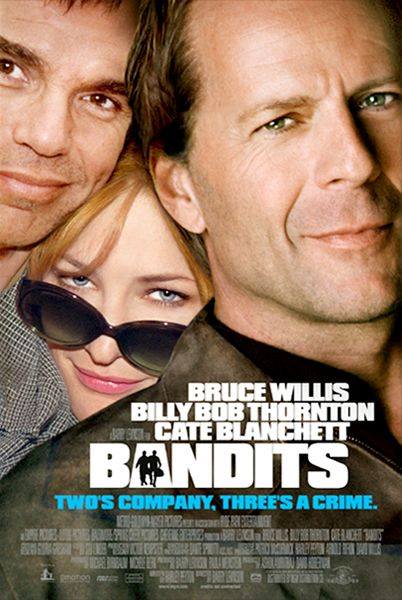
Barry Levinson’s Bandits is a film that I really enjoyed when I first saw it in theaters back in 2001 and it seems to be playing a lot of late on the HD movie channels. And every time I come across it, I can’t help but check it out, because it’s always insantly entertaining. It’s fun. It’s witty. It’s VERY clever. It’s got a great sense of casual style which was captured by the great cinematographer Dante Spinotti. Bruce Willis and Billy Bob Thornton were a terrific team with lots of chemistry, and Cate Blanchett has rarely been more sexy and fun and loose in a role. The ending is magnificent, to be honest – it’s a great twist that makes sense and that you never see coming, even if it’s been hinted at previously in the twisty narrative. Bank robber movies have been done to death, but there’s something unique about this mostly unsung effort that’s sort of hard to exactly pinpoint. I can remember laughing out loud in the theater over the ingenuity and the unexpected nature of the final moments. Harley Peyton’s perfectly calibrated screenplay knew when to be funny, knew when to be serious, knew when to be romantic, and knew how to pile on the incident and action, showing a total mastery of tone and really treasuring the element of surprise. Levinson’s career has been all over the place, with lots of great films, a few total duds, and dependably solid work in between; this is easily one of his most underrated efforts.

RON HOWARD’S FROST/NIXON — A REVIEW BY NICK CLEMENT

frost nixon

Frost/Nixon is one of those historical dramas with a predetermined ending that somehow never fails to be anything less than mightily entertaining. Reprising their stage roles, Michael Sheen is David Frost, the wild British talk show host who bought himself an interview with Richard Nixon, played by Frank Langella, after he had left office. Crisply directed by Ron Howard from a witty and detail-oriented script by Peter Morgan (who also wrote the stage version), Frost/Nixon is an intimate time-capsule, going back to a time when an ex-President could be gullible (and conceited) enough to agree to a series of interviews without really doing his due diligence. Nixon figured that Frost would be a push-over, as nothing that Frost had done professionally up to that point had suggested any real depth or societal importance. Nixon was blinded by cash. But boy did he get what he deserved. Essentially, and I’m not really spoiling anything that anyone with a nominal US history background wouldn’t know already, Frost got Nixon to admit guilt in his role as President during the taped interviews, which would then be broadcast on world-wide television (and have been released on DVD). The film has a terrific supporting cast of some of the best character actors in the business: Sam Rockwell, Kevin Bacon, Oliver Platt, Toby Jones, Matthey MacFadyen, Rebecca Hall, and Clint Howard all turn in vivid performances. Howard directs in an unfussy fashion with a simple elegance coming from his director of photography, Salvatore Totino, who has been working with Howard for over a decade. Shooting the film with a burnished, gold-brown glow gave off a feeling of yesteryear which was integral to the production. Again, you know where the story is going and how it’s going to end; it’s just a question of how good the film is in getting you there. This is easily one of Howard’s best films to date, and one that stands up on repeated viewings.

KEVIN COSTNER’S OPEN RANGE — A REVIEW BY NICK CLEMENT

1

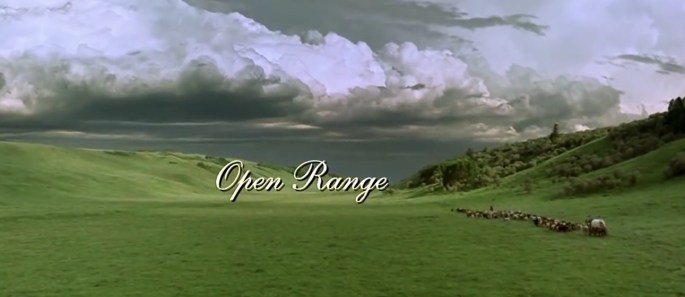
Open Range found Kevin Costner confidently in John Ford/John Wayne territory. This is a lovely throwback to old-school westerns, the sort of film that has a noble love story at its center, and is peppered with violent confrontation and surly character actors doing their gruff best. Robert Duvall, Annette Benning, and a vicious Michael Gambon all did fantastic supporting work, with Costner the firm and strong center to this tale of open range cattleman (Costner and Duvall) who go up against a greedy and deadly Irish land baron (Gambon) intent on total domination of the area. Benning is the woman who Costner falls in love with, and the deft screenplay by Craig Storper (from an original story by prolific novelist Lauran Paine) had the perfect balance of drama, romance, and bloody action, with the final 20 minutes containing an absolutely ear shattering and ferociously staged gun battle, with all sorts of bodies getting torn up in Peckinpah-esque fashion, with bullets whizzing by and overhead, splintering the wooden buildings with killer intent. Cinematographer J. Michael Muro, one of the all-time great steadicam operators, was able to touch upon classical and iconic imagery with his gorgeously composed widescreen photography, but never surrendered to any sort of slavish imitation of films from the past; there’s still more than a few modern aesthetic touches, especially during the gun battles, that make this film zip and pop around the edges. But at its heart, this is a classical Western filled with themes of honor and promises kept and friendship that knows no bounds. Critically embraced, the film broke the “Westerns are dead” curse back in 2003, becoming a late summer sleeper hit at the box office. The film features a terrifically rousing score by Michael Kamen.

3


ROMAN POLANSKI’S ROSEMARY’S BABY — A REVIEW BY NICK CLEMENT

baby

Genuinely creepy. Never truly “scary” but unnerving and happily cruel. This was Polanski twisting the emotional and psychological screws for a mainstream audience, and doing it with dark humor, visual panache, with his always incredible sense of pacing firmly on display. Mia Farrow in the role of a lifetime, and John Cassavetes perfectly cast as the shady husband who makes the wrong bargain. Based on Ira Levin’s novel, this is a truly messed up film, with all sorts of nasty implications, with Polanski’s obsession over sex and violence intrinsically linked, except this time, it’s the internal turmoil and toll that’s really stressed. Released in the summer of 1968, and shot for a reported $3 million, the film would become a massive critical and box office hit. Produced by genre master William Castle, with expert cinematography from William Fraker, who was easily one of the most prolific and steady cameraman of his era. Taylor Hackford’s exceedingly entertaining The Devil’s Advocate borrowed many thematic elements from Rosemary’s Baby, with Polanski’s iconic effort serving as inspiration for a variety of cheap imitations in the years that followed the success of Rosemary’s Baby. Ruth Gordon would win the Oscar for Best Supporting Actress, and what a performance she delivered. And let’s not forget a young Charles Grodin as Dr. Hill!

baby


BENNETT MILLER’S MONEYBALL – A REIVEW BY NICK CLEMENT

moneyball

The great American movie Moneyball centers on our great American sport, but is less about the sport itself and more about the people behind the scenes, those who constantly grapple with one recurring feeling: Disappointment. Baseball, after all, is a sport based on winning and losing, and Moneyball’s lead character, Billy Beane (the wonderful Brad Pitt in full movie-star mode), the general manager of the Oakland A’s, will stop and nothing in order to come out on top. But because baseball is a game, only one team can say that they’ve won the final game of the season. This is what Beane has been striving for his entire career, and the endless quest to win that final game will likely forever drive him as a competitor. In terms of bucking the standard conventions of your typical sports movie, the brilliance of Moneyball lies in how it doesn’t take a rote approach to telling a story focused on a sport that we’re all familiar with. Much like The Social Network (the two films share the invaluable Aaron Sorkin as writer and Scott Rudin as producer) this is an “inside-the-machine” movie, looking at the sport of baseball from an analytical and statistical point of view. But rather than bogging down the narrative with numbers and esoteric jargon to the point of confusion and/or boredom, Sorkin, and his estimable co-screenwriter Steven Zaillian (Schindler’s List, Searching for Bobby Fisher) have shaped Michael Lewis’s book into an emotional journey for Beane, as a coach, father, and friend.

Choosing to center your film on the notion of “sabremetrics” was a bold and unique decision. And considering the numerous starts and stops for Moneyball throughout its development, it’s remarkable that director Bennett Miller (Capote, Foxcatcher) was able to deliver such a clear cut vision (Steven Soderbergh was set to direct before the movie collapsed over “creative differences.”) Taking a niche subject and a somewhat unfilmable book and turning it into a quietly powerful film is no easy task, so much credit needs to be given to Sorkin and Zaillian. If you know their work, you’ll hear Sorkin’s witty, satiric voice in the rapid-fire dialogue, while the fluid structure, which deftly mixes flashbacks of Billy Beane’s subpar minor and major league career as a way of making correlations to what Beane as a manager was going through with his team, can be traced to Zaillian’s confidently guiding hand in the organization department. And instead of giving you a saintly approach to the head coach role, as written, Beane is a man of steadfast, stubborn convictions, willing to ruffle feathers, and more than happy to berate and fire people who aren’t valuing his new found philosophy. Many of the film’s best scenes take place within the team’s closed-door strategy meetings with the scouts, all of whom were either phenomenally well cast or the real deal. What Sorkin and Zaillian have done so well is that you don’t need to be a baseball expert to understand the sometimes arcane, economics-based approach to the sport that’s on display. Moneyball is an “inside-baseball” movie, something that really hasn’t been done before, and it sits right next to Field of Dreams, Eight Men Out, and Bull Durham as one of the best films to spotlight our national pastime.

But the key to Moneyball’s success is the rapport between Pitt and Jonah Hill, who both delivered engaging, funny, and totally inviting performances. Pitt hasn’t been this out-right-likable and charming in years, and it’s a treat watching him literally transforming into his generation’s Robert Redford right before our eyes. There’s an animal magnetism to Pitt as actor, and as he’s gotten older, the lines in his face and around his eyes have begun to express a vulnerability that was absent in his earlier work. Pitt plays Beane as a man trying to be a better father to a daughter that he doesn’t get to spend enough time with, and as such, no matter how much of a thorn-in-the-side he is to his teammates (he makes many selfish decisions in an effort to preserve his vision), you’re always on his side. Look at this performance and then contrast it to the tough-love-S.O.B. dad in The Tree of Life or the low-lives he so brilliantly essayed in Killing them Softly and The Counselor – Pitt loves to quietly stretch his range, and his not afraid of taking chances as an actor.

And Hill, playing the awkward comic relief to Pitt in the role of a stats-obsessed advisor who helps Beane develop and implement the sabermetrics system of player evaluation, was perfectly and smartly cast against Pitt, and the two of them immediately demonstrate a chemistry that’s hysterical to see unfold. Hill, who got his start as an Apatow class-clown and who has been killing it in every raunchy comedy made over the last 10 years or so, was a perfect partner for Pitt, and his career stretching work in this film would serve as a warm-up to his brilliant turn in The Wolf of Wall Street. He was also fantastic in the underseen black comedy Cyrus. Pitt and Hill couldn’t be any more different when it comes to performance style, personality, appearance, and expectation. Hill, playing a fictionalized version of real-life-stats-guru Paul De Podesta named Peter Brand, gets the lion’s share of the movie’s laughs, but also registers strongly as a dramatic presence. Without their bond, Moneyball wouldn’t be as powerful as it ultimately becomes, as the two men teach each other about themselves and about the sport that they love. It should also be mentioned that Philip Seymour Hoffman is effortlessly good as Art Howe, the put-upon manager who has to deal with Beane’s unconventional methods.

Moneyball doesn’t end with the last play of the game on the final pitch in the bottom of the ninth. It’s not that sort of movie and doesn’t want to be; it couldn’t be less interested in final-pitch heroics and dramatics if it tried. Wally Pfister’s intimate cinematography captures the sport in all of its glory when that sort of thing is called for, but instead takes a measured approach to the action, following Beane around relentlessly as he tries to figure out what his next move will be. Mychael Danna’s amazingly subtle yet highly effective musical score helps underline the big emotional beats without ever grandstanding or calling attention to itself. But what’s truly exceptional about the film is that it definitely does deliver a rousing, totally satisfying emotional release upon its conclusion, despite not bowing to the “final game” or “impassioned coach’s speech” cliché that we’ve seen a hundred times already. And when thought about at length, one realizes how the message of the film (echoed by Pitt’s daughter singing the lyric “You’re such a loser, Dad” during the end credits) is that losing is part of our culture, and at the end of the day, it’s more about how you conduct yourself as a person than it is about how many games you’ve won. In that sense, it’s very similar to Peter Berg’s fantastic high school football movie Friday Night Lights, and joins the ranks as one o the finest contemporary sports films ever made. It’s not about winning or losing, but about how the game has been played.

moneyball

MATTHEW VAUGHN’S KINGSMAN — A REVIEW BY NICK CLEMENT

1

Kingsman is absurd, outlandish, totally over the top, and cheeky as all hell. It’s a movie that is in love with the fact that it’s a movie, and as such, the film can never be taken seriously, and poses no real threat or menace – you just sit there and laugh at the audaciousness and the verve and the craft. This is a hyper-violent and extremely knowing send up of Bond and spy movies in general, a gleefully sadistic and sometimes cruel R-rated cartoon that’s been directed with the same smack-you-in-the-face style that don’t-give-a-shit British director Matthew Vaughn brought to his similarly ribald and cheerfully vulgar superhero riff Kick-Ass. There’s an anger that runs throughout Kingsman which is interesting to note; I detected some of the subversive shades of Fight Club and Falling Down running through its veins, while the more obvious touchstones of Bond, Bourne, Bauer, and Kill Bill are up front and center.

Given that this is a big-budget offering from a major studio – 20th Century Fox – I was shocked and pleased to see the level of out-right craziness on display here. This is an action film first and a comedy second, and it’s yet another indication of the Gareth Evans factor; it’s as if all Hollywood action guys got a chance to see The Raid and The Raid 2 and they now feel they have to up the ante. I also noticed some stylistic nods to Running Scared during the numerous shoot-outs. Vaughn brings a mean streak to much of his work (Layer Cake, his debut, is still my favorite of his) and while it’s clear he loves the trappings of the Bond universe and spy movies, he’s really set out to make a wink-wink, tongue-firmly-in-cheek effort that pokes fun at the ludicrousness of everything.

Because of this, the intense violence, while entertainingly stylish in the moment and bracing to witness as a result of the somewhat recent PG-13’ing of Hollywood, holds no lasting impact – this is a film that is comprised of a series of money shots, all the way from the opening frames, up until the final bits, concerned with being “cool” at all times, and as a result, nothing carried any weight or honest heft. Which is fine. It’s an R-rated comic book, and Vaughn really seems to excel with this tone. Some of it looks absolutely great (the stylish cinematographer is George Richmond), some of it looks like overly-CGI’d junk, but all of it is made with a certain bloody zest and boldness and the sheer delirium of the action set-pieces can’t be denied. Henry Jackman and Matthew Margeson deliver a truly fantastic musical score that sounds like outtakes from a Bond flick in many areas, and which helps drive the film home in every manner.

Colin Firth appears to have had the time of his life playing the suave and lethal member of the Kingsman, a secret group of British spies who help to keep the world in balance, while newcomer Taron Egerton appealingly underplays his fish-out-of-water character, the young recruit who has to step up to the plate. Samuel L. Jackson camps it up with a lisp as the megalomaniacal villain with a hilariously convoluted scheme to rid the world of most of the population in an effort to reverse global warming. Or something like that. Just wait until you see the method to his madness – it’s hysterical and nasty and I was sort of shocked to see it played out to the degree that it was. All of Kingsman is purposefully asinine, and as previously mentioned, it’s never realistically menacing or truly suspenseful. This is an over-stuffed, frenetic, sometimes witty, mostly predictable piece of escapism that blows heads up with a smile. And listen – any movie that finds the time to slaughter at least 100 ultra-conservative, right-wing, hate-spewing, super-Christians from Kentucky and ends its narrative with the promise of kinky sex is A-OK with me. This a’int your father’s 007.

1