TODD HAYNES’ CAROL — A REVIEW BY NICK CLEMENT

carol

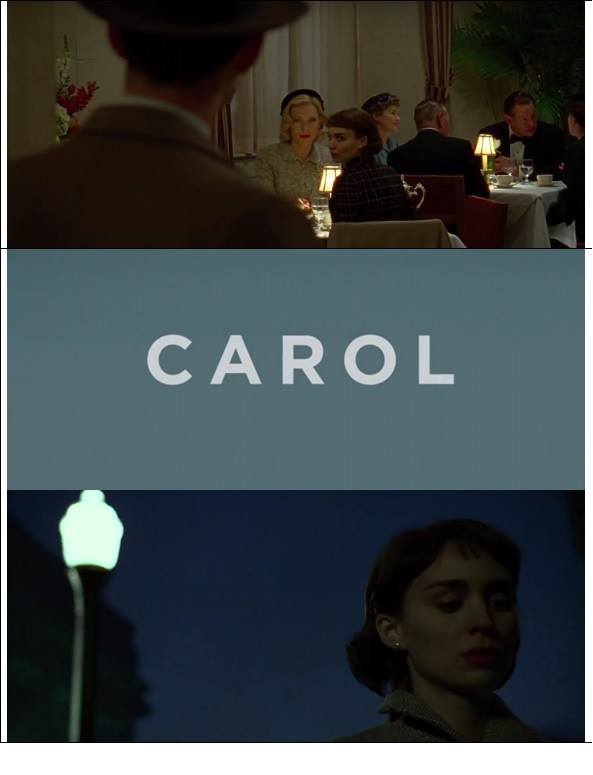
Carol is another immaculately crafted piece of cinema from filmmaker Todd Haynes (I’m Not There, Safe, Velvet Goldmine), featuring two splendid performances from Cate Blanchett and Rooney Mara, with an attention to aesthetic detail that will make lovers of costumes and production design and cinematography drool with delight. Shot in gauzy, smoky 16 mm film by the tremendous cameraman Ed Lachman, Carol feels like the fossilized remains of people’s tragically pained lives from over 60 years ago, with the sensitive screenplay by Phyllis Nagy hitting all of the appropriate notes of melancholy love and unstoppable yet forbidden passion. Based on the Patricia Highsmith novel The Price of Salt, the film tracks the love affair between a married woman (Blanchett) and her younger flame (Mara), the film paints a sad and incredibly serious account of two people who can’t resist temptation, even if they know that it’ll be nearly impossible to have exactly what it is that they want. Kyle Chandler, yet again, impresses in a small but pivotal role as Blanchett’s scorned and dismayed husband, and Sarah Paulson, as usual, steals all of the chances afforded to her by the intelligent, quietly powerful screenplay. It’s possible that Blanchett and Mara may be a bit mismatched for each other in this film; while I was thoroughly engaged all throughout, I was kept at a curiously slight remove on an emotional level. It might have been due to the overwhelming sense of craft that Haynes was displaying, or because of how the film kept a very level head about itself, never giving into cheap histrionics or sensationalistic speechifying.

This is a slow-burn drama, lingering long in the memory, a film made with tremendous care in all departments, and tackling subject matter that isn’t necessarily entertaining so much as it is enlightening. Mara was absolutely sensational, doing tons of emoting with her exceedingly expressive face (those eyes are extra intense…), and punctuating each line of dialogue with pointed eloquence. It’s no surprise that she took top honors at the Cannes Film Festival for this restrained, deeply internal performance. Blanchett, one of our most dramatic of actresses, sunk her teeth into a role that she seemed destined to inhabit, and while I’ve liked some of her other performances a bit more, there’s no denying her extreme skill as an performer; she totally owned this role with all her might. And it’s remarkable to note how she can effortlessly swing back and forth between the stage and screen, never losing sight of the specific ways that both mediums can create and emotional stir. The appropriate but repetitious musical score hangs in the air like a harbinger of emotional doom, giving off a tentative vibe in some scenes, and swooning with romanticism in some key spots. Carol feels like a thematic companion piece to Haynes’ excellent 2002 film Far From Heaven, which his homage to Douglas Sirk melodramas and featured an anguished performance from Dennis Quaid as a man struggling with his closeted homosexuality. Haynes is a socially conscious filmmaker interested in the human condition with each of his projects, and I could only hope to see more work from him in the near future, as it seems way too long in between projects for this unique cinematic voice.

DEREK KIMBALL’S NEPTUNE — A REVIEW BY NICK CLEMENT

1

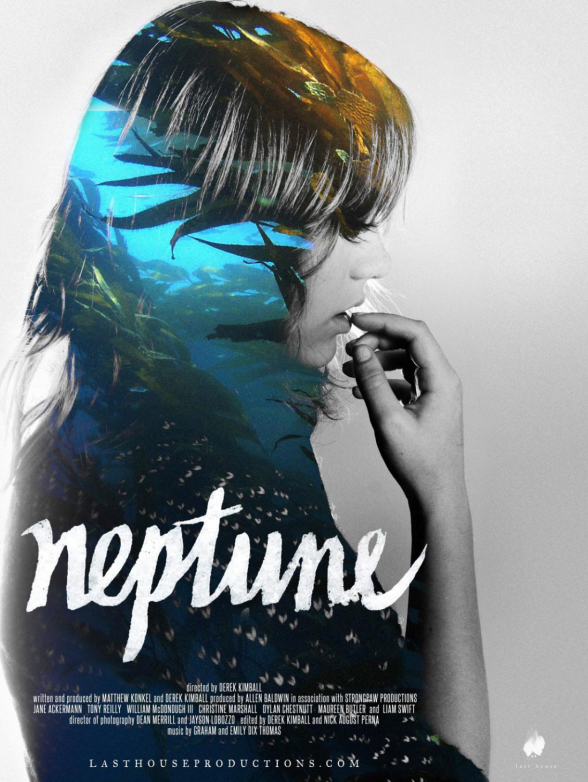
A narratively complex, visually arresting coming of age story set in 1989 off the coast of Maine, director Derek Kimball’s Neptune is a fascinating indie offering that will delight just as many as it confounds, leading to passionate praise in some circles, if not outright rejection in others. This is a film that’s interested in having the audience feel something, and because it’s less concerned with traditional plot points and story structure, the dreamy tone might be considered to slow for less attentive viewers. Centering on the peculiar life lessons of a 14 year old girl as she develops a fixation on a local boy who has gone missing, but more a study of a mind in flux and a body and spirit in transition, Kimball and his co-writers Matthew Brown, Matthew Konkel, and Douglas Milliken add layer upon layer to their emotionally gripping story in an almost fevered effort to stack the deck. Results are extremely rewarding if a bit emotionally oblique, resulting in a movie with commercial prospects that seem relatively small, unless a passionate and adventurous distributor were to work some further festival exposure and VOD magic. With the right partnership, this film would receive the attention and viewings that it deserves.

2.jpg

First time actress Jane Ackermann is Hannah Newcombe, a teen living with her strict guardian who happens to be a Reverend (Tony Reilly, commanding). She’s attending an all-girls school when something tragic happens in her small town which takes her down a road of unexpected self-discovery. A local boy goes missing, prompting her to deeply question everyone and everything around her, with the film possessing an experiential quality that becomes instantly engrossing. She abandons her religious upbringing, which of course spurs on resentment from the Reverend, and she develops a unique relationship with the missing boy’s father, Bill McDonough in a subtle yet emotionally frazzled performance, taking a job working on his fishing boat, helping him with the lobster traps. What Kimball and his co-writers were going for with this somber and introspective tale is to hold accountable a society and its seeming randomness as a way into the psyche of a young woman as she herself takes on a certain level of outward and inward change. Ackermann is up to the task in more ways than one, fleshing out here character in nonverbal ways which help to anchor her quiet performance with a level of severity, and projecting a young Sarah Polley quality that was noticeable in any number of scenes and instances.

3

Kimball infuses his unpredictable debut with a creepy sense of atmosphere all throughout, while displaying a firm grasp of the material and essentially crafting exactly the sort of film that it seems he set out to make. Refreshingly uninterested in traditional narrative, his surrealist strokes come across as studied, adding a further component to the evocative mix of ingredients. Whether or not that will satisfy certain audience members remains to be seen, because while Neptune does contain what many would consider to be expected payoff, the journey to get to those moments is one filled with a sense of unplanned discovery and an interest in mood more than concrete plot developments. The tech package may be low in budget but it’s high on smarts and confidence, with dual cinematographers Jayson Lobozzo and Dean Merrill making huge, deeply moody impressions (the underwater photography is especially memorable), while Kimball’s astute editing creates a steady sense of unease. Sound design produces the intended chills in all the right spots. Neptune recently screened as part of the 2016 Slamdance Film Festival.

neptune poster

CIRO GUERRA’S EMBRACE OF THE SERPENT — A REVIEW BY NICK CLEMENT

1

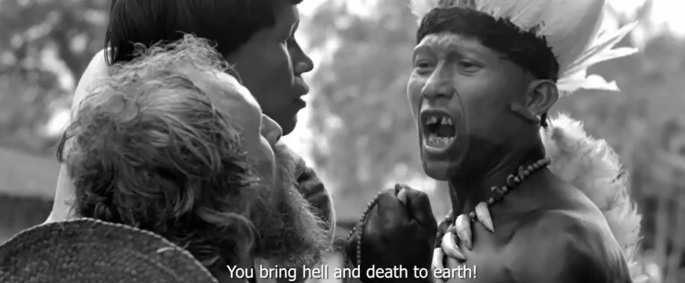
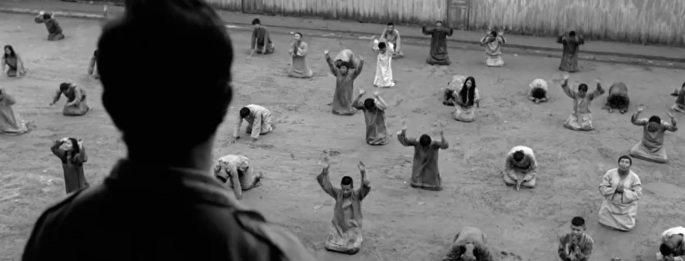
Take elements of Aguirre, Wrath of God, add a dash of Malick, a hint of Jodorowsky, and a pinch of Gaspar Noe at the finish, and you’ve got a rough approximation of what to expect from the wild new black and white psychological horror film Embrace of the Serpent. Playing almost like a thematic cousin to Ben Wheatley’s descent into madness A Field in England, this bold and challenging new film from Columbian writer/director Ciro Guerra announces an exciting new voice in independent cinema, as he’s cooked up a film that feels indebted to previous masters and their magnum opuses, but a work that feels adventurously alive as well as completely unpredictable. If you’ve seen the trailer, you might think you know what you’re in for, but one of the best aspects to this mind-freak-fest was that while it unfolded, it constantly subverted my expectations. The narrative contains two parallel stories, taking place between the years 1909 and 1940, and is fused together by the appearance of an Amazonian shaman named Karamakate, who happens to be the sole survivor of his tribe. The film details the journeys and experiences of two scientists, a German named Theodor Koch-Grunberg (Jan Bijvoet, the enigmatic star of the amazing film Borgman), and an American named Richard Schultes (Brionne Davis), both of whom were looking for the sacred, ultra-rare and potentially life altering Yakruna plant.

2.jpg

The script was loosely inspired by the two men’s diaries which detailed their work in the jungle. I loved this film, but I can totally understand why it might frustrate and alienate some viewers. This is one of those hearts of darkness exploration films, where men are guided by sometimes insane and stupid methods of thought, in an effort to seek some form of enlightenment not thought to be attained any other way. The themes of religious paranoia, the destruction of indigenous cultures, and the exotic setting of the jungle when juxtaposed by the high-contrast monochromatic cinematography by David Gallego all add a further layer to the surreal aesthetic package; lingering shots of the jungle and an emphasis on nature certainly point to the works of Malick, and it’s fascinating to continually observe that artist’s influence over so many young, upcoming filmmakers. The fully immersive sound design and at times mournfully soulful score by Nascuy Linares imbues the film with a sense of unique vitality. Embrace of the Serpent has, rather shockingly, been nominated for Best Foreign Language Film at this year’s Oscars (I simply cannot believe this fact…), while it won the Art Cinema Award in the Directors’ Fortnight section at the 2015 Cannes Film Festival. Filmed on location in the Amazonia region of Columbia and spoken in a variety of languages including Portuguese, Latin, Amazonian, German, and Spanish, the film is continually unnerving, and by its cosmic finish, more than a little trippy.

3


BEN WHEATLEY’S SIGHTSEERS — A REVIEW BY NICK CLEMENT

1

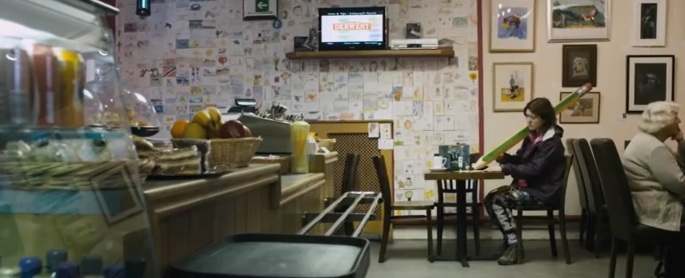
CAUTION: Only watch this film if you like your comedy JET BLACK. Dark comedies rarely get darker or meaner than Ben Wheatley’s misanthropic road-trip satire Sightseers. Sort of like the British version of Bobcat Goldthwait’s hysterical underrated gem God Bless America mixed with shades of Falling Down and Happiness, it’s a film that revels in its diseased nastiness, and one that has a distinct (if deranged) point of view concerning society and its various malfunctions. Lead actors and co-screenwriters Alice Lowe and Steve Oram are both terrifically vile and frequently hilarious, going totally for broke with their insane conceit, never looking back one, and matched every step of the way by a director who was totally in synch with their poisonous yet smart worldview. Wheatley is such a playful sadist and has such a great sense of visual space that he allows the film to open innocuously, only to then pepper the proceedings with one transgressive moment after the next. The unassuming yet stylish cinematography from Laurie Rose also plays with expectations, favoring day light for all of the big, nasty moments of violence, and placing an emphasis on camera placement and off the cuff shot selections. The toxically hilarious and ironic final moments are absolutely unforgettable. Wheatley’s wife, Amy Jump, was an additional contributor to the script, while Edgar Wright served as one of the producers. Sightseers screened at the 2012 Cannes Film Festival as part of the Director’s Fortnight section, and is really a movie only for those who enjoy the bitter and unrelentingly sour taste of cruel.

2


DENIS VILLENEUVE’S ENEMY — A REVIEW BY NICK CLEMENT

2

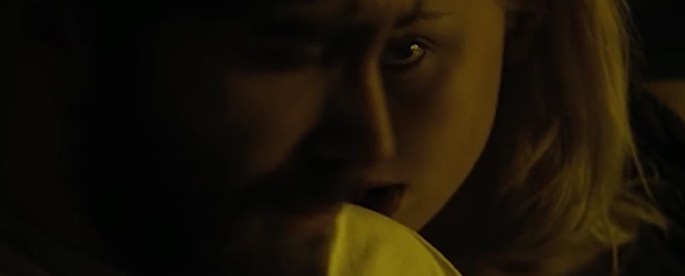
Enemy, the glorious head-scratcher from French Canadian director Denis Villeneuve (Prisoners, Incendies, Sicario, the upcoming Story of Your Life and Blade Runner 2), is a twisted mystery with all sorts of philosophically loaded implications. Is it the slyest version of Invasion of the Body Snatchers that’s ever been pulled off? Is it a metaphysical exploration of divided souls hovering in a unique state of otherworldly stasis? Is it the simple yet complex story of one many having a nervous breakdown? Or is it none of those things and something completely different? That’s the brilliance of this tricky, multi-layered, and extra-creepy piece of work, which features an on-fire Jake Gyllenhaal in dual performances. One version of Jake is a regular office dweller, repressed and atypical, going about his daily routine without much in the way of surprise, and the other Jake is the ultimate version of himself, what we project ourselves to be: Commanding, sexy, dangerous, and strong. When the two of these entities “meet,” the film becomes a mind-twisting exploration of identity and fate, all filtered through the always intriguing notion of the doppelganger. Based on Jose Saramago’s novel The Double, Villeneuve shoots in Fincher-esque pea-soup green and piss-stained yellow, giving the film an ominous visual sheen that’s both highly sketchy and ugly-slick. Each shot is perfectly designed, and I’m sure a frame-by-frame analysis of this film would be immensely rewarding. And then there’s the film’s final shot, which is a massive doozy, a true show-stopper, a legit candidate for the most WTF moment of any cinematic year. Actually, make that the film’s last TWO shots. It’ll create the impulse to hit the rewind button on your Blu-ray remote, as the stunned look on your face quickly gives way to nervous laughter, and then full on dread, followed by a discussion with yourself or the person(s) you’re watching it with. This is a hot-blooded mental-mind-fuck that will play twister with your brain.

3


JONATHAN GLAZER’S BIRTH — A REVIEW BY NICK CLEMENT

2

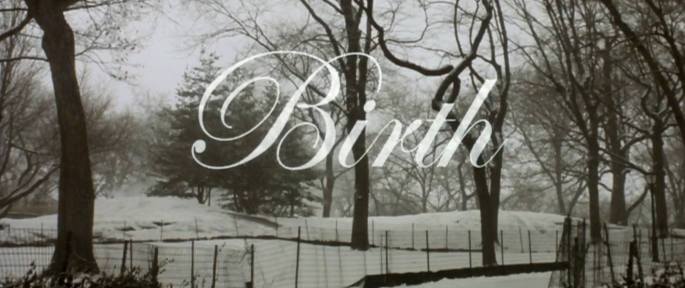
Directed by Stanley Kubrick’s ghost by using Jonathan Glazer’s body as a vessel, the eerie, creepy, totally brilliant (and disgustingly underrated — 38% at Rottentomatoes – are people insane?) 2004 movie Birth is a film that gets absolutely no love. And that’s just wrong – anything this powerful and trippy needs to be repeatedly studied, explored, and discussed. A complete 180 in terms of style and tone from his debut picture, the crime masterpiece Sexy Beast, Birth marked new territory for Glazer as a filmmaker. Visually haunting at every turn (shot by the late, legendary director of photography Harris Savides), with a memorable classical musical score that accentuates every scene, this is a hard-to-describe drama about a grieving widow (Nicole Kidman, never better except for maybe in To Die For), who is paid a visit by a 10 year old boy (Cameron Bright, also excellent in Wayne Kramer’s exuberantly nasty Running Scared) who claims to be her reincarnated husband. From the chilly opening moments of this offbeat, strangely wondrous film, you’re under Glazer’s moody directorial spell, and he never lets you out of his stylish grasp for the entire run-time.

3

One shot in particular – that of Kidman entering an in-progress opera in an extremely fragile emotional state, all done in one, extra-long take – is one of the greatest single shots I’ve ever seen in any movie. A bit hyperbolic maybe, but trust me, you’ll be blown away by the power of this extended moment, which ranks as the best single scene of acting Kidman’s ever given us; the shot means more because it heightens the narrative while stretching the limits of Glazer’s striking visual aesthetic. Alexandre Desplat’s soulful, haunting, and almost overwhelming score sets a funeral tone from the first moment, offering moments of psychological acuity not normally reserved for musical arrangements. Honestly, I dare not spoil ANYTHING to the uninformed viewer; the less you know about this film going in, the better of you’ll be. This is the sort of cult-favored classic that Twilight Time DVD Label or The Criterion Collection should look into licensing, a film made by a still budding auteur, and now with the popularity of Glazer’s hypnotic game-changer Under the Skin, I think it’s time that more appreciation be heaped upon Birth, as it’s truly one-of-a-kind in all the best ways that cinema can offer.

1

TERRENCE MALICK’S TO THE WONDER — A REVIEW BY NICK CLEMENT

1

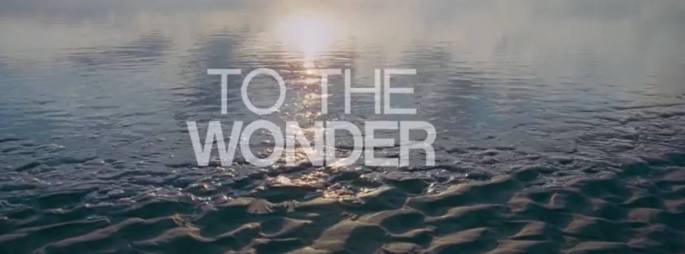
It didn’t matter what film Terrence Malick released directly after The Tree of Life. He could have dropped the next best thing since sliced bread and people still wouldn’t have emerged from the powerful trance that The Tree of Life leaves you in. So, it’s no surprise that the overall critical reaction that met To the Wonder was as mixed as it was (an uncalled-for 46% at Rottentomatoes). This is an intense film experience worthy of multiple viewings, maybe too intense or impressionistic for some. It’s certainly defiantly uncommercial and esoteric in its minutiae. Even more challenging and narratively private than The Tree of Life, To the Wonder is less epic and even more intimate, focusing on Malick himself as a young man (embodied by a mostly silent and observational Ben Affleck), struggling over the various loves of his life (Rachel McAdams, Olga Kurylenko) while trying to determine where to plant his familial roots. Much of the expressionistic tone and story developments shouldn’t be considered “real” — this is a film that is more interested in feelings, textures, mood, atmosphere, and memories. Like The Tree of Life, the events of To the Wonder feel cut from a dream, like half-remembered glimpses into one’s own past, filtered through a cinematic landscape that allows for introspection and reflection.

2

Almost half of what you “see” in To the Wonder is more a projection of each character’s thoughts and desires; the constantly swirling camera and lingering shots of the actors ensconced in deep, contemplative thought strikes me as more metaphorical than literal. Javier Bardem appears as an emotionally conflicted priest and it’s amazing how Malick wraps Bardem’s powerful and dark scenes into the rest of the film. This is an endlessly inquisitive and beguiling work, a subtly sexy and sensual film that will mean something different for every viewer. The incomparable cinematographer Emmanuel Lubezki captures natural light in ways that you’ve never seen in To the Wonder; each shot is worthy of intense artistic scrutiny because the images feel so alive and vital. Malick was interested in pushing the boundaries of cinema with both The Tree of Life and To the Wonder, but in this film, he’s asked the viewer to get engulfed in a mostly silent story, relying even more heavily on voice-over than in his previous films, and the results are positively dreamy and the very definition of unique. It’s that special breed of film that’s truly designed for the audience to ask themselves questions about what they’ve just seen, and it yet again underscores the fact that Malick is working on a level that’s above and beyond everyone else. Greatness is rarely immediately grasped by everyone all at once, and in the case of To the Wonder, time will allow this film’s gifts to grow and spread.

3.jpg

LENNY ABRAHAMSON’S ROOM — A REVIEW BY NICK CLEMENT

1

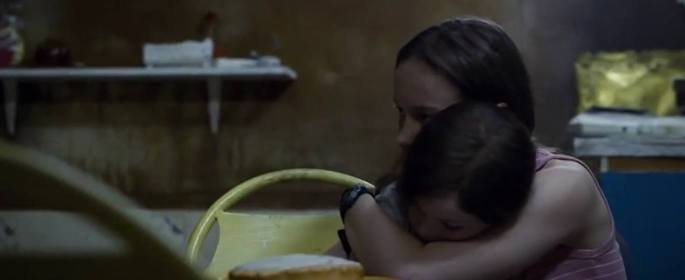
Room is a gut punch. This film snuck up on me and overpowered my emotions. I knew the general gist before sitting down, but I wasn’t prepared for how powerful the film would be. Lenny Abrahamson’s critically acclaimed film concentrates on a horrifying, immensely terrible situation – the imprisonment of a woman with the subsequent birth of a child in captivity – and does so with verve, intelligence, and a keen understanding of what constitutes as cinematic. Brie Larson, in nothing less than a shattering performance, conveys every emotion you might think possible for a human being, never over emoting or coming off as grandstanding; there’s a level of sensitivity to her work in this film that was gracious and revealing, though all of her previous performances have hinted at this doozy of a role. In film after film, especially Short Term 12, Greenberg, and her scene stealing work in Trainwreck, she’s been a major attraction, and in Room, she’s given a part that every single actress must’ve been dying to get. And very much her equal is newcomer Jacob Tremblay, who plays her five year old son, and does so with a sense of honesty and openness usually reserved for actors ten times his age. The filmmakers have taken the interesting approach by focusing the story on Tremblay, with much of the film unfolding through his internalized point of view, which makes the narrative even more contextualized and layered. It’s important to note that, yet again, another challenging and distinctive piece of art was produced by the people at A24; if only they could figure out the distribution portion of the filmmaking process.

2

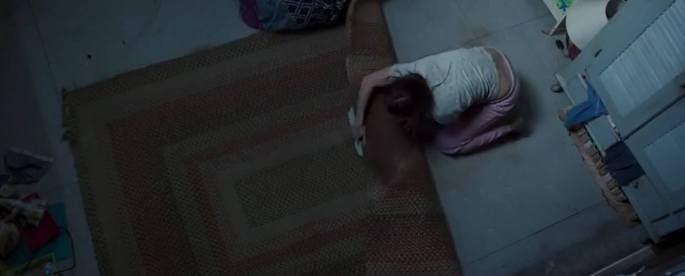
Make no mistake – this film is not going to sit well with many people, as it’s themes are beyond disturbing, emotionally devastating, and all too believable; this sort of thing happens way too often. By shooting in 2.35:1 widescreen in such a cramped setting, Abrahamson and his sharp cinematographer Danny Cohen play with expressionistic angles and skewed vantage points, as the first 45 minutes of this movie are almost entirely contained to the nightmarish shed that Larson and Tremblay have been calling home. The sequence showing Tremblay’s escape is knot-in-your-stomach intense; I haven’t been that edge of my seat in a long time in a theater, at least since the tunnel sequence in Sicario. And when you mix in “This Will Destroy You” by The Mighty Rio Grande on the soundtrack, those moments take on massive visceral impact. Again, Abrahamson’s inherent understanding of what’s cinematic in a story like this is sort of bracing to witness; time after time, this movie doesn’t exactly do what you think it will. Joan Allen is terrific in a small but pivotal supporting role, and the final act stings with a truthful poignancy that wisely makes it clear that NOTHING is OK by the time the credits start rolling. I questioned one, maybe two small things from a plot standpoint, but they were hardly major issues. And as a new parent, I’d be lying if I said that this movie didn’t make me upset on numerous occasions, as there’s something so primal about the ideas at play during this unquestionably forceful piece of filmmaking and storytelling.

3.jpg

F. GARY GRAY’S STRAIGHT OUTTA COMPTON — A REVIEW BY NICK CLEMENT

3

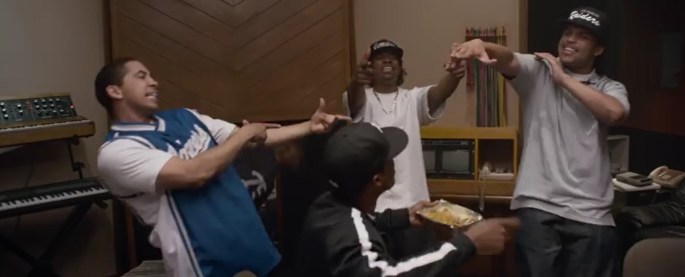
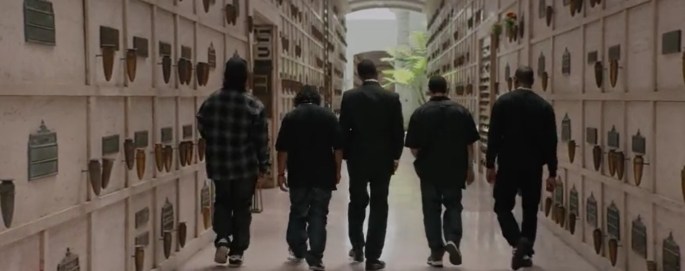
Straight Outta Compton is robust, vital entertainment, painting a vivid tapestry of one of the most turbulent periods of modern societal unrest, and telling an oversized, extremely engrossing tale that’s distinctly American and part of the greater cultural shift over the last 20 years. In a field of 10 potential nominees, even if I felt that there were better films, I am shocked that this movie didn’t have enough votes to get a Best Picture nomination with the Academy, especially considering the fact that it received a hat tip in the Original Screenplay category. It’s timely, it’s provocative, and it’s BIG. But whatever…Oscars or no Oscars…the movie was a massive critical and box office success, and for journeyman director F. Gary Gray, easily the best, most polished work of his career. The film has a dynamic visual style thanks to the slick yet gritty cinematography by Matthew Libatique, and it goes without saying, the movie moves to a SERIOUSLY awesome beat as a result of the near constant greatest hits that play over the soundtrack. Performances across the board are excellent and emotionally affecting, especially those by Jason Mitchell as Eazy-E, O’Shea Jackson, Jr. as Ice Cube (Cube’s son in real life, hence the uncanny physical resemblance), and Corey Hawkins as Dr. Dre. All three of these guys absolutely ripped into their roles with conviction and gusto, and are never unconvincing at any point. They have a great sense of chemistry with one another, and they all complimented each other’s performances by never allowing any one actor to overly dominate.

2

And what Gray and his crew of screenwriters achieved extremely well in Straight Outta Compton was to present the viewer with a time capsule of a city, and a nation, in flux, with the topical discussion of racism and unnecessary brutality and harassment at the hands of the police still an important and incendiary top of discussion. Gangster rap is as American as apple pie and baseball, intrinsically linked to certain sections of this country, with seepage occurring at random and all over. To denounce gangster rap as sensationalistic or as a glamorization of violence and drugs and misogyny would require you to push back against years of TV shows and movies that have all done the same thing – exploit the exploitable elements with a certain degree of swagger. But the difference, if you’re paying attention, was that there were messages in the songs of NWA, songs that spoke to a distinct set of people first and foremost, but offered a glimpse into another world for many others. Yes, the film has a traditional arc, and you get the scenes you’d expect from the musical biopic genre, but even then there’s a zesty sense of professionalism occurring in every filmmaking department. Fans of NWA will love this film, and the uninitiated should walk out with a new understanding, and hopefully respect, for an art form that may not be everyone’s cup of tea, but one that speaks its mind loud and clear, with an understanding of the difficulties of life at the center of the action. Version screened was a Blu-ray of the 2 hour 50 minute unrated director’ cut; I think I know which bit of sexual shenanigans was cut by the prudish asses at the MPAA.

1

PAOLO SORRENTINO’S YOUTH — A REVIEW BY NICK CLEMENT

1

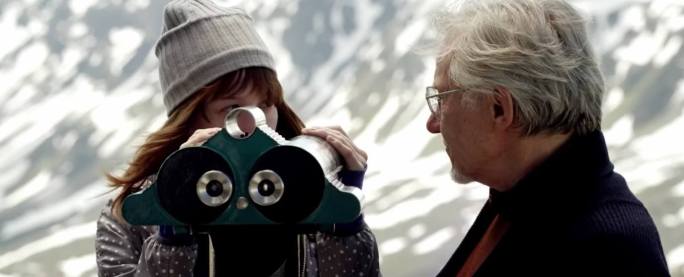
Youth, from director Paolo Sorrentino, is another visually lush and expressive mood piece from this extremely thoughtful filmmaker. Concentrating on the artistic process (both internally and externally), male camaraderie, long lost love, and above all else, the notion of vanity and one’s own life slowly slipping away, perhaps the film was too slow and melancholy for some, or too introspective for others. And while ultimately it might not shed any new light on its often explored themes, the entire package feels uniquely fresh and in awe of its own sense of cinematic richness. Similar to his previous effort, The Great Beauty, Youth has an almost ADD quality to the skipping narrative and to the intoxicating visuals, with Sorrentino adopting an almost Malickian sense of random intimacy, and his skilled cinematographer Luca Bigazzi capturing the exquisite Swiss Alps countryside in all its 2.35:1 widescreen glory. Anchored by a tender and soulful performance by Michael Caine and supported strongly by a wise Harvey Keitel, an emotionally frazzled Rachel Weisz, and a scene stealing, Kabuki-esque Jane Fonda, Youth explores a 50+ year friendship between a famed maestro (Caine) and a storied Hollywood filmmaker (Keitel), who take a vacation together at an ultra-luxury resort and come into contact with an interesting array of people, all of whom dredge up memories from the past, and help to set the course for the future.

4

I never expected the big whammy moment that comes at the top of the third act, Caine really brings it during the home stretch, the various bouts of visual whimsy and fantasy were beyond stylish and well integrated into the main story, and Weisz cut a painful portrait of a scorned woman who is looking to overcome some serious personal sadness. I was reminded, yet again, how much I love her as an actress, as she possesses a striking combination of sexiness and vulnerability, not to mention having some of the best dramatic chops in the industry; one monologue in particular should have netted her more awards talk (if that sort of thing is to be taken seriously…). The eclectic musical score by David Lang sets a playful yet pensive tone right from the start, and it was definitely fun to see Paul Dano with a fake moustache, to say nothing of his late in the game, um, transformation. Youth premiered at the Cannes Film Festival and competed for the Palme d’Or, and received a miniscule theatrical release this past December; I saw the film courtesy of a Region B Italian Blu-ray. Youth was shot at the Waldhaus Flims resort, and from what I read, the entire cast and crew stayed there during filming. Tough life.

2