ANTOINE FUQUA’S SOUTHPAW — A REVIEW BY NICK CLEMENT

1

Southpaw is more square-jawed, darkly-lit, extremely predictable entertainment from director Antoine Fuqua (The Equalizer), who seems very content to embrace clichés and never look back. He’s always been a great shooter (The Replacement Killers POWER) with a terrific eye for detail and visual composition, but he’s never better than the script he’s given, and here, working with a bluntly effective if wholly routine narrative from Sons of Anarchy creator Kurt Sutter, Fuqua lets his ace star, Jake Gyllenhaal, do all the heavy lifting. And once again, Jake G. delivers — this guy is just crushing every single role of late, and he brings a buff and vigorous determination to the role of a broken down boxer trying to win his entire life back after suffering tragedy after tragedy. This movie is sort of odd in that it feels overstuffed but not unwieldy; it’s a boxing movie, a vigilante justice film for a spell, and a father-daughter drama that couldn’t be more on-the-nose if it tried. You’ve seen almost every single scene and set-up that Southpaw has to offer in countless other films, but never blended together quite like this, and while every moment is telegraphed from the get-go, Gyllenhaal’s brutish and extremely physical performance carries the film, keeping it watchable if never surprising.

2

Rachel McAdams shows up in the first act looking all trashy-hot, Forest Whitaker does some reliably solid supporting work, and the boxing scenes are ferociously if unimaginatively shot by Fuqua’s cameraman of choice, Mauro Fiore, stressing tight angles, shutter retention tactics, and in a few instances, some incredible wide shots. The film features one of the final scores by James Horner and it’s one of those amp-up-the-big-moments crowd pleasers that fits for the story. Outside of Training Day (David Ayer’s screenplay is genius), Fuqua’s best film, for me, was his underrated period action drama King Arthur for producer Jerry Bruckheimer; if you’ve never see it, I suggest checking out the unrated director’s cut on Blu-ray. It has a rock solid script, beefy performances, and it looks absolutely fantastic thanks to the gritty and misty cinematography by Slawomir Idziak. I also enjoyed Tears of the Sun more than most, and have always wondered what that movie would have been like had the studio not tampered with the final cut; the editing process on that film, as I recall, was filled with complications. I’ve still not seen Olympus Has Fallen. But back to Southpaw – it’s the sort of movie that you can see coming a mile away, but that you can still engage with because of the performances and the familiarity of the material.

3

DEREK CIANFRANCE’S BLUE VALENTINE — A REVIEW BY NICK CLEMENT

1

In 2010, writer/director Derek Cianfrance dropped a hot-blooded cinematic bombshell on discerning audiences looking for a challenging, unquestionably mature look at a marriage coming apart at the seams. Clearly inspired by the freewheeling yet emotionally rigorous work of 60’s and 70’s era John Cassavettes, Cianfrance and his co-writers Joey Curtis and Cami Delavigne cooked up a stormy two-hander for stars Ryan Gosling and Michelle Williams, both of whom deliver tragically believable performances that should have netted them every single acting award that year; only Williams would be recognized by the Academy with a nomination. Named after the Tom Waits album, Blue Valentine premiered as a competition item at the 26th Sundance Film Festival, and became an immediate sensation, and features an evocative and deeply moving musical score by the band Grizzly Bear. This is a sad and searing film that some people might find too honest and harsh for their comfort levels. Gosling and Williams were outstanding and wholly believable as husband and wife, and it’s downright shocking at times to see how intense the two of them got with each other on a physical level, to say nothing of a personal level. The bruising screenplay goes to some deep, tough places that might hit too close to home for people who have been in volatile relationships.

2

The grittiness of just about everything in the film (the look, the sound, the textures) also helps to make the entire piece feel like a slice of life; at times you feel like you’re watching home video footage of a crumbling marriage. Blue Valentine shows you a marriage with all the highs and all the lows, and how two people who think they know each other are really just scratching the surface with one another. I dare not reveal any of the revelations or surprises that this film has in store as there are any number of moments while watching that you’ll feel the floor moving under your feet. When you have two incredible actors like Gosling and Williams crushing every scene and imbuing every moment with emotional honesty and openness, it’s almost impossible to not become totally consumed and engrossed as a viewer. And that’s what happens during Blue Valentine, or at least, that’s what has happened to me over the course of a few viewings. I forget that I’m watching a movie and I feel like I’m observing two real people and their very real problems. And even though the film ends on a note of slight discontent, there is an oddly uplifting undercurrent that can be felt as the final frames appear and the AMAZING closing song starts to play. It’s a totally sublime ending to an already extremely confident piece of filmmaking, one that carries a raw-nerve sexuality that few modern films ever dare to explore.

3

JAMES GRAY’S TWO LOVERS — A REVIEW BY NICK CLEMENT

2.jpg

All of the movies written and directed by James Gray look, feel, and sound alike. And while Two Lovers, which might be his richest and best yet (fine, The Immigrant is something special…), doesn’t revolve around the sordid world of crime, Russian-NY gangsters, and bloody shoot-outs (Little Odessa, The Yards, and We Own the Night are his other efforts), it’s no less of an accomplishment. Gray is a 70’s filmmaker at heart. His color palette consists of burnished browns, jet blacks, and gun-metal grey. His characters are ambiguous, morally conflicted, and quiet. Themes of family, loyalty, and violence run through all of his narratives, which jump from melodrama to genuine feeling with a peculiar grace. And this is what makes Two Lovers so excellent — it has a timeless quality, its characters seem real without ever falling into cliché, and Gray’s refusal to play anything safe imbues the film with a level of unpredictability that makes for great entertainment. And while Two Lovers may finally be too dour, possibly too portentous for some, the crafty decisions made by Gray and his co-scenarist Ric Menello should not go unnoticed, though they probably will, considering the ridiculously limited theatrical release that the film received. I hope that this movie has found an audience on DVD/Blu-ray/cable, because it deserves to win its share of fans.

3.jpg

The film is essentially a love story, but one shot through with heartache and dysfunction. Leonard Kraditor (the phenomenal Joaquin Phoenix) is depressed, miserable, and more than likely bi-polar. Still reeling from being dumped by his fiancée, he’s moved back in with his loving parents (played wonderfully by Isabella Rossellini and Moni Moshonov). They’re a family of Jews from the Brighton Beach section of Brooklyn, and Gray gets all of the familial minutiae just right. Leonard’s parents want nothing but the best for their boy and are deeply concerned about his well-being. Fearing that he might be regressing back to his addict-days, they arrange a date for Leonard with the charming Sandra Cohen (the extremely natural and appealing Vinessa Shaw, who deserves a helluva lot more work than she’s been afforded), who happens to be the daughter of a business associate of Leonard’s father. If sparks were to fly between the two of them, it might make the merging of Leonard’s parent’s dry-cleaning business with Sandra’s parent’s business run even smoother. But a monkey wrench is thrown into potential domestic and professional bliss when Leonard meets the sexy and emotionally wounded Michelle, played with damaged-goods allure by Gwyneth Paltrow, in one of her absolute best performances. It’s the classic situation: Seemingly good-hearted Jewish man needs to choose between the sensible Jewish woman who is loved by his parents, and the blond shiksa goddess who Leonard craves in a seriously carnal way. Relationships are struck up with both of the women by Leonard, and as he twists and turns his way between the two of them, the audience twists and turns in their seat because of the realistically awkward situations that the characters find themselves in. Who will Leonard end up with? How will his parents react? And will Leonard ever be able to shake off the demons from his past?

1

Two Lovers is the sort of adult-minded movie that people complain never gets made any more. Well, movies like this do exist — the problem is that distributors don’t have any faith in them. This is a shame because there are a lot of people out there who crave this sort of character and detail oriented work. The performances from Phoenix, Shaw, and Paltrow register as career highs for all of them, with Phoenix continuously providing varied and distinctive work all throughout his career. Leonard isn’t necessarily a likable guy, and many of the decisions that her makes seem foolish, but when you look at the story from a slight remove, you realize that the choices made are probably the ones that would be decided upon in the real world. Phoenix has a way with introverted, damaged souls, and it’s clear that repeatedly working with Gray has expanded his abilities as a dramatic artist. You like Leonard even though you probably shouldn’t. At least I did. Paltrow, who has an innate ability to convey sexiness and sympathy in the proper role, shines in a way that she rarely has on the big screen in Two Lovers — she’s totally hot, she’s total trouble, and she totally knows it. And the wildly undervalued Shaw exudes an effortless charm and a natural quality that so few major actresses’ possess. I had hoped that her terrific but subtle work in this film would have led to bigger parts down the road, or maybe a starring role on an HBO or Showtime or FX series, but alas, it’s not happened for whatever reason. And as always with Gray, the film has a stylish but unfussy visual style. Long takes are employed, static cameras are set in place, and the actors were given all the room they needed to carefully etch their layered characters. Films like Two Lovers are rare in that, typically, with a romantic drama, the audience has easy sentiment spoon-fed to them. Not here. Gray makes you work for a potential happy ending, and even when that ending comes, you can bet that there will be shades of uncertainty attached to it. Two Lovers may be small in scale, but it’s huge in heart and feeling.

BRIAN GOODMAN’S WHAT DOESN’T KILL YOU — A REVIEW BY NICK CLEMENT

3

What Doesn’t Kill You is a nifty, gritty little crime gem that slipped past a good chunk of people back in 2008, and you really have to hand it to veteran character actor and first time filmmaker Brian Goodman – he took traditional genre material and made it absolutely pop. This is an excellent but brutal Boston-set crime picture with a phenomenal lead performance by Mark Ruffalo, who is absolutely one of my favorite actors currently working. The fact that this was Goodman’s directing debut only makes the film even more impressive; it displays a sturdy confidence much in the same way that Gone Baby Gone, The Departed, and Mystic River had while working in this similar milieu. The film is very simple but extremely effective. Brian (Ruffalo) and Paulie (Ethan Hawke, terrific as always) have been best friends since childhood. Growing up in the rough and tumble “Southie” district of Boston has led them into a life of crime. They report to crime boss Pat (Goodman, smartly casting himself in the role), who is always taking a cut of their payouts. But when Pat goes to prison, Brian and Paulie start doing jobs on their own and not reporting in to Pat’s team. Then, Brian becomes a base-head, much to Paulie’s anger. And as a result of Brian’s addiction, his relationship with his wife Stacy (Amanda Peet, always solid) and kids becomes very strained. All of these things lead to a climactic decision on the part of Brian and Paulie of whether or not to try and rob an armored truck, which could be the score of their lives.

The film works first and foremost as a meat and potatoes crime movie, but by the end, you’ll notice all the small bits of detail that have been snuck in around the bristled edges. All of the genre’s themes are there: loyalty, friendship, honor, betrayal, love, and anger. Yet none of it ever feels tired or trite. And then when you realize that the movie is a true story, one that’s based on Goodman’s own life (Ruffalo is playing him!), it becomes all the more riveting. Goodman, who co-wrote the sharp screenplay with Donnie Wahlberg(!) and Paul T. Murray, directs with a straight-forward grace and cold elegance that melds perfectly with the wintry backdrop to this always compelling story. Christopher Norr’s desaturated and grey-hued cinematography was a perfect tonal match for the chilly environments and morally ambiguous nature of the characters and narrative. Alex Wurman’s score provided solid dramatic support, emphasizing key scenes with subtle vigor, but never overpowering any of the action or the performances. Had The Yari Film Group not filed for bankruptcy around the time of this film’s release, I really think that Ruffalo could have been in the running for an Oscar nomination for Best Actor. He was that strong, finally getting a meaty starring role after years of colorful supporting work. What Doesn’t Kill You is one of those scrappy, ass-kicking B-movies that transcends its genre roots, becoming better than most movies with 10X the budget and “star power.”

1

DEREK CIANFRANCE’S THE PLACE BEYOND THE PINES — A REVIEW BY NICK CLEMENT

1

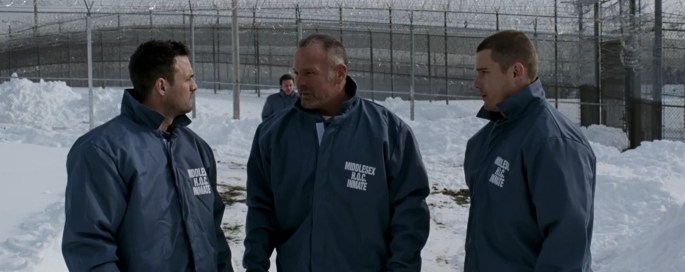
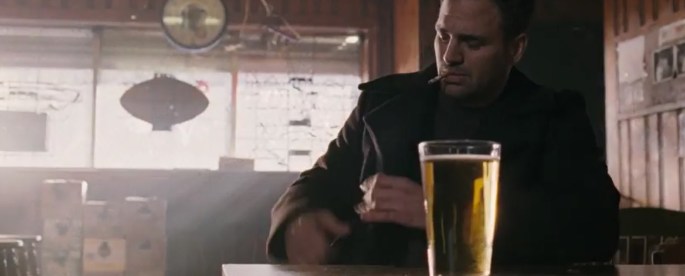
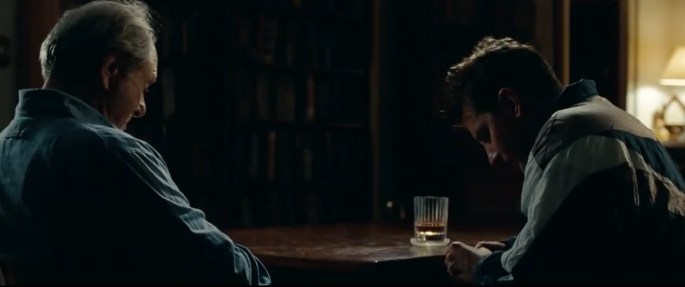
After his emotionally bruising, Cassavettes-esque debut Blue Valentine, director Derek Cianfrance delivered the ambitious crime drama The Place Beyond the Pines, which he co-wrote with Ben Coccio and Darius Marder, a unique and sprawling narrative that concentrates on a variety of subjects and themes: Fathers and son, husbands and wives, the criminal life, family dynamics, politics, law enforcement, and above all else – hard earned feelings. Everyone in this movie FEELS something strong – it’s one of Cianfrance’s greatest strengths as a filmmaker and storyteller – his ability to convey how his characters are feeling. This is a multi-strand effort that spans generations, constantly reaching for the same cinematic breadth and scope of something like Michael Cimino’s epic masterpiece The Deer Hunter. And while The Place Beyond the Pines doesn’t quite reach those immortal heights, it’s still a finely textured and multilayered piece of work that begs reconsideration after it was passed off in March of 2013 as a hard to classify in-betweener by a seemingly reluctant studio.

Ryan Gosling, Bradley Cooper, super greasy Ben Mendelsohn(!), Ray Liotta, Eva Mendes, Emory Cohen, Dane DeHaan, and Rose Byrne all delivered terrific performances in this upstate NY set drama that focuses on the consequences of various choices made by the wide swath of characters. Gosling is a career criminal who learns that he has fathered a child with an ex-girlfriend, played by the sultry Mendes, and what’s asked of him as an actor plays well to his strengths as a performer. Gosling excels when portraying insular men of action, the quiet type given to sudden fits of explosive rage, and here he’s given a juicy role that takes some unexpected turns, and I loved how he wasn’t afraid to be unsympathetic. Cooper, a good cop and stand-up family man who also happens to have political aspirations, is the kind of guy who is always trying to do the correct thing. And when he intersects with Gosling, their lives changes in ways that neither man could ever expect.

3.jpg

There’s a BIG WOW! moment about half way through The Place Beyond the Pines, and I dare not spoil it, but it’s at this point that the film shifts gears, flashes forward some years, and you’re introduced to the children of the various adult characters that have previously been established. It’s a bold, possibly jarring transition but Cianfrance handles it gracefully, allowing the film to progress at a leisurely but never flagging pace; he never confuses detail for bloat. He also, wisely, studs the film with visceral bits of action (the various robberies that Gosling commits and the subsequent getaways are the very definition of thrilling) that are shot with a breathtaking immediacy by cinematographer Sean Bobbitt (12 Years a Slave, Shame). Cianfrance is extremely strong with his visuals, but he’s just as attuned to his words, so the film has a sense of macho poetry to some of its interludes. Ray Liotta, Bruce Greenwood, and Rose Byrne all offer up strong supporting performances, while the somber score by Mike Patton kept the mood appropriately downbeat.

Smartly, The Place Beyond the Pines ends on a moment of introspection rather than clichéd violent bombast, which easily could have occurred if the film were the creation of a less mature voice. However, if I had one complaint about the film, it’s that I wished it were even longer. I wanted more time with these characters, and I wouldn’t be surprised to learn that a three hour (or longer) cut lives somewhere in a vault. At two and a half hours, the film feels complete, if a bit rushed towards the end, and because Cianfrance is aiming SO large and big with this story, I wanted more time for everything to breathe and expand. In any case, this is a tragically underrated movie, one that slipped by a large swath of the movie-going population, but a film that’s rich and serious and novelistic and incredibly solid at the core.

2.jpg

JOHN CROWLEY’S BROOKLYN — A REVIEW BY NICK CLEMENT

2

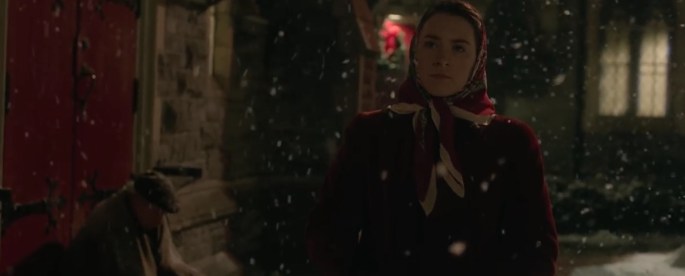
Brooklyn is a delightful film that had me crying pretty much all throughout. It’s heartfelt, it’s poignant, it’s sentimental (in the best possible way), and it features a performance of exquisite care and radiance by Saoirse Ronan, who in film after film has impressed, but here, genuinely dazzles. And completely steals your heart. And did I mention make you cry? From the very first scene, I was wrapped up in this honest, believable, thoroughly universal tale of home, family, love, and unknown opportunities. Yes, the filmmakers have told a romanticized version of the Irish/Italian immigrant experience in NYC circa 1950, but there’s a certain clarity to the message, and a touching sense of nobility to the narrative that reinforces the themes at every turn. Directed with grace and class by John Crowley (Boy A and Intermission, two very gritty and underrated films) and sensitively written by Nick Hornby (About a Boy, High Fidelity) who adapted Colm Tóibín’s novel, Brooklyn centers on Eilis (Ronan), who leaves her mother and sister back in Cavan for a new start in New York. She has a leg up, as a kindly priest (the magnificent scene stealer Jim Broadbent) has helped to arrange a room at a boarding house and a department store job, but her life changes when she meets the potential love of her life, a young Italian named Tony, whose parents had come to the states in search of a better life for their family. There’s an excellent scene at the dinner table where you get to meet Tony’s family, and rather than becoming a cheap stereotype, the moment feels beautifully played by all parties. Brooklyn is a movie about the importance and longing for family, how it defines many of us, and how it can shape us in ways we can’t predict. The movie was captured in creamy, sometimes gauzy tones by cinematographer Yves Bélanger (Dallas Buyers Club, Wild, Laurence Anyways), while the elegant score by Michael Brook (The Perks of Being a Wallflower, The Fighter) never ladles the schmaltz on too thick.

Throw in some drama back at home or Eilis, a budding romance, and the blossoming of her own sense of purpose and individualism, and you’re left with a warm and engaging film that hits all the proper notes you’d expect. Crowley knows exactly how long to hold on Ronan’s face in key moments, wisely holding on his actress’s expressive and pretty face, but also finding the uniqueness in her as a person that helps to separate her from her contemporaries. After some startlingly excellent work in diverse films like Atonement, Hanna, The Lovely Bones, How I Live Now, and The Way Back, this is a further reminder of her skills as a young actress, and offers a fantastic pairing of actress with material. Emory Cohen shines as Tony, the young Italian plumber from a big family who falls in love with Eilis, giving off irrepressible humor and spirit as a man who feels as if life is an endless stream of possibility, especially when he’s living it with the woman that he loves. After being featured in Derek Cianfrance’s The Place Beyond the Pines, his performance here is even more relaxed and sturdy, and you really root for the character. Domnhall Gleeson adds another feather in his cap from 2015 after his superb work in Ex-Machina and The Revenant with a stop for some ruffled-nose-fun in The Force Awakens, getting another juicy supporting role, and never allowing his character to become the cliché that it so could have been. And that’s the thing about the story to Brooklyn – it never gets too complicated or unnecessarily stuffed – this is Eilis’ story and the Ronan show all the way, with the filmmakers wisely zeroing in on the character and letting it take center stage. Ronan totally deserved her recent Best Actress nomination, as it’s a performance that signals a major step up for her as an artist. And it’s a large step up for Crowley, who on a $10 million budget made a film that feels at least twice as expensive, with a smart sense of pacing and tone; I’m anxious to see what’s next for him as a director.

6

AGI’S BIUTIFUL — A REVIEW BY NLC


1.jpg

Biutiful is pure cinema, extremely artsy and personal (so by that definition people liked to call it pretentious…), and a further reminder of how filmmaker Alejandro Gonzalez Inarritu is interested in pushing the form and crafting films of intense emotional and visceral impact. This 2010 Spanish language film was met with passionate embrace from a handful of critics, and star Javier Bardem would win Best Actor at the Cannes Film Festival, as well as garnering an Oscar nomination for Best Actor (which was the first time the Academy recognized an entirely Spanish language performance in this category). The film would also receive a nomination for Best Foreign Language Film, and would serve as Inarritu’s follow up to Babel. Bardem plays a terminally ill career criminal named Uxbal, who cons his way through Barcelona’s seedy, underground sweatshop world, a place filled with darkness hanging around every corner, with back alley deceit a major highlight. But Uxbal has a conscience, and understands the plight of the impoverished workers that make up this hellish environment.

He’s also a devoted family man, in love with his wife to an alarming degree, and as the film traces his final days of life on Earth, we watch as a man tries to put all of the messy strands of his life together, all the while knowing he’ll most likely be incomplete in all his goals. There’s a ghostly spiritual angle to this film as well, which were the portions that rubbed some people the wrong way, but Inarritu has always been intoxicated by a sense of the ethereal in all of his films, it’s just here he took it literally, with results that were, for me, rather intoxicating. Rodrigo Prieto’s gritty yet extraordinarily beautiful cinematography makes tremendous art out of a ton of despair and suffering, offering the viewer boldly designed visual compositions which are as searing as Bardem’s tour de force performance. Gustavo Santaolalla’s mournful score sets the appropriate mood, and it’s interesting to note that the film was co-written by two of the men who Inarritu would script Birdman with (Armando Bo, Jr. and Nicolas Giacobone); in retrospect the two films feels VERY connected on both an aesthetic and thematic level. The great Stephen Mirrione handled the fluid and graceful editing, cutting a picture that doubles back on itself, and uses expressive visual language to communicate mood and feeling. Seek this out if you’ve not seen it.

DAVID GORDON GREEN’S JOE — A REVIEW BY NICK CLEMENT

1

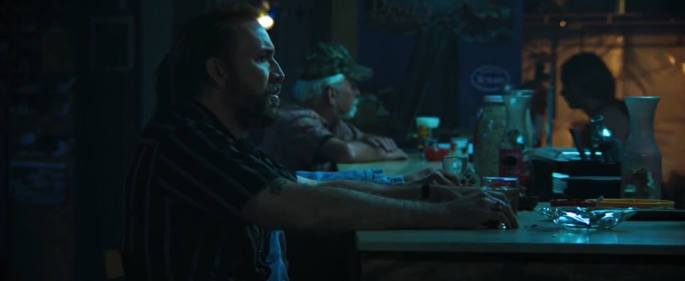
David Gordon Green is one of my favorite filmmakers. Impossible to pin down, he’s dipped his hands into a multitude of genres, going big with some, small with most, and always delivering something unique. He’s been extremely prolific, releasing almost a movie per year, and in some instances, more than one film in a 12 month period; he’s busy and I like it that way, because there’s always something different, edgy, and different about his films. He’s an idiosyncratic filmmaker clearly inspired by 70’s filmmaking, and the more I see of Hal Ashby’s work, there’s almost a modern Ashby sensibility to some of DGG’s output, as he’s always been interested in character and mood and atmosphere and people just as much as he’s been in plot. In his dark, slow burn drama Joe, Nicolas Cage went down and dirty and extra deep and DGG went small town and very mean with the nasty little film. This is a really tough but oddly rewarding movie, filled with low lives and drunkards and raw emotional and physical violence, telling a bruising story about a young boy dealing with a dangerous father, and how the kid crosses paths with a mysterious drifter (Cage) who may or may not be able to change his life for the better. Thanks to Tim Orr’s gritty cinematography, Joe has a very authentic atmosphere, and it’ll make you feel like a shower is necessary afterwards. Tye Sheridan impresses yet again; this kid has a serious streak going. Gary Poulter gives one of the scariest, most unpredictable performances of an alcoholic in a long time. But it’s the Cage show all the way in Joe, and this movie is a further reminder that he can still bring it when he’s interested in working with quality filmmakers on hefty material. He’s invested in the character, and so becomes the audience, and by the finale, the film hits moments of reflection and catharsis that are both unexpected and well earned.

SEAN PENN’S THE INDIAN RUNNER — A REVIEW BY NICK CLEMENT

1

This is a very hard hitting film, and served as Sean Penn’s remarkable directorial debut. I’ve found merit in all of Penn’s efforts as a filmmaker (Into the Wild is likely my favorite of his works), but this has got to be one of the most intense and anguished films from a first time filmmaker, at least that I’ve seen. Curiously based on the song “Highway Patrolman” by Bruce Springsteen, the film is set in Nebraska and revolves around two very unique brothers, one a small-town deputy while the other has resorted to a life of crime. The lawman is played by the wonderful character actor David Morse, giving one of the very best performances of his supremely underrated career, while the criminal is essayed by an early-in-the-game Viggo Mortensen, who gives an incredible and deeply layered performance as a Vietnam veteran who can’t seem to pull his life together no matter how hard he tries. Released in 1991 to excellent critical support but nonexistent box office, the film has attained a cult following, and is one of those small, meditative pieces concerned more with mood and character than about plot and overt payoff.

Anthony B. Richmond’s cinematography stings with burnished elegance, and Jay Cassidy’s editing keeps the pace moving along despite the film possessing a certain slow burn quality. The melancholy musical score by Jack Nitzsche and David Lindley only helps to add to the somber atmosphere, with Penn never resting on his music to do any of the emotional heavy lifting; his actors were more than up to the task while Penn’s screenplay stings in all the proper places. This is a very heavy, dramatic film, with an ending that leans on impassioned family dynamics rather than right and wrong. A fantastic supporting cast comprised of Dennis Hopper, Benicio Del Toro, Valeria Golino, Patricia Arquette, Charles Bronson (quietly powerful), and Sandy Dennis in her final film role all have memorable bits in this tough and sad film, while Arquette’s character goes through one of the most believable child-births that I’ve ever seen captured on film. The Indian Runner is only available, at the moment, on DVD, but this title screams Criterion Collection or Twilight Time.

BERMAN & PULCINI’S 10,000 SAINTS — A REVIEW BY NICK CLEMENT

3

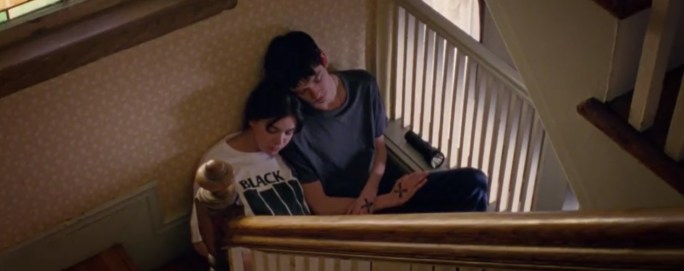
10,000 Saints is a solid indie drama, taking familiar, coming of age material and spicing up the proceedings with some excellent performances from a deep cast, most notably Ethan Hawke and Hailee Steinfeld. Set in the 1980’s in upstate Vermont and NYC, the film follows the journey of Jude Keffy-Horn (an effective Asa Butterfield), an introverted high schooler and aspiring musician, prone to smoking weed and huffing anything he can get his hands on. After a rather unfortunate mishap with his best friend, he decides to change up his lifestyle, and he moves in with his pot-growing hippie father (Hawke, in a sensitive, generous, extrememly funny performance) in the big apple. This film was directed by Shari Springer Berman and Robert Pulcini, the director’s of American Splendor, and if each of their projects hasn’t gotten close to the brilliance of their first, they’ve become reliable storytellers who are interested in that middle of the road story or project. Based on Eleanor Henderson’s novel, the film benefits from an excellent sense of time and place, with 1980’s NYC convincingly recreated on a presumably small budget, with the New England location shooting adding a touch of lived-in believability. Emile Hirsch, Julianne Nicholson, Emily Mortimer, Nadia Alexander, and Avan Jogia all contribute spirited supporting performances, while the camerawork from Ben Kutchins is unfussy yet moodily stylish in a low-key manner. Personal fun fact: one of the producers of this film, Robert Simmons, is an old high school friend – congrats!