PTA’S MAGNOLIA — A REVIEW BY NLC

magnolia

Paul Thomas Anderson’s unique and sprawling sense of narrative was perfectly matched by cinematographer Robert Elswit’s total mastery of the widescreen aspect ratio in Magnolia, a film that feels studiously cinematic, existing in its own hermetically sealed universe, a world that looks and sounds pretty much like our own, but contains a surreal, heightened atmosphere that was made possible expressly because of how well PTA and Elswit understand light, framing, and overall composition. The Stedicam work in this film is extraordinary, with one shot in particular ranking as one of the greatest of all time – the scene where child prodigy Stanley Spector (Jeremy Blackman) is being escorted by his domineering father (Michael Bowen) and stressed-out show coordinator through the bowels of the TV studio. In this long, unbroken piece of virtuoso filmmaking, the audience learns not only about two very important characters, but comes into contact with a variety of peripheral individuals, while providing a fascinating look at the behind-the-scenes machinations of a game show. The shot also starts outside, in the rain, and then moves inside, further upping the technical demands of the crew, which resulted in something truly unifying from a filmmaking perspective; it’s one of the ultimate “show-off” shots that adds something to the narrative instead of just being style for style’s sake. All throughout Magnolia the audience is treated to PTA and Elswit’s massive sense of style (the bit with the camera staying locked in place in the kitchen with Melora Walters and John C. Reilly entering and exiting frame is a delight), which never overpowers the story, probably because the narrative is as juicy and oversized as the visual aesthetic.

And this isn’t an action film or a period piece or some sort of hyped-up thriller, but because PTA is pure-cinema-all-the-time, Magnolia feels big, it feels weighty, and the visual design of the film intermingles with the density of the script and forms one epic yet intimate whole that feels cohesive. The camera seemed at-one with all of the actors and it’s because Anderson and Elswit are so in touch with one another as collaborators that this film feels uniquely organic in a way that few other films ever achieve. The use of music jacked-up many scenes – not to mention the sing-along towards the mid-way point – to the point of dizzying heights; this film has a busy soundtrack, taking in tons of sonic information, in an effort to create an audible tapestry in a decidedly Altman-esque fashion. One after another, a roll call of brilliant actors take center stage and run away with the movie; Tom Cruise, Jason Robards, Philip Seymour Hoffman, Julianne Moore, William H. Macy, John C. Reilly, Melora Walters, Philip Baker Hall, and Jeremy Blackman offer up performances that stare directly into their tortured souls as screen artists. This is a movie about damaged people behaving in questionable ways, so as a result, there’s an anything-goes quality to the narrative. It may not live in the “real-world,” but in terms of an untouched cinematic vision, something like Magnolia lives with the greats of Los Angeles storytelling. Even if the results are exactly your cup of tea, the boldness of the filmmaking simply cannot be denied.

ALEJANDRO GONZALEZ INARRITU’S THE REVENANT — A REVIEW BY NICK CLEMENT

The Revenant, Alejandro González Iñárritu’s aggressively masterful new wilderness epic, is the true definition of a consummate big-screen experience. Comparisons to Apocalypse Now, Aguirre, The Wrath of God, Jeremiah Johnson, Deliverance, and so many others before it are apt and fair; even after only one viewing, I feel confident in saying that this film belongs on the short list of great, filmed-at-no-expense extravaganzas. So few movies have attempted this sense of physical verisimilitude, and it all registers as a towering work that frequently boggles the mind, and most importantly, shakes the soul. Taking the simplest but most effective (not to mention timeless) of narrative conceits and setting this ferocious story of survival and death against one of the harshest environmental backdrops was a stroke of genius that would make Herzog envious; we know that Malick will be doing cartwheels during the show and after the lights have raised, as this is a film that feels cut from the same cloth as that legendary filmmaker – it’s like The New World on crystal meth.

The Revenant is extremely gory and unrelentingly mean and necessarily violent and not interested in holding your hand and being your friend or giving you “entertainment” in the classic sense of the word. But in ways that few studio movies dare to do, it challenges your expectations, dares you to keep watching, and asks you to submit yourself to a piece of filmmaking that’s been expressly designed to showcase death and suffering in all its forms. Nobody and nothing is safe in this film – men, women, children, animals, the landscape – it’s all there to be destroyed, ripped apart, and shattered. The performances from Leonardo DiCaprio and Tom Hardy are both wholly consuming, but in very different ways. DiCaprio is the hero of the piece, and his emotional core can be traced easily – his son has been killed, he’s been left for dead, revenge is all that matters. These are inherent instincts inside of every one of us, whether we want to believe it or not. That this is a true story, all I can say is, good God damn. Tom Hardy is brilliant – yet again – and brilliant in ways that will fly over the heads of many viewers. What he’s able to convey with just his eyes, from film to film, is nothing short of extraordinary, and despite playing the villain in The Revenant, he’s a man of strict moral code, understandable to some degree, which makes his decision making, and finally his cowardice, all the more fascinating to observe. And when the two of them face off in the final act, all bets are off, anything goes, and the way that the filmmakers showcase their brutal face off with one another grabs you by the throat and never lets up.

But the star of the show is director Iñárritu and his peerless cinematographer Emmanuel Lubezki, who with movie after movie, keeps making the case for the label of greatest working cinematographer in the world. And in a world filled with Deakins and Elswit and Richardson and Doyle and Debie and all of the rest of the greats, it’s even more impressive how consistent and extraordinary his films have been. Every shot in The Revenant is glorious; half of the film feels as if it were captured during magic hour, the use of natural light is stunning, and I just don’t understand how some of these long takes have been achieved; movie magic at its finest. Please reflect on this partial list: Children of Men, The Tree of Life, To the Wonder, Gravity, Birdman, The New World. Say what you want about the movies themselves (their all personal favorites from the last few years), but the visual nature of each and every one of them has been second to none, always groundbreaking, and frequently spellbinding. His work on The Revenant is likely his best, taking some of the visual cues he’s picked up from his now iconic (and often copied) collaborations with Malick, and infusing his imagery with a harsh sense of the extreme that is impossible to ignore. I can’t believe that Fox put up $135 million for a wildly savage, proudly R-rated movie that offers zero chance of sequels and lunchboxes and toys and action figures; in this respect it’s this year’s Interstellar, an ambitious, auteur driven anti-blockbuster blockbuster made by a singular filmmaker who isn’t interested in capitulating to anyone.

The Revenant asks a lot from the viewer – to remain patient, to witness an unending amount of bloodshed and bodily terror, and to put you in the position of both of the two lead characters, for better or for worse. The bear mauling is one of the great modern CGI set pieces that I’ve ever seen, and trust me, I’m ALWAYS looking for wonky effects or anything to pull me out of moments like these – NOPE. It never happened. It’s virtually flawless, with some individual shots that are as gnarly as it’s going to get. That steam that releases from the bear’s mouth and that mists the camera lens is a movie moment I’ll not soon forget, to say nothing of the bear’s foot pressing down on Leo’s face, claws out and ready. That’s the thing about this movie – there are SO many of THOSE moments – it’s pure cinema, fusing image and sound (seriously, the sound work in this movie is extraordinary, from the diverse score to the perfect use of ambient sound effects) and ideas into an incredible package that feels thrillingly alive and desperate to blow us away. It sits alongside George Miller’s Mad Max: Fury Road as the defining movie, for this viewer, of 2015, and a work that I cannot wait to see again.

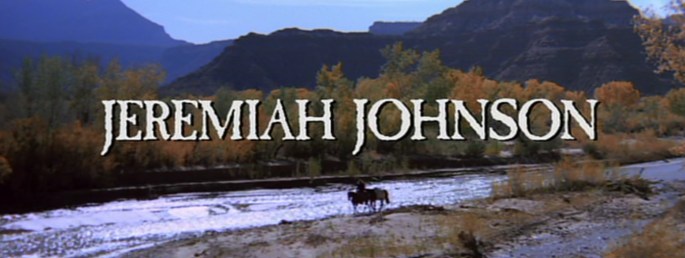
SYDNEY POLLACK’S JEREMIAH JOHNSON — A REVIEW BY NICK CLEMENT

2

Overwhelming amounts of machismo. 1972 Sydney Pollack POWER — directing with tough, elegant grace. John Milius POWER — he pisses manliness and this film is further proof of this fact. Duke Callaghan POWER — one shot after another of staggering beauty. Jeremiah Johnson is a thoroughly absorbing relic from another time, and a perfect movie for a chilly winter’s night. Robert Redford in his GOLDEN GOD years. No CGI. No lame-ass blue-screens. No studio sets. Let’s get out there in the mountains and film an epic. A true epic. Every movie NEEDS an overture. This one has one. And it’s glorious. Based in part on the life of mountain man John “Liver-Eating” Johnson, with Redford in the leading role, and the excellent Will Geer as “Bear Claw” and shot on location in Utah, the film has that extra special feeling of something that was crafted in the outdoors and without the aid of easy studio assistance. Lee Marvin and Clint Eastwood had been considered for the lead role at various points, and filmmaker Sam Peckinpah had been attached to direct before Pollack ended up getting the job. Shot on a reported $3.1 million budget, the film screened at the Cannes Film Festival, and would then become a big box office hit, grossing $45 million, and garnering tremendous critical praise. The Blu-ray release is extremely spiffy, cleaned up for sure, but still retaining that gritty, old-school-film-texture that seems to be slipping away into the cold of the night…


BILL PAXTON’S FRAILTY — A REVIEW BY NICK CLEMENT

f

This movie is so scary because I believe every second of it. No manufactured scares, no fake-outs, no cheap and easy genre traps. Bill Paxton directed this film with the intensity of a vice grip; it’s as uncompromising as storytelling gets. The performances are searing, with Paxton off the Richter scale amazing, and Matthew McConaughey doing fantastic pre-Renaissance work as a man trying to figure out how to grasp the most fucked up of situations. Murder motivated by the warping of religion is something that you read about all the time, which is why the very fibers of this movie have the ability to make your skin crawl. And the way that the Paxton character implicates his children…it’s the stuff that true nightmares are made of. Why hasn’t Paxton directed more after this utterly masterful debut? Are there no stories he feels that are worth telling? Released to excellent reviews but close to zero box office back in the spring of 2002, this film is so ripe for rediscovery, especially considering how popular horror movies have become over the last 15 years. This one has brains, though, which is probably why its profile is so low; this is my sort of horror movie, the type of film where I get hooked because of how much I could see the story unfolding in real life. Bill Butler’s crisp cinematography maximizes space and utilizes all the right angles to cover the bone chilling twists and turns of the narrative, while the creepily effective musical score by Brian Tyler doesn’t go over the top with gotcha! musical cues. Powers Boothe is superb in one of his customarily gruff supporting turns. This is a thought provoking thriller that has remained swept under the rug for far too long. The final moments will send a chill up and down your spine.

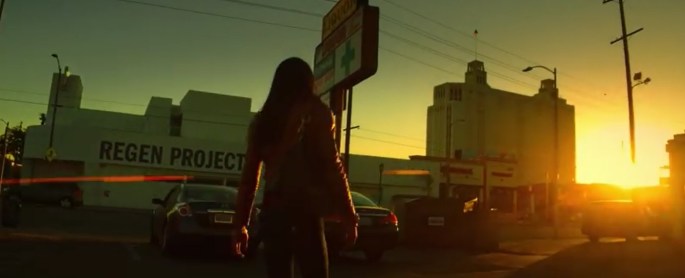
SEAN S. BAKER’S TANGERINE — A REVIEW BY NICK CLEMENT

3

Tangerine is a bold, raw, and deeply felt independent film from director and co-writer Sean S. Baker; it’s the first film I’ve seen of his and now I eagerly anticipate his next move as a filmmaker. This is the often hysterical, often draining story of two African-American transgender prostitutes, played with loud charm by Kitana Kiki Rodriguez and Mya Taylor, living VERY rough-and-tumble existences on the dangerous and dirty streets of Los Angeles. The believability factor of this project lies in the fact that the lead actresses, both of whom had zero major acting experience in the past, were former sex workers; this is their territory and they both explode off the screen in this abrasive and frequently uproarious movie. I can’t stress how unexpectedly hilarious I found large portions of this vibrant movie to be — there’s a direct honesty to almost every single scene, and while this is a world that I know nothing about on a personal level, you can’t help but get wrapped up in this whirlwind of people and places and confrontations and life moments; sometimes you don’t need to relate to the on-screen characters in order to empathize and sympathize with them. Yes, there’s a plot, a rather traditional one at its core, but what makes this movie so fresh and exciting are the progressive aesthetic decisions, the progressive social values, and the earned sweetness of the rather touching final moment. Co-produced by the Duplass brothers (do these guys ever sleep?!), this has the spontaneous feel of their best work, while much has been made of Baker’s interesting stylistic decision to shoot the entire film on a series of iphones; the 2.35:1 widescreen cinematography is extremely impressive and expressive for such a shoe-string approach to filmmaking. Tangerine is one of the year’s most interesting and unique films, and it’s currently streaming on Netflix for those who are interested.

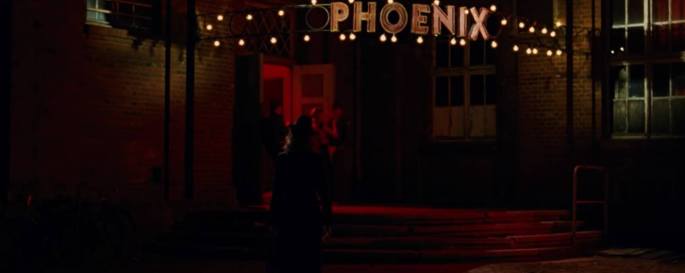
CHRISTIAN PETZOLD’S PHOENIX — A REVIEW BY NICK CLEMENT

2

Lurid, improbable, and highly entertaining, Phoenix, from director Christian Petzold, plays like a rarefied version of Face/Off. Set against the backdrop of Nazi-infested Berlin during WWII, the story centers on a female Holocaust survivor and former cabaret singer, who becomes horribly disfigured after being shot in the face. After reconstructive facial surgery leaves her looking nothing like her previous self, she sets off on a course to track down her husband, who may have been responsible for selling her out to the Gestapo. Nina Hoss gives a very effective and sympathetic lead performance, inviting the viewer into this crazy story and keeping you invested despite the inherently contrived nature of the piece; it’s all VERY cinematic, and extremely confident, so as a result, you just go with it. The movie, at times, felt like Paul Verhoeven’s Black Book, and while I liked that film a tad more than Phoenix, there’s much to admire with this fancy looking and exceedingly engrossing thriller. There’s a slight element of light Cronenberg-esque body horror during the first act, with a more restrained sensibility of course, while also mixing traditional historical touches and the war-time setting. The cinematography by Hans Fromm is lush and very stylish, with a complimentary musical score from Stefan Will. The script is as tight as the editing, with zero wasted scenes and all 100 minutes used very well in an effort to tell a zippy, crafty story. The film’s final scene might be one of the single best movie moments of the year in general, as so much is said with zero back and forth dialogue.

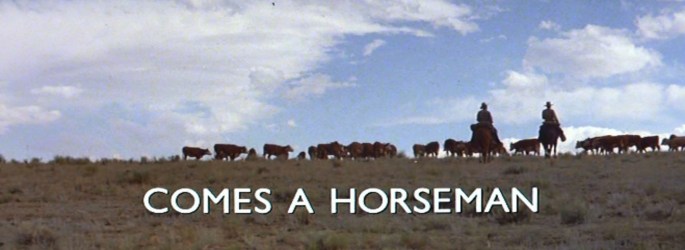
ALAN J. PAKULA’S COMES A HORSEMAN — A REVIEW BY NICK CLEMENT

2

Director Alan Pakula and cinematographer Gordon Willis reteamed for the revisionist Western Comes a Horseman, which on the face of it, seems like a project a bit out of their comfort zone on initial inspection. But upon actual viewing, Comes a Horseman is a fascinating piece of work that set out to demystify the genre, joining a group of gritty westerns that traded off of iconic imagery while skewering the very conventions that they stridently presented. Certainly not a traditional Western but set in the American West of the 1940’s, the narrative pivots on two ranchers (James Caan and Jane Fonda, both steadfast and excellent) who operate a small farm and who become threatened by economic hardships and the greedy plans of a local land baron (Jason Robards, commanding and menacing). Fonda was at her career peak when she signed on for this post-modern genre item, having just won an Oscar for Hal Ashby’s masterpiece Coming Home, and the film reunited her with Pakula, who had directed her in Klute, which was the film she won her first Oscar for. It also reteamed her with Robards, as the two had co-starred in Fred Zinnemann’s 1977 box office hit Julia. Pakula and Willis brought a more simple visual style to Comes a Horseman than one might expect, and while the two talents certainly paid respect to the milieu that they were working in, they opted for a more reserved aesthetic, stressing striking yet unadorned widescreen compositions as opposed to anything fancy or overtly ostentatious. There’s visual sweep to the imagery but at the same time one gets the sense that Willis was interested in subverting expectations, even while the filmmakers tipped their hat to classic staples like Red River. A film ripe for rediscovery, it’s available on DVD, but a Blu-ray would really make this underrated effort pop and sing.

HAL ASHBY’S BOUND FOR GLORY — A REVIEW BY NICK CLEMENT

2

Intimate on a narrative level and epic in visual scope, the 1976 film Bound for Glory is a supreme piece of American filmmaking, centering on one of the country’s most despairing time periods, filled with all of the small but vital humanistic touches that defined the work of director Hal Ashby. David Carradine delivered nothing less than a tour de force performance as folk singer Woody Guthrie, who traveled the country looking for fortune and fame during the Great Depression. With a colorful supporting cast including Ronny Cox, Melinda Dillon, Gail Strickland, Randy Quaid, and John Lehne, there’s never a dull moment, even if the film moves at a purposefully languid clip. But because Ashby took his time with this story, you get all the more invested in Guthrie’s plight and his desire to get a leg up in the world; the sequence where he gets to show his family their new house is nothing short of misty-eyed touching without veering into the overly sentimental. This was the first movie to employ the use of the Steadicam, with inventor Garrett Brown handling the operation, and the legendary Haskell Wexler calling the shots as cinematographer (he’d win the Oscar for his bronzed and beautiful work on this film). This film also features a few bar fights and train brawls that are some of the best staged sequences of cinematic beat-downs that I’ve ever seen; punches fly with vigor in this movie! There’s also a fascinating hobo component to the movie, with a majority of the picture highlighting the hardscrabble life of desperate men living in one of the most desperate of times in America; while beautiful looking, there’s an emotional harshness that permeates most of the scenes. Bound for Glory would be nominated for Best Picture, Best Adapted Screenplay, Best Costume Design, and Best Editing, but would only take the statues for Wexler’s groundbreaking photography and an Oscar for Best Original Score. The DVD that Netflix shipped was, sadly, presented in non-anamorphic widescreen, but never fear — Twilight Time is releasing the film on Blu-ray this year, along with another classic Ashby title, The Last Detail. Time may have forgotten about Bound for Glory, but viewers shouldn’t; it makes for an excellent companion piece to The Grapes of Wrath and is a further reminder of the genius that was Hal Ashby.

bound_for_glory_ver2


ROY ANDERSSON’S A PIGEON SAT ON A BRANCH RELFECTING ON EXISTENCE — A REVIEW BY NICK CLEMENT

2

The absurdist and thought provoking black comedy A Pigeon Sat On A Branch Reflecting On Existence is going to prove to be an endurance test for some viewers. I’m not gonna lie – people are gonna either turn this off within a matter of 10 minutes, or, fall totally under its beguiling spell. And my guess is that the filmmaker’s would be beyond happy with this fact. It’s literally 100 minutes of wide static shots, no real plot to speak of, highly artistic in a very private manner, eschewing any sense of the traditional, all in an effort to communicate an existential and experiential study of human beings and the banalities of life. I found it to be hysterical, cynical and progressive at the same time, endlessly interesting on a formal level, and all together bewildering by the conclusion. Swedish director Roy Andersson crafted a thematically linked trilogy of movies about the simplicity (both ugly and beautiful) of life, with Pigeon acting as the concluding chapter (the previous two efforts, Songs from the Second Floor and You, The Living, are unseen by me), and I can honestly say that there’s nothing else I can think of that truly feels like this movie.

There are elements of it that reminded me a tad of the French curiosity Lil ‘Quinquin, but Pigeon is truly its own thing, offering a series of vignettes featuring a rotating cast of characters in increasingly bizarre and surreal situations, learning hard but true lessons about life, while the beyond patient camera stares unflinchingly (and with zero judgement) at its subjects with almost cruel and unnerving intensity. The stuff involving the world’s most humorless salesmen selling joke and novelty items is a stroke of genius, and the last act involves some highly arresting (both visually and narratively) sequences that sort of just need to be seen to be believed (the human cauldron is something I’ll not soon forget). This isn’t a thriller or anything salacious, but because of the fixed compositions, lack of mickey-mousing with the music, and the unfamiliar actors, one gets the sense that anything is possible within the world of this strange film. I’m doing a poor job of explaining the content of this movie; watch the trailer and you’ll know rather quickly if this movie will be up your cinematic alley. It’s available as a streaming option via Netflix, and I would presume that there are other ways of finding this offbeat and totally original piece of work.


WOODY ALLEN’S MANHATTAN — A REVIEW BY NICK CLEMENT

1

There are so many reasons why Manhattan is considered one of Woody Allen’s greatest films. The pitch perfect performances, the astute direction, the funny and self-reflexive screenplay, and maybe most of all, the dreamy photography, Manhattan is a cinefile’s dream. One of the silkiest black and white films ever committed to celluloid, the widescreen cinematography by Gordon Willis is some of the most impressive and shimmery work that the master craftsman ever produced. This is one of Allen’s most romantic films (albeit bittersweet), as the script that he co-wrote with Marshall Brickman covered the usual neurotic behaviors that came to dominate his oeuvre. Directed with a sense of grace by Allen, the film became an immediate classic, and through the high contrast photography that casts New York City as its own special character, Manhattan possesses a formidable sense of style that feels incredibly particular and nuanced. The unforgettable image of Allen and Diane Keaton sitting near the 59th Street Bridge is one of those iconic moments in film history, with Willis demonstrating an innate understanding of how to frame his actors within the anamorphic 2.35:1 compositional space, and it’s key to note how he favored spatial geography as a way of representing distance and comfort for the characters within the emotionally fragile narrative. It’s interesting to observe that Allen demanded that all home video copies of this film be released in letterboxed format only, thus preserving the original aspect ratio. Take that, philistines!