PETER STRICKLAND’S THE DUKE OF BURGUNDY — A REVIEW BY NICK CLEMENT

2.jpg

Methodical, erotic, and exquisitely photographed and edited, The Duke of Burgundy is one of the more memorable films from 2015, a piece of work that’s in love with the very foundations of cinema and the endlessly possible ways that the moving image can transport the viewer to a richly atmospheric and highly seductive world. A romance, a thriller, a psychological horror story, and above all, a strangely sexy exploration of mental and physical domination, there isn’t a shred of nudity in this hot-blooded independent film, but that doesn’t matter; your pulse will race just from the sight of a person touching another’s leg. Writer/director Peter Strickland has made a film that Brian De Palma would and should be envious of; you feel the stylized filmmaking in this intoxicating and highly artsy effort right from the start, much in the same way that a De Palma film traffics in self-reflexivity and heightened stylistic flourishes. The Duke of Burgundy moves at a purposefully slow pace, inviting the audience into its esoteric and enigmatic playing field, where you observe the back and forth between two very particular women, and how they use sex, lust, power, and potentially love, in an effort to one up each other emotionally and mentally. Chiara D’Anna and Sidse Babett Knudsen are both spellbinding in this film; you literally can’t take your eyes off either of them, if not out of wonder about what they’ll do next, but rather, they’re just so strikingly photogenic in very unique and unexpected ways. The costumes and lingerie featured in this film are also major strengths; the undergarment supervisor is even given an on screen credit which is something I’m not sure I’ve ever noticed before! The entomology subplot puts things into thematic context while allowing Strickland some amazing opportunities for impressionistic filmmaking, while the entire film feels wholly unique in and of itself; there’s very little that I can think of that this film compares too. While not likely for everyone, this is one of those amazing pieces of dreamy and velvety storytelling that will produce a charge out of patient and artistically inclined viewers. The film also features an unsettling and nervy musical score, one that raises the tension levels while still hitting some lovely, romantic beats of sophistication. Available to stream via Netflix and also available on Blu-Ray and DVD.


GREGORY JACOBS’ MAGIC MIKE XXL — A REVIEW BY NICK CLEMENT

3

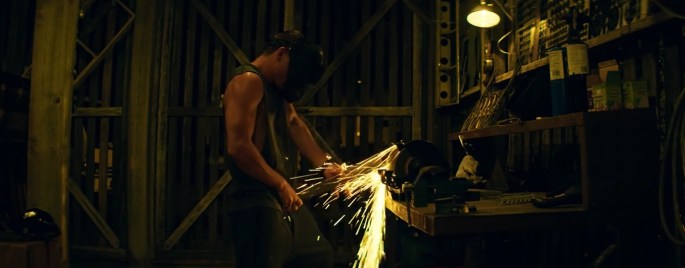
Gregory Jacobs’ Magic Mike XXL is a hoot and a holler, and a total 180 from the original, far more ambitious film, which I legitimately feel is great, subversive cinema. With Steven Soderbergh handling the cinematography and editing (under his usual pseudonyms of Peter Andrews and Mary Ann Bernard, of course), the entire tech package of Magic Mike XXL is super-slick and extremely thoughtful on an aesthetic level; there are some dynamic shots, either because of the camera movements or the still placement of the camera, and the editing has a pleasant hum that allows for an easy-going time. The script is nowhere near as interesting as the first film, but it’s really no less entertaining; this is the male stripper movie for those who felt that there wasn’t enough stripping and saucy shenanigans in Magic Mike. Whereas Soderbergh clearly wanted to subvert expectations with his surprise 2012 blockbuster, here, the vibrant looking sequel is more interested in having fun with a capital F, with a general party atmosphere firmly set in place right from the start.

Gone are any discussions of bank loans and start-up capital in favor of a more jocular, rambunctious tone. Channing Tatum is back as our entry point into this wild and wooly world of male entertainment, with most of the original film’s supporting cast making return appearances (notably absent is Matthew McConaughey). The ultra charismatic Joe Manganiello has a terrifically funny scene inside of a gas station convenience store, Twitch from So You Think You Can Dance shows up for some sexy dance routines, and I loved the Cougar Party with Andie MacDowell (she’s looking very fine…!) Also, the extra hot if too skinny Amber Heard shows up for some fun, Jada Pinkett Smith nails her scenes with authority, and the lovely Elizabeth Banks is a stunner in her extra-tight body suit during the protracted and highly spirited finale. There’s a level of innocent cheesiness to the entire thing that helps to make it all very non-threatening and harmlessly enjoyable, and even if it’s not up to the overall brilliance of the original (how could it be?), there’s plenty here to keep you satisfied. And here’s a final thought — now that we’ve gotten TWO high-profile male stripper movies from a major Hollywood studio, how’s about we get Magic Michelle?

JJ ABRAMS’ SUPER 8 — A REVIEW BY NICK CLEMENT

1

Out of all the movies directed by JJ Abrams, that I’ve seen, Super 8 is easily the best. It’s a spot-on and misty-eyed evocation of late 70’s/early 80’s BEARD POWER with nods to countless genre staples. It feels like the ultimate lost Amblin film. Terrific cinematography with an obscenely awesome amount of lens flare POWER, great production design, and energetic and at times exhilarating musical score, and engaging performances from all the kids. It’s not a perfect movie but it’s immediately engrossing, and by the end, completely satisfying. The father-son component was a huge reason for this film’s success as a piece of emotional storytelling; this is the sort of CGI/monster movie I want to see, a film where the need for special effects is born out of the story and the characters and not used as a crutch or for cheap gags. As always, Abrams directs in his awe-shucks style of intensity, making smart creative choices and allowing his innate understanding of entertainment to rule the day. The list of movies that are either visually or thematically referenced in Super 8 is totally wild: Close Encounters of the Third Kind, The Explorers, Poltergeist, The Goonies, The Monster Squad. Gremlins, and E.T., to name only a few and off the top of my head. And yet somehow, the movie feels all its own. And it must be mentioned again — there’s an astonishing amount of lens flares in this movie, which always makes me smile. Kyle Chandler totally owned all of his scenes, bring gravitas and sensitivity to his role as the beleaguered father figure, and as usual, Elle Fanning showed why she’s one of the best talents of her generation. This is an underrated blockbuster and one that’s worth revisiting or catching up with if you initially missed it.

KIMBERLY PEIRCE’S STOP-LOSS — A REVIEW BY NICK CLEMENT

1

With the exception of one effort, movies about the Iraq war have all faced an uphill battle with American audiences. Continually, it seems that ticket buyers are disinterested in seeing anything remotely resembling real life, featuring performances that are honest and true, and that look to illuminate on topical situations that are important to our societal landscape. For way too many people, it’s all about CGI trickery, franchises, and sequels, and they don’t want to know about anything else. I’ve grown increasingly disinterested in movies that resemble video games, and have been exploring older films and other titles that have slipped through the cracks. A few nights ago while on diaper duty with my infant son, I was surfing the movie channels, and I happened upon Kimberly Peirce’s searing and wildly underrated drama Stop-Loss, which is easily one of the finest contemporary war movies from the past decade, an ambitious work that might have bit off a tad more than it had time to chew (I’ve always wondered if a director’s cut was lurking somewhere…?), but a film that covers intense, hugely emotional material, all centering on a subject that is as enraging as it is frustratingly understandable. This blistering film died an undeserved death at the box office despite mostly positive critical notices, but too often, it seems as if people enjoy ignoring what’s going on around them when it comes to their choices in entertainment. This film simultaneously operates as a tribute to our men and women who put themselves in harm’s way on the battlefield, while also acting as a scathing critique of military policy. That Peirce is able to juggle multiple story strands within a very intimate framework is a further reminder of her excellent filmmaking and storytelling abilities. This was her first film in almost a decade since she burst on the indie scene with the uncompromisingly raw Boys Don’t Cry, and she’d follow up Stop-Loss with her updating of the classic horror entry Carrie; I hope she’s back with a new project very soon on the big screen.
2
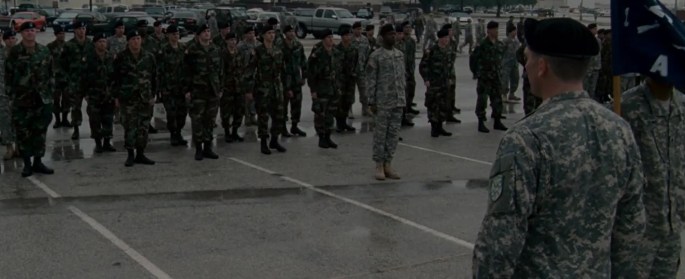
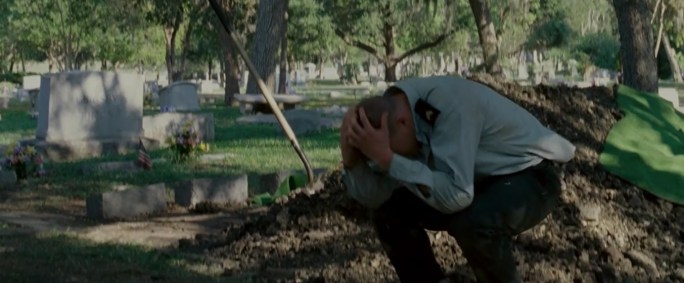
Stop-Loss begins with an intense battle sequence set in Tikrit. A unit of American soldiers led by Brandon King (Ryan Phillippe, never better) chase their enemy into an alley. His squad, made up of two friends from back home and a group of other young soldiers, are ambushed. A few men are killed, some are horribly injured, and all are deeply affected by what they see and what they have to do. This incredibly visceral sequence of action, shot vividly by the phenomenal cinematographer Chris Menges (The Killing Fields, The Three Burials of Melquiades Estrada) and expertly cut by editor Claire Simpson (The Constant Gardener), is scary and relentless. It’s also necessarily bloody and violent; by immediately thrusting the audience into battle without knowing anything about our characters, the viewer is catapulted into this world without warning. Brandon leads his men eventually to safety and we cut to their homecoming in Brazos, Texas where King and soldiers Tommy Burgess (the excellent Joseph-Gordon Levitt) and Steve Shriver (a brooding Channing Tatum) call home. Peirce and her co-writer Mark Richard effectively set the scene once the men arrive back home, with their narrative recalling some beats from Hal Ashby’s Oscar winning Vietnam war drama Coming Home. All of them are hard drinkers, and are not without their own sets of personal issues which stem from before they left for Iraq. Needless to say, the men all have trouble adjusting to life back in the states. Tommy is an alcoholic who can’t control his marriage and Steve is suffering from a serious case of post-traumatic stress syndrome (he’s seen digging fox holes in his front yard, in one of the film’s most harrowing moments, because that’s the only place he can comfortably fall asleep).

But Brandon has a bigger problem. Not home more than a few days, he gets the word that he’s been “stop-lossed” by the military. Considered an important and valuable soldier by his superiors, he’s ordered to go back to Iraq for another tour, despite having served two tours already. It’s in his standard issue military contract but the option isn’t executed for every soldier; this is an at-random thing. Naturally, Brandon objects, as he doesn’t feel it’s fair to send him back to fight, especially now that his opinion of the war has drastically changed. Peirce and Richard’s story stings of authenticity and I’m not surprised; her step-brother signed up to fight for America as a direct result of 9/11, so I’m assuming that some of this material had to have been culled from his experiences. The men in Stop-Loss come from military families and are all cut from the same patriotic cloth. Fighting for their country is as natural of a decision as brushing their teeth. But Brandon feels that enough is enough. He goes AWOL and hatches a plan to drive to Washington to confront a Senator that welcomed him upon his arrival home. Steve’s girlfriend Michelle, the Australian actress Abbie Cornish (gorgeous and extremely sympathetic), has been life-long friends with Brandon, and agrees to accompany him on his trip. Stop-Loss then takes the form of a road-movie for its middle section, where we’re shown what life is like for an AWOL soldier. Brandon runs into some other AWOL soldiers, who tell him of their life on the run from their superiors, and he’s told stories of a mysterious guy in Manhattan who for $1000 can arrange for safe passage to Canada. Only snag — you’re never able to come back to America.
3
Peirce and her creative team also spike the film with cut-ins of the soldier’s experience. Taking the form of personal videos shot during combat and personal downtime, these interludes enrich the story with a sense of the personal and a sense of the dangerous. Peirce uses this technique to heighten the scenes set in Iraq, and as a way of bringing the war back into focus during the road-trip sequences. Cinematographer Menges and Peirce use multiple film stocks and a lot of hand-held camera to ratchet up the intensity all throughout the film. It’s a visually dynamic piece of filmmaking that constantly surprises on a formal level even during the simplest of scenes. During the opening fire-fight, Peirce and Menges‘ camera covers the action in interesting ways that you haven’t quite seen before. The performances are uniformly excellent. Phillippe was fantastic in the lead role, bring conviction and determination to the part of a man at odds with himself and pretty much everyone around him. Because of his good looks, he’s been an undervalued dramatic actor; see his work in Crash, Flags of Our Fathers, and Breach as more examples of his abilities. But his performance in Stop-Loss should be considered a revelation for him as an artist. Sure, he’s still buff and camera-ready, but there was a somber, soulful quality in his performance that’s hard to shake. One scene, in which he’s attacked by some local drunks outside of a bar, is unflinchingly intense; the battle scars he received in Iraq come back to haunt him in a major way. Tatum, who burst on the scene in the indie A Guide to Recognizing Your Saints before recently becoming a mega-star thanks to Magic Mike and the 21 Jump Street series, was also very effective in his role as Brandon’s best friend and severely traumatized soldier. Late in the film, Brandon and Steve get into a physical confrontation that was startling in its believability and sadness. And Gordon-Levitt, who at the time was hot off the success of the ultra-stylized indie Brick, struck all the proper notes as a deeply troubled young man who simply cannot get his personal life in order. This is a big, sprawling, purposefully messy, extraordinarily heartfelt film, one that did not deserve to wither on the vine at the box office. When a filmmaker like Peirce delivers an honest, smart, and entertaining film that’s important to our national conversation, what’s to be said about the lack of interest on the part of our fellow citizens?

GUY MADDIN & EVAN JOHNSON’S THE FORBIDDEN ROOM — A REVIEW BY NICK CLEMENT

2

Uncompromising, hallucinatory, and certainly not for all tastes, The Forbidden Room, from directors Guy Maddin and Evan Johnson, is a stylistic tour de force for everyone involved, and a further reminder that there are cinematic artists out there who are pushing the limits and expectations of even the most seasoned and discriminating of viewers. The highly expressionistic/impressionistic cinematography by dual shooters Stéphanie Anne Weber Biron and Ben Kasulke is nothing short of spectacular, producing a phantasmagoria of images, all of which consumes the viewer with ferocious intensity that some might feel suffocated, if not continually startled. Similar in tone and spirit to something like Ben Wheatley’s bravura A Field in England but wholly original on its own terms, this is a work that’s best to be experienced rather than cajoled into seeing. Check out the trailer, and you’ll know within 20 seconds if this is something that you might enjoy or respond to. Starring some familiar faces including Charlotte Rampling, Mathieu Amalric, and Udo Kier (a frequent Maddin collaborator), this is as non-linear and esoteric as it’s likely going to get, a true piece of challenging art cinema that’s likely to frustrate and excite in equal measure. The rough “plot synopsis” sounds as if you are making it up as you go along; I’m not going to bother with a point by point, blow by blow summation of this film. Initially, this isn’t a movie to study on a micro level, but rather, The Forbidden Room is the true sum of all its wild and crazy parts, a nightmarish odyssey into cinematically strange territory, with a distinct point of view that elevates it from just being weird for weird’s sake. And if you’re a fan of it, The Forbidden Room will likely engender multiple viewings, so as to dissect all that’s being hurled at you, and all that’s being discussed within its dense, thoughtful, and metaphorical narrative. It’s also interesting to note that the film was shot in various public studios (interested parties could visit and attend the shoots) at the Centre Georges Pompidou in Paris, France and the Centre PHI in Montreal, Quebec, Canada. Guy Maddin has always been a provocative filmmaker, and with his latest project, he’s again conjured up something totally unique and oddly special.

RON SHELTON’S TIN CUP — A REVIEW BY NICK CLEMENT

3

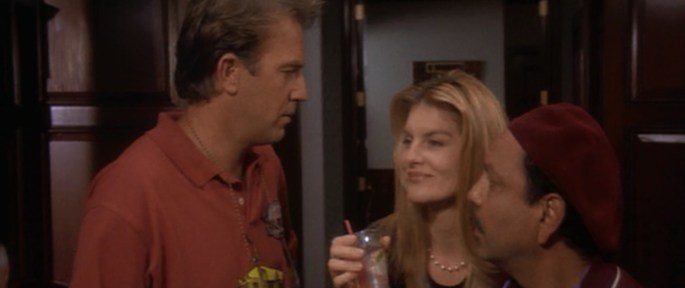
Ron Shelton’s Tin Cup is one of my absolute favorite romantic films ever made. But it’s more than a great romance – it’s a great sports movie, it’s a terrific buddy film, and most importantly, it’s a wonderful piece about human beings and all their persistent foibles and inconsistencies. Starring an amazingly relaxed and extra charming Kevin Costner as a should’ve-been/could-still-become golfing legend, he was paired up with the effortlessly sexy Rene Russo, and bam! Massive screen chemistry! They seriously smolder in this film, looking totally in love, and sharing such a great sense of old-school charm and rapport with each other that I’ve long considered this to be one of the most under the radar movie romances that I’ve ever seen. The golfing footage is remarkable on a technical level, there are more than a few major comedic set-pieces, and the final 20 minutes are lump-in-the-throat perfect. I’ve always been a big fan of Costner, and this is easily one of his best performances, if for no other reason that he just seemed so at ease in Roy McAvoy’s skin. And, if rumors are to be believed, Costner handled most of the golf action on his own, which is probably why the entire film feels so authentic when out on the course. An impressive supporting cast of colorful character actors were along for the ride, including Cheech Marin as Costner’s faithful caddy, and Don Johnson as the oily romantic and sporting rival. Shelton has long been an ace in the hole for me as a filmmaker, having crafted some of the A-1 best sports movies of all time – Bull Durham, Cobb, White Men Can’t Jump, and the hugely underrated Play it to the Bone are all directorial efforts, while he also mixed in some genre efforts with the cop sagas Dark Blue and Hollywood Homicide, while also contributing to the scripts for Michael Bay’s Bad Boys II, the underrated actioner Under Fire, and William Friedkin’s college basketball expose Blue Chips. But it’s Tin Cup that I find myself continually revisiting; it’s a comfort blanket movie that feels just right.


PAUL MAZURSKY’S BOB & CAROL & TED & ALICE — A REVIEW BY NICK CLEMENT

1

Bob & Carol & Ted & Alice is soooooo 1969. A study and exploration of the shifting sexual proclivities of two married couples, not to mention a general roasting of overall social norms and familial expectations, this is a funny, dated, sexy movie, which further reinforces the notion that Paul Mazursky was totally in love with the female body. It’s also a film to directly challenge the grand institution of marriage and monogamy, with the screenplay bouncing back and forth between various points of view, all in an effort to try and understand the ultimate desires of individuals. But here’s the deal, and make no mistake – the bottom line is – if you were married to Natalie Wood or Dyan Cannon back in the day – cheating should NEVER have crossed your mind. All kidding aside, the idea that Wood would have been that cool with her husband shagging a 20 year old production assistant is something that more or less constitutes the ultimate male fantasy, but hey, it’s the movies, kids! But, we’re not all Robert Culp in his brown leather jacket and pant combo, so maybe I can see how this might have been acceptable (snort). Seriously – this film is so hysterical over sex, so passionate and so totally in awe of its two leading women that it might be seen as an obsessive’s guide to the female form. Chock full of nudity, playful banter, and scenes that would never, ever be repeated in a movie today, this film is yet another reminder of how interested Mazursky was in the human condition, and how men and women use sex and emotions to take advantage of any given situation or circumstance. Elliot Gould was terrifically awkward in an early leading role, while Wood and Cannon were too hot for words. One can totally see why this film catapulted Mazursky to instant stardom within the filmmaking community.

ROB BOWMAN’S THE X-FILES: FIGHT THE FUTURE — A REVIEW BY NICK CLEMENT

1

One of the best transitions ever for a TV show to feature film. Directed with style and smarts by series veteran Rob Bowman. Fantastic widescreen cinematography from underrated shooter Ward Russell (Days of Thunder, The Last Boy Scout), who utilized a rich color palette and took full advantage of the excellent locations chosen for the story. Absolutely loved the Neanderthal Man opening sequence with the first alien encounter – raw, nasty, primal, and scary. Series mastermind Chris Carter took full advantage of the inherently cinematic possibilities with his iconic material, and along with Frank Spotnitz and undoubtedly many others, crafted a fabulous continuation of the central alien mythology plot-line, while beefing everything up visually and thematically. I’ve gone back to this movie for years, not just out of my love for The X-Files in general, but because, on its own, it’s a damn good movie. Fine, some of it is a bit impenetrable to the casual viewer or non-fan, but even in those instances, the gripping set pieces, tremendous production design, and excellent performances should alleviate any concerns.

Bowman throws in nods to various political thrillers from the 70’s, most notably Alan Pakula’s masterpiece The Parallax View, and all throughout, there’s an unnerving vibe present, from the ominous back-room deals with the Syndicate, to the sub-Antarctic government base that forms the absolutely smashing action-oriented finale. All of the regular faces from the TV show are present in the film, while the filmmakers brought in some excellent supporting players like Martin Landau, Armin Mueller Stahl, Blythe Danner, and Terry O’Quin. The opening domestic terrorism bombing sequence is rivetingly staged, while the mid-film action sequence inside the dual domes out in those corn stalks is expertly shot, cut, and directed. And when those bees are released, the scene kicks it up a further notch. David Duchovny and Gillian Anderson were at their best here as Mulder and Scully, and their “almost-kiss” moment was one of the absolute best moments in the series. Everything about this movie clicked (which you can’t say for the decade later follow up, The X-Files: I Want to Believe), and I am eagerly anticipating the return of the TV series when it drops at the beginning of 2016. I just really hope that the central narrative beats pivot off of the extraterrestrial angle that the show is famous for.

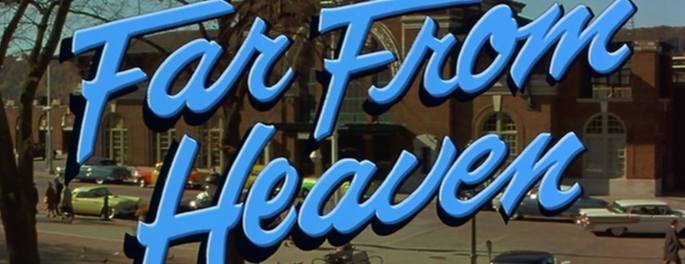
TODD HAYNES’ FAR FROM HEAVEN – A MINI REVIEW BY NICK CLEMENT

1

An aesthetic and thematic masterpiece for director Todd Haynes, who brilliantly recalls the work of Douglas Sirk with this passionate, exquisitely mounted melodrama. Sterling performances from Dennis Quaid, Julianne Moore, and Dennis Haysbert, with sharp supporting turns from Patricia Clarkson and Viola Davis and James Rebhorn. Ed Lachman’s primary-color-rich cinematography frequently pops the eye, from the bravura opening crane shot, all the way through to the studied camera placement and deliberate pacing, this is an extraordinary evocation of a lost genre, while simultaneously operating as a stirring piece of emotional storytelling. Features a gorgeous and soul-stirring score by Elmer Bernstein. I can’t wait to see the upcoming film Carol, which seems to be some sort of companion piece to Far From Heaven.

CHRISTOPHER NOLAN’S THE DARK KNIGHT – A REVIEW BY NICK CLEMENT

1

At this point, there isn’t much left to be said about The Dark Knight. The film grossed almost a billion dollars worldwide and its critical acclaim vaulted its director, Christopher Nolan, into the upper stratosphere of big-budget filmmakers. It’s a masterwork of comic book moviemaking, talking iconic imagery and filtering them through the prism of a Michael Mann crime epic, and featuring a tour de force performance by Heath Ledger as the most sinful of all superhero antagonists, The Joker. While I will always prefer the epic nature of The Dark Knight Rises (flaws and all, it’s my favorite in the Nolan series), there’s something so lean and tough-guy-poetic about The Dark Knight; it really does feel like Heat featuring men in masks. Picking up right where he left off after his excellent franchise re-boot Batman Begins, Nolan essentially made his first effort look like a student film by comparison, and that’s not to knock Begins, because it’s a wonderful piece of entertainment, a movie that reimagined Batman for a modern, more visceral style of storytelling within this particular genre. And what’s particularly awesome, and where the film is better than The Dark Knight Rises, is that The Dark Knight is both epic and intimate; this is a massive crime saga, taking cues from the aforementioned Heat and Brian De Palma’s The Untouchables, but never forgetting to stay true to the intense character dynamics that have made this universe of costumed freaks so especially memorable. By placing Batman and all of his cronies and adversaries in a real world setting, no matter how stylized his Gotham City is, Nolan was able to fashion a trilogy of films that felt all the more tangible and immediate, something that not one, single Marvel effort has ever done, with the possible exception of Captain America: The Winter Soldier.

Batman, again played with gritty determination by Christian Bale, who brought stoic seriousness to his dual performance as Bruce Wayne/Batman, is caught between his own sense of vigilante justice, crossed with deeper psychological issues. In The Dark Knight, the Nolans and David S. Goyer, stacked the deck with his arch nemesis, the Joker, played with such menacing glee by Ledger that you have to just assume that the preparation and performance might have affected his psyche; his posthumous Oscar trophy was indeed fully warranted, and not some nonsense done for sentimentality or good-faced-publicity as some dunderheads have suggested in the past. The plot is multi-layered, convoluted yet not impenetrable, and steeped in crime movie mythology that speaks both to classic film noir and the graphic novel roots that Nolan favored. The Joker is out to bring down Batman, while also trying to put a stranglehold on Gotham’s City’s overall criminal element. From the steely, Mann-esque precision of the film’s opening bank robbery sequence; you get the sense that Ledger’s Joker isn’t a playful clown, but rather, a certifiable psychopath. The way he licks his scarred lips and the way his sinister cackle fills a room with eerie rage are just two of the ways that Ledger left an indelible mark on this classic comic book icon; I wonder if any other actor will be up to the challenge in future installments. Harvey Dent, an excellent Aaron Eckhart, is trying to clean the streets up from city hall, and Jim Gordon, played with low-key integrity by Gary Oldman, is working his way up the police chain of command. Various gangsters figure into the plot and there is a morally complex chain of events that figures into the film’s gripping climax. But the real show is the duel between Batman and the Joker, and it’s here, with two of the comic-world’s most beloved characters, that The Dark Knight really excels.

Nolan, reteaming with his phenomenal cinematographer Wally Pfister, bathed the film in shadows and blacks; this is a dark movie, both in theme and in appearance, but in the end, serving a stylistic and narrative purpose. The tragic nature of Harvey Dent is highlighted in a powerful character arc that exposes the many faces (literal and metaphorical) to the character; Eckhart’s performance was one of his absolute best. And then there’s the film’s major action scene, occurring at the half-way mark, which is a towering triumph of choreography, seamless CGI integration, and old-fashioned movie magic. By the end of this haunting and beautifully crafted piece of explosive entertainment, the viewer can’t help but breathe a sigh of relief. The Dark Knight was one of the first superhero films to never feel like a traditional superhero film, and the topical, real-world grounding that Nolan infused into his trilogy has been felt on other, future projects from a variety of other filmmakers. And yet, at the end of 2008, the old farts in the Academy felt like dissing one of the most successful films of all time, which was truly a shame, because the film stands as a genre centerpiece, and a reminder that art within this particular canvass is still attainable even when toys and lunchboxes are being considered; rarely does big-budget, summertime filmmaking become this successful at fusing all of the creative elements together.