MICHAEL BAY’S PAIN & GAIN – A REVIEW BY NICK CLEMENT

1

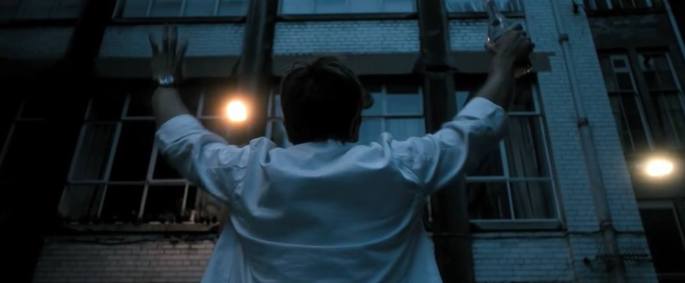
What if a “real movie” looked like a Michael Bay movie? Pain and Gain is that project. This is Bay’s best work as a storyteller and filmmaker. In fact, it’s his only “film,” as he’s made a career out of making “movies.” And that’s fine. Sometimes, we need silly fun to clean the palette or to just admire in the way of aesthetic beauty, and in terms of Bay’s visual abilities, it’s inarguable that he’s a master of composition, camera, color, texture, atmosphere, and pyrotechnics. He’s at the top of the class when it comes to “blowing shit up and making it look fabulous in anamorphic 2.35:1 widescreen,” as The Rock, Bad Boys, and most especially, Bad Boys II, are genre touchstones, and I’ll always go to bat for The Island and the first Transformers. But make no mistake – Bay’s special brand of visual insanity is absolutely head-spinning when it wants to be, as almost always, he’s capable of astonishing visual sights. His use of saturated primary colors, all vibrant and slick yet still with some grit packed in there (hello, Tony Scott…), has influenced commercial filmmaking over the last 20 years. I’ve had a long, off-and-on obsession with this man’s robust filmmaking technique, as I think there’s a level of cinematic dynamism that is impossible to ignore.

But, with his long-time passion project Pain & Gain, Bay proved that he actually DOES have the ability to tell a multi-tiered story, complete with flawed and unlikable characters with smart pacing and witty dialogue. I also loved the upending of the idea of the classic Bay Hero, which is one of the most unique aspects of this fresh little black-comedy crime caper. The script was credited to Christopher Markus and Stephen McFeely (Captain America: The First Avenger, Captain America: The Winter Soldier), and it’s clear from the start that this won’t be another easy-to-digest popcorn movie or a $250 million toy commercial posing as a summer blockbuster. All three lead performances (an unnervingly stone-faced Mark Wahlberg, an extra-agitated and creeped-out The Rock, and Anthony Mackie providing some great moments of dim-witted comedic levity) are fantastically gross, while the movie revels in nastiness and a foul, wrongly-idealized version of the American dream. Tony Shaloub is viciously nasty, Ed Harris dominated the final act with a gruff performance of coiled masculinity, and there’s a great cameo from Michael Rispoli, who I always love seeing on screen. This was the movie that Bay forced Paramount to make in between Transformers entries, and it’s the movie he had been keeping in his back pocket for years and years. And it’s not hard to see why; the project is based on a true story, the Florida locale plays to Bay’s sexy visual strengths, and the characters leap of the screen. Whether or not you like them at all is your business. The script isn’t afraid to get down and dirty, as it‘s very clear that Bay felt energized about the notion of making an honest-to-goodness story without having long-lead conversations about marketing tie ins and lunch boxes.

9

ROGER SPOTTISWOODE’S THE PURSUIT OF D.B. COOPER — A REVIEW BY NICK CLEMENT

1

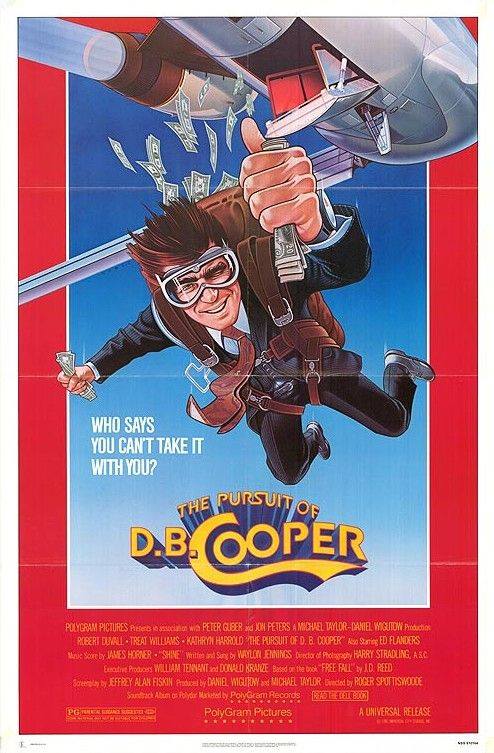
Being a product of the 1980’s, there are more than a few under the radar gems that always made me smile (for one reason or another) or that kept me entertained. Based on the novel Free Fall by J.D. Reed, The Pursuit of D.B. Cooper was one of those titles that I found myself watching on cable (or was it HBO?) repeatedly, never truly understanding it, but enjoying it nonetheless. It’s always been on the back on my mind to revisit, so I sought it out, and low and behold, it’s nearly impossible to find. So I recently purchased a Hungarian Region B DVD for the film (no American disc release has ever occurred, to my knowledge), and despite the fact that the movie was lensed 1.85:1 and then presented in the 1.33:1 aspect ratio (thus losing visual information), I had to check it out again. The disc transfer looks to have been processed in bowls of urine, which is a shame, because the image looked overly yellow in numerous spots and the cinematography, in general, is consistently eye-catching. As for the movie, it’s exactly as I remembered it being – a raucous, wild, totally crazy little action adventure that took a real man and real situation and turned the entire thing into the equivalent of story you’d tell at a campfire, or an urban legend that takes on a mind of its own.

Released in 1981, the film centers on wild-man aircraft hijacker D. B. Cooper (Treat Williams in a unique role), who made off with $200,000 in 1971 after leaping from the back of a plane over the Pacific Northwest. The script imagines what it would have been like for Cooper to hide out and attempt to evade capture by law enforcement. Jeffrey Alan Fiskin’s incident packed screenplay fictionalized most of what happened during Cooper’s escape, but that doesn’t prevent this offbeat item from being undervalued if a tad obscure; Fiskin’s other scripting credits include Cutter’s Way and Tony Scott’s pulpy thriller Revenge. John Frankenheimer was the film’s original director, and would later denounce the entire production. He was replaced by TV journeyman Buzz Kulik just before shooting began. Then, after the movie was well into production, Kulik was fired, and replaced by final collaborator Roger Spottiswoode, who would be the only director to receive an onscreen credit. The film has an interesting, sort of ramshackle visual aesthetic, heightened by a jaunty, honky-tonk-ish score by James Horner. A sort of lark that would never get made today, the performances by Robert Duvall (as an insurance investigator) and Williams anchor the film with a level of class and conviction, Kathryn Harrold was a total knock-out, and while the overall lightheartedness of the entire endeavor is apparent from frame one, the various action scenes are briskly shot, cut, and executed, especially the opening sequence complete with a real sky-dive done before the era of CGI laziness kicked in.

IVAN PASSER’S CUTTER’S WAY – A REVIEW BY NICK CLEMENT

2

Cutter’s Way is so underrated it’s almost a joke. Terrific script by Jeffrey Fiskin, who also adapted Jim Harrison’s Revenge for the late, great Tony Scott, gritty and propulsive direction by Ivan Passer, and boasting an absolutely ferocious performance by John Heard (probably his best work) as a disabled Vietnam vet and a fantastic Jeff Bridges as best friends who get mixed up in a murder mystery when one of them accidentally witnesses a guy disposing of a dead body. Heard’s emotionally fragile and physically beleaguered character then gets an idea that might push stuff over the edge; I’m really trying to avoid any spoilers or too much of a plot description because this movie is so consistently awesome and I’d want anyone unfamiliar with it to track it down and have as little of an idea as possible about what they’ll see. Based on the novel Cutter and Bone (and released at one point under that title), the film premiered in 1981, and went criminally under the radar at the box office due to lack of marketing and confusion/turmoil at the studio; the film’s Wikipedia page highlights what happened to this cinematic diamond in the rough. Happily, Cutter’s Way has picked up cult status over the years, and it’s easy to see why. The material is politically charged without being preachy, it’s tense and terrific when it comes to action and dramatics, and the performances all sting with authenticity and force. Jordan Cronenweth handled cinematography chores, and as usual, the results were wonderful, while the score by Jack Nitzsche hits all the proper notes. The film has a tone that feels more 60’s/70’s rather than the 80’s, and the ambiguous nature of the narrative is a key highlight to the film’s success. Honestly, make it a double bill with Karel Reisz’s phenomenal and equally underappreciated Who’ll Stop the Rain, and then come and thank me for telling you to do so!

ALEKSEI GERMAN’S HARD TO BE A GOD – A REVIEW BY NICK CLEMENT

3

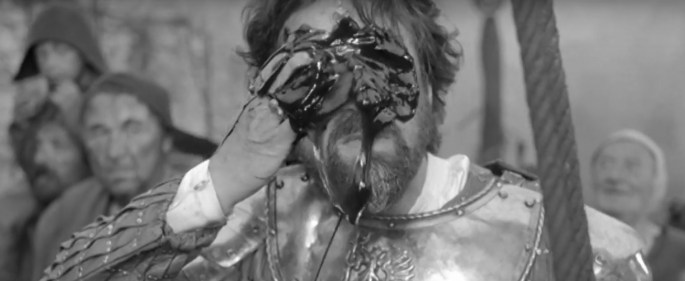
You’ll know within the first few minutes of the impossible to completely describe and classify film Hard To Be A God if you’re going to make it through all three hours of this carnival of cinematic madness. In production for 13 years with director Aleksei German passing away before the film could be fully completed (his wife and son finished the herculean job), this is a continuously staggering and all-together monumental piece of filmmaking, and it’ll likely prove to be a severe endurance test for even the most discerning, adventurous viewer. This is a Russian language medieval science-fiction film, shot in black and white, and offering nothing in the way of audience comfort; this hellish vision feels as uncompromising as anything I can think of, and it offers sights and sounds of such striking and odd depravity that people are likely to be disturbed and perplexed in equal measure. Based on the novel by the Strugatsky brothers, the story involves a group of scientists who journey to a planet that most resembles Earth, but the twist is that the society that inhabits the planet is culturally and technologically challenged to the point of almost ludicrous imagination. The people have violently suppressed any form of advancement (imagine if the Renaissance movement was skipped entirely), using murder and scare tactics against anyone demonstrating intelligence. One of the scientists decides to sneak his way into the Kingdom of Arkanar in an effort to offer help and progress to the people, but he’s met with all sorts of opposition, and his ideals continually prove to be shattered all the way until the end. This film is consistently disgusting, and I don’t think I’ve ever seen anything as dirty and grimy and all together vile. There are repeated shots of people puking, passing their bowels, yelling asinine noises, playing a variety of musical instruments for no apparent reason other than just making noise, and I swear, there are more than a few moments where the camera lingers on the grotesque face of a person to an almost awkward degree. Werner Herzog would do backflips for this movie. German and his various collaborators created one of the ultimate cinematic nightmares, and because the film operates in an oblique, circular fashion, there are times when you feel like the film is doubling back on itself; this is one of those pieces of work that’s interested more in atmosphere and minutiae than it does on massive plot developments. This film is fascinated by manure, pain, mud, filth, disease, water, and people spitting, and the themes of society’s inherent ability and propensity for self-destruction feel sharp and well observed and sadly relatable. It’s a travesty that German didn’t live long enough to see the completed version of this insane, instantly legendary piece of work. After only one viewing, I’ve only begun to scratch the surface.


PETER BOGDANOVICH’S PAPER MOON – A REVIEW BY NICK CLEMENT

12

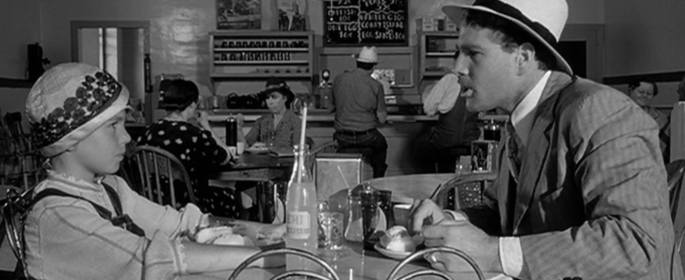
This is a wonderful movie, the sort that rarely gets made these days, and if it were to get made, nobody would go to see it. Two great and thoroughly engaging performances from Ryan O’Neal and Tatum O’Neal, some colorful support especially by Madeline Kahn, a terrific script by Alvin Sargent, spot-on direction from Peter Bogdanovich, all lovingly captured in silky-smooth black and white by master cinematographer Laszlo Kovacs. Set in Kansas and Missouri during the Great Depression and centering on the odd-couple pairing of a con man getting mixed up with a confident nine year old girl, this comedy/drama has a light touch all throughout, and can easily be seen as an inspiration for Ridley Scott’s Matchstick Men. Some of the shots in this film last for a long time, and the clarity of Kovacs’ images were at times startling to behold, with an emphasis on the flat and anonymous Midwest geography. Sargent’s screenplay was romantic, funny, clever, and from what I’ve read, a big departure from the novelistic source material; he would receive an Oscar nomination for his adaptation. Shot on a $2.5 million budget, the film would become a big hit, grossing $30 million domestically, and would net Tatum O’Neal an Oscar for Best Supporting Actress, making her the youngest winner in Academy history.

JACQUES AUDIARD’S A PROPHET – A REVIEW BY NICK CLEMENT

1.jpg

Jacques Audiard’s A Prophet is a searing, violent, and totally unforgettable cinematic experience. This has got to be one of the most epic, primal, exciting, and all together riveting crime pictures ever made, or, at the very least, that I’ve ever seen. Don’t let the fact that it’s a three hour French prison film scare you away from seeing it, as I can almost promise that you’ll be locked into this film from frame one, as Audiard’s vice-grip direction is inescapably forceful and commanding. There are performances here that will shake you to your core, with the film possessing a screenplay that’s brilliant in its fine details, while the intimate, raw-nerve cinematography pulses with life, visceral tension, and edginess. There’s a shoot-out in A Prophet that ranks as one of the all-time best, not because of a huge body count or excessive amounts of gore/blood, but because of the importance it has within the narrative, and the bold and scary way in which Audiard shot and cut the sequence. I could go on and on but I won’t. If you care about movies, and if you haven’t seen this gale-force knock-out, make it a top priority. Audiard’s work overall is supremely impressive (few films hit harder than Rust and Bone) but this one is his crowning achievement that I’ve seen thus far. I can’t wait to see Dheepan.


DAVID WNENDT’S WETLANDS – A REVIEW BY NICK CLEMENT

1

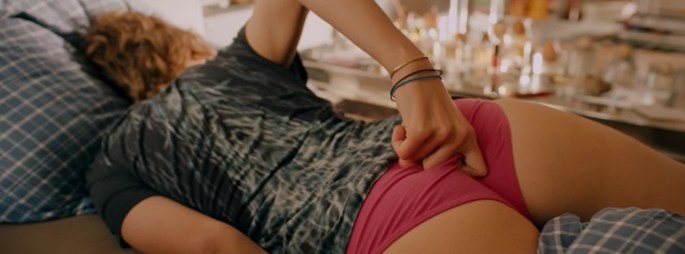
The insane German import Wetlands is singular, gross, nauseating, highly sexual, strange, lovely, smart, insane, icky, depraved, uber-graphic, and sort of monumental. It’s never, ever going to be remade for American audiences and it’s likely to appeal strictly to fans of “cinema-as-art.” I’ve never seen anything remotely like it. You get to see a POV shot from that of an STD-infected pubic hair, a woman uses a variety of vegetables as sexual pleasure devices, and the camera lovingly details a shaving accident that, let’s just say, will pucker up a certain part of your derriere. And that’s all in the first act! Directed with energy and snap by rising star David Wnendt with a constant attitude of “I’ve Got Something To Prove,” Wetlands, at times, feels like a hybrid of Enter the Void and Blue is the Warmest Color with a dash of sweetness from a Farrelly Bros. enterprise. Carla Juri gives an absolutely fearless, wholly committed performance as a young woman named Helen with any number of unique sexual and bodily fetishes. I can’t think of one major American actress who would ever dare take on the challenge of this role. Known in some circles as “the anal fissure movie,” Wetlands will prove to be an endurance test for many viewers, offering wildly graphic sights you’ll never be able to un-see. After the previously mentioned shaving accident, Helen winds up in the hospital and falls in love with a male nurse, but this being the type of movie that it is, their meet-cute is over discussions of bloody anal injuries and the benefits of frequent oral sex. After her surgery, Helen fakes the inability to pass her bowels, in an effort to remain in the hospital so that she can win the heart of the nurse she’s falling in love with. So it’s the classic girl meets boy story, filled with the requisite amount of heart and honesty that makes you care for the characters, but ups the gross-out elements way past what Apatow and Rogen could ever dream of creating. This is outlaw cinema to be sure, replete with constant full frontal female nudity, extraordinarily graphic sexual behavior, and a general air of chuck-it-all-unpredictability that is bracing to behold and keeps you on edge. And while there is a rather sweet and simple story that gets told, many viewers will be too caught up in the moment to make heads or tails of whether or not Wetlands has something interesting or valid to say. I think it does. It’s smart, it’s honest, it’s very mature despite the various idiocies, and at its heart, this is a film about acceptance, love, and about how one woman, no matter how different or odd her behavior may seem, is living the life that she wants to live, bloody orifices or not. Not for the faint of heart or weak of stomach, Wetlands is a romantic comedy that defies general description. In short, see it with the family!

DAVID MACKENZIE’S PERFECT SENSE – A REVIEW BY NICK CLEMENT

1.jpg

Perfect Sense is a stylish, unnerving, and very underrated sort-of-apocalyptic drama/thriller with a very unique hook: Suddenly, everyone on the planet begins to have a meltdown of their collective senses. Everything that we take for granted, every single day, gets thrown into chaos; unexpected fits of rage, compulsive eating, spontaneous deafness, lack of ability to taste, and sudden blindness. Directed with extreme care and control by the interesting and talented filmmaker David Mackenzie (Starred Up, Spread, the upcoming and awesome sounding Comancheria from the writer of Sicario), Perfect Sense was an IFC release that went totally under the radar a few years ago, but it’s worth seeking out for its distinctive premise within a well-traveled subgenre, and to watch the riveting performances from Ewan Macgregor and Eva Green. They play a newly formed romantic couple who experience the strange and unprompted physiological breakdowns, and to watch them spiral out of control in front of each other feels oddly personal and all together surreal at times. The final moments of the film sting with intended irony and there’s a level of intensity to be found throughout this entire film that helps to ratchet up the emotional and visceral tension, especially during the numerous scenes of people suffering the sensory breakdowns. The sleek cinematography is courtesy of Giles Nuttgens and the chilling musical score was supplied by Max Richter. This is a very tough film to sum up in words, but trust me, I don’t think there are too many other films like this one out there, and if there are, I’d love to know about them.

JAMES PONSOLDT’S THE END OF THE TOUR – A REVIEW BY NICK CLEMENT


2.jpg

Thanks again to A24, we’ve been given another excellent film. The End of the Tour focuses on a long weekend in the life of deceased author David Foster Wallace, whose 1996 novel, Infinite Jest, became a literary sensation and cultural touchstone for an entire generation. Bolstered by two terrific performances by Jason Segel (as Wallace) and Jesse Eisenberg (as then Rolling Stone reporter David Lipsky), the film has been confidently directed by James Ponsoldt (who previously helmed the strong indies Smashed and The Spectacular Now) and sensitively written by Donald Margulies, who based his script on Lipsky’s best-selling memoir Although of Course You End Up Becoming Yourself. The action covers the period of time where Lipsky stayed at Wallace’s house, conducting a lengthy interview, in the aftermath of the Infinite Jest publicity and success. The film is very talky, very literate, very smart, and most of all, very sad, as death hangs over the entire film, and the wintry setting sets an immediately chilly tone that suggests isolation and mental despair. Wallace was a man who reportedly suffered some intense personal demons, and while this film is nothing like a traditional biopic, you definitely get the sense, in only an hour and 40 minutes, that he had a lot of inner turmoil to sort out, with feelings of inadequacy and self-resentment. But as played by Segel, he was also a man capable of great friendship, compassion (love the dogs), and keen humanistic understanding, able to decipher life’s strangest moments and put them into a thoughtfully arranged flow of words. Eisenberg does classic Eisenberg here, and as always, there’s something going on in those shifty and potentially deceiving eyes; he’s also the sort of actor who can really make dialogue sing. And because this film is almost solely dependent on its script, it needed to be strong, and the work here by Margulies is nothing short of beautiful, with line and after line hitting with dramatic force and resonating with poignancy. Visually, the film is solid if a bit solemn, but that was likely a creative decision; the flat, mid-America landscape seems a perfect atmospheric highlight. Danny Elfman’s score is unobtrusive but always effective.

1.jpg


KENNETH LONERGAN’S MARGARET

2.jpg

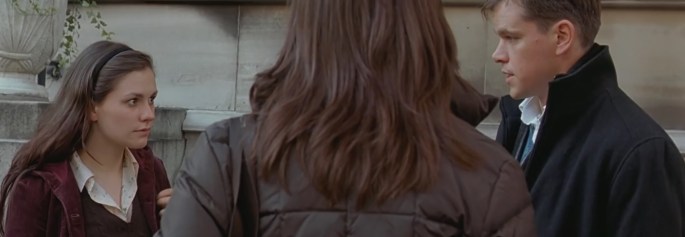
Fascinating, challenging, and totally not for those without patience and an interest in 70’s style filmmaking aesthetics and storytelling techniques, Kenneth Lonergan’s almost-never-released multi-character drama Margaret is a film that many don’t even know exists, and that’s truly a shame, because it’s as compelling and as powerful as cinema can get. Originally scheduled for release in 2007 but inexplicably shelved until 2011, Margaret is one of those movies that’s likely to appeal to viewers looking for an almost novelistic approach to their movies, as the film bounces around from place to place, person to person, which creates an Altman-esque tableaux of individual moments which begin to combine into something profound and touching. Lonergan’s lone previous directorial credit, You Can Count On Me, was a perfectly observed indie dramedy with black humor and lots of heart, featuring some stellar turns from Laura Linney, Mark Ruffalo, and Matthew Broderick. Whereas that film was small and intimate, with Margaret, he went large, and the results are no less impressive, but what’s important to note is that his sense of the small and personal didn’t dissipate with his sophomore directorial outing. Featuring a volcanic lead performance from Anna Paquin (never better, and I’m not the biggest fan overall), the film centers on a tragic city-bus accident and the aftermath that it creates. It’s a story about guilt, grief, acceptance, and finally, forgiveness, and nothing about the narrative is easy or simple. The film utilizes an Altman-esque sound design with tons of overlapping dialogue; Lonergan’s decision to also have the casual conversations of extras and peripheral characters audible on the soundtrack and audible to the main characters further heightens the anxious mood and frenzied atmosphere of this engrossing tapestry of people and events and places and emotions. The superb Mark Ruffalo pops up in yet another soul-searching supporting turn, and the film is enlivened with the likes of Matt Damon, Allison Janney, Kieran Culkin, Rosemarie DeWitt, Matthew Broderick, Olivia Thirlby, and Lonergan himself. We’ll never know exactly what happened behind the scenes with this film. The oft-rumored “Scorsese-Schoonmaker Cut” would certainly be interesting to see, but what we’re left with is a film of enormous ambition, a multilayered magnum opus from one of the best, most underappreciated voices that Hollywood has come across in years. Note: version screened was the 186 minute director’s cut.

1.jpg