GILLIAN ROBESPIERRE’S OBVIOUS CHILD — A REVIEW BY NICK CLEMENT

1

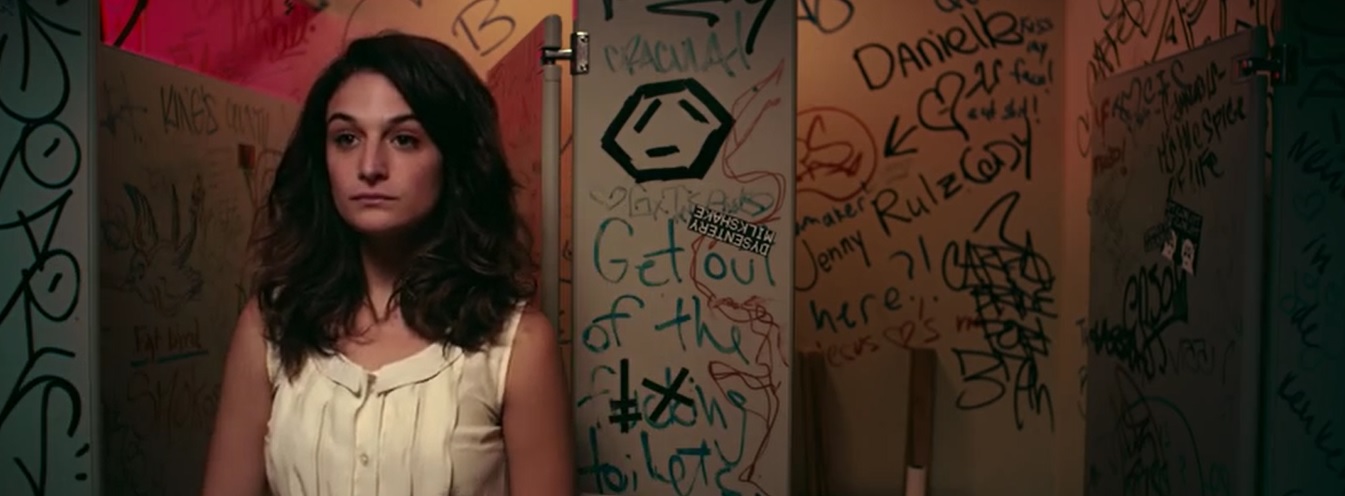
The 2014 comedy Obvious Child is one of the most realistically funny films I’ve seen in the last few years. On repeated viewings, it’s gotten better and funnier and I keep noticing how on point so much of the social commentary feels, especially within the context of our increasingly nutter-filled landscape that we all inhabit. Jenny Slate was absolutely outstanding and completely deserved an Oscar nomination for Best Actress, but sadly, that didn’t happen, as the Academy has an aversion to comedies, let alone ballsy ones like this. Long live the amazing people at A24 – without their taste and resources, the recent movie-going experience wouldn’t be anywhere near as impressive as it’s been. This is a wonderfully honest and often times darkly hilarious comedy that despite featuring one small plot contrivance seems perfectly calibrated over the possibly too brief running time (at 85 minutes, I could’ve spent more time with these characters in a few more scenes). But when artistic collaborators seem this tapped into their material, it’s tough to fault them for what they didn’t do. Slate stars as a down on her luck stand-up comic who’s miserable after being dumped by her boyfriend and losing her part time job and only real source of income. Then, things get extra complicated when she learns that she’s pregnant after a one-night stand with a too-nice-to-be-real potential beau, played by Gabe Liedman, who killed it on the later seasons of The Office (damn I miss that show!) Is she ready for a child when she doesn’t even have control over her own life? How can she break the news to a guy she’s just met? Obvious Child is the product of multiple female voices (co-writer/director Gillian Robespierre, co-writers Karen Maine and Elisabeth Holm, and exec-producer/star Slate) and combines a clear, linear narrative with uproarious improvised stand-up bits which Slate and Liedman absolutely nail with aplomb. A special mention must be paid to the film’s almost unique obsession with fart and poop humor; so simple yet so effective and so refreshing to see it used in a smart fashion rather than as random, scatological humor. And most importantly, I love how Obvious Child isn’t a “will she have an abortion or not?” ticking-clock type movie; the right to choose should always be left to the individuals responsible, with zero interference from any outside institution, which is the message that the creative team clearly and wholeheartedly endorses. Most importantly — this movie is just damn funny, with the humor coming from an honest, heartfelt place.
2

RIDLEY SCOTT’S BLACK HAWK DOWN — A REVIEW BY NICK CLEMENT

2

Black Hawk Down really was a tour de force for director Ridley Scott and his crew of technicians and actors. I’ve see this film so many times it’s almost laughable, but revisiting it just recently, I was struck by just how immersive of a film experience this really is, with few rivals. It’s the gold-standard for combat movies, and Scott’s uncompromising vision of urban warfare set precedents in the early 2000’s and has been constantly imitated ever since. Borrowing from cinematic touchstones like The Battle of Algiers and Saving Private Ryan, this was Jerry Bruckheimer’s stab at Oscar gold and he must’ve been livid when Scott was nominated for Best Director but the picture itself was short-changed in the top category. It’s the rare Bruckheimer picture to be taken truly “seriously” by critics, and one of the few pictures in his entire filmography that strived for something more than just “entertainment.” Scott and Bruckheimer made sure to stick to the core of Mark Bowden’s riveting and devastating book, and in doing so, created one of the most visceral pieces of action filmmaking ever constructed.

It’s a physically exhausting movie to sit through, harrowing all throughout, with a constant sense of dread and impending violence. With stunning spatial clarity and obsessive technical finesse, Scott and cinematographer Slawomir Idziak created a gorgeous yet brutal film that pummeled the audience with a sense of sustained cinematic intensity that few other films have matched (Peter Berg’s recent Lone Survivor and portions of Randall Wallace’s We Were Soldiers come close). I saw this film 10 times theatrically, a personal record for one movie. Granted, I saw it 5 nights in a row at my college campus theater (for free), but for me, this is one of the most exciting, most intensely realized portraits of warfare that’s ever been created. I also had the chance to work on this film during pre-production during my days as an intern at Jerry Bruckheimer Films – I’ll never forget the sight of Bruckheimer, Scott, and Joe Roth doing laps around the Santa Monica compound, smoking cigars, talking about the film. I had the experience to hang out with production designer Arthur Max quite a bit, and Scott would come into the room and check out all of the models and boards and plans, deciding where the helicopters would land, etc. Totally wild.

1

JON BAIRD’S FILTH — A REVIEW BY NICK CLEMENT

1

Jon Baird’s Filth is a walk on the wild side, a totally unhinged, at times downright surreal black comedy about a Scottish Very Bad Lieutenant played by a hyperventilating, go-for-broke James McAvoy, who sheds any sense of previously earned pretty-boy image with this career changing performance of intense cinematic excess. Lots of wink-wink, stare-directly-at-the-camera humor, loads of depraved sex and graphic nudity, some nasty violence, all wrapped up in a cruel, satirical bow that only original author Irvine Welsh (Trainspotting) could come up with. Sure, the purposefully messy aesthetic is borrowed from other films of this sort, but it’s the anarchic spirit that the story clings too that keeps everything moving forward at a relentless clip, never stopping to take a breath. McAvoy is utterly insane here, losing himself completely into a sordid world of bad behavior with little to no consequences…up until the ballsy-as-hell final shot, which should leave you snickering with evil delight. The great supporting cast includes Eddie Marsan, Jamie Bell, Imogen Poots (that name…those eyes!), Jim Broadbent, Joanne Froggatt, and Gary Lewis. This is a prime example of outlaw cinema that should only be viewed if you’re drawn to extremely aggressive narratives featuring morally questionable, sometimes unlikable lead characters who have a weak spot for drugs and alcohol and more drugs and an undying appetite for kinky sex. And again, I have to state: McAvoy is just outrageously awesome in this film, grabbing the material by the throat and never letting go.

2

TERRENCE MALICK’S THE NEW WORLD — A REVIEW BY NICK CLEMENT

1

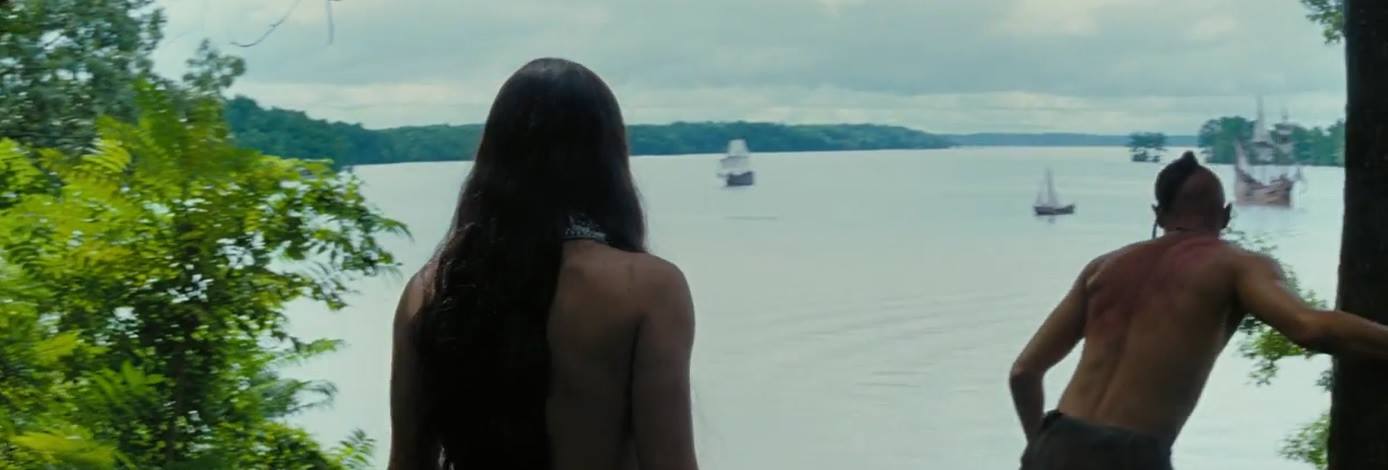
For some, the whispered, unconventional cinema of Terrence Malick is enough to put them to sleep or reach for the remote. Not me. I eat it up. I had the great fortune of viewing The New World four times theatrically back in 2005. The first time was that ULTRA-private 2 hour and 30 minute cut that was released in the last week of December, in order to qualify for the Oscars (at which Malick was disgustingly snubbed), and has never been released on DVD/Blu-ray, except for an Italian release. After one week in roughly five theaters, Malick, ever the perfectionist, asked theater owners to pull the film, so that he could re-edit it. What was then released a few weeks later on a semi-wide scale by New Line Cinema with little to no advertising dollars spent on promotion was a two hour and 15 minute version, which I then viewed three times. And for good reason: ANY version of this film is visionary, and it requires multiple viewings to unlock its many secrets.

2

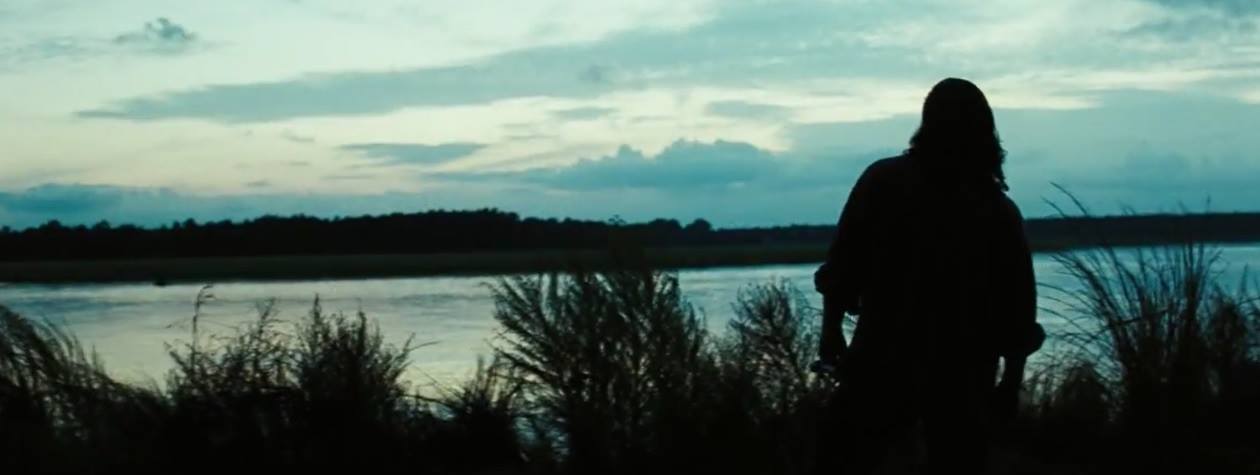
The New World is a beguiling movie, a work that transcends beauty, a piece of art that feels organic and that is both at one with nature and at one with the soul of cinema. Malick’s sensitive, idealized version of the John Smith meets Pocahontas story is never exactly what you expect it to be; characters dart in and out of the narrative, the focal point shifts repeatedly, and information is doled out purposefully slowly in a somewhat oblique fashion. To some, this can be frustrating, and people have a tendency of quickly losing interest. For me, this is how I want to experience the unlimited joys that movies can provide. I love experiencing the world through Malick’s eyes; his understanding of light, texture, and atmosphere is second to none, and the pairing of him with genius cinematographer Emanuel Lubezeki was a match made in movie-heaven (their collaborations on The Tree of Life and To the Wonder have literally re-invented the wheel in terms of using images to tell a story; get here Knight of Cups). Utilizing only natural and available light and shooting entirely on location, The New World has a gorgeous yet realistic visual style that is positively transfixing yet never overly stylized. Malick relies on the inherent qualities of the natural world to fill the 2.35:1 widescreen frame and each and every shot is museum quality.

3

The performances by Colin Farrell, Q’orianka Kilcher and Christian Bale are extremely affecting and Malick’s dreamy, elliptical screenplay, which is rife with internal monologue and stream of conscious ramblings, adds to the tone-poem quality of the narrative. Farrell, in particular, is sensational in what amounts to a heavily internalized piece of acting. At times brooding and then sensitive, mysterious yet open, he allows the viewer in to his headspace only to a certain degree, never becoming a true Hollywood hero in the way that so many other filmmakers might have been tempted to craft. This performance was in the middle of that extraordinary run that he had in the mid 2000’s where he worked with Oliver Stone, Terrence Malick, Robert Towne, Michael Mann, and Woody Allen, in that order. Shit. Just think about that for a moment. The musical score is obscene, mixing classical pieces with hauntingly melodic offerings from a much compromised score from James Horner (those lettuce leaves never stop being tossed in the air!). The New World is a bold, quietly moving masterwork from a filmmaker shrouded in privacy who should be celebrated every time that he decides to unleash one of his works on the public.

THE EDITORIAL WORK OF CRAIG MCKAY — BY NICK CLEMENT

1

“Movies are made in the editing room.” “Shoot for the edit.” “We’ll fix it in post.” These are just some of the cliché industry phrases that have no doubt become the norm with many filmmakers. Editing is one of the most important aspects to any film, and having someone who understands the importance to the flow of images is crucial. Editor Craig McKay has amassed more than 40 credits over 30 years of working in Hollywood, getting the opportunity to forge an intense working partnership with director Jonathan Demme (McKay has cut Melvin and Howard, Swing Shift, Stop Making Sense, Something Wild, Married to the Mob, The Silence of The Lambs, Philadelphia, and The Manchurian Candidate for the eclectic helmer), while also pairing up with filmmakers like Robert Redford (The Conspirator), James Mangold (Cop Land), Warren Beatty (Reds), Cary Fukunaga (Sin Nombre), George Armitage (Miami Blues), and relative newcomer David Lowery (Ain’t Them Bodies Saints). In film after film, he’s demonstrated an innate sense of when to edit, when not to edit (which is just as important), and in what fashion to present those edits, which results in the total package by the end.  And it’s astonishing when looking at his full resume, with so many classics under his belt, not to mention smaller, extremely underrated efforts like the 1998 film Smoke Signals, the Joseph Ruben dramatic thriller Return to Paradise, and the unique extraterrestrial drama K-PAX. I’m amazed by McKay’s versatility, going from genre to genre with total ease, working on features and documentaries (Babies, Sicko, Tricked), and always gravitating towards classy material.
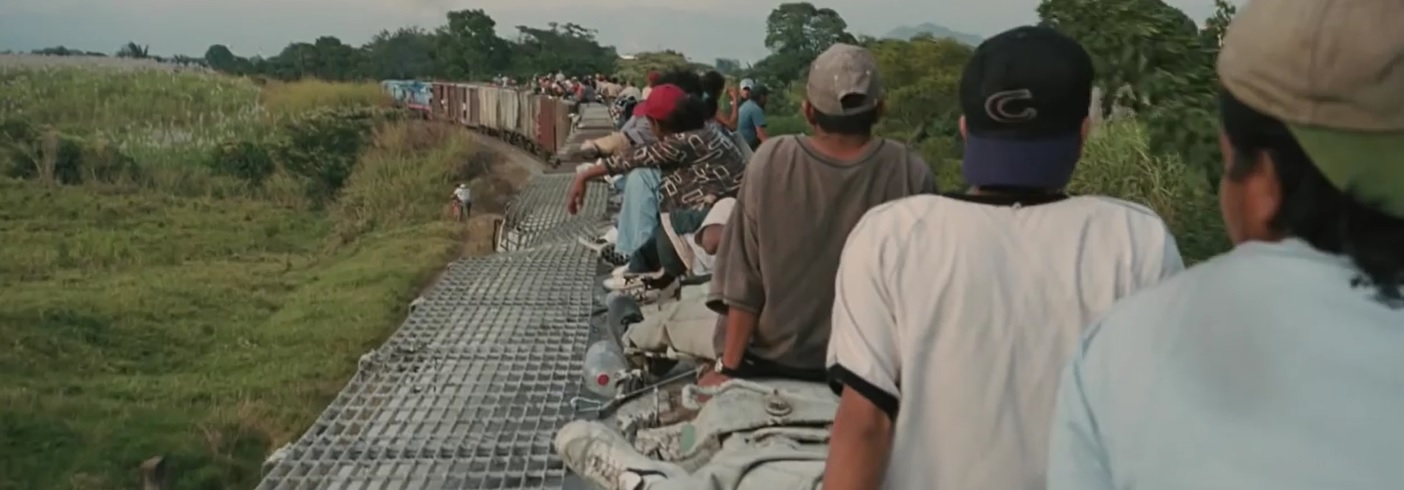
Cary Fukunaga’s directorial debut, Sin Nombre, is one of those harrowing dramas that shines a light on a tough, topical subject (the plight of immigrants due to societal violence), and a main reason for the film’s success is the propulsive editing patterns that McKay and co-editor Luis Carballar employed on the picture. Because Adrian Goldman’s cinematography was so evocative and worthy of study, McKay and Carballar were forced to cut an exceedingly beautiful looking film (despite the harsh and violent subject matter) which has to be difficult in the sense that the images might be sad to truncate. The same could easily be said for the poetic and lyrical touches that McKay brought to David Lowery’s underrated Ain’t Them Bodies Saints, which plays like a modern version of Badlands, and features two slow-burn performances from Casey Affleck and Rooney Mara. Lowery was clearly inspired by the works of Terrence Malick with this film, and McKay’s understanding of pacing and balance played a massive role in the film achieving the specific, heightened mood and atmosphere that was undoubtedly desired. And when you look at something like Jonathan Demme’s wildly underappreciated and completely unnerving updating of The Manchurian Candidate, you get a sense of just how amazing McKay’s range is as an editor. This is one of the more tension filled Hollywood thrillers of the last 15 years, featuring a vulnerable and emotionally unhinged Denzel Washington, and the jittery yet incredibly precise editing patterns used on this film completely engross the viewer into a dangerous world of fear and potential death. McKay is truly an editorial talent who has no limits as an artist, knowing exactly when and how to implement the various tricks of the trade, with results that are typically nothing short of expert.

5

ABEL FERRARA’S WELCOME TO NEW YORK — A REVIEW BY NICK CLEMENT

1

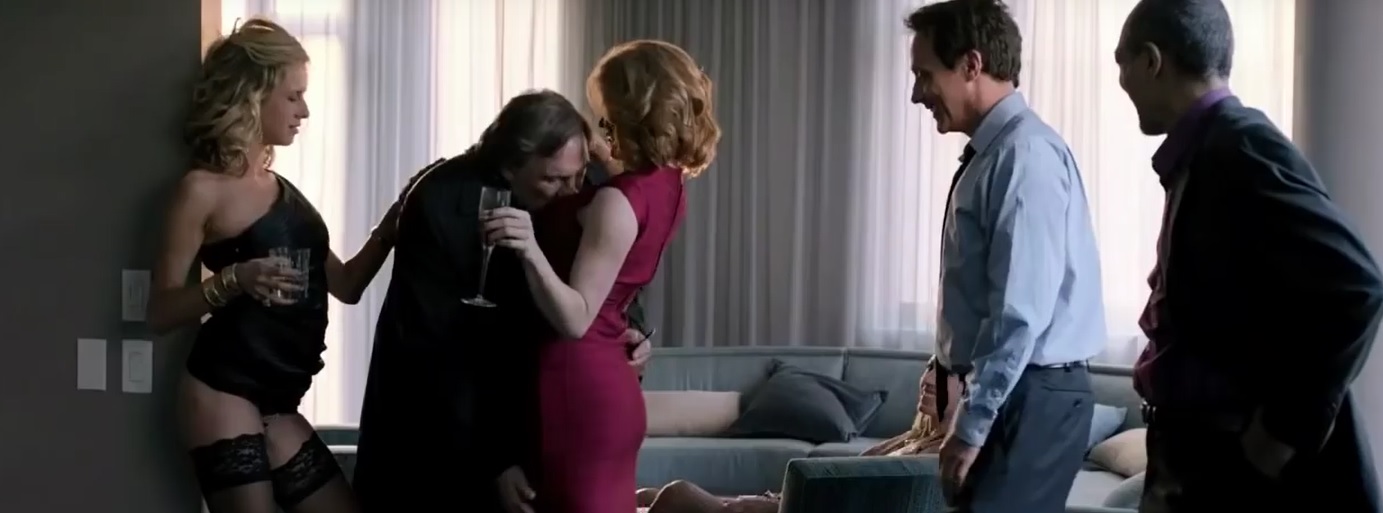
Abel Ferrara’s vivacious and scandalous new film Welcome to New York possesses an intense sexual energy that’s largely been absent from movies in recent years. Yes, sex is constantly on display in the movies, but this film resonates with a fierceness that feels exciting and troubling all at once. It plays like a great companion piece to The Wolf of Wall Street in the sense that the audience is asked to spend time with a morally questionable (and at times reprehensible) lead character who then starts to show his human façade when his carefully constructed universe starts crashing down all around him. In one of the best performances I’ve seen in recent memory, Gerard Depardieu is absolutely animalistic as a composite version of IMF managing director Dominique Strauss-Kahn, who famously was arrested after being accused of sexual assault by a hotel employee while staying in New York. Ferrara and co-writer Christ Zois (the two have co-scripted four films together) clearly based this explosive and highly erotic film around the debauched exploits of Strauss-Kahn even though Depardieu’s character goes by a different name, that of Devereaux. We watch as his marriage to his long suffering wife, played with pent up anger and hostility by a fantastic Jacqueline Bisset, starts to suffer more than it ever has; the scenes between Depardieu and Bisset sting with a Cassavetes-style rawness that speaks to the honesty of the dialogue and the clarity of the direction. Shot by longtime Ferrara collaborator Ken Kelsch, the film has a seductive but never garish visual style, with the moneyed locations befitting the high-rolling lifestyles on display, while Kelsch’s camera seems positively enamored by all of the nubile naked flesh on display. Because make no mistake – this is a film that loves cinematic sexuality, with Depardieu involved in any number of trysts with any number of participants, portraying a man with a boundless sexual appetite that would finally become his downfall. The procedural aspects after he’s arrested are fascinating, there’s a bit with Depardieu having to strip down for a prison-style body search that has some of the most unflattering nudity that I can think of (which also further underscores the personal humiliation of the character), and the final shot of the movie is coldly brilliant, and very similar to Wolf of Wall Street, informing everything that’s come before while making a comment on the future. If you’re interested in seeing this film in the manner that the filmmakers intended, the only way to do that (legally, of course) is to purchase the Region 2 Blu-ray, which has an “Alternative Cut,” which should really be marketed as a “Director’s Cut,” because from what I’ve read, Ferrara was none too pleased with what happened to his film after production had ended. He’s always been a challenging, ballsy, in-your-face filmmaker (my favorites, along with this one, include King of New York, Bad Lieutenant, The Funeral, and Body Snatchers), and Welcome to New York demonstrates that after more than 30 feature films, he’s lost none of his wild, provocative edge.

2

JONATHAN DEMME’S THE SILENCE OF THE LAMBS — A REVIEW BY NICK CLEMENT

1

The Silence of the Lambs is one of those virtually flawless films that feel as if nothing could be improved upon. It continually stands the test of time. There’s zero fat on the bones of the narrative, Jonathan Demme’s observant style was perfectly attuned to the psychologically disturbing material, the performances were beyond reproach, and Tak Fujimoto’s stark cinematography paired perfectly with Craig McKay’s astute sense of judiciously timed editing; every scene in this film has been designed for maximum impact but without ever showing its aesthetic hand in an obvious way. I’ve long been obsessed with the way Demme frames his actors in the middle of the frame, resulting in compositions that feel unnerving and unique in a manner that truly burrows under the skin. Jodie Foster’s performance is easily the best of her career, and Ted Tally’s screenplay has a sense of economy that never betrays character development or small important details; the dialogue is also sinister and witty and brilliant. What else can really be said about the iconic nature of Anthony Hopkins’ work in this film? He’s chillingly engaging, and despite the fact that he’s a lethal killer, because of how Hopkins played the part, you understand how and why Foster’s Clarice Starling would grow emotionally attached to him. The supporting performances are all excellent, with Scott Glenn, Ted Levine, Anthony Heald, and Frankie Faison all turning in unforgettable screen moments. I had the pleasure of watching much of this movie frame by frame during a college course, and it’s extraordinary when dissected at close proximity, and you realize more and more just how incredibly in synch Demme was with Fujimoto and McKay. The film boasts an absolutely haunting score by Howard Shore that dials up the tension at almost every moment, never going for gotcha! sound cues, instead stressing a nightmarish soundscape that envelopes the picture at key moments. Years from now, as many films have come and gone, this will be one that people will look back on as a shining example within a well-traveled genre.

2

JAMES MANGOLD’S COP LAND — A REVIEW BY NICK CLEMENT

2

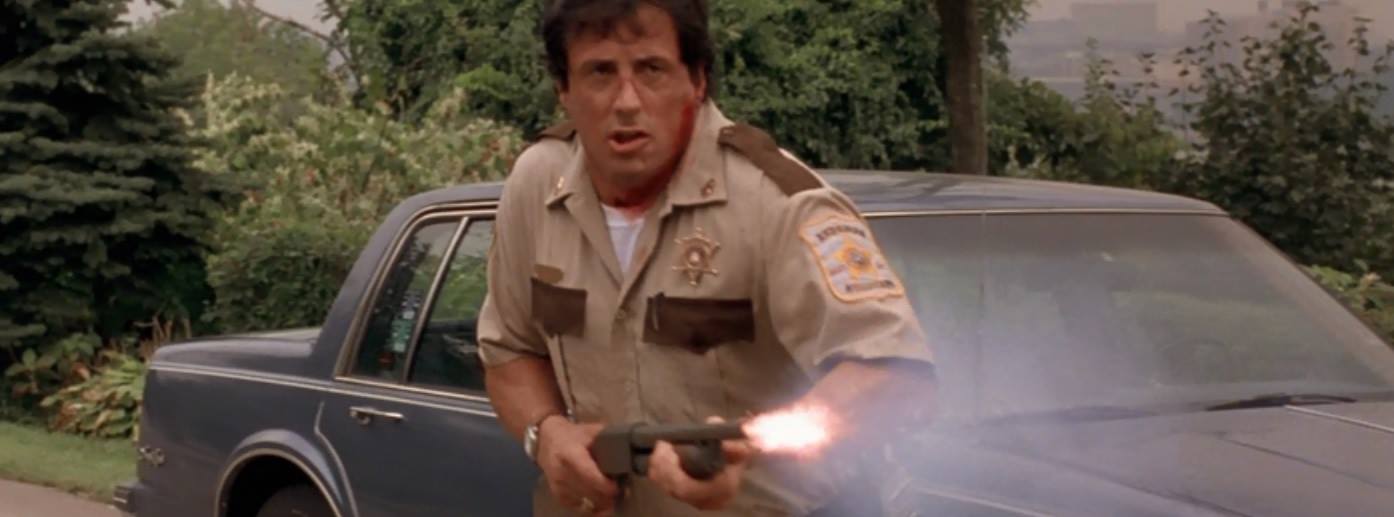
James Mangold has yet to top his 1997 film Cop Land – this film is just incredible from start to finish. Taking on the thematic ambitions of a classic Western while tipping its cap in the direction of neo-noir policier, this hugely entertaining and densely woven portrait of city wide law enforcement corruption ranks as one of the most underrated films of its decade, or any decade, for that matter. Sylvester Stallone’s deeply wounded, vulnerable, and ultimately heroic performance easily stands as one of his finest accomplishments as a performer, as he was able to rely on his endlessly fascinating face which holds the potential to bolster a film’s story more than words ever could. Playing a partially deaf New Jersey sheriff in a town populated mostly by big-city, law-bending NYC cops, he’s constantly at odds with numerous members of his community, who feel that the regular laws don’t apply to them when off the clock. How he interacts with the various members of the force is a study in posturing and a reminder of how generous Stallone can be as an actor when working with others.

3

The plot involves an unintended murder, a shady cover-up, disappearances, more murders, lots of overall mystery, and a sense off righteous bloodshed with an escalating sense of tension that ramps up all the way until the explosive finale. The cast is absurd. To wit: Robert De Niro, Harvey Keitel, Ray Liotta, Robert Patrick, Peter Berg, Annabella Sciorra, Cathy Moriarty, Paul Calderon, Michael Rappaport, Janeane, Garofalo, Noah Emmerich, John Spencer, Frank Vincent, Arthur J. Nascarella, John Ventimiglia, Edie Falco, Tony Sirico, Bruce Altman, Method Man, Robert John Burke, Victor Williams, and tons of “faces” that all add up to the one of the most impressive ensembles ever corralled for a major motion picture; casting agent Todd Thaler was working overtime! Eric Edwards’ unfussy cinematography was stylish at all times without ever once calling attention to itself, utilizing slow-motion in smart fashion, while Craig McKay‘s perfectly timed editing ratcheted up the anxiety that almost every single character faced during the course of the emotionally and physically violent narrative (Mangold wrote the script as well).1

Cop Land feels volatile and dangerous at all times, and it was sensational to see Stallone underplay his sad-sack character to such a degree that when he gets his chance to lash out, the moment feels all the more cathartic because of how reserved he had previously been. Howard Shore’s music seals the deal while Mangold brings it all together at the finish. At the time of its release, the film was met with solid critical notices, and it managed a respectable $45 million gross, but I always questioned the mid-August release date (this was an October or November movie all the way) and I think that expectations within Miramax may have been outside of what should have been anticipated, as this is a dark, serious film with grave consequences for most of the characters. Mangold reinstated close to 15 minutes of footage for his eventual director’s cut. And after countless revisits, it’s been made clear to me that this film is a true diamond in the rough, one of those efforts that while respected, never truly got its due credit.

ANDREW FLEMING’S UNDERRATED COMEDY DICK — A REVIEW BY NICK CLEMENT

1

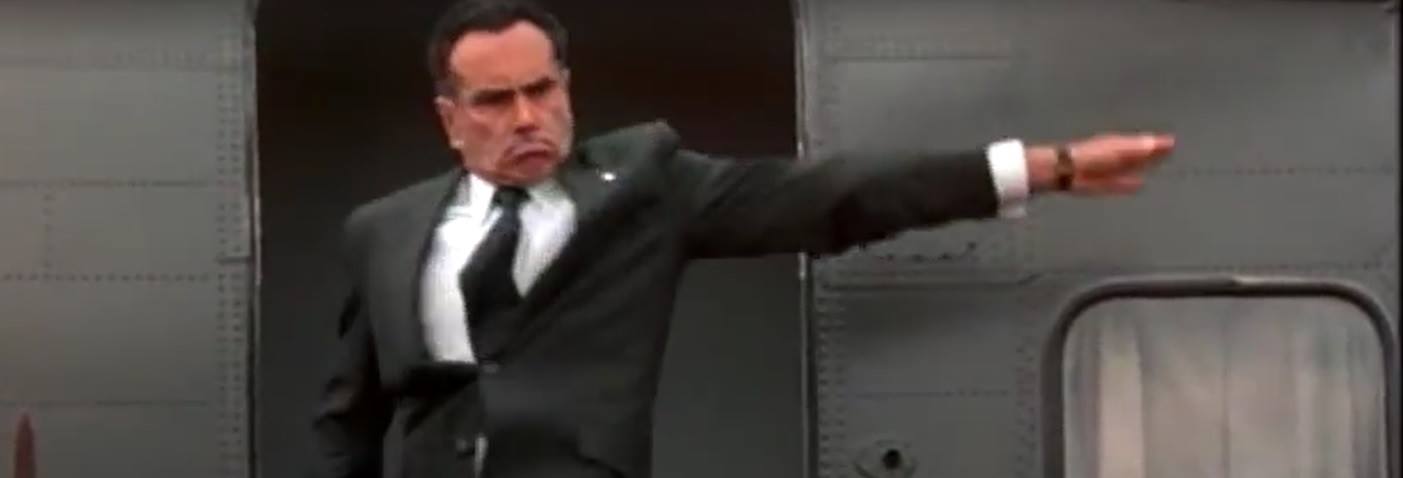
The 1999 political comedy Dick is a hilarious film. An absolute bomb in theaters (it grossed $6.2 million domestic), this is one of those films that’s found a long shelf life on cable, movie channels, and DVD (no Blu available as of yet). Reimagining Watergate-era Richard Nixon shenanigans through the prism of the “dumb-blonde” comedy, the film was energetically directed by Andrew Fleming (The Craft, Hamlet 2) from an extremely clever screenplay that he co-wrote with Sheryl Longin, and has a ridiculous cast top-lined by the terrifically funny duo of Michelle Williams and Kirsten Dunst as two clueless high-school girls who get pulled into political conspiracies and life at the White House. Dan Hedaya was priceless as Tricky Dick, getting a chance to flex his sharp comedic muscles, and the obscene supporting cast includes highly amusing work from Will Ferrell, Dave Foley, Jim Breuer, Teri Garr, Bruce McCulloch, Harry Shearer, Saul Rubinek, and Ryan Reynolds. Despite favorable reviews with some critics REALLY going to bat for it, teens weren’t interested, probably unimpressed by the period/political context, and adults were confused as to who the film was “for.” It was likely overshadowed, to a certain degree, by the high-school satire Election, which had been released a few months earlier to overwhelming critical acclaim but to even less box-office; the emergence of Alexander Payne and Reese Witherspoon was still fresh on many people’s cinematic minds. Regardless, Dick is one of those comedies where so many jokes hit and hit hard, with a plot that never stalls out, with genuinely smart comedy ruling the day rather than cheap gags taking central stage.

2

GEORGE AMRITAGE’S MIAMI BLUES — A REVIEW BY NICK CLEMENT

miami

Off-kilter, extremely quirky, cheerily violent, sexy when and where it counts, and just a ton of unexpected fun, the 1990 genre-skewing Miami Blues slipped in and out of theaters back in the day, grossing less than $10 million domestic, despite some strong reviews and a final package that constantly subverts our expectations for the milieu. Had this curiously strange movie been released now, I think it would have found a much more willing and appreciative audience. Originally a project for filmmaker Jonathan Demme (who would go on to produce), the film was adapted for the screen and directed by odd-ball-filmmaker specialist George Armitage (Grosse Pointe Blank, The Big Bounce, Vigilante Force) and was based on the novel by Charles Willeford, and centers on a deranged criminal named Fred Frenger “Junior” (Alec Baldwin in one of his loosest and most unpredictable performances), who upon being released from prison, jets down to Miami in search of a fresh start. However, immediately upon landing, he’s up to his old tricks again, never able to leave his past behind. He breaks the fingers of (and inadvertently kills) a pestering Hare Krishna, and from there, embarks on an increasingly violent crime spree involving hold-ups, random robberies, and lots and police impersonation so that he’s able to make off with big scores under the pretense that he’s a lawman. He meets a perky and naïve college student/prostitute named Susie (an extra cute and sassy Jennifer Jason Leigh), and a romance blossoms, despite Junior never fully exposing all of his secrets, and Susie becoming quickly attached both emotionally and physically. An aging cop named Moseley (a very funny and weathered Fred Ward) is on Junior’s trail, trying to put all of the pieces together in the wake of all of the madness that Junior is leaving behind. Moseley is in real trouble after Junior breaks into his place, assaults him, and steals his gun, badge, and dentures, which results in a film-long joke about Moseley’s teeth and gums and Junior’s enjoyment of flashing a real police badge that’s not his.

This is the sort of film that mixes comedy and violence in a unique way that produces a tone that’s hard to pin down. There’s an eccentricity to the material (thus luring the mind of Demme to the endeavor) that feels at odds with the demands of the studio thriller, so it’s not surprising to notice in retrospect that audiences were dismissive of it at the time of its initial release. Baldwin, who was hot off the success of The Hunt for the Red October with a tremendously appealing movie star performance, did a total 180 with his work in Miami Blues, balancing menace and sex appeal in a way that few others would have been able to pull off, resulting in a turn that feels alive and as different as anything he’s ever attempted. For her part, Leigh is all cutesy charm and innocent fun, and her frequent nudity felt bracing to witness given the relative prude qualities of today’s young starlets. Ward brought a grizzled manliness to the role of his “seen-too-much” cop, a guy with a set of false teeth but proper convictions. The snappy editing by Craig McKay allows the film to move at a brisk but never frenetic pace, while the cinematography by Tak Fujimoto opts for the gritty rather than the slick, with locale work also being a standout. The energetic musical score by David Chang rounds everything out. Shout! Factory has recently released a new Blu-ray of this forgotten about flick, and it’s one that’s definitely worth catching up with if you missed it 25 years ago.