JEAN-PIERRE JEUNET’S A VERY LONG ENGAGEMENT — A REVIEW BY NICK CLEMENT

1

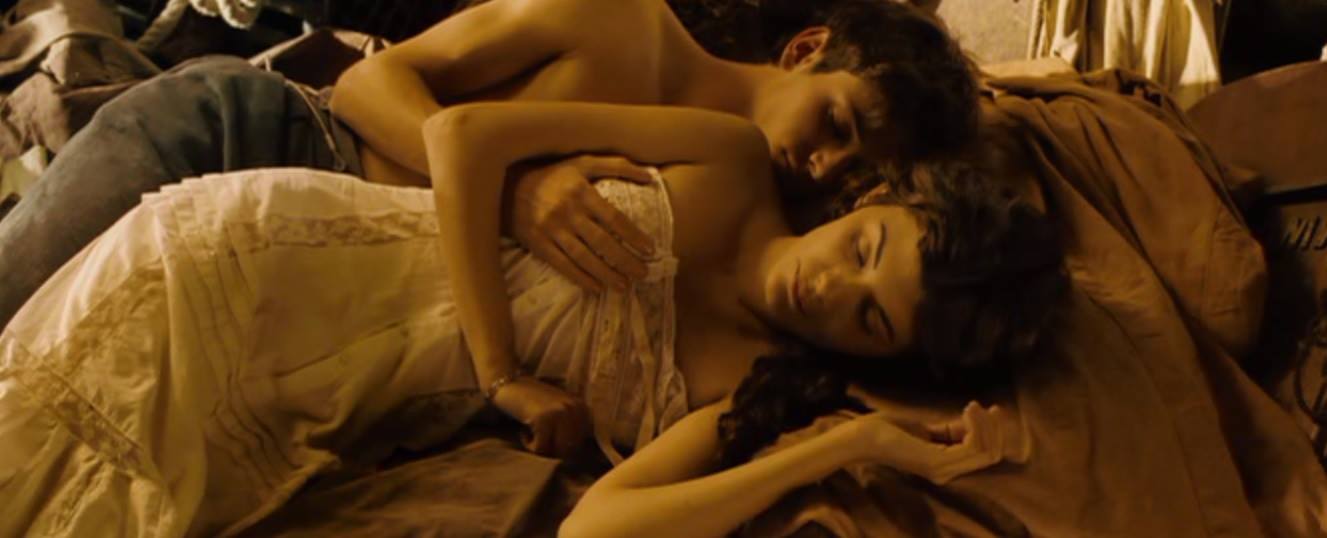
Wholly staggering and wildly undervalued, the 2004 film A Very Long Engagement is a masterpiece of storytelling and filmmaking, representing the greatest and grandest achievement yet for visionary filmmaker Jean-Pierre Jeunet. And I feel that’s saying something, as this is the man responsible for Amelie, City of Lost Children, and Delicatessen, to name just a few (the latter two being collaborations with Marc Caro). Melding the bubbly romantic whimsy of Amelie to the gritty and grimy battlefields of WWI, this is a true genre-bender, a war film with a bleeding, aching heart, boasting a finale that’s incredibly poignant without being overly sentimental; it never fails to devastate during the final moments. It’s utterly criminal that this massive piece of work was lost during the holiday movie blitz that year, and it’s a joke that the film is only available on DVD in America or as a Region B Blu-ray (thankfully, I have a Region Free player). Hollywood has long held a fascination with all aspects of WWII, with modern WWI movies in relative short supply by comparison; every future film to explore the rigors of trench war fare should be compared to this one. Jeunet co-adapted the storybook-style screenplay with Guillaume Laurant from the original novel by Sébastien Japrisot, and he brought his handmade style to every facet of this enormous and elaborate production. I adored his idea to shoot some of the flashback scenes in Academy Ratio 1.33:1 black and white, which gives those beats the sense of archival footage, when in reality, they feel like their own short film embedded into this grand canvass of people, places, and things.
2

The busy narrative of A Very Long Engagement pivots on five French soldiers, all of whom have been convicted of self-mutilation in an effort to ditch their remaining service time and be sent home and away from the horrors of battle. One of these soldiers, Manech (Gaspard Ulliel), is engaged to his childhood sweetheart (Audrey Tautou), and all he can do to mentally survive is continually think of her and how strong the love is between the two of them. Sent to “no-man’s land” (the highly dangerous and deadly area of land in between the French and German lines), Manech and the other solider-prisoners meet their individual fates in ways that I won’t dare spoil, but I will allow that the tale is told in slight Rashomon style, with various versions of the events explained to Mathilde as she works to put the mysterious pieces together of her future husband’s whereabouts. She sets off on an epic quest with the help of a private investigator to collect information and meet the wives of the other four soldiers that Manech was condemned to death with, leading her to some truly dark and upsetting revelations, but despite all of the sadness around her, she never gives up hope in finding the one person she loves the most. There’s a poet’s sense of the fragility of life on display all throughout this carefully mounted film, and the intricate storyline engrosses the audience immediately from the start, with the startlingly beautiful images washing over the viewer like a suffocating lather of exquisiteness. Bruno Delbonnel’s bronze-tinted and utterly ravishing cinematography, is, simply put, some of the best I’ve ever seen on a big screen, small screen, whatever size screen. Each shot is post-card ready, boasting immaculate vistas, raw and immediate battle footage with lots of graphic carnage, a sumptuous color palette, and grand and sweeping camera movements that defy logic and give you perspectives that you’d never expect. A late set-piece involving an exploding hydrogen blimp inside of a makeshift triage center is horrifying and beyond comprehension, and the various sequences of bloody combat are handled with extreme technical finesse without ever sacrificing grit and muck.

3

The performances are all uniformly excellent, with the appropriate supporting actors hitting their moments of expertly placed comedy in perfect ways to lighten the dramatic load, while Tautou and Ulliel are left to do the majority of the heavy emoting and dramatic lifting, and both are more than up to the task. Exuding a palpable chemistry and a deep longing for each other that’s wonderful and heartrending, the two of them were a perfect match. Marion Cotillard and Jodie Foster both have knock-out extended cameos, especially Foster, and Jeunet regular Dominique Pinon makes his customary appearance. A Very Long Engagement would only be nominated for Best Cinematography and Best Production Design at the Oscars (rightfully so, but predictably, it won neither award; The Aviator took both), which seems massively shortsighted, but because this film wasn’t a true Hollywood production, it was up to the French government to select their country’s film for Academy consideration, and they didn’t go to bat for A Very Long Engagement. I’ll never understand why. The film grossed $70 million theatrically worldwide, with only $6.5 million of that total coming from United States ticket buyers, a fact that makes me sick to my stomach. This is truly epic filmmaking of the highest order, made by an artist who is totally in love with all of the visual and narrative possibilities of the filmic form, and I’ll always be blown away by the handcrafted feel that A Very Long Engagement possesses. It’s so enormous yet at the same time feels so intimate and fragile, an attribute that’s incredibly hard to find.
KARL REISZ’S WHO’LL STOP THE RAIN — A REVIEW BY NICK CLEMENT

1

A thrilling chase movie, an affecting romance, an anti-war statement, a rousing action picture, and a sturdy drama about drugs and addiction, Karl Reisz’s 1978 film Who’ll Stop the Rain is a film that would never get made in today’s Hollywood studio system. It effortlessly blended multiple genres into a complicated, provocative mix, and it’s a film that I’ve viewed a few times this year after not being familiar with it. Released as the Vietnam war was coming to a close, it’s a work that boldly explored the fresh societal wounds that were still raw and exposed after a decade of fighting, and the power that the film ultimately achieves extends to any number of sequences that may feel jumbled together at times, but finally coalesces into something unique and satisfying and distinctly 70’s in feeling, atmosphere, and style. Reisz, a Czech-born British filmmaker with an interesting array of credits which included The Gambler with James Caan and The French Lieutenant’s Woman with Meryl Steep and Jeremy Irons, weaves this compelling film via an intricate narrative which was based on the Robert Stone novel Dog Soldiers, and adapted by Stone himself and screenwriter Judith Rascoe (Havana, Endless Love). When the film premiered at the Cannes Film Festival, it screened under the novel’s original title, but the studio later changed it due to fears that the public wouldn’t be interested in a “war” film so close to the end of Vietnam, and also probably to cash in on the popularity of the Credence Clear Water Revival smash hit that plays repeatedly throughout the film.

With the war waging on, a jaded and tired war journalist named John Converse (a sweaty, paranoid, thoroughly excellent Michael Moriarty) crosses paths with an old buddy, a Marine named Ray Hicks (Nick Nolte, fresh off The Deep, here making his first big attempt as a serious dramatic leading man in a feature film after years in the TV trenches), and asks him if he’ll help smuggle heroin from the jungles of Vietnam to the streets of San Francisco. A one time score, get rich, get quick, screw the Government. Hicks will meet up with Converse’s wife, Marge (Tuesday Weld, terrific), make the drugs/cash exchange, and be on his way. But when Hicks shows up to meet Marge, he discovers that she’s been popping pills while her husband has been overseas, and before long, Hicks realizes that he’s being followed by a pair of goons (Richard Masur and Ray Sharkey) who are either connected to Converse or to the drug suppliers. Hicks and Marge form an unlikely partnership with the potential for unexpected romance, and the two of them hit the road just as they become pursued by a corrupt DEA agent played by Anthony Zerbe. Marge suffers withdrawl as she becomes cut off from her pill stash; it’s then that Hicks decides to use some of the heroin to ease Marge out of her volatile state. After a series of action sequences and chases, Converse re-appears in the story, and the film climaxes with an elaborate shoot-out. The film’s final moments are tough and sad in the ways that the best films from the 70’s were. And the Neal Cassady connection to author Stone informs the story in many ways which make it an even richer experience in retrospect.

While well respected critically at the time of its release, Who’ll Stop the Rain failed to garner attention from the Academy, though it was up for the Palme d’Or at Cannes, Nolte was nominated for Best Actor by the National Society of Film Critics, and the writing team of Stone and Rascoe were nominated by the Writer’s Guild. Probably a bit to topical and angry with the war still a sensitive topic during the late 70’s, I wouldn’t be surprised to learn that it wasn’t a smash at the box office (it’s final dollar performance is underreported on-line). But what makes the film so spectacular was the way that Reisz infused all of the elements with a sense of realism and purpose, never focusing too hard on one aspect, and allowing all of the pieces to naturally come together. The big action set-pieces are extremely well handled, and the final moments are appropriately heartbreaking. Nolte is sensational, giving an animalistic performance in the prime of his on-screen youth, his voice nowhere near total gravel just yet, with his wild hair swinging one way this minute and the other the next. He had terrific chemistry with Weld, who had the right combo of sass and class, sexy but seemingly approachable, and damaged in a way that cries out for help. And Moriarty cuts a convincing portrait of a man so crushed by war that he feels the need to take action for himself, despite the potentially deadly consequences. Who’ll Stop the Rain is a film that I can’t wait to explore again and again, as it gives off the fumes of great films from the past (The Treasure of the Sierra Madre kept coming to mind) and seems like a precursor to many action dramas that would lead the way in the 80’s, films that would mix topical action with relatable themes of heroism, sacrifice, and sorrow.

2

CLINT EASTWOOD’S GRAN TORINO — A REVIEW BY NICK CLEMENT

2

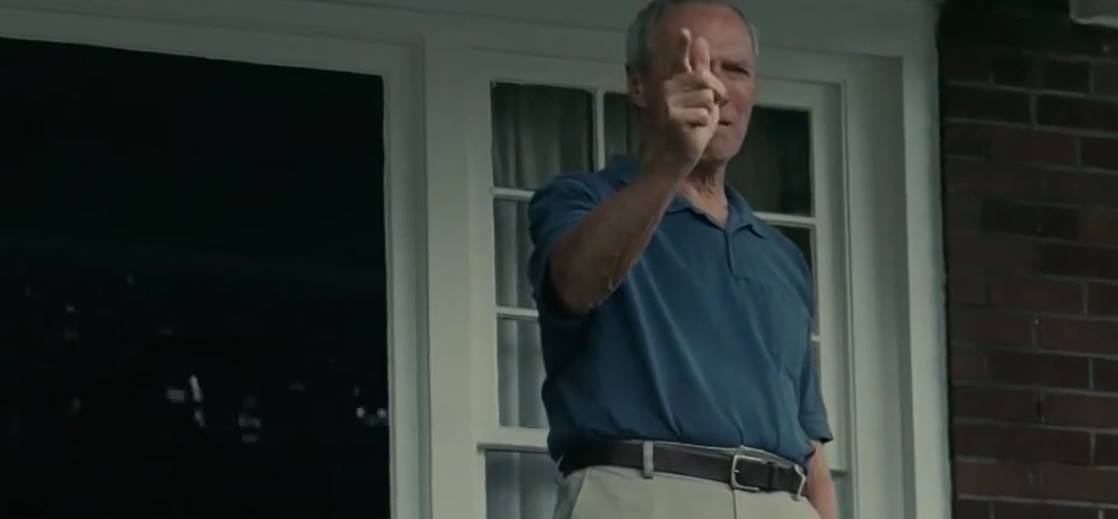
Gran Torino is a sensational entertainment and a true testament to Clint Eastwood’s power as an artist. The film is blunt, impactful, and direct, and Eastwood’s performance is one for the ages. A screen icon for over 50 years, took his leathery persona to a new level in Gran Torino in the role of Walt Kowalski, a bitter, racist, Korean war veteran, seemingly tailored made for Eastwood. He’s part Dirty Harry, part Archie Bunker, and all sorts of manly. The didactic yet extremely effective screenplay by Nick Schenk is an angry piece of work. The film is essentially a dissection race (a theme that Eastwood has touched upon his entire career), of different cultures, the mentality of different generations, and how everyone has an idea in their head of how their life is supposed to progress. Eastwood’s simple and unfussy direction is a perfect match for the script. Gran Torino seemed to be speaking for an entire generation of older American males, men who are disgusted by the disintegration of the American heartland and the rapid deterioration of old-school family values. And no matter how misguided the Kowalski character is at various points in the narrative, Eastwood brings his character full circle in a believable fashion. This film is a lot of stuff all at once – it’s wickedly funny, casually racist, always compelling, and strangely moving by its conclusion.

Kowalski has just lost his beloved wife at the start of the film. A war vet who worked for decades at the major Ford plant in Detroit, he’s unimpressed with the remnants of his family and the rapid decline of his city and neighborhood. His grandchildren are slobs and show no respect for their dead grandmother. His sons are foreign car-driving yuppies who would rather put him in a retirement home than do the proper thing and take care of him. But worst of all are the family of Hmong immigrants who have moved into Walt’s neighborhood, which used to be made up of Irish and Italians. Kowalski, who openly insults his neighbors with racial slurs, is revolted by what’s become of his immediate surroundings. Asian and African-American gangs cruise the streets, sparking menace on every corner. It’s the end of an era for men like Kowalski, guys who were raised in a hardscrabble but spirit-defining generation, and Kowalski isn’t going anywhere, no matter how tainted, in his eyes, things have become. The narrative gets complicated when Walt’s neighbor, Thao (Bee Vang), a somewhat directionless teenager being bullied by his gang-member cousin, attempts to steal Walt’s vintage 1972 Gran Torino, as part of a gang-initiation. Walt breaks up the attempted theft and then steps in when the gang members continually harass Thao and his pretty sister Sue (Ahney Her), thoroughly kicking one of the gang member’s asses, thus sparking a potentially violent feud.

One of the many surprises of Gran Torino is how brutally funny it is. Yes, the humor tends to be a bit awkward because of the virulent racism that Kowalski spews. But what Schenk’s screenplay gets so right is the anger that a veteran like Kowalski would feel after watching his neighborhood fall into a massive state of spiritual and moral decline. I have no doubt that there is a huge swath of America that resembles what’s on screen in Gran Torino, and for better or for worse, that’s the country that some of us inhabit each and every day. And there is a sad, honest truth to the film that is at turns biting and deceptively sentimental. Eastwood growls and snarls many of his lines, not as a stunt, but as a way of expressing his inner turmoil and seething rage. The other actors who surround Eastwood do a solid job, and while the overall lack of experience on the part of both Vang and Her is obvious at times, over the course of the film, they both improve, especially when paired with Eastwood in the same scene. And in many spots, this amateur quality makes for a more natural feeling resulting in a more emotionally resonant viewing experience.

Gran Torino is, in the end, a movie about tolerance, change, and respect. It doesn’t speechify, it doesn’t preach too hard to its audience, and while the film sometimes feels a bit too schematic at times, it knows what it wants to say and how to say it with force and clarity. There are a few moments with Kowalski where you peer into the soul of a haunted man, and because Eastwood is such a sharp performer, you’re always rooting for him despite his numerous shortcomings. As the film speeds along to its inevitable climax, one gets the sense that this was the role that Eastwood had been leading up to at that point in his career. His legacy as an artist is undeniable, and throughout the years, he’s provided audiences with no shortage of intelligent, thoughtful explorations of America and the people that inhabit this country, their various obsessions and pre-occupations. He’s also a filmmaker with an inherent understanding of violence and the power and impact of the violent cinematic image, and as a result, his films frequently carry an intense emotional force that Gran Torino certainly possesses. This is an instant classic and an almost perfect distillation of the epic screen mythology of Clint Eastwood as a storyteller and actor.

3

ALAN PAKULA’S KLUTE — A REVIEW BY NICK CLEMENT

1

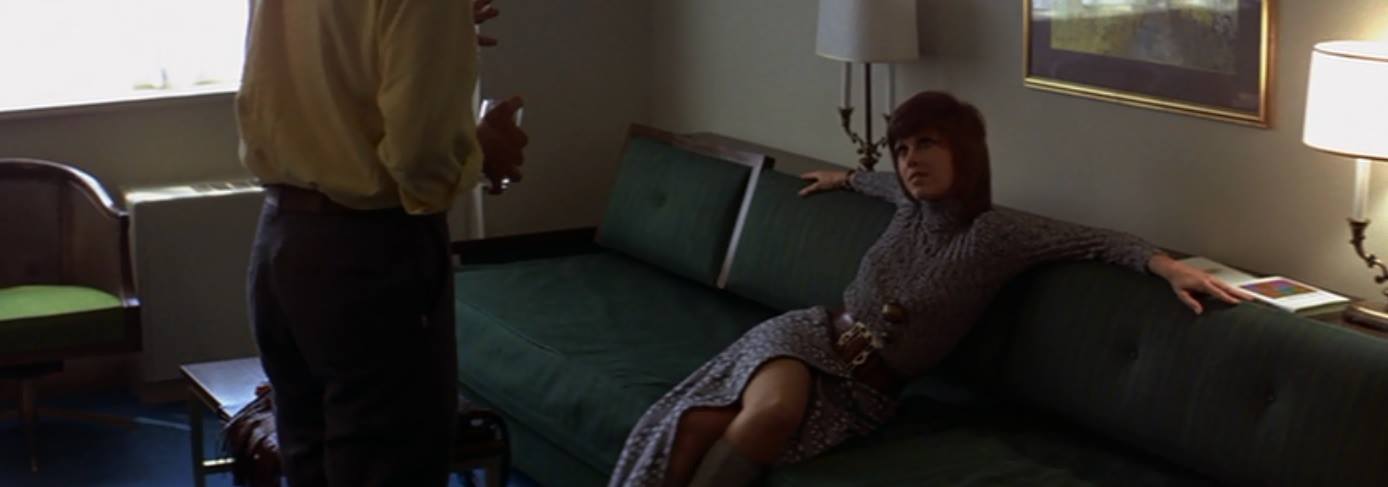
There isn’t a single film from Alan Pakula that I’ve seen and not enjoyed on some level, and revisiting Klute recently was something of a personal revelation. I hadn’t seen this amazing thriller in a long time (at least 15 years…) and I had totally forgotten about how sketchy and seedy and slow-burn it is, and how creepy and oddly sensual that musical score was; this is one of those total-package thrillers that delivers the aesthetic goods on every level, while still paying attention to character development, motivation, and narrative intent. Gordon Willis literally crafted a film born out of shadow and the night; his moniker “The Prince of Darkness” couldn’t have been more spot-on, and in this film, there are shots that look like they have 10 different shades of black in them. Jane Fonda was super sexy and totally riveting to watch, confident one moment and vulnerable the next. Donald Sutherland did some solid if subdued supporting work, letting Fonda come to him in an effort to maximize the dramatic potency of each of their scenes together. The screenplay by Andy and Dave Lewis allowed for some great monologues for Fonda, and I’d like to think that this film was considered a triumph for cinematic feminism back in 1971. Roy Scheider delivered colorful character work, the hat-tips to noir from Pakula and the Lewis brothers were studied and well-informed, and again, the level of Gordon Willis POWER can never be underestimated.

2

JON WATTS’ COP CAR — A REVIEW BY NICK CLEMENT

1

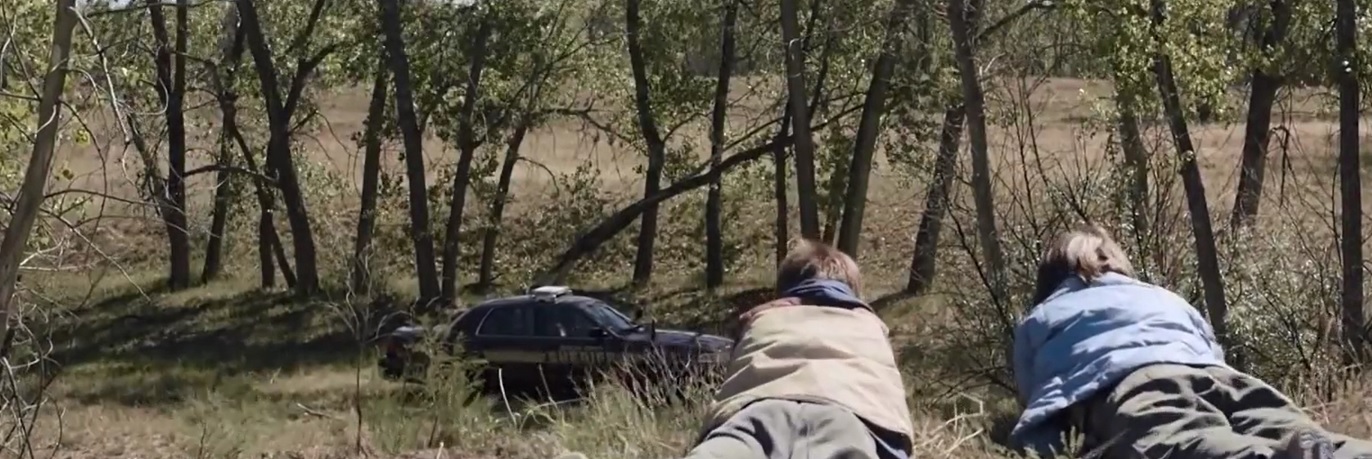
Directed with lean efficiency and a mean streak a mile wide, Cop Car is an extra-tight B-movie made all the more potent because of its exacting sense of logic. The final moments do stretch credibility, but, within its own realm, and considering all that has come before it, I bought into it from moment one. This is a delightfully wicked little film, evoking Eric Red’s cult classic Cohen and Tate in more than one spot (child endangerment, oh my!), and featuring two child performances from James Freedson-Jackson and Hays Wellford that hit all the right notes of innocence, foolhardiness, and unearned confidence. The narrative hinges on the idea that the two boys have run away from home one summer’s day, and while they trek through the open plains of New Mexico, they come across a seemingly abandoned cop car in the middle of a field, which they proceed to take out for a joyride, after, rather humorously, giving themselves a tutorial on driving. The naïve youngsters then get a rude awakening when a psychotic sheriff, played with a wonderful glint of desperate cruelty in his eyes by Kevin Bacon, informs them that he’d like his car back, and to not look in the trunk. I’m not saying anything more, because what this film does for 90 minutes is turn the screws fast and hard, never allowing you to think too hard about what’s been occurring, but when you do stop to think about the events of the plot, you can’t help but admire the bracing sense of forward momentum combined with a general air of unpredictability and a fantastic sense of tension. Produced, co-written, and directed with low-budget panache by Jon Watts (about to be sucked into the Marvel/Spiderman mess), the film comes across as a darkly comedic yet starkly violent thriller in the vein of an early Coen brothers effort; I love it when tones are mixed up and Cop Car certainly enjoys sadism with a side order of ironic humor. The crisp and clean widescreen photography by dual cinematographers Matthew J. Lloyd and Larkin Seiple maximizes space and geography to an unsettling degree, which creates a dangerous and menacing atmosphere right from the start. Cop Car is every 10 year old boy’s dream AND nightmare, all in one, and I’d like to think that both Freedson-Jackson and Wellford were given a serious talking-too regarding make believe vs. reality. There are some bits with the kids handling loaded weapons that are flinch-inducing, and the sense of terror that overcomes the two protagonists in the final act is nearly unrelenting. This is a refreshingly unpretentious, casually stylish and totally transgressive little thriller that should delight fans of this genre to no end.

2

JILL SOLOWAY’S AFTERNOON DELIGHT — A REVIEW BY NICK CLEMENT

1

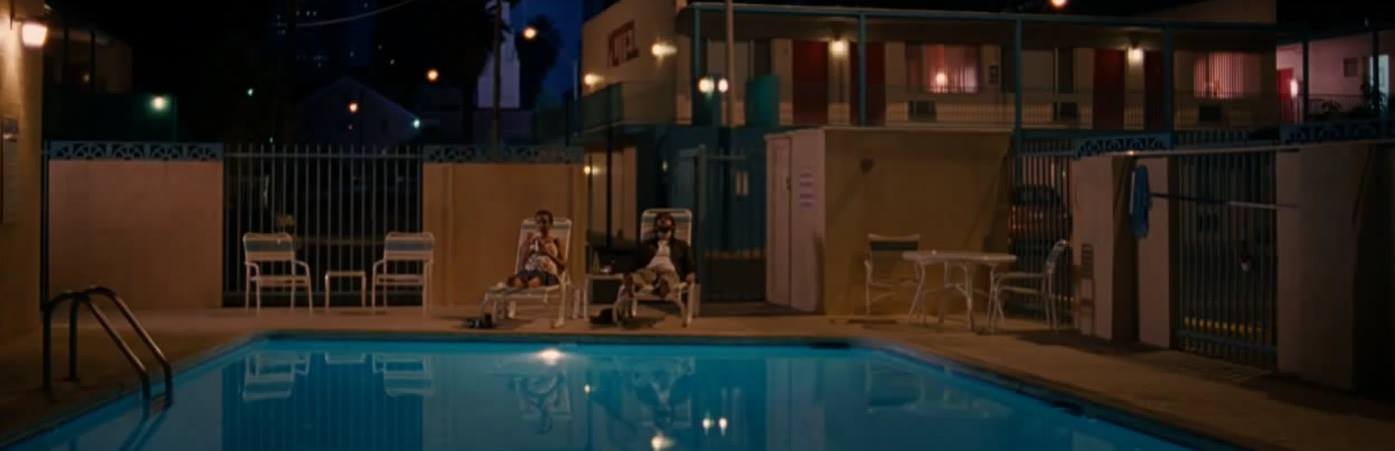
Afternoon Delight is a pitch-perfect indie from 2013 that deserves more attention. Written and directed by Jill Soloway (Amazon’s Transparent) and starring the always awesome Kathryn Hahn, this is an extremely funny, well observed, sexy comedy that hits all the proper notes of pathos and hilarity. Hahn’s wildly amusing and emotionally volatile rollercoaster of a performance is something that needs to be seen to be believed, as she explodes from one sequence to the next with nervous energy and burning desire to make her life more exciting. Juno Temple goes all out (as usual…she’s a fearless talent) as a young stripper/hooker who becomes friends with Hahn, and the two of them create a unique relationship where they both learn from one another in an effort to better themselves. Soloway isn’t afraid of getting down and dirty, and the way she injected just enough smarts into the story keeps it from feeling like cheesy sitcom material that goes nowhere after a terrific set-up. Josh Radnor was very effective as the conscience of the piece, playing Hahn’s curious but still uneasy husband who has to navigate his wife’s new-found zest for life with an interesting degree of openness and familial protection. Jane Lynch gets expected laughs as Hahn’s emotionally dry shrink. Shot with a casual sense of style that never interferes with the narrative by cinematographer Jim Frohna, Afternoon Delight is one of those little hidden gems that gets lost in the shuffle, and is well-worth seeking out. Soloway won the Best Directing award at Sundance for her efforts.

2

JOHN CARNEY’S ONCE — A REVIEW BY NICK CLEMENT

1

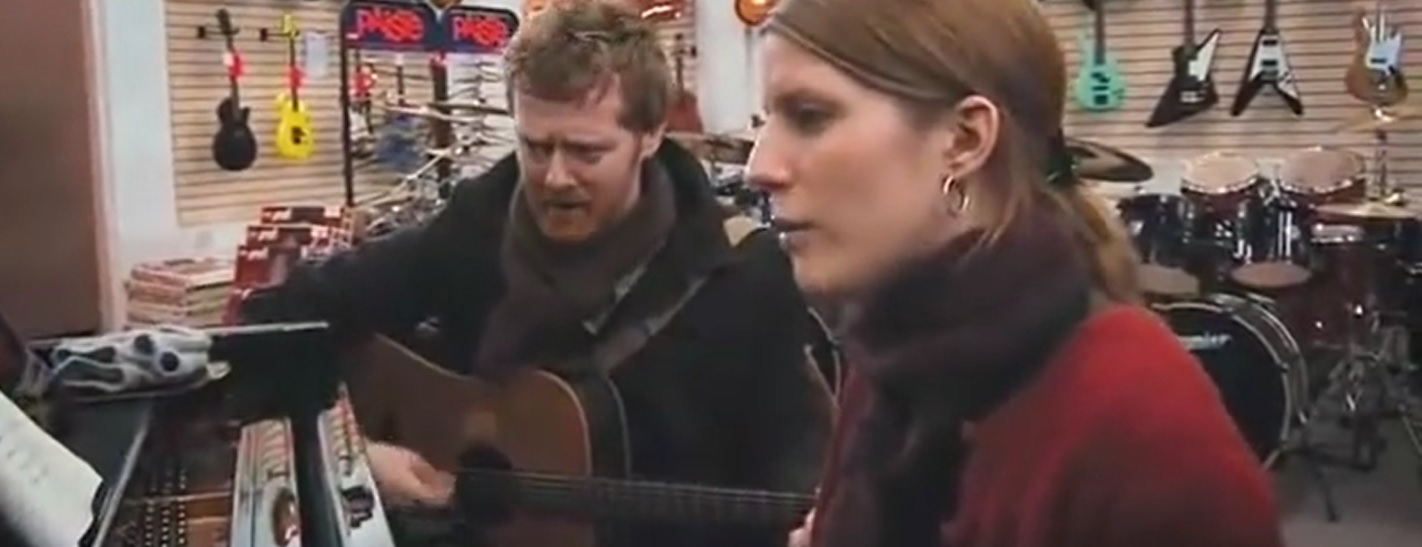
John Carney’s lightning-in-a-bottle musical romance Once is the musical for people who don’t like traditional musicals. I’ve seen this film a dozen times – easily – and I’m always swept up by its numerous charms. An Oscar-winning critical darling and sleeper hit on the art-house box office circuit back in 2007, Once is the sort of film that has found a massive second-life on DVD/Blu-ray and it’s even spawned a successful Broadway show, which I had the fortunate chance to see, and totally love. The film is a super low-budget effort that sits alongside The Commitments as one of the best working-class musical dramas of all time. There is spoken dialogue throughout the film, but much of the story is told through song, but in an organic fashion so as to never feel forced. The actors, Glen Hansard and Markéta Irglová, were friends for a long time before they shot the movie, and are musicians first and foremost. The story is simple: Boy meets girl, boy wants girl, girl sort-of wants boy, boy impresses girl, girl warms up to boy, and then….well…I’m not spoiling. What I will reveal is that each and every musical sequence is divine, especially when the two leads collaborate in the back of a music shop; pure bliss. The emotion, joy, and love that the characters develop for each other, and how it’s all born out of their mutual love for music, registers in every single scene of this deeply heartfelt film. And the ending of the story is just about perfect; I couldn’t have imagined a better way to cap this lovely and always believable story. By the end of the film’s swift 86 minute run-time, you’ll be wishing that there was one more song to be heard. Carney, who played in a band years ago with Hansard, takes a natural stylistic approach to his story, employing a grainy, digitally shot, hand-held aesthetic that adds to the realism of the story. Much of the film, which took 17 days to complete on a $150,000 budget, was shot by the cameramen from a distance, thus relaxing the actors and allowing them to be spontaneous with their performances. This is a true gem.

2

SAM MENDES’ AWAY WE GO — A REVIEW BY NICK CLEMENT

2

I’ve been a fan to some degree of all of the films from director Sam Mendes, but if there’s one film that nobody seems to bring up much from this classy and stylish filmmaker, it’s his underrated and extremely perceptive road movie Away We Go, which got a quiet release in the summer of 2009, and garnered very mixed reviews, with some people loving it and some really hating it. This is a film that holds up a mirror to a variety of American subcultures and essentially shows the viewer how messed up everyone is, and how we’re all just struggling to find our little nugget of gold, while we make countless bad decisions along the way and meet people who constantly fail and disappoint us. Feeling very much like a movie from the 70’s, this was Mendes’ most aesthetically loose piece of filmmaking, eschewing his formally precise compositions in favor of spontaneous hand-held cinematography, which complimented the episodic and freewheeling screenplay by husband and wife team Dave Eggers and Vendela Vida. John Krasinski and Maya Rudolph were perfectly cast as a mid-30’s couple on the brink of being parents who set out on the road to visit friends and family in a last ditch effort to plant roots before their baby arrives. A terrific supporting cast including Allison Janney, Maggie Gyllenhaal, Chris Messina, Melanie Lynskey(!), Josh Charles, Jeff Daniels, Catherine O’Hara are along for the ride, all getting a chance to create lasting and distinct portraits of diseased Americana which are sadly too believable, while Krasinski and Rudolph smartly underplay every scene, allowing the story to come to their characters without any forcing or over emoting. They also conveyed terrific sense of romantic chemistry between one another, which upped the empathy quotient in an otherwise biting piece of social satire. The upfront and awkwardly humorous sex scene that more or less opens the movie sets the quirky tone right away, and I loved how this felt like a total 180 from anything that Mendes had done before or has done since. This was his Flirting With Disaster (another wildly underappreciated gem from a distinct cinematic voice, David O. Russell), and it’s a film that more people should make the time for.

1

RIDLEY SCOTT’S MATCHSTICK MEN — A REVIEW BY NICK CLEMENT

2

Matchstick Men is top five Ridley Scott. The cinematic sleight of hand on display is remarkable. So stylish in a very subtle way, never revealing its full hand until the very end. I love it when Ridley goes “small.” This tricky, funny, nasty film features a great Nicolas Cage performance in one of the ultimate conman performances to hit the big screen, with possibly career best work from the sensational Sam Rockwell as his affable partner. Alison Lohman’s young looks were perfectly used as a further layer to the tricky narrative, and Dody Dorn’s editing is razor sharp with not one wasted moment. John Mathieson shot in bold widescreen, ramping up the shutter speed during the numerous mental attacks that Cage suffers, emphasizing space and minutiae in an effort to convey anguish and uncontrollable behavior. Hans Zimmer’s jazzy, atypical score evoked an old-school feeling, and the way that Cage’s OCD ticks and mental sketch-outs were used to pepper this constantly morphing story added edge and unpredictability to one of the most overall surprising films of the last 15 years. I have watched this movie at least 10 times and I’ll continue to do so throughout the years – it’s absolutely terrific on every single level. Bruce Altman and Bruce McGill, two of my absolute favorite character actors, both provided extremely memorable support. This film should have done so much better at the box office, and despite mostly excellent reviews, it just doesn’t get talked about enough. This October will see the long awaited, at least by fans, Blu-ray, which will hopefully port over the marvelous making of documentary Tricks of the Trade, which was produced by friend of Podcasting them Softly Charles de Lauzirika. WARNING: NO SPOILERS IN THE COMMENTS!

3

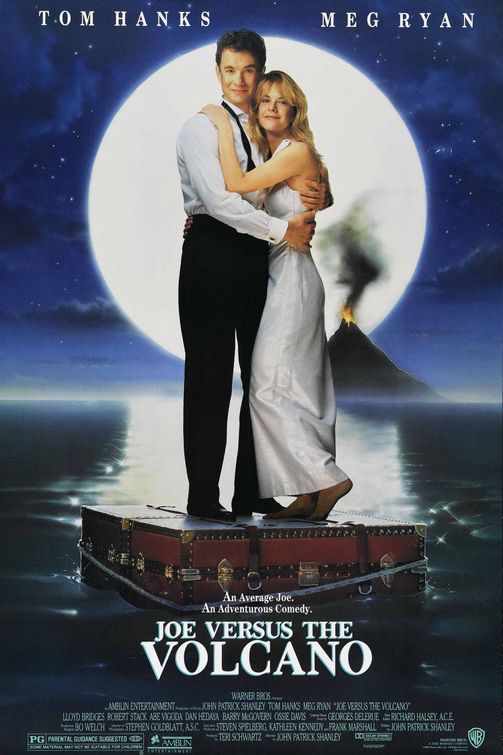
JOHN PATRICK SHANLEY’S JOE VERSUS THE VOLCANO — A REVIEW BY NICK CLEMENT

joe_versus_the_volcano

John Patrick Shanley’s Joe Versus the Volcano is a wonderful movie, the sort of project that defies description, and only comes along once in a great while. The fact that this movie was released in 1990 and that I can think of very little to compare it too must count for something. This was a film I watched repeatedly as a teen, but after a recent revisit, I’m struck by the film’s unique sense of heartfelt melancholy, as well as its confidence with balancing various tones and distinct performances.  This movie took chances with its narrative, wasn’t afraid to be a bit “out there,” and Shanley still grounded the entire piece with a level of realism that made the plight of Tom Hanks’s character all the more resonant. Shanley is an immense talent, and when looking at his collective body of work as a writer in all mediums, Joe Versus the Volcano stands out even more; it’s truly a piece of entertainment that marches to the beat of its own drum. While critics were mixed at the time, I would like to hope that there’s a lot of people out there who hold this smart, surprising, and extremely funny little gem of a movie close to their hearts, as it’s the sort of work that rarely gets released these days. I can’t imagine how much of a challenge it might have been to market this quirky film back in an era before the internet and large scale media saturation, where you could really pinpoint a niche audience and attack hard. This was yet another charming, offbeat effort that would attract a huge following during the heyday of VHS, and would further cement the star power of rising stars Hanks and Meg Ryan, who would go on to reteam in Sleepless in Seattle and You’ve Got Mail. Stephen Goldblatt handled the peppy cinematography; while Geroges Delerue’s playful score immediately set the mood. The insane supporting cast includes Carol Kane, Lloyd Bridges, Robert Stack, Abe Vigoda, Nathan Lane, Amanda Plummer, Ossie Davis, Dan Hedaya. An Amblin Entertainment release.