DOUG LIMAN’S THE WALL — A REVIEW BY NICK CLEMENT

3

Bitter, subversive, and violently fierce all throughout its super-lean 80 minute running time, Doug Liman’s Iraq war thriller The Wall operates as both a minimalist genre exercise ala Phone Booth and Buried, while angrily commenting on American foreign military involvement. And it serves as a reminder that Liman, who certainly got bit by the blockbuster bug (The Bourne Identity, Mr. and Mrs. Smith, Edge of Tomorrow), can still drop a down and dirty little gem that delivers a smart gut punch. The Wall is short and sweet so I’ll keep my comments the same, as the less you know about this nervy picture the better. I’ve long been a big fan of Liman’s varied technique and it’s exciting to see him switching gears and taking on a gritty quickie like this; he’ll be back on screens later this year with the drug running crime film American Made with Tom Cruise.

2

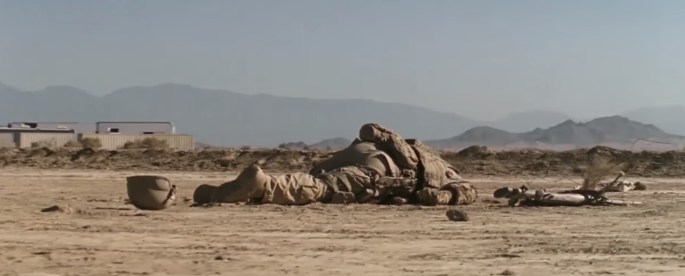
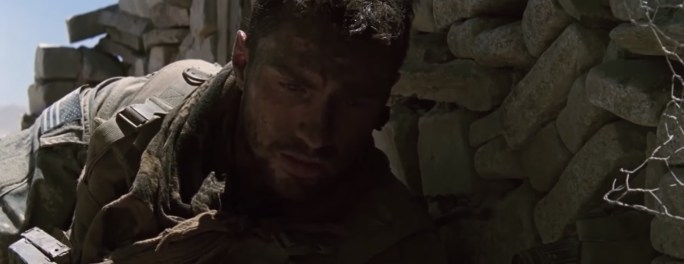
Dwain Worrell’s ultra-focused screenplay was the first spec script purchased by distributor Amazon Studios, with the plot centering on two American soldiers, played by Aaron Taylor-Johnson and John Cena, who become trapped by an Iraqi sniper near a small compound and partially destroyed cement wall. When Cena is hit, it’s up to Taylor-Johnson to save himself and his partner, all the while contending with the enemy combatant who has hacked into their radio, remaining unseen for the entire film, and clearly enjoying his close yet hidden proximity. Taylor-Johnson is very effective as the panic-stricken soldier who is also dealing with a potentially life-threatening bullet wound, Cena spends most of the narrative with his face down in the dirt but is still quite strong, and the calm yet chilling voice-over performance of Laith Nakli understandably makes you anxious.

1

The Wall hugely benefits from Roman Vasyonov’s exceptional and jittery widescreen cinematography (the film was shot on 16mm film stock), while Julia Bloch’s no-fat editing keeps the pace lightning quick without ever sacrificing any of the fired-up dramatics. The solo location keeps things intense and claustrophobic despite being set outside, and the lack of a traditional musical score keeps the film all the more tense and unnerving. The ending is startling and exactly as it should be. The Wall was released last weekend to a questionable Rottentomatoes score of 62% (if the Marvel logo were attached it’d be in the 90’s), and practically non-existent box-office returns. To be fair, I doubt many people are aware of this movie, which is a huge shame, as smart and ruthless thrillers like this are in small supply, especially during the increasingly empty-headed summer movie season.
1

TIM HUNTER’S RIVER’S EDGE — A REVIEW BY NICK CLEMENT

2

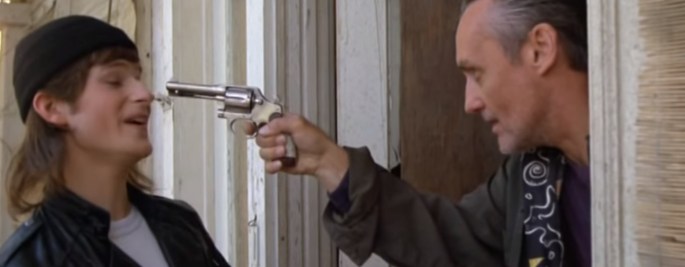
Tim Hunter’s brutal and unforgettable drama River’s Edge is one of the most unflinching looks at dysfunctional teen life ever put on screen, and serves as a grim reminder of how powerful true-crime based cinema can be when properly handled. Inspired by a real murder that took place in 1981 in California, Neal Jimenez’s hard-hitting script never soft pedaled any of the scary, emotionless nihilism that permeated a group of kids who were all tangled up in thoughtless killing, with an amazing cast of then-young actors doing sensational work, including Keanu Reeves, Ione Skye, Roxanne Zal, Josh Richman, and Crispin Glover, with Dennis Hopper providing his usual brand of sinister character acting from the fringes of this chilling film. With evocative cinematography by Frederick Elmes and a haunting score from Jürgen Knieper, this is one of those absolutely harrowing efforts that once you’ve seen you’ll never forget, and despite shining a light on some very unsympathetic characters (Larry Clark must love this film!) who are all caught in a deadly scenario, Hunter’s steely direction keeps the film from ever becoming cloying or sentimental, as he stressed the inherent cruelty and sadness of the story without over doing it.

3

JAMES SCHAMUS’ INDIGNATION — A REVIEW BY NICK CLEMENT

indignation_xlg

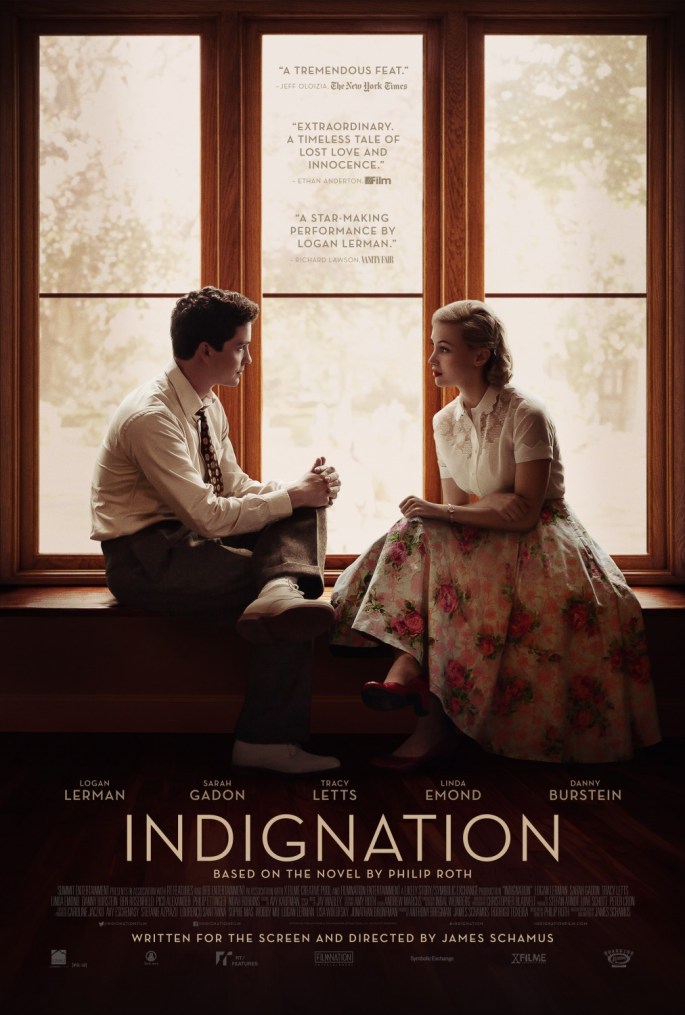
Next up on Did You Have Any Idea This Was Made And Released? is the confident and excellent 50’s-set drama Indignation, from producer/writer/scholar James Schamus, who made his directorial debut with this adaptation of Philip Roth’s novel of the same name. Schamus has, for the last 20 years, been Ang Lee’s main creative collaborator, and also found time to run Focus Features; it’s no surprise that he’d choose an intelligent and classy piece of material such as this for his first foray into full-fledged feature filmmaking. Logan Lerman, again excellent after strong work in Perks of Being a Wallflower and Fury, makes a commanding impression as a young Jewish college student, the son of a Kosher butcher, who leaves New Jersey for Ohio, and immediately has problems settling into campus life. The early scenes project a wonderful sense of time and place, which then fluidly leads into the rest of the story.

3

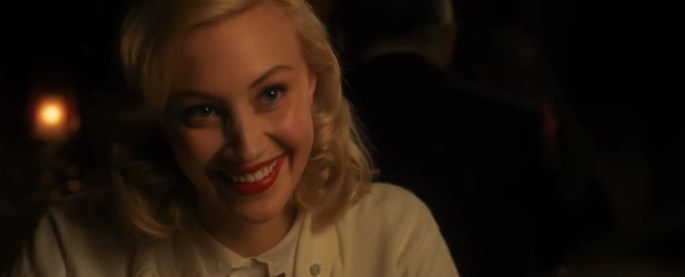
His bumbling roommates aren’t a good fit, he’s got an overbearing Dean of students (played by the tremendous and invaluable Tracy Letts), his parents are a mess, the Korean War is escalating, and he catches the eye of a sexually forward and potentially troubled female student played by Sarah Gadon (very pretty but a little dramatically flat) who changes his life forever after a very saucy (especially for the time) first date. The societal humor that’s on display during the various sexual entanglements is often very, very funny. But just you wait until the film’s dramatic centerpiece arrives in the form of a one on one confrontation between Lerman and Letts; this staggering bit of acting between the two thespians runs for close to 15 minutes and becomes nearly overwhelming by its conclusion. With rat-a-tat dialogue and the two performers heatedly reciting their lines, it’s hilarious, smart, stinging, and hugely entertaining to observe.

2

So why didn’t Indignation, which was “released” by Roadside Attractions and Summit Entertainment in the head-scratching summer movie season last year after being acquired at Sundance, have any sort of visibility in the marketplace? Beyond the fact that it’s a film that would likely appeal to a narrow audience (especially these days), I can’t figure out why the distributors didn’t even TRY to do something with this strong piece of cinema; it wasn’t even worth a fall release date as opposed to be being buried in late July? Because it should have grossed way more than the $3 million domestic that it did, and it’s much better than its 82% Rottentomatoes score (if the film opened with the Marvel logo it’d be in the 90’s). This should have been aggressively marketed to upscale audiences, with a simultaneous push onto VOD platforms at the time of its theatrical release.

1

All of the craft contributions were splendid, with period-fantastic art direction and production design by Derek Wang and Inbal Weinberg respectively; painterly cinematography that stressed dark hues from Kelly Reichardt’s favored director of photography Christopher Blauvelt; patient editing by Andrew Marcus which allowed various scenes to unfold at a smart pace for maximum dramatic impact; and a superb musical score by Jay Wadley that tied everything together.  But because the film didn’t have massive stars and nobody showed up in superhero spandex, nobody saw it, or has even heard of it. Schamus demonstrated a natural hand as a storyteller with this project, and I hope it’s financial failure doesn’t dissuade him from working again in the helmer’s chair. The title of this film is very fitting for the themes explored within the emotionally tricky narrative, and for how I feel about the direction that cinema in general is currently headed.

1

BILLY WILDER’S THE APARTMENT — A REVIEW BY NICK CLEMENT

1

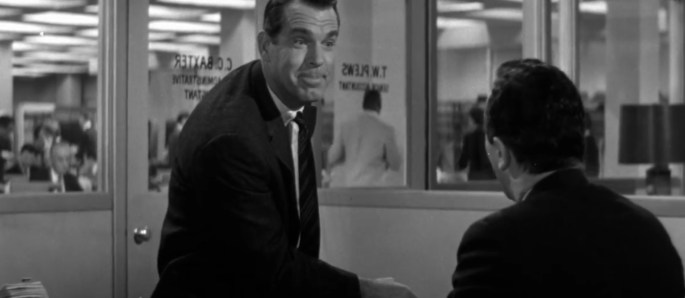
Released in 1960, Billy Wilder’s The Apartment stands as one of the filmmaker’s greatest works, a motion picture written with intelligence, directed with style, and preformed with vitality by its splendid cast, which included Jack Lemmon, Shirley MacLaine, Fred MacMurray, Ray Walston, David Lewis, Willard Waterman, David White, Edie Adams, Hope Holiday, and Jack Kruschen. Few modern romantic comedies have ever reached the heights of this film, which despite being over 50 years old, doesn’t feel dated; there’s a truthful sense of humor and life running all throughout this film’s narrative bones with the sexually thematic underpinnings never losing their bite.

apartment_ver3

Wilder and co-screenwriter I.A.L. Diamond struck a superb combination of drama and laughs, while never forgetting to ground the story in something emotionally substantial. The idea that Wilder followed up Some Like It Hot with The Apartment is sort of mind-boggling; a director would be lucky to make a film that’s half as good as either of those, let alone release them back to back. The excellent musical score by Adolph Deutsch perfectly matched the on-screen action which was captured in a studious manner by cinematographer Joseph LaShelle; the patient but never slack editing was handled by Daniel Mandell.

2

And then there’s the titular location itself, beautifully designed by Alexandre Trauner and Edward Boyle, which certainly becomes its own character as a result of the various people occupying the space. This film really has it all; the aesthetics were in line with the themes, Lemmon was in full swing, and the end result is intoxicating. Grossing $25 million back when money was real, The Apartment garnered 10 Academy Award nominations, and won five, including Best Picture, Best Director, Best Screenplay, Best Editing, and Best Art/Set Decoration. In 1968, the film received a Broadway spin-off called Promises, with Neil Simon, Burt Bacharach, and Hal David collaborating on the stage project.

3

STEPHEN GAGHAN’S GOLD — A REVIEW BY NICK CLEMENT

1

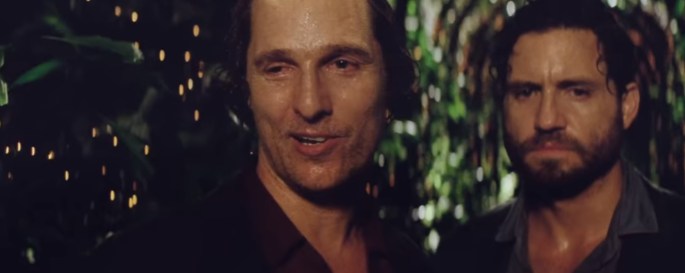
Stephen Gaghan’s Gold is a wild if familiar, sort-of-true-story saga about modern gold prospectors who risk it all in the Indonesian jungle for the pursuit of extreme fortune. Matthew McConaguhey’s over-sized and maybe-too-method performance is the big reason to see this film; if you’re a fan of him as an actor then his oily, greasy, bloodshot, and nearly constantly cocked performance will be a big hoot. Edgar Ramirez gives his usual fine support, and there’s a bunch of familiar faces in the background. But this is the McConaguhey show all the way, with the actor gesticulating like a mad-man while rocking a tragic receding hairline, his puffy face covered in flop sweat in almost every scene, and looking thoroughly toxic and grotesque in nearly every instance; he’s a personal pigsty and I thought it was priceless to observe. Robert Elswit’s fantastic widescreen cinematography is the other big standout in Gold; he’s one of the best, most varied shooters in the business and Elswit gives every sequence of this film a really cool visual atmosphere with some really thoughtful camera angles.

2

Patrick Massett and John Zinman’s zig-zagging and incident-packed script feels at times borrowed from other “process” narratives and there’s certainly a whiff of cliché running throughout the film’s narrative bones, but I thought this was a raggedly stylish movie that had a certain boozy bravado that kept in interesting if never truly special. It reminds of The Wolf of Wall Street and Blow but lacking some of the pizzazz and amoral laughs those films provided. And when you go and read about the real scandal involving the Canadian mining company Bre-X, you can see how some of the more outlandish moments that happen in the film actually occurred in real life, and how other bits of insanity were jettisoned maybe out of fear of being perceived as too over the top. Daniel Pemberton’s blustery score certainly added some oomph; ditto the tunes on the 80’s-centric soundtrack. Various director and star combos were attached at various stages, while the finished film elicited mixed critical reviews and tepid theatrical box office returns. Gold is now available on Blu-ray/DVD and streamable through various providers.

3

MATT REEVES’ DAWN OF THE PLANET OF THE APES — A REVIEW BY NICK CLEMENT

1

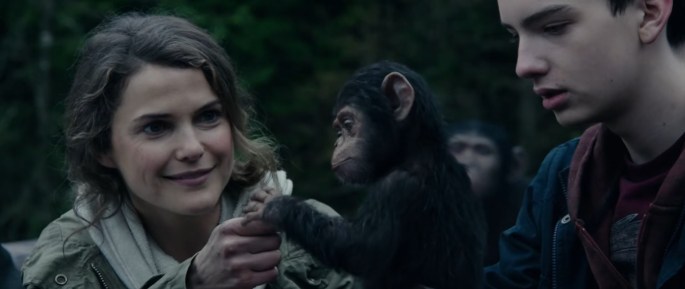
One of the only CGI-dominated franchises that I personal care about at the moment, the recent rebooting of Planet of the Apes has been spectacular, with both films delivering supreme, photo-real visual effects and narratives that feel topical and human and never anything more than they have to be. This summer’s upcoming War for the Planet of the Apes looks truly epic and is one of the few movies that I’ll actually spend $6 to see in a theater. And while not as emotionally affecting as Rise of the Planet of the Apes, Matt Reeves’s 2014 sequel Dawn of the Planet of the Apes, is an aesthetically robust, smarter-than-normal summer blockbuster that considerably upped the ante in the visual effects department. Completely and flawlessly realized in each and every shot (minus the opening with the antelopes and the phony-looking bear), the apes are startling in their movement and fur patterns, wholly consuming in the face (especially in the eyes), while conveying true weight and scale when compared to the humans.

2

Andy Serkis as Caesar and Tobby Kebbell as Koba were the clear standouts of this film, with their motion-capture work taking on magnificent shape and scope, with intimate details to match the bigger moments. And because of their prowess as actors underneath their digital monkey suits, I’m able to stay completely invested and engrossed in the story and the action, as the screenwriters wisely decided to spend far more time with the apes than with the humans. Jason Clarke and Keri Russell were solid but sadly Gary Oldman was mostly wasted after a few effective scenes in the beginning; why cast him if you aren’t going to take full advantage? Small quibbles aside, Dawn of the Apes is an excitingly dark and grim popcorn flick with some great rain-drenched cinematography from Michael Seresin, and features more than one “how’d-they-do-that” stedicam shot, and some positively surreal action when the shit hits the fan in the final act. And besides, this film has apes riding horses while firing machine guns, which is always something one should see.

3

YUVAL ADLER’S BETHLEHEM — A REVIEW BY NICK CLEMENT

2

Tough, gritty, stark, sad, and all-too-believable, the hard-hitting 2013 Israeli political thriller Bethlehem takes zero prisoners. Yuval Adler’s film explores the volatile relationship between an Israeli secret service officer (the fantastic Tsahi Halevi) and his potentially dubious teenage Palestinian informant (Shadi Mar’i). The film possesses some absolutely devastating final moments which are similar to the pessimistic but inevitable finale of the Palestinian film Omar.  Adler, along with co-writer Ali Wakad, crafted an extremely engaging story rooted in genre thrills, but also managed to explore everyone’s quest of navigating both sides of the socio-political divide within the dense and propulsive narrative. Yaron Scharf’s point blank cinematography was in perfect tandem with Ron Omer’s razor-sharp editing, while Ishai Adar’s minimalist yet suspenseful score sweetens the pot. Bethlehem was the recipient of six Ophir Awards, and screened at the Venice Film Festival, where it won the top prize. It was the official Israeli entry for Best Foreign Language Film, but it was shockingly not nominated. This is a riveting piece of cinema with terrific performances and a downbeat but truthful denouement.

1

MIKE MILLS’ 20TH CENTURY WOMEN — A REVIEW BY NICK CLEMENT

3

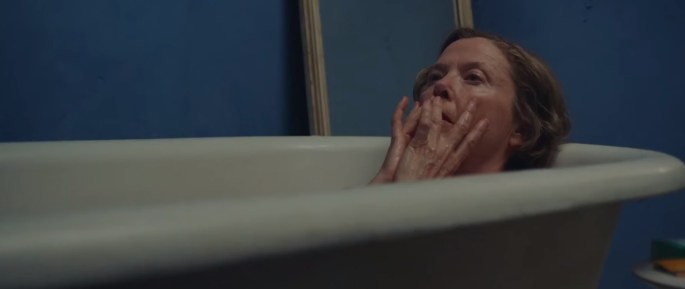
I’m not sure where we’d be in the film world right now without the erudite efforts of companies A24 and Annapurna. These two production and distribution entities have been responsible for the lion’s share of truly excellent cinema over the last 10 years, and added to that list is the film 20th Century Women, from writer/director Mike Mills (the superb Beginners). Every single creative decision in this film worked for me, there are six or seven lines of dialogue that are absolutely hysterical, there’s isn’t a bad performance in the ensemble, and visually the film is very stylish without ever being ostentatious. A coming of age story for multiple characters set against the backdrop of 1979 Santa Barbara, this is a very liberal and progressive piece, with characters who are all flawed and layered, and rather than focus on contrived plot machinations, Mills allows his story to amble along, just observing these characters, all of whom are in some sort of existential transition.

1

Annette Benning (robbed of an Oscar nomination) leads the cast as a single mother raising a teenage son (Lucas Jade Zumann), and who leans on a free-spirited tenant in her house (Greta Gerwig) and her son’s blossoming childhood friend (Elle Fanning) to help him through those emotionally and hormonally frustrating years. Billy Crudup steals all of his scenes as a chillaxed handyman who has ingratiated himself on both Benning and Gerwig. I don’t want to reveal too much more than that, as the pleasure that this film elicits stems from the tender and thoughtful script, the generous performances, the cool and elegant cinematography from Sean Porter (Green Room, Kumiko,The Treasure Hunter), Leslie Jones’ clean, gliding editing, and the utterly sensational soundtrack with killer tracks from Talking Heads, Louis Armstrong, The Raincoats, Devo, David Bowie, and many more. I loved this milieu, with the end of one decade occurring and the beginning of the next taking shape, with punk in the background and sex in the air.

2

And yet, for as quality as this film is on every level, nobody saw it. And more importantly, few had the chance even if they wanted to. Saddled with a year-end release date where it had to compete with every awards bait title imaginable, 20th Century Women grossed just over $5 million in theaters and got not foreign release. Totally disheartening, as a film like this, in years past, would have been embraced by audiences as it would have been a studio movie with a hearty marketing budget. But now, thoughtful pieces like this seem better suited to the daring distributors or as television programs; even though Mills beautifully wraps up each character by the end of 20th Century Women, I’d love to see these people expanded upon on the small screen, as a place like Netflix or Amazon seems well suited to this type of elevated material. Mills rightfully received an Oscar nomination for Best Original Screenplay which certainly makes me happy.

8

FRANK PAVICH’S JODOROWSKY’S DUNE — A REVIEW BY NICK CLEMENT

1

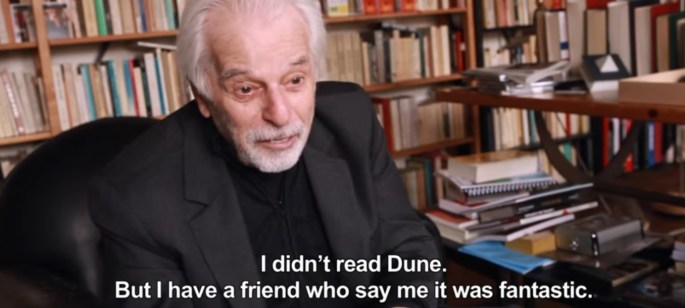
I really enjoy documentaries about movies that never came to be, stuff like The Life and Death of Superman Returns and Lost Soul: The Doomed Journey of Richard Stanley’s Island of Dr. Moreau. And similar to those poignantly enjoyable ruminations on films that never came to pass, Jodorowsky’s Dune, from director Frank Pavich, is a wonderful exploration of one of my favorite subjects: Cinematic Madness. Charting the highs and lows of filmmaker Alejandro Jodorowsky’s attempts to adapt Frank Herbert’s famous novel for the big screen in the mid-70’s, Pavich infuses humor, celebrity, and eccentricity into his tale of a filmmaker who never stopped believing in himself even when other people around him fell by the wayside. And it’s downright fascinating to see how much of Jodorowsky’s pre-production artwork and designs would end up being used (stolen?) in future sci-fi blockbusters such as Alien and Star Wars, to name only two.

3

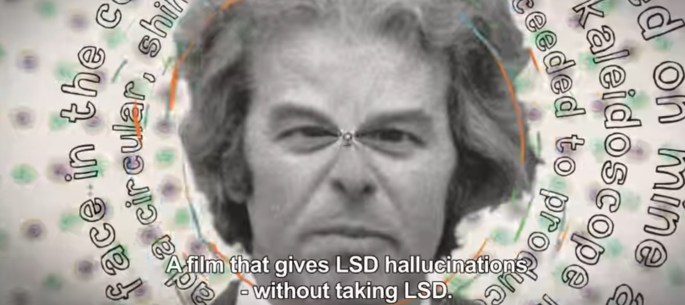
David Lynch would of course go on to film and release his cult classic version of Dune, while a big-budget remake has been in development for years with filmmakers such as Peter Berg and Pierre Morel coming and going; hot-shot director Denis Villeneuve (Enemy, Arrival, Sicario, the upcoming Blade Runner 2049) is currently working on a version as his next feature film. Jodorowsky’s Dune is a heartfelt tribute to the power of cinema and how this particular art form can grab someone for their entire life and drive them crazy with unfulfilled visions; I bet Herzog is a big fan of this piece of work. I’ve only seen Jodorowsky’s El Topo and The Holy Mountain, so I think it’s time to really delve into this man’s body of work, and I must say, I really, really respect and admire his devotion to simulating the effects of LSD for his audience.

2

PETER WEIR’S FEARLESS — A REVIEW BY NICK CLEMENT

1

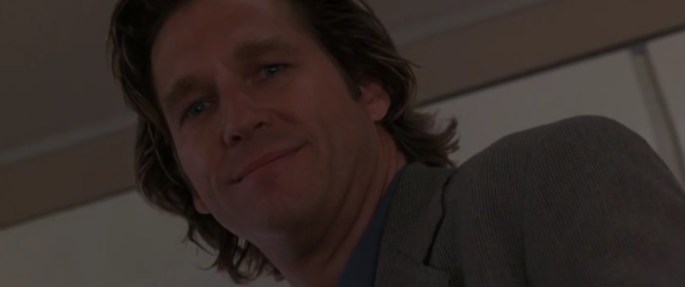
Fearless is an exceptional film. I was blown away by this shattering piece of work as a 13 year old theatergoer, and over the years, I’ve easily seen this remarkable study of the human condition at least a dozen times. I probably saw this more than a dozen times, actually, as it was on HBO seemingly every day for a few years. Peter Weir’s career is a unique one; I can think of few other filmmakers who have made as many great films as he has to then just become forgotten about by the studios. Granted, he’s not likely interested in the CGI-driven idiocy that has come to dominate the mass movie market, but it’s sad to think that he’s not getting gigs because his intelligence and compassion were always massive strengths to his work. And while Fearless explores a story that many might find hard to enjoy (survivor’s guilt after a traffic plane crash), lead actor Jeff Bridges was wholly stunning, meeting the emotionally harrowing material head on, and delivering a tour de force performance of cinematic dramatics which was spawned from the pages of Rafael Yglesias’s novel of the same name (he handled the screenplay adaptation).

2

Rosie Perez breaks your heart in this film; I love her and it’s a crime that she’s basically disappeared in recent years except for her small but pivotal turn in Ridley Scott’s diamond-cut gem The Counselor. In Fearless, she delivers an atomic bomb of on-screen emotion; only the most jaded person wouldn’t be touched by her character. Isabella Rossellini did her usual scene stealing, Tom Hulce and John Turturro, and John de Lancie were all very strong, and you also get to see a very young Benicio del Toro. Maurice Jarre’s reflective musical score hits both high and low notes of personal introspection, and Allen Daviau’s gleaming cinematography casts a visual spell over the viewer. The film contains one of the most surreal and expressive plane crash sequences that I can think of, and the scene with the strawberries is something I’ve never forgotten. Despite excellent reviews, an October release date, and Oscar buzz (Perez was nominated for Best Supporting Actress), Fearless died a quick commercial death, before becoming an audience favorite in the home video market. This is the sort of film I could watch any day of the week. Warner Archive released the Blu-ray in 2013.

3