HANY ABU-ASSAD’S OMAR — A REVIEW BY NICK CLEMENT

3

The Palestinian film Omar, which was released in 2013, is an incredibly lean and disciplined political thriller that ticks like a fine-tuned clock on a narrative level, and offers up riveting thrills when it comes to its action bits. Director Hany Abu-Assad packs a serious punch into his film, which mixes romance and sociopolitical observations into a potent mix. From the startling opening moments all the way to the film’s absolutely ferocious final shot, Abu-Assad engrosses the viewer in a dangerous and authentic-feeling landscape filled with betrayal and ultimate tests of friendship. The plot centers on a baker who braves the West Bank barrier in order to spend time with the woman he loves; after a fight breaks out with Israeli troops, he’s forced into working as a double agent with consequences that appear to be deadly.

2

First time actor Adam Bakri completely commands the screen with an intensely physical performance and a hardened gaze, while the smart plotting never goes over the top into the realm of the absurd. After winning the Special Jury Prize at the 2013 Cannes Film Festival, Omar would receive an Oscar nomination for Best Foreign Language Film. Abu-Assad’s 2006 feature Paradise Now (also Oscar nominated) is similarly intense and unforgettable. And it must be stated again that the final few moments of Omar are beyond intense; I can think of few movies that have dared to end on such an uncompromising note. And I’m always a big fan of movies that put a topical spin on genre elements. Abu-Assad’s upcoming romance/disaster film The Mountain Between Us, with Idris Elba and Kate Winslet, sounds like a winner.

1

GUEST CRITIC & FILMMAKER DAMIAN K. LAHEY ON RONNY YU’S THE BRIDE WITH WHITE HAIR

BrideWhiteHairPoster
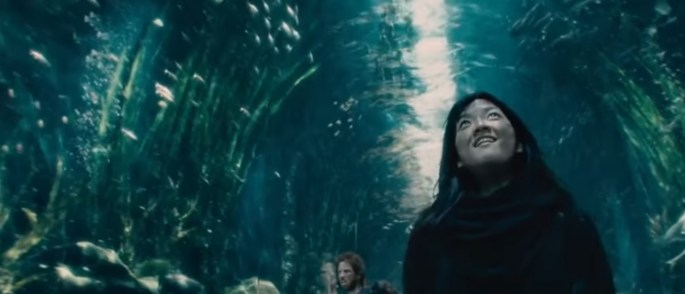
The Bride With White Hair (1993) dir. Ronny Yu

Once when I was in high school I picked up a cult Asian movie magazine from Barnes N’ Noble. This was before a lot of this stuff was available on video and the DVD cult revolution was still years away. Many of these films were only available through underground catalogues. They were expensive and the quality was often dubious. This magazine in particular covered mainly sexploitation roughies. However, a section of it covered more mainstream Asian fare and included was a review of Ronny Yu’s ‘The Bride With White Hair’ that was over the rainbow in its praise of the film. I never forgot the film and years later when I got a DVD player it was one of the first DVDs I bought. While not a masterpiece rivaling ‘Citizen Kane’ as the review had claimed, it is certainly a classic of Chinese cinema and in my opinion, one of the best fantasy films ever made.

An evil cult has been terrorizing the land and a famed warrior falls in love with the cult’s chief enforcer. This is a dark fantasy ‘Romeo & Juliet’ story. Brigitte Lin and Leslie Cheung are perfectly cast and their chemistry is uncanny. They hold the tragedy of their characters’ destinies in the palms of their hands with the weight it deserves. This is forbidden love at its most fierce.

Director Ronny Yu has razor sharp instincts. He knows you can’t confuse action with soul when it comes to these types of films. The action sequences can only be as good as their emotional content. The way he blends the two here is nothing short of remarkable. Many of the images her are iconic as well. No way around it. You won’t be able to shake some of these shots. Peter Pau sealed his reputation as a cinematographer with this one. The work of a master.

This film is mounted on an epic scale though it is only 92 minutes long. Not many films that go for that scope with such a short running time can pull it off. Usually, something feels missing or seems off. But not here. It all feels deserved and earned. Though the same can’t be said for the cheesy song that plays over the end credits sequence. Woof! No offense to all you early 90s Asian synth pop fans out there but…

Ronny Yu would later have to flee China for political reasons and washed up on Hollywood’s gold encrusted shores to make movies like ‘Bride Of Chucky’ and ‘Freddy Vs. Jason’. He would not come close to making another film of this caliber until ‘Fearless’ starring Jet Li in 2006.

TheBrideWithWhiteHairStill

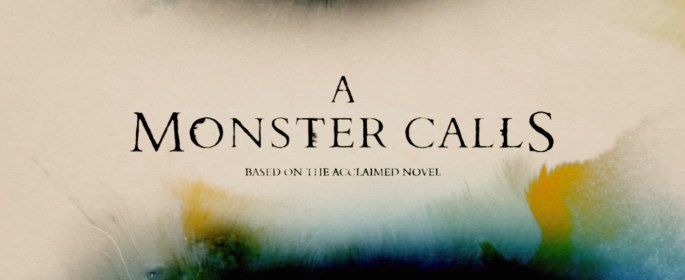
J.A. BAYONA’S A MONSTER CALLS — A REVIEW BY NICK CLEMENT

1

A Monster Calls is easily one of the more upsetting films I’ve seen in a long while. I knew what the narrative entailed before viewing it, but I wasn’t prepared for how much this movie would explore death and its consequences and how children cope with staggering loss. I’m typically wary of CGI-dominated storytelling, but here, the absolutely striking visual effects were in COMPLETE service to the emotionally harrowing material; the sound and fury on display means something, and therefore, as a viewer, my eyes didn’t gloss over when the aesthetic got rambunctious. Director J.A. Bayona, who previously helmed the immensely underrated tsunami drama The Impossible, has crafted a thrillingly artistic film that is both dark in theme and in palette; this is a nearly unrelentingly grim and sad piece of work that never softens any of its rough edges, with dark hued, edgy handheld cinematography employed by ace shooter Oscar Faura that feeds into Fernando Velázquez’s robust musical score.

2

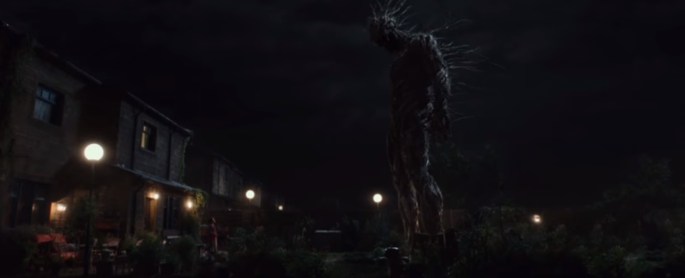
Set in the U.K. and based on the novel by Patrick Ness and Siobhan Dowd, A Monster Calls revolves around 12 year old Conor O’Malley, brilliantly portrayed by the young actor Lewis MacDougall, whose mother (Felicity Jones) is losing her battle with terminal cancer. Conor isn’t interested in living with his grandmother (Sigourney Weaver) and he’s got a father (Toby Kebbell) living in America who has various reasons for not stepping up. And he also must contend with some rather cruel school yard bullying; this film really hits some mature notes that will need to be smartly processed by younger viewers. Conor then starts to imagine a humongous tree monster (wonderfully voiced by Liam Neeson) living outside of his house who aims to tell him three stories, and demands one final story in return. The baroque visual design of the tree and his surroundings is startling and unique, with the surreal images meshing beautifully with Eugenio Caballero’s vivid production design.

4

I’m not exactly sure who this film was geared towards, as it’s a piece designed way more for adults, and yet is told through the POV of a child, and the material is way too intense and layered for tykes to find involving (if they’re not scared shitless by the tree monster). It’s got a Joe Dante/Amblin feel at times, but it’s never playful or ironic or wink-wink. But in today’s Pixar-happy marketplace, a film like this seemed destined to get lost, which is exactly what happened. Produced for a reported $50 million, this film grossed less than $5 million in America, with international ticket sales preforming only modestly despite very favorable critical notices. Films like this are too smart for the room, and too challenging for mass audience attachment. A Monster Calls is definitely one of the more distinctive “family” offerings in quite some time, and a film I’m not likely to forget anytime soon for a variety of reasons.

3

YEON SANG-HO’S TRAIN TO BUSAN — A REVIEW BY NICK CLEMENT

2

The horror genre is my least traveled and I’m certainly no big fan of zombie narratives (my favorite is easily Zack Snyder’s Dawn of the Dead) but WOW and WOW, the South Korean film Train to Busan is completely insane and amazing and unrelenting in its awesomeness. What’s also excellent about the film is that I cared about the characters and became immediately invested in them, so by the time the harrowing finale was taking center stage, I had a lump in my throat and sweaty palms of nervous excitement. Certainly inspired by Marc Forster’s visually stunning but super silly World War Z, director Yeon Sang-ho most notably borrowed the zombie-topple visual motif from the Brad Pitt blockbuster, but because this film cost roughly what the craft services bill was on WWZ, the filmmakers were able to go all out with the gore (something WWZ painfully lacked) and as a result fashioned a far more effective piece of nightmarish horror. Part of my enthusiasm for Train to Busan stems from not knowing much about it, never seeing a trailer beforehand, and having a generally low opinion and set of expectations for these sorts of items. This was a fabulous surprise. After premiering in the Midnight Screenings section of the 2016 Cannes Film Festival, Train to Busan became one of the biggest films in the history of the South Korean box office. It’s now available to stream on Netflix and well worth your time if you’re looking for a riveting and bloody piece of cinema that goes for the jugular while still respecting your brain and playing with your emotions.

3

JAMES GRAY’S THE LOST CITY OF Z — A REVIEW BY NICK CLEMENT

3

James Gray makes films that are now considered “throwbacks” which is part of the reason why he’s yet to have a true break-out box-office hit with general audiences. It also doesn’t help that distribution problems have plagued more than one of his efforts, and let’s be honest, in this lowest common denominator movie marketplace that we find ourselves in, CGI-free pieces of filmmaking that skew towards adults and not infants like The Immigrant, Two Lovers, and his newest and by far most expansive achievement, The Lost City of Z, aren’t exactly what the studios have in mind. Which is a shame, because film after film, Gray has impressed me with his ability to tell morally complex stories with a true sense of filmic beauty, and he’s become one of my favorite filmmakers over the last 20 years. His debut was the ridiculously confident Little Odessa in 1994, which he followed up with the one-two crime-movie punch of The Yards (tragically underrated) and the 80’s policier We Own The Night. But with The Lost City of Z, Gray has stepped outside of his NYC milieu, and has crafted a visually bold and ultimately haunting story of exploration, family, and potential madness. I was in complete awe of this film, and I could have watched another hour of material had Gray been inclined to present it.

2

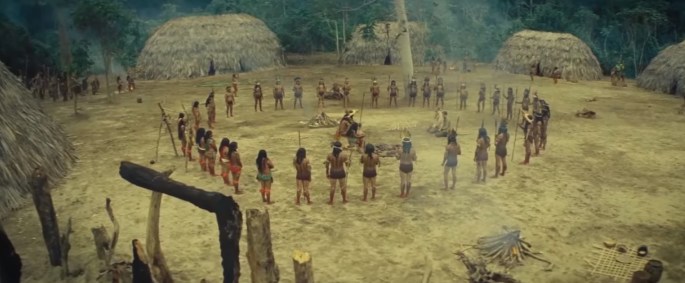
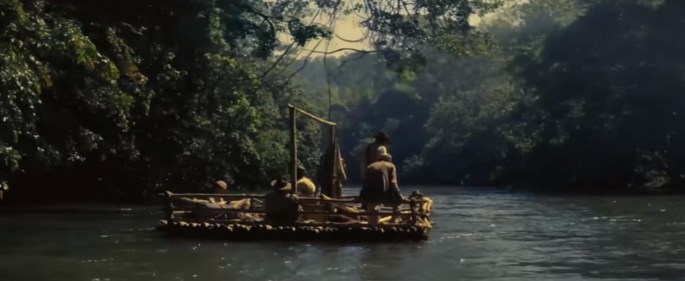
Charlie Hunnam is very commanding as Percy Fawcett, a British artillery officer in the early 1900’s who was drafted by the Royal Geographical Society to trek into the Amazon in order to create a map that would establish the border between Brazil and Bolivia. Once there, he became obsessed with finding an ancient city described to him by local indigenous tribes, which would later in time be named as El Dorado. With piqued personal interest and strong support from his wife, superbly played by the now invaluable Sienna Miller, Fawcett would return to the jungle on seven separate occasions (the film condenses to three), and would famously not return home after his final journey. These events were chronicled in the book The Lost City of Z by journalist David Grann, and Gray, in adapting the material for the screen, has fashioned an old-timey adventure picture in the vein of a David Lean epic, with shades of Herzog and Coppola thrown in for contemporary flavor. The supporting cast includes a plethora of strong performances from a bearded Robert Pattinson, Tom Holland, Edward Ashely, the great Angus MacFayden (despicably sloppy!), Ian McDiarmid, Clive Francis, and a smartly cast Franco Nero as a pivotal character in the film’s narrative.

1

The photography in The Lost City of Z is undeniably astonishing. Shot on 35mm film in 2.35:1 widescreen by master cinematographer Dariusz Khondji, re-teaming with Gray after The Immigrant and with previous credits including Seven, Evita, and Stealing Beauty, there’s a glorious richness to every single image in this movie that left me slack-jawed in numerous spots. Blacks are super-inky, the jungle’s natural light is captured in a casually graceful manner, and sequences shot in Europe have a just-rained freshness that feels tangible, with a bold yet ornate sense of color on display all throughout. Christopher Spellman’s riveting musical score hits so many phenomenal sonic notes that it’s tough to list them in a review; this is easily one of the more memorable and impressionistic film scores I’ve heard in years. The evocative and impressively varied production design by Jean-Vincent Puzos is the stuff that awards are made of; everything feels real in this movie. The two hour and twenty minute run time was perfectly paced by Gray and editors John Axelrad and Lee Haugen, allowing for a more layered experience by fleshing out Miller’s character, instead of just giving us the rote wife role. It’s wild to think that this super-expensive looking film was financially cobbled together by multiple independent investors, with Amazon Studios doing a low-key theatrical release in the head-scratching month of late April. I was overwhelmed by this epic yet intimate tale and as a relatively new father, I found the final stretches to be singularly creepy and emotionally disturbing. This is easily my favorite film of the year out of the eight movies I’ve seen, and I wish I could see it again on the big screen.

4

BONG JOON-HO’S SNOWPIERCER — A REVIEW BY NICK CLEMENT

3

Filmmaker Bong Joon-ho is extremely adept at juggling many different tones all throughout his diverse body of work (Barking Dogs Never Bite, The Host, Mother, Memories of Murder) and his latest, the ambitious sci-fi thriller Snowpiercer is no exception. Visually bold, gloriously alive in every frame, and filled with enough ideas and subtext to match the almost endless violent action, it’s a work almost expressly designed for film-buffs and people who are itching for a Terry Gilliam movie. Production designer Ondrej Nekvasil deserves an Oscar nomination for his stunningly realized work as each train car is its own unique character and it’s a blast to guess what’s coming next from scene to scene. The performances from a deep and eclectic cast are all uniformly excellent, with Tilda Swinton stealing the entire show every time she shows up, and Chris Evans doing his predictably strong and commanding hero routine.

2

But here’s my one big beef that prohibits me from doing a full flip-out for this otherwise sensational piece of movie-making: every time the camera would cut to outside of the train I lost all involvement due to the dodgy (and sometimes horrendous) CGI. I know this wasn’t a $100 million production, and yes, I know, it’s always about the IDEAS, but a ton more work needed to be done to the exterior of the train and the snow-smashing shots, some of the vistas looked obscenely artificial, and the climactic action scene was very, very, very video-gamey. If you don’t have the budgetary means to get some of these bigger things accomplished, maybe it’s best to leave them out in favor of something else? Not a movie-crusher for me, but something that bothers me about this otherwise visually robust and exciting piece of cinema.

1

BERNARDO BERTOLUCCI’S 1900 — A REVIEW IN NOTES BY GUEST CRITIC & FILMMAKER DAMIAN K. LAHEY

1900poster


‘1900’ Director’s Cut (1976) dir. Bernardo Bertolucci

Two children are born on the same day in Italy in 1900. One belonging to the land owner class and one to the working class. This epic film chronicles their lives through decades of friendship amidst the rise and fall of fascism in their country. Here are 20 things I took away from it.

1. No small feat. This film is 5 hours and 17 minutes long and I never once found it boring or tedious. It moves along at a brisk pace. I watched it in one sitting.

2. There are moments where Bertolucci’s direction, Morricone’s score and Storaros’s photography come together in a way that is absolutely MAGICAL. Goose bumps just thinking about it. In many ways this film is a cinema lover’s dream come true.

3. While this film is painterly in its compositions and lush in its production value – it is at times extremely cold and obscenely graphic. VERY harsh.

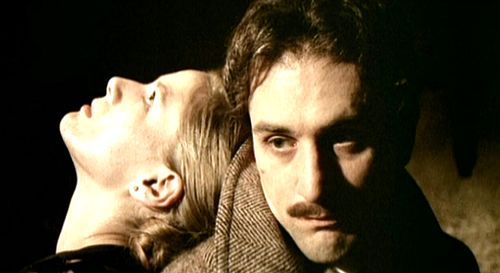
4. I had never seen Gerard Depardieu NOT fat before. It blew my mind. Svelte, dashing and handsome…wow. He gives an extremely passionate performance worthy of the revolutionary spirit of his character.

5. Robert DeNiro is remarkably young and daft here and does a fine job as a man who knows the right thing to do but lacks the moral courage to act on it.

6. Dominique Sanda is all class as the tragic free spirit who finds her life suffocated by the dominating presence of the fascist guard.

7. As the chief fascist foot soldier, Donald Sutherland has never been more sinister. Super nasty!

8. The appearance of Burt Lancaster in this film is worth noting as he was a very outspoken anti-war Hollywood tough guy. His casting seems to be a strategic move by Bertolucci – signaling from the outset that Hollywood’s liberal war horses had signed off on the film’s message.

9. Surprisingly, Stefania Casini (‘Suspiria’, ‘The Blood Stained Shadow’, ‘Andy Warhol’s Dracula’) gives the film’s most tender and nuanced performance as the epileptic prostitute who comes into the picture at two very crucial points. The emotional warmth she gives to the material makes one wonder what more scenes like this could have done for the film.

10. The dubbing is pretty ruddy, folks. As someone not bothered by dubbing, it’s pretty noticeable here. You’ve been warned.

11. This film does a great job conveying that in times of extreme injustice and oppression, the WORST offenders are those in a position to do something about it but choose to do nothing.

12. The infamous scene where you get to see both DeNiro & Depardieu’s ding-a-lings is very awkward. I have tried to intellectualize it within the political context of the story and it just doesn’t work for me.

13. The history Bertolucci presents in this film is one convenient for the narrative. The fascists assumed power by appealing to the very people they came to oppress – the poor working class. Bertolucci skips over this for a more black and white version of the events by romanticizing the put upon communist peasants and demonizing the fascist coddling rich folk. Given this film is 5 hours and 17 minutes long I believe he had room for a more historically accurate and nuanced representation of the facts.

14. However, to speak to what I just wrote – this is a political piece first and a historical piece second so to quibble over historical accuracy is probably foolish. This is a take down of fascism from Point A to Point B. Belting you in the face with a frying pan would be more subtle than this film is.

15. I admire this film for showing the emotional as well as financial pettiness that often permeates the upper class thus further emphasizing their detachment from the rest of us.

16. There’s a scene where people pull loads of shit out of a horse’s ass with their bare hands.

17. The release of this film was mishandled so many different ways it’s impossible to keep track. Somebody lost A LOT of money on this one.

18. Given the fall of the United States to authoritarian fascism this past year, ‘1900’ is certainly an appropriate watch. I’ll stop there. Things could get ugly if I delved into that further.

19. Bertolucci paints a comical and touching picture of the ‘what do we do now?’ crowd that suddenly found themselves empowered after the fascsists were driven out. I felt exposing their naivety as well as the perils of hypocrisy they faced to be spot on.

20. Surreal closing of the film points out that the back and forth between the classes has always been and will always be.
 1900pts

WALTER HILL’S STREETS OF FIRE — A REVIEW BY NICK CLEMENT

2

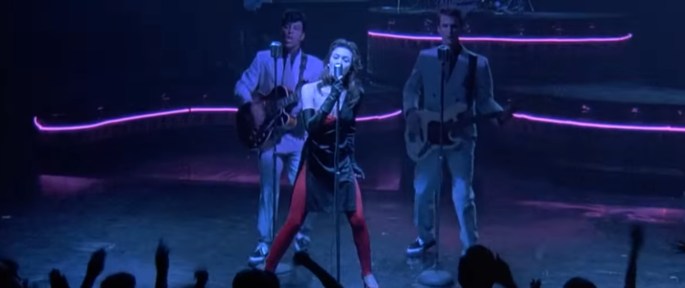
Walter Hill, sadly, has made so many films that have bombed with theatrical audiences, and one of his most underappreciated efforts is his 1984 “Rock & Roll Fable” Streets of Fire, which features Michael Pare and a blazing-hot Diane Lane as music-crossed lovers who have to contend with a lethal biker gang led by a wild and crazy Willem Dafoe, who had been suggested to Hill by filmmaker Kathryn Bigelow, after he had starred for her in her 1982 debut The Loveless. Possibly inspired (intentionally or not) to a certain degree by Philip Kaufman’s equally underrated The Wanderers, this is a nearly unclassifiable genre-bender, with bold and vibrant cinematography from Andrew Laszlo that stressed the retro-50’s vibe that was then mixed with Hill’s signature 80’s aesthetic, resulting in something truly special and offbeat. Hill and co-writer Larry Gross clearly had a blast creating this striking cinematic universe, while Ry Cooder’s phenomenal musical score amplifies every single scene. Rick Moranis, E.G. Daily and Amy Madigan are all excellent in supporting roles; look for Bill Paxton tending bar. And, it should certainly be repeated that Lane was astoundingly sexy in this film. Lawrence Gordon and Joel Silver co-produced, with the film getting developed during the making of 48 Hrs. Available on German Blu-ray and via an upcoming Shout! Blu-ray release.

4

JEFF NICHOLS’ LOVING — A REVIEW BY NICK CLEMENT

1

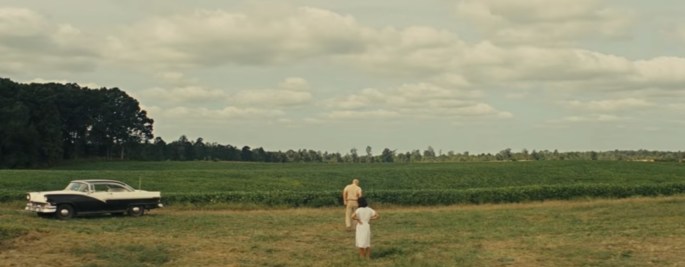
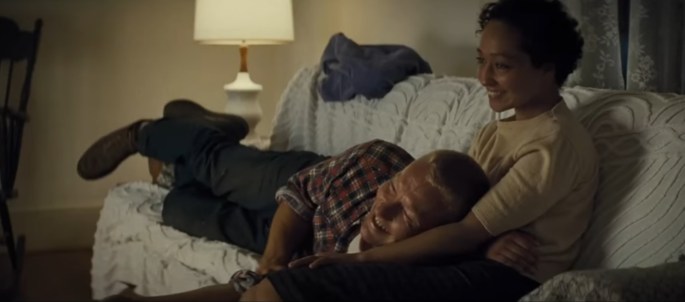
Loving is a respectful, reverential piece of work from cool-as-a-cucumber budding auteur Jeff Nichols (Midnight Special, Take Shelter, Mud, Shotgun Stories). With a dramatic through line that remains on an even keel and quiet temperament for two hours, this is a somber and sad yet never overly sentimental true life story of Richard and Mildred Loving, an interracial couple who dared to challenge the state of Virginia over their right to get married. Sensitively portrayed by Joel Edgerton and Ruth Negga, the actors were clearly directed by Nichols to behave in a very pragmatic and reserved fashion; there’s never a moment where one particular scene feels “bigger” than the previous, and this sense of dramatic neutrality helps to build a sense of grace to the entire portrait. Because that’s what this film is – a portrait of two people in a very specific time and place, and it’s beyond revolting to think that these people suffered in the way that they did, and not all that long ago in terms of America’s history.

2

There’s nothing over the top during Loving, no emotional grandstanding or sociopolitical speechifying, subtle or hammerhead, because Nichols is too good for that. He’s interested in the audience finding these people while observing the story, and very similar to his other 2016 effort Midnight Special, there’s much to be said about what’s not shown on screen in order for the story to progress; Nichols is a “you fill the gaps in” storyteller, which can be annoying for viewers who need everything spelled out for them. Nichols based his film on the documentary The Loving Story, by acclaimed filmmaker Nancy Buirski (By Sidney Lumet). Chad Keith’s evocative production design, Julie Monroe’s extra-patient editing, Adam Stone’s dark-hued cinematography, and the minimalist musical score from David Wingo seal the crisp and clean aesthetic package, resulting in a movie that feels wrapped with care and yet still susceptible to fresh wounds. This is an excellent piece of work that speaks to the sense of humility and respect that select people have for others.

3

BARRY SONNENFELD’S GET SHORTY — A REVIEW BY NICK CLEMENT

2

After an auspicious start as a hot-shot cinematographer on films such as Blood Simple, Raising Arizona, Three O’clock High, Big, When Harry Met Sally, Miller’s Crossing, and Misery, Barry Sonnenfeld switched to full-blown director, with a bunch of mixed-bag credits throughout the last 25 years. From where I sit, Get Shorty is easily his best film, and one of the finest Hollywood comedies ever crafted. The remarkable cast included a perfect John Travolta as a Miami mob-enforcer turned wannabe Los Angeles player, Gene Hackman in a wily and hilarious performance as a has-been B-movie producer scoundrel, the alluring Rene Russo as Hackman’s ex who falls for Travolta, Dennis Farina (“They say the fucking smog is the fucking reason you have such beautiful fucking sunsets”), David Paymer, James Gandolfini, Danny De Vito, Delroy Lindo, Jon Gries, and many more familiar faces and character actors. Released in 1995, this came hot on the heels of Pulp Fiction, and became a box office success and critical favorite. This is an endlessly re-watchable film with snappy dialogue courtesy of tremendous screenwriter Scott Frank (Out of Sight, Minority Report, The Lookout) who adapted Elmore Leonard’s novel, excellent visual design from shooter Donald Peterman, a jazzy soundtrack, and splendid acting from a top-flight ensemble. I wish there was a new movie like this one coming out this weekend.

1.jpg