THE ROBERT ALTMAN FILES: A PERFECT COUPLE (1979)

Coming off the universally reviled and glum Quintet, Robert Altman began to move back toward the warmth of human relationships with A Perfect Couple, a lighthearted romantic-comedy that tracks a mismatched couple through a series of sweet-natured misadventures as they connect, decouple, and reconnect. Put against Paul Newman’s fight for survival in a world not fit to survive, the synopsis of a middle-aged man (Paul Dooley) falling in love with a backup vocalist in a rock band (Marta Heflin) probably seemed much more in tune with what moviegoers in 1979 were wanting. Unfortunately, Altman wasn’t in much of a mood to tackle such a light project and as a result of being weighed down by a number of elements on top of which it can never seem to climb, A Perfect Couple both registers as one of Altman’s weakest efforts and the one that marked the end of his relationship with 20th Century Fox as his fifth picture delivered to them, 1980’s HealtH, would slowly bump its way down their release schedule, eventually dropping off of it completely, never to return.

The movie opens promising enough as Alex Theodopoulis (Dooley) and Shiela Shea (Heflin) enjoy an outdoor performance at the Hollywood Bowl of the LA Philharmonic, for which his sister, Eleouisa (Belita Moreno), is a cellist. As a torrential downpour disperses the crowd and ends the concert, Alex and Sheila escape to cut short what we learn is their first date which has been powered by their participation in a video dating service. During this time we also learn that Sheila lives in a cramped loft among numerous members of Keepin’ ‘Em Off the Streets, a rock outfit she has just recently joined. Alex, on the other hand, is part of a starchy and conservative Greek family where almost nothing is done individually, Friday nights are spent watching their father (Titos Vandis) mock-conduct along to orchestral music, and men who are almost halfway done with their entire existence on this planet still have to ask for permission to go on a date.

All of this is to set up a story of opposites where two sides of a relationship are viewed with elements in both sets of families that mirror each other and, surprisingly, this is where the film really fails. This is a movie that wants to show how clever it is by drawing parallels between the two disparate worlds but, unfortunately, neither world is appealing and Altman further cheats the audience by giving too much of one and not enough of another. One of the biggest examples of this is how Altman treats the gay characters in his film. Always one step ahead of his peers in his treatment of LBGTQ characters on the whole (most notable in the remarkable Come Back to the Five and Dime, Jimmy Dean, Jimmy Dean), Altman wears down a lot of shoe leather discussing the inner workings of the relationships between three gay members of the band (which is commendable) but then gets tight lipped and opaque when dealing with the other side of the coin, namely, Eleouisa and her relationship to band mate Mona (Mona Golabek) which is clearly non-platonic. It’s unclear if Altman keeps it coy to underline Alex’s clueless, almost juvenile and stunted view of sex and relationships or if Altman is making a point in regards to the sad sickness in Alex’s family that causes Eleouisa to code-talk her way around it but, by doing so, he shortchanges the audience by closing off an interesting avenue for dramatic exploration.

In fact, throwing up road blocks to anything interesting is what Altman seems to do well in this movie. Almost every side character that saunters into the frame is preferable to the couple at the center. Whether it’s co-screenwriter Allan Nicholls popping up as well-meaning suitor Dana 115 or Ann Ryerson’s hilarious turn as a randy veterinarian, the urge overwhelms me to cling to their legs and beg them to take me away with them. Likewise, I’m almost certain a better movie could be made out of the exploits of Alex’s bored yet obsequious brother, Costa (Dennis Franz) and/or his creepy, effete brother-in-law, Fred Bott (Henry Gibson, fabulous as ever), both of whom feel like characters who escaped from an episode of the brilliant sitcom Soap. Hell, give me a movie featuring nothing but the exploits of the emergency room doctor, drolly played by frequent Altman collaborator Frank Barhydt and one of the few in the film who seems to understands he’s in a Robert Altman picture.

Throughout the film, Alex is an uppity scold who is continually turned off by things in both Sheila’s world and outside the confines of his own familial sarcophagus. He’s disdainful of the “weirdos” in her world but he also runs like a scared man-child when he realizes that a video date he is with likes a little slap and tickle. He seems to be a man of little intestinal fortitude, reuniting with Sheila after a disastrous video date only to leave again when he realizes that the rigors of the road and the lack of privacy just aren’t for him. His final return to her, almost insultingly, occurs only after he’s banished from his family following a left-turn tragedy that occurs in the third act and, unfortunately, one which the film simply cannot emotionally support, creating a fatal tonal imbalance. I would almost say that Alex is maybe a spiritual cousin to the distaff sexual cripples that populated 3 Women and That Cold Day in the Park excepting we see the patriarchal squeeze that makes Alex into the person he is and we are triply frustrated when he never does anything proactive about it.

Her performance maybe three slight shades of beige, Marta Heflin makes zero impression in this movie. This is a shame because Heflin is a natural and good actor (she’s underused in A Wedding and she’s perfect in Five and Dime). Only ever getting the heart pumping during a scene where she is roundly humiliated by Alex’s ridiculous family, Heflin never seems like she’s fully bought in to the relationship nor does she give off the impression that she wouldn’t be fine without it. After all and in the end, is Alex REALLY worth all the trouble she goes through in the film? But Altman and Nicholls don’t give her character much life and, like the contrast between the gay characters, the comparison between the stern patriarchs of the Theodopoulis clan and Keepin’ ‘Em Off the Streets is a cosmetic afterthought; the kind of thing you’d be able to show an elective film course made up of seventh graders as to teach about thematic balance.

This is a film that doesn’t resolve as much as it ends. It feels like a much longer film was shot but a hacksaw was taken to it and only the items that really interested Altman (namely, the stuff with the band) were left in. But, by keeping one eye on the clock and delivering a crowd pleasing rom-com (which, at just a hair under two hours, is still overlong) the cuts to the film create gaping holes and so many questions remain as the credits roll. Is Sheila now out of the band and replaced by the singer we see for the first time right before the end? How did the band and the LA Philharmonic wind up playing together at the Hollywood Bowl? Is Alex completely done with his family without ever standing up for himself? How in the world did Alex ever have a first wife without ever telling her he really liked her? Does Sheila even have a backstory? Is she so weak that she takes Alex back with no kind of discussion about his shitty attitude and his penchant for leaving her? If Altman thought he could pull a Minnie and Moskowitz and simply get by with a “love conquers all…EVEN TWO WILDLY OPPOSITE PEOPLE” movie, he missed the gritty charm and the attention to character that infused every frame of that film that made it work despite all of its logical holes and corners cut by its writer and director, John Cassavetes.

And let me pause on here to remark on the thing I most dislike about A Perfect Couple, which is the entirety of Keepin’ ‘Em Off the Streets. From their candy-ass stage routine to their insistence on using two apostrophes in their name to the soft rock musical arrangements that are so tethered to 1979 they sound like they were composed while sitting in wicker furniture and recorded under a hanging plant supported by macrame, I hate everything about this band and despise any and all moments spent with the group in rehearsal or in concert. Like a Grateful Dead full of Donna Jean Godchauxes (but only if Donna Jean Godchaux could actually carry a tune outside of the studio), this is a band far too large to be plausibly functional. Ted Neeley has the thankless role of prick band leader, Teddy, but my disdain for his character goes beyond what’s written given his stupid wardrobe and his annoying habit of jamming his hands in his pockets while he’s performing on stage. All of it combines to create a grating, overexposed idea that is not entertaining nor do I buy any of it as something audiences would care to see, regardless of the fact that they were, indeed, a real band who had split before production but reformed specifically for the film. When people tell me that they have the soundtrack to A Perfect Couple, I have to fight back the urge to snakily tell them that I don’t bother them with my personal troubles so I don’t know why they can’t return the favor.

Throughout the film, we witness a silent “perfect couple” (Fred Beir and Jette Seear) as they pop up in various scenes through the story as a visual counterpoint to the messiness that happens around them. Only at the big ending at the Hollywood Bowl do they fall apart as our imperfect couple of Alex and Sheila reunites for the final time. It’s a cute idea, I guess, but stuck in the midst of one of Robert Altman’s worst films, it’s an idea wasted on a film that doesn’t deserve it.

(C) Copyright 2021, Patrick Crain
THE MICHAEL MANN FILES: BAND OF THE HAND (D. PAUL MICHAEL GLASER – 1986)

The exact formula for 1986’s Band of the Hand is this: The Dirty Dozen minus seven, divided by approximately half in age, strain through Miami Vice, and a tablespoon of sugar stirred in for taste. A corny, violent, foul mouthed, junior varsity Mod Squad with an odd sense of pacing and a structure that feels suspiciously like two episodes of a TV show that never happened but maybe should have, Band of the Hand is both aggressively stupid and thoroughly lovable from the first frame to its last. If I believed in the notion of guilty pleasures, I’d label it as such. But since I harbor zero guilt nor shame in my taste or what brings me joy, Band of the Hand stands as a delicious piece of gorgeous, brainless cheese that was worth the six American dollars I spent on the no-frills and pristine Blu ray from the fine folks at the non-flashy yet solid Mill Creek, the Southwest Airlines of boutique physical media labels.

The story is simple: a group of malcontented, underage criminals from all over greater Miami are locked into a paddy wagon and dumped into the middle of the Florida Everglades where Miccosukee Indian Joe Tegra (Stephen Lang… yes, you read that right) teaches them how to survive in the wilderness so they can go back to the urban jungle of Miami and take the streets back from crime lord, coke distributor, and black magic enthusiast Nestor (James Remar… yes, you read that right).

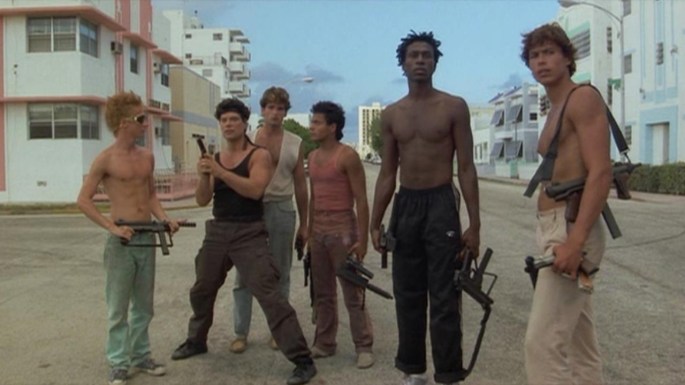
Split right down the middle as if structured as a two-act play, the first half of the film is all set-up and introduction with a generous amount of padding when moving through the Lord of the Flies portion of the film. First we meet our anti-heroes in an excitingly cut montage over which the title track of the film, written and performed by Bob Dylan with backup by The Heartbreakers (yes… you read that right), is laid with such confidence and gusto that it’s likely to never don on the viewer just how incredibly bizarre all of it is. First in the slam are Reuben (Michael Carmine) and Moss (Leon Robinson), the respective heads of rival street gangs, the Cuban Homeboys and the African-American 27th Avenue Players. Next we meet ultra-slick Carlos (Danny Quinn) who is stung by undercover vice cops while trying to middleman a deal for Nestor (and I swear to all that’s holy that I was shocked that someone didn’t scream “Freeze! Miami vice!” when they flashed their badges). The group is rounded out by J.L. (John Cameron Mitchell), a mute demolitions expert who murders his abusive stepfather in the film’s opening moments, and Dorsey (Al Shannon), an illiterate ne’er do well who has an uncanny skill for escaping from from juvenile lock ups. Quite predictably, but no less entertainingly, these rough and incorrigible youths will be taught a thing or seven by the stoic Joe Tegra including how to build a comfortable sleeping area out of branches and leaves and also how to trap and kill a wild boar. You know… as one has to do when fighting drug lords in Miami.

Once conditioned, the group moves their action back into the city where they take over a derelict building in which Haitian squatters are seeking refuge from the drug dealers that are crawling all over the streets outside (marshaled by a slick drug dealer named Cream, played to the nines by Laurence, then Larry, Fishburne). And like the half before it, this portion is padded out with some really time-specific D.A.R.E.-adjacent do-gooding like the sequence where Moss and Reuben rook their gangs Tom Sawyer-style into painting their building (and, naturally, these otherwise deadly gangs with ancient beefs against each other do this task in absolute harmony). But everything takes a deadly turn which sets up a particularly violent third-act that climaxes in the Band of the Hand, as they begin to call themselves, concocting a scheme to kill Nestor’s drug operation at the source.

Also rolling around in the narrative are a couple of side joints involving Carlos’s girlfriend (Lauren Holly) who Nestor keeps as his own after Carlos is disappeared into the juvenile system and Joe’s battle with keeping his reform program alive. A scene involving the man in charge of funding for Joe’s program (Bill Smitrovich) promises more to Joe’s story but winds up being a half-assed dramatic punctuation mark which catapults Joe into a state of complete frustration where he adopts a total ‘fuck the system, I ain’t backin’ down no more’ attitude.

This is the feature film debut by actor/director Paul Michael Glaser who had previously directed a couple of notable Miami Vice episodes for executive producer Michael Mann, filling the same production role here. But even if the film isn’t directed by Mann, none of this would be remotely possible if not for him. It’s hard to imagine this movie looking or feeling like this without Michael Mann injecting the production with his very unique look and style; it’s as much a “Michael Mann film” as Cat People is a “Val Lewton movie.” Additionally, the idea of vigilantism at the core of the film in which the bad guys become good by comparison (a little Magnum Force here), is prime Michael Mann territory.

Given that it’s not a movie that anyone over thirteen should take very seriously, there are things about it that the audience has to put up with which extends beyond the frontiers of the acceptable, even for 1986. Each time a spat between Reuben and Moss breaks out, they cock sideways and slam their torsos into each other to the point where I wasn’t convinced they didn’t think gold coins would fall out of their nipples if the force was great enough. And it’s a cinch that the entire world will hear your audible eyeroll when J.L. breaks his silence because HE’S HAD ENOUGH OF THEM FUCKIN’ AROUND AND THEY NEED TO WORK TOGETHER, GODDAMNIT!!!! LET’S DO IT FOR THE BAND OF THE HAND!!!

But, God help me, I love the film’s go-for-broke and vulgar style and the filmmakers get extra props for plopping this 70’s vigilante movie into the 80’s without the slightest bit of care how dated its premise was. Additionally, all the performances are fun (dig Miami Vice regular Martin Ferrero as a hardware proprietor) and the film is packed with great tunes by Shriekback and the Reds, contributing to a much better soundtrack than it deserves.

In the annals of 80’s pop culture, there were precious few things that didn’t get some kind of splash influence by Miami Vice. Given its production team and cast, most of whom at least contributed one day’s work on Vice, Band of the Hand might be the one piece of entertainment that feels like it organically grew out of the show and, to be honest, it serves as a better back-door pilot than the one that actually occurred in the waning days of Vice’s fifth season. And if you can’t get down with James Remar playing a Latino drug lord, Stephen Lang playing a swamp Indian, and a whole lot of things getting blowed up real good in-between, stay away from Crain Manor because, first chance I get, I’m pairing this beauty with Miami Connection or any random Andy Sidaris film for the people in my life who like to pile into my living room and know how to party correctly.

(C) Copyright 2021, Patrick Crain

THE ROBERT ALTMAN FILES: QUINTET (1979)

O.C. and Stiggs aside (and we’ll get to that later), if there is another movie in the canon of Robert Altman that has been as torched and reviled as Quintet, first in a pair of films Altman released in 1979, I know it not. Laughed out of the theaters and dismissed upon its initial release, Quintet now camps comfortably at the precise halfway mark between maligned masterpiece and deserved disaster though, in the end, it will likely never amount to anything other than being a nobly interesting film that pleases exactly nobody.

Stepping about as far away as he could from the crowded canvasses that had served him well throughout the decade, Quintet tells the story of Essex (Paul Newman), a seal hunter living in the final, frozen days of civilization who, with his pregnant traveling companion, Vivia (Brigitte Fossey), returns to his iced-over and ruined city after a decade-long sojourn/hunt in the south. Upon his return, he rejoins his brother, Francha (Thomas Hill), and learns that there is no longer any employment or hope in the civilized world and that people mostly pass the time playing Quintet, a backgammon-like game played on a pentagonal board. When a pipe bomb is slipped through the doorway to Francha’s apartment while Essex is away and kills all of the inhabitants within, Vivia included, Essex becomes embroiled in an enigmatic search to unravel the reason for their murders and the numerous deaths that occur soon afterward.

This summation makes this all sound terribly exciting and, to be sure, there’s probably a better film to be made from the elements that make up Quintet, but, as released, it’s readily apparent that there was just simply nobody around to tell Altman “no.” What began life as a star-studded meditation on the unknown ended up looking more like a yarn someone heard while huddled around a water pipe with some friends in a dorm room. As a contemporary piece of entertainment in 1979, it’s unclear who this movie would be for and its audacity is as equally admirable as it is peculiar. But it also shows just how far away Altman was from the pulse of America he so keenly tracked during the first half of the 70’s as popular entertainment, and Altman himself, had been rocked by bubblegum films such as Superman: The Movie, Star Wars, and Grease.

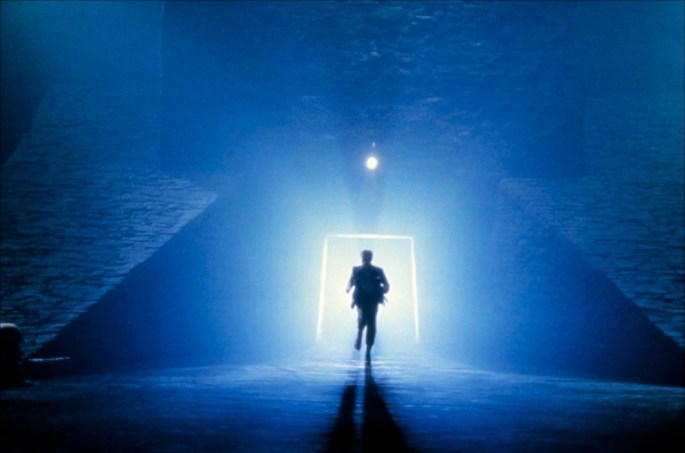
Quintet is designed to be an intellectual mystery film (though it’s more a whydunit than a whodunit) crossed with some trace elements of science fiction and it succeeds far more in the latter than it does the former. In creating a location as unique as Presbyterian Church in McCabe & Mrs. Miller or Sweethaven in Popeye, the utilization of the derelict portions of Montreal’s Expo 67 was a stroke of genius as both the art direction of Wolf Kroger and production design Leon Ericksen help create a believable, ice-encased metropolis. Likewise, Altman is 100% committed to the frozen world he builds in Quintet which seeps into the smallest parts of the film. Whether it’s your cup of tea or not, there is a mad genius to cinematographer Jean Boffety, returning from Thieves Like Us, smearing Vaseline around the outer edge of his lenses, giving the visuals a patina of translucent frost that contributes to the perpetual and uncomfortably frigid atmosphere that blows off the screen.

Also impressive is the assemblage of Altman’s top tier, globe-spanning cast which also helps sell the illusion that the inhabitable world which remains is a frozen coagulation of run-off from the four corners of the earth. American Paul Newman and Swedish Andersson mingle with Spanish Fernando Rey, French Brigitte Fossey, Danish Nina Von Pallandt, and Italian Vittorio Gassman, the latter two exchanging their marriage license in the previous year’s A Wedding for opposing sides in the deadly tournament of Quintet. All of these performances are very unique and mix in a way that is sometimes tin-eared and jarring but probably comes close to fully realizing a world where language is being boxed up and only the physical actions and gestures in the service of all-encompassing gamesmanship matter.

But allowing Altman to take the audience on a joyride to the edge of extinction couldn’t help but give audiences of the time a case of the grumps. For this is a film Altman wants everyone to Take Very Seriously and, as such, it is completely without joy and utterly faithful to its hopelessness. Staking its claim in this grim territory early by killing off the pregnant Fossey, the film’s one beacon of life, Altman presents a world so bleak that wild dogs are devouring the bodies of the dead within thirty seconds of them hitting the ground; a civilization so dark, the word “friend” has been replaced with “alliance.” Perhaps Altman felt the world was coming to a place that was so pained and depressed that a post-coital embrace would be met with a flood of sadness at the remembrance of what’s been lost. And maybe it was (and is). But to think that anyone in 1979 would pay hard-earned money and burn a Friday or Saturday night to be told these truths was just as mad as the pulpit rankings of Gassman’s St. Christopher, telling his flock of frigid miserables that the unknown blackness that awaits after death is so completely terrifying and all-consuming that they should be happy with the disconsolate lives they lead even as they slowly starve and freeze to death.

As an unearthed relic that is slowly becoming lost to time, Quintet is a kind of fascinating curio. An outlier in his filmography, there still remains through-lines to his work both past and future. The opening mostly resembles California Split as it moves the poker club to the end of the earth, people huddling around frozen gameboards and fighting off boredom instead of feeding their gambling addictions. Likewise, the whole idea of the sixth man, a player position in the game of Quintet that’s festooned with all kinds of allegorical meaning, is something Altman first toyed with in 3 Women, specifically with the character of Willie Hart (Janice Rule). Representing the silent watcher on the margins of the frame, Willie Hart was the unknowable-known; a creature filled with middle-aged emptiness that can only fully understood when it’s too late to change the course of destiny.

In the end, Altman does find a kind of hope as Newman refuses conventional wisdom and marches (for five straight minutes of screen time) into the great white north, following a goose he spied with wonder in the opening minutes of the film. But ending on an opaque note of hopeless bravery just wasn’t what a lot of people who had just watched John Travolta and Olivia Newton-John fly away in a car wanted to put up with. And while a lofty piece of nonsense dialogue such as “You’ll never understand the scheme until you are part of the scheme” seems ponderously risible and ultimately head-scratching when deployed in the film, I can’t help but think it would have been better served as the Orson Welles-voiced tagline to the (non-existent) board game adaptation of Quintet by Parker Brothers.

“One Man Against the World” screamed the tagline on the Quintet one-sheet, plastered under the contemplative mug of Paul Newman and his mid-distance stare. Replace his face with that of Robert Altman and you were probably closer to the truth as the seventies began to sputter to an unfortunate close.

(C) Copyright 2021, Patrick Crain

THE RUSS MEYER FILES: THE IMMORAL MR. TEAS (1959)

There is much more to be said about Russ Meyer’s films outside the obvious. In fact, it’s something of a shame that one feels that they need to qualify their love of his movies or justify placing him in the ranks of other great filmmakers. Sure, he peddled tits and ass, but if that’s all there was to him, his films nor his legend would have endured for as long as they have. For in Russ Meyer, the audience got what they came for and then some. His starlets, as impressively and impossibly built as they were, were always photographed with a master’s eye. And beyond that, the images were always hooked together in a rapid-fire montage of unmistakable rhythm that would have made Sergei Eisenstein proud.

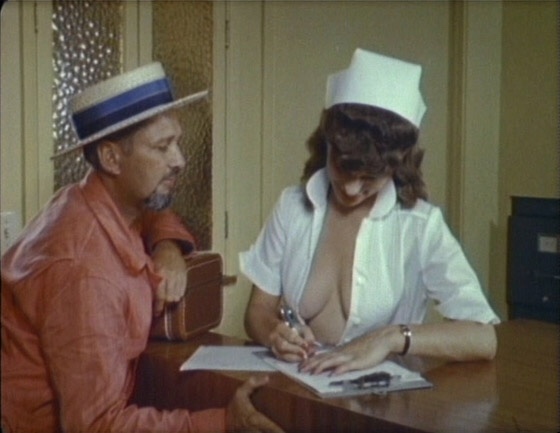
The Immoral Mr. Teas was Meyer’s first film and while it’s no Citizen Kane it’s a much more laudable first effort than Stanley Kubrick’s anti-masterpiece Fear and Desire. Most of the film’s faults can be placed squarely on the constraints of the time. In fact, it’s somewhat amazing that The Immoral Mr. Teas was released at all. Shot in four days and containing a threadbare, almost non-existent plot that covers a couple of days in the life of the hapless titular character (Meyer Army buddy, Bill Teas) who, after a molar extraction, begins to see the peripheral women in his life in the nude, The Immoral Mr. Teas has all the pitfalls of a film that is really only interested in making excuses to display some flesh.

But, after all, this was 1959 and The Immoral Mr. Teas holds the distinction of being the first non-documentary, non-educational, non-naturist film to display on-screen nudity. That really should be given a great deal of quiet reflection. In this day and age when nudity is mostly the norm and passé, it’s hard to imagine that there was a day where on-screen nudity wasn’t a consideration at all. But one day it wasn’t there and the next day it was and when this film punched through that specific ceiling, the walls began to collapse. It’s staggering to consider but every single second of nudity that has occurred in our films and television programs is due to this film. And, sure, had The Immoral Mr. Teas not been made, something certainly would have come along and taken its place as ground-zero for cinematic smut. But history is what it is and just as Herschell Gordon Lewis single-handedly invented on-screen gore with Blood Feast in 1963 and created a piece of actual history, The Immoral Mr. Teas, quaint and naive as it is, lives in a display case in the cinema history museum of the mind, a pioneering relic yet very much one of its time. Along with shattering the taboo of displaying women in the buff, it single-handedly invented the “nudie cutie” subgenre of film; movies that just barely qualified as feature length and were stacked to the rafters with bare breasts and butts but completely devoid of plot (and one to which Meyer would contribute another few titles before shifting into narrative work). The film also caught a wave where, in America, social mores were beginning to become more relaxed and subversive entertainment, found both in juvenile delinquent movies and the nascent Rock and Roll music, was getting eaten up en masse by the youth culture, creating a potent chemistry for change. Though it’s mostly a inauthentic mock-up, 1978’s Grease is something of a celebration of this specific period when a seismic shift in the culture occurred with drag racing, rock music, and a healthy amount of open, teenage libidinousness replacing hand-holding and Your Hit Parade (and, in fact, the cover of Jules Feiffer’s 1958 omnibus of his satirical cartoons, Sick, Sick, Sick, is seen in both The Immoral Mr. Teas and the opening credits of Grease).

What Meyer was after here was, basically, a Playboy magazine come to life. And, to that end, the film is a success. But, in other ways, the film works just as well. The repeated gag of the hula-hoop girl is pretty golden and some of the flat, industrial film-like narration, utilized to keep our sad-sack hero’s mind off of all the nekkidness around him, winds up being subversively funny. Also present is Meyer’s amazing eye for composition and rhythm. When watching the film, it’s apparent that this wasn’t made by someone who couldn’t care less but, instead, it’s a film made by a craftsman who labored over all of his shots and even managed to find a fun, creative angle to the dream sequences, stripping them down to their most basic images with a dash of Chuck Jones’s backgrounds thrown in as a whimsical garnish.

Despite its strengths, The Immoral Mr. Teas, is much more a historic document than it is a compelling piece of filmmaking. It’s dull and wears out its welcome before it sputters out and dies but, at just over an hour, it’s a pretty painless affair even when the novelty of seeing naked flesh on screen has long since become rote and commonplace. The Immoral Mr. Teas may not still light one’s fire as it did when it was first released but it’s a much more watchable and digestible piece of filmmaking than the myriad other nudie cuties that followed in its wake And, yes, I’m talking explicitly about you, The Adventures of Lucky Pierre.

(C) Copyright 2021, Patrick Crain

THE ROBERT ALTMAN FILES: A WEDDING (1978)

Robert Altman understands that weddings are semi-goofy affairs on which, each year, a whole lot of money is dropped on lavish, nerve-wracking, and anxiety-inducing ceremonies and even more unthinkably gaudy receptions, all in the service of unions that have less than a 50% chance of succeeding. He’s also keen on the notion that all weddings are secret disasters waiting to happen as the joining of two families is generally a nightmare recipe. So it’s curious that A Wedding, Altman’s first contemporary and reality-bound work since Nashville, feels like more like a rough idea than it does an actual movie. To be sure, it’s a mostly wonderful and quotable film, but it’s also frustratingly overstuffed, laboriously too busy (even for an Altman joint), and, perhaps most consequentially, permeated with an ugly and rank contempt for almost all of its characters.

A Wedding is the story of the wedding and subsequent daylong reception of Muffin Brenner (Amy Stryker) and Dino Corelli (Desi Arnez, Jr.). Opening as a grand and reverent enterprise, the film slowly peels layer upon layer from almost every character in its purview to the point where, at the end, the entire party on both sides of the aisle has been exposed as unpleasant, sick, and/or corrupted in almost embarrassing measures.

On the groom’s side is an air of a nouveau riche aristocracy and is one that is likewise laced with ennui-induced drug addiction. On the bride’s side, there is more established wealth that masks a lower-class of people where bored complacency leads to wanton hedonism and where familial relations are far too close for comfort. Between them is an assortment of friends, siblings, in-laws, ex-boyfriends, ex-girlfriends, estate staff, and event contractors, all of whom share secrets, desires, loves, laughs, drinks, weed, politics, and indignities throughout the day and into the evening.

I suppose that in his defense, Altman thought it was all ok if he stuck it to everyone on the screen with equal force and measure and therefore couldn’t be branded as an elitist if he did so. But it’s almost as if the cynical summations of America that he presented in both Nashville and Buffalo Bill and the Indians had disgusted Altman to the point where the poison couldn’t help but flow into his creative juices which, sometimes, does minor damage to the film. I mean, it’s one thing to introduce a creepy, almost incestuous relationship between two of the family members in the pursuit of some dark humor but, from a sexual standpoint, the bride’s side of the family is presented as such a gaggle of grossly dysfunctional and regressive hayseeds that the film sometimes veers dangerously close to being mean-spirited. Like the world on display in Buffalo Bill and the Indians, the groom’s side of the family is a closed, perverted environment and one that is so decadently incorrect that “Chairman of the Board” William Williamson (Altman regular Bert Remsen filing his last performance for the director) is the only guest to show amid the “few more than a hundred” regrets.

Sometimes, the need to cover everything crowds out Altman’s better sense and further dulls the piece. While the former supplies at least three of the film’s hilarious moments, both Viveca Lidfords’s Ingrid Hellstrom and Maureen Steidler’s Libby Clinton could have been completely excised from the film without affecting its structure in the least. Likewise, less time could have been spent on extraneous characters and situations such as the sometimes farcical security detail (which includes co-screenwriters Patricia Resnick and John Considine) and the film crew (which includes another co-writer, Allan Nicholls). While well-intentioned, neither of these conceits feel very organic and they likewise suck up a lot of oxygen that could have been of better use by focusing on the specific relationships between the myriad characters or on Geraldine Chaplin’s delightfully uptight wedding planner, smartly utilized as the film’s master of ceremonies/center of the hurricane.

As is to be expected, the entire cast is incredible. While her broadly pitched performance sometimes tilts in the direction of the Eunice character she created for her variety show, Carol Burnett is wonderfully hilarious as Tulip Brenner, mother of the bride. Almost better is Nina Van Pallandt as Regina Corelli, mother of the groom. Nursing a secret yet crippling addiction to heroin, Pallandt is by turns nervous and jittery before her performance relaxes into an enunciation minefield where all of her hard r’s are sanded down and she glides along on a soft, narcotic cloud. Vittorio Gassman, playing beleaguered father of the groom Luigi Corelli, turns in a softly hilarious and ultimately touching performance as he slowly reveals himself to be perhaps the most decent person in the whole bunch. But, if anything, the film’s greatest casting coup was to pair Paul Dooley and Dennis Christopher as father and son. Portraying, respectively, father and brother of the bride, Snooks and Hughie Brenner, both find the exact temperature in every scene they’re in and create a truly believable dynamic which no doubt led Peter Yates to cast them as father and son in the following year’s Breaking Away in which both gave career-best performances.

And on a technical level, A Wedding is a marvel. As much as any multi-tracked ensemble film from Altman, it demands to be seen twice as half of the film’s best jokes are found in the grout and away from the camera, in snippets of random dialogue that rise above the maelstrom of its staggering cast of characters (there are about twice as many people in this than in Nashville). Additionally, most of the scenes contain an energetic and bustling choreography of actors moving in and out of the staid and static frame that sit nicely alongside Altman’s more familiar, “roaming-eye” camera flourishes.

By now, it probably sounds as if A Wedding is something of an unlikeable failure which is most definitely not the case. While it’s far from a masterpiece, it contains a great many worthwhile insights that live underneath its thorny and acrid surface and, despite the film’s tone, the natural beauty of Altman’s style can’t help but elevate the picture to something more than just a moving portrait of unappealing wax dummies. Even though the air is mostly foul, there’s a vivaciousness in this movie and perhaps the point of the film is that it’s as as equally hilarious and nauseating as real life.

In retrospect, though, Altman’s greatest idea involves the death of Nettie Sloan (Lillian Gish). It’s probably no accident that Gish, the doe-eyed “First Lady of American Cinema,” is cast as the matriarch of a family which is helplessly dishonorable. Dying in the film’s early moments (setting up one of the film’s best gags that predates Ted Kotcheff’s Weekend at Bernie’s by a full decade), she seems utterly relieved to no longer have to lord over a family where the relationship between her daughter Clarice (Virginia Vestoff) and Randolph (Cedric Scott), the African-American house butler, is explicitly dictated to remain in the closet (as is the family’s biggest secret which reveals itself in the film’s closing moments). An antiquated sense of race and class dissolving as the natural winds of change blow about her, Altman symbolically uses Gish’s demise to trumpet the new cinema which had, by 1978, choked out the old system.

“When it’s over, it gets real sad,” says Rosie Bean (Lesley Rogers) to Geraldine Chaplin’s Rita Billingsley about the exhausting comedown that occurs after the ceremonial brouhaha surrounding a wedding. On one hand, it’s an indictment of the kind of dichotomy that naturally exists between a wedding and a marriage. On another hand, it’s something of an existential conundrum put to people like Billingsley who make a living feeding the beast and widening that delta. But another possibility is that it could also be Altman speaking to himself; reckoning that his Hollywood stroke had become less and less significant and perhaps feeling his best days were shrinking into the horizon behind him. But like the detestable and doomed Wilson Briggs (Gavan O’Herlihy) and Tracy Farrell (Pam Dawber), the bride and groom’s respective exes who each show up to the wedding reception as bad-faith discomfort agents, Altman was too busy being a condescending wisenheimer to see the jackknifed tanker sitting in the middle of the highway toward which he was barreling at top speed.

(C) Copyright 2021, Patrick Crain

THE MICHAEL MANN FILES: MIAMI VICE (1984 – 1989)

“You ever forget who you are?” Saundra Santiago’s Detective Gina Calabrese asks Detective James “Sonny” Crockett (Don Johnson) as they stand on the deck of his boat and take a brief respite from their jobs as undercover vice cops in an early episode in the first season of Miami Vice.

“Darlin’,” Crockett replies with a wide grin that made millions of Americans fall in love with him, “sometimes I remember who I am.”

By the end of the series, all of his wise guy charm will be burned to the ground as a hollowed out and gutted Sonny Crockett will slowly come to terms with himself and what he’s been through over the course of the past five seasons and 111 episodes. “Things I’ve done, things I can’t remember. I can’t believe that was me,” Crockett will eventually muse to his partner, Detective Ricardo “Rico” Tubbs (Philip Michael Thomas). “Jesus, Rico. What kind of a person am I?” His smile muted and with his tres chic ripped jeans and stylishly shaggy, $500 Beverly Hills haircut causing him to look more like a self-destructive stepdad who has missed his last three AA meetings than a People Magazine cover boy, the denouement of Sonny Crockett is one befitting a pastel festooned and neon-filigreed Greek tragedy. And, regardless of the many hands that stewarded the show from its origins to its finale in 1989, Miami Vice is 100% the crystallized vision of executive producer Michael Mann.

In its most embryonic form, Miami Vice was an idea for a television show that grew from a seed that was a scrap of paper with the words “MTV Cops” written on it by NBC head Brandon Tartikoff. By the time it passed through the hands of Anthony Yerkovich, producer and writer of the popular crime procedural Hill Street Blues, he had filled in the idea with the notion of vice cops and their bottomless supply of impounded goods that they could then use in their sting operations. But when it worked its way to Michael Mann, he found in it the perfect vehicle in which he could blend his then-radical power-chord coupling of music and image, then saturating the world of music videos, with his fascination regarding the fine line and symbiotic relationship between heroes and villains. For not even fifteen minutes into “Brother’s Keeper,” Miami Vice’s pilot episode, the thesis of almost every Michael Mann enterprise that will come after has been spoken by Caroline (Belinda Montgomery), Sonny Crockett’s ex-wife. “You’re all players, Sonny,” she says to him. “You get high on the action.” For all of the ephemeral details that surrounded it and the many pop culture flourishes that it inspired, Miami Vice is the cornerstone of all of Mann’s works; a fable about professional men who cannot hold their personal lives together because they’re too busy chasing themselves around the block.

When it first aired in September of 1984, there was simply nothing on network television that was remotely like Miami Vice. But unlike other television shows that made a splash, not a one rearranged the entire landscape like Miami Vice did when audiences began to eat it up during its first season’s summer reruns. From the way television shows looked and were produced to the emphasis on post-modern architecture to, finally, men’s fashion, Miami Vice made an impact in such a way that one could argue for a pre-MV and post-MV line in the sand when discussing pop culture in the 1980’s.

But Miami Vice isn’t exactly the 80’s fluff that nostalgia-porn hounds try and make it out to be. Jabronis could and will costume themselves in linen jackets and pastel colored shirts to the end of all eternity but the show’s dated touchstones can never erase the sheer sadness that acts as the undercurrent in Miami Vice. Of the original five characters in the vice division at the end of the show’s pilot episode, only two remain at the close of the series, the other members either suspended, dead, or having participated in voluntary attrition. Likewise, contrary to the white-hot look the production stills of the duo conveyed to mass audiences via slick posters sold in the local mall’s Spencer’s Gifts, Crockett and Tubbs aren’t flashy players with cool clothes who lounge on the hood of Sonny’s Ferrari Daytona (or his Ferrari Testarossa, depending on the season) while parked on the banks of a Miami waterway, chasing hot women and solving crimes on the side. Mostly everything on their backs and in their possession are loaners from impound, their romances and relationships are all doomed, and for all of their diligent and valiant efforts as low-paid public servants (as the heavy in every fifth or sixth episode is fond of reminding them), they are rewarded with absolutely nothing; the series ending with both of their lives in virtual shambles.

Of course, Miami Vice wouldn’t have been the monster hit that it was if the show’s deeper and more existential nature not been dressed up with the kind of irresistible mix of pop music and slick visual style that worked like dopamine on television audiences for a good couple of years. The first two seasons, encapsulating the time in which Michael Mann was most involved as the series’s showrunner (and scored his sole writing credit on the show with season one’s “Golden Triangle, Part II” episode), have the best balance between party and pathos and are likely the seasons that are most etched into the collective minds of those who might have caught an episode or three, but mostly soaked up Miami Vice as it permeated everything else. And, while ensuring the cosmetic side of the show was its ace in the hole, it gave the series a sly ability to reveal so much about the rot of the 80’s while simultaneously celebrating it. It’s all incredibly sexy to look at but underneath all of it is a show that reflects bottomless excess as the criminals in their vast, empty mansions reveal the vacancy of the soul and the slicked down edges reveal an artificiality of the spirit. Likewise, the show doesn’t skimp on taking viewers to the less glamorous parts of Miami and the redneck-festooned, outer limits of the state, reminding viewers that Florida is 10% Miami club scene and 90% Oklahoma with a beach view.

While Mann would later plant the seeds for the more tightly-plotted kind of serialized television we’d come to expect in the late 1990’s and early 2000’s with 1986’s Crime Story, Miami Vice adheres to a looser narrative arc which feels both comfortable and realistic. Ensuring that there was always a way for new viewers to feel at ease with the show no matter when they dropped in, Miami Vice was less rigorous in its continuity than a nighttime soap like Dallas and, instead, it would frequently loop softly back on itself and move forward in believable, incremental time bursts by weaving perpetual side characters such as Charlie Barnett’s Noogie Lamont and (especially) Martin Ferrero’s Izzy Moreno in and out when needed but also by bringing characters back from previous seasons and episodes to deliver closure to their stories.

Being a network show not anchored to a serialized format and one that was bound to myriad forces beyond its control, Miami Vice sometimes fell victim to the fickleness of the broadcast order causing the narrative illusion to sometimes falter as beards (and Daytonas) disappeared and reappeared. Additionally, though it’s not quite as bad an offender as VEGA$ (and this may very well be a matter of personal taste given that it was completely normal for shows of its day), Miami Vice occasionally had higher-end guest talent popping up in multiple roles throughout the series (looking at you, Martin Ferrero and Stanley Tucci).

But, perhaps worse than VEGA$, the sheer amount of stunt casting in the show (particularly season two) is embarrassing, indicative of a property so immensely popular that it was becoming self aware and learning all the wrong lessons. For every musical artist who could act (Glenn Frey or Phil Collins) there were ten others who couldn’t (nine of them being Frank Zappa) and the random appearances of non-MTV musical artists such as Peter Allen and Leonard Cohen (who’s actually pretty great in his episode) shake out as downright bizarre. And given that the show was basically 111 one-hour movies, you can be certain that there were some recycled storylines peppered throughout with the occasional irredeemably awful episode thrown in just to ensure you were paying attention. And, for whatever it’s worth, it’s a horse race between “Missing Hours” and “The Big Thaw,” fourth season entries that feature, respectively, a plane-shifting James Brown and the cryogenically frozen remains of a reggae artist, as to which is the episode most up its own ass.

But the most egregious issue facing Miami Vice was the network’s decision to slash four episodes from season five during its original broadcast run to move the finale up, cancel the series, and free up its Friday night time-slot, which shortchanged a bit of the show’s narrative drive. While a fun, if inconsequential, back-door pilot was buried by this decision, two of the series most emotionally rewarding stories involving Dennis Farina’s crime boss, Al Lombard, and Pam Grier’s NYC detective (and Tubbs’s love interest), Valerie Gordon, were either relegated to being shuffled into the non-syndicated 1989 summer rerun schedule or, in the case of Grier’s episode, not being shown until 1990 after the episode was sold as part of a syndication package to the USA cable network. Anyone curious in revisiting the series would be well served to remember that, whatever order the episodes appear on whatever streaming service or physical media release, “Freefall” is the episode that closes out the series and that those “lost episodes” are only marked as such because of a business decision by NBC and were indeed originally produced and intended to be broadcast before the finale (and, as a side note, if the streaming package doesn’t include “Evan”, one of the greatest episodes from season one, protest loudly).

And for a show widely remembered as surface pap, Miami Vice took sympathetic, serious, and direct looks at AIDS, homosexuality, rape, the homeless, child molestation, and generally saved its anti-drug ire for dealers and cartels, refusing to sanctimoniously point fingers at casual users or addicts. For a show cemented down in Reagan’s America, it was unashamed when it cast a critical eye to the United States’s shady relationships with South American dictators, itself the dark heart of the final episode of the series. And while it mainly focused on the exploits of Crockett and Tubbs, Miami Vice did stretch out a bit with the characters of Detectives Calabrese and Trudy Joplin (Olivia Brown), giving both room to develop and breathe in episodes with layers of psychologically complicated issues at play. Additionally it also allowed second-banana characters Larry Zito (John Diehl) and Stan Switek (Michael Talbott) to go beyond their initial boundaries as the sometimes-bumbling duo who provided the laughs and ultimately toward something much darker and more tragic in the third season. And unlike other shows at the time, episodes would avoid traditional closure by eschewing a pre-end credit tag in favor of episodes that would run out the clock and employ effective freeze frames to keep the audience in its grip, contemplative of the (usually) downer ending with which they’d just been hit.

On a technical level, Miami Vice was probably the most impressive show of its time and it remains a masterful piece of network television. The character arcs are satisfying and its stylistic choices have proven to have longer legs than the fashions it inspired. Jan Hammer’s music sounds like the perfect cross of Giorgio Moroder and Tangerine Dream and hasn’t dated one day and the kind of pop songs employed in the show now have enough mileage on them to be considered oldies, giving their utilization a new kind of life. In its day, the usage of Crowded House’s “Don’t Dream It’s Over” (used beautifully in the fourth season episode “Rock and a Hard Place”) had an immediate emotional relevance. Closing in on forty years later, it lands a whole other kind of way. Likewise, the utilization Peter Gabriel’s “Don’t Give Up” is so masterful in blending the music with the image that when it occurs in the fifth season’s “Redemption of Blood” episode, it provides the series with one of the most emotionally disarming moments. Most surprising was that it was never beyond Miami Vice to make ironic use of pop music, its most notable and perverse example occurring during the “Rites of Passage” episode from season one as Foreigner’s “I Want to Know What Love Is” is laid over a cross cut juxtaposition of Tubbs and Valerie’s lovemaking and a tragic, lethal dose of heroin being forcibly delivered.

Ultimately, though, Miami Vice could only work with the right chemistry between the cast members. Don Johnson wasn’t the first choice to play Sonny Crockett but he was the right choice. It was a fairly portentous move to cast Johnson as he is able to deftly move the attention from his megawatt smile and, as the series unfurls towards its closing seasons, incrementally closer toward the sadness in his eyes. Additionally, as he becomes more comfortable with the role, Johnson begins to pitch so naturally that, in the closing episodes of season four and beginning episodes of season five, the differences in that of Sonny Crockett and Sonny Burnett, Crockett’s deep undercover persona, are all built out of minor subtleties. It’s one hell of a performance. Philip Michael Thomas is an even more inspired piece of casting as he brings a much more authoritatively hip and relaxed feel to the show and he never lets his New York vibe slip into the background, no matter how long he stays in Miami. Although he’s saddled in earlier episodes as the “dialect guy” where he’s forever going undercover as a Jamaican, his character goes through as many dark turns as Crockett’s and, by show’s end, Thomas’s impressive range has been given an appropriate showcase. And likewise, Diehl, Santiago, Brown, and Talbott are all fantastic in their roles and each of them get moments where they do a great bit of impressive heavy lifting.

At the center of the show, though, is the taciturn stoicism of Edward James Olmos’s Lt. Martin Castillo. A character who spends 90% of his time keeping his words to a minimum while staring a hole through whoever is pissing him off, it’s kind of staggering just how fleshed-out Castillo is by the time the series ends. For within the series is an actual Castillo arc that is both incredibly moving but also serves as a reminder that, along with those episodes that focus on the other characters on the show, Miami Vice was big enough to encompass stories for all of the members of the team and each and every single one is an encapsulation of downbeat pragmatism.

But the guiding light of the show had to be the vision and thematic elements planted in the first two seasons by Michael Mann. As the show grew outward and influenced the culture, it took on a life of its own. But the stylistic flourishes that continued to bounce off the show, even during Dick Wolf’s reign during seasons three and four, were just the clearing of the heavy exhaust fumes Mann had put in the air in 1986. Stepping away from the show to put both Band of the Hand, of which he was executive producer, and Manhunter, which he wrote and directed, into theaters while prepping Crime Story, a new television series starring Dennis Farina that debuted in September of that year, made 1986 a busy and pivotal year for the filmmaker. And though none of those projects had quite the same impact of Miami Vice, they all played a part in making Michael Mann’s name something recognizable; a kind of visual and aural brand of moody entertainment whether on the big screen or the small.

In the world of Michael Mann, the balance between compelling, operatic drama and high-camp self parody is as tenuous as the balance between the cops and criminals in his works. In Miami Vice, this balance was perfected in a way impervious to those who would go through the show with an ironic detachment. And those who would purposefully do that would sadly miss what is perhaps Michael Mann’s greatest contribution to his own cinematic legend.

“You know, you and I aren’t that different,” crime boss Al Lombard says to Crockett near the end of the first season of Miami Vice.

“All I am is what I’m going after,” Lieutenant Vincent Hannah will confess to his wife as his third marriage swirls down the drain in Michael Mann’s Heat almost exactly ten years later.

Will Graham, call your office.

(C) Copyright 2021, Patrick Crain

THE ROBERT ALTMAN FILES: 3 WOMEN (1977)

After dicking with the Dino De Laurentiis company one and only time in 1976 with his acidic Buffalo Bill and the Indians, Robert Altman moved into what seemed to be a really nice and comfortable distribution deal with 20th Century Fox, whose film division president was Altman superfan Alan Ladd, Jr. To Ladd, Robert Altman could do no wrong, so whatever Altman wanted to deliver was a-ok with him. This couldn’t have been a more perfect arrangement but it somehow led Altman to write, produce, and direct five movies over the course of the following four years that would greatly assist in his unceremonious ejection from Hollywood and cause him to wander the creative wilderness for every waking second of the 1980’s. This is not a reflection on the quality of the movies Altman delivered to Fox, mind you. This was just how it went down.

3 Women, the first project on Altman’s slate, was likely the one that knocked him most off-course with audiences, causing him to have to thread quite the needle to work his way back into the mainstream. If audiences were only somewhat welcoming to Nashville and Buffalo Bill & the Indians, it’s hard to imagine that anyone thought they were going to cotton to 3 Women, a perplexing and mysterious film quite literally built out of a dream. But ever the maverick, Robert Altman just didn’t care. He had carte blanche with a major studio and he was going to make the movies that he wanted to make and 3 Women was his shot across the bow to illustrate just how serious he was about it. And, in crafting a post-Bergman/pre-Lynch meditation on shifting personalities and twinning identities, Altman produced a true masterpiece with 3 Women and it stands as one of his greatest achievements.

The film begins simply enough. Inelegant and plain Pinky Rose (Sissy Spacek) arrives fresh from Texas to a dusty, desert town in California and goes to work in a health spa that caters to the elderly. There, she meets Millie Lammoreaux (Shelley Duvall), a overly self-confident chatterbox whose lack of an emotional quotient would stun even the least self-aware among us. In need of a roommate after her freewheeling friend, Diedre (Beverly Ross), moves out of her one-bedroom apartment, Millie reluctantly allows Pinky to move in with her. Here, Pinky soaks in Millie’s constant jabbering about her goofy recipes for frozen banana pops and tuna melts and becomes completely enamored with (to Pinky) Millie’s excitingly independent lifestyle which doesn’t really consist of anything outside either being shunned by her neighbors at her apartment complex’s pool or hanging out at a nearby bar and shooting range run by Edgar and Willie Hart (Robert Fortier and Janice Rule). After one of Millie’s McCall’s-inspired dinner party goes awry, the film takes a sharp left turn better left experienced as a first person viewer rather than a third person reader as Altman and company take the audience on one of the most spellbinding and haunting journeys in his filmography.

The third part in a loose trilogy that includes That Cold Day in the Park and Images, 3 Women stays out of the humdrum life of Frances Austin or the unreliable mind of Cathryn and replaces them with a diaphanously hazy dreamscape where only Dennis Christopher’s Coca-Cola delivery boy seems like the only outsider. Traces of the other films occur as the horribly awkward Millie is much more like Frances Austin, her understanding of sex and contraception bordering on the juvenile as she chirps to Pinky that she only takes the pill “when I know I’m going to do something.” But more in line with Images, 3 Women goes into hyperdrive when it’s focusing on the confusion of identity and psychological doubling. Aside from the utilization of identical twin sisters who work alongside Millie and Pinky at the spa, the details that blossom from both Pinky and Millie reveal a wicked symmetry that continues to tangle around the two of them until metaphoric ripples across the surface of a pool triggers a sea change in attitudes and personalities that culminates in a horrific nightmare and an even more terrifying climax, the board and all of its players becoming completely resettled.

3 Women is a curious title for the film as it predominantly about two women. But Janice Rule fills the important role of the silent and intimate yet unknowable presence that fascinates Altman, an idea that he would explore in greater detail two years later in Quintet. Willie isn’t just another woman in this universe with a phonetically similar Christian name to Duvall’s character. She’s the sad end to a tributary Duvall pretends to understand but, in reality, one in which Duvall has no clue. To Millie, Edgar and Willie are just a fun couple who run the watering hole where he cuts up on the shooting range and she solitarily creeps around the rotten and derelict park and emblazons all available white space with sinister, anatomically-defined figures engaged in a terrifying and bitter scrum. To Willie, Millie and Pinky become, at different times, “the other woman” which, frankly, they can only understand from their side. It’s all Scrabble and wines with names like like Lemon Satin and Tickled Pink until you’re the one who is desperately alone, toiling away at the bottom of a dried up pool while on the downslope of middle age where allegory and reality cruelly blend into one.

It’s likely impossible to heap enough praise on Shelley Duvall and Sissy Spacek who give two of their greatest performances in 3 Women. And, truthfully, it was likely the best Duvall ever got, her performance nabbing her a Best Actress award at the Cannes Film Festival that year. As Millie, Duvall projects an almost impossible lack of self-awareness with an attitude both supremely confident and subtly fragile that is by turns both painful and hilarious. And Spacek’s Pinky has to go from homely to hot in both look and attitude and the 180 degree shift in her performance an absolute masterclass from top to tail. The film’s tone never strays from its dreamy origins and everything in the story clicks much like it would if you were half-lucid and looking at life through a gauzy filter. It sometimes feels like it’s a movie taking place about five hundred feet above an Altman film where the overlapping dialogue and off-frame conversations can still be vaguely heard, always keeping one of the film’s feet in a recognizable reality but submitting to almost no rule of traditional Hollywood filmmaking.

Given that this came out in April of 1977 and Star Wars came out a scant five weeks later, it probably comes as no surprise that 3 Women, despite getting some of Altman’s best reviews in years, got its ass kicked all over the box office. Unlike William Friedkin’s Sorcerer, another brilliant film from ‘77 that got itself all kinds of fucked up by Star Wars’s monopoly on America’s imagination, the business 3 Women lost to Star Wars was, truthfully, probably negligible. This film was going to be a tough sell no matter what year in which it came out. But what happened to 3 Women was not just that it simply got murdered in its general release, hardly anyone not named Jerry Harvey remembered it at all and the film languished in obscurity, never seeing a home video release until the Criterion Collection picked it up in 2004.

But to Altman, this was just part of the business and tough sells and easy sells weren’t his problem. He had a pipeline set up and when one project crashed, another one was on the horizon. While doing promotion for 3 Women, Altman made an off-handed remark to a reporter that his next film was going to be “a wedding,” a joke on the then-nascent business of having a legit film crew come and professionally capture your wedding. Well, a joke turned into an idea, an idea into a script, and a script into a film, and by the following year, A Wedding would be unleashed on America.

That’s just the way Altman rolled. Well… for a few more years, at least.

(C) Copyright 2021, Patrick Crain

THE MICHAEL MANN FILES: THE KEEP (1983)

There is a scene in Michael Mann’s Thief where James Caan’s professional cat burglar takes up the standing offer from a crime syndicate to work packaged scores (ie, jobs that have already been set-up and are mostly ready to execute) in exchange for big dollars. Frank doesn’t like the idea as his is a fully independent operation. “I am Joe the Boss of my body,” he tells Leo, head of the organization. But Frank needs money and he needs it fast so he takes on the first gig that will net him close to a million in cash.

I think about that scene a lot when I think of The Keep, Mann’s big studio follow-up to Thief. Based off the the very popular book, itself the first in the Adversary cycle of novels by novelist/doctor Paul F. Wilson published between 1981 and 1992, The Keep seems like a job taken rather than a job wanted. A tale of a mysterious keep in the Carpathian Mountains where Nazi soldiers have awakened an unspeakable evil while doing Nazi shit to the edifice and the contents within, there seems to be little within the narrative itself that really interests Michael Mann and, to be sure, he never made another movie quite like it.

But Michael Mann does find thematic value in the notion of matter versus anti-matter which is at the center of The Keep. Like his protagonists in Miami Vice, Manhunter, and Heat, there are stark opposites on the dividing line of good and evil but regardless of the size of the chasm between the two, they simply cannot live without each other. In The Keep, the occupying force, first led by benevolent Woermann (Jurgen Prochnow) then by the butcher Kaempffer (Gabriel Byrne sporting the proudest of the proud boy haircuts) inadvertently releases Molssar, a powerful force of ultimate evil and destruction that takes terrifying human form with each soul and body it annihilates. This awakens Glaken (Scott Glenn) a curious, timeless being of ultimate good and healing (in somewhat androgynous human form) who, triggered the moment Molssar’s tomb is opened, begins to move from Greece toward the Romanian keep and a final battle royale with Molssar.

Like most other Mann projects, there exists levels and degrees of each character’s goodness and badness and sometimes these get blurred or become interchangeable. A subplot involving Dr. Theodore Cuza (Ian McKellan) a Jewish professor who is called in to assist in figuring out what’s killing all of the Nazi soldiers around the keep, is seduced into selfishly harnessing the destructive power of Molssar for good and there is likewise an attempt to contrast between characters on the same team as reflected in the relationship between Prochnow and Byrne (which, in the case of Nazis, will ALWAYS boil down to a distinction without much of a difference). Present also is the Mann-favorite theme of doomed love that occurs between Eva Cuza (Alberta Watson) and Glaken but the decision to bring the latter into the story when there are only thirty or so minutes remaining in the whole film make it an easy one to miss or really care about on any kind of serious level. That said, the film’s sole sex scene, whiplash-inducing it may be, is so ravishingly shot by cinematographer Alex Thompson that the mind boggles at the idea that, given different circumstances, Michael Mann could have run a side hustle making high-end erotic cinema.

There is a very strong temptation to consider The Keep Michael Mann’s equivalent to The Magnificent Ambersons. In both cases, a visionary director adapts a best-selling work and fashions it to his taste only to see the studio destroy it in post-production. But Orson Welles didn’t have contempt for Booth Tarkington’s novel as Mann did for Wilson’s (reportedly, he didn’t like the book at all) and, unlike Ambersons, The Keep has bigger issues than its ending (though the ending is an issue and a half in The Keep). The film is choppy and festooned with tell-tale signs of post-production stitching such as abrupt ADR laid over wide shots and it sports a sound mix that goes from indifferent to incompetent. Additionally the heavy studio axe taken to the contract-violating three hour cut Mann delivered rendered the film baffling; an oddly paced fever dream with a confused narrative structure encased in a beautiful, smoke-filled phantasmagoria. Also working against Mann was the rather unexpected death of the film’s visual effects supervisor, Wally Veevers, who left this earth with a great many ideas still locked in his head JUST as post-production was gearing up. This was quite an unwelcome bit of bad fortune for a film that had already gone over-budget and over-schedule and whose director, only at the helm of his sophomore theatrical feature, continually gamboled from one unfocused visual idea to another.

And, to be sure, there was a great deal of excitement at Paramount when this went into production. Big-budget supernatural horror films were only fitfully profitable but they were in vogue again and Paramount wasn’t going to miss their chance to get a piece of that pie. In fact, they were so jazzed that a tie-in board game was commissioned and created by Mayfair Games. Today, that game will cost you a small fortune if you stumble across one that is intact but, at the time, they mostly sat on the shelves of game and hobby shops and collected dust due to the fact that the film as released found absolutely no audience.

But for something that STILL feels like an unfinished rough cut, there are many things going for The Keep, and there are enough of them to justify both the film’s rabid cult-following and the academic attention given to it. Chiefly, Tangerine Dream’s score is truly fantastic and it’s perhaps even better than the one in Thief. And The Keep is REALLY where the rubber meets the road in terms of Mann’s near-trademarked, perfect marriage of strong visual ideas with their passionately charged, aural counterparts, often working overtime to create an overwhelming sense of beauty and tragedy. Scenes of great dramatic gravity that Mean Something™️ are underscored with deadly earnest tonal passages that guide the viewer’s emotions in a way that are simultaneously manipulative and inspired, predating the broadly orchestrated dramatic lifts in Miami Vice and Manhunter and would continue to remain a staple of Mann’s work. Likewise, moments of pure cinematic masturbation that are constructed out of little more than backlighting, slow-motion, and fog machines are cut and scored in such a way that an unmistakable gorgeousness is conjured up, absolutely trumping the pointlessness of the artistic choices made.

After there came an impasse between artist and studio, The Keep was dumped into theaters with almost zero fanfare and, these days, Michael Mann mostly disowns it. The rights to the music have been difficult to tie down which has created a legal stalemate regarding the film’s ability to be distributed in the United States and there hasn’t been a domestic release of the film in over thirty years. After its headache-inducing production and the even more hellish post-production, a disgusted and broken Michael Mann turned his back on features for a hot minute to regroup in the world of television, the medium that had previously been so good to him. For he yearned to bring his cinematic vision to the more controllable world of small screen entertainment; a television series with the high production values of a Hollywood film where he could impress his progressively moody visual palate onto his obsessive themes regarding good and evil.

In 1984, he would find the perfect vehicle for all of those things. And when Michael Mann was bound for Miami, nothing in American pop culture would ever be the same again.

(C) Copyright 2021, Patrick Crain

THE MICHAEL MANN FILES: THIEF (1981)

“I have run out of time,” Frank softly says to Jessie, almost begging her to listen to him. He wants her to know that his time on this earth has been abnormally disrupted due to incarceration and that his life as a professional criminal has rendered a regular, natural existence impossible. In Jessie, the lady who works the register at one of his favorite breakfast haunts, Frank correctly senses another outcast; a wounded and marginalized soul who is letting the better part of her years slip away from her. He desperately wants her to be a part of his life and does everything in his power to convince her to agree to do so. Tearfully, she eventually does.

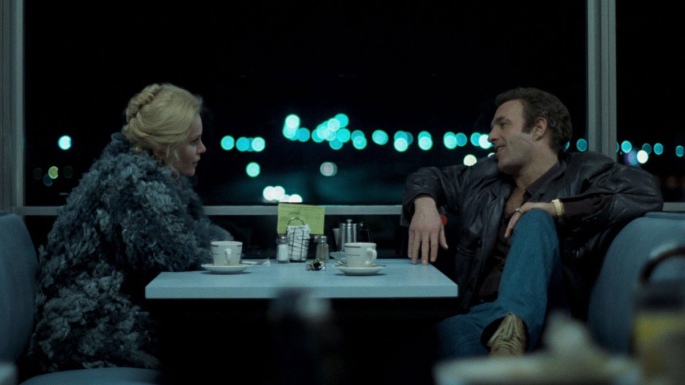
Leading up to that conversation in a late night diner, it’s crystal clear that Frank has had quite a day. After pulling off a meticulously executed, all-night diamond heist, he has to deal with some criminals that have stolen the money he was supposed to have received for the aforementioned robbery, he’s learned that his father-figure and mentor, Okla, is rapidly dying from heart disease, and, to top it all off, he’s over two hours late for a dinner date with Jessie due to his having to go through some clandestine, bullshit meet with members of a crime syndicate just so he can recoup his dough from the robbery the previous evening. This is his life, but it’s sure not the life he wants.

One of the most disarming things about Thief, Michael Mann’s theatrical film debut from 1981, is how much it focuses on Frank’s desire to chuck his life as a criminal and to settle into suburban anonymity. As portrayed by James Caan, Frank is decidedly not addicted to the juice of living like a criminal nor does he need the action to direct his life. Unlike Harry Dean Stanton’s Jerry in Ulu Grosbard’s Straight Time, co-scripted (uncredited) by Mann, or later Mann characters such as Heat’s Neil McCauley, a “regular type life” with “barbecue and ballgames” sounds just fine and dandy to Frank. In fact, Frank is so desperate for convention that he carries around a sad, wallet-sized collage of his dream life replete with pictures of children, a luxury car, Okla, and an inexact depiction of someone who will fill the role of wife and life partner. It’s no more exciting than what regular people take for granted but it means the absolute world to Frank.

In order make his modest dream life happen quickly, Frank makes a devil’s bargain with crime boss Leo (Robert Prosky), agreeing to a limited number of complex, pre-set, and high-yield robberies with the handshake agreement that he will be able to refuse any further work after each completed job. Naturally this will fall apart in spectacular fashion as crooked cops and even more dishonorable criminals complicate and jeopardize Frank’s vision for his future.

For a movie that made such limited noise at the box office, Thief’s influence on the crime thriller, in both look and content, is all but incalculable. As to the former, one would think that Michael Mann singlehandedly invented the visually intoxicating mix of wet streets and neon signs in the same way someone bumbled into mixing peanut butter and chocolate and made the Reece’s organization a bottomless fortune. As to the latter, the attention to detail that soon became the norm is directly influenced by Thief’s impeccably shot and edited sequences that highlight the fascinating, granular elements that make up the lives and work of professional criminals. Certainly films such as Jules Dassin’s Rififi and any number of Jean-Pierre Melville titles predated Thief’s love for the Swiss watch-precision in criminal activity. But Mann’s significant choice of laying the hypnotic and percolating minimalism of Tangerine Dream’s prog rock score over his near-wordless action montages pretty much created the blueprint for the look of almost ALL visual media that followed. When critics spoke about the slick, heavily-stylized “MTV look” that crept into theatrical films and commercials in the early 80’s (including Mann’s next theatrical endeavor, The Keep), they were talking about a style the ground zero of which was found in Thief. William Friedkin may have pioneered the idea in 1977 with Sorcerer (also boasting a score by Tangerine Dream) but Mann perfected it in 1981.

The lyricism found in Mann’s dialogue is also in full flower in Thief which melds quite beautifully with the stark, unmistakable realism of the life of the convict both in and out of prison, as chronicled by Frank in his diner monologue to Jessie which eerily recalls the day-to-day life of Murphy in Michael Mann’s previous film, The Jericho Mile. When Frank tells Jessie about an assault on his life and the aftermath that followed while he was serving time, he sounds as if he’s reciting a poem he was asked to write to describe the hell that exists within the prison walls. This is likewise the case when a bereft Frank verbally melts down and makes a full spectacle of himself in an adoption agency after he and Jessie are turned down as prospective parents due to Frank’s status as an ex-con. Never before has the utter hopelessness and anguished inhumanity that is the part and parcel of the life of a criminal been delivered with such control and beauty as it is in Thief.

Unlike Michael Mann projects that would come later, Thief, isn’t as interested in exploring the slippery nature between cop and criminal as it aims to be more classic in its mold while being more progressive in its approach. Thief, for lack of a better term, is a neo-noir where the chiaroscuro is given heavy assistance by magnesium but it is not an existential mediation on the tenuous line between good and evil. That said, in doing some rather interesting things in its casting, it does serve as a bit of thematic foreshadowing as real-life thief John Santucci, who served as a technical adviser and whose actual industrial burglar tools are used in the film, portrays the sleazy Sgt. Urizzi and real-life cop Dennis Farina, close to hanging up his badge for a respectable career in show business, shows up as Carl, Ataglia’s lethal bodyguard. The crossed lines of cop and criminal are all in the casting here but they will soon be at the heart of the rest of Mann’s oeuvre.

Aside from its technical and structural brilliance, Thief will always register as a bonafide masterpiece due to the impossibly high level of passion in the performances. It has been said countless times over but it will never not bear repeating that Thief is James Caan’s greatest hour. Equal parts tough, thoughtful, tragic, and triumphant, Caan slow-walks himself through the role of a lifetime, enunciating every syllable and wearing every nuanced emotion on his face while also turning in a remarkably physical performance (cat burglary looks like a lot of work, folks). As a woman whose past connection to the criminal element has limited her own options in life, Tuesday Weld’s Jessie radiates a wholly believable warmth and an inner-toughness which has been constructed to shield her from certain disappointment and render her invulnerable to easy influence. Jim Belushi is terrific in a rare dramatic role as Barry, Frank’s wiretapping and surveillance whiz, and Willie Nelson transcends mere stunt casting as the zen and terminal Okla, Frank’s jailhouse mentor. Among all of the supporting cast, though, Robert Prosky is the one who deserves special mention. A latecomer to acting (he was 41 when he was cast in his first part in a television movie in 1971), Thief was Prosky’s first big role and he owns every second of it. One second professional to the core and the other the most poisonous villain this side of Ben Kingsley’s Don Logan, Prosky brings a perfect balance to the role that forces him to oscillate between grand benevolence and guttural betrayal. Prosky’s delivery of an absolutely odious monologue in the last third of the movie deserves some kind of special award for being as captivating, thrilling, and rewatchable as it is horrifying, execrable, and repellant.

When speaking about the contemporary crime thriller, Michael Mann’s name brings as much heft to the genre as Hitchcock’s name did with the suspense film and Thief worked overtime to make that happen. And due to Michael Mann’s unshakable fidelity to the detail of the work of his characters and his impeccably operatic examination of their melancholic lives, he would soon find his options opening up exponentially when he redirected his focus from the lonesome, existential life of the career criminal and towards the cops that made their living chasing them. But with Thief, Mann found that perfect vehicle that allowed him to fuse his visual and thematic sensibilities into one flawless package while setting a stylistic pole position for the rest of Hollywood.

(C) Copyright 2021, Patrick Crain
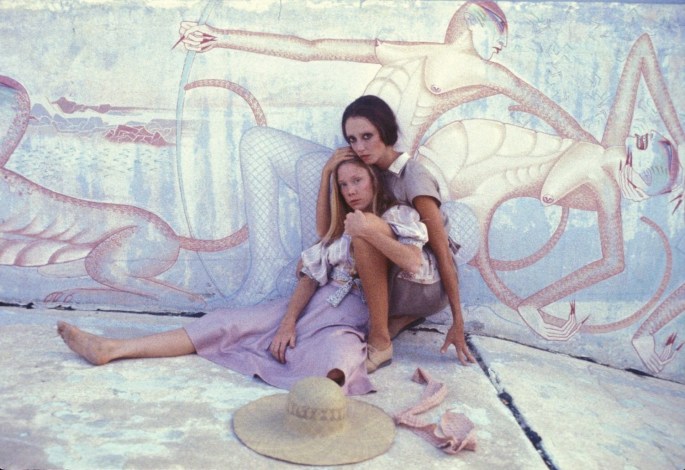
THE ROBERT ALTMAN FILES: BUFFALO BILL AND THE INDIANS, OR SITTING BULL’S HISTORY LESSON (1976)

At the conclusion of Nashville, the camera pans upward into the high heavens and the last image we see before staring off into the ether is the American flag. So it is appropriate that, at the beginning of Buffalo Bill and the Indians, or Sitting Bull’s History Lesson, the film that was released the following year, we see the raising of the American flag over the strains of reveille. Following some narration about the brave men and women who built our country and trudged through hardship after hardship, we witness the scene of an Indian attack on some settlers, driving the narrator’s point home in traditional western style. Once the carnage has concluded, the camera pulls back to reveal the attack has been a recreation and the settlers and natives are actors and this has all been done in the attempt to perfect a scenario for a Buffalo Bill’s Wild West Show. So where Nashville infused Altman’s vision of an America being infested with rot via politics and show business, Buffalo Bill and the Indians aims to almost invert that formula from the jump by giving a tall-tale American history lesson filtered completely through the artifice of show business which, ultimately and paradoxically, overflows with truths.

The year is 1886, and William F. “Buffalo Bill” Cody (Paul Newman) is a bigoted, ridiculously coiffed, narcissistic, and pinheaded blowhard who lives in a cloistered bubble of his own legend that is his Wild West Show where he is the figurehead, president, and CEO. But the new season needs a fresh angle as crowds are dwindling, causing chaos and cutbacks in Codyland. With the help of obsequious press agent Major John Burke (Kevin McCarthy) and ruthless producer Nate Salisbury (Joel Grey), Cody scores a coup when he wrangles Sitting Bull (Frank Kanquitts), whose victory over General George Custer at the battle of Little Big Horn made him a ready-made villain to audiences, into joining his show. Cody, a puffed up man of no small amount of self-importance, is frequently annoyed and enraged at Sitting Bull’s insistence on not rewriting history for the sake of entertainment nor allowing Bill to look like the star-spangled hero to which the latter is accustomed of appearing. Sitting Bull’s lethargic refusal to play the game Bill’s way, backed in full by Annie Oakley (Geraldine Chaplin), the show’s major draw, threatens the Wild West Show and, since he’s mostly a media construction, Bill’s existence.

To audiences of the day, this was maybe the most unwelcome bit of bicentennial cheer since Frank Zappa’s “Poofter’s Froth Wyoming Plans Ahead.” To fans of Paul Newman and westerns, this was an affront to the senses and their patriotic sensibilities. To those that loved Altman and were in the tank for him, it was unsubtle and too on-the-nose. And maybe both of those camps’ criticisms mattered a great deal in 1976 when the nation was struggling with itself as it turned 200 years old. The country’s dichotomous mindset couldn’t be summed up any better than the Academy nominating Taxi Driver, All the President’s Men, and Network for Best Picture only to then turn around and award the Oscar to Rocky, regardless of that film’s bottomless merits and endless appeal. It was clear that America was in the midst of a national case of the DT’s and was desperate to feel better.

Buffalo Bill and the Indians, unfortunately, was not made for people who wanted to feel better. It was made for people who thought all the ballyhoo circling the bicentennial was a racket, and a racist one at that. This kind of disdain made Robert Altman a frequent target of conservative critics who would continue to willfully label his flaming of American culture as a misanthropic attitude about America itself. Of course, this was wrong as Altman loved America and, in fact, embodied its best and greatest characteristics. What Altman hated was the rank hypocrisy and the half-truths that built so much of the American narrative, something that doesn’t seem like an unreasonable point of view. And, after all, what was the Wild West Show but a traveling pack of exaggerations that, nonetheless, blazed a trail in the collective mind of America and ensured that its revisionist tales took the place of actual history? If conservative critics are hell-bent on discussing the effect of television and movies on our citizens, why not extend that same argument to those mythological tales with a reach so far back into America’s past that our country’s mind has been hard-wired to recognize only its supposed benevolent greatness?

And perhaps Altman, whose Nashville was a critical hit but didn’t exactly achieve its goal of changing the way movies were made, earned himself no favors in Hollywood by making show business look like a nepotistic, valueless, and grotesque vessel frequently lost in it own sauce of incompetence and yes men. But by looking into the past and examining how so much of America’s historical foundation is built on myths and legends, he also sees the ability to shape the future. Buffalo Bill is a buffoon but his keen understanding of the power of “the show business” to twist history into something perverted, unfair, disgusting, and beneficial only to him is frightening. “Bill Cody can only trust his senses. And when his senses fail him, he might just see things as they really are,” muses Burt Lancaster’s Ned Buntline, one-time scribbler of penny dreadfuls but current deconstructionist of the myths he once helped create.

Naturally, something like Buffalo Bill and the Indians has aged extremely well and, viewing it in 2021, it’s a little jarring. For much of its running time, it feels like a funhouse mirror put up against our contemporary politics. Inspired by Arthur Kopit’s play Indians, screenwriters Altman and Allan Rudolph keep Buffalo Bill and the Indians confined within the boundaries of the camp of the Wild West Show and by keeping the film more or less stagebound, the Wild West Show and all of its backstage pandemonium begins to look like a lot like the White House of Donald Trump. When Bill meets Sitting Bull, it’s a mock celebration that’s meant to feel like an honorable meeting between two great heads of state but is instead a giant fantasy created to assuage the ego of Buffalo Bill who is such a moron, he has no idea what “incarcerated” means and confuses William Halsey (Will Sampson), Sitting Bull’s interpreter, for Sitting Bull himself. Liikewise, truth has no room within the parameters of the Wild West Show. Ned Buntline’s character is such an unwelcome creature in Bill’s land of fantasy that he attempts to have Buntline tossed from the premises the second Bill hears he’s around. Naturally, Bill delegates this duty to someone else and, likewise, Buntline won’t move until Bill disinvites him personally. This leads to one of the film’s most beautifully written and performed scenes in which Lancaster sighs “You haven’t changed, Bill.” “I’m not supposed to change,” Newman retorts. “That’s why people pay to see me.”

As a document in regards to Altman’s feelings toward the bicentennial, it’s fascinating. As a retroactive treatise on what would exactly happen if we lived in a political environment that operated like in the same fashion as backstage at The Muppet Show, it’s pretty brilliant even if Altman sometimes hard presses his acrid point to the point of smugness. “You know,” President Grover Cleveland coos in admiration as Buffalo Bill struts away from a reception, “it’s a man like that that made America what it is today.” Yeah… we get it. Additionally, Altman sometimes stretches himself for easy laughs and the running gag involving Buffalo Bill’s infatuation with opera singers proves to be more irritating and farcical than it is funny but it does at least set up one of the film’s most sublime moments in which the pack of artless cornballs in the Wild West Show are put to shame and moved to tears by the simple performance of by Nina Cavelini ‘Qui Sola Virgin Rosa’.

But, in the grand scheme of things, the film’s flaws seem minor in comparison to its triumphant execution and its fearless determination to take on both the seemingly unassailable lacquer that protects America’s Disneyfied image of itself and the vainglorious stupidity (and potential danger) of Hollywood. By admitting that America itself is a malleable tall tale if delivered by the right kind of polished huckster and that nobody, no matter how noble, is beneath selling out for the right price and practicality, Altman foretold of an America in ruin, susceptible to the charms of empty-headed, megawatt stars where relationships are transactional and nothing is sacred.

“Boy, I’ll tell you,” Harvey Keitel’s slack-jawed and dim-bulb nephew to Buffalo Bill says at some point in the film as he stares off into the distance, “there ain’t no business like the show business.”

Brother, you ain’t kidding.

(C) Copyright 2021, Patrick Crain