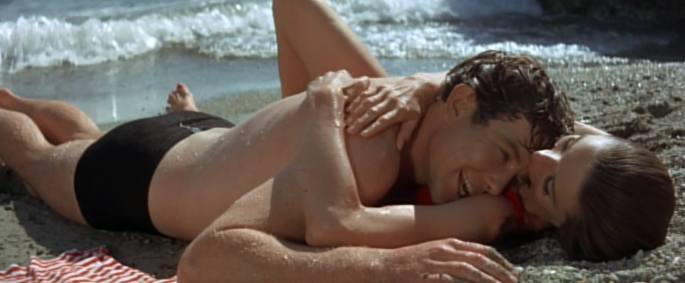
Stanley Donen’s 1967 British marriage dramedy Two for the Road is a film that I feel like a schmuck for not seeing sooner. Written by Frederic Raphael (who would receive an Oscar nomination for his brilliant work and who would later collaborate with Stanley Kubrick on Eyes Wide Shut), the film is a witty, serious, subtle, and totally late ‘60’s style and acting piece with fabulous performances from Albert Finney, Audrey Hepburn, Eleanor Bron, William Daniels, and a child performance of purposefully staggering annoyance by Gabrielle Middleton, who you literally just want to leave on the side of the road. The film centers on a husband and wife (Finney and Hepburn) who begin to examine and reminisce about their 12 year relationship while taking an emotionally taxing trip to Southern France. Various events from their lives are crisscrossed throughout the script, with former lovers making appearances, potential new lovers becoming a possibility, and a constant sense of “anything-might-happen” driving the story. Raphael’s boldly non-linear screenplay makes some modern movies feel downright conventional, and I’d have to assume that back in the day, this narrative style really took people by surprise.
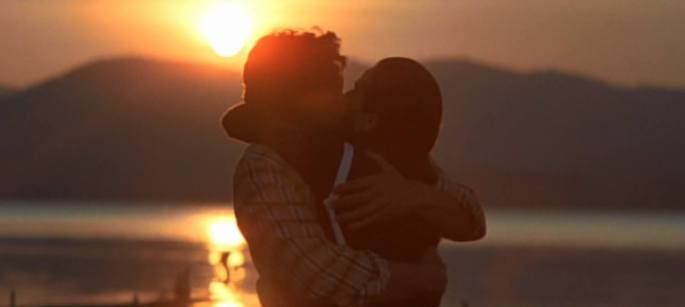
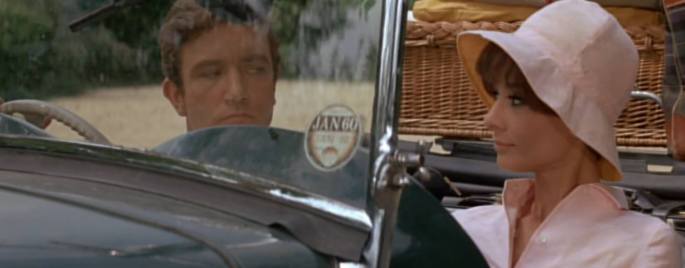
The relationship on display is examined from multiple perspectives in multiple time periods, with both Finney and Hepburn running a gamut of emotions while hitting major life milestones, and contending with the birth of their daughter. Finney, in what can sort of be considered a warm up to his blistering work in Alan Parker’s 1982 masterpiece Shoot the Moon, is fantastic as a man caught between his desire to be a loving husband and the man who he believes he is deep down inside, even if that’s not who he is in actuality. Hepburn, stunningly photographed and costumed in every scene, gets lots of laughs and enjoys playful banter with Finney, while also getting a chance to explore her dramatic side, especially during the emotionally volatile last act. I loved how in certain scenes, Donen would edit a bit sooner than normal, thus forcing the viewer to put some of the story pieces together on their own, and while nothing is left up in the air, the way that Raphael devised his tricky but coherent screenplay allows for all sorts of speculation about what’s in store for the various characters by the film’s conclusion. The jaunty and spirited original score by Henry Mancini peppers each scene with distinct personality, and Donen’s New Wave-inspired aesthetic touches keep the film visually interesting and narratively unique. The film is also a feast for the eyes for anyone who considers themselves a vintage car enthusiast.
 Podcasting Them Softly