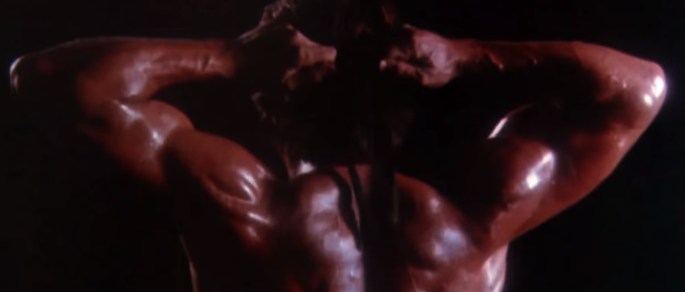
This movie is absurd. Absurdly fucking amazing. EVERYTHING EXPLODES POWER. TESTOSTERONE GALORE POWER. Where the first film in this phenomenal franchise was more of a lean and mean and stripped-down chase movie, this overblown and undeniably thrilling sequel opted for period appropriate bombastic spectacle, with hindsight results that are beyond perplexing and rewarding in equal measure. There’s nothing in this film that isn’t jacked, juiced, and fully loaded, with every single performance teetering on the edge of cartoonish respectability, and yet, it’s so damn sincere you just have to laugh and marvel at all of its blazing idiocy. Released in 1985 and grossing $300 million worldwide and becoming one of the most iconic action films of all time, Rambo: First Blood Part II was directed by George P. Cosmatos in a smack-you-in-the-face fashion, with every single action set-piece destroying the last and laying waste to entire villages, multiple armies, and entire populations. Definitely one of the premium gonzo-action movies of its day, there’s nothing on the Hollywood landscape, for multiple reasons, that remotely comes close to replicating this sort of insane summer fun.

The story cooked up by Stallone, Kevin Jarre, and James Cameron involves Rambo being sent to look for POW’s in Vietnam, only to be double-crossed by his own side, and then delivering repeated smack-downs to every single person he comes into contact with, foreign and domestic. The bold and beautiful anamorphic widescreen cinematography by the historic talent Jack Cardiff showcased every fire ball, every glistening muscle, every single machine gun casing with slick and gritty glee. A chorus of top-flight editors including Larry Bock, Gib Jaffe, Frank E. Jiminez, Mark Helfrich, and Mark Goldblatt, whose legendary credits include Commando, Terminator 2, and Bad Boys 2, made strict and coherent sense of all of the pyrotechnics, throat-slicings, and hand-to-hand combat, whittling everything down into a tight, 96 minute package that wasted not a single moment of screen time. Jerry Goldsmith’s pounding, triumphant score is a lesson in pure cinematic bad-assery. Richard Crenna, Charles Napier, Steven Berkoff, Martin Kove, all provided studies in gruff masculinity, while Sly anchored the entire production with a sense of 100,000 watt movie-star magnetism. This was the first film ever to receive a 2,000 screen release nationwide. A Carolco Pictures production of a TriStar release.

 Podcasting Them Softly