American Honey – A Review by Kyle Jonathan

American Honey

2016.  Directed by Andrea Arnold.

hero_american-honey-tiff-2016

Andrea Arnold’s masterpiece, American Honey, is not only the Millennial anthem, it is one of the most important films of the decade.  Saturated with candy wrapper visuals, a cacophony of auto-tuned hip hop, and massive sexual appeal, American Honey is the story of the underprivileged side of a lost demographic, an America without purpose masquerading as road trip revelry.  Using blistering symbolism, relevant characterizations. and brutal audacity, this is one of a handful of films that defines a generation.

Star is a teenager who joins a rag tag tribe of lost souls caravanning across America selling magazine subscriptions.  As she becomes inundated in a culture of erotic mores, drug abuse, and exploitation, Star finds love, hope, and a complacent sense of self.
americanhoneysashashia-0-0

Arnold’s script is both a sordid coming of age tale and a terrifying reflection on the waywardness of youth in distress.  Borrowing classic elements from Beat poetry and Rivette’s Paris Belongs to Us and then transfusing them with a counterfeit understanding of the American Dream, the result is a world in which it’s always apparent that something is very wrong and its characters could care less.  The group’s mammoth transport, a white passenger van becomes a surrogate mobile coffee house, eschewing politics and philosophy in favor of tattooed mythology and marijuana laced diatribes.  You can almost feel the ghost of Kerouac looming over the proceedings, encouraged by the rebellion and yet saddened by the lack of purpose, with the central ensemble travelling endless roads without a physical or spiritual destination.

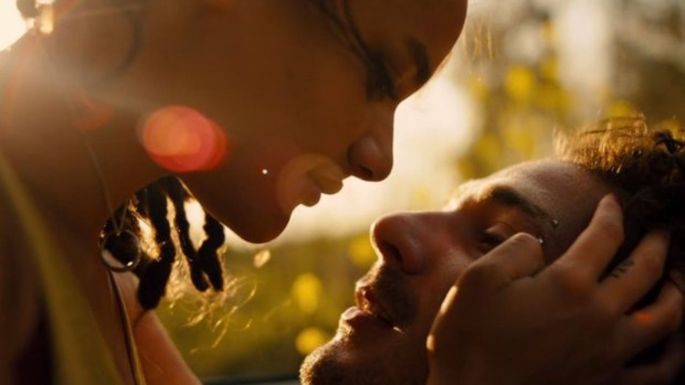
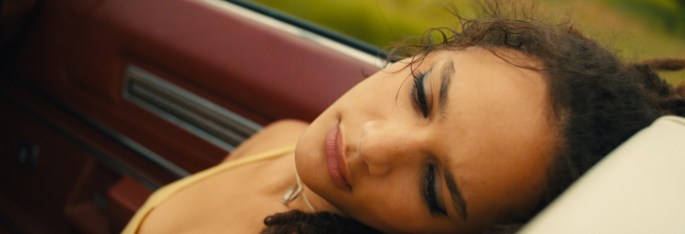
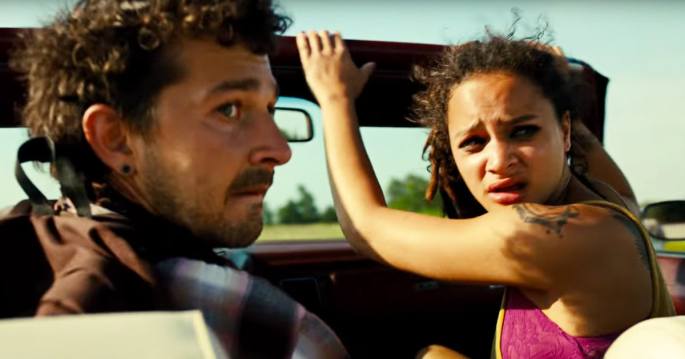
Arnold picked the majority of the cast by interviewing drunk teenagers and loners while prowling spring break locations.  Sasha Lane was chosen to lead as Star, with her intricate performance being memorable for her ability to balance sexual mystique, danger, and conviction all while battling the uncertainties of adult life.  She’s supported by Shia LeBeouf, who gives the performance of his career as Star’s forbidden lover, Jack.  This is a story about the forgotten, and LeBeouf throws his soul into his portrayal, using the hardships of his career to show Jack as a hungry street hustler whose armor of cool protects a lonely and restless heart desperate for an escape, a errant Peter Pan for a social media Neverland .  His chemistry with Lane is scorching, with some of the most raw and poignant love scenes ever filmed.  It’s easy to see how these two hearts find one another, as they both yearn for more amidst the reefer smoke, and yet, submit to a continual charade of hard partying and felonious behaviors as a welcome distraction from the world outside the van.
ah-cover2-1-1400x480

Robbie Ryan’s cinematography is poetically unhinged.  Filmed in 4:3 ratio, without widescreen, the film is presented as if the viewer is watching the film on their cell phone, an accusatory detail that also keeps the action uncomfortably close, simulating the idea that these neglected children are everywhere in the land of the free and exorbitantly rich.  Despite the framing choice, there are some remarkable shots of the beautiful Oklahoma landscape, filled with colorful wildlife and golden sunsets.  These images are opposed by their urban counterparts, with murky puddles and discarded canines populating the dingy motel underground in which Star is imprisoned.  One of the most beautiful sequences involves a lakeside bonfire with the kids jumping across the flames in true Lost Boys fashion, with the actors’ joys and fears intermingling into a hive mind of reckless euphoria.

The soundtrack is an MP3 onslaught of country and hip hop, and each song’s timing is perfectly chosen, almost always generating from a native source in the film, keeping everything within the personified turbulence.  Running at a colossal 163 minutes, American Honey takes its time with what it has to say, using the musical cues to highlight the cosmetic approach used to hook the kids into an indentured life, using the promise of tangible wealth as a carrot to cyclical servitude.  This is a generation who have been constantly reminded about the greatness that came before them.  They have no cause to unify them except for the intoxicated promises of their superiors, empowering them with a larger than life bravado.  There are several cringe worthy sequences in which characters put themselves into peril, either by getting into a stranger’s car or by going to a place they shouldn’t, and it’s difficult to tell if the characters truly believe their untouchable, or (more likely) that they just don’t care.
rs-245871-american-honey00

In limited release currently, and hopefully heading to Video on Demand soon, American Honey is one of the best films of the year.  Arnold’s cautious manifesto takes a concept that could have been overshadowed with violence and cynicism and instead presents it as a dysfunctional love story on the forgotten back roads of America.  Featuring tattooed outcasts who are forced to carve out their own identities in a transient community of grifters, most accept this condition as a natural consequence of their place in the financial order.  What’s more terrifying than the complete submission of the wayward sons and daughters is that those who understand that the game is rigged would rather keep playing on the off chance that they might luck into some part of an American Dream that left them in the dust long ago.  A hypnotic affliction rather than a traditional movie going experience, American Honey mutates Charles Peguy’s famous quote into something more personal, perfectly summarizing its intent:

America belongs to no one.

Highly.  Highly Recommend.

telecharger-american-honey-2016-films-complets-1257x640

Fantastic Beasts and Where to Find Them – A Review by Kyle Jonathan

Fantastic Beasts and Where to Find Them

2016.  Directed by David Yates.

fb_cc_trl_1232

David Yates returns to the Harry Potter universe with a delightful prequel that focuses on the adult wizarding world of America.  Featuring gorgeous visuals, unforgettable costuming, and a terrific ensemble performance, Fantastic Beasts and Where to Find Them provides an enchanting atmosphere, populated with mythical creatures, devious villains, and some surprisingly dark subject matter that abandons it’s intriguing set up in favor of a cataclysmic superhero finale.

Newt Scamander is a protector of magical beasts who arrives in New York City with a mysterious agenda.  Some of his collection escapes from his bewitched suit case and begin to wreak havoc on the city, increasing tensions among the magical community who are desperate to remain unknown to ordinary humans.  A wizard detective named Graves is investigating a series of supernatural disturbances that he believes are being perpetrated by one of the escaped creatures.  Newt, along with a human bystander named Jacob set about recapturing the animals before they’re harmed by the paranoia of the American wizards.  Their quest takes them through the heart of an esoteric metropolis where they’re joined by new comrades and challenged by unspeakable darkness.

597409861

Eddie Redmayne does an outstanding job as Newt, portraying him as the consummate outsider.  It’s a refreshing take on the awkward loner, with Redmayne communicating pain and wonder in equal amounts, without ever turning nasty.  He’s a mischievous and misunderstood explorer whose pursuits have left him isolated, but not cold.  Katherine Waterston does an admirable job as one of his sidekicks, but many of her scenes are so rushed that its difficult to identify with her until the film gets through it’s clunky first act.  However, once it does, this film shines, with Phillipe Rousselot’s spellbinding cinematography coming alive.  There are some outstanding compositions, especially during the sequences inside the magical headquarters, with a daring escape scene stealing the thunder.

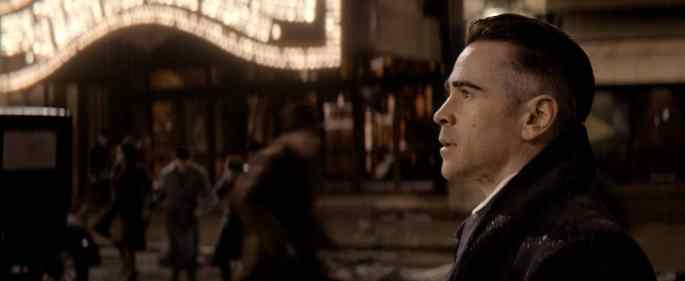
Dan Fogler has the comic relief portion, starring as the human who is unwittingly drawn into the wizards’s reality.  One of the best parts of his role is how his character is a summation of everything great about the golden age of America and it never feels forced.  Alison Sudol stars as a telepathic love interest who outshines her classic good looks with empathy and wit.  These are desperate times, despite them not involving He Who Will Not Be Named, and the film does a great job at making things count by focusing on the social issues of a city tearing itself apart.  Colin Farrell’s Graves is under cooked, due to the nonsensical script.  When it’s brilliant, it’s brilliant, but the moments in between are confusing and often hard to follow due to the sound editing.  Despite this, once it becomes apparent that the focus is on adult wizards who are proficient in their trade, many of the conveniences of the narrative are forgivable.

fantastic-beasts-trailer-comic-con-006-1280x533

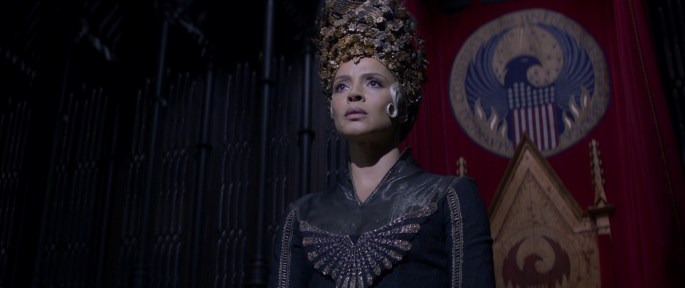
Coleen Atwood’s costume design is one of the strongest elements, easily transporting the viewer to an alternate 1920’s.  Every character’s ensemble is top notch and perfectly at home in the chaos.  David Allday’s art direction bolsters the roaring 20’s veneer by sprinkling mystifying artifacts throughout, with a sequence inside an arcane speakeasy being the centerpiece.  Music icon James Newton Howard’s score is the final touch, using the familiar notes of the franchise to create a foundation for an entirely new vision that mimics the child like awe of Newt’s perspective.

There are stumbles in the set up, but once it calms down, Fantastic Beasts and Where to Find Them becomes one of the best films in the series.  If there is a flaw it’s in the climax, which forgoes the academic problem solving of the central act for a CGI bonanza, complete with city destruction and dazzling light effects.   The subplot that leads to the final showdown is shallow and tacked on, but this is easily forgotten thanks to the amazing work of the central quartet, whose actions would gain them an instant invitation to Dumbledore’s Army.

154

In theaters now, Fantastic Beasts and Where to Find Them is a worthy entry into one of the most popular film franchises of all time.  Featuring a touching lead performance, crisp visuals, and a softball ending, this is a film that reminds the viewer, what it’s all about: Telling an engrossing story that allows the audience to have a memorable and enjoyable time in a world that appears different from their own, but also a place with hope, goodwill, and heroes to root for.

Recommend.

fantastic-beasts-and-where-to-find-them-fantastic-beasts-and-where-to-find-them-39391160-1920-1080

Billy Lynn’s Long Halftime Walk – A Review by Kyle Jonathan

Billy Lynn’s Long Halftime Walk

2016.  Directed by Ang Lee.

billy-lynns-long-halftime-walk-slice-600x200

One of the most talented directors working today, Ang Lee’s latest is a war story that focuses on the soldier’s personal plight and the impossibilities of returning to a country that cannot fully comprehend their experiences.  Billy Lynn’s Long Halftime Walk is an awkward epic, using slick visuals and first person points of view to keep everything within Lynn’s conflicted mind.  A largely wooden cast and shallow script are overcome by the sheer scope of the picture, delivering an emotionally resonate film that forgoes preaching in favor of intimacy.

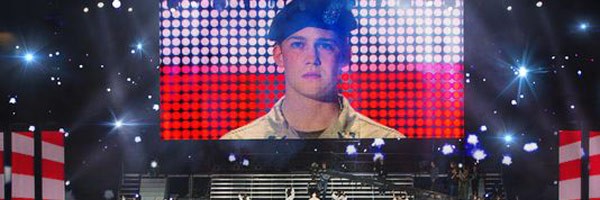
Billy Lynn is an Army Specialist who received the Silver Star for an act of bravery in Iraq.  As a result, his squad, the Bravos, become national heroes and are sent on a US tour to bolster support for the armed forces.  The tour ends on Thanksgiving, with the Bravos being the guest of honor at a professional football game in Dallas, including their participation in the half time show.  What follows is Lynn’s recollection of the war interwoven with his current dilemma on whether to return to the fight or abandon his unit in order to heal his traumatized soul.

billy-lynns-screencap1

This is the first film to be shot at 120 FPS in 3D at 4k resolution.  Lee’s choice to unleash the technical fuselage on a dramatic film is controversial, with only a handful of theaters in the country able to show it in all of it’s splendor.  The result on a conventional screen is nothing short of breathtaking.   John Toll’s formidable camera work has a surreal quality, bolstered by the electronic wizardry.  Even the most innocuous items are so saturated with color that it’s difficult to focus on any one thing for too long.  There’s some wonderful reverse shots and close ups that are framed as if the viewer is Lynn, giving the proceedings a video game feel that takes some time to get used to and Lee never seems to settle down.  The combat scenes are the centerpiece, with Drew Kunin’s sound mixing adding depth to the visceral carnage. Every gunshot and explosion cascades off of the screen, putting the viewer into a figurative harm’s way.

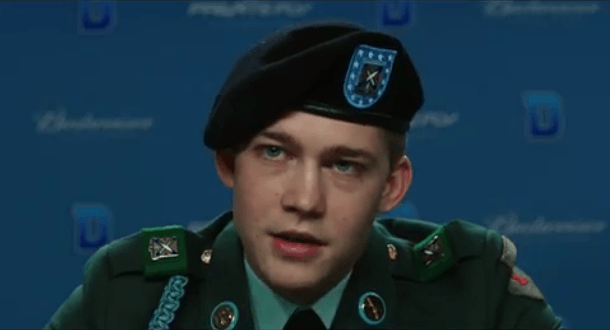
Jean-Christophe Castelli’s script is double edged.  On one hand, the characters, for the most part, have a cardboard quality that is compounded by the optical kinetics.  None of the soldiers appear real, and yet that is part of the design.  The heart of the story is how veterans return as ghosts, faded images of the people they were before the bloodshed, haunting the national focus during war time and then receding to the fringe of social awareness until another news cycle summons them once again from the darkness.  Newcomer Joe Alwynn is the best surprise.  Lynn is a role that doesn’t require a lot of vocal effort.  Everything hinges on body language and Alwynn’s pathos is both heartbreaking and familiar.  Kristen Stewart continues to show her prowess with her portrayal of Lynn’s defiant sister.  What could have easily been a cliche’d social justice caricature is transformed into a believable rebel, who no matter what remains loyal to her sibling.

screen-shot-2016-10-27-at-9-37-56-am

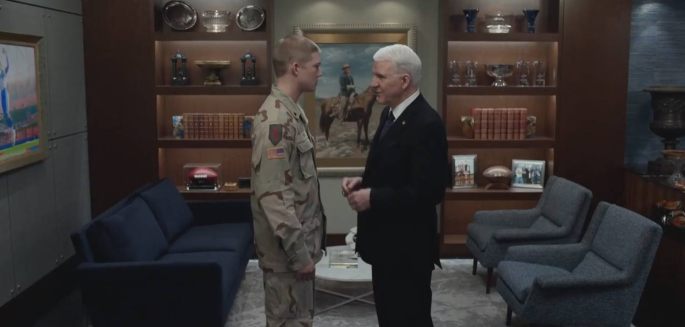
Garett Hedlund does solid work as Lynn’s superior.  One of the more disturbing aspects of this film is how it depicts post traumatic stress disorder.  Hedlund, more so than any other character, embodies the danger that hides in the wounded hearts of those who have experienced the nonstop life or death situations of war.  The amazing Steve Martin has a villainous role as a sports tycoon looking to buy the film,rights to the team’s ordeal for a paltry amount, simulating the sensationalism of war by the corporate elite.

In theaters now, Billy Lynn’s Long Halftime Walk is a unique film that doesn’t quite hit the mark.  It’s refreshing focus on the personal tribulations of American soldiers is endearing for its lack of politics, but is also unable to overcome to obtuse script and odd pacing.  Despite these flaws, it is a technical wonder and a genuinely human film that treads through familiar territory with a complacent sense of self.  It doesn’t offer anything new, but what it does provide is a lush viewing experience that focuses on a level of brotherhood few non combatants will ever truly understand.

Recommend.

billy-lynns-long-halftime-walk-trailers-posters

Dirty Harry – A Review by Kyle Jonathan

Dirty Harry

1971.  Directed by Don Siegel.

dirty-harry-lb-2-1

Iconic.  Controversial.  Misunderstood.

Don Siegel’s legendary cop saga, Dirty Harry, is an abrasive and uncompromising bare knuckle brawl.  Built atop a turgid city in distress and featuring one of Clint Eastwood’s most memorable performances, Dirty Harry strips away peaceful reflection, opting to depict a world in violence is not only appropriate, but welcomed.  An unapologetic imagining of one man’s obsessive hunt for a serial killer and one of the most revered films of the 70’s, Dirty Harry is a perfect marriage of blue collar grit and heart stopping action.

A serial killer known as Scorpio is terrorizing the streets of San Francisco.  Inept bureaucrats and bumbling police administrators are baffled and turn to Inspector Harry Callahan, an infamous detective, to bring the assailant to justice.  Paired with a Latino detective, Callahan pursues Scorpio across a variety of locales and tension wound scenarios, in which both the hunter and the prey switch roles numerous times.  As the violence escalates, Callahan’s disdain for the system forces him to abandon conventional means in order to stop the killer, leading him to forsake the badge and embrace the trappings of his dubious nickname.

dirty-harry-opening

Clint Eastwood’s performance has been unfairly categorized as a macho cop vehicle.  One of the best things about Eastwood in this film is how his Harry always seems inconvenienced.  He begins as a believer, who is always being interrupted by the nonstop corruption and villainy of the city he’s sworn to protect.  He stops a bank heist while absently chewing on his lunch.  During a ransom delivery scavenger hunt, Harry meets a myriad of miscreants, each of which he approaches with a tired sense of concern, desperately wanting to be left alone to pursue true evil, and yet unable to stop himself from policing.  Yes, he has catchy lines and always exudes an aura of coolness, but it’s the vulnerable outsider that brings everything home.

John Milius worked on the Zodiac Killer inspired script, which portrays San Francisco as a false haven.  On the surface, the city is populated by the beautiful and hard working masses, living in relative harmony while the rest of the nation fractured over Vietnam.  Underneath the veneer, the police perpetuate bigotry and the system ultimately fails those it seeks to protect.  Callahan’s colleagues shame his tactics and yet continue to call on him when the situation demands a forceful response, enriching the theme of necessary transgression when confronted with darkness outside human understanding.

dirtyharry33

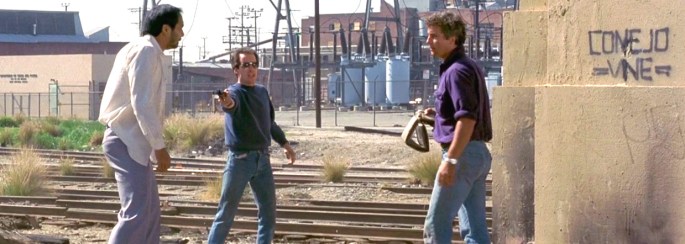
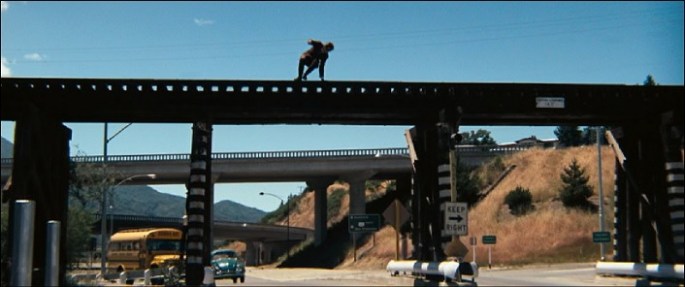
Lalo Schifrin’s unique score combines jazz, creepy voice overs, classic rifts, and free love rock into a eclectic knife that cleaves through the smog, with memorable melodies that are still used in television and other mediums today.  Glenn Wright’s costume design is often overlooked, giving Harry a modern hounds tooth blazer, a symbol of his devotion to justice.  Bruce Surtees’s brash cinematography features some amazing shots of the nightlife, using aerial photography and stark contrasts to set the dark city apart from it’s sunshine counterpart.  There is a wide shot of Eastwood on elevated train tracks that is sublime, and the following sequence, in which Harry jumps onto a moving bus was performed by Eastwood himself.

Everything about Dirty Harry is a perfect convergence.  Siegel’s patented directorial genius shines in every scene, using a wealth of technical expertise and a phenomenal central performance to create a singular cinematic endeavor.  Available now for digital rental, Dirty Harry is an overwhelmingly American film, revered for it’s tough guy mystique and misjudged for its unrepentant brutality.  Underneath the blood and bullets lies one of the more thoughtful cop films of the 70’s,right down to its heartbreaking finale.  A slimmed down neo noir in an uncomfortably tight package, Dirty Harry is an essential piece of American crime cinema.

Highly Recommend.

dh04

To Live and Die in L.A. – A Review by Kyle Jonathan

To Live and Die in L.A

1985.  Directed by William Friedkin.

to-live-and-die-in-la-window-shatter-william-friedkin-william-petersen-willem-dafoe-john-pankow-michael-greene-debra-feuer-john-turturro-darlanne-fluegel-dean-stockwell-robert-d

William Friedkin’s renegade gut shot, To Live and Die in L.A. is a brilliant neo-noir and a painfully detailed crime thriller.  Filled with desperate lawmen and intriguing criminals, Friedkin’s neon drenched city of fallen angels delivers a nihilistic deconstruction of the hero cop films that were prevalent during the 1980’s and remains an important example of artistic freedom today.

Chance is a secret service agent stationed in LA.  His partner is murdered by a slick counterfeiter named Masters.  Chance vows revenge at any cost, bending the law whenever he can to get closer to Masters.  His antics pull him and his new partner Vukovich across the line when the two become involved in a conspiracy to obtain cash to buy Masters’s confidence.  Things predictably go awry and soon the two agents are involved in one of the greatest car chase sequences ever filmed and forced to confront their evil deeds head on, resulting in a brutal finale in which Friedkin’s dissent becomes clear: Not only does no one ever get away clean, life inevitably and mercilessly goes on.

to-live-and-die-in-la-holdup-william-friedkin-william-petersen-willem-dafoe-john-pankow-michael-greene-debra-feuer-john-turturro-darlanne-fluegel-dean-stockwell-robert-downey-s

This is one of the most authentic crime films ever made.  Friedkin consulted a convicted criminal and used him as a consultant on the counterfeiting scenes.  The money that was produced was so realistic, the Secret Service interviewed a dozen cast members and Friedkin himself after some of it was used off set.  Based on a novel by a retired secret service agent, the dialogue and weary agency politics feel frustratingly real, as do the natural reactions of the agents.

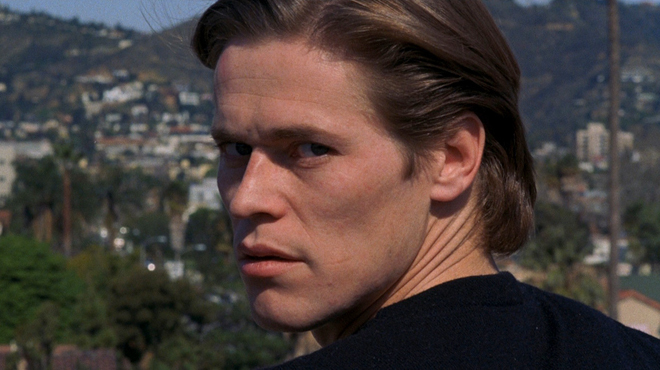
William Petersen’s Chance is an urban cowboy, a summation of rogue cop bravado and red blooded Americana.  Petersen does an outstanding job, portraying Chance as a zealot, a true believer in his cause whose bravura is his armor.  Willem Dafoe plays Masters, the foil.  While Chance is the bull, Masters is the fox, with Dafoe gliding through his scenes with a fatalistic quality that makes him stand out from his criminal counterparts.  While Chance is the epitome of the law in Friedkin’s poisoned city, Masters is the streets, the promises that LA whispers in the viewer’s ear.  On the surface, Dafoe appears handsome, almost androgynous, a black angel who operates in the open, exploiting loophole after loophole.

image

John Pankow has the most understated role as Vukovich, the reluctant partner who helplessly orbits around Chance’s fury, beginning as an idealist and slowly transforming into a disciple.  Dean Stockwell and John Turturro round out the cast as a compromised lawyer and a nervous bagman.  It’s one of the many things in this unique vision that make it memorable, no one is exactly what they appear to be, and the hidden agendas reinforce the noir paradigm with a calculated design.

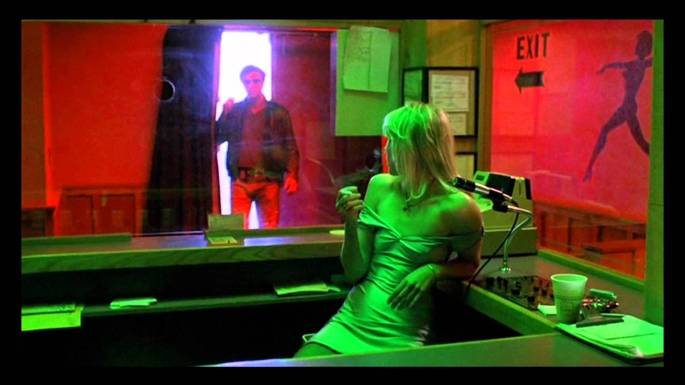
Robby Muller’s gritty cinematography captures the elusive city with blistering wide shots that open the film, illustrating the pressure cooker environs with an ominous red dawn.  Every exterior has a primal feel, bringing the urban jungle to life, while each of the interior locations, designed by Cricket Rowland, offset the danger by giving the illusion of sanctuary.  The film’s major set piece, a high speed car chase going against the flow of traffic is a must see.  Petersen did most of his own driving, with Pankow’s backseat hysterics being real.  The scene took six weeks to shoot, putting the film a million dollars over budget, with the crew shutting down traffic for several hours a day.  The end result rivals Friedkin’s work on French Connection’s infamous car chase sequence.

toliveanddieinla

80’s band Wang Chung did the soundtrack, combining pop culture elements with a downbeat synth score that oozes in the background.  Everything was done as fast as possible, with Friedkin filming the actors during “takes” and using the test footage rather than formal clips.  One such segment, involving a chase in an airport got the crew in hot water with the airport authorities, as Petersen ignored their warnings and ran atop the divider between two moving sidewalks.  Add in the film’s surprisingly abrupt climax and the result is a one of kind potboiler that would never get made today.

Available now for digital rental or on an amazing Shout Factory blu ray, To Live and Die in L.A. is a must see film for fans of the crime genre and an outstanding offering from one of the greatest directors of all time.  Friedkin had several misses that did not connect with audiences and To Live and Die in L.A. was a lean and perfectly nasty return to form.  A film that has no heroes, only manipulators of opportunity, if you’re looking for a nostalgic jaunt into the dark side of the 80’s, you can’t got wrong with this one.

Highly.  Highly Recommend.
11-600x324

Phase IV – A Review by Kyle Jonathan

Phase IV

1974.  Directed Saul Bass.

dvd_phase

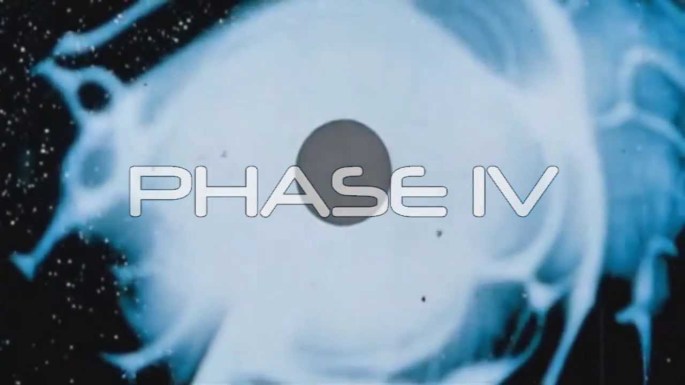
An absolutely insane visual head trip, and legendary artist Saul Bass’s only feature film, Phase IV is a science fiction horror mind ripper that asks impossibly complex questions and offers few explanations.  The definition of high art, this is a film that will infuriate as much as it entrances, using stunning micro-cinematography to capture an insect revolution from the inside out.

A cosmic event endows the ant population of Arizona with a higher form of intelligence.  They become a hive mind and begin to erect strange pillars in the desert.  A scientific duo, along with a hold out family, begin a war against the increasingly dangerous insects.  One of the scientists believes that ants may have a deeper purpose, while his counterpart is obsessed with destroying their queen.  As the stakes rise and the ants begin to reveal their true intentions, mankind is conscripted into a higher form of existence, in which their etymological overlords could redefine their species or annihilate it.

tumblr_nj1lq6rjyy1qa0uc2o8_1280

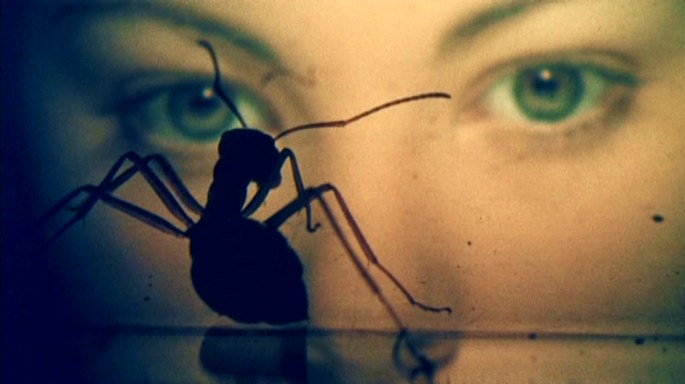
Renowned wildlife photographer Ken Middleham, whose terrifying cinematography on The Hellstrom Chronicle caught Bass’s eye, captures the insect evolution with intricate closeups.  Despite the ants beginning as the antagonists, the viewer is helplessly drawn into their emergent society, complete with head decorations, espionage missions, and one of the most somber funeral scenes ever depicted.  Phase IV is a hypnotic voyage, following the likes Kubrick in which it takes extremely grandiose concepts and machine guns them across the screen and into the subconscious.  Mayo Simon’s script is a minefield of coffee house ethics and LSD prophecy, moving from the inevitability of the ant kingdom to the desperate and fractured human response.  The characters run the gambit from sexpot, vengeful hunter, and quizzical scientist, with each transforming into a specifically designed piece for the insect agenda.  Dick Bush handles the human side, capturing their plight in a lurid explosion of red and orange, using vibrant color to mirror the extreme emotional chaos.

Cult movie king Michael Murphy stars as Dr. Lesko, a mathematician who believes he can communicate with the insects via numbers.  His counterpart is Hubbs, played by the legendary Nigel Davenport, the voice of HAL from 2001: A Space Odyssey.  Davenport brings a delicious amount of obsession to an already crowded party, with Hubbs refusing peace and embarking on a one man extermination mission.  The conflicting scientific approaches is an interesting feature, showcasing how even the most intelligent scholars are vulnerable to primal paranoia.

tumblr_nj1lq6rjyy1qa0uc2o9_1280

John Barry’s art direction is a Frankenstein mismatch of Escher and Giger, presenting the ant colony as a cold, otherworldly place filled with odd angles and bizarre constructions.  The human world is filled with technology and overwhelmed with metallic silver, while being completely surrounded by the ever encroaching red sands of the desert, hyper visualizing the ants rise to supremacy.  Brian Gasciogne’s score enhances these concepts by blending classical and electronic melodies, harmonizing with the stoic insects and the frantic humans, with both genres presenting as opposites, and yet, oddly complimentary.

All of these wonderful and atypical elements combine into an instant B movie classic.  Phase IV is one of the most popular Mystery Science Theater 3000 episodes, and late night airings on less than reputable cable channels allowed the film to develop a cult following and quietly escape the 80’s VHS graveyard.  The original ending was cut by the studio, considered to be even more of a psychedelic departure than the rest of the film.  It was thankfully rediscovered in 2012 and can be found on Youtube.  The film has been cited as an inspiration for songs, video games, and Cosmotos’s Beyond the Black Rainbow.

4957topphas

Available now for digital rental, Phase IV is a thinking person’s film…if said person was overdosing on psychotropics.  Featuring a unique premise, outstanding micro visuals, and an unusually poignant representation of insect culture, Phase IV is a kaleidoscopic fever dream in which the war between man and nature is revealed to be a much deeper, and possibly sinister undertaking.  If you’re in the mood for a time capsule experience that mainlines 70’s aesthetics and preternatural ethical dilemmas, Phase IV delivers a singular experience.

Highly.  Highly Recommend.

maxresdefault

Christine – A Review by Kyle Jonathan

Christine

2016.  Directed by Antonio Campos.

14-christine-2-w750-h560-2x-738x240

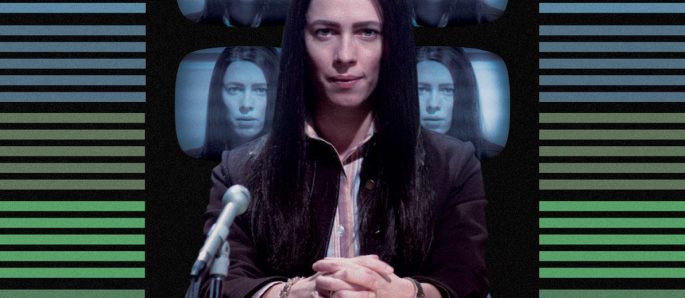
Giving the viewer a front row seat to mental devastation , Christine is a claustrophobic character study that chronicles the last days in the life of Christine Chubbuck, a TV reporter who ultimately lost her struggle with depression, and committed suicide on live television.  Featuring one of the most profound performances by an actress this decade, Christine approaches its subject matter in a scholarly manner, observing the events from arm’s length and allowing the viewer to form their own conclusions.

Christine is the lead field reporter for a local news station in Sarasota, Florida, having recently relocated with her mother after a serious bout with depression.  She spends her spare time fantasizing about landing a more reputable job, interviewing politicians and celebrities, while pining for a handsome coworker.  The arrival of the station’s owner puts the crew under duress as rumors swirl about promotions and firings, with the station manager pressuring Christine to find more provocative stories to cover, going against her ideal that the joy of the human condition is paramount when it comes to the press.  Christine’s mother begins seeing a man, sparking resentment from Christine who is yet to experience intimacy.  As Christine’s depression returns, her sanity begins to succumb to attrition, culminating in one of the most shocking incidents in the history of live television.

14-christine-2-w750-h560-2x-738x240

Rebecca Hall’s portrayal of Christine is terrifying in its organic presentation.  Watching her Christine go step by step through her psyche’s utter destruction is a harrowing experience, akin to Polanski’s Repulsion, but without the visual hallucinations, a telling omission that is a direct result of Hall’s undeniable power of communication.  She remains on screen for the duration of the film, thus trapping the viewer inside Christine’s mental nightmare along side her and it never relents nor does it become tiresome.  Christine is not the type of character that you root for, but she is awkwardly mysterious, stubbornly complex, and completely exposed.The amount of research Hall did in preparation for the role is evident in the details of Christine’s tragic existence.  Her retreat from big city living to a false paradise, coupled with her obsession over mundane details are representative of the silent horror that many people endure on a daily basis.  As Christine passes the point of no return, the viewer is left in an odd place, empathizing with the need for Christine’s pain to end and yet puzzled by her decision.  The film’s refusal to add commentary is yet another gesture of the immense trust it places in Hall’s capable hands.

Joe Anderson’s cinematography captures the 1970’s backroom reporting vibe adequately, featuring smoky backdrops and close ups on the rudimentary camera equipment that would eventually capture the act.  Craig Shilowich’s script relies heavily on Hall’s prowess, but manages to inject not only a sense of nostalgia, but a hint of the new age psychedelic mysticism that was prevalent during the time period, enhancing the atmosphere with free love antics.  The dynamics between the crew are vintage representations of drug culture and sexual politics, but are easily eclipsed by Hall’s dangerous elephant in the room at all times.  This is Christine’s story, and every other aspect takes a backseat.

christine

In theaters now, Christine is a fascinating film about a woman’s decision to end her life live and in color.  Hall will garner awards for her memorable and scary portrayal of a woman who has lost her way and cannot, despite everything, find her way back.  A cold, academic analysis of a mental breakdown, Christine is disturbing in its casual attitude, presenting the events without opinion, reminding the audience that there is a Christine on every street, in every office, and in every classroom.  If you’re interested in a sterile biopic that focuses entirely on its central character, Christine is an excellent psychological exploration of the perils of untreated mental distress.

Highly Recommend.

christine-1193x520

Moonlight – A Review by Kyle Jonathan

Moonlight

2016.  Directed by Barry Jenkins

images

An urban lullaby, Barry Jenkins’s second feature film is a turbulent emotional epic.  Using subtlety and overwhelming restraint, Moonlight tells an all too familiar story of an urban youth struggling to find himself in a manner that is not only realistic and respectful to the culture, but also overcomes any sense of conformity by dismantling the very essence of
what it means to be human.

Told in three acts, with each focusing on a pivotal moment in the main character’s life, Moonlight uses the sun washed streets of Miami as a backdrop for it’s bluesy examination of heartbreak and the unquenchable thirst for acceptance.  Chiron comes of age on the tough streets of a ghetto in south Florida, tortured by his peers for his quietly delicate mannerisms.  His mother slowly loses her battle with addiction and Chiron finds a surrogate father in Juan, a drug dealer who teaches him the importance of self.  During high school, Chiron has a sexual encounter with one of his best friends and in the aftermath is involved in an assault that sends him out of state.  In the final act, Chiron has become a drug dealer like Juan, and yet still craves for a connection like the one from his youth.  A fateful phone call brings Chiron home where he comes full circle with his past, confronting his ghosts with a soft spoken sense of courage and hope.

moonlight-by-david-bornfriend-courtesy-of-a24-1200x520

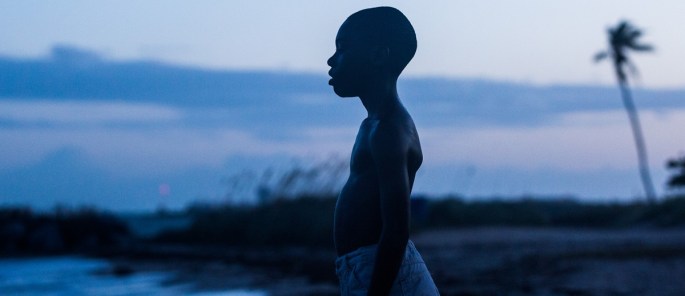
The strength of this phenomenal directorial effort is in its fragility.  Chiron’s odyssey is a quiet broken mirror, reflecting his pain and ostracism by contrasting them with a world of characters who have each accepted their fates.  Mahershala Ali’s Oscar worthy supporting role as Juan brims with a cool complacency, a street king who not only understands the game, but fundamentally surrenders to its inevitability.  He teaches Chiron not only to be self aware, but urges him to make peace with the beauty that surrounds him while also deciding for himself who he is going to be.  The father son relationship is highlighted through some wonderful shots in the first act by James Laxton.  Chiron’s hand floats out of car window, reminding the viewer that this is a child forced into the cruel realities of adulthood.  Juan and Chiron’s scene at the beach is a blissful tangent that harmonizes the concepts of self reliance and spiritual rebirth with a dazzling pallet of blues and crystallized light.  The unforgettable denouement of the first act is unforgiving and candidly raw, setting the tone for Chiron’s tribulations to come.

Naomie Harris stars as Chiron’s mother, whose transition from caretaker to fiend is abrupt and tragically realistic.  She runs the gambit of maternal desolation with ease, floating from frustrated concern to violent disgust in an instant, communicating a furnace of self loathing with a handful of lines, the most important of which is muted by Nicholas Birtell’s score.  Every part of his musical design is applied with a beautiful mix of uncertainty and longing, using a classical arsenal to wage Chiron’s personal war to find a place in world that doesn’t seem to want him.  Ashton Sanders as teen Chiron and Jhareel Jerome as teen Kevin have the film’s best scene, a sexual encounter that is handled with such grace and attention that the entirety of what is happening isn’t felt until long after.  This is where Jenkins’s script comes to life, using the two actors to communicate a budding understanding of pain and alienation.

moonlight-slice-600x200

Trevante Rhodes arrives in the final act as an adult Chiron.  This young actor’s ability to harness the unstable torment in Chiron’s heart with virtually no lines is not only an outstanding byproduct of a formidable talent, but a matter of fact capstone on a film that is already momentous.  He portrays a man who is, in essence, still a teenager on a beach searching for the love of his life.  Every shy look, hesitant breath, and wanting stare is infallible, a perfect summation to the life the viewer has seen unfold.  Laxton used different film stock for each act, with the final being the most vibrant.  There is one scene in particular that uses a deep shot to show the beach from Chiron’s point of view that is heart stopping, dovetailing the rejuvenating colors with Chiron’s anxiety.   As Chiron reconnects with Kevin, the mood is cautious, and yet undeniably hopeful.  Andre Holland’s Kevin is the the missing piece in Chiron’s shattered heart, a warm and self aware shard that contrast’s Chiron’s eternal bereavement.

Moonlight is being touted as one of the best queer films ever made.  While this is certainly true, the magic of Jenkins’s unforgettable story is that is defiantly human.  It highlights an already uncomfortable and foreign demographic and then adds the homosexual element as a means to remind the viewer that we are all in the same struggle.  No matter your race, economic status, religion, or sexual preference, every human has often found themselves in the darkness overcome by grief and uncertainty.  It is the power of love that is the Moonlight, the one universal constant that can repair even the most broken of things.  Chiron and his soulful journey is the face of that truth.

moonlight-2016-movie-screencap-02

In theaters now, if you see only one film this year, Moonlight needs to be that movie.  This is a deep film that is not only thoughtfully engaging, but it also makes it remarkably easy to do so.  In a time where fear of ideological opposites dominates our electronic intake, Moonlight shines through the adversity with a message on the importance of compassion and the ameliorating powers of unconditional love.

Highly.  Highly Recommend.
moonlight-trailer-banner

The Handmaiden – A Review by Kyle Jonathan

The Handmaiden

2016.  Directed by Park Chan-wook.

hero_handmaiden-2016-1

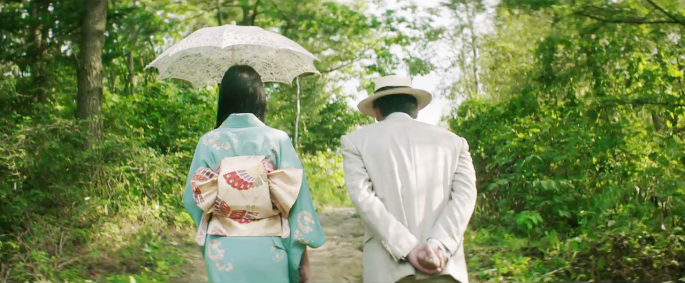
One of the most remarkable things about watching films is when you get entranced by the world within the story.  Park Chan-wook’s erotic noir, The Handmaiden, is a sterling example of storytelling made possible by an elaborately constructed environment filled with mysterious pleasures and unspeakable evil.

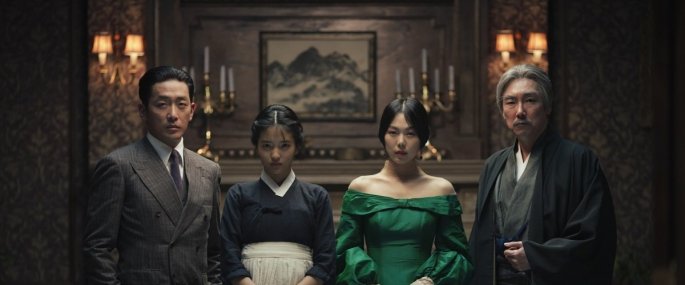
Petty thief Sook-hee is handpicked by the Count, a Korean grifter looking to get rich posing as a noble during the 1930’s Japanese occupation.  The con involves Sook-hee serving as a handmaiden for Lady Hideko, a despondent heiress who is rumored to be engaged to her reclusive uncle Kouzuki, a purveyor of rare and deviously risque literature.  Sook-hee is to assist with ensuring Hideko falls in love with the Count so that they can marry, allowing her partner to have the lady committed to a sanitarium, and leaving him as the sole inheritor of her immense fortune.  Told over three painfully detailed acts, depicting conflicting points of view, The Handmaiden unfolds into a sexual free fall, in which unbridled passion, tenuous loyalties, and unsettling truths converge into a graphic parable on the cost of desire.

tumblr_o6rtkypjxl1qidyw2o8_1280

Chan-wook adapted the script from Sarah Waters novel Fingersmith.  The first act is deliberately slow, introducing the players and casually drawing the viewer into the anachronistic world of Hideko’s sinister household.  While the narrative slightly drags during the overlong introduction, there are endless details whose relevance, once revealed, shows the genius of Chan-wook’s malicious design.  Ryu Seong-hie’s art direction is meticulous and engaging, with the composition of antique relics and unusual sexual devices hiding danger and wonder in equal amounts.  Sang-gyeong Jo’s costume design is a temporal paradox, blending the modern suits of the faux nobility with the pristine kimono’s of the Japanese elite.  Every item, location, and character has an alluring quality, with each individual element concealing an abyss of shadows waiting to be explored.

Chung Chung-hoon’s cinematography has a conspiratorial vibe, capturing various scenes from different angles, with each representing a different player in the macabre contest.  Featuring some of the most vivid sex scenes ever filmed, the camera hovers and spins over top of the couplings, mimicking the heady dizziness of sexual release.  This a gorgeous film populated with gorgeous people, and Chung-hoon encompasses every sexual encounter with an uncomfortable lingering eye that perfectly encapsulates the beauty of forbidden consummation.

tumblr_od8ek1qcfv1uxevtuo1_1280

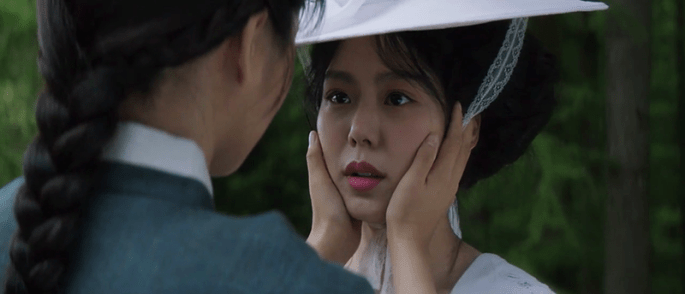
Kim Min-Hee as Hideko and Kim Tae-ri as Sook-hee give excellent performances, completely submitting to Chan-wook’s vision, but also giving each of their roles a personal touch that is vulnerable and empowering throughout.  Ha Jung-woo as the Count delivers a wonderfully subtle turn, whose fatalistic tendencies deliver one of the best surprises.  Cho Jin-woong’s portrayal of the uncle evokes a skin crawling reaction in every scene, simulating a monstrosity in human guise, desperate to shed his skin and revel in the darkness underneath.

While the Hitchcockian influences are undeniable, The Handmaiden defies ordinary constraints due entirely to Chan-wook’s trademark panache.  Taking a base concept of deceit and infusing it with sexual audacity and unsettling insinuations, this is a film that uses every technical aspect to create a poisoned fairy tale, in which normal conventions are inverted so that the viewer is never able to predict the outcome as the story unfolds in three very unique segments, where  atypical archetypes are the weak sister and the underdog is the apex.

handmaiden3

In theaters now, The Handmaiden is one of 2016’s most artistic films.  Featuring beautifully unabashed sex scenes, a dream like world filled with wonder and terror, and a host of strong performances, The Handmaiden delivers on every level.  A potent love story, a noir mishmash of betrayal and violence, and subtle critique on the Japanese occupation of Korea, this is a film that will arouse and repulse in equal amounts, everything that Park Chan-wook’s brilliantly vicious filmography is known for.

Highly recommend.

handmaiden_poster1a

Arrival – A Review by Kyle Jonathan

Arrival

2016.  Directed by Denis Villeneuve.

screen_shot_2016-08-16_at_10-25-44_am-0

A slow burn science fiction epic, Arrival is one of the most artistic big budget films to ever be produced.  Featuring an unforgettable lead performance, jaw dropping visual effects, pitch perfect sound design, and somber, one of a kind cinematography, Arrival is a cerebral and extremely relevant film experience.

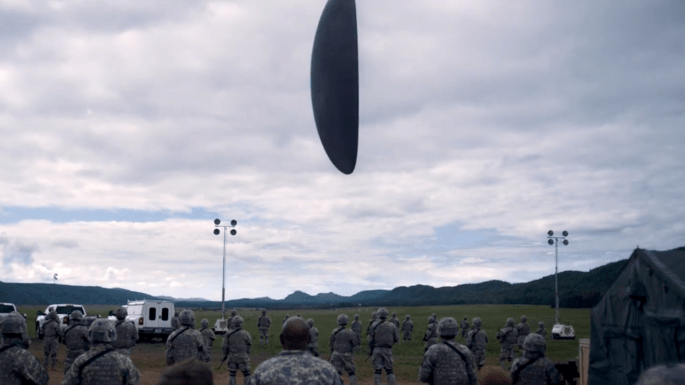
Twelve alien spacecrafts descend upon Earth, spread across the globe in a random configuration.  The American military recruits language expert Dr. Louise Banks and physicist Ian Donnelly to communicate with the aliens in order to discover if their intentions are hostile.  The pair slowly decipher the extraterrestrials’ complex language, in which visual symbols are used in place of traditional phonetics.  As Louise delves deeper into the alien dialect, she begins to experience a form of transcendence that not only holds the key to the alien’s agenda, but also a contains a power that could either redeem humanity or utterly destroy it.

arrival4

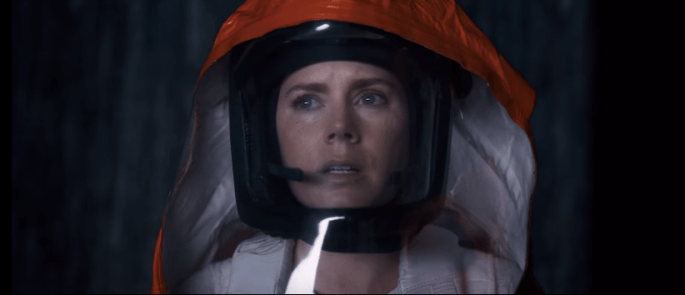
Amy Adams gives the performance of her career as Louise.  This is a heavy film. packed with imagery and subtext that could have overshadowed a lackluster performance and Adams’s immense capabilities shine not only in her delivery, but in her total commitment.  She portrays Louise as an outsider, a master in communication and yet a novice in human connection.  As the narrative progresses, the viewer can’t help but identify with her creative weariness, a scientist who believes there is always a non aggressive option, even in the face of annihilation.  She’s supported by Jeremy Renner, who does an excellent job as her academic opposite.  It’s one of the many things about Arrival that is so telling.  When the scientists disagree, they are respectful and use their contrasting viewpoints to find a consensus, offsetting Forest Whitaker’s army officer, whose focus is on the threat.  He takes what could be an opposing force and portrays his character as a concerned collaborator, willing to give science a chance, but always remaining pragmatic.

Bradford Young’s cinematography is pure visual splendor, showcasing a remarkable understanding of a larger than life undertaking.  The shot of the initial approach to the vessel is breath taking, capturing fog as it tumbles across a vista, gorgeously symbolizing the mutual confusion of first contact.   There is a transitional shot involving Louise’s memory, offset by orange emergency lighting that has to be seen to be believed. The shots outside the craft are filled with deep blues and thick shadows, mimicking the  fear of the human world.  The interior of the ship is framed with mind bending angles as the team ventures inside and then saturated with ghostly whites and institutional blacks, using color to evoke the strangeness of the visitors.

arrival-2016-screen2

Isabelle Guay’s art direction portrays the otherworldly vessel without complicated gadgetry and ominous corridors, allowing the camera to focus on the interactions.  It is this simplistic and respectful approach that makes it work.  Once the parley begins, the attention is on the participants, with Sylvain Bellemare’s sound design stealing the focus.  Repetition and subtext are key with alien sounds vibrating through the speakers, echoing within the viewer’s mind as they try to piece together the mystery.  Johann Johannson’s score is an intimate companion, being a force unto its self when the action requires and then delicately receding, like the memory of a first kiss   Ryal Cosgrave’s sublime visual effects present the alien dialect with beautiful inky characters, while his vision of their physical form is one of the most unique creature designs ever attempted.

Eric Heisserer’s script, based on the award winning short story by Ted Chiang, will capture gold this awards season.  This is an intoxicating, patient film that respectfully holds the viewer’s hand while also giving them room to explore their own conclusions.  Using the base concepts of communication and alienation as a means to combat inter species conflict, Arrival teaches, but never lectures.  It uses the narrative to present the universal concepts of acceptance and tolerance through a scientific filter but never goes beyond the essentials, remaining accessible to the audience if they are patient with the slow release story design.  There are a few elements related to natural human paranoia that are used to add tension that could have been excised, but their presence only enhances the feeling of desperation that pervades throughout the final act.   While astute viewers will see the conclusion coming long before it happens, Arrival is an experience where the journey of discovery is paramount over the summation.

arrival-2016-scifi-film-trailer

Debuting in theaters today, Denis Villeneuve’s Arrival is one of the best films of 2016.  Continuing his amazing streak of thought provoking and challenging movies, Villeneuve proves that he is more than capable of delivering greatness.  His control over the potent elements is evident in every frame, with the final product being one of the most thought provoking and genuinely heartfelt films in recent memory.

Highly, highly recommend.

arrival-title