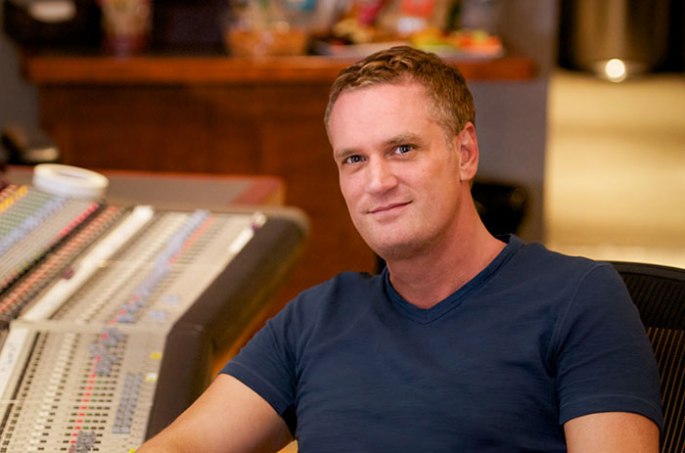
Chopped and Scored: An Interview with John Ottman by Kent Hill

This slideshow requires JavaScript.

I have always been a lover of film music. Having come from a very musical family, I was surrounded by everything from Stravinsky to story books on records. Yet I have fond memories of my Grandmother buying this record that had a compilation of science fiction movie music. It had music from Star Wars, Star Trek, 2001 . . . just to name a few.

Of course I have always been obsessed with movies. And my Grandmother would continue buying me music from the films I would talk with her about – that’s until I admit; I started to get particular about the whole business. If I came out of the theatre humming themes from the movie, chances are I was on my way to buy the score.

Much to my chagrin I have not done that in a while. Probably the last time was when I picked up Giacchino’s score for the new Trek movie in 2009 – but, in the years leading up to that I bought a lot of film music. One such score I went straight from the theatre to the music store was Superman Returns. My relationship with that film I have already written about on this site. ( if you so desire you can read it here: https://podcastingthemsoftly.com/2016/08/31/a-nice-day-for-supermans-return-by-kent-hill/ )

The composer was John Ottman. A phenomenal talent who came up in the industry working with Bryan Singer on all of his films as composer but also as editor. A unique part to play in the film business, though when you read further, you’ll find he regards the dual role as quite a nightmarish undertaking.

It was fascinating talking with John as we covered his early days, adventures in the X-Men trade, a little of Superman’s return, passions projects, future possibilities. It was a rare treat to finally to chat with a film composer – but as you’ll discover, John Ottman, is so much more . . .


KH: John was working in films always your dream?

JO: Yeah, ever since I was a kid I was making movies in my parent’s garage, and invariably convert them into some sort of space station or spaceship, you know, and get my neighbours and my friends to act in the movies, so I started as far back as grade school.

KH: You are primarily known as a composer. Was it a case of: I want to work in movies so what can I bring to the table? Was it a love of music and film scores that set you off down this path?

JO: Well actually the music is something that, you know, is like, you fall into what you least expect to be doing. I was a film music fan, and on my movies I would take the scores Williams and Goldsmith and Horner – I took great pleasure in putting their names up on the screen when I was doing the credit sequences of my films. But anyway, so I basically, I played the clarinet and I knew music and I listened to film scores, I sort of got trained, my sensibilities watching the original Star Trek actually, cause they would reuse a lot of the same scores and it gave it sort of a cohesion in terms of themes and so forth, but to cut a long story short, you know, I was doing the first feature with Bryan Singer and our composer dropped out in the eleventh hour and we had a Sundance deadline, and I had been doing the composing as a hobby ever since MIDI technology came along in the 80’s, I was writing pieces in my spare time and scoring my friend’s student films and short projects and so forth, so his back was against the wall, and I knew the character more intimately than anyone cause I had created him in the editing room and knew what made him tick, and so anyway I wrote the score and we won the Sundance film festival and after that we put The Usual Suspects together – that’s when the blackmail began basically, because I was like well, I like writing film scores, screw this editing thing, and Bryan says, Oh hell no, you’re not ever going to write a score for me unless you’re the editor so (laughter) that is sorta how it all began. It’s like my agent says: “Does Danny Elfman have to wash Tim Burton’s car to get to score his movies? So that started the collaboration with Bryan as a filmmaking partner.

KH: So this was Public Access, the first collaboration?

JO: Right, correct. So I fell in love with writing film music and, you know, film scoring you can be in and out of a movie from a matter of weeks to couple of months, three months sometimes four months, but you’re going to be able to keep things fresh and go on to something different or even have a break, you know, so the long haul of making a movie can be two years, so I go to what’s called editing jail and I leave my scoring career for a long time, and then of course the process of managing an entire film basically what I do and scoring it, and it was easier when I was younger but, I don’t recommend it.

KH: When I saw that you both score and edit, do you function in the dual capacity or to you cut the film and then score it or are you thinking about the score before you have footage to cut?

JO: I only think about the score to the extent is, I worry about having to write it someday. How I am going to do it, I have no idea because the editing of course and the management of the movie never stops, so I’m always tormented by when am I going to be able to write this thing, cause it’s not like I say one day to everybody, hey, I’m gonna go write the score now, let’s just stop making the movie. But no I actually – people are surprised to know that I cut dry, I don’t cut to any music whatsoever, because I feel like if I’m cutting sequences and put music in right away, even if it’s a temp track, I feel like that’s a crutch. There is no time for me to write original music for me to temp the film with cause we have to show the film to the studio to get approved so I do have to put temporary music in when we present the first cut of movie – as I am putting the movie together I don’t put in any music at all. I feel like, if you put music in to sell, every editor wants to sell a sequence, so everyone’s like, great, loved the sequence so then we present another sequence. The problem with that, I find, is that the music fools everyone into thinking the scene is working better than it is, and it just delays any potential problems that are going to inevitably happen later, and I’d rather face those problems upfront cause I don’t have time to have a film that’s a problem child cause I got a score to write, it’s gotta work, so what I do is I put the movie together with no music or maybe there might be one scene with some music on it, and I feel like if I’m sitting back and watching it and I don’t want to blow my brains out and it’s working, then the score is just going to bring it to another level, but it’s not dependent on the score to tell the story. So, after the whole film is put together in my editor’s cut, then I will put the temporary music in, and it’s almost better to do it that way to, because over the process of making the movie, it constantly is changing and if you put music in as you’re cutting going to get hacked up and hacked up and hacked up, it’s not going to have any like, cohesion to it. So that’s what I do, I put the music in after it’s all put together in the first cut of the film and then we present it, and that gives the studio of course, an idea of the kind of score that’s going to be written and then, as you know, the mayhem and hell on Earth never stops, the film is always in flux and, somehow, I tell everyone we’re screwed if I don’t start writing soon (laughter), then it’s the sorta  thing where I go home, I write for two or three hours and then I race back to Fox, or wherever we’re making the movie, to deal with a test screening or meetings or ADR with the actors or dealing with visual effects problems and so on.

KH: Bryan Singer and you have been together since his debut, you must; by now have a great short-hand with each other?

JO: Yeah, it’s all about trust I think. He feels, I imagine, less trepidation because we have a track record. He’s sort of a reactor. He likes to react to something. If it feels him feel good or it gives him chills or it makes him feel involved in a scene, then he reacts. So he kinda trusts me to determine what the sound of the movie is going to be then he will, dig it or not.

KH: So he has no preconceptions? He just waits for you to present it and then he gives the thumbs up or down as it were?

JO: That’s exactly right. He’s afraid if he tells me to do something that it might destroy some potentially great idea I might have had, so he doesn’t want to ruin something I might be thinking or – he doesn’t want to rain on my parade I think until he hears it, but then if he hates it he can rain on my parade. But I think both editorially and musically there’s a trust factor like I said, so he can relax and know that things are being taken care of.

KH: He can focus on bringing it altogether and you picking up the slack as it were?

JO: He can focus on having a life, like a lot of director’s have…

KH: While you’re locked away labouring over it hey?

JO: (Laughter) I destroy my life to enable his.

KH: Everything for the director’s vision?

JO: Yes, (laughter) yes. But I think we’ve sort of created each other’s sensibilities over the years, in terms of the taste factor. I think if I’m writing something or I put a scene together or come up with some interesting way of conceiving the scene editorially, if I’m getting chills or I’m getting excited about it, there’s a good bet he’s going to feel the same way. But if he doesn’t I’ll just scream at him. (laughter)

KH: Well you have of late being to a lot of superhero stuff with Bryan with regard to the X-Men movies. Are you yourself a fan?

JO: Well I never read a comic book in my life before doing X-Men. I just treat it as another movie and I learn, of course with X-Men, because it’s based upon the lore of the comics and so forth I do my research and then became sort of an aficionado simply by the very fact I wanted to learn about these characters and what made them tick, and X-Men I guess had some added meaning for me because, you know, being a gay guy, you know, and X-Men is all about the misfits and being misunderstood or unaccepted and whether your gay, your black, your fat, this is I guess what the lore is about is being accepted or not accepted. So I though X-Men 2 was very ballsy in that regard because it had that coming out scene with Bobby who is the snowman or ice boy or whatever he’s called (laughter) in his living room with his parents, and I was like wow, this is really blatant.

KH: Hey Bobby, have you tried not being a mutant?

JO: That’s right, exactly. But you know what’s interesting about the scene is if you key into what it’s about and you understand X-Men, you totally get that scene almost like you’re being hit over the head, but if you’re like – I think those people who really don’t understand all of this, I think it went right over their heads, (laughter) but think that’s sort of the genius of that scene. But of course that got me connected to it; of course it was my big orchestral score and superhero films allow someone like me who’s a thematic composer to just let my hair down with the orchestra and write emotional themes and so forth. So it was my first outing in that regard and there was a lot of excitement connected to that film and it was also just a good experience that movie, unlike most film experiences, I don’t remember there being a lot of (laughter) horrible things that happened on that movie.

KH: Well X-Men 2 is still today, even with the great influx of superhero cinema, regarded as one of the better comic book films?

JO: Yeah, I think it’s the best X-Men film. I mean Days of Future Past, people are saying that’s the best one, but obviously the most recent thing people always think is the best, and I’m very proud of Days of Future Past but still, my heart is in X-Men 2 as being the best one because it just had this sort of like . . . emotion to it, you know, we got some of that in Days of Future Past as well and we really endeavoured to do that because of X-Men 2, to give it the same resonance at the end and so forth, but yeah, there’s just something great about X-Men 2 and the characters and the story.

KH: That is one of my favourites among your scores; that rousing, almost John Williams-like march at the opening of the credits?

JO: Thanks. I was happy to resurrect it for the last couple of X-Men movies, cause it went away a couple of times.

KH: I have ask a question I’ve always wanted to ask someone like yourself who was connected to the production – the ending of X-Men 2 has a kind of Wrath of Khan feel to it, was that conscious?

JO: (laughter) A little bit. I mean, Wrath of Khan, Bryan and I would always sort of say was the bible, you know, that movie is just a great movie in terms of character development and story and of course the score, and so it’s almost like instead of asking what would Jesus do, you ask what would Wrath of Khan do? So I think I was very much thinking about, you know, how emotional the end of Wrath of Khan is and so I wove some of that in there. I don’t know if it was conscious to be a rip off, but I think the feeling and the influence of that score, well, it was an influence that’s for sure.

KH: I thought it was fitting, and I know a lot of people homage elements of other films, but think it was executed well so when you come to the ending, as in Wrath of Khan and we hear Spock do the voice over for the first time instead of Kirk, and then in X2 we hear Jean instead of Professor X?

JO: Right, right, and I thinks that’s obviously why my brain inevitably had to go there, but the irony to is, Jean Grey’s theme, I think very unintentionally but strangely has cord comparisons to a few cords in the Wrath of Khan wrap-up, so I think the planets align where the person who’s a real, real aficionado of the Star Trek 2 score hears the influence, but I don’t think just anyone would notice the couple of cords that are there in a similar pattern.

KH: While we are on the subject of superheroes, I wrote a piece about Superman Returns which you worked on. What was that experience like; getting to incorporate Johnny Williams’ themes into your score, which I might add, I think you did beautifully?

JO: Well before I actually began the movie, I felt I was getting death threats practically on the internet, people would complain that John Williams isn’t scoring it, and who’s this guy, why is Ottman scoring it? I felt sort of like, oh my god, I feel so unworthy (laughter) writing this score and I’m going to make nobody happy, so it was a really daunting task. Then one day I finally just said, I’m just going to forget about all of that, otherwise I’ll be crippled by the whole thing, so I’m just going to write the score the way I would normally approach a film, and all of my sensibilities and my concepts of writing scores were learned from Williams and Goldsmith and those masters anyway, so I kinda fall into the same kind of approach that they would take, accept it’s my own my own you know, so I just went on to score the movie, and I scored it like I would any other movie except I would just incorporate a DEN-DA-DAH!, every so often (laughter). But I did harken a couple of times, you know, one time I harkened to Lois Lane’s theme, and obviously the opening is John Williams’ theme. But then I wrote some themes of my own like Lex Luthor never had a theme and I wrote one for him, so I guess by some miracle it was really embraced by even the most insidious haters, so I felt like I had a victory, and I did, I really killed myself on that score, it’s probably I think 115 minutes or 120 minutes of music I wrote, and I guess what gets irritating from time to time is the whole: well it was just John Williams’ music, but, you know, yeah, but if you really count the number of Williams’ nods in that score it’s probably a few minutes.  So I wrote a shitload of music and we recorded it at the old Todd AO theatre in Studio City, which doesn’t exist anymore, which is a really large scoring theatre with great sonic qualities to it.

KH: Well I think you did a great job on that score and I think it was a grand idea to use it in the first place, rather than with the recent Man of Steel and its creation of a whole new musical voice for Superman. What attracted me initially to Superman Returns was the fact it was peppered with nostalgia.

JO: Yeah, it’s both a strength and a weakness of the movie – I’m not talking about the score, you know the movie came out at a time where it’s on the heels of one of the greatest movies ever made, the 1978 version of Superman, and so it’s like, I think the fear if we veer too far and suddenly made it like some Man of Steel thing, it would have been universally rejected, but at the same time, it was crippled in a way by being so reverential to the original, which of course makes me emotional and people who like the 78 version. But it felt like it sort of restricted the movie in a way. You know, I am very proud of it, it’s definitely a flawed film, but I think artistically it’s also a beautiful movie, so I am very proud of that.

KH: It was my perception that the movie came together really quickly. I know there were other directors attached – but then it seemed like rapid fire, okay we’re finally making this Superman movie now?

JO: My memory is kinda sketchy, but, you know, we were supposed to do X-Men 3, so I was all excited to do that because I had laid down all these seeds in the X-Men 2 score to expand upon all those in X-Men 3 and then Bryan called one day and said we’re doing Superman. I was like WHAT!

KH: I remember reading somewhere that the director of the eventual X-Men Last Stand was attached to Superman, then there was this shift and he and Bryan swapped movies?

JO: I don’t remember that, but yeah, I was in Australia for six months so it wasn’t, the shoot wasn’t that accelerated, and I remember we didn’t really, you know how these tent pole movies go, it’s crazy but they often go into these – they start shooting films with scripts that aren’t fully ready. I remember one of the things that wasn’t fully realized or realized at all was the whole Metropolis, what I call Metropolis mayhem, which was shooting through the streets and saving all these people, we didn’t have any sequence for that so we were heavily in post and then we were like shit, we don’t have anything – so I had to fly back to Australia and we storyboarded some things and I am still in disbelief how fast the visual effects people were able to make any of that work cause it was literally done at the last second, all that stuff, that whole sequence. If you look at it it’s not perfect visual effects wise cause it’s so rushed, but I look at it and I’m in awe how fast they were able to do that, I mean there were dead bodies on the floor and vodka bottles rolling around in the hallway, but they got it to work.

KH: And did you like the country while you were down this way?

JO: I miss Sydney big time, because when you’re working somewhere, you really don’t get to enjoy were you’re at, when you’re an editor and composer – I mean other people can enjoy their lives more. But yeah, every time we go shoot somewhere I feel as though I have unfinished business and I want to go back to that place and enjoy it, so I do want to go back to Sydney.

KH: So you’ve worked with Bryan a lot, but you’ve also worked with some other notables like Shane Black a couple of times on Kiss Kiss, Bang Bang and The Nice Guys – what’s Shane like?

JO: He’s a really nice guy; let’s just say he’s a character (laughter). But he also, you know I guess a lot of directors are that way – they want react to an idea you have. Kiss Kiss, Bang Bang is one of my favourite scores only because it wasn’t really temped with anything that worked and so I sort of, you know, I took the film home and tried to figure out what can I do to this movie to give it some sort of quirkiness or interesting personality, and I felt what if I do like a retro 60’s kinda score, cause it’s not a period piece, it’s a current day movie, and that’s what gave it this kitschy kinda quality, it’s really just me fucking around on the keyboard, with really some bongos and stuff, and I suddenly had this epiphany and then I brought out like an electric piano and sort of came up with this funky theme, and I sent to Joel Silver, the mock-up of it, and he kept playing it in his car over and over again and he goes I LOVE IT! I LOVE IT! I LOVE IT! So I have to say I think my score for that helped really define that movie, so the challenge of The Nice Guys was that well, this time it is a period piece so, you know, if you put the 70’s kitschy music on a 70’s movie, it is really easy to fall into parody and make the film feel like – like your making fun of the movie as opposed to being in with the film. So think that was the biggest challenge with The Nice Guys score, and it was really hard to ride that line. Unfortunately with The Nice Guys there wasn’t a title sequence animated for my score, so there was really no time to introduce the main theme, therefore I just played the main theme ad nauseam whenever I could stuff it into the film because it was a buddy-buddy film and I wanted the main theme to represent the two of them.

KH: It’s good to see Shane making resurgence. He was initially revered as a writer, what’s he like to work with as a director?

JO: I only dealt with him very little on Nice Guys and Kiss Kiss, Bang Bang just by happenstance and I ended up working with Joel a lot. I mean, Joel is sort of a control freak and is very, very involved. Let’s just say he’s a hands-on producer. That I respect about him a lot, and frankly Joel comes from the old school of film scoring, so he’s actually very sophisticated about film music, and he’s very – so is Shane – so the two of them they’re both very concerned that making sure the score has melody and is thematic and that comes from the influence of, you know, the older films they like so in that regard I enjoy working for both of them.

KH: While we’re on the subject of directors, have there been any other collaborations that have been great experiences?

JO: Yeah, I mean, my favourite scores or experiences have been from the films that bombed or that nobody saw, I mean, Kiss Kiss, Bang Bang is actually one of those, no one saw it in theatres, it’s a great movie and so it caught on and became a little cult classic, so that’s one that bombed that actually people know now. There are others like Astro Boy, which was my foray into animation, which was one of the best experiences of my career, and I did this really emotional, positive, feel-good, joyful score which I don’t normally get to write, you know, the London symphony, it was like a love fest, you know, people in animation, I think, seem to be happier and more well-adjusted people. So the director and I got and great and the producers, I think it was the only time in my career where, I couldn’t wait for them to come over and listen to the next batch of cues. Normally you dread when they come over. Yeah I went to London, his parents met my parents and we recorded the score, people were crying and then the film made 3 million dollars, (laughter) and it’s like, it’s just like really devastating, it was devastating for me but really devastating for him, cause he must of spent over at least a couple of years of his life on the film. So you know, that’s what happens, that’s part of filmmaking. And I did a film way back with John Badham called Incognito, and it remained as such because it was never released, and I think it’s my most masterful work because, it was this movie where – it was all about art forgery, and there were these long extended sequences, some 4 and 5 minutes long with no sound design, no dialogue, it was an all musically driven movie, so it was like being commissioned to write a classical score. It was about a guy forging a Rembrandt, Jason Patrick was the star – I think their whole marketing campaign was to market Jason Patrick on the success of Speed 2…

KH: Oh No…

JO: …Yeah and when Speed 2 tanked and no one liked that movie, they had no way to market Incognito, so they just threw it in the can. So Incognito, it’s not a masterful film but it’s a really great story; Peter Weller had started directing it and then John Badham took over – and that was a great experience for me but again, really, really depressing because the score was just something composers would die to do and no one saw it.

KH: You’ve enjoyed a host of varied experiences, from the big summer movies, but also you’ve worked on films like The Cable Guy; you’ve done a Halloween movie in H2O, Lake Placid, Eight-Legged Freaks . . .

JO: Yeah, I think the best thing for anyone in this business is when they can jump to different genres because people always say: “what genre do you like?” – I say well, whatever I haven’t been working in for a while, because it just inspires you to go into something different. Earlier in my career with Suspects, I was pigeonholed as the sinister guy, so even though Suspects isn’t really sinister, after that I was doing a lot of darker films. Then I got into little quirky films and I discovered I had this real knack, this natural knack for quirky movie scores so, they did this Fantasy Island reboot, the ill-fated series, and I did things like Pumpkin and even Kiss Kiss, Bang Bang or even a movie like Eight-Legged Freaks, it’s quirky, that’s for sure.

KH: Do you have a preference though, when you look for the next film, is there a genre you go for above others?

JO: No, no I really don’t. I wouldn’t be good at some kind of rap score or super modern thing, that wouldn’t be my thing. . .

KH: So you’re not secretly a Bernard Herman looking for the next Hitchcock movie?

JO: No, no, no. I would love to do, I mean, like I said for instance with the Astro Boy thing, you know, that was a very positive, emotional, joyful kinda score and that, I jumped at the chance because I just get to don’t often get to do those kinds of things, I mean it was a superhero film technically, so I guess I was still in the superhero genre. It was like the Fantastic Four films too, they were not great movies, but they offered me a chance to do lighter superhero fare, where X-Men is decidedly darker and rides that psychological line more carefully because it’s so serious where Fantastic Four films, I got to have a little more fun in terms of letting the music be a little more pop corny or whatever.

KH: I want to ask, you are commonly known as Bryan Singer’s composer like Williams is to Spielberg. Is that or has that been a help or a hindrance in your career?

JO: I do think it’s a hindrance, I mean, I think, you know, for better or for worse, cause you know Bryan makes me do the fricken editing thing, but I think it’s good for a composer when you have a star director you’re connected to you cause I think it helps your stock as a composer, so in that regard I can’t say, I’d say it’s a positive to be connected to a big director, I really can’t see it as a negative being associated as that director’s composer.

KH: No, I wasn’t insinuating that, I mean it in the sense that when you’re not doing work for Bryan and they ask for you not as John Ottman but merely as Bryan Singer’s guy?

JO: That’s why it’s important for me, when I’m finished on one of these X-Men films, I’m so destroyed, like I was talking to you offline about how my personal life is such a cataclysmic cataclysm that I don’t want to work, I want to take a break after these movies, but what I should be doing, you know, is jumping at scoring some of these other films for other directors, which I do want to do for sure, but I just have to recharge my batteries, but by the time my batteries get recharged he’s got another fricken movie (laughter). So I go back to editing jail and then the syndrome continues.

KH: Well you are doing double duty and not solely focusing on the score?

JO: Well that’s then thing, it’s not like I just go in and score the film like my peers that are just scoring films, and I’m like ALL YOU HAVE TO WORRY ABOUT IS SCORING A MOVIE! (laughter), I have to worry about all these other things. I am at a point in my life where I have these filmmaking needs, you know, and one of them, if there is any silver lining at all to managing a film with Bryan or editing a film for Bryan is I get to flex my filmmaking muscles, and sometimes when I’m just scoring films for a while, I miss, I used to miss being a little higher on the totem pole. You know film composers used to be the luminary person who would walk in and the angels would sing and the seas would part – but now you walk in and it’s basically like you’re craft service because it’s a different world now with computers and producers see their son’s friend composing shit in their garage with garage band or whatever, so I think the art form of film music has been devalued and let’s face it, a lot of film scores now, it’s basically ostinatos and waws – so there’s a lot of junk out there which I think devalues the art form. But what I was going to say, when I have time off, I want to branch out into other things to; I think TV is like the new medium now for being able to delve to characters and story development and so forth aka Game of Thrones and so forth – so I watch that stuff and I’m like wow, I’d love to be involved, not as a composer, but as a director, I’d love to direct some TV pilot, not pilot, episodes, but sure I’d love to direct a pilot. But yeah, that’s something I’d love to get into just to break it up you know.

KH: A pause from the perils of tent pole filmmaking?

JO: Yeah, but of course I’d love to score some smaller movies to, get back to my roots, some of those independent and quirky films – but also, I started as a filmmaker and I directed that feature, Urban Legends, and it was what it was which is like a silly teen horror movie but, there are facets of that I’m proud of, I loved working with the actors and it was very exciting so, I miss that. There’s too many fucking options is my problem. If I could split myself into three different people, you know, one to go off and do one thing and one to go off and do another (laughter). Once I make a decision to do one thing I screw myself out of doing another – but of course that’s life you know.

KH: I must be nice to be in that position to have such options – even though it’s tiring – it must be nice to be in demand?

JO: Yeah, it’s really tough to say no to things. I’ve been offered a couple of things as editor, and it’s like, I don’t want to go do that to myself, but it’s like people who are much respected in the business asking me, and painfully I just so no, it’s so hard to say no when want you – but I’m not going to edit a film right now are you crazy. The worst punishment you can put a human being through is to go edit a movie (laughter).

KH: I noticed your name connected with a new 20,000 Leagues under the Sea. Can you tell us anything about that?

JO: Well it’s in development; it’s not even in preproduction right now as far as I know, they’re doing some early day’s concepts, pre-vising and things like that, I really don’t frankly know any more than that. Places like IMDB always jump the gun on these things, then your mother calls you and goes, “Oh, you’re doing this movie?” and I’m like, “I am, I don’t know?” (laughter)

KH: I know it’s a project that’s been kicking around for a while, so I was just curious.

JO: I’m just trying to enjoy my free time right now, so I’m trying not to think about it. You know, the thing with the three monkeys, one’s got his hands over his eyes . . .

KH: Hear no evil, see no evil, and speak no evil?

JO: Yes, yes.

KH: Well John, I’m not going to take up any more of your time, but it’s been a privilege talking with you. I am a great admirer of your work.

JO: Thank you, well you have good taste.

KH: I hope to hear more, see more or even see you get to direct another one. Perhaps get someone else to edit and score so you can kick back?

JO: I feel very sorry for that person (laughter). I’ll probably end up doing all three myself again – but like you said, it’s good to have options.

KH: Again you’ve been very generous with your time, John thanks again mate.

JO: it’s been great talking with you.


Well that was John Ottman ladies and gentlemen, a man of music and as well as many other talents; and like I said to the man himself, I look forward to witnessing more of his incredible work. In fact I’ve got Kiss Kiss, Bang Bang right here on my desk – might, since I’ve done with this interview, kick back and reward myself with beer and a movie…

(COMING SOON: VIRTUALLY SPEAKING: AN INTERVIEW WITH BRETT LEONARD BY KENT HILL)
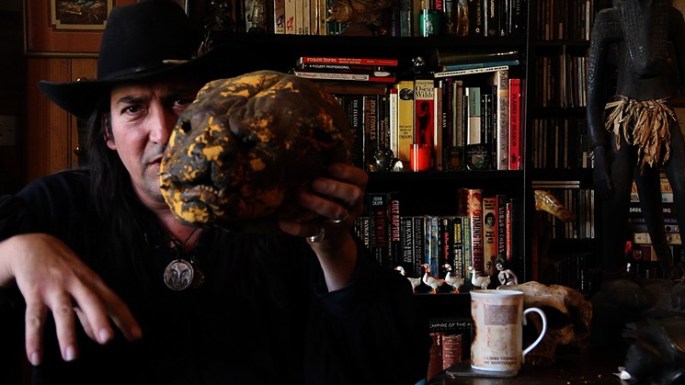
 

Richard Stanley: An Interview by Kent Hill

Error
This video doesn’t exist

I first contacted Richard in 2015 with regard to the Straight to Video trilogy of anthologies I was putting together. He responded promptly and was very enthusiastic, saying he would work something up. Then he disappeared. I thought I had lucked out, when out of the blue he contacted me again; he had indeed been working on a piece and that he had not forgotten me. When what he had written arrived it was more than I dared hope for. Richard had crafted a heartfelt reminiscence of his youth, his early VHS adventures and then his first steps along the path which would eventually see he become the incredible journeyman filmmaker that has refused to let the creative fire within him subside.

So can lightning strike twice? Poised by my recent successes in securing audiences with filmmakers I ardently admire for interviews on this site, I thought I’d reach out once again, to that man who delivered more than I’d asked for. Greedy? Sure. Yet I am as fascinated by Richard Stanley as I am with his cinema. In David Gregory’s thrilling documentary, Lost Soul: The Doomed Journey of Richard Stanley’s Island of Dr. Moreau, I was, as I often am, intrigued with the journey storytellers take on the way to finally realising their ultimate pinnacle.

I was determined however, not to walk the road much travelled with Richard. I would keep it all as informal as possible, and along the way I found myself at times simply sitting back, letting this natural raconteur do his thing. We went back to the Island, because I admit I wanted to know a little more; we touched on Richard’s collaboration with the late Michael Herr; talked about the current state of cinema; being trapped in the transit lounge on 12 Monkeys. There was Judge Dredd, Ron Perlman, H.P. Lovecraft, Jodorowsky, and even the promise of a future autobiography which I will happily put down the cash for right now.

Again Richard Stanley offered up more than I could have hoped for, and I come away from the experience with even greater respect for this extraordinary gentleman and a hope – hope that there might come a day when the uncompromised vision of this richly unique artist can at long last see the light of day – finding it’s way to a cinema near us all.

To Richard my profound thanks. To the rest of you . . . enjoy.

(Disclaimer: – Our connection was hampered by a storm raging outside Richard’s house so I ask for your forgiveness. I had to edit around some spots where the audio and visual dropped out momentarily. Aside for some sound sync issues, the awesomeness of this conversation I believed has been preserved.)


The stuff that dreams are made of: Remembering Explorers with Eric Luke by Kent Hill


This slideshow requires JavaScript.

When you were a kid, did you ever play pretend? Did you ever tie your Mother’s red table cloth around your neck and make-believe you were the Man of Steel. Or maybe with an arsenal of plastic pistols and a gang of friends image yourself in the heat of battle? Did you ever crawl inside a cardboard box and take off into the stars?

Eric Luke sat down at is desk one night many years ago and began musing on just that very notion. The only difference being, what if the cardboard box was a real spacecraft, which would propel you above the stratosphere and into the depths of space? What adventures would await you?

The film that would emerge from this glorious concept was Explorers; starring Ethan Hawke, River Phoenix, that guy Dick Miller, Robert Picardo and James Cromwell among others. It would be directed by Joe Dante; the man behind Gremlins, The ‘Burbs, Innerspace and Small Soldiers. He would lead a team of marvellous creative talents and craft a beloved film which has, at long last, garnered the appreciation it richly deserves, and along the way see itself elevated to a true classic.

It is a film that I hold dear and it (now it can be told) was also my first encounter with the concept of video piracy. But should the authorities read this, it was my Uncle Gary that did it, not me.

I have watched it often throughout the years and it still speaks to me. Ben, played by a young Ethan Hawke, was very much like I was at that age; a kid who loves dreaming and stories of the fantastic, and movies, staying up all hours and watching movies. Each time I revisit this picture I feel myself transported. I am back in my old room, movie posters all over the walls, the old set with the top-loading VCR situated above it and the joy, the wonder of watching dreams come alive on the screen.

I first contacted Eric when I asked him if he would be interested in writing a foreword for my friend Kevin Candela’s book Weedeaters. Turned out Eric is a huge fan of Day of the Triffids, so it was a great fit. Kevin confessed that he had not seen Explorers so I urged him to check it out. If you, dear reader have not seen it yet, then you might want to abstain from reading the following, as spoilers abound. If you have seen it then please kick back, relax and read the story of the man who took his childhood imaginings and shared them with the world.


KH: Explorers was one of the high water mark films of my formative years, and I figured who better to talk to about than the gentleman who wrote it?

EL: That’s great, that’s great. It’s always nice – I mean, it’s been such a long time and it was the sort of experience where it was released and it didn’t do very well, in fact it did horribly initially and I thought, well that’s that, it was a nice pipe dream and it really paid the bills in a nice way while it happened but that time is over and, you know, I happy that it happened, but, you know good bye. Well over the years, it’s come back again and again, I’ll be talking to somebody, and it’s people of a certain age who I think were still watching VHS tapes, you know, because it was released on VHS and could, so the idea was they could watch the tapes over and over and over, and sort of get to know the movie a little bit better than they would nowadays where you stream it once and go on to the next thing.

KH: Well certainly for my age group, and I only ever saw the film on VHS, I did not see it at the cinema…

EL: Right, not many people did by the way.

KH: (laughter) Like a lot of these movies it seems to be the trend. They come and don’t meet expectations as far as the studios are concerned…

EL: Well back then was the beginning of this trend, if it didn’t do well in the opening weekend, they did not give it time to catch on, and especially back then, there was no secondary market. It was not going to Netflix, there was no Netflix, there was online market. It would basically disappear unless they gave it a release on VHS and then you could go rent it at a store. Now, it did so poorly, the initial weekend, that they said Oh we’re not going to release it on VHS, then a short time later they said, well let’s give this a try, and it did moderately well, but it was always called a cult hit. But, you know, never was considered any kind of financial hit at all.

KH: But it has gone on because I believe it has a lot of enduring qualities about it. There are so few films that have some of the ingredients which Explorers has. It has a wonderful cast, it has a wonderful message – it’s a film with something to say. There used to be this crossroads in the arts were it wasn’t always the singular direction of how much can we sell, it used to be also: what do we have to say?

EL: The thing that sold it, because I was working I a science fiction bookstore, I had graduated from UCLA film department, and had written a couple of scripts and nothing took off, but the thing that sold it, that Paramount thought, let’s make this was like the one sentence concept, because E.T. had just come out and been the biggest hit ever, so my answer to that was three boys build their own space and go into space and it all works, it’s not just a fantasy, there’s some scientific underpinning. It was beginning to be the era where it was the concept of the film that was selling it rather than character. So I have to say that that one sentence is what sold it, but then having the characters to back it up and the emotion and all the stuff that needs to be there for a good story I think is what has made it last. But they were really open to high concept movies in a big way and I think it’s been the same ever since. It’s, you know, sort of stayed that way for a long time.

KH: So were you were always interested in movies and making movies?

EL: Yes, ever since I was a kid, I picked up the home movie camera and started making movies as early as elementary school and just kept at it all the way through, through high school and then went to UCLA for college to learn how to do that. But, you know, I didn’t grow up in Los Angeles, I had no concept of how to try and be successful and get into the film industry. It was a big mystery. So to have this script was my ticket in, and I think I chanced on the right idea at the right time, but, you know, I was basically working, I was going to a film editor at this small special effects house and I had no idea what the future looked like. Then, one night, this idea came to me. It was actually back from when I was a kid and we used to actually pretend we had our own spaceship, so I went back and played let’s pretend again and that’s how the whole thing happened. That’s how it worked.

KH: Ok, so you sit down and write the script – where did you go from there – did you go through the regular channels or did you manage to get it somebody who was interested?

EL: Yeah, I got out of UCLA with a short film and just took it to all the studios and you know, the big story at the time was that Spielberg had crawled over the back fence at Universal and set up an office and put up a name plate on an office door and pretended like (laughter) he was part of the film department, and nobody questioned it, and, you know, that’s how he got his career going. So I knew you had to be fearless, so I just cold called from the outside and said I have this, would you like to look at it and got an agent through that, and then they actually passed on it and said we think this script is sellable, or marketable, then one of those agents broke off and formed her own agency and said I think I can do something with this. So it was like a series of dominoes falling over, and she submitted it over a weekend read, everybody passed on it except for the last guy who said, I like this a lot. He took it around, all the studios passed on it except for Paramount at the very end who said we like this, we think we can do something with it. I developed it with them and they showed it to all kinds of directors, everybody passed on it and one of the last directors was Joe Dante, who said, I love this, who do I talk to about it this? So it was a series of steps right to the cliff edge where I though, that was it, it was a nice career while it lasted, but nothing ever happened, and at the very end it actually did go into production.

KH: So is the film that we have seen, is it true to your script or was it drastically altered?

EL: It was altered a lot; it was my first big experience with the studio development process. And my third act, once they go to outer space was always more of a boy’s adventure movie and there was more at stake, there were more bad aliens and good aliens and the kids are caught in the middle and they were trying to get a crystal that had all the secrets of Martian civilisation, so it really felt like boy’s adventure or something like that. And then Joe Dante came in and his whole thing is pulling out the rug under people’s expectations and he, I think in response to the feeling like everybody going to expect them to have this Spielbergian cosmic experience in space, wanted to say no, actually the big reveal is they are kids like you – and they watch TV, they watch monster just like you, they love science fiction just like you. So that was his big twist, so that third act never felt like mine but I certainly worked with Joe to try and work with that concept, and make it the best it could be. But it really did change from my first draft.

KH: So worked more with Joe on the script than the producers or equally with both?

EL: It was a long process. I initially worked with the producers and the studio, developing it in order to get it to Joe Dante and then Joe said, because he had just had Gremlins, again one of the most successful movies ever, so he was the 800 pound gorilla who could say no, I want to develop it my way, and the studio backed off, so suddenly I was working with Joe and his team. So I got a real education about what the development process is like and who has the creative power to finally put their foot down and say this is mine now and this is my vision.

KH: So was that a better experience, working with the director who is going to bring about the films conception as opposed to a bunch of story people who are essentially trying to make your story fit into a mould?

EL: Absolutely, because it was all art by committee and it felt like people, you know, giving me creative notes based on marketing, or based on some concept that I had no idea why, I didn’t understand it, but at that point I was saying O boy anything, just tell me what to do. There’s a feeling, you know, because you sell the script and you are working on it by virtue of them saying yes, we want you to be here, but we just as easily give it to somebody else so, me being really young thought, I’ll work with these people, I definitely want to be involved in this, I still feel owner even though its changing. So to work with Joe was a relief. He’s a great guy; he included me in the entire process, where I said I actually want to stay on this through production and through post-production, and he said absolutely, so it was like the best film school in the world for me, you know, apprenticing myself to him. So he was great.

KH: You were there, hanging out on the set?

EL: Constantly. I went with Joe up to ILM, I sat through the sound mix, you know, all the way up to the release, I was just really sort of shadowing Joe, and have nothing but good memories. I was really a great time, a very exciting time.

KH: Well it really was a double whammy for you, I mean; you sell your first script, you get to be present at your first production. You hear so many stories where the writer sells the script but the movie is never made. You not only sell your script, but are gifted the full ride?

EL: Oh yeah, and so many scripts get taken away from people, and you just sort of wave good bye to it, and it turns up later in the theatre and you don’t recognise it. Explorers I was on all the way, through the production – cause there was these huge stages over at Paramount, like that whole set, you know, the creek, where they build the spaceship, a life creek that they build in the back of this stage…

KH: The creek bed was a set?

EL: Right, right. I think there were a few helicopter fly-over shots, aerial shots where they have establishing day time shots of the real neighbourhood, but the rest was shot on a sound stage. It was really odd for me because I based that on a creek behind my house when I was a kid, and here it was recreated in Hollywood on a great big sound stage, and it was so real that I remember one day the first AD said: “I have to make an announcement, we want the grips to stop urinating in the underbrush.” (laughter) Because it was so real, I guess they just lost track of that, but it was horrible (laughter).

KH: Well that is incredible; so a good portion of the film was sound stage shot. Obliviously locations were used for exteriors?

EL: Yes that is pretty obvious those are real exteriors, but so much of it, day time and night time had to be shot on that sound stage that they said, let’s just build it, it gives us much more control, and there is so much that has to happen there, from building the spaceship – it just makes much more sense that way.

KH: Right and you don’t have to fight the weather?

EL: Exactly. And also they were kids, you know, they can only work with them so many hours per day, they were all fourteen, so there was all this scheduling stuff with them. And then of course the whole ending, the interior of that spaceship was on a huge stage too. It doesn’t look that big on the finished film, but when you walked onto that set it was pretty amazing.

KH: I can image. Where they land on the alien craft, it appears to be quite a cavernous space, also the moon lounge, if you will, where they sit and watch TV?

EL: It was pretty clever as far as multi-purposing the different sections, cause the whole interior of the spaceship had that look. I remember Joe walking in and saying this feels like 5000 fingers of Dr. T, if you’ve seen the old Dr. Seuss film?

KH: I have.

EL: He said it feels like that, hopefully that’s not a bad omen because that film did so badly (laughter). But the look of that, with those oddly reflective, dully reflective surface and those colours – anyway, great memories.

KH: Wonderful – that was something I was unaware of, that the creek was a stage – fantastic. No I think it’s a great picture, more specifically I love the three boys, cause I think they represent a good cross-section of people in the world, you’ve got the dreamers, the sceptics, and the scientific or logical minds – it is a great balance that carries us through this fantastic tale – and like you’ve mentioned in your conception of the script, who didn’t, when they were little sit behind the wheel of the family car and pretend they were driving, or turn a cardboards box into and rocket ship. Another part I love, watching the climax where they were all flying above the clouds, coming off watching Superman, and wondering how marvellous it would be to soar through the air. Flying on to more expansive dreams and certainly other adventures?

EL: Yeah, and that’s what I thought at the end, that left it open. I was going to say that, it was essential for me when I was a kid, I loved science fiction and part of that, my father was a scientist at NASA for a first moon shots, and all of that excitement for John Glenn and then for the first moon landing, my father was part of the NASA, he was a computer programmer and so for me growing up it was always this feeling that the science had to be working also. So, you know, you can write a screenplay where anything can happen and it’s a fantasy, but the underpinnings of, hey, maybe this really could work, and back then computers were really just starting to be this thing, where if you had a feeling like if you could program in these pre-internet days, if you could find the right circuit board, or the right program – computers were the new magic, and they hadn’t come into their own the way they have nowadays and there wasn’t any social media, there weren’t apps that you could download every day, every second of the day – it was really basic computers and computer graphics and really simple straight forward programming language but, it was just the beginning of that where it did feel like the new magic, and that you could fly, or that you could create force fields, you could do whatever you wanted to do if you just knew the right program.

KH: You must have been influenced by the science fiction films from the 50’s, and there seems to be a lot of references in Explorers to Joseph Newman’s This Island Earth, which I had seen prior to watching Explorers, and indeed Ethan Hawke is watching that film within the film. The idea I noticed that was similar was human’s being brought together to work on alien technology?

EL: Yeah, and there is also the idea at the beginning that they are given the special message, the thing to build, which will allow them to communicate with outer space, the magic crystal in effect, the alien technology that will then expand the world and allow them the explore outer space.

KH: Like you have mentioned, you had a privileged entrance into the business in working with Joe Dante, who has a marvellous career. He had just come off of Gremlins – had you seen that film and where you aware of him before your collaboration began?

EL: Yeah, in fact that was one of the nights of my life, because they said, oh there’s this new movie Gremlins and the director of it is interested in Explorers. There’s a screening of it tonight at, it was called the Mann’s Chinese Theatre but it used to be Grauman’s Chinese Theatre in Hollywood, and Joe is gonna be there. So I went and I watch Gremlins sitting behind Joe Dante, and we hadn’t met yet, but I knew that that was him. And the crowd was going nuts, they loved it, and I just thought oh god, if this guy says yes to this script, this is fantastic. So it was really memorable.

KH: I started to mention the cast before, a great young cast; a young Ethan Hawke, a young River Phoenix. It wouldn’t be a Joe Dante movie without Dick Miller or Robert Picardo.

EL: Exactly, exactly.

KH: I guess the element that brought me into the film is that I identified with the character of Ben because that’s how I was as a kid, always like, why can’t we just go off in the spaceship, and Wolfgang’s like, no we need to run tests, and Darren’s like who cares, in the beginning that is?

EL: And also we gave Darren the mechanical aptitude to assemble the whole thing, and work with tools and the unhappy home life, you just get a little hint that that’s going on, so within himself he’s looking for a reason to escape.

KH: I loved the whole christening of the ship with his Dad’s beer, I christen thee, the Thunder Road from the Springsteen song, cause the other guys are trying to come up with something grander and arguably pretentious with the Jules Vern or the Einstein?

EL: That’s another great memory. They said we don’t think we are going to able to get the rights to call it the Thunder Road. So I said, can I write a personal letter to Bruce Springsteen cause that’s one the anthems of my youth. So I wrote a really heartfelt letter to him about, you know, as I was growing up I used to just drive all night and play that on the car stereo, so it was just like it is supposed to be, and it really speaks to me, and he wrote back and said ok, use it. So that was another great moment.

KH: I don’t know if it was your intention, but is the Starkiller reference a nod to the fact that in the original Stars Wars story Luke Skywalker was originally named Luke Starkiller?

EL: Yep. I had read an early script of Star Wars that somebody slipped me called like the Starkiller Chronicles or something like that, or Chronicles of some alien name that was really awkward, but that was definitely from that, so I thought, I’ll use that (laughter).

KH: I would have really have loved to have seen more of the Starkiller movie that is going on in the drive-in scene…

EL: Me too!

KH: Was that – that was obviously a separate little production?

EL: Yeah they built that over on another stage, and I have to say that that was the day that Joe was obviously having the most fun.

KH: It must have been like a flashback to his Corman days?

EL: Yes, yes exactly, and, you know, he was dealing with the studio, and all of this – some tension every day, but that particular day he just had a blast. You could see him just open up and go, oh, this is what I love! (laughter)

KH: I loved how it appeared to be dubbed badly?

EL: It was supposed to be an Italian production that had been poorly dubbed into English.

KH: I love how Ben was the one that had seen the film already and the boys are discussing it and Darren says does she take her clothes off, referring to the girl in the movie, and Ben says yeah, she has three navels…

EL: (laughter)

KH: Another part, the part played by Dick Miller I have always wanted to know or have confirmed, when he is on the phone to his buddy and says, I’ve been having dreams and I haven’t had dreams like this since I was a kid – is he or has he had the same dream that the boys are having?

EL: Yeah, that was the idea. Joe would come to me at the end of every day and say, here are the scenes for tomorrow, can we get something more, and we would sort of work day to day, which I was surprised at because the studio would try and lock the script and say, no more changes, and here was Joe improvising with the kids and coming up greats ideas and little moments – and with the Dick Miller character, he said I need something more from him, you know, he was initially just a threat that they would be discovered and somehow stop them from going to space, there needed to be that threat for them to overcome. And so, through discussion with Joe, he said what if he remembers, and through him remembering his own childhood it’s the same dream. It’s not a big plot point, but it’s there if you notice it.

KH: I admit I was always curious, particularly when he says I haven’t had these kind of dreams since I was a kid. Then at the end of the film, because all the kids are having the collective dream, then Ben’s love interest wakes up near the end like she too has experienced the dream and is then flying with him and the others in the dream preceding the credits?

EL: Definitely. All of that is true.

KH: Great. That’s been bugging me for a while now, and I thought if I ever get to talk with someone connected to the movie, that is something I want to know.

EL: You know, so much of what just falls apart in movies is that everything is spelt out, there is no mystery, no question marks, you know, you need – the studio thinks that you not only need to tell everybody, but you need to tell them twice or three times because they are underestimating the intelligence of the audience or even of kids to involve and ask questions and sort of leave something mysterious. So that was the idea there, was to make it more interesting by never stating it.

KH: I have always loved it because it was subtle. In another scene, when they take off for the stars finally, Dick Miller is watching them, and the way he is watching them, and he says, nice going kid. It is almost like he doesn’t want to stop them really – he only wants a kind of verification that the dreams he has been having, have substance and…

EL: …Are real, and that this kid is going to get to go and do something he never got to do himself.

KH: It’s wonderful, and I think it is something that is missing from films today. It’s like you said, they are so good at crossing all the t’s and dotting all the i’s and there’s nothing to ponder at the end?

EL: I mean, you see smaller independent films where there are lots of things that a mysterious, and poetic and left up to your interpretation. But big studio films are seldom like that because they have to play it so safe – for sure.

And by the way, it strikes me, it’s really great to talk about all these story points after all these years.

KH: Oh this is a gift for me sir. I was different from all of my friends in that I watched films more intently, the first time was for enjoyment but after that I would go back again and really pick it to pieces. I was and am very much a student of movies aside from watching them for enjoyment.

EL: And I was the same way. I watched film, I mean, back then you couldn’t – films were not on demand. You had to wait for them to come to the local theatre, or film festivals or maybe they would be on TV and maybe you’d get to see it a second time, but never a third time. So it was really odd to be on the other side, to actually be making the movie and seeing, you know, each one of these moments is going on screen and, are people ever going to watch it at all or more than once. It’s great, and thank you for doing this, it’s great to talk about it again.

KH: It’s my pleasure. Can you tell me what that feels like, I mean, you’re sitting there with this script you’ve written, you’ve obviously thought about it a long time, you’ve put it down on paper, you hope that it would get made and now you are sitting there on the set watching it come alive – that’s gotta be an indescribable experience?

EL: Initially it just feels like a rollercoaster that’s going too fast, because the writing process is all really, the timeline of the writing is up to you. You get to consider every word and do it in silence, and it’s very solitary – then, all of a sudden there are 30 to 40 to 50 people all waiting for the thing to be done and to move on to the next thing, and you’re looking at performance, there are all kinds of people: actors being the foremost, but then the people interpreting what you’re thinking, and if it doesn’t feel right to you, and you say to yourself okay wait a minute, with did that feel right and actually what can I say to change it that people will understand – and all of sudden, it’s onto the next shot, and onto the next moment. So that was one thing I had to get used to was the pace, was unbelievable compared to actually sitting down and writing it, but then there are moments were you go, that was exactly how I imaged it in my head and somehow it all came together.

KH: So did you do a lot of rewriting during filming?

EL: On a daily basis. Like I said, Joe would come to me, and have ongoing discussions, because again, I said, can I be involved in this whole thing, and he said absolutely, I would love to have a writer on the set every day, because then we can talk about how we can make these little changes. So, I remember even coming up to him during the shot, or saying, because they were going to do a second take, and I said, how ‘bout this, how about giving them this, and he was completely open to that which any other director might have said shut up, you’re bothering me, but Joe was really open to that.

KH: I’ll tell you, another thing I’ve always wanted to know, is the line yours or was it improvised, the line about Lassie – when the alien says I watched four episodes of Lassie before I realized why the little hairy kid never spoke?

EL: (laughter) Arh, that was actually Robert Picardo, and Joe really liked to work with him because he improvises, and I’ll tell you, they put him in that make-up, and turned on the camera and let him go, and he was coming out with one-liners that had everyone on the floor. So they just let him go and edited together the ones they thought were best, including the Lassie line.

KH: That is still one of my favourite lines: why the little hairy kid never spoke, I mean sure he rolled over fine, but I don’t think he deserved a serious for that.

EL: (laughter)

KH: So Rob Bottin also worked on the film, doing creature effects?

EL: Yes, yes, in fact the look of the creatures which, of course Joe loves Warner Bros. cartoons, and that whole design thing that comes out of Chuck Jones, and there’s always references to Chuck Jones, I mean, I don’t know, Joe when he was a kid just watched Warner Bros. cartoons all the time and loves that aesthetic and the timing and all of that stuff, so he was able to bring all of that with him and Rob Bottin, you know, there was all these designs which were very realistic, cause again, E.T. had just come out, and this film being a response to E.T., and a lot of the initial designs were very realistic – then, all of a sudden, all these cartoony designs came in and Joe said, that’s perfect, look at theses, you know, that’s what these aliens are going to like – and I went with it. I mean I look at them and said ok, I’m trusting in Joe, because this is his film now and that’s how it happened. I think Rob brought in those designs for the aliens.

KH: He having worked with Joe on The Howling and he did The Thing and so many others.

EL: That whole idea of change make-up and rubber make-up and transformation make-up is really a lost art now because digital effects can do anything, and you can’t see the effect coming, whereas back then, the shot would start and there’d be something a little odd about it and then you’d say ok, this is great what’s gonna happen? So you would sort of prepare and see what the make-up artist could come up with because it was physical, it was right there in front of you, and it’s like looking at a puppet master or that kind of craft as opposed to a digital artist working, but behind the scenes.

KH: It have made it easier in a sense, because as you say, it’s right there for the boys to interact with – his ears, his antennas, was the mouth operated by a puppeteer?

EL: No that was Picardo’s mouth. That was one of the few things that he could control aside from the arms and fingers and the body language. There was a team of maybe eight technicians surrounding him with bicycle cables that were controlling the eyes, the antennas, the nose, I mean, everything about him and all he had was the mouth so that’s what he started to do, tell jokes constantly.

KH: Could he see?

EL: No he couldn’t see. They had to lead him onto the set, cause he was blind, and then set him up and let him do his thing.

KH: So, if we may talk briefly about it, after Explorers did you go on and try to get other movies developed?

EL: Yeah, one great thing that happened is I got put on contract at Paramount, which they were still doing at the time, it’s unheard of now, but they actually had a few writers on contract that they would have work on different – like, make this script funnier, or we’ve got this project we want to develop in this direction, so can you develop it, and for me, I got lots of experience writing screenplays and unfortunately, responding to studio notes about how to change scripts, rather than taking a step back and saying I want do a deeply personal project the way that Explorers was. So it really paid the bills, and for the rest of my life I’m really happy I had that time, in fact I followed the regime over to Disney. When Michael Eisner and Jeffrey Katzenberg moved from Paramount to Disney, they took me along and put me on contract over at Disney and one thing I got to do was write and direct for Disney Television. There were a couple of movies called Not Quite Human, about a robot boy who wanted to be a real boy – and at the time they were really successful, you know I got to do the sequel also, because it was successful for Disney TV. But it didn’t lead anywhere. I got to develop scripts or pitch scripts, and some got picked up at MGM and at a few other places, and then eventually – I think because I kinda reached the end of my creative, whatever it was that drove me in the first place – you know, it kind of reached the point where the phone wasn’t ringing anymore, to be brutally truthful, and I went, you know what, I have got to start doing something that is really meaningful to me, so I started to write, I started to write novels and rediscovered that fire that originally got Explorers written.

KH: That’s great. So do you have any amusing anecdotes from Explorers you can share?

EL: Ok so there’s the grips that were peeing in the creek, that’s one, and Ethan Hawke broke his ankle riding dirt bikes with River Phoenix, so he had to do the rest of the film in a cast, you know, that sort of Jackie Chan thing, where they make it look like a shoe? So he was in a cast for the last part of the film and they had to hide it through production. Arh, let’s see, O boy, that maybe it. I’m sure I’ll think of something, if I think of something I’ll email you.

KH: That’s cool.

EL: Oh you know who was great to work with? James Cromwell as Wolfgang’s Dad. To see his career just skyrocket was fantastic. I ran into him two years ago, he was giving a lecture or a dramatic reading in Los Angeles here, and I went and I said, hey, I don’t know if you remember me but I wrote Explorers, and his face lit up. So it was great to see him again after all these years.

KH: Yes – is the bug bomb in the basement?

EL: (laughter) Yes, right, exactly.

KH: Did you pinch anything from the set?

EL: Oh boy, no, no I can’t think of anything right off the top of my head. There was no real – you know, when I went up to ILM, they had the miniature Thunder Road and all that stuff, but that was under lock and key, I couldn’t get any of that. I see some great online home kits of the Thunder Road, one in particular, the guy made decals and everything, it was a perfect replica, but I don’t have it. Someday, someday.

KH: I just wondered, cause I have interviewed other filmmakers and they say, hey you gotta do it – that stuff is worth a fortune today.

EL: if I had been thinking at the time, yeah I would’ve, but I was being very good about everything, I didn’t want to rock the boat, I was pretty young at the time.

I tell you though, a lot of the experiences the, you know, like the post-production and mixing the sound I was able use in Interference, in my audio book. I went back and remembered a lot of those – like there’s one chapter in there about a guy who’s kind of washed up and on his way out and used to do, you know, like Roger Corman type movies, and that whole chapter, all of that detail is from talking with Joe about that whole time and that sort of West Hollywood washed out, you know, sound stages and really low budget, backstreet Hollywood feel, was all based on that, sitting down with those sound mixers and all those post-production guys who’d been doing it forever, since the old days, since the 1950’s, 1940’s – so I was able to use all that detail later on.

But no physical objectives that I stole off the set that I can remember.

KH: Well Mr Luke it has been truly a pleasure talking with you. Explorers is a very dear film to me, and I have enjoyed immensely conversing with, ultimately, the creator of it.

EL: Thank you so much, this is really a lot of fun and again, it’s so great after all these years to be recalling it.


That was Eric Luke ladies and gentlemen – and it was extraordinarily humbling for this fan of Explorers to talk with him. I have been seeing other articles on Explorers popping up online lately so I figured it was a good time to type up this interview.

It is a grand experience and I believe to this day, it is something we all wish we could do. Both in terms of the story, being gifted with a vision that enables you to ascend to dizzying heights, and for those of us that write, to have one of our dreams picked up by those in the halls of power in Hollywood, to have them read our adventures, to look us in the eye and say: “Tonight, we launch.”


COMING SOON: IS THAT YOUR FIRST NAME OR YOUR LAST NAME? REMEBERING DEATHSTALKER 2 WITH JIM WYNORSKI BY KENT HILL

What the world needs now: Remembering The Return of Captain Invincible with Philippe Mora by Kent Hill

This slideshow requires JavaScript.

It was the eighties here in Australia. Video stores were huge and their selection was impeccable. Aisle upon aisle they ranged; the good, the bad and the extraordinary. During this fine time the local industry was bold and daring. Our filmmakers were still doing genre pictures, and among these great men was a director I have always admired, one Philippe Mora.

I remember watching Mad Dog Morgan (Mora’s feature debut) for the first time with some neighbourhood friends. Unlike me, their parents were very controlling over the films they were allowed to watch, thus they would come round to my place regularly to sample the weird and wonderful.

So there we were watching Mad Dog, and I swear I have not seen since, such perplexed expressions on children’s face whilst watching a movie. They were stunned and poorly and not enjoying the flick at all. It was following this screening that my house became off-limits and I had to go to their houses to watch stuff where we could be monitored, and I could no longer expose these young, fragile minds to quality cinema.

Philippe has an eclectic resume that’s got everything from alien abduction to ballerina werewolves. But there is a film of his that I have watched more than all the others. It is movie that was ahead of its time. It has it all; comedy, action and Christopher Lee singing. It is the ultimate tale of a superhero that has hits the skids; it is The Return of Captain Invincible.

I recently had the opportunity to interview Philippe on this, my favourite of his movies:


KH: You had come off of Mad Dog Morgan, and then The Beast Within – how did Captain Invincible fall into your lap?

PM: My agent Robert Littman gave me the script and an offer to direct. I liked the basic idea of the fallen super hero, the opening newsreel montage, and the American history reminded me a bit of my film Brother Can You Spare a Dime. I wanted to stylize it and I also wanted to make a musical. I said I would direct it if I could turn it into a musical which reflected different styles of popular music and the producer agreed.

KH: The writer of the film (one of the three credited writers) was Steven E. De Souza who would go on to write Die Hard – what was your experience working together?

PM: We never worked together on the film for reasons that I have honestly forgotten. We are now friends and want to work together on something if we can agree. I have found that producers sometimes like to keep directors and writers apart as a misguided control tactic. I worked on one re-write with Peter Smalley where my aim was, quite crudely put, to have a gag on every page, that is, every minute. Any kind of gag – visual or verbal.

KH: It was I think a great plot. A superhero, helps end WWII, is accused of siding with communists, retires Down Under, the US has a secret weapon go missing, the world needs the Cap back, but he’s hit the booze and gone over the edge?

PM: The plot was unique and ground-breaking. Until we made this film superheroes never had problems. But with alcoholic Captain Invincible recovering, now every superhero has problems! Recently The Guardian called it “pioneering.” At the time many people did not understand the film because it radically broke with formulas and was cross cultural in genre and national cultures. The Australian angle was due to financing necessities and I embraced it to make it work.

KH: You re-teamed with your Mad Dog cameraman Mike Molloy for the film?

PM: Molloy in my opinion is brilliant and one of Australia’s best. He was a newsreel cameraman in Vietnam and I met him when I was a kid at my parent’s restaurant the Balzac in Melbourne.

KH: You directed Alan Arkin in the title role; Christopher Lee is the villain – also accomplished Australian actors like Bill Hunter and Chris Haywood – a very eclectic mix?

PM: James Coburn was my first choice for the Captain, but it seems strange to me even now, he didn’t get the humour. I worked with him later on Death of a Soldier. Superb actor. Arkin I believe accepted the role for personal and political history reasons: his father I understand had been a blacklisted teacher. He is brilliant in the film in my opinion and hysterically funny to my taste. Regarding the Aussie actors Bill Hunter was part of my OZ “repertory” company since Mad Dog and Haywood was very funny as the French valet. Serious actors love doing comedians’ work and vice versa.

KH: I still can’t get Christopher Lee’s musical number out of my head after all these years, “If you won’t chose your poison, I’ll have to bring the boys in…”

PM: As WW2 buffs, Lee and I became fast friends. He was dying to sing in the film and when he found I wanted to make a musical he was in. He hated Nazis his whole life and so liked the idea of caricaturing a Nazi racist. Richard O’Brien wrote the incredibly clever lyrics so we had a perfect storm of talents. Unique in the history of musical films. Lee himself thought that number was one the best or favourite things he had ever put on film. It was killer!

KH: Can you tell us any anecdotes from the productions that have not surfaced:

PM: We had a crew doctor who gave the crew legal stay awake pills that also increased appetite! The producer Andrew Gaty came to me about a third way through the gruelling shoot and said the food and catering budget was way over budget, skyrocketing. I expressed bafflement. Which was true. Anyway I ended the shoot rather heavy like everyone else. I think the pill was called Catovit.

KH: Superhero films are the order of the day. Your film was, some might say, a superhero parody, something that could really be said to be ahead of its time – an anti-superhero film on the level with what would emerge with The Watchmen and Kick Ass. Time has been called the ultimate critic. Looking back, in your opinion, how has time treated the Captain?

PM: As mentioned The Guardian recently called it pioneering and I agree. At the time there was more creative freedom in Australia under 10BA financing than anywhere else in the world and that is the only way it ever could have been made. I think cross genre films are anathema to corporations and financing entities because the brain type cannot comprehend innovation or non-formulaic narrative. The frontal lobe starts melting. Anyway Invincible has now spawned many films with variations on superheroes as anti-heroes or damaged individuals. Yesterday’s innovation becomes today’s cliché. Many films have been derivative of my film: for example, look at Hancock.

KH: What are your finally thoughts on Captain Invincible?

PM: I love the film and was originally really confused by the reaction. I am very proud of it and I think it stands alone. As I recall we paid Irving Berlin ten thousand dollars for using Kate Smith singing God Bless America, which he donated to the Boy Scouts of America. So when I see Captain Invincible inadvertently crushing the Boy Scouts shoulder at the beginning of the film I always get a chuckle.


Well that was Philippe Mora ladies and Gentlemen. For those interested in the Guardian article which is referenced, please find the link below. For those of you not familiar with Captain Invincible, I urge you to seek it out; for adventure, for laughs, for the unknown. In the days before it was Marvel, Marvel everywhere and not a spot to think – Mora’s movie is more than ever, what the world needs now!

Into the blue!

http://www.theguardian.com/film/2015/sep/20/the-return-of-captain-invincible-rewatched-pioneering-superhero-film

COMING SOON: Elvis has left the building: Remembering 3000 miles to Graceland with Demian Lichtenstein.


Zero Defects: Remembering Innerspace with Vernon Wells by Kent Hill


This slideshow requires JavaScript.

It just occurred to me, over this past month, that I have interviewed two Hollywood veterans with ties to Joe Dante films. One was Eric Luke, writer of Explorers (my interview with him I’ll be posting soon) and two, Vernon Wells star of Innerspace.

Both movies ironically, did not fare well upon their initial release. But with the passage of time the pair have, at last, been realized for the true gems that they are.

Innerspace I saw for the first time on VHS. I vividly remember the video store giving away these promotional plastic visors, similar to those worn by WWF superstar Bret “The Hitman” Hart, but a transparent yellow with the film’s title emblazoned upon them.

I watched the film with my friend Christopher Elkington. He had already seen it and so grabbed the remote, and fast-forwarded to where he thought the movie should have started. This was just beyond the point where Tuck (Dennis Quaid) gets hammered at a military soiree and is helped home by his love, Lydia (Meg Ryan.) She leaves early the next morning intent on never seeing Tuck again. Dennis is hot on her heels, pleading for forgiveness when she jumps into a cab, driven by that guy, Dick Miller, speeding off and taking Tuck’s towel, leaving him bare-assed out in the street.

To this day I have no idea why Chris wanted to skip this portion of the film, but after he left I watched the whole thing again from start to finish.

Innerspace, in this dude in the audience’s opinion, is the second outing (Explorers being the first) in which Dante puts a new spin on a classic movie, long before the age of the ‘reimagined’ flicks like Burton’s horrific Planet of the Apes. When I spoke with Eric Luke, we discussed the influence of This Island Earth on Explorers. So too did Vernon Wells reveal that the studio believed ardently that Innerspace could be marketed as a kind of remake of Fantastic Voyage. There are parallels sure. But Dante’s film is far more nuanced than the pretty standard fare which is played out in Voyage. I love the film mind you, but I believe it was foolish to try to sell Dante’s movie based on its ties to a 60’s film with generally serious tone.

I wanted to talk with someone who worked on the film and could think of no one better than Vernon Wells. He was extremely kind in contributing to my book Conquest of the Planet of the Tapes: Straight to Video III, so I called him up and asked if Mr. Igoe wouldn’t mind sharing his reminiscences.


KH: I’m sure you are bored to death telling Road Warrior and Commando stories, so I wondered if we could talk about Innerspace?

VW: Oh yes, one of my favourite movies.

KH: That must have been a bit of a dream part for an actor because well, you don’t have anything to say?

VW: I don’t say anything period. No, it was great. Didn’t have to learn any dialogue, didn’t have to do nothin’. I wish they were all like that.

KH: (laughter) It was good to just stand there and look menacing hey?

VW: Yeah, just about, yeah.

KH: So whereabouts were you in your career when the part came along?

VW: I had finished Commando and was actually heading back to Australia, and my manager rang me and said they wanted to see me about a new film called Innerspace. Joe Dante was directing it, who was famous for the Gremlin movies, and I thought this could be fun. So I said well, you know I’m headed to the airport to get on a plane and fly home. She said yeah I know that, we’ll set it up so you can go do your interview before you head to the airport. Ok, so I went the interview with Joe Dante at his office over at the studio at 20th Century, and I walked in, and he was very happy to see me, we chatted for a while, and we sitting around a round table that had a glass top. So we talked about things, and he told me a little about the film and I was very interested in the whole thing – then he said they wouldn’t know until they got to speak to Steven Spielberg, cause it was Steven Spielberg’s film, and he was in England overseeing *batteries not included at that time. So I said ok, that’s fine, no probs, I’m headed back to Australia to see my parents and things so just, let me know. So I stood up and as I stood up I leant down on the table, and the whole top of the table lifted up in the air and fell on top of me. So I was kinda lying on the floor with the table on top of me, and Joe just looked down at me and he went; “Now there’s an interesting way to get a movie.” Then they lifted it off of me, and I got up totally embarrassed and thought well that’s that, and I told my manager as I was being taken to the airport, I said you know, you can forget that one, I screwed the whole thing, I had the table fall on me and anything that could go wrong did go wrong. So she went, “No worries,” another time sorta thing. So I went back to Australia and I got off the plane and was walking towards where you get picked up by your friends, after you’ve gone through customs, and there’s a guy standing there with a card, with my name on it. And I thought, O my god, seriously, my parents have sent a driver to pick me up cause I’m an actor now. I thought yeah they’re trying to give a hard time. So, I walked over and said alright, who put you up to this, and he said, “I’m sorry?” I said, who put you up to this? He said, “Up to what?” I said, carrying the card with my name on it, I said I don’t need a driver. He said, “I’m not a driver sir, I’ve actually got a telegram for you.” Well then I got all worried, because I’m thinking someone meeting me at the airport with a telegram, something might be wrong with my mother or my father or my brother or my other siblings. So I was all concerned so got the telegram off him, ripped it open and read it, and it said, Dear Vernon, please go to the Qantas desk and get your ticket for your return flight to America, you’re due in San Francisco for special effects in two days, and I went what? So I was like, you gotta be bloody kidding me, I got the film, and now I got to Australia, I was turning around and flying back. So as I walked through to go where I had to get the ticket and find out when the next flight was out, my mother and brother were waiting for me behind this line, and I waved to them as I went past, so walked over and said well guys, give me a cuddle and a kiss cause I’m back on a to America. And my mother was like, what? And I said yeah, maybe I’ll have an hour or so to spend with you, and they took all my baggage and stuff and it all went back on the plane. I think I had a couple of hours before the plane left, so I had a cup of coffee with my folks and jumped back on plane and flew back to Los Angeles and then to San Francisco, to start prepping all of the special effects stuff they had to do at the end of the film when I become very small, inside Martin Short’s body.

KH: Yeah, you had to climb inside that suit, the robotic suit?

VW: Yeah. It was actually quite interesting, cause I thought there’s no chance in the world. But, I was told later, when Steven Spielberg saw the interviews of each of the people, he stopped at mine and said that’s the guy out of Mad Max – and Joe said yeah, and Steven said I want him, I think he did a brilliant job in that movie and I love George Miller so I want him. And that’s how I got it, I didn’t get it because I could act, I got because of George Miller.

KH: I’m sorry to say it, but that’s gotta be a thing with you – it’s like, hey that’s the guy from the Road Warrior or get me the guy from Mad Max?

VW: It was, for about ten years it was like a big mill stone around my neck.

KH: So you often heard the old chestnut: get me the guy from Mad Max?

VW: Yeah, and the other one was yeah, yeah we’d like to use you, but unfortunately you’d probably be like that Mad-Maxy-character, and that’s not what we’re looking for. And I said yeah, that’s why I’m an actor, cause I can only do one thing. And it was that way for quite a while, but eventually it went away, but it’s terribly annoying when you’re the person that it’s about, and you know you can do other things but you’re not going to get the chance.

KH: Yes it must be frustrating as an actor identified by a memorable part, but then being constantly measured by said part?

VM: Yep, an annoyance sometimes, but, you know, you sorta gotta to look at it logically. I did two classic films, I did Commando, with Arnold Schwarzenegger and I did Road Warrior for George, and then I did Weird Science which has become a classic and then Innerspace. So I look at it logically, if George never had the faith in me, that I didn’t, and put me in Road Warrior I wouldn’t be talking to you. And that’s where my career started, and that’s what got me going, and that character became, and still is, the definition of who I am. And you know what, I am damn proud of it now, but for a long time it was like, bloody movie, cause it was always the yard stick I was measured against, and you know sometimes that yard stick gets to be really heavy.

KH: Especially when that’s all people seem to see that you’ve done, missing all other accomplishments?

VW: Yeah, and they don’t want to try you in anything else, its only gotta be that, and it was fun when I started playing just normal people in films, good guys as they say, it actually took me a few films to actually get into the rhythm of it because I was so used to being on the other side of the stick, which when you’re playing a villain there’s no rules you know, villains have no rules, they go out there and kick everybody’s arse and shoot people and go for it. When you’re the good guy you’re not allowed to do that. I had to get used to that.

KH: Just on that, when you said people were expecting you to do “that part,” it must have been cathartic to do Weird Science, where you essentially do a parody of that character?

VW: It took quite a while for them to convince me to do it actually, because I really didn’t want to go back there. It was sorta like, been there, done that, didn’t like it much, going home now. But, once again, if I hadn’t done it I wouldn’t be talking to you sort of thing, it was just one of those things. I think I just wanted to move on and try to find out what else there was cause I wasn’t old enough and I wasn’t mature enough in my acting to except the fact that the one that had made me who I was, was Road Warrior and I should be damn proud of it, you know, live up to it, but I couldn’t, I was, you know, it was there, like this ghost that haunted me continuously and I began to hate it, but then you get past that and you get to realize, shit, that’s what got me here, you know, that’s the thing that people remember me by, and that’s the thing that people talk about so I should be proud of that. And of course I am now, it’s the greatest thing in the world, but back then, for a few years was like urgh! But not anymore, so when I got asked to do Innerspace, it was just so much fun, it seriously was. It was just, out of control and I loved every second of it.

KH: Cool. So getting back to Innerspace; you had the quick turnaround, and you were off to do special effects. I guess you did that at ILM?

VW: Yes, they encased my in plaster, to make a little dummy of me that was going to be used for all those final scenes, which was kinda fun, and they kinda had a lot of fun with me while I was encased in plaster, they stood me between two desks in the foyer to let me dry, and everyone that walked past me would slap me on the arse – which was kinda of fun.

KH: There’s no stopping these people?

VW: I know, they just can’t help themselves. But that was kinda fun and doing the all the things that we had to do it, it was just, it was interesting and I got to do all the fun stuff. I had the arm that changed into anything they wanted including a very large dildo. It was just a fun time, you know, Joe Dante is just totally hysterical to work for, I’ve done two films for him now, and he’s wonderful to work with, but of course I got to work with my other hero , the first one being George Miller, and the second one being Steven Spielberg.

KH: Did you meet Steven?

VW: Yes I did. It was on the set and it was only because Joe knew what I was like about Steven, and Steven came to the set and I was there and Joe was working with me and he was saying “Back up, back up Vernon.” And there I am backing across the set and I’m thinking, dear god, I’m going to be half an inch tall in the shot if I keep going back. So I just kept backing up and I bumped into somebody, and I turned around and said I’m sorry and it’s like whoa, Steven Spielberg. And I said Mr. Spielberg I loved . . . I loved . . . what was his film?

KH: Jaws?

VW: No.

KH: Raiders?

VW: No. Phone home, phone home…

KH: Arh, E.T.

VW: E.T. yeah. So I said to him, as soon as I spun around and saw him, I said oh my god, I’m sorry Mr. Spielberg, Oh I loved E.T. and as soon as I said it I went, why did I say that. Of all the dumb shit things to say, I had to say that.

KH: No, no, I know what it’s like, when I’m talking to people who I admire like yourself – in fact I said to my wife this morning – should I get him to do some lines from his movies, and she’s like no, save it till after the interview, don’t piss him off otherwise he won’t want to talk with you.

VW: (laughter) I don’t get pissed off that easily. Were they lines from Innerspace cause I don’t know which ones they’d be?

KH: (laughter) That’s what she said – he doesn’t have any lines in that. No, I meant some of the classics from your other films like: “How come two unpopular dicks like you, is havin’ a party?”

VW: Arh yes, Weird Science. That was fun.

KH: So at what point did you look at the script and think “Woohoo, no lines to learn?”

VW: I knew about that right from the start, Joe told me. Joe told me that Steven had said he was taking away all of my tools as an actor. One being my hands, cause I use my hands when I act, the other being my eyes cause I have these big blue eyes, and the third one being my voice because, Steven said, your voice is just too known, because when I talk people just know who I am – so he just took all of them off me – to see if I could act.

KH: That has to be more challenging for an actor, not being to use those elements of you – to have to then emote without physically and verbally emoting?

VW: Oh yeah. Well now you have to create the character internally create the whole thing that you wouldn’t have to do when you can use your hands, your eyes, your voice, you project the character, you don’t have to do so much work, so to speak. But I enjoyed it, it was a great challenge and I had all this fun stuff to do. I worked with great people throughout the whole film.

KH: So what was the shoot like?

VW: It was shot in California and San Francisco. We worked up in the park by the Golden Gate Bridge, we worked up there, and shot stuff in San Francisco on the hills, there was two or three scenes like the taxi scenes that we shot there, but the majority of the film was shot back here in California. All the stuff in the shopping center was California, all the stuff where I was driving around in the BMW was California. All the internal set stuff was shot over at Warner Bros. A funny aside to that is, while I was on the Warner Bros. lot shooting Innerspace, at the same, Mel (Gibson) was there shooting the first of his Lethal Weapon movies and George (Miller) was directing Witches of Eastwick – all that the same time, the three of us and none of us saw each other.

KH: I was just about to say, did you happen to bump into each other?

VW: We were all working in closed sets and things and so never ran into each other cause we had different hours – so we never got to see each other – but the three of us, from one film (The Road Warrior) shooting three different films at the same studio.

KH: Wow – that’s a great story. So during the film, did you get to work with everyone or where your scenes shot separately and later intercut?

VW: I got to work with most of them. I got to work with Kevin (McCarthy) who played my boss.

KH: He must have been a great guy to hang out with?

VW: I love Kevin, loved him a lot, he was great to work with. And I worked with Meg Ryan and Martin Short, cause I was inside Martin Short, so I had to work with Martin, and worked with a lady, I can never remember her name, she was my boss, who I worked for, I can never think of her name, but she was wonderful. So I basically worked with the four leads, continuously. (The actress Mr Wells couldn’t remember at the time was Fiona Lewis as Dr. Margaret Canker)

KH: So did you get meet Dennis outside of Martin?

VW: Dennis was wonderful, everybody was wonderful. Martin was wonderful – every time Joe Dante came on the set Martin would sing, Joooeee Daannnte, wo wo, until Joe got sick of it. He was always joking, and Meg was very quiet, but very lovely, and Dennis was great. They were all just really cool people to be around.

KH: I thought it was a great ensemble cast?

VW: Oh yes, really fun.

KH: As I often ask – are there any tales from the set you can share that have not yet surfaced?

VW: Yeah, well everybody knows it. There was one, when I was inside that big costume, they take it from straight up and it goes over, down, down, down, to being flat and there’s like this door that comes across it when I go into the machine to be, you know, taken down to being small. I have a phobia about being in small places, and I have a bigger phobia when I have all these batteries around me and lights. So they were going to try to get this scene done as quickly as possible, cause Joe knew I was a little bit unhappy about it. So they did it a couple of times, the on the third take doing it, it all got stuck with me under the floor and they couldn’t open the floor and they couldn’t get me out. And it was funny because in very big stage whisper one of the stage hands went, “Shit, Vernon’s stuck down there, and he hates being in small spaces.” And I went. “Arhhh Crap!” So now I had to convince myself not to panic, cause I was in this thing underneath and I had all these batteries around me that could leak. It was just one of those interesting times that you have, of course, nothing happened, it was like all inside my mind and I was paranoid that I was gonna get fried or something. But they got me out and I was fine. But the other classic thing happened was that Whoopi Goldberg came to the set to have lunch with me. I had met Whoopi in New York a couple of months earlier, and she was in town to do an interview I think, but she came across and came on the set around lunch and came and had lunch with me and Joe, and Mike I believe, his producer. So it was kinda really cool, cause I knew Whoopi – so that was nice. The whole thing was just fun, really laid back set, cause Joe is just really laid back when he’s directing, you don’t have any tension, everyone just does their job and it’s all done well.

KH: I was leading up to Joe Dante, he is big hitter, made some great moves. As a director does he give you much, or do you know what he’s looking and give it to him?

VW: No he gives you a lot, you know, he sets the scene, he lets you know where he wants you to go and it’s up to you to deliver. He expects, since he’s hired you to do the job, he expects you to deliver. You know some directors can be very like . . . just their attitude makes the set a little bit . . . tight, everyone’s a little bit wound up, but on Joe’s sets it’s the opposite, everyone’s sort of mellow and laid back and doing their job and you don’t have any kind of tension on the set at all, which is really cool, I love working with him, he’s a really cool dude.

KH: I think, it might be just me, I think it’s great that in two films you’ve been in, there has been a shopping mall chase/action scene. Of course you weren’t in the scenes in Commando with Arnie in the mall, but you were chasing Martin around the shopping center. Was that shot during business hours?

VW: I think we actually filmed that on a weekend, no we couldn’t have, cause that would’ve been hell. I thing we would’ve shot earlier or midweek so there wasn’t a lot of people around, and that particular area we were in was closed off so we could shoot. I had a lot of fun doing it, and it was so funny because we had to figure out something I could do to the clown that was just horrible, and we came up with popping the balloon that he had in his hand – and that’s probably the worst thing you can do if you’ve got a clown who’s blowing balloons and you come up and pop his balloon. So Joe had me do that which was kind of mean to say the least, to the poor clown.

KH: I liked your interchangeable hand. How did that work?

VW: They had a fake part in my sleeve that I could put my hand into and then the bits they were using could screw into that, and I could hold them and if they had to move or do anything, I could put my fingers into whatever there was to control them. It was a little uncomfortable sometimes, but once you got used to it, it was fine.

KH: One of my favourite scenes is when you are being watched by the kid with toy gun and you then blow the smoke from your ‘hand’ gun?

VW: Yeah, the old chestnut, blow the smoke off the finger.

KH: Was it a treat to finally see the finished film?

VW: I loved it, I thought it was a really, really good movie and should have done so much better than it did. It was just a matter of timing; a matter of Warner Bros. didn’t seem to get behind it for some reason, there wasn’t a hell of a lot advertising, and the actual advertising they did with the hand and the little capsule that was inside Martin Short – you had no idea what it meant. So I don’t think that worked at all and just the wrong time to bring it out. It’s just one of those things, you know you sometimes – we have no control over that, we have to go with what happens. But I was a little disappointed that it didn’t go gangbusters, but it’s still, totally beloved by everybody.

KH: Indeed. I think it’s great what Joe Dante does. I spoke recently with Eric Luke the writer of another of his films, Explorers, and we were discussing how he likes to make movies that aren’t essentially remakes, but kind of a different spin on older movies. In the case of Explorers it was a different take on This Island Earth, and with Innerspace it was a different spin, if you will, on Fantastic Voyage?

VW: Yes. It was the same kind of thing and when it came out, that poster with the hand with that little capsule on the hand; people thought it was just a remake of Fantastic Voyage, which it wasn’t. And I think they tried to play on that, and it just didn’t work. But me personally, I don’t care, I love the movie and thought it was extremely well done, and I’m really proud of it.

KH: Another sequence I wanted to touch on, when the two pods do battle inside Martin Short, was that purely effects with insert shots of your face?

VW: Some of it was that way, but a lot of it was us doing it on cables, and fighting and to give the illusion of being in liquid inside the body. But then, a lot of the far away scenes – that’s why they had to make a body cast of me, to use it for those scenes with models. So some of those scenes were shot wide, they could use that, but for the close ups it was us, doing our thing and having fun.

KH: It is one those films that has endured, why do you think that is?

VW: (laughter) I think it’s just that I’m a bloody good actor.

KH: (laughter) Well that’s a given.

VW: I think its television to be really honest with you. The fact that they play everywhere on cable and you’ve got all these movies and the younger generation gets to see them, and people who now have kids that saw it when they were young they go oh my god, I remember this, this was that movie and they get their kids to watch it, and their kids like it, so you now have another generation that’s suddenly going, you wanna see this. It’s like another one of mine, Weird Science, it’s all over the internet at the moment – they’ve got this whole big thing cause Weird Science is playing somewhere, I’m not sure where, but you’ve got this whole internet thing, and it’s you know, let’s have Weird Science back, and it lists all the people in it, and it’s let’s see Weird Science. So it’s a new generation that’s catching on to these movies, and there’s no blood and guts in ‘em, they’re just fun movies, and I think people just like to relax and watch something that’s fun and funny and nice without everything blowing up and people getting shot everywhere.

KH: It’s true, and Innerspace is such a good balance of comedy, drama, and action. There are so few films that achieve that?

VW: Yeah, and I think that, having done plenty of movies where things blow up and people get shot and killed, being able to do the occasional movie that’s like a family movie or a kid-friendly movie is kinda fun.

KH: Well it’s been a number of years now, but the film continues delight, and let me sincerely thank you sir for chatting with me today. It’s been a rare treat and I have been trying real hard not to geek out.

VW: Are sure you don’t want me to do the lines?

KH: (laughter) No, no, it’s ok, you don’t have to.

VW: I could do one for you?


Mr. Wells did go on and he was very gracious to say some of his famous lines that I enjoy. It is a peril of the type of work and one cannot help sometimes getting a little star struck.

So dear readers if you’ve not enjoyed Innerspace for a while, or if you’ve never seen it, go check it out. I know that I feel like watching it again right now.


(Coming Soon: Big Ass Sensation: An Interview with Mike Mendez by Kent Hill)

Well Documented by Kent Hill


This slideshow requires JavaScript.

It’s late at night here in the land Down Under, and as usual, I have just finished watching a movie. It has been a good week for it, watching movies. While my wife binge-watches her Supernatural, I have had the pleasure of watching two truly astounding portraits. One was De Palma and the other Life Itself.

I find myself as unable to speak at the end of this heart-breaking adventure through the life of the great watcher, Roger Ebert, as I remember being after coming out of the theatre seeing Braveheart. My Scottish blood was up that night, and I felt a pride for my heritage that any gift I might have with the English language shall come up short trying to relate it to you. It is my own trials of these last weeks that move me now as I witness the last days and last deeds of Ebert.

I recently had a health scare and am on medication to try to tame these issues. But they pale in comparison when I look had the degeneration of the mighty critic, whose battles with his friend Gene Siskel I enjoyed so often. It was not who was right or wrong about the films that moved me, but simply, the passion they exuded for this medium which is for me also, a life’s grand obsession.

We see Roger struggle in his final times, his end of days with a determination that is the embodiment of courage. Some may call it foolish courage, but fools and heroes are one and the same. To see him, as I have in myself early this week, have the frustration of his trials be swept away by a moment of enthusiasm and inspiration (in my case for this new gig that is writing for PTS.) When a filmmaker I approach to have a chat about their work gets back to me suddenly and I find myself throwing all else aside, taking to the keyboard, readying my thoughts so as not to waste what time I may be granted; so that this precious audience with another of those whose work has coloured my dreams and set fire to my desire to be a doer as well as a watcher is not squandered.

I am so moved I am grateful to my wife for interrupting me as the credits roll on the Ebert portrait. She wants to show me a defining moment on her Supernatural, and its helps to let the lump in my throat sink, as the building thoughts of the scare I have sustained, the thoughts of my father’s debilitated state after his stroke some years back all were climbing to the surface.

This is more than just a documentary about a film critic. It is a look into a life. It is a look at what drive can do for those with the will, with tenacity to not only chase their dreams but also not to stop until they are realised. We hear Ebert, though aided electronically to communicate, still fighting the good fight; this man Herzog proclaims the good soldier of cinema.

The equal to his film is the aforementioned De Palma – in this dude in the audience’s opinion – a long overdue tribute to a master that came to prominence with likes of Spielberg, Lucas and Coppola. The soft but blunt speaking student of Hitchcock sits centre stage to talks candidly of his work, his influences, shit behind the scenes and the personal life that was going on around and outside the set of his films.

From his early days working with a very young De Niro, to being there the eve the music of Bernard Herrmann fell silent, to the joy of The Untouchables and Mission Impossible, to the crushing blows of Bonfire of the Vanities and Casualties of War (one of my personal favourites of his films.)

I wish there were more master classes like this with the filmmakers I revere. I went to film school and was often taught by instructors who knew well their fundamentals, but then I watch something like this and feel as though I was ripped off. You sit and listen to this man as he breaks it down. His films, his methods, his reflections and it’s like the best lecture on making movies you have ever sat through. There was honestly many moments that I felt guilty somehow that I wasn’t taking notes.

I was pleased indeed that De Palma spoke a little longer on some films more than others. Grateful I was that these chapters were on the films of his I have watched over and over as my passion for them dictates. Though I do wish he had talked a little longer on the others, the likes of Mission to Mars, which I thought at the time and still do, was a really bizarre choice for him to helm. But I find I am satisfied – more so than I was with the Milius portrait (which I still loved mind you) for skipping over Farewell to the King, my favourite of all his movies.

Needless to say I have watched De Palma more times this week than Life Itself, being how I just received it in the mail today. Normally I would have watched it again before writing something about it, and you’ll forgive me, but I was just so moved by it I just had to fire up the keyboard and knock this out before sleep over takes me.

There are two things I walk away from these films with.

One, those that have truly mastered the art of the moving image, whether it is by making them or writing and informing an audience with a critical eye and a passionate tongue; these kinds of people know that it is a privilege to do what they do for a living. As Kubrick I believe said best: though it can be like writing War and Peace in a bumper car at an amusement park, when you finally get it right – nothing else comes close to it.

And two, these are the music makers and these are the dreamers of the dreams, as it was once said. Those of us that are still out here striving for a day in the sun must take heart and look to these examples of giants in the industry. We are not yet giants, but we must climb atop the shoulders of such, then and only then can we see the heights and know them for their glory, till giants ourselves we shall one day become.

I’m going to bed now. You seek out these films and watch them.

I pray you do.


Breaking into the rec room: An Interview with S.S. Wilson by Kent Hill


This slideshow requires JavaScript.


Steven Seth Wilson is the writer, director, producer best known for his work on the Tremors films and TV series. These credits though, are not all he has accomplished in his fascinating career. He also gave us Johnny 5, *batteries not included, episodes of the animated series MASK, and had the misadventure (one might say) of heading out into the Wild Wild West.

Time, however, has elevated the films he has penned (along with long-time friend and collaborator Brent Maddock) into that of cult status, and has seen him go from not only writing, but to talking them helm of his productions as a founding member of  Stampede Entertainment.

It was a treat for me recently to be granted the chance to interview this filmmaker whose works I heartily admire.

KH: Sir you are the writer connected to some of the cherished movies and one animated television program of my youth thank you for this opportunity?

SSW: I am happy to contribute.

KH: Did you always want to work in movies?

SSW: Believe it or not, my father “pushed” me into the film business.  He is a psychologist, so when I left for college, I signed up for psychology courses.  When he found this out, he went to my advisors and changed my major to film and television, saying to me, in effect, “You’ve been making movies in our back yard since you were twelve!  What are you thinking?”  I had not thought of trying to have a career in film making until that moment.

KH: What was your first job in the industry?

SSW: I began work as a stop-motion animator, doing animation scenes for educational short films that were sold to schools and libraries.  I was enraptured by the films of Ray Harryhausen (7th Voyage of Sinbad, etc) and had studied stop-motion techniques from an early age.

KH: MASK was one of my morning cartoon staples; how did you come to work on that show?

SSW: Like most jobs in Hollywood, it was “who you know.”  My first roommate when I came to California to go to University of Southern California film school was Terrence McDonnell.  We kept in touch and, many years later, he landed the job of story editor on M.A.S.K.  The story editor approves stories and oversees the writing of all the episodes.  The show was unusual in that the studio had ordered 65 episodes at once.  That was an absurdly large show order, so the editors had to develop lot of stories as fast as possible.  Terry joked, “I was hiring anybody I knew who could type!”  I ended up writing quite a few of the episodes.

KH: We now come to the adventures of Johnny 5, can you tell us of the genesis of Short Circuit?

SSW: It spawned from an educational short film.  One of them I wrote, called “Library Report,” starred a stop-motion robot that I also animated.  The film was so successful, my writing partner, Brent Maddock, and I decided to write a spec script featuring a robot.  We had written several other scripts with no success. We couldn’t even get an agent.  But this one turned out to be the one that got us the break.  A fellow Brent met in a screenwriting workshop knew the son of producer David Foster, and knew that Foster was looking for scripts with robots.  He showed it to the son, the son showed it to Foster, and the next thing we knew we were being called to a meeting on the old MGM studio lot (now Sony).

KH: A couple years after Short Circuit 2 arrived; was this commissioned purely on the success of the first or did you simply have more to say?

SSW: We always have more to say!  But in truth it was green-lit because Short Circuit 1 was quite successful (No. 1 at box office for a time).   By the way, this was long before the remakes and sequels craze in which Hollywood is now mired.  You may be surprised to know that our agent lobbied against our writing the sequel.  Back then such work was regarded as best handed off to hacks.  But we didn’t want anyone else coming up with stuff for Johnny Five.

KH: *batteries not included is a wonderful movie, it brought to mind my bedtime stories like the elves and the shoemaker. Can you tell us of the making of the film and the Spielberg connection?

SSW: Spielberg was making the TV show Amazing Stories at his studio, Amblin Entertainment, at the time.  *batteries  was based on a script written by Mick Garris for that show.  Spielberg liked it so much he felt it should be a feature instead of a TV episode.  Director Matthew Robbins and Brad Bird then wrote a movie-length version, but became so busy in pre-production they didn’t have time to keep re-working it to fit the budget.  Brent and I were already working at Amblin on other things, so Steven Spielberg asked us to do the revisions, working closely with Matthew and Brad.   It was a very intensive process, as the movie was already in pre-production, with sets being built, robots designed, etc.  Spielberg was personally involved every step of the way, often in the script meetings when we turned in each new version.

KH: Are you, or have been one of those writers that have been ever present on set?

SSW: Hah, it’s a rare writer who ever gets that opportunity.   In general, writers aren’t welcome on the set.  The director wants to do his/her own thing with the material and doesn’t want to be bothered with your petty ideas and complaints.  We were frustrated by this reality, and our agent counselled us that if we wanted more creative control, we’d have to become producers/writers. 

KH: You have written a couple of films with a similar keynote being Heart and Souls and Ghost Dad, spectral comedies?

SSW: That’s just by chance.  Spielberg originally came to us to re-write Ghost Dad (which was originally called Ghost Boy).  Then, for a variety of political reasons, the movie was not made at Amblin.  Since the script was owned by Universal, it got re-written and re-considered by other people over the years, eventually being made by Sidney Poitier and Bill Cosby.  We had forgotten all about it.  Indeed, we did not even realize it had been put into production until we read about it in Variety (that’s how much power writers have in Hollywood).  There was very little left of our original script. 

Heart and Souls was a movie based on a short film, called “Seven Souls.”  By the time it was made, we were known for the fantasy/sci-fi slant to our writing, so Universal approached us about turning the short film into a feature.  We worked with the film’s creators, adding ideas to flesh out the story — and successfully lobbying them to let us reduce the original’s seven ghosts to four!

KH: Before we come to the Tremors films, can we touch on another monster: the Wild Wild West? Big budget, Big losses, Jon Peters and the Razzies?

SSW: Oh my, long story.   Two producers acquired the rights to the much-loved TV show and contacted us about writing the feature.  They’d already had some scripts done, but didn’t like them, and wanted us to start from scratch.  We loved the show, re-watched episodes, contacted fan groups, etc.  Then came up with our story and turned in our script.  At first it didn’t go anywhere and, as one must with many Hollywood projects, we forgot about it.  Then, maybe a year or so later, we got a call that Barry Sonnenfeld was going do it.  So we were plunged back into the action, working on a revision under his supervision.  Somewhere along the line, since it was now a BIG movie, it was handed over to BIG producer Jon Peters.  The story we like to tell there is that, in our first meeting, he did not realize it was a Western, and wasn’t pleased to hear it.  Anyway, we worked very hard on it, occasionally being given some very strange demands.  As an example, at one point the Peters group insisted we change the spider machine to a modern stealth bomber.  We tried to compromise, shading it toward a Victorian era steam-punk flying machine.  In the end, Barry didn’t like the flying machine, and late in the process he asked to see earlier drafts with the spider machine, which we happily gave him.

Then, quite suddenly, we were off the movie.  We turned in our latest revision and never heard from anyone on the production again until we were sent tickets for seats in the back of the theatre at the premiere.  It was rewritten many times by many writers after we were fired and, like Ghost Dad, very little of our original script remains, other than the spider machine itself.  We were surprised that the Writers Guild ended up granting us shared screen credit.

So, yes, you get Razzies for something over which you had no control whatsoever.

KH: Let’s talk Graboids, tell us of the genesis of Tremors?

SSW: It grew out of the desire to have more control.  We took our agent’s advice and wrote the script on spec, so that we could dictate what happened when it was sold.  It was a tough sell, but with a great deal of behind-the-scenes deal-making, agent Nancy Roberts finally sold it to Universal, getting them to agree to let us produce and our long-time friend (from the short film days) Ron Underwood direct.   We were delighted to be in the trenches with Ron every day on location, battling the elements and coming up with creative ways (with much help from our brilliant crew) to stay on time and on budget.  Eventually, the dailies were looking good enough that the studio even gave us little increases here and there.  The famous car-sinking scene was originally cut, for example, but finally got approved and was the very last scene shot.

KH: One good turn deserves another. Was Aftershocks a given?

SSW: Not at all.  Tremors was not a box office hit.  It did not become a cult film until much later, thanks to the then-new world of movies going out for rent on VHS tape.  Years later, as Universal began to see how much it was making in that secondary market, they came to us and asked if we were interested in making a sequel, for less than half the original’s budget.  But we said yes.  And I got to direct it.

KH: Three, four and even more. You directed a couple of instalments and then came the series?

SSW: Yes, the movies were all quite successful in the DVD universe.  Universal had a whole division dedicated to making sequels to its theatrical features and they kept asking for more Tremors.  We had total creative control over all of them, so they were a delight to make even though we worked for the minimum rates.  And Universal was fine with us directing them, our now business partner in Stampede Entertainment, Nancy Roberts, “the mother of Tremors,” producing, etc.

The series came out of the blue, when Sci-Fi network (now the comical “SyFy”), asked us if we wanted to do it.  As always, we said, “Sure!”  Ironically, we had tried to sell the idea of a Tremors series a few years before, with no takers.  So it was fun to be able to use some of the ideas we’d already come up with.

KH: What happened regarding Bloodlines (Tremors 5)?

SSW: You will have to ask Universal.  We had written the script ford Tremors 5 immediately after making Tremors 4.  But Universal chose not to make it at that time.  Then, some ten years later, they let us know they’d decided to make it after all.  They asked us to rewrite/update it, but were adamant that we would have no other creative control of any kind.   We could not direct, produce, go to the set, etc.  We were given no explanation for this decision.  For us, the only reason to make these low budget movies was for the fun of continuing to innovate while staying true to the creature rules and character personalities that fans had told us for decades they loved.  So we felt we had no choice but to decline.  The studio quickly hired another writer and the movie was made without us involved in any way.

KH: Can you talk a little about your friendship/collaboration with Brent Maddock and the rise of Stampede?

SSW: Brent and I have written now together for some 35 years.  We just consistently seem more successful working together than independently.  Broadly speaking, he’s the “character” guy and I’m the “story” guy, though by the end of each script we work together line by line in polishing.

Stampede was the brainchild of our agent, then manager, then partner Nancy Roberts.  It grew out of our desire to make our own movies the way we wanted to.  For many years we maintained an office and staff.  For now we have downsized, with the ability to ramp up again if we sell something we can control and produce or direct.

KH: IMDB is not always reliable, but I noticed Short Circuit was at the top of your credits with (announced) following it?

SSW: The rights to a remake were granted by the owner (not us) to Dimension Films.  Since David Foster was involved, he invited us to work on the remake our own movie.  It was actually fun to try to solve the problems of updating it, both technologically and artistically — and there are problems.  After all, in the original it was easy for Johnny Five to remain hidden.  No one had cell phones or, for the most part, even home computers! 

But after a couple of drafts, Dimension rejected our version.  For one thing, they insisted that the remake should star a little kid along with the robot.  So we were fired and they moved to other writers and directors.  It has been years since then, so it is unclear if they are still on track to make the movie.

KH: Sir, thank you for this opportunity, as a fan of your work this has been a privilege?

SSW: You are most welcome.  Thanks for your interest.


That was S.S. Wilson dear readers. If you haven’t kicked back and enjoyed any of his movies recently then do it now Laserlips, ’cause your mama is a snowblower…

Coming Soon: Zero Defects: Remembering Innerspace with Vernon Wells by Kent Hill

I stole this interview from Rick Overton while he was taking a pee-pee: Remembering Willow by Kent Hill

This slideshow requires JavaScript.

We had travelled beyond the boundaries of our village, all the way across the great river to the Daikini crossroads. Only when we arrived in our new home did we discover that the town had no cinema. Sure they played movies occasionally at the town hall, but it was annoyingly infrequent. The town did boast, however, one of the largest video stores I have ever seen.

I so in many ways I was not cinematically going to starve.

It’s funny I don’t recall Willow playing in many cinemas, in or around where I lived at the time of its release. I do remember the first day I saw it though, on video.

I rode past the video store on my way home from school and the copy I had reserved was waiting for me. I was so jubilant and hurriedly shoved the tape into my school bag and cycled home as fast as my little legs would carry me.

Settling down in my room, I shut all the curtains, closed the door and readied to immerse myself in the experience. That’s, when it all wrong. A friend of my mother’s arrived bringing with her, her two consistently painful children. They stormed in, and of course we were always expected to be generous and courteous to visitors.

“Why don’t you let them watch the movie with you,” said Mum.

“Oh why not,” said I, through gritted teeth.

Now, for the record – I hate it when people talk during a movie. My wife I exclude from this, but every else be forewarned. And these kids were on a mission this particular afternoon; to squeeze any and all enjoyment I might have had watching a movie I and waited fervently to witness since I first saw a short featurette that appeared during James Valentine’s The Afternoon Show which was a kids cartoon extravaganza here in the great Down Under back in the day. And how one could not be excited? From the creator of Star Wars and the director of Cocoon was coming a tale of wizards and warriors, of swords and sorcery. Man, that was all this growing boy was looking for as part of his complete breakfast back in those days, let me tell you.

So my first viewing was trashed, but, thanks to the advent of the VHS, I could watch movie later that evening in my fortress of solitude and really enjoy it, minus the meddlesome harridan and her brood.

And O what bliss, what joy, what rapture. Willow was everything I had hoped it would be. A grand, sweeping adventure carried along by James Horner’s splendid score; my third favourite of his behind Krull and Wraith of Khan. Great direction by future Oscar winner Ron Howard, beautiful photography for Adrian Biddle, top work (and as ever cutting edge wizardry) from the magicians at ILM, stunning locations including New Zealand before all those Hobbits came out of their holes.

Then there was the great ensemble cast lead by the ever delightful Warwick Davis, the enigmatic charisma of Val Kilmer, his future wife Joanne Whalley, the great Billy Barty, Gavan O’Herlihy, Patricia Hayes (who I loved in A Fish Called Wanda and of course, The NeverEnding Story) as well as terrific baddies in Jean Marsh (Return to Oz) and General Kael Pat Roach (named for the notorious film critic and played by the guy who delighted in pummelling Indiana Jones).

There were two other cast members that I enjoyed. The comic relief you might call them. The R2D2 and C3PO of Uncle George’s fantasy offering. They were Rool and Franjean, played by a duo of very funny/talented performers in the form of Kevin Pollak and Rick Overton. He was too early for flapjacks on Groundhog Day and was being abducted by aliens in The High Crusade – but he did make a little time for yours truly the other day to chat about the making of Willow.


KH: How did you come to be cast in Willow, and where does it rate among the films you have done?

RO: On the matter of shooting Willow, I had just worked with Ron Howard on another movie called Gung Ho with Michael Keaton. Ron brought me in because I had shown him my stand-up comedy when we were filming the previous one. He even asked me who I thought I would work well with that I suggested Kevin Pollack. I think I can honestly say that it rates as one of the most fun times I’ve ever had shooting a film. Kevin and I help towards the most amount of special-effects matte shots of little people put into a film since the Disney film, Darby O’Gill And The Little People.

KH: The shoot took place in places like England and New Zealand. As your work had to be enhanced by effects, did you get to go to the locations?

RO: We did not get to go to any locations because the effects shots were all done in postproduction. Those took place in San Rafael California where Industrial Light and Magic used to be before having moved to the Embarcadero in San Francisco later on.

KH: You worked well together with your foil Kevin Pollak, but i suppose he might argue you were his foil?

RO: Often, Kevin Pollack would try to make me laugh right before I take so there lots of outtakes. As you hear the first AD on the set call out “Quiet on the set, rolling…” Kevin would lean in and whisper “Take me home and make me stink…” And I would bust up laughing for the take.

KH: On Warwick Davis’ commentary of the film, he says he is often asked in connection with Willow, what is or was Val Kilmer like. So what was Val Kilmer like if indeed you interacted with him at all?

RO: Because we were in postproduction, we did not get to interact with Val Kilmer. We did get to interact with Warwick Davis briefly.

KH: It must have been something seeing the finished film, are there any amusing anecdotes you can share?

RO: I wonder if it’s still available, I haven’t seen it since it was on cassette.

We might have been the very first to do a fake behind the scenes reel where we use the green screen of us offstage, still dressed as brownies, sitting in tiny folding chairs that fit us but in front of what would be place behind us later as a Barbie dream house with crew people walking past and dropping candy wrappers on us as we get an interview about the importance of our roles in the film.

KH: Have you stayed in contact at all with any of the cast and crew since?

RO: Haven’t been in touch with most of the folks on that film lately. Kevin is perhaps the one I see the most.

KH: Looking back, what are your thoughts on the film and its enduring nature?

RO: There are several morals in the story, but one is to follow your heart and what you know was right even when it isn’t easy or there could be jeopardy. Be brave.

It was the hobbit before the hobbit was committed to a large budget. Another layer of significance is that the process of Morphing was invented for the film and has been used everywhere since. There was lots of innovation to come out from the team that made Willow. It didn’t do as well at the theatres as it deserved, but subsequently has been a perennial favourite for many at Thanksgiving since. And still rents at a healthy rate.

KH: The moral of the story, if you will, is that you can succeed no matter how small you are or how insignificant you believe you are – is that something that you think stayed with viewers?

RO: Willow is about loyalty – loyalty to friends, loyalty to community, loyalty to what is right overall. The part that doesn’t have to do with your size is the size of your will to do what’s right – and Willow’s will was mighty.


Well that was Rick Overton dear readers. If you’ve not watched the glory that is Willow in a while, maybe it’s time to rediscover it. If you have never seen it then please go and check it out, it is a truly grand adventure with a marvellous cast and crew that came together superbly.

Well that’s enough outta me, now, that way, to the lake!

Brush Strokes on the Big Screen: An Interview with Rocco Gioffre by Kent Hill

This slideshow requires JavaScript.

There was a time when the artistry we see on the big screen was not generated by computers. There was a time when it was all hands-on; when talented artists and crafts people, put their skills to the test and pushed the limits of what was possible. They were behind the cameras and used techniques that are slowly fading from existence. They helped bring the director’s vision to life and excited audiences around the globe. Theirs was an art born of light and magic, of pain and patience in the aid of achieving wonders that still hold up to this day.

I recently had the good fortune to talk with one of these extraordinary artists. A man, who with his brush helped bring scenes to life in movies and television, from Close Encounters of the Third Kind to Game of Thrones. It was my pleasure to talk with the Hollywood veteran: Rocco Gioffre.

You may never have seen his face, but you have certainly scene his work – but as he might say; if the work is done well, you probably can’t see where the real world ends and the illusion begins.


KH: Now you’ve worked on some big movies. You’ve worked on everything from Spielberg films to Steven Seagal movies – even Beverly Hills Chihuahua?

RG: (laughter) You know, as the years go by, I find myself more and more, less in contact with the fellows who were directing the movies, basically further away on the totem pole, because there are many more visual effects supervisors involved in the making of big effects features these days, and so matte painters, especially since the advent of digital matte painting, have been replaced by people in ever increasing numbers who can operate Photoshop software efficiently, and you know, they do a lot of digital matte paintings in the movies these days, I’d say there are hundreds of what is considered qualified matte painting artists that operate as digital artists these days. So I think that, with some exceptions, like the film I just recently finished working on where I was hired to one, big, old, traditional matte painting, it was on a show called La La Land, and Damien Chazelle the young director who did Whiplash a couple of years ago, has just finished this up and it’s a musical with Ryan Gosling and Emma Stone, and I was actually contacted by a recommendation by another old-time matte painting artist who was of the last generation of paint brush matte artists, gave them my name because the director on this La La Land movie Damien Chazelle wanted a traditional brush-painted painting in his movie, because he wanted to impart some style, he actually wanted to see brush strokes on the thing, so that’s unique, but typically I’m working in digital now. The crews are gigantic. The likelihood of me working one on one with the director is not as common as it was in the old days.

KH: But you, you come from the classic school, you are one of the guys we see on old ‘making of’ books and publications painting on glass?

RG: Oh yes, that’s correct. I painted on glass, I think in those books and the way that people think of it, they think that the majority of these paintings were done on glass, where in fact when I go back and look at the actual art pieces that are left over from a variety of movies, a good percentage of those paintings were actually done on panel, hard board panel as well.

KH: I guess it would depend on whether or not there were live action elements which had to be composited together with the matte painting?

RG: Sure, although the ones that I’m referring to that are done on hard panel, the way that they are used in compositing, it’s the same kind of a thing where you think you might need to use a sheet of glass if you’re going to do a composite with live action photography, but more often than not it would be depending upon the methods chosen by the studio, because most of the panel matte paintings that I’m referring to, ones that were done on panel as well as ones that were done at say for instance MGM studios or 20th Century Fox – a portion of the painting would be painted black to complement an area that was actually blackened out on the set, so you’re getting two parts of a puzzle that are double exposed together and you don’t really need to use a sheet of glass in every instance to do a composite shot, glass comes in handy for other types of effects.

KH: So let’s talk about some of the movies you’ve worked on, we don’t have the time to do them all so let’s do some of the big ones. I have seen on various profiles that your first movie was Close Encounters as an assistant matte artist?

RG: Yes, as an assistant, and to clarify what an assistant does is a throwback to the olden days of being a squire in knighthood or an arrow makers apprentice or an assistant blacksmith. Much of what you are doing is helping out the artist in the most basic chores that go with doing an oil painting, in other words the beginner in a department like that, might just do some pencil tracings to help lay out piece of artwork, and one of the many chores that you had to do as an assistant matte painter in the days of painting with paint brushes was take the big stacks of dirty paint brushes that the main artist, in my case it was Matt Yuricich who was mentoring me; you’d clean their paint brushes for them, you’d scrape the paint off the dirty paint palette and push a broom, you know, clean up after them. But you would do understudy type work while you were learning how to produce a matte painting. So it’s the same, it’s the same kind of a thing, you know, prior to the use of all the modern, you know, not-so-dirty equipment like computers these days, but in the old days it was messy business and the painting with oil paints requires that you make sure the artist is always supplied with good, clean paint brushes and simple things like that. So on Close Encounters, although I already knew and what got me my job was, I did have some animation to show and a portfolio full of artwork. I was being trained as a matte artist and the actual matte painting that I got to do on the show amounted to some painting elements, runway lights turning on, a lot of scenes where the city gets blacked out, you know the electric goes out and you see all the city lights getting sequentially knocked out or sometimes just coming back on when the power grid is turned back on, but I probably only did three complete matte paintings for Close Encounters of the Third Kind. What was fun was just working in and around all the different artists. Douglas Trumbull, who was the head of that visual effects department and his partner Richard Yuricich you was Matthew’s younger brother, but was the cinematographer, he was the main man for the camera department and did the camera work on that show, which included initially Close Encounters, but later on that same crew they worked together on Star Trek: The Motion Picture and Blade Runner. But those guys, they allowed us to do some crossover work, so I might be helping out on some of the elements shooting of the saucers and the tank cloud or sometimes spending time with Greg Jein in his model building department but we were allowed to do a little bit of crossover work on that show, and I got to be around all that was going on that show, I’m rambling here, but on that show it was not uncommon either; Steven Spielberg would walk into the effects department without an entourage of people around him, he’d just come in on his own and sit and watch dailies when they would project them and make notes and chat with the crew and it was a much smaller set up. At most, on average, we wouldn’t have any more than 30 to 35 in the entire effects department on Close Encounters of the Third Kind, each in their own training and disciplines that they specialized in, whether it was optical compositing or matte panel work or miniature construction, motion control photography.

KH: That must have been a bit of a treat, to meet Mr Spielberg?

RG: You know, the previous film he had done just prior to Close Encounters, a year or so before was Jaws. So I think Steven Spielberg was just around 30 years old I think, or in his early thirties at most when he directed Close Encounters of the Third Kind and was just a very fun, vivacious, colourful personality – loved to talk about motion pictures with anybody and you could see he was just inventing new shots, he was always ready to sit down and scribble something up that he wanted to see. He was really a fun and energetic director. And, you know, as years go by, I don’t think he’s lost much of that, I think that when I see his films that have come out over the years, he always to me, whatever type of film he chooses to do, it always feels like he’s ready to get out on a limb and take a chance now and then, which is more than can say for a lot of the directors that, you know, have come along over the years, you’ll see them stagnate or not try new things and Spielberg, I think, I try to keep an eye on whatever he does and once in a while I’ll go the theatre and see of this films. Actually I’m very pleased with how he takes chances.

KH: Your paths crossed again when you worked on Hook?

RG: That was before too much digital was involved. There was about fifty percent of the compositing work, or nearly fifty percent, there were more opticals than they expected I think, they were trying to do mostly digital compositing on Hook. We were still doing traditional matte painting work on that show, but I didn’t get to see Steven even once on Hook, I was working at ILM. The main supervisor was a gentleman I had worked with years prior, Eric Brevig , was the visual effects supervisor, who spoke more one on one with Steven Spielberg and screened dailies with him separately from the effects crew. I think they worked back and forth between Los Angeles and San Francisco, but I stayed where we were doing the matte painting, that was the only time I worked at Industrial Light & Magic. My friend and fellow matte painter Mark Sullivan, called me up, he was heading their department at that time and said Rocco, do you want to come up here and work on Hook? So that was the only job I did at ILM, but I didn’t get to see Spielberg on that show.

KH: You mentioned Star Trek before. You’ve had the distinction of working on both of Star Trek’s cinematic births with The Motion Picture and J.J. Abrams Reboot?

RG: Yeah, that actually makes me smile, it was one of those things where I did very much enjoy doing matte painting work for Douglas Trumbull, along with my mentor Matthew Yuricich who did much of the matte painting work on Star Trek: The Motion Picture, but by that time, a couple years after I’d worked with him on Close Encounters, we were each at our own easel creating matte paintings for Star Trek: The Motion Picture; a project that was done in a tremendous hurry, because Douglas Trumbull had initially passed up the opportunity to do the work on that movie, he had other projects in the works, some of his Showscan projects and so forth that he was developing so he decided not to take on the effects work that he was offered to do on Star Trek: The Motion Picture and some months had gone by and the show was being done by Robert Abel & Associates, they’d taken on the job and things weren’t going well, Paramount was not happy with the pace with which the work was being created and they got worried about it. So the work was then pulled from Robert Abel & Associates and reassigned it to two companies, Douglas Trumbull and Apogee out in the valley, that was John Dykstra’s company, they did most of the Klingon work. Then that many years later in 2007, you have the J.J. Abrams Star Trek. But that work, because it was just a huge amount of digital work, I didn’t get to work with J.J. Abrams on that show.

KH: You were obviously part of a team for the Abrams Star Trek?

RG: My company on the J.J. Abrams Star Trek, actually what Douglas Trumbull’s job, you know, on the Robert Wise Star Trek, probably didn’t work with the director either, there was just so much work to do and we were just kept very busy as part of Doug Trumbull’s crew, so any of the discussion that occurred with Robert Wise was typically either done with Richard Yuricich and Douglas Trumbull in contact with Robert Wise on that show but Doug’s crew were just full time, very busy with the miniature work and the matte painting work and compositing on Star Trek: The Motion Picture, but then that many years later, what is it thirty years between those shows, my company – I had partnered up with a friend at the time and we were working on the J.J. Abrams movie and our company Svengali, was the name of it, with myself and a young producer who was dealing with the producing end of the effects – we took on about 70 shots for the J.J. Abrams Star Trek, and I was one of about a handful of matte painting artists that we had, and we had a lot of compositing work that we turned around for that show to, but there were many teams of effects companies on the J.J. Abrams first Star Trek movie – and I think that movie came out very nicely. I was real pleased with the work on that.

KH: So, more often than not, in your line of work you report more to the head of the effects department and not the director?

RG: Up until the time, before digital effects existed, I would work very commonly, one on one, I would meet with the director and producer of the movie. But, when it was matte painting work just done on film – what happens, and can explain this a little more clearly to, any of the screen credits you see for me; other than the iconic ones that you’re talking about like – although on Blade Runner I did get to talk with Ridley Scott, he would come and visit Douglas Trumbull’s Entertainment Effects Group, and he would sit in dailies with us and discuss what he wanted on the matte paintings there, so he would pop in. Ridley Scott is a tremendous sketch artist along with the guy he hired Syd Mead. But Ridley is definitely capable of picking up a pencil and paper and doing a very good drawing and conveying what he wanted – but, what I was going to say is, by the time I worked on Star Trek: The Motion Picture myself and five other Doug Trumbull employees decided to form our own company called Dream Quest. I headed that matte department and from that time on until my very first digital matte painting work which came around 1997, I did work directly with the film directors on most of the screen credits that you can find my name on. On Gremlins I’d meet and work with Joe Dante on that, you know so, many of the other shows we did, actually our little company Dream Quest which grew pretty rapidly, we would meet with not only the visual effects supervisor on those shows, but the directors would know us on a first name basis, you might have read about Dream Quest back in the day, I don’t know?

KH: Yeah I did. So you’ve had the privilege of meeting some of the big hitters?

RG: Yeah, I mean John Badham who directed many of the shows we had at Dream Quest including Blue Thunder and Short Circuit; he was a repeat customer at our Dream Quest company. I left Dream Quest and actually just wanted to start my own little matte painting department apart from them in 1986, myself and my matte painting buddy Mark Sullivan split off and started a little matte department/effects shop that didn’t have any specific company name, we were just going under our own individual names and at that point in time I did work on Robocop and worked for Paul Verhoeven, which was his first American film.  So anything you would see screen credit wise from 1986 on, I’d pretty much be called in, most of those shows didn’t have more than a handful or a dozen or so matte painting shots, I like those kind of movies better because more often than not, there not just wall to wall visual effects, they’re little movies, sometimes they’re westerns, sometimes they’re simpler science fiction movies – Robocop didn’t have more than seven matte paintings I don’t think – but they’re important ones. But back from the Dream Quest days and since you mentioned J.J. Abrams, he a couple of years ago, purchased one of my old matte paintings that I got to do; it was something at Dream Quest that is almost iconic and it was only a movie that had three matte paintings in it, but the first movie Vacation with Chevy Chase, when he drags his family on a cross country chase through Europe…

KH: Oh, National Lampoon’s?

RG: Yeah National Lampoon’s Vacation. But the Walley World amusement park is completely a fabrication – they came up with it to make fun of the theme parks and Disneyland – and that director, who was a wonderful guy to work for, I worked with him on Caddyshack prior to Vacation, but Harold Ramis who passed away a couple of years ago, was a very fun director to work for and a few years back, one of my matte paintings of Walley World for Vacation was purchased by J.J. Abrams, so he’s got that on his office wall now.

KH: Well that must make you feel good, that they have life after their initial use?

RG: Yeah, yeah – a rebirth or an interest that people have, in collecting some of the old oil paintings.

KH: Well I think it’s an incredible art form, and watching a lot of behind-the-scenes programs that I love to do, seeing the old way it was done, together with the skill involved, trying to match something that has to be composited along with a live action element…

RG: Yeah, what fun. You know as far back as I can remember even as just a youngster, doing that kind of work, you didn’t feel the magic, you know, you felt, and what’s interesting in its earliest and most basic form, you’d be working on a sheet of glass, right out there on location in front of the camera, and painting a castle that you know, you could see through the view finder on the location camera and someone would come over and say what’s going on here, and they’d look through the view finder and it’s like looking at a magic trick, because it’s all happening right there, through the lens. There’s just something about it, and it’s not there quite, anymore. The new methods are great, they’re a good way to go – but some of those old methods, which are still viable by the way, that doesn’t mean that they couldn’t be used, it’s just what they take is a certain amount of planning and commitment to a look and one of the things that exist these days more than ever is the exact opposite of that, there’s a tremendous amount of indecision.

KH: It really was an art form that was incredible because you have to match, when you talk about that kind of work, the lighting and the existing background elements. You can’t just go up there and paint something that is situated correctly – it has to comp well with the background, to give the illusion at least, that it’s there?

RG: For a paint brush artist it’s a challenge and it was a very fun and good challenge and there were relatively few artists that could do it, in those earlier days. The quantity of matte painters that were traditional paint brush matte painters, that I was working with, if you were to total up all the good matte painters of the 80’s there weren’t more than twenty people, that could do that art form and do it well – so we were specialists and, you know, going back into the golden age of Hollywood, each studio had a department of probably no more than a half dozen or ten artists in each department for each of the major studios. And sometimes they’d switch over. I know Matt Yuricich, my mentor, worked at 20th Century Fox until the mid-1950’s and then switched over to MGM for the rest of his career at a major studio and then he free-lanced after MGM closed its matte painting department. But that studio would still call him from time to time even though they didn’t have a full-time matte department they still had the equipment and some of the personnel, so he might get called in to work on a movie now and then. But, you know, it did end up going away from the studios are more into the freelance effects companies. What was I going to say, Oh, you probably are going to work your way around to asking about some of the other shows, or did I get to work with any of the directors, some of the first time directors would include Kevin Costner on Dances with Wolves.

KH: I was just about to ask you about Dances with Wolves, what was that like?

RG: Yeah westerns are indeed a lot of fun because what’s being asked of you, and around that same time, a very good Australian director of photography , Dean Semler, of Mad Max and Road Warrior fame, he was hired by Kevin Costner to shoot Dances with Wolves and almost the same, within a year of that, I worked on another western, although it was a modern-day western called City Slickers with Billy Crystal which was also shot by Dean Semler – so you get to see some of the same crew from one show to the next. I did like westerns because what you get to do its always so suspect, not like a science fiction movie where you’re doing a futuristic cityscape, everyone’s going to say wow, look at that nifty futuristic cityscape, where in a western really, what they wonder is, how the hell did they get that many buffalo out there on that location, instead on thinking that you are looking at some sort of trick…

KH: That it could be a matte painting?

RG: Yeah, fun stuff. Also years later I got to work on a Mel Gibson movie called Apocalypto, and Dean Semler, he was the director of photography on that show. That film has some wonderful visual effects.

KH: And they’re the kinds of films that most wouldn’t expect matte paintings in. The naturalistic setting presents the notion that a great deal of matte work would not be required, as opposed to fantasy films where it is commonly expected?

RG: it’s true, and part of that is, when they go to a location like that, which has gorgeous vistas and sunsets, this is going in the opposite direction and are shows that didn’t work on but when I saw Peter Jackson’s Lord of the Rings movies I was just blown away of course by gorgeous landscapes that are down in New Zealand, the mountains and skies and so forth, which really served as a perfect integration for the trick shots and the matte paintings that they did. Though people have seen those landscapes before, to enhance them and combine them with trick shots works very well, but I noticed in the more recent movies they’ve gone completely digital and have done away with shooting on location for the Hobbit movies for instance, and they don’t look nearly as impressive as something shot out in the wide open spaces.

KH: So you’re saying something that combines effects shots and natural vistas, you find more effective?

RG: It’s what makes a matte shot work, in my opinion. Because if you are looking at a really beautiful set or really good back lot with some nice lighting or a really good location, if there are people standing outside under sunlight, just something enough to guide your eye and make you see that you are looking at something real, then what you’re doing when you blend and match the lighting on a matte painting and put the correct perspective match on everything it gives an illusion, but because you’re looking at a combination of things, you know, and you see that live action portion that’s real, it fools you, it makes you think this must be real, we’re matching to something that’s real. When you start doing the entire thing, and you’ve only got a green stage and an actor sitting on a green apple box, you’re setting yourself up potentially for something that won’t look as real, unless you really have a good plan. It takes a lot more effort, to go out and shoot under real sunlight to have at least half of the scene actually done.

KH: Sure, and that must have been something you encountered when working on a film like Cliffhanger?

RG: Oh Yeah. The more you’ve got, even if you’re doing a shot completely from scratch, it’s what you’re intercutting with, the stark reality, it forces your hand, it forces you to have to match something to looks completely real. Where if what you doing looks like a stage, a very stagey effect, than the best you can do, if you want to maintain continuity is maybe, you know, match the look that’s on the set, but more or less you’re going to be trapped into matching the look of whatever it was that you’re intercutting with. So if you’re on a really good-looking location or a set then at least, you know, part of that, it sets, it sets a look that you’ve got to maintain.

KH: On a film like Cliffhanger, what type of work did you do on that, are you simply trying to match vistas that had to be extended or hide cable rigs?

RG: Well actually the matte artist, and I’m going to give the credit to her, she was my boss. When I went off to do my Dream Quest company, Matthew Yuricich, on Blade Runner, hired a new apprentice, her name is Michelle Moen, and she ended up working with him for many years and when Douglas Trumbull’s company switched out of that facility, it became, and was taken over by Richard Edlund, Boss film – Matthew was still in the department for a number of years on Ghostbusters, on Die Hard etc., and Michelle was there with him doing matte painting work and by the time Cliffhanger happened, Matthew had retired from the department and Michelle Moen was in charge on Cliffhanger and so she called me up and had me come in and work as an additional matte painter on that show. But most of those matte paintings on Cliffhanger were her work, and, I was going to say, of the crew, they had one of the guys who had been at ILM because that’s where Richard Edlund came from before he started Boss film, he brought some people with him and among them Neil Krepela, who had shot a lot of really extensive high resolution transparencies of the mount ranges that they were using on location with Stallone. All the real beautiful live action photography, Michelle Moen matched her mountains to. The two shots I got to work on were the same thing, we were matching to something that was very real, though, what it was, they couldn’t really, constantly be putting Sylvester Stallone in peril, so much of those trick shots that are in that movie are relatively invisible. They have him, supported by wires, and often you’ll see a stage or a rig that would be hidden later on by a matte painting. There’s a big pull back that Michelle did where Stallone’s on the face of a cliff and the camera moves backwards, for a long time, between cliff walls that were built in miniature and he ends up being just a tiny little speck.

KH: Yes, I know the shot. But, another film in your filmography that I wish to talk about, because it’s one of my favourites, is Buckaroo Banzai?

RG: Oh my God, what fun. Yeah, in fact, the director on that was W.D. Richter and a visual effects supervisor is an old friend whom I know from Douglas Trumbull’s place is Mike Fink, and he, he split the work up between my company, Dream Quest, and Peter Kuran’s company VCE, Visual Concepts Engineering. But Dream Quest, our group did much of the crazy looking flying, they look like sea shells almost, the spaceships in that show, and there was a lot of fun, and the crazy sky background shot that we created for the flying ships that were done with cotton clouds are similar to the ones in the movie Brazil, you know, but we actually had a stage filled with fibre-filled cotton that was all sculpted out by myself and the other matte artists and some of the model crew. And then we did a continuation cloudy sky background painting, but there are a number of other matte painting shots in that show. But yeah, Buckaroo Banzai, gosh we had a lot of fun miniature work in that show, and it’s a very entertaining movie. I got to meet Peter Weller and then again on Robocop we got to chat, and I got to know him better then, afterword.

KH: I’ve seen among your credits you’ve done some visual effects work as well as your matte painting work, is that correct?

RG: Yeah, it’s true, although I’m known primarily for matte painting work, I like to think of myself as a good visual effects creator, and that includes animation, compositing work – I tended, especially in the pre-digital day, but even nowadays too, I tend to want to do my own compositing, and anytime there’s any enhancements and animation to be done, anything that brings the shot to life.

KH: Another film I wanted to ask you about, another favourite of mine that not many people remember, is D.A.R.Y.L.?

RG: Oh yeah, we shot live action, for the shots we did in and around Orlando, Florida and there’s some very nifty model work to that our company did, Dream Quest did, with a miniature of a blackbird jet an SR-71 that gets blown up. There’s also some matte paintings and some sky background tricks, and it’s a good movie – but not your typical science fiction film.

KH: True, and I’ve not see anything like it since.

RG: If you look, it might have been on a Facebook page that I have, there’s a shot that didn’t end up getting into D.A.R.Y.L. that we did for the movie and I just have basically a still photo of one of the background paintings we did, where you’re looking down from about 30,000 feet. It was a lot of fun, it’s just myself hanging on a rope high above the clouds, it’s a real wow of a still photo. It really shows off the artwork, I used to use it to impress people because it looks like I’m a stunt person in one of those cliff-hanger moments.

KH: When I was looking through your credits, I noticed a lot of films. You’ve worked on shows like Tremors 2, Little Nicky, Apocalypto (as you’ve mentioned), First Knight, the Sean Connery King Arthur movie…

RG: Oh that was just one quick redo shot we did for that. You know I think I still have a matte painting, that was a revision matte painting that was done for Rob Roy, which was what I thought was a wonderful movie with Liam Neeson. That was a fine movie. But, what was I going to say – when I mentioned John Badham, who directed Blue Thunder and Short Circuit, there’s a bicycling movie he did with Kevin Costner called American Flyers, the same director, John Badham, did Saturday Night Fever back in the day and a bunch of films in the 80’s, but he would keep coming back to our little company in Culver City and say hey, can we put a sunrise in behind this bridge or he would just come up with ideas. It was fun back then with the traditional effects work. Sometimes you’d get repeat customers. Actually Danny DeVito, I worked on his first directing job, a little TV movie called The Ratings Game which I think has just come out on blu ray. Again, you meet these first time directors and they would come back to you and ask you from one show to the next, hey, I’ve got an idea, can we try this? But back before visual effects were all the rage like it is nowadays, you certainly would just come up with ideas and say gee, I wonder if we could make this happen.

KH: So, as we wind up here, do you have any favourites among the films you’ve worked on?

RG: Well certainly the ones that the sci-fi and effects fans love are pretty good stand-outs, like Blade Runner and Robocop, Gremlins, of course I mentioned National Lampoon’s Vacation. I think most folks back then had no idea they were looking at matte painting work, they probably thought they found – well they did go inside the Magic Mountain amusement park, and used their rollercoaster at the end, but the entrance to that park and the big moose head themed sign and stuff – I don’t think anybody expected that those were trick shots. I loved working on Close Encounters because it was the first show that I worked on. I was only 18 years old and four months out of high school when I was working on that. I don’t know if I’ve mentioned it, but I’d sent some work through the mail and I had been a teenager in Ohio, which is a few thousand miles away from Los Angeles and got hired over the phone to work on Close Encounters.

KH: Like you’ve said, Blade Runner is still, though it was made in what they refer to as the analogue era of effects, a beautiful movie. Analogue or digital I don’t care, it is astounding.

RG: That’s right. If it’s well done it doesn’t matter what method they used. The thing with Blade Runner, the proof is, they went back and did clean-up work and got rid of little mistakes here and there, but for the most part the visual effects could be left alone in that movie – they are that perfect.

KH: It has also been your privilege to work with the big names in visual effects like Matt Yuricich, Richard Edlund and certainly Doug Trumbull.

RG: Thanks, the real kick, if you get to interview him, he never changes. The guys got a tremendous memory, he’s got a good scientific mind, but he’s got a great sense of humour, never have I worked with a man that made me laugh as hard as Doug Trumbull, he’s a character.

But thank you for calling me and wanting to do an interview.

KH: It’s been wonderful, because really admire the work you used to do, and I don’t mean that derogatorily.

RG: (laughter) No I appreciate it, and I agree when you said, liking the older work, because to me what works about a lot of those older scenes and a lot of those older shots is that they are just good basic compositions. The camera isn’t flying all over the place like you’re looking at a video game, you know, it’s just straight forward filmmaking and it works by virtue of its simplicity.

KH: Your back now working in your own company?

RG: Well on and off. I’ve got my own company, after thirty used I moved my shop from West Los Angeles, about ten miles south of where I was before. But I do work for other companies as a freelance artist, in fact these last couple of years I’ve been working as a digital matte painting artist on Game of Thrones.

KH: So do you have any big films that are coming up?

RG: Well I really don’t. There is that feature I mentioned coming out later this year called La La Land, where they had me do one panoramic shot, which goes by in about nine seconds, a sweep across Paris at night. So it’s a Parisian cityscape which the camera passes over it quickly, before ending when it passes through the entrance of a jazz club at night, which they did with a miniature. But that shot was all done with old fashioned/traditional trickery on film, the whole film was shot in 35mm, so the director wanted to see a slightly more stylized looking Paris at night for those shots. It almost at the end of the movie and that will be coming out later this year. But as far as anything that’s going on right now, I’m in-between projects.

KH: Well thank you sir, it has been a privilege to talk with an artist of your calibre and experience..

RG: I’m an old timer, just one of those old timers…

KH: You’ve worked on a lot of films that are dear to my heart and I thank you.

RG: Thank you, thank you. You take care, and we’ll be in touch.


That was Rocco Gioffre dear readers, a master artist, of the cinematic persuasion.

(Coming soon: The stuff that dreams are made of: Remembering Explorers with Eric Luke by Kent Hill)

Matte paintings featured:

Walley World ticket booth matte painting from “Vacation”
Parisian Alley from a Japanese music video directed by Antoine Fuqua
Prison matte painting for Madonna movie “Who’s That Girl” ( Slammer )
“Dances With Wolves” buffalo herd and landscape extension. 
“Dreamscape” matte painting, post apocalyptic subway tunnel ruins.
“Almost Heroes” comedy western with Chris Farley ( Fort Adams, Virginia matte painting )
“Highway to Hell”  Skyscraper tilt up shot matte painting
“Harley Davidson and the Marlboro Man” sunrise beyond billboard on Sunset Blvd.
“Star Trek:The Motion Picture”


An Excerpt from Conquest of the Planet of the Tapes: Straight to Video III, Commentary by Todd Farmer.

This slideshow requires JavaScript.

My first video game was Pong. I was not a fan, even though it was ground breaking at the time … boring.  I can remember riding my bike three miles to the local Wal-Mart to play Asteroids.  Atari, Commodore 64, I had them all.  But video games weren’t my only love.  There were also comic books and movies.  I wish I’d kept all of the old comics by the way – and the GI Joes – and the Evel Knievels.  But alas, I was in a rush to grow up.  As for movies, they existed in the theater and what you saw on TV or free HBO weekends.  But as a founding member of Generation X, I saw the birth of the VCR.  And later I attended its funeral.

The VCR changed everything … because we could record. We were no longer at the mercy of theaters or TV schedules.  Record and re-watch.  It was brilliant.  But what if the movie you wanted to see wasn’t on TV to record?  That too would change.  Although this was ten years before the first Blockbuster, mom and pop video rental shops spread like a small town virus.  Rent, watch and take it back!  The VCR was to movies what the internet became to information.

The VCR revolutionized the “sleepover.” Friends and pizza and a VHS of family friendly movies like 9 TO 5 or XANADU … until that was … mom and dad when to bed. Then we’d quietly pull out THE SHINING, CHEECH & CHONG, FRIDAY THE 13TH, THE FOG, CADDYSHACK,THE OCTAGON, USED CARS, MAD MAX … it was a cultural awakening.  And by the way, those are just movies released in 1980.  Every year presented us with a treasure trove of movie magic … all in the comfort of your own home.

And shall we embarrassingly speak of the sexual awakening? This was before Skinamax.  Before the Internet, before our parents were ready to talk the birds and the bees.  Does anyone actually use that term these days?  Doubt it.  Point is, we learned about sex from the VCR.  ANIMAL HOUSE, PORKY’S, FAST TIMES AT RIDGEMONT HIGH, PRIVATE SCHOOL, MY TUTOR, SPRING BREAK, REVENGE OF THE NERDS, SIXTEEN CANDLES, BACHELOR PARTY, POLICE ACADEMY, and every slasher that came out in the 70s and 80s.

We could record movies from TV, rent, buy and then there was the boom in home videos. With a camcorder the size of a small refrigerator, we could make our own spy movies and play them back for friends on the VCR.  Or record our high school band slaughtering the vocals on Boston’s More Than a Feeling.  I have an old VHS of my smashing performance as Frederick in the Pirates of Penzance.  I also have one of my stretching to catch an end zone pass while dragging my toes.  6 points.  And for those fearless few who felt confident no one would ever find and watch their hidden VHS tapes, there was homemade porn.  Eh… I may have been guilty once or twice.

OH! And let us not forget those rare, oft-forgotten VHS surprises you simply didn’t see coming.  I remember crashing at a buddy’s house; he was snoring and I couldn’t sleep so started scanning his VHS shelf.  He had FRIGHT NIGHT!  I popped it in the VCR and sat back to enjoy some Roddy and team… um.  It was porn.  Although official studio released movie tapes were “protected”, we’re not talking about breaking into the CIA here.  There was simply a tiny little plastic chad that when “popped” out, meant any tape could be recorded over with anything you wanted.  We all did it.  Instead of buying blank tapes, just grab a purchased movie that you either hated or no longer watched, pop the chad and bingo, you were recording JAWS from HBO!  That said, why anyone would tape over FRIGHT NIGHT… blasphemy!

Also let us not forget the impeccable durability of the VHS tape. We’re talking plastic cases made by the lowest bidder to protect roughly 570 feet of remarkably flimsy and utterly unrecyclable Mylar.  With each play the tape would degrade slightly.  If you were recording over said tape, then the degradation was even higher.  You were lucky if they lasted 10 years, and it wasn’t uncommon to eventually end up with VHS tracking lines: those thin, white horizontal lines at the top or bottom of the screen – sometimes both.  You could pop the VHS out and try to spool tighter.  Sometimes that worked.  More often it did not.  The fancier VCRs had a tracking adjustment but once those lines started… the end was near.  So, no – not really durable, but … at the time it was all we had.  And we were blessed to have it.

Laser disks gave the VHS a scare but the high price kept them out of the everyman and woman’s homes. But once DVDs appeared on the scene, the offer of better quality, more storage and longer shelf life meant the looming end of the VCR and VHS.  Although you can oddly enough still find the DVD/VHS combo on the market if you desire.

The last VHS I bought was actually a three pack. It was 1997 and I purchased the Star Wars Special Edition Trilogy.  And strangely enough they are the only studio VHSs remaining in my possession. In fact, I can see the set from here, on a shelf next to my Stephen King books.  I loved the VHS era.  It was a big part of my growing up.  The movies that inspired me to seek out the business of Hollywood were movies I viewed over and over on VHS tapes.  If I had a time machine, would I go back, would I live through that era again?  Nope.  Let’s not live in the past.