TRUE DETECTIVE 2.6 CHURCH IN RUINS – A Review by Frank Mengarelli

TRUE DETECTIVE 2.6 CHURCH IN RUINS

“Sometimes a thing happens, splits your life.  There’s a before and after.  I got like five of them at this point.  And this is your first.  But if you use it right, the bad thing, you use it right and it makes you better.  Stronger.  Gives you something most people don’t have.  As bad as this is, as wrong as it is. This hurt, it can make you a better man.  That’s what pain does.  It shows you what’s on the inside.  And what’s inside of you is pure gold.  Pure solid gold, that’s what you got.” – Frank Semyon
truedetectives02e061080p

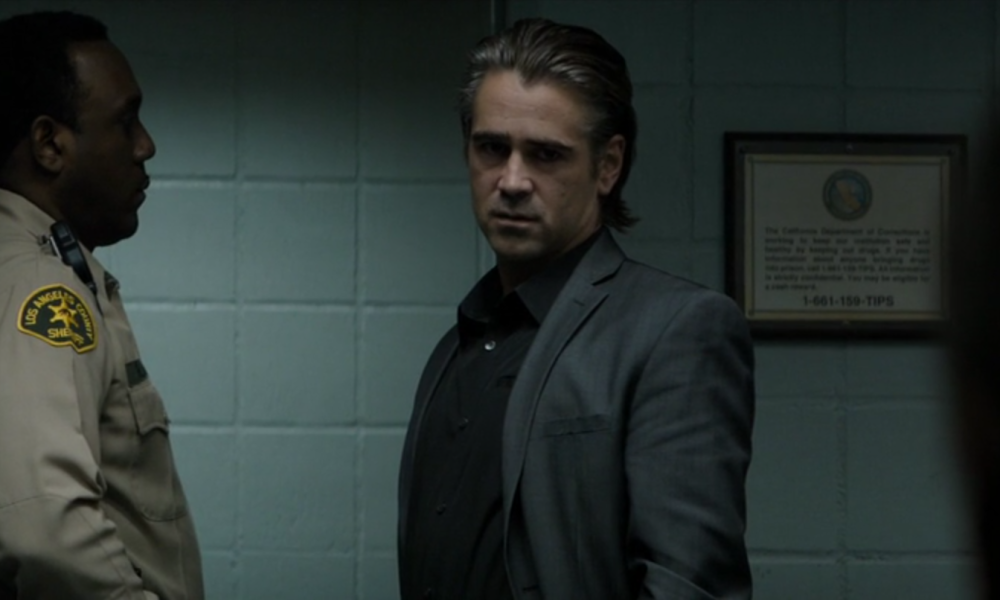
Four major events transpired in yet another taut and meticulous episode.  Only two more episodes to go, unfortunately.  The first major event was the sit down between Velcoro and Semyon, and it went in a direction that I didn’t quite see it going.  Turns out, Ray and Frank are friends.  There is trust and appreciation between the two of them, yet Frank feels remorse for what he has done to Ray.  He turned his life upside down by giving, unknowing to him, false information about the man who attacked Ray’s (ex)wife.  At this stage in the show, Ray is the only person that Frank can fully trust within his real world and his shadow world.

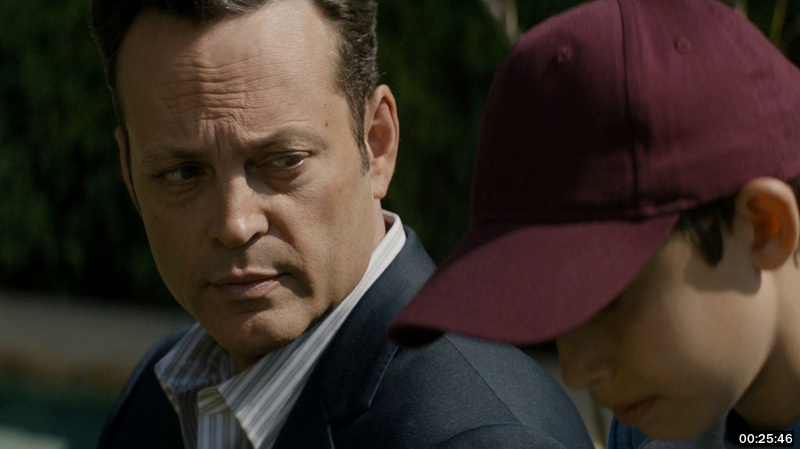
Frank visits his former employee’s wife and son, while Frank genuinely conveys his sympathies to Stan’s wife, where the heart of the show truly lies is Frank’s exchange with Stan’s son.  Frank, who can relate to Stan’s son, really has no idea how to talk to him, how to comfort him.  The dialogue is incredibly impactful.  Anyone who watches the show has had a moment that “splits your life.  There’s a before and after,” Frank continues, “if you use it right, the bad thing, you use it right and it makes you better.  Stronger.”
screen-shot-2015-07-26-at-11-01-40-pm

Ray’s self loathing cocaine, alcohol and American Spirits binge was frightening.  He took himself to the absolute limit in one of the biggest self-destructive scenes that I have seen.  He breaks down, mumbles to a picture of his son, he touches the scar on his upper lip, now visible without his mustache covering it.  The scar on his upper lip was not there in the flashback sequence in the first episode.  I can only imagine he got that when he killed the wrong man who he thought was the rapist, or his then wife physically struck him after he told her about what he had done.  The scene ends with Ray’s farewell to his son, to his ex-wife, and to his life.  First we were teased with Ray being shot with riot shells and in this episode with him nearly having a heart attack at the height of his binge.  Ray knows that his toxicity has ruined everyone pure around him and he has clearly made his decision about his fate, and he is going to go out on his own terms.

screen-shot-2015-07-27-at-2-31-12-am

Then there was the EYES WIDE SHUT sex party.  Women are everywhere, old men watching, and cauldrons of Viagra within arms reach.  The Mayor’s son was there, Blake the creepy redheaded guy that works for Frank and undoubtedly is behind the false information relayed to Ray, the State’s Attorney who is running for Mayor and many other power holders from the show.  Then we get the flashback to Ani’s childhood, she’s on her father’s hippie commune, where she was raped when she was very, very young.  The hand of the child in the flashback was strikingly young, and gave you all the information about Ani’s life, and who she is and why she became who she is.

This show takes place in the over dramatized noir world, where people don’t speak the way these characters do, people don’t look like the people from the show.  There has been so much unnecessary aggression towards this season and frankly the constant torpedoing of this season is ridiculous.  Nic Pizzolatto is such a great writer in the way that he can dissolve this dangerous world to applicable dialogue that challenges the viewer, challenging them to reflect on themselves to see whether or not they really are solid gold.

PTS Presents The Gary Young Special Episode 2: CHINATOWN, LA CONFIDENTIAL and TRUE DETECTIVE

For our second episode in the Gary Young Series, we sat down and discussed Roman Polanski’s CHINATOWN, Curtis Hanson’s LA CONFIDENTIAL and both of those films influences on the second season of TRUE DETECTIVE.  We had a blast, hope you guys enjoy!

PTS PRESENTS ERIC RED POWERCAST

ERIC RED1

eric redPodcasting Them Softly is proud to present a chat with cinematic horror/thriller icon Eric Red, as he chats about his eclectic career, his future projects, and his love for movies in general! Eric is famous for having written THE HITCHER, NEAR DARK, and BLUE STEEL, as well as writing and directing the incredible action thriller COHEN & TATE, BODY PARTS and BAD MOON. His most recent effort was the psychological horror thriller 100 FEET which features a gripping lead performance from Famke Janssen. Eric also writes novels, and his latest, WHITE KNUCKLE, is now available on Amazon.  We hope you enjoy it as much as we did!

TRUE DETECTIVE 2.5 OTHER LIVES – A Review by Frank Mengarelli

True Detective 2.5 OTHER LIVES

“I try and limit the people I can disappoint.” – Ray Velcoro

qs9tkodawj7h-600x338

Two months have passed since the blistering shootout close of last week’s episode.  The characters have all moved on, trying to reinvent themselves.  Vince Vaughn has now sunk to where his character presumably was months, maybe even years before the show started.  He’s nowt living in the suburbs in a small house and being driven to a bar he currently runs.  Colin Farrell shaved off his Sampson mustache and now works for Vaughn as an enforcer.  Taylor Kitsch is moving ahead with his charade engagement and McAdams is now smoking cigarettes and ditched the e-cigs.

The big revelation in this episode was family.  It took five episodes for it to sink in, but the three detectives come from terrible places.  Affliction parades over all of the main character’s souls .  Whether it is Farrell’s drunk and racist cop father, or McAdams’ free loving, inner-self father or Kitsch’s drunk and tarting mother; all three of them escaped where they came from and tried to live their own lives, but always in the shadows of their former selves.  And then it struck me during the formation of the secret investigation they got wrangled into.  The only place these three belong are with each other.  There is no other family for them in this world.  They accept and understand each other’s plights, and speak fondly of one another.  Acceptance is something that the three detectives desire the most, and with each other – that completely achieve that.

true-detective-other-lives

The big reveal this episode was that Vaughn gave Farrell the wrong information on the man who raped his ex-wife, in order to put Farrell in his pocket.  Sometime between the fourth episode and the fifth, the actual rapist was caught unbeknownst to Farrell, until he was told mid episode.  This sent Farrell into a path of self-righteous destruction, beating down Rick Springfield’s creepy doctor to get information about the sex parties, uncovering a blackmail scheme that shined a lot of light on the mysteries of the season.  Something happened after Farrell got the information from Springfield, he lunged towards Springfield and the camera cut away to a new scene.  What happens after the cut?  Does Farrell beat him to death?

The episode finishes strong with Vaughn and his wife in bed, in a good place.  They were open and honest with one another about who they are and what they want, and came to the realization that they love one another, regardless of how far Vaughn has fallen from grace and whatever his wife’s struggles were prior to their marriage.  Farrell shows up, banging on Vaughn’s front door.  Vaughn answers.  Farrell can barely contain his rage of being strategically misled by Vaughn.  He’s shaking, he’s grinding his teeth.  Vaughn is at a standstill, unsure of what happened to Farrell and what his intentions are.  The camera cuts back to Farrell.  He’s stone cold.  Not moving.  In that moment, Farrell has made up his mind that he is going to kill Vaughn.  Give Collin Farrell the Emmy, Golden Globe and Screen Actors Guild award now.  Same goes for writer/creator Nic Pizzolatto.  He is a literary genius.

tdray

Episode 14: Steven Spielberg’s MINORITY REPORT with Guest Joel Copling

We are pleased to be joined by Joel Copling of Joel on Film, who is a great friend of Podcasting Them Softly’s.  We discuss Steven Spielberg’s masterful MINORITY REPORT as well as the top five performances of Tom Cruise and Samantha Morton!

PTS Proudly Presents Lynn Shelton POWERCAST

Shelton POWERCAST


74568_456797413041_2518525_nPodcasting Them Softly is extremely excited to present a chat with independent filmmaker Lynn Shelton, as she discusses her fantastic and eclectic body of work and singular filmmaking style. Over the last 10 years, she’s made six films, all of which have taken on a deep desire to explore people and emotions and the complexities of the human heart and mind. We Go Way Back, My Effortless Brilliance, Humpday, Your Sister’s Sister, Touchy Feely and Laggies have all demonstrated a fantastic ear for the way people speak with an observational shooting style that allows for the expansion of the visual language of cinema. She’s worked with big name actors and little known talents, and no matter the project, her unique voice has been heard loud and clear. We’re honored to have had the chance to talk with Lynn and we hope you enjoy the Lynn Shelton POWERCAST!

The Man Who Made Indiana Jones – By Frank Mengarelli

“You lost today kid, but that doesn’t mean you have to like it.” – Fedora (Richard Young)

 Every time I’ve watched INDIANA JONES AND THE LAST CRUSADE, even as a little kid, I was always drawn to the character dubbed Fedora (Richard Young) in the credits. He’s never called directly by name in the film, but during the opening when Young Indy (River Phoenix) is watching the gang in the cave digging for treasure, the name Garth is mentioned.

Indiana Jones had met a wide array of characters in the films, but I don’t think anyone had as big of an influence on his life as Fedora did. Fedora has limited screen time, and few lines of dialogue, but during the opening sequence of the film – he’s the most important character. After Indy gets the cross from the gang and Indy gets chased to a circus train – he finds himself in a life or death situation when he falls into a train car that contains a roaring lion.

Indy tries to tame the lion with his whip, but Fedora and his men are on top of the train car looking down, and Fedora commands that Indy toss-up his whip so they can pull him up. After Fedora rescues Indy, they chase beings again, as Indy escapes from the caboose Fedora watches Indy run down the train tracks, away from the hauling train. As Fedora watches him run away, he gets a smirk on his face.

When Indy returns home to tell his father what he had just done, his father essentially brushes him off because he’s working on his obsession of the Holy Grail. Fedora’s gang shows up with the town’s sheriff and the sheriff asks Indy for the cross back. Fedora’s gang is pompous and smug because they just won. But as everyone leaves, Fedora is left standing in the doorway. He removes his fedora and as he sets it on Young Indy’s head he says one of the greatest lines in film history: “You lost today kid, but that doesn’t mean you have to like it.” The film then resumes in real-time where we see Harrison Ford as Indiana Jones – he’s on a ship, being held by men with blood coming from his busted lip. He’s smiling remembering Fedora’s words of wisdom.

It’s not that Fedora is sympathetic to Indy, even though he’s the only one who shows respect to him; Fedora sees himself in Indy, and for that he gives him his fedora as if he’s passing the torch to him, telling him, “here you go kid, the job is now yours.” In the films when Indy is out in the field, he always has his hat, and risks his life on a couple of occasions to ensure that he has possession of his hat that Fedora gave him when he was a teenager. While it may not always be the same exact hat, the hat does symbolize Fedora, the man who made Indiana Jones.

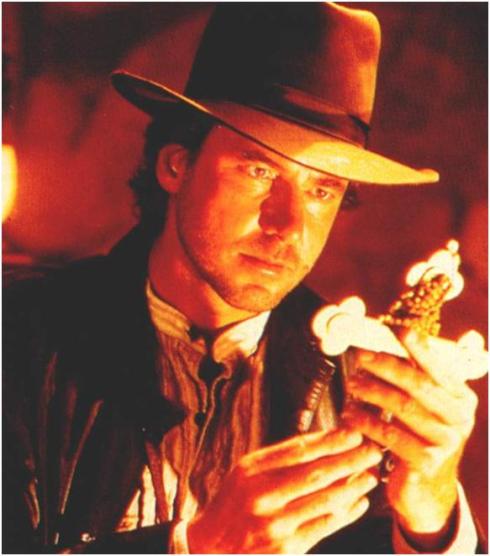
When Spielberg shot the scene in the cave, where the men find this rare artifact, Fedora is hunched over, and he’s holding it – watching it. He’s mystified by the discovery and it’s then you realize he’s not after the money, he’s after the hunt. The tight close-ups, and the way the camera revolves around Fedora is much like the way Spielberg shoots Indy when he’s found the idol in RAIDERS OF THE LOST ARK.

When we see Ford as Indiana Jones, he’s dressed exactly like Fedora was in the third film. His hat, his rough leather jacket – and even Fedora’s rough look and demeanor and right down to that signature smart ass smirk transcended to Indy. As the third film displays, Indy didn’t have a good relationship with his father, Henry Jones, Sr. (Sean Connery) was obsessed with his work, too obsessed to provide the emotional commitment of being a father. Fedora accepted that role – though their interactions only lasted for a couple of hours when Indy was in his teens. Fedora shaped the man who stopped being “Junior” and became Indiana Jones.

In the original script the character of Fedora was originally Abner Ravenwood, who was the father of Marion (Karen Allen) and dubbed as Indy’s “mentor”. To be honest with you, I completely ignore the fourth installment of the franchise. Lucas, Ford and Spielberg should have known better.

The fact that in the original script that Fedora was Abner almost solidifies the fact that Fedora is actually Indy’s mentor. Next to Indiana Jones, I think Fedora is the second most important character in the franchise even though he had maybe ten minutes of screen time and ten lines of dialogue. In that short time, we see Fedora in Indiana Jones, and in turn when we see Ford as Indy – I see Fedora.

After the films premier, Robert Young reprised his role as Fedora/Garth for a live performance of the opening show of the National Boy Scout Jamboree at Fort A.P. Hill in Virginia. This event was produced by Steven Spielberg.

I would have liked to have seen more of Fedora, even an adventure of his since he is the precursor of Indiana Jones – but that’s what makes him so effective – is the fact that we know absolutely nothing about him – yet his story is told through the adventures of Indiana Jones.

TRUE DETECTIVE 2.4 DOWN WILL COME – A Review by Frank Mengarelli

TRUE DETECTIVE 2.4 DOWN WILL COME

“Sometimes your worst self, is your best self.” – Frank Semyon (Vince Vaughn)

We are now at the halfway point of the second season of TRUE DETECTIVE. The latest episode was an incredible slow burn of more complex character development, so slow that the episode came to a crawl at certain points, only to brilliantly explode in the final ten minutes to a Michael Mann inspired street shoot out.

truedetective2

Vince Vaughn’s back is to the wall, he’s out of resources and he’s going back, extorting the current owners of his previous businesses, his marriage is falling apart and he is losing trust in the people working for him. Colin Farrell is exiled inside his self loathing, saying goodbye to his son by giving him his father’s badge. Taylor Kitsch relapsed and drunkenly slept with his former “Black Mountain” buddy, and shored that up with more self destruction by getting engaged to his former girlfriend when she told him that she was pregnant. Rachel McAdams’ life is still a mess, and a formal sexual misconduct complaint was charged against her by the simpleton officer she was having sex with as well as her current partner helping fuel the complaint.

We also get a glimmer into what I think is the underlining occult story line of the show. McAdams’ father (David Morse) shows her and Velcoro a picture from the 70’s of him, Vinci’s Mayor’s father and Rick Springfield’s characters all on a beach side. I’m thinking that the sex parties that have been referenced in the last two episodes have something to do with them.

true-detective

The episode ended like the fourth episode of the first season, a tremendous shoot out. This time, it wasn’t one take like it was in the first season. This time, the camera followed the three leads exchange gunfire with a gunman from a meth lab, as well as chasing an SUV down on foot. The scene was absolutely graphic. Civilians that were protesting outside of a public transportation bus terminal were gunned down; the officers supporting Farrell, McAdams and Kitsch were all gunned down.

What I found more engaging and interesting than the intense shoot out, was after it was over, the camera held on each character, we watched them regroup in the aftermath that left everyone dead but them. Farrell’s hands were shaking, saliva dripped from his mouth. McAdams was crying. And then there was Kitsch. Kitsch was stone cold, no emotion, no remorse and no empathy.

screen-shot-2015-07-13-at-2-52-08-am

A lot has been built around Kitsch’s character. He’s gay, but more interestingly enough he was involved in “Black Mountain” during the Iraq war. Black Mountain can only be the fictional version of the “defense” contractor Black Water, that had free reign in Iraq, and they killed anyone and everyone. Kitsch’s vulnerability came out in his scene with Farrell earlier in the episode:

“I just don’t know how to be, out there in the world.”

“Look out that window, look at me. No one does.”

Pizzolatto’s writing is unique and he truly has his own voice. The four main characters, much like this episode itself, are all slow burning. Whatever inner torment and turmoil they are dealing, they’re completely lost in who they once thought they were, or better yet who they thought they could have been. As Leonard Cohen’s theme song says, “I live the life that I left behind.”