RADIOLAND MURDERS – A REVIEW BY J.D. LAFRANCE

radioland-murders_still1

Radioland Murders (1994) was one of George Lucas’ rare forays outside of the Star Wars universe and like others (Willow and Howard the Duck) it was a critical and commercial failure. Lucas seemed to be following in the footsteps of Woody Allen’s Radio Days (1987) by paying homage to the heyday of radio in the 1930s before television and when it was the source of news and entertainment for millions of Americans. It was a time when The Shadow captured people’s imaginations and Orson Welles’ War of the Worlds broadcast fooled thousands into believing we were actually being attacked by Martians. It is the twilight of this era that Lucas’ film depicts.

It’s 1939 on the night that WBN radio goes nationwide and the whole station is abuzz with activity. Roger Henderson (Brian Benben) is the head writer and his wife Penny (Mary Stuart Masterson) is an assistant to the director (Jeffrey Tambor). They are forced to deal with an unhappy sponsor who doesn’t like the scripts, unhappy writers who don’t like their working conditions, and unhappy actors with inflated egos. As if that wasn’t bad enough, during the opening musical number the orchestra’s trumpeter dies from a heart attack.

Soon, the station’s director turns up dead as well from an apparent suicide. However, it is revealed that both deaths are actually murders. Radioland Murders starts off as a farcical comedy and gradually mutates into a classical whodunit with no shortage of suspects and with the Hendersons out to solve the case while keeping the radio show going. Roger and Penny are married but their union is in big trouble because she caught him with another woman (the star of the station’s radio programs no less) and hasn’t forgiven him while he claims that nothing happened. To make matters worse, Roger ends up becoming one of the primary suspects and has to rush to clear his name.

Mary Stuart Masterson looks beautiful and is lit like a glamourous 1940s movie star but with screwball tendencies. However, she’s let down by the screenplay and saddled with a miscast co-star in the form of Brian Benben who’s not very funny. His character is a sap and it’s hard to see what Penny sees in him.

The problem with Radioland Murders is that it relies too much on broad, slapstick humor with many of the jokes falling flat. There is also too much going on. The movie gets too busy at times. A stronger director might have been able to handle it better but then again, maybe not because the problems are inherent in the screenplay. The movie is written by four different people and this may explain why it is such a mess. Screenwriting by committee is rarely a good idea.

The vintage big band music and the slick production values are the film’s only highlights. There are even cameos by Rosemary Clooney and George Burns (unfortunately his last film role) but they do little to help this mess of a movie. It’s not hard to see why Radioland Murders failed and why Lucas returned back to the safety of the Star Wars universe. One of his contemporaries, Francis Ford Coppola, also ran into difficulties trying to recreate a bygone era with The Cotton Club (1984). Obviously, people are not particularly keen on revisiting the 1920s and the 1930s, or, at least, the way Coppola and Lucas envisioned it.

HARD BOILED – A REVIEW BY J.D. LAFRANCE

hard1

In retrospect, John Woo’s Hard Boiled (1992) can be seen as his audition reel for Hollywood. And what a helluva audition reel it was – a masterfully orchestrated magnum opus of mayhem. After its release, he moved to the United States and started over (directing a Jean Claude-Van Damme film no less – ouch!). Woo’s film took the gangster melodrama, that he started with A Better Tomorrow (1986), to the next level. In doing so, he created what is arguably the greatest action film ever made.

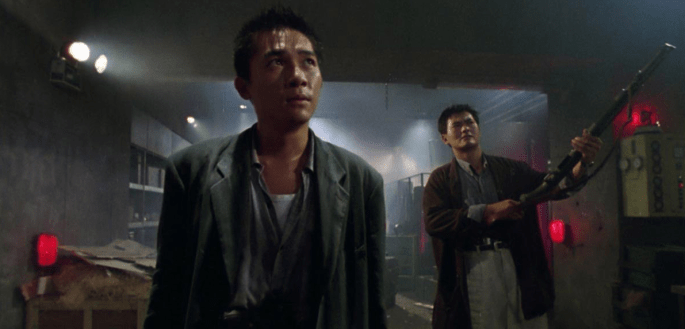
We are introduced to a city mired in crime and corruption – one that is at the mercy of the Triads, gun smuggling gangsters with very little regard for human life as evident from the bloody shoot-out in a teahouse that kicks off the film. We are also introduced to a police officer named Tequila (Chow Yun-Fat), a one-man army with two guns in his hands; able to gun down bad guys while sliding down a banister (which has since become one of the iconic images from the movie). However, when the gangsters kill his partner, Tequila makes it his life’s goal to take them all down, the law be damned. He eventually crosses paths with Tony (Tony Leung), an undercover cop working deep within the Triads as an efficient killer. So deep, in fact, that he’s beginning to lose his original identity. Once Tequila discovers Tony’s true identity, they team-up for a show-stopping finale that can only be described as a bullet-ridden blow-out of epic proportions.

Hard Boiled is structured around three major action set pieces: the teahouse shoot-out that introduces Tequila, a warehouse gun battle where the cop meets his undercover counterpart, and the hospital showdown where the two men team-up to take down the bad guys. Each sequence is more ambitious than the one that came before and this culminates in the hospital battle that includes an impressive three-minute action sequence without any edits – virtually unheard of in an action film, especially one with as much mayhem as this one.

Woo plays with action film conventions by imparting intentionally sappy, sentimental moments like Tequila rescuing a room full of babies from gangsters and then gives it a mischievous twist by having one baby pee on the fire that started on the cop’s leg after he outran an explosion with said child.

While Woo purists cite The Killer (1989) as his finest achievement, Hard Boiled tops it in terms of kinetic action and choreography. While the previous film may deal with weightier themes, the latter film has a stronger foil to interact with Chow Yun-Fat. The chemistry between him and Tony Leung is excellent. Their characters start off as antagonists but over the course of the film they become allies, developing the kind of deep, meaningful bond that a lot of characters in Woo films share with one another. Tequila’s girlfriend (Teresa Mo) almost seems like an afterthought. After all, how can she compete with what Tequila and Tony go through together over the course of the film?

hard2Hard Boiled was Woo’s last Hong Kong film and this caused some critics to speculate that the film reflected his conflict between staying in a country he loved but that was facing an uncertain future, and leaving it for a prosperous new beginning. This metaphor was said to be expressed symbolically in the besieged hospital at the film’s finale. It represented Woo’s state of mind at the time: does he stay in a place that will potentially kill him, or escape and live but at a cost. The cost was the many restrictions that the Hollywood studios imposed on his first two American films, Hard Target (1993) and Broken Arrow (1996). It wasn’t until Face/Off (1997) that he was able to finally cut loose stylistically but it still felt like highlights from his Hong Kong output. This makes fans nostalgic for his older films and is why Hard Boiled has stood the test of time. It is still superior to any action film that has been made since.

MY SO-CALLED LIFE – A REVIEW BY J.D. LAFRANCE

CLAIRE DANES, JASON LETO

When My So-Called Life debuted on television in 1994, it was seen as a smart alternative to mindless teen pap like Beverly Hills 90210. I don’t know about you, but I didn’t know anyone like the “teens” (just how old were the actors anyway?) on that show. In comparison, the kids on My So-Called Life were awkward, vulnerable and, most importantly, real. All of the characters on this show acted like actual people. Sure, the writing, at times, was a little too touchy-feely and bleeding heart liberal for its own good – the influence of Thirtysomething’s Mitchell Herskovitz and Ed Zwick – but its observations about teenage life (and life in general) and the many melodramas that make it so difficult were right on the money.

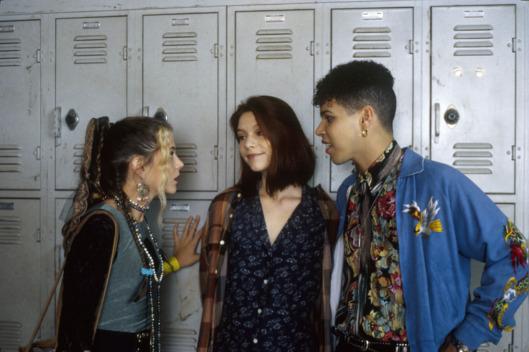
Angela Chase (Claire Danes) is a nice girl still figuring out who she is as she pines after the dreamy Jordan Catalano (Jared Leto) who, initially, barely knows that she exists. Angela is friends with party girl Rayanne Graff (A.J. Langer), the openly gay Rickie Vasquez (Wilson Cruz), Sharon Cherski (Devon Odessa), who used to be Angela’s best friend but has since been replaced by Rayanne, and the awkward Brian Krakow (Devon Gummersall) who secretly has a crush on Angela. In the first episode, Angela dyes her hair crimson as an act of rebellion against her mother (Bess Armstrong) who tries so hard to understand her daughter but doesn’t have a clue what she’s going through. Her father (Tom Irwin) is a nice enough guy but also equally clueless about his daughter’s day-to-day trials and tribulations. Angela’s parents are both liberal-minded people who were probably Hippies in the 1960s, grew up and bought into the system while still retaining their liberal sensibilities.

One of the great things about the show is how the writers flesh out the characters and the relationships between them. The conflicts that Angela has with her mother are spot-on and have a real ring of honesty to them. Rayanne’s self-destructive, partying ways are addressed in one episode. In another, Rickie comes out to his relatives and is kicked out of the house by his abusive uncle. The seemingly perfect Jordan turns out to be flawed as we find out in one episode that he can’t read or write.

There are so many stand-out episodes (let’s face it, they are all good), like the one with Angela’s substitute teacher (played to perfection by Roger Rees) who inspires her to think outside the box. However, she becomes blind to his flaws by his dynamic charisma. Arguably, the best episode is the Christmas one where singer/songwriter Juliana Hatfield plays a homeless person that Angela tries to help. It’s a truly moving episode as materialism and the commercial aspects of Christmas are rejected in favor of family, friendship, and selfless acts of kindness.

socalled2

Looking back at it now, My So-Called Life is a wonderful snapshot of the mid-1990s with the hairstyles and the clothes (you can even spot an REM poster in Angela’s bedroom) distinctive of that decade prominently on display. One can now look back at this decade through nostalgic glasses via this show. Despite its brief run, My So-Called Life not only helped launch the careers of Claire Danes and Jared Leto, but without it there would be no Freaks and Geeks or Joan of Arcadia or Gilmore Girls, which also presented smart and sensitive teens in a realistic way. Both of these shows also had brief runs which seem to suggest that American viewers favor escapist fare like The OC and not heartfelt shows like My So-Called Life.

MARVEL’S THE AVENGERS – A REVIEW BY J.D. LAFRANCE

Scarlett-Johansson-The-Avengers-movie-image

The Avengers (2012) was the culmination of an ambitious project that was carefully planned by Marvel Studios over several years and spans several films utilizing characters, both major and minor, from each. While the notion of a shared universe with characters from one franchise appearing in another is a relatively novel idea in film, it is nothing new in comic books where costumed superheroes cross-pollinate all the time and even contribute to a larger story (see Secret Wars II). With Iron Man (2008), Marvel decided to do in film what they’ve been doing in comic books for decades. Its commercial success paved the way for subsequent adaptations of The Incredible Hulk (2008), Thor (2011) and Captain America: The First Avenger (2011), each one featuring a scene that hinted at something bigger and it has finally arrived with The Avengers, which features heroes from all of these films banding together to form a super team of sorts.

The challenge that Marvel faced was to find a director that could successfully bring all of these wildly different heroes together and also handle the movie stars playing them. Up to that point, Marvel had employed journeymen studio directors like Jon Favreau (Iron Man 1 & 2), Louis Leterrier (The Incredible Hulk) and Joe Johnston (Captain America: The First Avenger). But with Kenneth Branagh directing Thor, it was the first time the company had hired someone with auteurist sensibilities since Ang Lee and his fascinatingly flawed yet ultimately ill-fated take on the Hulk in 2003. And so, the hiring of Joss Whedon to direct The Avengers surprised some. With only one feature film on his resume – the cult film darling Serenity (2005), and known mostly for his television work on Buffy the Vampire Slayer, its spin-off Angel and sci-fi western Firefly, there was some question if he could handle a $200+ million blockbluster populated with movie stars.

Whedon got his start as a screenwriter and honed his chops over the years on T.V. sitcoms and as a prolific and often uncredited script doctor (Speed, Twister, etc.), but more importantly were his hardcore comic book fan credentials, having actually written a brief run for The X-Men, so he knew how they worked in terms of dialogue, plotting and depicting visual action – perhaps the most important criteria for The Avengers gig. It was a calculated risk that paid off as the film amassed an impressive box office result and received strong critical response.

The Tesseract, a powerful energy source that was featured prominently in both Thor and Captain America, has activated itself and appears to be trying to open a portal to outer space. Sure enough, exiled Norse god Loki (Tom Hiddleston) arrives with the intention of using it to take control of Earth and enslave its inhabitants. To this end, he brainwashes brilliant physicist Dr. Erik Selvig (Stellan Skarsgard) and S.H.I.E.L.D. (a top secret government organization) operative Clint Barton a.k.a. Hawkeye (Jeremy Renner) to help him do his bidding. This doesn’t sit too well with S.H.I.E.L.D. director Nick Fury (Samuel L. Jackson) and he decides to enlist Earth’s mightiest heroes to stop Loki.

This includes Russian super spy Natasha Romanoff a.k.a. Black Widow (Scarlett Johannson) who quickly finishes her “interrogation” of Russian gangsters to approach Dr. Bruce Banner (Mark Ruffalo), a philanthropic scientist now staying “off the grid” by working in the slums of India and trying hard not to unleash his Hulk persona, a being with superhuman strength that is off the charts. Captain America (Chris Evans) has been thawed out since being trapped in ice at the end of World War II and is still trying to sort things out with Fury’s help. S.H.I.E.L.D. also approaches Tony Stark a.k.a. Iron Man (Robert Downey Jr.), interrupting his work on a clean energy source. Norse god of thunder Thor (Chris Hemsworth), and Loki’s adoptive brother, is the wild card, arriving out of nowhere to intervene when Iron Man and Captain America attempt to capture him, resulting in an impressive skirmish. This all builds up to a spectacular climactic battle between Loki and an alien army that comes swarming out of the portal created by the Tesseract and the Avengers.

With the unfortunate exception of Jeremy Renner, the entire cast gets a chance to flex their acting chops the best they can between massive action set pieces. Mark Ruffalo, the third person to play Banner after Eric Bana and Edward Norton, really nails the human side of his character, playing him as slightly twitchy and paranoid drifter. He appears confident (because, hey, he can turn into the Hulk) yet distracted – a jumble of emotions. This is easily the best representation of the Hulk on film, both visually in terms of CGI and also how he’s portrayed – as a rampaging monster – the Mr. Hyde to Banner’s Dr. Jekyll.

Not surprisingly, Robert Downey Jr. gets the lion’s share of the funny quips – he was born to spout Whedon’s witty dialogue. It is a nice return to form after the cluttered rush job that was Iron Man 2 (2010). Based on Whedon’s perchance for having prominent strong-willed female characters in his projects, Scarlett Johannson’s Black Widow gets a beefed up role and proves to be an integral part of the team. Not only does she show off a considerable physical prowess but she also holds her own against the likes of Robert Downey Jr. and Mark Ruffalo.

Chris Evans and Chris Hemsworth carry on with their characters from their respective films without missing a beat, each adding their own unique flavor to the team. In particular, Evans does a good job when Captain America steps up and takes tactical control during the war in New York while Hemsworth has some nice moments with Tom Hiddleston as warring brothers who just happen to be gods.

The Avengers is chock full of eye candy for comic book fans, from the S.H.I.E.L.D. Helicarrier to actually seeing superheroes fight each other – something, oddly enough, you don’t see in most films but that happens all the time in the comics. It is pretty cool to see the likes of Thor, Iron Man and Captain America duke it out while engaging in playful superhero banter. Unlike the other Marvel films starting with and including Iron Man, Whedon creates a real sense of danger for our heroes. There’s a feeling that they might fail and this tension is thrilling because it is so rare in these kinds of films, except maybe The Dark Knight (2008). It also raises the stakes when Whedon’s film needs it because there is a real sense that the Avengers are fighting for something tangible. He gives them something personal to fight for than just the usual let’s save the world goal. This culminates in the climactic battle in New York City between Loki and his alien army and the Avengers in one thrilling sequence after another, each filled with large-scale slugfests. The choreography during this massive battle is top notch. There is never any confusion as to what is happening and where, which is quite refreshing. The end result is pure, unfiltered comic book geek nirvana.
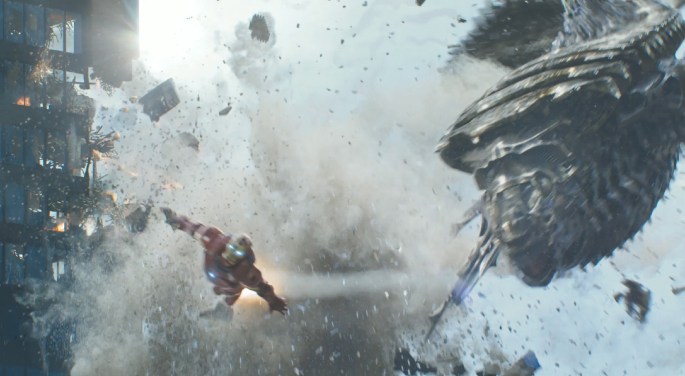
avengers2The Avengers falls rather nicely within Whedon’s wheelhouse as it is all about a group of misfits that band together to save the world from a great evil, just like Buffy the Vampire Slayer, Angel, Firefly, and so on. It doesn’t get any more disparate than a Norse god, a billionaire playboy, a World War II super soldier, a brilliant scientist, and two spies. Like much of the aforementioned work, the heroes in The Avengers bicker and fight amongst themselves but when the need to step up for the greater good arises, they put their differences aside and make a stand together. Loki continues in the tradition of eloquent Whedon villains who are incredibly confident because, well, in his case he wields great power and knows it. However, Loki isn’t just out to rule the world. For him, there is a personal component – he seeks vengeance for the slights he feels were incurred in Thor. This film was a great way to kick off the summer blockbuster season in 2012 and is a potent reminder of what a filmmaker who knows how comic book works can do if given the chance. The result is a smart, witty film that is a throwback to entertaining, crowd-pleasing comic book adaptations like Superman: The Movie (1978) and Batman (1989).
UNDER THE TUSCAN SUN – A REVIEW BY J.D. LAFRANCE

under-the-tuscan-sun

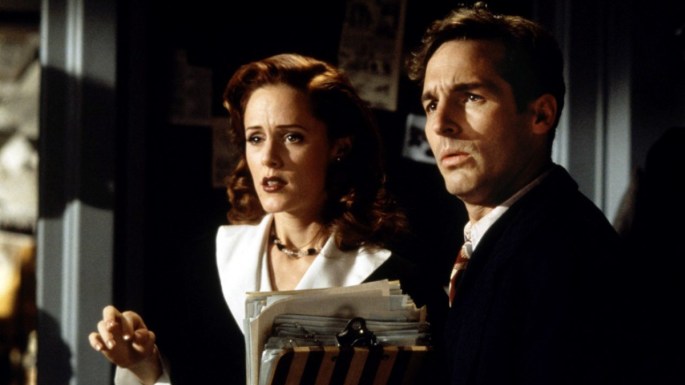
From her screenplay for The Truth About Cats and Dogs (1996) to her directorial debut with Guinevere (1999), Audrey Wells has created films with strong female protagonists. She continues this thematic preoccupation with Under the Tuscan Sun (2003) featuring a main character that goes on a journey of self-discovery in Italy. Based on the bestselling 1996 memoir of the same name by Frances Mayes, the film is a warm and inviting romantic comedy that attempts to deviate from some of the conventions of the genre.

Frances Mayes (Diane Lane) is a professor of literature living in San Francisco with her husband. Her bad reviews of other people’s books comes back to haunt her when a writer harboring a grudge hints that her husband has been having an affair. During the messy divorce, and understandably upset over his betrayal, she sells her half of their house rather than pay up via alimony. Frances moves into a noisy apartment building and tries to figure out what to do with her life. She suffers from writer’s block — not just with her book, but with her life. Patty (Sandra Oh), her best friend and support group, is unable to go on a ten-day trip to Tuscany because of her upcoming pregnancy. So, she gets Frances to go in the hopes that a change of pace and scenery will provide her with a fresh start.

Before she knows it, Frances is on a bus full of gay people in Italy with the tour guide telling everyone her life story. She spots a charming little villa on the tour and decides to get off the bus. She becomes enchanted with the place, meets the owner and decides to buy it. To say that the house is fix-it-upper opportunity is a mild understatement but Frances plugs away, renovating the house and, in the process, her life.

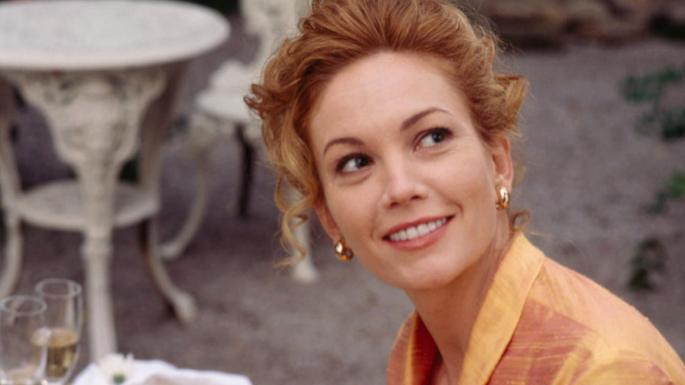
Under the Tuscan Sun was a nice change of pace for Diane Lane, fresh from her role in the dark, erotic thriller, Unfaithful (2002). She is quite good as a newly independent woman trying to start her life over. The gorgeous Lane looks absolutely radiant and brings a lot of charm to the role. She shows a real knack for light comedy as well and is not afraid to look silly or vulnerable.

It also doesn’t hurt that director Audrey Wells surrounds the stunning Lane with a picturesque, postcard perfect Italian countryside. Every frame is filled with resplendent scenery and everyone eats delicious looking food. It is a shameless love letter to Italy. A more cynical person might say that this film is just one long ad for the tourism board of the country. It works. Under the Tuscan Sun really makes you want to go there, discover your very own villa and escape from it all.

Under the Tuscan Sun is reminiscent of Enchanted April (1992) in that it also features women getting away from dreary past lives and moving to Italy to gain their independence and start their lives anew. In terms of plotting and dialogue, Tuscan Sun is pretty standard fare but it is quite entertaining, features a winning performance by Diane Lane and is handsomely photographed.

THE LOOKOUT – A REVIEW BY J.D. LAFRANCE

josephgl_1227304014

With his adaptation of Elmore Leonard’s novel, Out of Sight, Scott Frank demonstrated a knack for crime thrillers with plenty of plot twists and double crosses. He finally got the chance to direct his own film and the result was The Lookout (2007), a neo-noir that evokes other crime movies like Charley Varrick (1973) and Fargo (1996).

Chris Pratt (Joseph Gordon-Levitt) is a young hockey player with a promising career that is snuffed out in an instant thanks to a car accident that he caused. Four years later, he’s working as a night janitor at a local Midwestern bank located out in the middle of nowhere and dealing with a head injury from the accident. He has to write down everything that he does to get ready every day. His old life is gone and his new one is one mundane day after another. Chris now lives with Lewis (Jeff Daniels), his blind roommate who helps the young man out with things around their apartment.

Chris meets Gary (Matthew Goode) at a bar one night. He’s a genial guy who befriends the young man over beers. Chris also meets a beautiful young woman named Luvlee (Isla Fisher) who is friends with Gary. They quickly go to work on Chris, Gary appealing to his brain and Luvlee to his heart. They make him feel like he belongs, which is important to him because his family doesn’t know how to relate to him anymore. Pretty soon Gary tells Chris about a bank heist he plans to pull with his buddies. The bank that they are targeting just happens to be the one that Chris works at. Gary dangles the proverbial carrot in front of Chris with the promise of money and the power that comes with it. He is very persuasive and knows exactly which buttons to push. Like most heist films, things do not go according to plan and the rest of the film deals with the aftershocks.

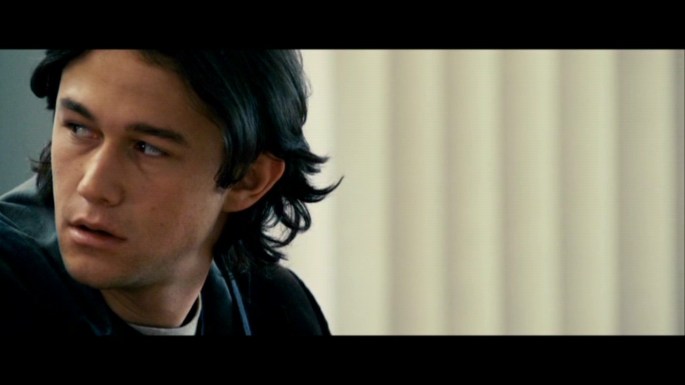
Joseph Gordon-Levitt continues his knack for offbeat roles. He does a great job portraying someone with neurological damage and the frustration that comes from not being able to do simple things like opening a can of food or remembering someone’s name. He also conveys the guilt his character feels over the car accident that cost two of his friends their lives and robbed him of a promising future. We see how he tries to hide his disorder and the frustration of not being able to do basic things. It’s a performance grounded in realism that is in contrast to this stylized noir world. It doesn’t hurt that he is surrounded by cold, detached characters, and this makes him very sympathetic as well.

Jeff Daniels steals pretty much every scene he’s in as Chris’ genial roommate. The actor displays a dry sense of humor that is very funny to see in action. He and Gordon-Levitt’s character make for very unlikely roommates to say the least but the two actors make it work thanks to the excellent chemistry they have together. Along with The Squid in the Whale (2005) and Good Night, and Good Luck (2005), Daniels is turning out to be quite an excellent character actor appearing in several well-made independent films.

Frank has a keen visual sense, adopting a predominantly dark color scheme in keeping with the neo-noir tradition. He has crafted a clever little thriller with a fascinating protagonist at its center. What could have easily been a forgettable film is anchored by yet another riveting performance by Gordon-Levitt.

O.C. AND STIGGS – A REVIEW BY J.D. LAFRANCE

ocandstiggs1

After Popeye (1980), Robert Altman had effectively alienated himself from most of the Hollywood studios and took to adapting stage plays for the big screen through independent financing. In the early 1980s, National Lampoon magazine published stories about two troublemaking teenagers named Oliver Cromwell ‘O.C.’ Ogilvie and Mark Stiggs written by Tod Carroll and Ted Mann. When Altman made O.C. and Stiggs in 1984 (it wasn’t released until 1987), teen comedies were all the rage but he hated them and so, instead, he made it into a biting satire of these kinds of films. Not surprisingly, nobody liked it and the movie quickly disappeared. Even among Altman fans it has few supporters and was eventually quietly released on DVD.

O.C. (Daniel Jenkins) and Stiggs (Neill Barry) are suburban teens and avid practical jokers who live in Phoenix, Arizona. The main target of their gags is the Schwab family, a decadent, materialistic clan headed by Randall Schwab (Paul Dooley) who sells insurance. The mother (Jane Curtin) is an alcoholic, their son (Jon Cryer) is a gullible idiot while their daughter is about to get married.

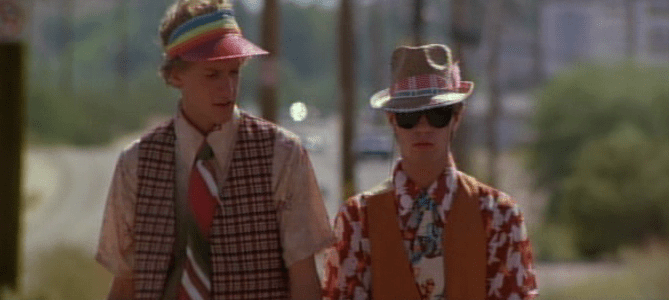
In some respects, O.C. and Stiggs are like teenage versions of Hawkeye and Trapper John from M*A*S*H (1970). Both feature clever hipsters but the latter were also brilliant surgeons whereas the former are only good at one thing – staging elaborate practical jokes. In M*A*S*H, the two surgeons were fighting against authority and the absurdity of war while O.C. and Stiggs are fighting against materialism and mediocrity as represented by the Schwabs with their bad fashion sense and gaudy décor – the epitome of the “ugly American.”

The problem with O.C. and Stiggs is the central characters. They aren’t particularly interesting. Their obsession with pulling endless practical jokes on the Schwabs seems mean-spirited at times. Another problem lies in what O.C. and Stiggs are rebelling against, which isn’t as clearly defined as the war in M*A*S*H. The teen pranksters are rebelling against the mind-numbing banality of suburbia and the “Greed is good” era of Reaganomics. There is an attempt to provide some kind of motivation for why these kids do what they do. Stiggs’ dad is cheating on his wife while O.C.’s dad (grandfather?) is unemployed and possibly senile. No wonder they spend all their time together devising elaborate schemes. It is a form of escape from their mundane surroundings.

This movie sees Altman in an extremely playful mood with the same kind of fast and loose structure as California Split (1974), which also features two freewheeling pals careening from one crazy encounter to another. A crazed, babbling Dennis Hopper even pops up as a burnt out Vietnam vet. It’s as if his photographer character from Apocalypse Now (1979) had somehow made it out of Kurtz’s compound and came back to the United States.

There are some nice moments, like when O.C. dances with a beautiful girl (Cynthia Nixon) at the Schwab wedding that is a nod to classic Hollywood cinema by way of Fred Astaire and Ginger Rogers. But it is not enough to keep this uneven film together.

Altman flips the ‘80s teen comedy on its head. He even refuses to populate the film’s soundtrack with trendy New Wave music, instead opting for the catchy African music of King Sunny Ade. No wonder people hated this movie when it came out. Clearly Altman did not grasp the original source material (or didn’t even bother to read it) and just did his own thing. The results are, at times, amusing and at some point you either surrender yourself to the goofiness of the whole enterprise or resist this maddeningly frustrating effort.

CARLITO’S WAY – A REVIEW BY J.D. LAFRANCE

release_carlitosway

There was a lot of anticipation when Carlito’s Way was released in 1993. Director Brian De Palma had just come off a lukewarm reception for yet another Alfred Hitchcock homage, Raising Cain (1992) and was in need of a hit to appease the studios. And so, a re-teaming with Al Pacino in an effort to recreate the magic of Scarface (1983) made commercial sense. Carlito’s Way was much more somber in tone than the cinematic shotgun blast that is Scarface. It is a tragedy about how a criminal tries to go straight but is ultimately doomed from the get-go.

Carlito’s Way features one of the oldest chestnuts in the world. Narrating his story during the last moments of his life, Carlito Brigante (Pacino) is a veteran criminal recently released from prison and intent on leading a normal, law-abiding life. Of course, it isn’t going to be that easy and when he returns to his old neighborhood, his reputation precedes him. Local gangster Benny Blanco from the Bronx (John Leguizamo) is a cocky, up and comer who sets his sights on Carlito after he is shamed by him in public. Carlito, however, barely notices him as he’s torn between reuniting with an old flame, Gail (Penelope Ann Miller), a struggling Broadway dancer, and keeping his lawyer friend, David Kleinfeld (Sean Penn) out of trouble.

As a personal favor to David, Carlito runs a nightclub so that he can raise enough money to start his own business renting cars in a tropical paradise with Gail. However, Carlito’s loyalty to David will be his undoing because his friend has become so corrupt during the time that Carlito was in prison.

As always, De Palma injects the film with his trademark bravura action sequences, including one early on when Carlito accompanies his cousin on a routine drug deal that turns into a violent blood bath. One look at the set-up and, like Carlito, we know that something is not right. De Palma prolongs the violent confrontation for as long as possible, gradually building the tension as we feel Carlito’s apprehension. The director orchestrates the entire scene like a pro, knowing just how long to build things up before the inevitable eruption of violence.

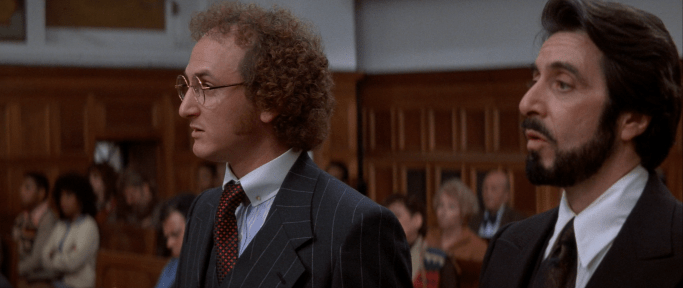
Carlito is a role tailor-made for Al Pacino, allowing him to essay another larger-than-life character. Carlito is a smart guy who cannot escape what he is no matter how hard he tries and Pacino conveys the melancholy that lurks behind the bravado of his character. The real scene stealer, however, is Sean Penn’s sleazy, coked-up lawyer. The actor reportedly did the film to help finance his second directorial effort, The Crossing Guard (1995). For a paycheck role, Penn does a great job as he disappears into the character, complete with a frizzy afro and cheap suits. It’s almost as if Pacino’s presence inspired Penn to step up his game. And this makes Penn’s memorable turn so much fun to watch.

The rest of the cast is filled out by solid character actors like John Leguizamo, who plays Benny as a pushy little runt with a motor-mouth, and the always reliable Luis Guzman as Carlito’s right-hand man. The only miscasting is Penelope Ann Miller as Pacino’s love interest. She looks out of place and just doesn’t have the chops to hold her own against Pacino.

Despite the cliched premise, Carlito’s Way works so well because of the caliber of actors, David Koepp’s screenplay with memorable dialogue (“You think you’re big time?! You’re gonna fucking die big time!”), and De Palma’s stylish direction. This film is proof that given the right material, De Palma can still make a hell of an entertaining movie.

SEMI-PRO – A REVIEW BY J.D. LAFRANCE

Will-Ferrell-in-Semi-Pro-will-ferrell-11769585-853-480

Semi-Pro (2008) proved that Will Ferrell is no longer bulletproof at the box office. The film was not well-received by the critics (nothing new for Ferrell) but failed to connect with his fans like Anchorman: The Legend of Ron Burgundy (2004) and Talladega Nights: The Ballad or Ricky Bobby (2006) did. On paper, Semi-Pro must’ve seemed like a sure-fire hit: mix the dumb guy humor from Anchorman with the underdog sports team of misfits from Slap Shot (1977) and sprinkle all sorts of popular culture references from the 1970s. So what went wrong?

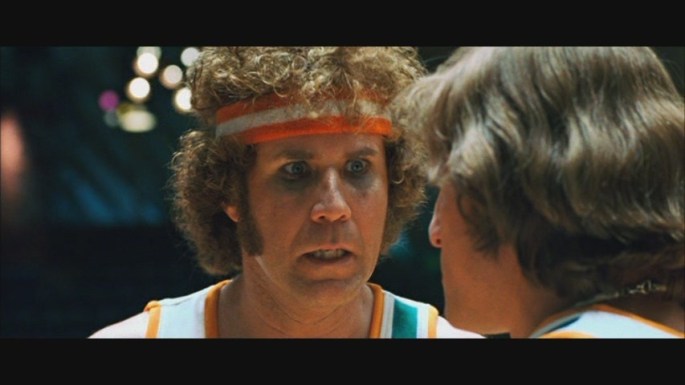
Jackie Moon (Ferrell) is the ever-confident, terminally clueless owner, head coach, and star player (if you can call him that) of the Flint Tropics, an ABA basketball team that might be dissolved when the league merges with the NBA. Only the four best teams will make the cut, which is not good news for Jackie’s team. They are awful, averaging an attendance record of 91 people a game. The lone exception on the team is Clarence “Downtown” Malone (Andre Benjamin) who actually has a shot at making it to the NBA. The Tropics are so bad that one of the local commentators reads the Classifieds section of the newspaper during one game.

In order to improve the team’s chances, Jackie trades their washing machine for Ed Monix (Woody Harrelson), a physical player not above punching out his opponents. The Tropics certainly have their work cut out for them. Not only do they have to start winning on a regular basis but they also have to average 2,000 people every home game. So, Jackie thinks up all kinds of hair-brained schemes to fill seats, including jumping the team’s cheerleaders on roller-skates and wrestling a grizzly bear.

For the first half of Semi-Pro, the comedic beats, or rhythm, is just not there. At the very least, it is inconsistent. Many jokes fall flat and are just not funny. The two color commentators Lou Redwood (Will Arnett) and Dick Pepperfield (Andrew Daly) steal every scene that they are in with their raunchy repartee (much like Jason Bateman and Gary Cole did in Dodgeball: A True Underdog Story). Then, a funny thing happens in the second half. The film actually gets better. There are a few serious moments, mostly dealing with Monix and his ex-girlfriend (Maura Tierney), and once the Tropics get their act together, the film picks up momentum.

Will Ferrell plays the same type of character we’ve seen in countless films – the clueless confident guy with a touch of arrogance. To be fair, he’s got it down to a science now, but it is getting a tad predictable. One gets the feeling that Ferrell is trying to recapture the magic of Anchorman, complete with the 1970s setting. Unfortunately, Semi-Pro is nowhere near as funny despite an excellent premise. Aside from Will Arnett as his usual snarky self, Woody Harrelson is quite good as a washed-up former NBA player looking for redemption and hoping to rekindle his relationship with an ex-flame.

Semi-Pro isn’t a total train-wreck by any stretch and it does have its genuine moments of hilarity but doesn’t quite deliver as well and as often as it should. If you can make it through the first half of the film, where the filmmakers struggle to find the right mix of humor and drama, you’ll be rewarded for a much more satisfying second half that pays off your patience for sticking it out.

CARLOS – A REVIEW BY J.D. LAFRANCE

Carlos

Notorious international terrorist Ilich Ramirez Sanchez a.k.a. Carlos the Jackal came to prominence in the 1970s and 1980s with several politically-motivated bombings, kidnappings and hijackings in Europe and the Middle East. He eventually became a popular culture icon with thinly-disguised depictions in films like Nighthawks (1981) and gracing the cover of Black Grape’s debut album. His image was used as a cultural touchstone rather than an accurate depiction. Incredibly, it wasn’t until Olivier Assayas’ ambitious, five-and-a-half hour miniseries Carlos (2010) that the man and his times were finally done justice. Assayas wisely doesn’t pass judgment on Carlos but rather depicts how he influenced the political climate and how it, in turn, influenced him. Far from a stuffy history lesson, Carlos is an epic political thriller with a charismatic performance by Edgar Ramirez as the infamous terrorist.

Carlos is presented in three, feature-length episodes that track his rise to power and notoriety; the man at the peak of his powers and his greatest triumph; and his inevitable decline and capture. Early on, Assayas establishes his take on Carlos (Ramirez), presenting him as a vain man who, at one point, is seen admiring his own naked body in a mirror to the strains of “Dreams Never End” by New Order. We also see him espouse his personal philosophy, that true glory is “doing one’s duty in silence. Behind every bullet we fire, there will be an idea because we act in harmony in our conscience.” And initially, he seems to adhere to this but once he becomes a superstar among international terrorists, he embraces and cultivates his inflated reputation.

In the first episode, Assayas shows Carlos’ clumsy attempts to impress Wadie Haddad (Ahmad Kaabour), co-founder of the Popular Front for the Liberation of Palestine (PFLP), with a bungled assassination and a failed bombing. This segment builds towards an intense showdown between French domestic intelligence agents and Carlos at one of his girlfriends’ apartment in Paris where we see just how dangerous he is when cornered. The second episode starts off literally with a bang as Carlos and his group arrives at the OPEC headquarters in Vienna and take oil ministers from all over the world hostage in 1975. This was his highest profile operation done at the height of his powers.

By the end of the second episode, Carlos has been kicked out of the PFLP and he starts up his own terrorist organization, effectively becoming a mercenary. The third episode tracks his inevitable decline as he wages a war of terror on France in the early to mid-‘80s after they arrest his wife and a close associate. It’s costly battle for both sides but more so for Carlos who can no longer rely on his reputation to get jobs or find safe haven in countries that used to be sympathetic towards him. He becomes more vulnerable to attacks because he has more to lose, chief among them a family.

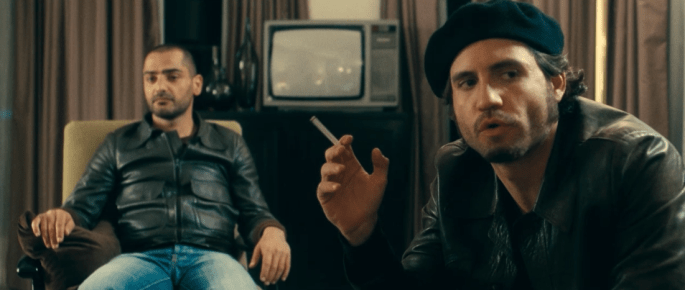
Edgar Ramirez’s magnetic presence really comes across early on as he exudes the cocky confidence of the man and conveys his complete commitment to the cause he espouses so brazenly. The actor has Carlos’ terrorist swagger down cold, showing us the smooth ladies’ man with his perfectly coifed looks and stylish attire. Known prior to Carlos mostly for his strong supporting turn in Tony Scott’s Domino (2005), he finally gets to be front and center, playing the role of a lifetime: a larger than life historical figure in a sprawling epic. Assayas and Ramirez’s fascinating take on Carlos is that he viewed himself as a kind of rock star, a charismatic personality who clearly saw himself as someone of importance, destined to do great things. This is evident in the way Carlos idolized and emulated Che Guevara during the OPEC raid, sporting the iconic revolutionary’s trademark beret and scruffy facial hair look as if making a statement. Also, the rock star analogy is further explored in the use of post-punk music along with the third episode, which could be seen as Carlos’ “fat Elvis” period of decline. Ramirez commands every scene he’s in, especially the OPEC raid where he prowls around rooms and hallways, expertly orchestrating this attack in order to get what he wants.

In an intriguing break from tradition, Assayas eschews a traditional orchestral score for source music, predominately post-punk rock. The opening track is “Loveless Love” by the Feelies, which sets the tone of the film. As the song builds so does the tension of the scene it plays over – that of Carlos attempting to assassinate a pro-Israeli businessman in England. Assayas also uses a few tracks by Wire, one by A Certain Ratio and a memorable action sequence scored to “Sonic Reducer” by the Dead Boys. The attention to period detail and architecture is also excellent as Assayas takes us on a perverse travelogue through Europe and the Middle East with Carlos as our guide.

With its color-coded sequences and its objective direction that is slick and confident, Carlos resembles Traffic (2000) and Syriana (2005). These films are all ambitious and expansive in scope as they expertly blend personal politics with bigger political movements. Carlos is a towering achievement, a fascinating study of a man who was a reflection of the times in which he lived in and is embodied by Ramirez’s powerful performance spanning several decades. Assayas’ film is very relevant to our times as it examines the complex machinations of international terrorism with the agendas of terrorist groups clashing with that of the governments of countries all over the world. Carlos sees the struggle of the oppressed against imperialist regimes as a war that he helps fight. With the end of the Cold War, he is marginalized and considered a relic from a bygone era. Assayas has crafted an incredible film that is smartly written, well-acted and masterfully directed.