THE MEN WHO STARE AT GOATS – A REVIEW BY J.D. LAFRANCE

bt7ul3laqprvmupqkhqw

George Clooney is one of those versatile actors that can easily go back and forth between big budget studio films like Ocean’s Eleven (2001) and smaller, more personal independent films like Good Night, and Good Luck (2005). One gets the feeling that given his preference, he’d much rather make the latter than the former but he’s smart enough to know that doing the occasional studio film gives him the opportunity to make smaller films. One glance at the cast list for The Men Who Stare at Goats (2009) and you would assume that it was a studio film with the likes of Clooney, Jeff Bridges, Ewan McGregor, and Kevin Spacey involved. It’s the offbeat premise, however, that could only come from an indie film.

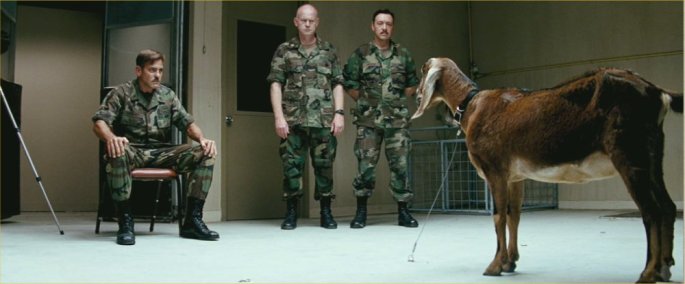
Inspired by Jon Ronson’s non-fiction bestseller of the same name, The Men Who Stare at Goats follows the misadventures of Bob Wilton (McGregor), an investigative journalist in search of a major story to cover. He stumbles across a secretive wing of the United States military called The New Earth Army, created to develop psychic powers in soldiers. These include reading the enemy’s thoughts, passing through walls, and yes, killing a goat by staring at it. While doing a story about a man (Stephen Root) who stopped the heart of his pet hamster with his mind for a local newspaper in Ann Arbor, Wilton finds out that this man used to be part of a top secret military unit of psychic spies in the 1980s. At least, that’s what he claims.

Understandably skeptic about the man’s abilities, Wilton learns about the former leader of the unit, Lyn Cassady (Clooney), “the most gifted psi-guy” who now runs a dance studio. After a co-worker dies suddenly and his wife leaves him for his editor, Wilton interprets these incidents to be a wake-up call and travels to the Middle East to cover the war. By chance (or is it?), while staying at a hotel in Kuwait, he runs into Cassady. This self-proclaimed Jedi Warrior (?!) tells Wilton about Project Jedi, a hush-hush assignment that cultivated Super Soldiers with super powers. Cassady’s technique for tapping into these powers involves drinking alcohol and listening to the music of classic rock band Boston.

Wilton learns all about this elite unit that combines “the courage and nobility of the Warrior” with “the spirituality of the Monk,” and follows in the footsteps of “the great Imagineers of the past”: Jesus Christ, Lao Tse Tung and Walt Disney. Wilton convinces Cassady to allow him to tag along during his mission in Iraq and the rest of the film plays out as a quirky road movie cum satire of war films.

George Clooney is quite good as the clearly bat-shit crazy Cassady. The actor plays the role seriously but you can see that insane glint in his eyes. It’s impressive how he is able to say some of his character’s ridiculous dialogue with a straight face. Clooney gets maximum laughs by playing it straight and is also not afraid to act silly when the situation calls for it. And it does in one of the film’s funniest set pieces during a flashback where Cassady’s New Age commanding officer (Bridges) loosens up the unit by having them spontaneously dance to “Dancing with Myself” by Billy Idol. It’s pretty funny seeing a bunch of uniformed soldiers, Clooney included, dancing their asses off.

Clooney is surrounded by a very impressive supporting cast. Jeff Bridges plays a peace-loving high ranking soldier, sort of the Dude if he had been drafted instead of dropping out of society. Kevin Spacey is the black sheep of the unit and jealous of Clooney’s powers. Meanwhile, Ewan McGregor is the naive reporter and audience surrogate. They all get their moments to show their stuff but the film really belongs to Clooney and his seriously wacky character.

After making serious political films like Syriana (2005) and Good Night, and Good Luck, it’s nice to see Clooney starring in a political satire that is funny but still has something to say as it shows the absurdity of the war in Iraq. This is evident in a scene where Cassady and Wilton narrowly escape a firefight between two competing security firms. The Men Who Stare at Goats falls under the truth is stranger than fiction category as it presents a story populated by eccentric characters and tall tales, some of which might be true. Regardless, it is an entertaining film with a wonderfully oddball sense of humor in the same vein as other memorable war satires like M*A*S*H (1970), Catch 22 (1970) and Three Kings (1999). Don’t be put off by the setting. Although it takes place in Iraq, The Men Who Stare at Goats is not weighed down by the baggage of this war.

ULTRAVIOLET – A REVIEW BY J.D. LAFRANCE

76546_original

Ultraviolet (2006) presents a future ravaged by a disease known as hemophagia that mutates its victims giving them enhanced speed, strength and intelligence but with a drastically shortened life-span of 12 years. The government tried to eliminate all of the diseased but a number of them eluded capture and formed an underground terrorist group dedicated to bringing down the oppressive regime. Caught in the middle is a deadly infected agent named Violet (Milla Jovovich), who retrieves a case that provides the key to destroying all of the infected people or it might save her because her limited life-span has almost expired.

Director Kurt Wimmer packs in a lot of exposition in the first ten minutes (almost too much) forcing the viewer to absorb a lot information as this world and its rules are established. He certainly doesn’t waste any time, getting right down to the story but at the expense of any kind of character development. Ultraviolet doesn’t settle down until halfway through its 94-minute running time as it attempts develop its characters but by that point we really don’t care because we have been bombarded with all of this eye-popping action and vibrant set design. After awhile, all of the exposition becomes too much to absorb and you just have to surrender to the film’s arresting style.

Like he did with Equilibrium (2002), Wimmer has created a protagonist that can kick major ass and look really cool doing it – what more could you ask for from a film like this? Sadly, Milla Jovovich still can’t act worth a damn but fortunately the movie doesn’t give her much of a chance to as it goes from cool action sequence to the next at a near breathless pace. After working with such a talented actor like Christian Bale in Equilibrium what possessed Wimmer to work with the acting black hole that is Jovovich?

That being said, Wimmer ups the ante with the action sequences, using way more extensive CGI in this movie, most notably in an eye-popping chase sequence where an attack helicopter pursues our heroine along the side of a building, defying gravity as she rides along its face. Even the fight scenes feature a lot more CGI, which is a shame as part of the charm of Equilibrium was the au natural combat.

Wimmer adopts a striking primary color scheme against bleached out silvers befitting Violet who can change the color of her hair and clothing at will. In the background of a given scene there can be splashes of yellow or purple and then someone could walk by in a red outfit. It sounds like a jarring effect but Wimmer makes it work somehow. His command of composition of what is contained within the frame has become more advanced and his skill as a director has improved greatly (as has his budget, apparently) – this is a great looking movie.

Ultraviolet is similar in terms of story to the live-action Aeon Flux (2005) movie only with infinitely better action sequences. However, Wimmer’s screenplay is quite weak with very wooden dialogue. He should have adopted the less is more approach of Aeon Flux, which was a nice example of visual storytelling. The set design and visual effects are much slicker and infinitely more colorful compared to the almost monochromatic color scheme of his previous film. Ultraviolet is all a bit silly – scratch that, very silly – but it is completely committed to its own sci-fi hokum in a way that is strangely admirable. In a perfect world, the major Hollywood studios would give Wimmer $100 million to make a big, splashy summer movie instead of hacks like Brett Ratner who has no personal style. What Wimmer needs to do is stop writing his own screenplays and work with somebody who can – that would surely result in an infinitely better movie that he is clearly capable of making.

WHERE THE BUFFALO ROAM – A REVIEW BY J.D. LAFRANCE

oQYFByZ

Many filmmakers over the years have tried to make films out of Hunter S. Thompson’s books but the first completed effort did not surface until 1980 with Where The Buffalo Roam. It is not a good film. And yet, I find myself oddly fascinated by this deeply flawed effort. Perhaps it is Bill Murray’s truly inspired one-note performance and the stories of his deep immersion into the role. So deep that he has never fully been able to shake Thompson’s persona since. From articles that appeared at the time of its release, the project seemed doomed from the get-go with a first-time director clearly out of his depth and a problematic screenplay that Murray and Thompson tried in vain to improve during filming. The end result speaks for itself.

The film begins with a situation familiar to anyone who’s read Thompson’s work – under pressure to get an article done by a strict deadline for Blast magazine (aka Rolling Stone) for his long-suffering editor Marty Lewis (Bruno Kirby wasted in a thankless role). Up against it, he decides to write about his friend and attorney at law Carl Lazlo, Esq. (Peter Boyle). The film proceeds to flash back to San Francisco, 1968 and Thompson is holed up in a hospital room with a Wild Turkey I.V. drip (nice touch) and his own private nurse. Lazlo shows up (through the window no less) and springs his client for a road trip in a muscle car that bears more than a passing resemblance to the one James Taylor and Dennis Wilson drove in Two-Lane Blacktop (1971).

After this promising start, the film stalls with a bit where Thompson pretends to draw a lady’s blood which is pointless and painfully unfunny. Although, things perk up slightly in the next scene where he attends a court case that Lazlo is working. In the courtroom, he proceeds to mix up a Bloody Mary while he waits for the proceedings to begin, which is fairly amusing. Lazlo’s defense of four hippies stops the film cold. It is supposed to show his righteous fight for the underdog and the futility of working within the system. It is supposed to set up the struggle between the counterculture and the establishment, which epitomized the 1960s. Instead, it just comes across as dull and preachy.

Where the Buffalo Roam
jumps to Los Angeles, 1972 as Thompson covers the Superbowl as depicted in the book Fear and Loathing on the Campaign Trail ’72. After a tedious bit where he checks in, the film reaches its funniest point (not a hard feat, mind you) as Thompson stages his own Superbowl in his hotel room. He corrals a maid and a room service waiter into playing an impromptu game and, in the process, trash the room in a humorous scene that is the closest this film gets to realizing Thompson’s writing that was often filled with absurdly comical passages.

However, the film stalls yet again when, surprise, Lazlo shows up to take Thompson (and us) away from fun and sidetracks the narrative with painfully obvious political and social commentary as the crazy attorney tries to get his client to join a band of revolutionaries. The whole sequence makes no sense and is a total bore but does make you thankful for the fast-forward button. At this point, I really appreciated what a great job Terry Gilliam and Johnny Depp did adapting Fear and Loathing in Las Vegas (1998) to the big screen.

Fortunately, Thompson doesn’t have much time for Lazlo’s revolution and splits. The film segues into an amusing example of one of Thompson’s infamous college lecture appearances where he conducts a rowdy Q&A session to an adoring crowd of students. It is here where he utters one of his most famous pearls of wisdom: “I hate to advocate weird chemicals or insanity to anyone but they’ve always worked for me.” For anyone who has seen vintage footage of Thompson at one of these college campus appearances, the film’s recreation is spot on – a rare moment of verisimilitude.

Where the Buffalo Roams
ends on a high note as it traces Thompson’s misadventures on the campaign trail, pitting him against the elite press corp. as he invades the plane carrying respectable journalists from newspapers like the Washington Post, much to the consternation of a White House representative (played by Animal House alumni Mark Metcalf). Not surprisingly, Thompson gets banished to the “zoo” plane with all of the technicians. It’s a chaotic, noisy crowd where Thompson fits right in. He proceeds to get a straight-laced journalist (played wonderfully by Rene Auberjonois) whacked out of his skull on prescription drugs (he’s later found in the plane bathroom singing, “Lucy in the Sky with Diamonds”). This allows Thompson to steal his press credentials, which he uses to meet President Richard Nixon in a bathroom where he proceeds to freak the man out with his Gonzo behavior.

1-20160609152105

Bill Murray certainly has Thompson’s distinctive voice and unique physical mannerisms down cold. In the opening scene, he nails the man’s tendency to sudden outbursts of anger and conveys his love and use of guns. Thompson also had a tendency to mutter to himself, often dictating into a tape recorder, which Murray does quite well. Best of all, the comedian spouts many Thompson-erisms at certain points that make you wonder if they were the parts that Murray and Thompson rewrote or that Murray, channeling Thompson, improvised. But for all of this hard work it still feels like a caricature of Thompson, or rather his public persona, like the Uncle Duke character in Doonesbury, but it is still fun to watch. Murray’s performance does contain moments of inspired lunacy, like the hospital room scene and the hotel Superbowl sequence. He does the best with what he has to work with but it’s an uphill battle and he’s constantly thwarted by the unorganized screenplay and ho-hum direction.

In the late 1970s, Thompson’s agent Lynn Nesbit called him one day and told him that movie producer Thom Mount wanted to pay $100,000 for the rights to “The Banshee Screams for Buffalo Meat,” a eulogy for his attorney Oscar Zeta Acosta, which appeared in the October 1977 issue Rolling Stone magazine. Thompson agreed to have it optioned without seeing a script figuring that the film would never get made because Fear and Loathing in Las Vegas had been optioned several times and never made. He remembers, “Then all of a sudden there was some moment of terrible horror when I realized they were going to make the movie.” In 1978, illustrator Ralph Steadman (who had worked with Thompson on numerous occasions) was asked to create a poster for the film. He used a drawing entitled, Spirit of Gonzo as the basis but this incarnation disappeared and in 1979 he created a completely different poster.

Thompson met with the film’s screenwriter John Kaye but felt that the man understood more than what was in the script. “I was very disappointed in the script. It sucks — a bad, dumb, low-level, low-rent script.” By his own admission, Thompson admitted that he signed away having any control so that he couldn’t be blamed for the end result. In the early drafts, Lazlo’s surname was Mendoza but this was changed after Nosotros, a group of Chicano actors and filmmakers, threatened to generate controversy if the character was played by Anglo actor Peter Boyle.

Before principal photography began, director Art Linson took a four-month crash course on directing. Steadman observed the first-time filmmaker on the set and said that it was “pretty obvious that he was in no frame of mind to catch the abandoned pure essence of Gonzo madness, which can only happen in uncontrolled conditions.” However, Steadman also felt that Linson’s “fanaticism for the subject he was trying to portray was undoubtedly there, and his sincerity, too,” but that the director was under the impression that the film was going to be a runaway hit before he’d even begun filming it and therefore refused to take any chances with the material.

While making Where the Buffalo Roam, Murray hung out frequently with Thompson. They were known to pull some wild stunts, like the time, at Thompson’s Aspen, Colorado home, after many drinks and arguing about who was the better escape artist, the writer tied the comedian to a chair and threw him into the swimming pool. Murray nearly drowned before Thompson pulled him out. The comedian also hung out with Steadman, who gave Murray his impressions and observations of Thompson’s mannerisms. According to Steadman, within two weeks of Thompson being on set, Murray had transformed into him.

Just before principal photography began, Murray became apprehensive because of the shortcomings of the script. Kaye claims that Thompson and Murray changed parts of it during filming and, at that point, he chose to no longer be involved. Linson did allow Murray, with Thompson’s help, to add lines on the set. Years later, Thompson said that he and Murray wrote and they shot several different beginnings and endings for the film but none of them were used. Murray and Thompson continued to be concerned with the film’s lack of continuity and in early 1980 added voiceover narration. Where the Buffalo Roam was sneak-previewed in late March and the last two scenes and most of the narration were missing. Murray was reportedly furious. Universal ended up shooting a new ending and three days before release, a press screening was canceled because of editing problems.

Thompson even served as a consultant on Where the Buffalo Roam but this did little to translate the author’s warped vision to the big screen. While watching the film, it becomes readily evident that, despite Murray’s inspired performance, Kaye and Linson had no idea what Thompson’s books were trying to say. The film seems more like a collection of rather tame highlights from the man’s work, including Fear and Loathing on the Campaign Trail ’72, The Great Shark Hunt and Fear and Loathing in Las Vegas. Where the Buffalo Roam owes more to the sensibilities of Animal House (1978), with its goofy humor, than Thompson’s savage political satire. Mount also produced Animal House and ended up casting a few of the supporting actors from that film in this one. With Terry Gilliam’s adaptation of Fear and Loathing in Las Vegas, we laugh along with Thompson and his attorney but at a certain point the film makes it a point to show that these guys aren’t very nice and are quite destructive – to themselves and those around them. It is this darkness that is missing from Linson’s film, which is a light-hearted romp, a slob comedy.

In an interesting post-script, Murray had a tough time shaking Thompson’s persona after filming. Murray made the film between the fourth and fifth seasons of Saturday Night Live. When the fifth season began, the comedian was still channeling Thompson, showing up to meetings with the long black cigarette holder and sunglasses. One of the show’s writers said, “Billy was not Bill Murray, he was Hunter Thompson. You couldn’t talk to him without talking to Hunter Thompson.” Early in the fifth season of the show, Murray sometimes looked bored on-air and was described as acting like “a tyrant” backstage by some. He seemed to be angry at everyone and very uncooperative. After the film was released and tanked at the box office, as well as being trashed by the critics, the studio quickly pulled it from theaters. Murray started to act more like himself and no one brought up the strange period where he acted like Thompson. Years later, Murray reflected on the film: “I rented a house in L.A. with a guest house that Hunter lived in. I’d work all day and stay up all night with him; I was strong in those days. I took on another persona and that was tough to shake. I still have Hunter in me.”

Where-the-Buffalo-RoamAfter the film’s dismal reception, no other adaptations were completed. It took actor Johnny Depp and his friendship with Thompson to get any kind of serious attempt at an adaptation of Fear and Loathing in Las Vegas even considered. In the end, I think that the problems I have with Where the Buffalo Roam are best summed up in a speech Thompson gives at the end of the film where he says, “it just never got weird enough for me.” Amen, my brother.

THE BOURNE LEGACY – A REVIEW BY J.D. LAFRANCE

bourne1

With The Bourne Ultimatum (2007) came a satisfying conclusion to the popular spy franchise as its protagonist finally came to terms with who he was and how he came to be a government-trained assassin. Never one to let a lucrative franchise die, Universal Pictures soon started to develop yet another installment. However, Matt Damon and Paul Greengrass – Ultimatum’s star and director respectively – felt that there was no more story to tell and bowed out, leaving the studio with quite a dilemma. So, they went back to the architect of the series, screenwriter Tony Gilroy. He had written the first draft for Ultimatum before two other writers were hired while he tried his hand at directing. He had made waves in the press about not being particularly thrilled with the direction the third film had taken and so I’m sure he saw The Bourne Legacy (2012) as a chance to make this franchise his own and no doubt itching to bounce back after the lackluster box office of his last film Duplicity (2009).

The problem Gilroy faced was getting people interested in a film no longer starring the series’ beloved lead actor. However, he wisely cast a completely different actor with Jeremy Renner (The Hurt Locker) who, thankfully, doesn’t play a rehash of Jason Bourne. Gilroy also wisely acknowledges what came before by having the ending of Ultimatum overlap with Legacy. In doing so, this installment isn’t a remake but rather a reboot/sequel hybrid that exists in the same world created in the first three films.

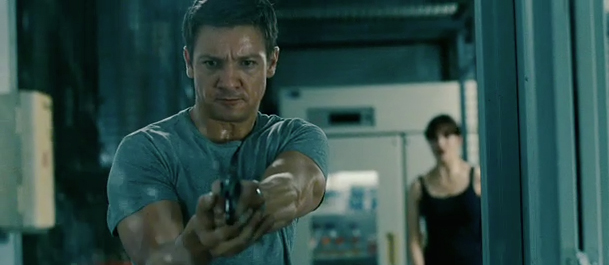
After Jason Bourne exposed the United States government’s top secret operations, Blackbriar and Treadstone, the CIA bigwigs enlist retired U.S. Air Force Colonel Eric Byer (Edward Norton) to cover their tracks. This involves eliminating all operatives in other clandestine undertakings, chief among them Operation Outcome. It is one of the Department of Defense’s black ops programs that provides agents with green pills that enhance their physical skills and blue pills that enhance their mental capabilities. One by one, these agents are killed except for Aaron Cross (Renner), who’s been on a training exercise in the remote wilderness of Alaska.

The CIA also tries to kill the scientists that researched the pills by brainwashing one of them (Zeljko Ivanek) to shoot his co-workers, save Dr. Marta Shearing (Rachel Weisz) who narrowly survives. This is a chilling scene as Gilroy ratchets up the tension with the killer coldly gunning scientists down like some kind of mild-mannered (yet frighteningly lethal) Manchurian Candidate. Naturally, Byer and his crew create a cover story for the media of just another crazed rampage by a lone gunman. As it turns out, Marta originally administered Aaron’s meds and so he seeks her out to get more pills and get some answers, while Byer tries to kill them. Once they are on the run, Gilroy cranks up the paranoia factor as simple tasks like boarding a plane are a nerve-wracking experience as any fellow passenger could be an incognito government operative sent to kill them.

Aaron Cross is a much chattier character than the taciturn Bourne and, unlike him, Aaron knows exactly who he is. Once a good soldier, he now questions what he’s doing and why he needs to be dependent on these pills. This latter dilemma manifests itself more and more as the film goes on with Aaron conveying, at times, the desperation of a junkie looking for his next fix. With The Bourne Legacy, Renner completes a trifecta of high-profile action films that include Mission: Impossible – Ghost Protocol (2011) and The Avengers (2012). The supporting roles he had in those two films were just warm-ups for Legacy where he finally gets to headline his own big, Hollywood blockbuster and pulls it off.

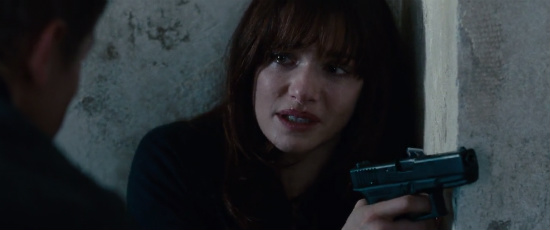
Rachel Weisz’s Marta is not the damsel in distress she initially appears to be as the scientist quickly acclimates to her predicament – being on the run with Aaron – and even helps him take out the occasional bad guy. Not surprisingly, Aaron and Marta’s relationship is initially an abrasive one as he demands more pills and answers from her, but she soon realizes that without his help she will most certainly wind up dead before the day is out. It is an uneasy alliance that you would expect from two people thrown together in a desperate situation but over the course of the film they learn to trust each other. Weisz plays a convincing scientist, adept at spouting the technical jargon that comes with the role, but she also has some touching scenes with Renner as his character becomes as dependent on her as she is on him. The Bourne Legacy is a nice change of pace for the actress who hasn’t been in an action-oriented franchise since The Mummy films.

Interestingly, the idea of drug-induced government operatives eerily echoes, albeit on a much larger scale, a storyline in the fourth season of the television show Buffy the Vampire Slayer. Buffy falls in love with a college student by the name of Riley who is actually a pharmaceutically-enhanced government agent, and much like in the Bourne films, this top secret operation is eventually exposed and then covered up by the government. Once Riley realizes the true nature of the operation, he goes rogue and even begins to feel the detrimental effects of the drugs he was on – his pain receptors shut down and he must seek treatment. Sound familiar? Now, genetically enhanced government operatives are nothing new. Comic book superhero Captain America is also enhanced through genetic engineering but the similarities between The Bourne Legacy and this storyline from Buffy the Vampire Slayer are quite striking.

For those not crazy about Paul Greengrass’ frenetic, often disorienting hand-held camera action sequences in The Bourne Supremacy (2004) and Ultimatum, will be happy to know that Legacy is, by and large, devoid of them. Gilroy shows a good sense of geography and skill at choreography during these scenes, in particular, a dynamic and tense battle in Marta’s home between her and Aaron and a team of assassins sent to kill them. With this sequence – and others – Gilroy creates a real sense of danger and scary intensity as one feels that Aaron and Marta’s lives are really at risk.

The-Bourne-Legacy-3

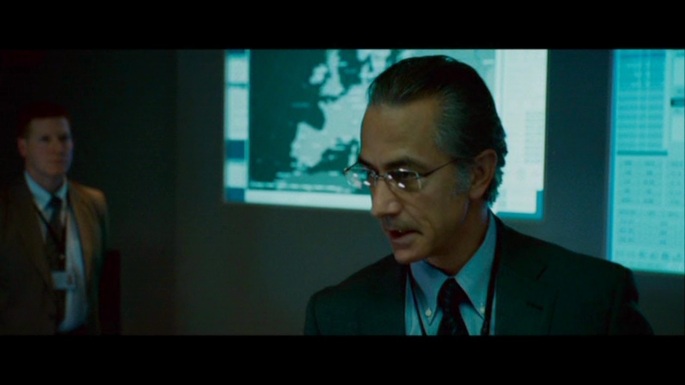
The Bourne Legacy could be seen as an opportunistic cashgrab by a studio afraid to let a lucrative franchise lie dormant but I don’t think Tony Gilroy sees it this way. In addition to delivering a rousing spy thriller, he raises some interesting questions about the culpability of pharmaceutical companies that research and create performance enhancing drugs and this is touched on in an early conversation between Aaron and Marta where he chastises her for claiming ignorance over the true purpose of the drugs she helped create, pointing out that they control him. Gilroy’s skill at writing smart dialogue comes into play during this scene and throughout the entire film as he creates an intelligent and exciting thriller that opens up the world he first helped create in The Bourne Identity (2002). That being said, he doesn’t deviate from the template established in the first film as our heroes are tracked with state-of-the-art surveillance technology by government officials barking orders in a control room all the while the protagonists traverse the globe looking for answers and evading the bad guys. While, Legacy is not as good as the first three films – Matt Damon was just too good at eliciting our sympathies and, at the time, those films were a fresh alternative to the Bond franchise – it is very well done and a promising start for a new series of films with a new protagonist to root for.

THE BOURNE ULTIMATUM – A REVIEW BY J.D. LAFRANCE

bourne1

After two films with Jason Bourne (Matt Damon) on the defensive and on the run, The Bourne Ultimatum (2007) sees our hero going on the offensive and taking the fight to his handlers. Coming full circle not only thematically, but also on a production level – the film was born out of chaos as principal photography began without a completed screenplay – it managed to come out the other side with a coherent final product that endeared itself to both audiences and critics. Ultimatum not only avoids the dreaded third installment of a trilogy jinx (they are notoriously the weakest), but ends up being the strongest one of the series as Bourne gets some definitive answers to who he is and his past.

Ultimatum picks up right where The Bourne Supremacy (2004) left off with Bourne on the run in Moscow after being seriously injured in an exciting car chase with a fellow Treadstone assassin. Meanwhile, Simon Ross (Paddy Considine), an investigative reporter with The Guardian, a British newspaper, is working on a story about Bourne and a top-secret CIA operation known as Blackbriar. Naturally, the agency finds out and puts Ross under surveillance in the hopes that Bourne will contact him, which he does, at a busy London train station.

Bourne’s rendezvous with Ross amidst the hustle and bustle of the train station is a nice homage to the opening of Francis Ford Coppola’s The Conversation (1974) as the two men are heavily scrutinized by all kinds of CIA surveillance. There is a lot of fun to be had watching Bourne masterfully evade all their manpower and hi-tech equipment in a wonderfully intense and insanely choreographed sequence that successfully ratchets up the tension as the CIA closes in. However, before Bourne can get Ross to reveal his source, an extremely efficient Blackbriar assassin (Edgar Ramirez) kills the journalist and disappears like a ghost.

Fortunately, Bourne takes Ross’ notes and figures out that the source is located in Madrid. During the course of his investigation, Bourne is reunited with Nicky Parsons (Julia Stiles), a CIA operative sympathetic to his plight. Within the agency, the man in charge of Blackbriar, CIA Deputy Director Noah Vosen (David Strathairn) wants Bourne dead because he sees him as a dangerous liability while another agent, Pamela Landy (Joan Allen), wants to take him alive because she doesn’t agree with Vosen’s methods. This results in some wonderfully testy bickering between the two actors as they argue over what to do about Bourne. The rest of Ultimatum plays out as a brilliantly staged cat and mouse game with Bourne turning the tables on his handlers.

This time around, David Strathairn is the veteran character actor enlisted to play the CIA honcho tasked to find and eliminate Bourne. Like Chris Cooper (The Bourne Identity) and Brian Cox (The Bourne Supremacy) before him, he has the gravitas to play a take-charge authority figure and part of the enjoyment of this film is watching Bourne constantly thwart Vosen’s plans. In Ultimatum, Landy is a more sympathetic figure as she wants to capture Bourne alive (unlike Vosen). As the film progresses and she learns more about what the United States government did to Bourne and others in Treadstone, she realizes that she can no longer be complicit in the CIA’s illegal activities. Nicky Parsons also undergoes significant development as she ends up helping Bourne and turns out to be a key figure in his past.

Paul Greengrass, who also directed Supremacy, is back behind the camera bringing his trademark, no-nonsense pacing and visceral, hand-held camerawork to Ultimatum. The film’s action sequences are the epitome of edgy intensity as the fight scenes are quick and as brutal as a PG-13 rating will allow. They are realistically depicted – after all, guys as well trained as Bourne don’t waste any time and know exactly how to bring someone down as quickly and as efficiently as possible.

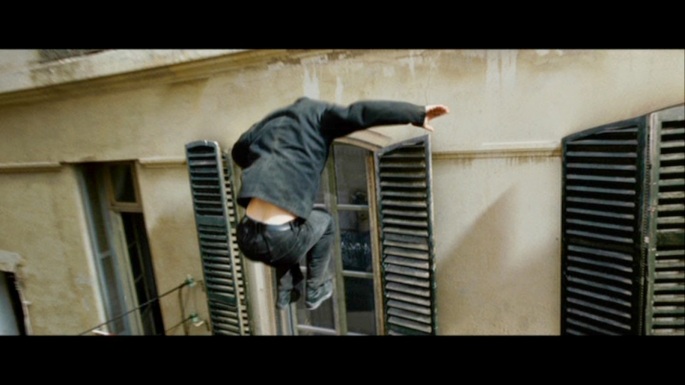
Bourne2Like with the other Bourne films, Ultimatum also has exciting chases, including the police pursuing Bourne over rooftops in Tangiers while he’s chasing an assassin going after Nicky, and a crazy car chase through the busy streets of New York City. Greengrass and his stunt people upped the ante on the chases, most notably the sequence in Tangiers, which starts off with scooters in the busy streets and then after a car bomb goes off, along rooftops on foot. Greengrass’ kinetic camerawork is taken to the next level as we literally follow Bourne leaping through the air from one building to another.

The lo-tech versus hi-tech dichotomy is beautifully realized in all three Bourne films as symbolized in the way he kills the highly trained assassins sent to kill him. In The Bourne Identity (2002), it’s with a pen, in Supremacy it’s with a rolled up magazine and in Ultimatum it’s with a book. The films never make a big deal about it and even show how well Bourne can manipulate technology, but his best chance at survival is to MacGyver it and stay off the grid.

With the phenomenal success of The Bourne Supremacy, Universal Pictures persuaded screenwriter Tony Gilroy to write the first draft of The Bourne Ultimatum for a significant amount of money, but only under the conditions that he could leave after its completion and that he wouldn’t have to speak with director Paul Greengrass, who was also returning, and did not get along with the writer. According to Damon, “It’s really the studio’s fault for putting themselves in that position. I don’t blame Tony for taking a boatload of money and handing in what he handed in. It’s just that it was unreadable. This is a career-ender.”

After Gilroy left the project and a release date looming, Greengrass brought in four other writers including George Nolfi, Scott Z. Burns, and Tom Stoppard, the latter who said of his input: “Some of the themes are still mine—but I don’t think there’s a single word of mine in the film.” Amazingly, before the film’s release date, Gilroy arbitrated and lost to get sole credit. As a result, the filmmakers were writing the script as they were making the film over three continents in 140 shooting days. According to Damon, “There wasn’t a single day where we didn’t have new pages! The main issue was that a question was never answered: Why was Bourne here? … What Paul settled on was that it has to be a story about meeting his maker.”

The exciting chase through the streets of Tangiers was an homage to Gillo Pontecorvo’s Battle of Algiers (1966). It took 14 days to shoot with Bourne’s rooftop leap done by a stuntman jumping right behind Bourne while carrying a small, lightweight camera. According to second unit director and stunt coordinator Dan Bradley, he often allowed the stunt people to hold the cameras because “they’re not too freaked out about getting hit or sliding under something while holding a camera. Some of the best shots in Supremacy and Ultimatum are because the stunt guys were operating.” Once again, Greengrass applied an independent film aesthetic to a big studio movie budget or, as he put it, “one of the ways you do it is to try your luck and set the action in places where you can’t behave like a big movie … You’re forced to sort of be a bit like a student film and make it up as you go along, live on the land and shoot when people are around.”

Bourne3If Identity was about our hero escaping from his CIA handlers and Supremacy was about him figuring out why they are still after him, then Ultimatum is all about getting revenge on those responsible for messing up his life in the first place and figuring out, once and for all, his identity. What elevates Ultimatum (and the rest of the series) above, say, the Mission: Impossible movies, is that it is more than just an exciting thriller (although, it does work on that level). It is also has a sharp, political component in the form of a scathing critique of the CIA’s dirty little secrets. The series ultimately asks, what happens when a highly-trained and conditioned government operative questions what he does and why? How does he undo the programming that made him what he is and come to grips with what he’s done? This film answers these questions to a satisfying degree while also being very entertaining conclusion to the series.

THE BOURNE SUPREMACY – A REVIEW BY J.D. LAFRANCE

bourne1

After the grueling experience that was making The Bourne Identity (2002), Matt Damon was understandably wary about reprising the role of Jason Bourne. However, the film’s substantial box office success meant that the studio was eager to crank out a sequel and brought their leading man back into the fold with the promise of a new director after Doug Liman managed to alienate almost everyone on the first film. Paul Greengrass, director of the critically-acclaimed Bloody Sunday (2002) came on board, taking up where Liman left off by adopting the same loose, hand-held camerawork and cranking up the intensity, especially with the action sequences, to the detriment of some that felt the herky-jerky movements resulted in motion sickness. Regardless, The Bourne Supremacy (2004) was a hit both critically and commercially, outperforming Identity.

Bourne (Damon) and Marie (Franka Potente) have gone off the grid by taking refuge in India and this gives him time to sort through his fragmented memories and feverish nightmares. But, as is always the case with these kinds of films, our hero can’t stay hidden for long and trouble finds him. Meanwhile, a top-secret government deal in Berlin goes bad. Two agents are assassinated by Russian bad guys who steal $3 million and files that pertain to the whereabouts of Bourne. Greengrass ups the stakes right from the get-go as he has Bourne framed for the agents’ deaths and the stolen money and has an assassin (Karl Urban) track him and Marie down. An exciting car chase ensues that leaves Bourne alone and putting on him on the run again. This makes him dangerous as he has nothing holding him back so he can focus entirely on finding out who wants him dead and sift through the remnants of Operation Treadstone from the first film.

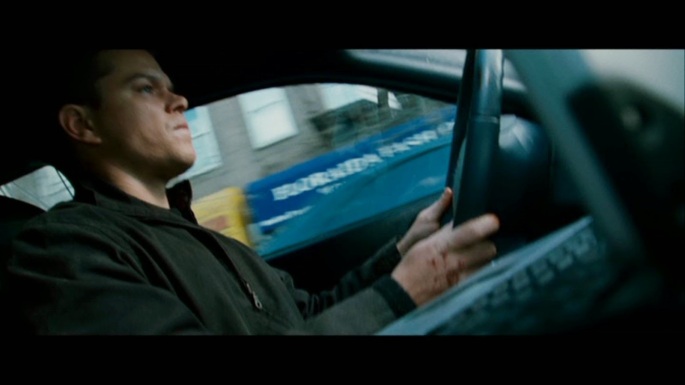
One of the first things that becomes obvious while watching this film is how its look harkens back to 1970s American cinema. Director Paul Greengrass utilizes the gritty, realistic look of his previous film, the powerful Bloody Sunday, with a lot of hand-held camerawork and snap zooms to give a you-are-there rush of adrenaline and urgency to the action sequences. In the car chases, Greengrass often places the camera right in the vehicle so that it is almost like we are riding along with Bourne, trying to piece together his fragmented past. In particular, the first chase in India is like The French Connection (1971) by way of Calcutta. Tony Gilroy’s screenplay wastes no time getting into it. We’re not 15 minutes into the film and Bourne is being chased by a mysterious and ruthless Russian assassin. It is this intense, no-nonsense pacing that propels this film so that one barely notices the two-hour running time.

Matt Damon plays Bourne with a quiet determination and intensity. It’s a surprisingly minimalist performance devoid of self-conscious tics and proves that his performance in the first Bourne film was no fluke. Bourne is not some invincible, super-soldier, but a tortured man trying to rebuild his past and his identity. He doesn’t kill unless absolutely forced to. And yet, he is certainly a man of action, capable of going from an inert, passive figure to one full of explosive action in a heartbeat. Supremacy sheds more light on his past as he’s haunted by a job where he killed a Russian politician and his wife. Damon does a nice job of portraying a man coming to terms with the fact that he is a killer. Bourne also comes to terms with the notion that what was just another mission for him forever changed the life of a young woman who was made an orphan because he killed her parents. It is an important part of the humanizing of Bourne as he sheds his past of being a detached assassin to someone trying to redeem himself. He tracks down people like Nicky Parsons (Julia Stiles), introduced in Identity as a handler to the Treadstone assassins, that can provide him with pieces of his past so that he confronts it and understand what he was in order to change who he is in the present.

The primary bone of contention that critics had with The Bourne Supremacy was how Greengrass films the action sequences. There is an impressively staged fight scene between Bourne and another Operation Treadstone survivor in Munich that is dizzyingly claustrophobic thanks to extensive hand-held camerawork that dives right into the chaos. It is memorable not only for its jarring brutality but also for Bourne’s skill with a rolled-up magazine that he uses to defend himself against a rather large knife. Greengrass’ camera flies around the tight confines of this room, dragging us along for this visceral, almost primal sequence. He treads a fine line between being edgy and incoherent, but knows just how far to push it – something that the countless imitators didn’t always achieve. This approach drew criticism for being too fragmented and disorienting, making it difficult to see what was happening but I think it was Greengrass’ attempt to put the audience right in the middle of the action and to experience the sudden and brutal nature of how quickly these guys fight.

bourne2Joan Allen’s Pamela Landy is an interesting character in that initially it appears as if she will be an antagonist like Conklin in The Bourne Identity, but when she’s assigned to investigate the Berlin job she uncovers the existence of Treadstone and this brings her up against Ward Abbott (Brian Cox), the operation’s caretaker and the man who also mothballed it. She’s no dummy and quickly figures out its nature, what Conklin was up to and Bourne’s role, which, in a nicely executed scene, quickly recaps the events of Identity for those who haven’t seen it. Over the course of Supremacy, she shows indications of sympathy towards Bourne’s plight that are developed further in The Bourne Ultimatum (2007). Allen’s scenes with Cox are interesting as they are often fused with tension as Landy uncovers the secrets of Treadstone while Abbott, clearly uncomfortable with his dirty laundry being aired, tries to cover his ass, which makes for some heated exchanges between the two as they butt heads.

The Bourne Supremacy gives more screen-time to the character of Nicky Parsons. Landy brings her along because of what she knows, but Nicky ends up playing a crucial role when Bourne confronts her, asking questions about the operation. Stiles was an up and coming movie star in the late 1990s with films like 10 Things I Hate About You (1999), but had dropped off the mainstream radar by the mid-2000s. It is nice to see her pop up in the Bourne films even if she isn’t give much to do initially.

The Bourne Supremacy was based loosely on the 1986 best-selling novel of the same name by Robert Ludlum. Universal Pictures offered screenwriter Tony Gilroy $3 million to write the screenplay and he agreed, but only if it wasn’t a repeat of The Bourne Identity. Gilroy used a plot point from the novel – Marie is kidnapped and held ransom, forcing Bourne out of hiding – as the impetus for the sequel. The screenwriter came up with the idea of taking Bourne on “what amounts to the samurai’s journey, this journey of atonement,” said producer Frank Marshall. Gilroy didn’t want to make a revenge movie because “Bourne killed people and he doesn’t start the movie with a clean slate. There’s a lot of blood on his hands.” He decided to make Bourne a reluctant murderer and that he should suffer for his crimes. To this end, Gilroy envisioned Supremacy as “The Searchers of action films,” but was upset that Greengrass came in and placed an emphasis on action and not Bourne’s atonement.

Next, the producers had to find a new director that would have an affinity for the subject matter. Gilroy recommended that Marshall watch Bloody Sunday, directed by Paul Greengrass. It was a gritty recreation of the 1972 peaceful civil rights march in Derry, Northern Ireland that ended in violence. The producers were impressed with the film’s immediacy and sense of realism. Greengrass liked The Bourne Identity and how it “married an independent sort of feel with a mainstream Hollywood sensibility.” He flew to Prague and met with actor Matt Damon and they talked about the character of Bourne. Greengrass said of the character: “I think this film is not so much about a man who’s lost his memory, although that is part of it – but it’s more about what happens when you’ve recovered your memory and realized that you’re actually a bad man.”

Damon spent months doing personal and combat training including special firearm instruction in order to portray a trained assassin. The actor worked with a SWAT expert in Los Angeles so that when Bourne first picks up a gun in the film “it needs to look like an extension of his arm,” Damon said. He and Greengrass got along right away with the actor happy to have a director “who was putting you first and saying, ‘Be as natural and real and honest as you can and it’s our job to capture it rather than yours to adjust for the sake of my shot.’ That’s the thing an actor wants to hear.” The actor had no problem doing most of his own stunts, but was apprehensive doing an underwater scene where Bourne’s car goes crashing into a river. “I didn’t want to do that at all,” Damon said and so he worked with a diving instructor a couple times a week for a month in order learn how to relax underwater without an oxygen mask and eventually be able to do simple tasks like tying a shoe. Still, after one day of shooting under water, he “woke up probably four times gasping for breath, thinking I was drowning. It was terrible.”

Principal photography began on the streets of Moscow then moved to Berlin with the city’s former eastern sector doubling for the streets of the Russian capital and finally ending in Goa, India. Producer Patrick Crowley wanted the transition from locations to mirror Bourne’s arc “from lush, tropical and warm to more progressively cool, steely, blue, then finally to grays.” To depict the visceral car chases, the production utilized a high-speed, low center of gravity, chassis replacement stunt driving camera platform that was piloted by a stunt driver from a moveable cockpit, which allowed all kinds of camera placement around the vehicle.

bourne3The people behind the Bourne franchise are smart and willing to take chances. They cast an atypical action hero with Matt Damon, surrounded him with an eclectic cast that mixed Hollywood and internationally known stars (with the likes of Julia Stiles, Brian Cox and Karl Urban) and hired independent filmmakers like Doug Liman and Paul Greengrass against type to direct, letting them put their own unique stamp on their respective films. Ultimately, The Bourne Supremacy is all about the title character making amends for his past. There is a scene where he confronts the woman, whose parents he killed, that is rich in understated emotion as Bourne takes responsibility for his actions and tells her what really happened. It’s a great way to end the film as Greengrass eschews the cliché of a climactic action sequence (which happens before this scene) in favor of a more poignant one as Bourne atones for one of his many sins while also setting things up for the next installment.

THE BOURNE IDENTITY – A REVIEW BY J.D. LAFRANCE

bourne1

When The Bourne Identity (2002) debuted in theaters, audiences were hungry for a new kind of spy film. The James Bond movies adhered to a tried and true formula and it had gotten old. Mission: Impossible II (2000) collapsed under John Woo’s stylistic excesses and a boring love story with no chemistry between Tom Cruise and his love interest played by Thandie Newton. The world had changed dramatically since the events of 9/11 and a new international espionage action thriller would have to acknowledge this new reality. Along came The Bourne Identity, a very loose adaptation of Robert Ludlum’s novel of the same name and it connected with audiences even if most critics hated it.

A mysterious, unconscious body is found floating out at sea by a boatload of fishermen. Two bullets in his back and a device that stores a Swiss bank account are found embedded in his hip. He wakes up with amnesia and one of the men onboard fixes him up. It isn’t until almost five minutes in that the first bit of understandable dialogue is uttered. Up to that point director Doug Liman drops us into this strange world without any set up so that we are disoriented, much like the film’s protagonist and therefore we identify and empathize with him almost instantly. These first few scenes establish the film’s style – constantly moving camerawork often with jarring, jerky movements that mimic our hero’s disorientation.

After two weeks at sea, he makes his way to land and begins a quest to uncover his identity. Over time, he discovers skills he didn’t know he had but that come out instinctively, like the ability to disable two armed police officers with his bare hands in Switzerland. He checks out his Swiss bank account and discovers that his name is Jason Bourne (Matt Damon). The safety deposit box contains money, passports for several different countries, and a gun. It becomes obvious that Bourne assembled this stash of supplies in case of a situation like the one he’s currently experiencing.

After a daring escape from the United States embassy, Bourne pays a young German woman named Marie (Franka Potente) to drive him to Paris where he apparently lives. It turns out that he’s some kind of lethal, CIA-trained assassin who has something to do with a top-secret operation known as Treadstone and he should be dead. It seems that the United States government is trying to silence an exiled Nigerian dictator by the name of Nykwana Wombosi (Adewale Akinnuoye-Aghaje) now living in Paris. He wants the CIA to put him back in power in six months or he’ll blow the whistle on their attempt to assassinate him. The man in charge of Treadstone – Alexander Conklin (Chris Cooper) – wants to make sure Bourne is dead because he was supposed to kill Wombosi when something went wrong. He sends three other assassins after Bourne and Marie.

Because Bourne suffers from amnesia and is being hunted by a secret branch of the CIA, we sympathize with his plight. It doesn’t hurt that he’s portrayed by Matt Damon who comes across as instantly likable and empathetic. Before The Bourne Identity, he was not regarded as an action star and so his capacity for sudden bursts of ruthlessly efficient violence and the ability to escape from several dangerous situations was a revelation. Damon pulls it off and more importantly is convincing as a deadly assassin with no memory. He is nothing short of a revelation as Bourne and the actor does an excellent job of not only gaining our sympathy early on, but also maintaining it throughout as we root for Bourne to figure out who he is.

When Bourne breaks out his martial arts for the first time in the film we are as surprised as he is and not just because it’s the first time we’ve seen him do so, but at the time Damon had never done a film like this before and it was his debut as a man of action. To his credit, he looks very adept and comfortable in the fight scenes and doing the stunts. The first substantial fight sequence where Bourne is attacked by a fellow Treadstone assassin is a visceral set piece as he uses everyday objects like a pen to defend himself. This is not the clean, polished style of Bond movies, but down and dirty fighting that looks bloody and painful. It has a personal vibe to it as the fight takes place up close and personal in an apartment. I like that the film shows Marie’s reaction to what has just happened. She is genuinely shocked and upset at the sudden outburst of violence she witnessed. As she and Bourne flee the scene she even throws up as a reaction to being in real danger.

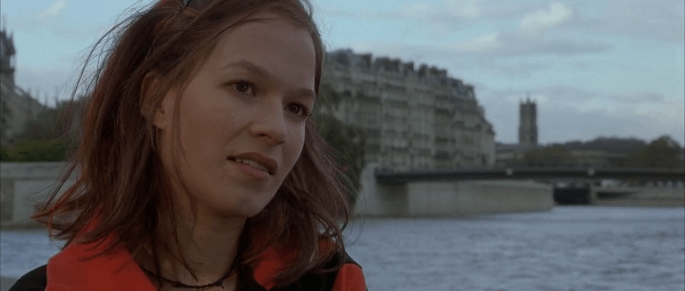
The casting of Franka Potente as Bourne’s love interest is an intriguing choice. She doesn’t have the supermodel looks associated with the Bond girls. She’s beautiful with a nice smile and an easy-going charm. She’s relatable and grounded – part of the film’s realistic aesthetic. Marie is an everyday person thrust into extraordinary circumstances once she encounters Bourne. Potente also brings a certain amount of international cinema cache thanks to her breakout performance in Run Lola Run (1998). As a result, she doesn’t come across as some damsel in distress, but a proactive foil for Bourne. They quickly develop an easy rapport as he finds her constant, nervous talking comforting. Damon and Potente play well off each other in these early scenes as her character humanizes Bourne so that he’s not just some inhuman killing machine.

Chris Cooper is ideally cast as the no-nonsense bureaucrat Conklin who knows more than Bourne and yet is always one step behind in finding and catching the elusive assassin. He isn’t given much to do, but makes the most of his limited screen-time as he orchestrates the search for Bourne with considerable technological resources at his disposal. Cooper exudes just the right amount of uptight malevolence that we’ve come to expect from a Republican-controlled government. A young Clive Owen shows up as a Treadstone assassin who methodically tracks and then kills his targets. His showdown with Bourne in a field of tall grass is a tension-filled sequence as our hero uses misdirection to get the drop on the assassin, neutralizing him, but not before he imparts crucial information about Bourne’s past.

One of the reasons that The Bourne Identity was such a game changer for the spy movie genre came as a result of taking the hi-tech surveillance used in movies like Enemy of the State (1998) and updated it on a global scale as Conklin and his room full of I.T. specialists (including character actor extraordinaire Walton Goggins in a small role) track Bourne’s movements in Europe. Everyone leaves electronic footprints be it through credit card use or being picked up on security cameras and this was even more prevalent after 9/11. This heightened sense of surveillance has become a part of our daily lives. There is a certain delicious irony at work as Liman crosscuts between Conklin and his staff using sophisticated technology to find two people who are doing their best to stay off the grid, which results in them taking refuge in a house in the French countryside.

I like that Liman shows Bourne and Marie actually trying figure out his identity by doing the legwork involved as they call potential leads on the phone, visit key locations and talk to people as they try to put together the jigsaw puzzle that is his past. There’s a nice sequence where Bourne walks Marie through a task that he needs her to do for him. As she makes her way through a hotel lobby his words play through her head and we hear them over the soundtrack in voiceover narration.
bourn2.pngAt the time of its release, much was made of the chaotic production that pitted indie director Doug Liman and against Universal Pictures. Their dirty laundry was aired in the mainstream press and there was speculation that The Bourne Identity was going to be a box office failure. After the critical and commercial success of Go (1999), Liman decided to pursue his passion project – an adaptation of Robert Ludlum’s The Bourne Identity, a book he loved while growing up. It had been published in 1980 and featured an ex-foreign-service officer on the CIA’s hit list. Liman read it again while making Swingers (1996) and found that the characters still engaged him. He inquired about the film rights and found that Warner Bros. controlled them. Over time, the rights expired and Liman met Ludlum at his home in Montana, securing the rights. In 2000, Liman asked screenwriter Tony Gilroy if he would rewrite the screenplay he had for The Bourne Identity. After the success of The Devil’s Advocate (1997), Gilroy had gotten a reputation for saving damaged scripts.

Gilroy was not thrilled with the source material: “Those works were never meant to be filmed. They weren’t about human behavior. They were about running to airports.” Liman persuaded Gilroy to read the script, which he realized was “awful,” but they met and the latter asked the former why he wanted to make this film. Gilroy declined Liman’s offer, but when pressed gave him a suggestion: toss the novel and keep the idea of an assassin with amnesia. “You only have one way to find out … What do I know how to do? I guess your movie should be about a guy who finds the only thing he knows how to do is kill people.”

Liman eventually wore Gilroy down and he agreed to work on the script. While the first five minutes of the film comes from Ludlum’s book everything after Bourne gets off the boat was created by Gilroy. At the time, Matt Damon wanted to “try an action movie … exactly the way I’d love to do it, with someone who was thinking outside the box. Doug being Doug, this would be an interesting movie.” He agreed to do the film after meeting Liman and reading Gilroy’s script.

Liman took the project to Universal Pictures in the first place because “it was just as important to them as it was to me to make this a character-driven movie and not just a generic action movie.” By his own admission, the director was mistrustful of studio decisions like their suggestion that he shoot in Montreal instead of Paris to keep costs down. He argued that the Canadian city didn’t look like the City of Lights and the studio relented. Liman applied his often chaotic, unpredictable style of filmmaking to a big budget studio film with mixed results, often angering the producers. For example, once in Paris, he hired a crew that didn’t speak English (so he could practice his French).

When Damon arrived he didn’t like the changes made to the script after the one that made him sign on in the first place. Liman had brought in David Self (Thirteen Days) to fix what he felt was a problematic third act when Gilroy left to write Proof of Life (2000). Some of the character-driven material had been removed in favor of bigger action sequences. According to Damon, Self “went to the book and did a page-one rewrite. Every few pages, something blew up … It was not the movie I agreed to do.” Editor Saar Klein remembers, “We went into production with a script that was just a mess.” Liman agreed and Gilroy came back after finishing Proof of Life to write new scenes and fax them from New York City to Paris.

Producer Richard Gladstein left the production because his wife was going through a difficult pregnancy. Universal did not want Liman filming unsupervised in Europe and brought in veteran producer Frank Marshall who had known the director since he was a child. The studio felt that Liman’s approach was unorganized and unnecessarily costly. He responded by saying, “I like to keep my options open. I’m known for changing my mind.” The studio also felt that he lacked maturity. For example, one night Liman paid the crew overtime to light a forest for him to play paintball. Liman claimed that the studio hated him and they tried to shut him down: “The producers were the bad guys.”

It got so bad between Liman and the studio that they rejected anything he said. The director ended up using Damon as his surrogate, but this only worked for a short time. One day, Liman realized he’d missed a shot and asked the producers if he could redo the scene. They said no and so he loaded four minutes of film in a camera and reshot the scene himself, which infuriated the producers. This resulted in a giant screaming match on the set. At one point, Liman even toyed with auctioning off his director’s credit on eBay. Despite all the friction between Liman and the studio the end result speaks for itself. The Bourne Identity was a commercial hit, but the studio had not surprisingly soured on Liman and banned him from directing the sequels. “I lost my baby,” he said.

The Bourne Identity was shown to a test audience who liked it, but wanted more action at the end. After much debate with the studio, Liman and Gilroy devised a new action sequence. The screenwriter did not enjoy the experience of working with Liman finding that the director “didn’t have any sense of story, or cause and effect.” Liman found Gilroy “arrogant” and at one point attempted to hire a new screenwriter until Damon threatened to quit if his script wasn’t used. Gilroy saw a rough cut during post-production and was worried that the film wasn’t going to be good. It had come out a year late and went through four rounds of reshoots. He tried to take his credit off the film and arbitrated against himself. He wanted to share credit (and blame) with someone else. After all the dust had settled the film went over budget by $8 million and two weeks over schedule. This forced Universal to move the original release date of September 2001 to February 2002 only to push it back again to May 31 and finally settling on June 14.

What separates The Bourne Identity from the Bond films at the time is that it took the international espionage thriller and personalized it. For the most part, the adventures that Bond had in his movies never affected him personally (the notable exception being License to Kill and now the Daniel Craig films) while in The Bourne Identity it is very personal, but without sacrificing all the things we’ve come to expect from a spy movie: exotic locales, exciting car chases, lethal bad guys, and intense fight scenes. What made the film such a breath of fresh air was how it tweaked these tried and true conventions.

bourne3At its heart, The Bourne Identity is a mystery as Bourne tries to figure out who he is and why there are people trying to kill him. This gives Liman the opportunity to ratchet up the tension as Bourne is constantly looking over his shoulder, never able to rest for too long and unable to trust anyone except for Marie. Known previously for character-driven independent films Swingers and Go, Liman showed his adeptness at working in multiple genres by bringing his trademark loose, almost improvisational approach that breathed new life into the spy genre. It had become safe and predictable and it took an outsider like Liman and casting against type with Damon to shake things up. Without The Bourne Identity, Casino Royale (2006) would have been a very different film and the subsequent Daniel Craig Bond films wouldn’t be as gritty and substantial as they are.
THE COLOR OF MONEY – A REVIEW BY J.D. LAFRANCE

color-of-money

The 1970s saw the rise of the Movie Brats, a collection of filmmakers that had grown up watching and studying films. They made challenging films that reflected the times in which they were made and were revered by cineastes as much as some of the actors appearing in them. Directors like William Friedkin, Francis Ford Coppola, Hal Ashby and Martin Scorsese made intensely personal films that blended a European sensibility with American genre films. However, the one-two punch of Jaws (1975) and Star Wars (1977) and the failure of expensive passion projects like New York, New York (1977) and Heaven’s Gate (1980) ended these directors’ influence and saw the rise of producers like Joel Silver, Don Simpson and Jerry Bruckheimer, and movie star-driven blockbusters in the 1980s and beyond. It got harder and harder for the Movie Brats to get their personal projects made. Most of them went the independent route, making films for smaller companies like Orion and doing the occasional paycheck gig with a Hollywood studio.

For years, Scorsese had been trying to fund a personal project of his own – an adaptation of The Last Temptation of Christ. It was a tough sell and he ended up making After Hours (1985) and The Color of Money (1986) as a way of keeping busy while he tried to get Last Temptation made. At the time of The Color of Money much was made of it being Scorsese’s first movie star-driven film and some critics and fans of the director felt that he was selling out. It would not only be promoted as a film starring Paul Newman and Tom Cruise (and not as a Scorsese film), but was a sequel (something that the director was never fond of doing) of sorts. Newman had been interested in reprising his famous role of “Fast” Eddie Felson from The Hustler (1961) for some time but he had never met the right person for the job – that is, until he met Scorsese.

The Color of Money begins twenty-five years after the events depicted in The Hustler and we find that Eddie (Newman) is enjoying a comfortable existence as a savvy liquor salesman with his bar owner girlfriend Janelle (Helen Shaver) and occasionally fronting a pool hustler. His current investment, a cocaine addict named Julian (played with just the right amount of sleazy arrogance by John Turturro), is getting roundly beaten by a young turk named Vincent (Tom Cruise) who catches Eddie’s attention with his “sledgehammer break.” He becomes fascinated watching Vincent play and his cocky behavior between shots, like how he works the table. Eddie also watches the dynamic between Vincent and his girlfriend Carmen (Mary Elizabeth Mastrantonio). What really catches his attention is not just Vincent’s raw talent but also his passion for the game. He’s even willing to play Julian after he’s won all of the guy’s money because he just wants his “best game.”

There’s a nice bit where Eddie tests Carmen’s skill as Vincent’s manager, exposing her lack of experience and schooling her on the basics of pool hustling in a beautifully written monologue by Richard Price that Newman nails with the ease of a seasoned pro. We get another healthy dose of Price’s authentic streetwise dialogue in the next scene where Eddie takes Vincent and Carmen out for dinner and continues to school his potential protégés: “If you got an area of excellence, you’re good at something, you’re the best at something, anything, then rich can be arranged. I mean rich can come fairly easy.” The scene is also nicely acted as Tom Cruise plays the cocky upstart with just the right amount of arrogant naiveté without being a typical goofball. As Eddie puts it, “You are a natural character. You’re an incredible flake,” but tells him that he can use that to hustle other players. The ex-pool player lays it all out for the young man: “Pool excellence is not about excellent pool. It’s about becoming something … You gotta be a student of human moves.” And in a nice bit he proves it by making a bet with them that he’ll leave with a woman at the bar. Of course, he knows her but it certainly proves his point. This is a wonderful scene that begins to flesh out Vincent and establish how much he and Carmen have to learn and how much Eddie has since The Hustler.

The young man is a real piece of work – brash, directionless but with raw talent. It is clear that Eddie sees much of his younger self in Vincent and decides to take the young man under his wing and teach him “pool excellence” by taking him and Carmen on the road. It’s an opportunity to make some money while also getting back Eddie’s passion for playing pool. The Color of Money proceeds to show the three of them on the road for six weeks, getting ready for an upcoming nine-ball tournament in Atlantic City. Of course, there are the predictable bumps in the road as Vincent’s impulsive knack for showing off costs them money and Eddie feels like the young man’s not listening to him. It’s a formula we’ve seen used in countless films but Scorsese does everything he can visually to keep things interesting, especially in the dynamic way he depicts the numerous games of pool, the use of music (for example, one game is scored to “Werewolves of London” by Warren Zevon) and the actors that play some of the opponents along the way, like a young Forest Whitaker as a skilled player that manages to hustle and beat Eddie at pool.

However, it is the camerawork by veteran cinematographer Michael Ballhaus that impresses the most. He and Scorsese depict each game differently, employing a variety of techniques, like quick snap zooms in and out, and floating the camera gracefully over the pool table or gliding around it. He even has the camera right on the pool table following the balls around. The camera movement and editing rhythm of each game is dictated by the mood and intensity of each match, like the grandiose techniques employed when Vincent shows off during a game of pool. As he revels in his own showboating moves, the camera spins around him as if intoxicated by his bravado. However, much like the chaotic pool hall brawl in Mean Streets (1973), the camera movement goes nowhere symbolizing the futility of Vincent’s actions. Sure, he beat the top guy at that pool hall but in doing so scared off an older player that had much more money.

While The Color of Money was made fairly early on in Tom Cruise’s career, his relative inexperience actually suits his character. His youthful energy mirrors Vincent’s. It is his job to come across as an arrogant flake of a human being, which he does quite well (too well for some who were unimpressed with his performance). Cruise has always been an actor that performs better surrounded by more talented and experienced people and with the likes of Paul Newman acting opposite him and Scorsese directing, it forces the young actor to raise his game. One imagines he learned a lot on the job much like Vincent does in the film. Scorsese knew exactly what he was doing when he cast Cruise and got a solid performance out of him. In the late ‘80s, Mary Elizabeth Mastrantonio acted in a series of high profile roles like The Abyss (1989), The January Man (1989) and this film. She’s given the thankless job of the girlfriend role but manages to make the most of it. One gets the feeling that Carmen is a fast learner and smarter than Vincent. She is much like Eddie in understanding the business side of pool hustling.

Color-of-Money-Tom-Cruise

Naturally, Newman owns the film, slipping effortlessly back into Eddie’s skin after more than 20 years and it’s like he never left. The scenes between him and Cruise are excellent as the headstrong Vincent bounces off of the world-weary Eddie. Over the course of the film something happens to the elder pool player. As he tells Vincent at one point, “I’m hungry again and you bled that back into me.” We see that youthful spark fire up in Eddie again after so many years dormant and Newman does a fantastic job conveying that. While many felt that his Academy Award for the performance he gives in The Color of Money was really a consolation prize for a career of brilliant performances, this does a disservice to just how good he is in this film and how enjoyable it is to watch him get to work with someone like Cruise and Scorsese, watching how their contrasting philosophies towards acting and filmmaking co-exist in this film. There is an energy and vitality that Cruise brings and Newman feeds off of it and Scorsese captures it like lightning in a bottle.

When Paul Newman read Walter Tevis’ sequel to The Hustler it made him wonder what “Fast” Eddie Felson would be doing now and wanted to revisit the character. He had seen Raging Bull (1980) and was so impressed by it that he wrote a letter to Scorsese complimenting him on such a fine piece of work. The director was just coming off of After Hours and was attached to several projects, including Dick Tracy, with Warren Beatty, a fantasy film entitled Winter’s Tale, Gershwin, with a screenplay written by Paul Schrader, and Wise Guy, a book about the New York mafia written by Nicholas Pileggi. However, they all took a backseat when Newman invited him to direct a sequel to The Hustler. The actor had been working on it for a year with a writer. Scorsese was interested but didn’t like the script Newman showed him because it was “a literal sequel. It was based on at least some familiarity with the original.” Scorsese felt like he couldn’t be involved with the project if he didn’t have some input on the original idea of the script.

Scorsese wanted to go in a different direction and brought in a new screenwriter, novelist Richard Price who had written The Wanderers and also a script for the director based on the film Night and the City (1950). Scorsese liked the script because it had “very good street sense and wonderful dialogue.” For The Color of Money, Price and Scorsese’s concept was basically what became the film, exploring the director’s preoccupation with redemption but with what Newman saw as “recapturing excellence, having been absent from it, and then witnessing it in somebody else.” Newman liked it and Price and Scorsese came up with an outline and began rewriting the script. Price studied pool players and wrote 80 pages of a script. They took it to Newman and got his input. By the end of nine months, Price and Scorsese decided to make the film with Newman.

For Scorsese this was the first time he had ever worked with a star of Newman’s magnitude. “I would go in and I’d see a thousand different movies in his face, images I had seen on that big screen when I was twelve years old. It makes an impression.” As a result, Scorsese and Price made the mistake of writing for themselves when they should have tailored the script to suit Newman and his image, or as Scorsese later said, “we were making a star vehicle movie.” The actor wanted to explore aging and the fear of losing his “pool excellence.” He also wanted the character of Minnesota Fats, played so memorably by Jackie Gleason in The Hustler, to return but Price couldn’t get the character to fit into the script. He and Scorsese even presented a version of the script with Fats in it to Gleason but he “felt it was an afterthought,” said Scorsese.

It was Newman that suggested Cruise for the role of Vincent to Scorsese. The young actor had met Newman before when auditioning to play his son in Harry & Son (1984). Scorsese cast Cruise before Top Gun (1986) had come out but he was a rising movie star thanks to Risky Business (1983). He had seen the young actor in All the Right Moves (1983) and liked him. The project was initially at 20th Century Fox but they didn’t like Price’s script and didn’t want to make it even with Cruise and Newman attached. Eventually, it went to Touchstone Pictures.

Newman was not fond of improvising on the set and suggested two weeks of rehearsals before filming. Scorsese wasn’t crazy about this and found them “aggravating. You are afraid that you are going to say ridiculous things, and the actors feel that way too.” However, he agreed to it and brought in Price so that he could make changes to the script. Fortunately, everyone felt secure in character and with each other. Price and Scorsese didn’t have the film’s ending resolved and felt that they had written themselves into a corner. The studio wanted them to shoot the film in Toronto but Scorsese felt that it was too clean and chose Chicago instead. Both Cruise and Newman did all their own pool playing with the former being taught how to do specific shots that he played in the film with the exception of one, which would have taken two additional days to learn and Scorsese didn’t want to spend the time. Cruise had dedicated himself to learning how to play pool: “All I had in my apartment was a bed and a pool table.” He worked with his trainer and the film’s pool consultant Mike Sigel for months before shooting started.

Some Scorsese fans marginalize The Color of Money as one of his paycheck films – the first he did for the money – and while it may not have the personal feel of a film like Taxi Driver (1976), it still has its merits, a strong picture that fits well into the man’s body of work. I would argue that it is one of his strongest films stylistically with some truly beautiful, often breathtaking camerawork capturing all the nuances of playing pool: the energy and vitality of the game is there without sacrificing any of the story or the characters. This film also shows how a director like Scorsese can take a hired gun project and make it his own. It looks, sounds and, most importantly, feels like one of his films and not a commercial studio picture. Others must have agreed as the film not only became Scorsese’s most financially successful film at the time but a critical hit as well.

ColorOfMoney_Rolex2

The director proved to the studios that he could deliver the goods at the box office while to himself he was still able to invest the film with some of his own personal touches. Ultimately, The Color of Money is about Eddie’s redemption and rekindling the spark he had in The Hustler before the screws were put to him. As with many sports movies, the story builds towards the climactic big game or, in the case of this film, the big tournament but Price’s script offers a slight twist in that Eddie’s victory is a hollow one and the real one is at the very end when his love for playing pool has finally come back completely. He is reinvigorated and excited about where his life and game will go from here and this is summed up beautiful in the film’s last line – “I’m back.”

MACHETE – A REVIEW BY J.D. LAFRANCE

danny-trejo-as-machete

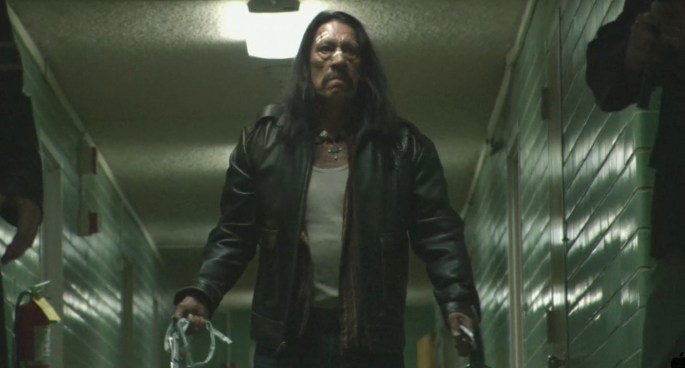
When he made his half of the Grindhouse double bill (2007), Robert Rodriguez also put together a trailer for a film he would like to see. And so, Machete (2010) was born – a Mexploitation action film about an ex-federale who is set-up, double-crossed and left for dead. However, the origins for this project go back even further to 1995 when Rodriguez made Desperado, the second film in his El Mariachi trilogy. It would be the first time (but certainly not the last) he worked with veteran character actor and professional badass Danny Trejo. He’s someone you’ve probably not heard of but have definitely seen. If you need a tough-looking tattooed henchman, he’s your man. While working on Desperado, Rodriguez envisioned Trejo starring in a series of action films as Machete but at that time the director did not have the clout to get someone to bankroll a Latino action film that didn’t feature someone with movie star looks like Antonio Banderas.

Rodriguez never forgot about his pet project and over the years cast Trejo in several of his films. Even though the Grindhouse films were a commercial failure, audiences loved the faux trailer for Machete. Rodriguez managed to convince a Hollywood studio to finance it with a modest budget and used his connections to assemble an impressive cast that included the likes of Robert De Niro, Jessica Alba, Steven Seagal, and “introducing” Don Johnson. However, what worked as a movie trailer be too much of a good thing as a feature film?

The prologue sets up everything we need to know about Machete (Trejo) – he’s a badass Mexican federale set-up by his corrupt superior and left for dead by local druglord Torrez (Seagal). It also sets just the right tone as we see Machete hacking and slashing his way through a house of bad guys with bloody abandon. Meanwhile, in the United States, a corrupt, ultra-conservative Texan senator named John McLaughlin (De Niro), campaigns on a platform of preventing illegal immigrants from crossing the border. He even employs a border vigilante group, led by the brutal Von Jackson (Johnson), to enforce his policies.

Sartana Rivera (Alba) is an upstanding Immigrations enforcement officer investigating the problem through legal channels and ends up crossing paths with Luz (Michelle Rodriguez), a no-nonsense taco stand operator who moonlights as a revolutionary operating an underground railroad of sorts for her Mexican brothers and sisters. Machete, now a day laborer (or, at least that’s his cover), is hired by Michael Booth (Jeff Fahey), a local businessman, to kill the Senator for $150,000. Machete is set up, shot and forced to go into hiding. With the help of Rivera and Luz, he plots revenge on the men that betrayed him.

It’s awesome to see Danny Trejo finally get to carry a film for once and play a character that doesn’t get killed off. He brings his customary intensity as the strong, silent man of action and in many respects the film is Rodriguez’s present to the actor as he has him take down tons of bad guys, look cool doing it, and hook up with many of the film’s lovely ladies, including Michelle Rodriguez, Jessica Alba and Lindsay Lohan! Robert De Niro is a lot of fun to watch playing a John McCain meets George W. Bush-esque xenophobic politician. It’s also great to see Steven Seagal as a powerful criminal and Machete’s arch-nemesis, not to mention appearing in a mainstream film that didn’t go straight-to-home video.

Michelle Rodriguez adds another tough chick role to her resume as she portrays the female Mexican equivalent of Che Guevara but with a dash of Snake Plissken. Another fun bit of casting is Lindsay Lohan playing the messed up celebutante child of Booth. She and Rodriguez have some fun riffing on her public persona and kudos to the director for not bowing to peer and public pressure about her party girl reputation and showing that regardless, she still has the acting chops. Rodriguez regulars Tom Savini and Cheech Marin show up in memorable bit parts as a deadly assassin and Machete’s ex-federale now-priest brother.

It’s no secret that Rodriguez is a filmmaker that wears his influences on his sleeve. For example, Desperado was an homage to the Hong Kong action films of John Woo and From Dusk Till Dawn (1996) and Planet Terror (2007) evoked the films of John Carpenter and George Romero. Growing up in the 1980s, Machete is Rodriguez’s love letter to the films produced by Cannon Films during that decade. They were responsible for cranking out an endless stream of generic action films starring the likes of Charles Bronson, Chuck Norris and Michael Dudikoff. In these films, the action stars were often a one-man army capable of wiping out the fighting force of a small country seemingly single-handedly. The same goes for Machete who is an unstoppable killing machine bent on revenge.

Machete is full of outrageous, over-the-top violence and inventively staged action sequences, like one scene where Machete bungee-jumps from one floor of a hospital to another with the aid of an evil henchman’s large intestine. In this respect, the film has the same gonzo, go-for-broke action that Rodriguez orchestrated in the underrated Once Upon a Time in Mexico (2003). Living up to his namesake, Machete finds all sorts of ways to kill the bad guys with a vast assortment of sharp weapons. Machete is a lot of fun and never outstays its welcome as Rodriguez knows how to keep things moving so that things never get boring.

michelle-rodriguez-as-luzMachete not only features all kinds of wild action sequences but also has something on its mind, commenting on the rampant immigration problems that continue to plague the states along the United States/Mexico border. Along the way, Rodriguez plays up and makes fun of Latino stereotypes (they are all day laborers and love tricked out cars) only to twist them into a rallying cry, a call for revolution that takes full bloom by the film’s exciting conclusion in a way that has to be seen to be believed. Best of all, Rodriguez has created yet another awesome Latino action hero. Forget Sylvester Stallone’s The Expendables (2010), Machete is the real deal and a no-holds-barred love letter to ‘80s action films. As great as it was to see many of the beloved action stars from the ‘80s and 1990s, I felt that Stallone’s film never went far enough. Rodriguez’s film doesn’t have that problem as it gleefully goes all the way with its cartoonish violence.
THE LORD OF THE RINGS: THE FELLOWSHIP OF THE RING – A REVIEW BY J.D. LAFRANCE

rings1

It was the film many thought would never happen and that languished in development hell for years, bouncing from studio to studio until New Line Cinema took a very big gamble with filmmaker Peter Jackson who, at that point in his career, was known for making slapsticky low budget horror films (Braindead) and had one art house hit (Heavenly Creatures). He wasn’t someone you would necessarily entrust millions upon millions of dollars on making a trilogy of fantasy films – not the most commercially successful genre (Willow, anyone?). Jackson was also tackling The Lord of the Rings, the much-beloved series of books by J.R.R. Tolkien – get it wrong and you’re going to have legions of very unhappy fans.

However, Jackson was a fan too and he had a vision, which, with the help of his co-screenwriters Fran Walsh and Philippa Boyens, and an army of collaborators, brought The Lord of the Rings vividly to life. The first film, The Fellowship of the Ring (2001), was a massive critical and commercial success and would be followed by two even more successful sequels, The Two Towers (2002) and The Return of the King (2003). Everyone has their favorite film of the trilogy and for me it’s the first one because it has an intimate feel rendered on an epic scale, if that makes any sense. In other words, The Fellowship of the Ring is about a small group of characters, the Fellowship, and the journey they undertake.

Jackson establishes this intimacy early on with Bilbo Baggins’ (Ian Holm) birthday celebration. The Special Extended Edition version takes its time introducing the hobbits and their world. Jackson uses warm, inviting colors and folksy music to convey that the hobbits are a friendly, down-to-earth people who live in a tight-knit community where everyone knows each other. Most importantly, we are introduced to Frodo (Elijah Wood), the hero of this epic tale. For it is he who Bilbo entrusts with the last remaining Ring that he must to take Mordor to destroy so that it doesn’t fall into the hands of the evil Sauron.

The Shire sequences also establish the dangerously seductive lure of the Ring, the origins of the quest and the creation of the Fellowship as led by the mighty wizard Gandalf the Grey (Ian McKellen). Aside from Frodo, fellow hobbits Sam (Sean Astin), Merry (Dominic Monaghan) and Pippin (Billy Boyd) join him on his journey. The group starts simply enough and over the course of the film others join their ranks, including Aragorn (Viggo Mortensen), a human ranger, Legolas (Orlando Bloom), an elvan archer, Gimli (John Rhys-Davies), a grumpy dwarf, and Boromir (Sean Bean), a human fighter. At heart of the Fellowship (and really all three films) is the friendship between Frodo and Sam. It is Sam who looks out for Frodo and sticks with him for the entire quest.

There are all kinds of parallels, story structure-wise, between The Fellowship of the Ring and Star Wars: A New Hope (1977). The Tolkien books were an obvious influence on George Lucas’ films. The main characters from both films are plucked from obscurity, a remote rural environment to go on a dangerous quest and are mentored by an elderly wizard type. Hell, Han Solo and Aragorn are characters cut from the same cloth and are both given cool introductions to establish their respective badass credentials.

Jackson manages to get some career-best performances out of many cast members. Elijah Wood, Sean Astin and Orlando Bloom, in particular, have never done anything better since (or before for that matter, except maybe for Wood and his chilling turn in Sin City) and this film launched a series of very eclectic leading man roles for the always watchable Viggo Mortensen (it doesn’t get more diverse than disparate roles in Hidalgo and Eastern Promises). Both Ian McKellen and Christopher Lee give the film some serious class and loads of genre credibility. It is Wood and Astin that anchor this film and give it its heart. The relationship between their two characters epitomizes most noble aspects of friendship and of the Fellowship. This only deepens in subsequent installments.

Once our heroes begin their journey, Jackson establishes a riveting urgency as they are pursued by the nightmarish ringwraiths and a vicious army of orcs. And yet this only strengthens the camaraderie among the hobbits and the rest of the Fellowship despite its dysfunction in the form of Boromir. However, when it matters and when faced with dangerous opponents, they work as a team as evident in the exciting and visceral battle against a monster in Balin’s Tomb and the even grittier battle against the orcs at the film’s climax.

Contrary to popular belief, Peter Jackson did not have a lifelong ambition to adapt Tolkien’s books into films. Producer Saul Zaentz owned the film rights for years and gave them to Jackson when he and Fran Walsh met with him and expressed their passion for the project. Zaentz sold the rights to Miramax who wanted to make only one film with Jackson. Disney was the financial backer but they didn’t believe in the project, refusing to give Miramax the money to make it. Harvey Weinstein, head of Miramax, gave Jackson three weeks to find someone else to make the film and in 1998, New Line agreed to make it into three films. Jackson originally proposed two films but it was New Line’s idea to make three.

In order to cut down on costs, Jackson decided to film all three films back-to-back over a grueling 274-day shooting schedule on location in remote areas of New Zealand in more than 100 locations with 20 major speaking roles and 20,000 extras. At the height or production, the film crew swelled to 1,300 people with seven units shooting multiple elements simultaneously. Jackson and company were at the mercy of New Zealand’s notoriously mercurial weather – unseasonal snowstorms and overnight flooding but in the end, the filmmakers accomplished what they set out to do and the proof is in the impressive final results.

rings2The Fellowship of the Ring is one of those rare films that lives up to its mountains of hype. Jackson tells an engaging story and crams as much of the source material as possible into the film. Sure, certain characters and subplots have been cut-out but that is the nature of a feature film adaptation. Maybe, someday, someone can turn it into a mini-series so that everything can be included. Until then, we have Jackson’s magnificent films to enjoy.