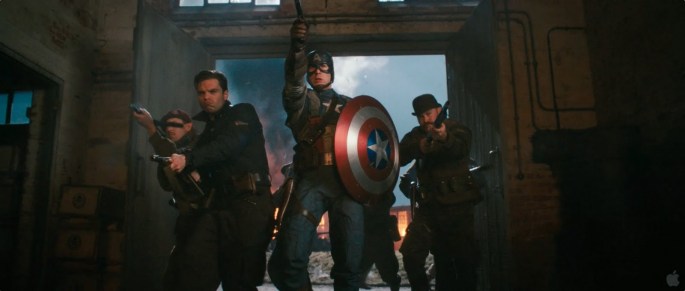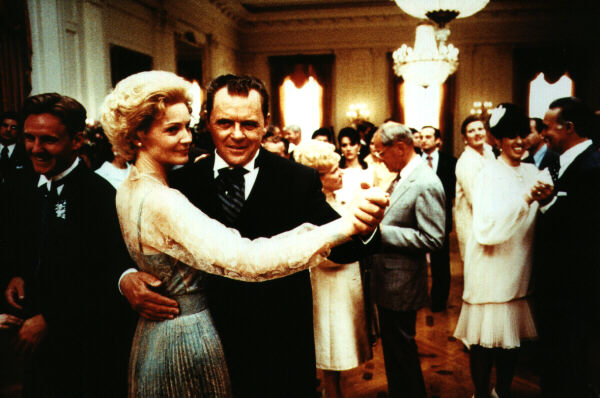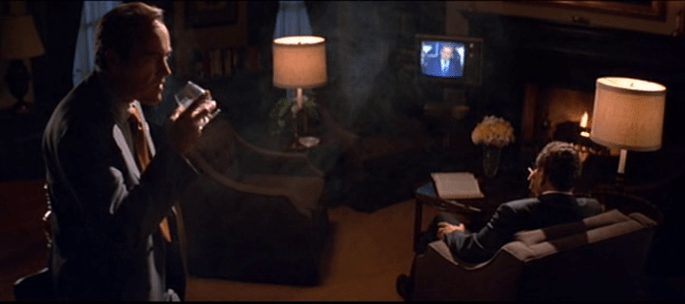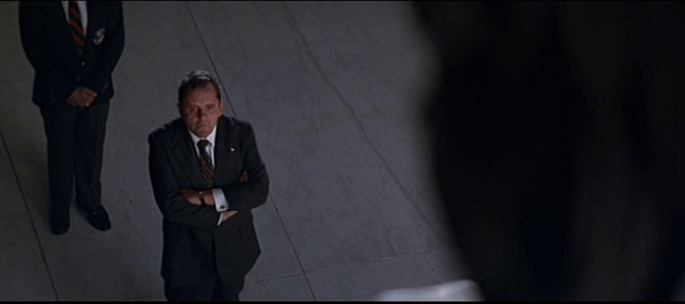
SYRIANA – A REVIEW BY J.D. LAFRANCE

4648

If there’s one good thing that came out of George W. Bush’s presidency it was a wealth of politically and socially-minded art in response to his unpopular regime. Leading the charge, in Hollywood at least, was George Clooney who positioned himself as a vocal liberal celebrity with two high profile movies in 2005: Good Night, and Good Luck and Syriana. The latter film was written and directed by Stephen Gaghan, who wrote the screenplay for Steven Soderbergh’s Traffic (2000), and was loosely based on See No Evil: The True Story of a Ground Soldier in the CIA’s War on Terrorism, Robert Baer’s memoir of his days as a CIA operative in the Middle East.

Structurally, Syriana follows the same template as Traffic with four distinctive yet also interlocking storylines presented in a non-linear fashion but containing all kinds of layers and complexities. The first one focuses on Bennett Holiday (Jeffrey Wright), an attorney working for a Washington, D.C. law firm whose job it is to make sure that the United States government approves a merger between two large oil companies, Connex and Killen, both of whom have lucrative oil drilling refineries in the Middle East. Connex is losing control of crucial oil fields in a kingdom ruled by the al-Subaai family. The emirate’s foreign minister, Prince Nasir (Alexander Siddig) has granted drilling rights to a Chinese company, which has pissed off the American oil industry and the energy interests of the U.S. government. In retaliation, Connex starts a not-entirely legal merger with Killen, an oil company that has recently won the drilling rights to key oil fields in Kazakhstan.

Robert Barnes (Clooney) is a veteran CIA Paramilitary Operations Officer who works in the Middle East collecting information on and preventing the trafficking of weapons by arms dealers. After one particular job in Tehran to assassinate two Iranian arms dealers, he suspects something is wrong after an anti-tank missile that was intended to take out his targets was diverted to an Arab. After writing a memo to his superiors that upsets them, he is given a desk job. He gets increasingly frustrated with his superiors because they have no idea what is really going on in the Middle East. So, they send him back into the field to kill Prince Nasir.

Bryan Woodman (Matt Damon) is an idealistic energy analyst based in Geneva, Switzerland. His superiors assign him to work as an economic advisor to Prince Nasir in the Persian Gulf out of sympathy for a tragedy in his personal life that was indirectly the fault of Nasir. Woodman soon finds himself caught up in a power struggle between Nasir and his brother for control of their ailing father’s vast empire. His younger brother is chosen as the King’s successor instead of Nasir who plans a military coup so that he can introduce democratic reforms to counter his father’s conservative government.

The last storyline shows how terrorists are cultivated. Saleem Ahmed Khan (Shahid Ahmed) and his son Wasim (Mazhar Munir) are fired from their jobs at Connex oil refinery in the Middle East because of a Chinese company outbidding Connex. This fosters a deep resentment towards these wealthy companies. It also makes Wasim and his friend easy recruits for a terrorist organization that appeals to their religious beliefs and provides them a structure and a purpose to their lives.

Since 9/11, the typical Tom Clancy spy movie blockbuster that was popular in the 1990s has been replaced with a more realistic and more immediately relevant type of film. With Syriana, Gaghan was interested in portraying “the world right now.” The inspiration for the film came from 9/11 and his lack of knowledge on the Middle East. “When 9/11 happened, it suddenly was a war on terror, which I think of as a war on emotions. It all started to click for me,” the screenwriter remembers. While working on Traffic, he began to see the parallels between drug addiction and America’s dependency on foreign oil. A few weeks after 9/11, Steven Soderbergh sent Gaghan a copy of Baer’s See No Evil. Soderbergh had bought the rights to the book and negotiated a deal with Warner Bros. Gaghan read the book and wanted to turn it into a film. It added yet another layer to the story he wanted to tell. He managed to convince the studio to give him an unlimited research budget and no deadline.

Gaghan met with Baer for lunch and they talked about turning the book into a film. The summer was ending and Baer was taking his daughter back to boarding school in Europe. According to him, “all the players in the Gulf spend August in the south of France,” and he invited Gaghan along to meet with some of these people. For six weeks in 2002, the two men traveled from Washington to Geneva to the French Rivera to Lebanon, Syria and Dubai, meeting with lobbyists, arms dealers, oil traders, Arab officials, and the spiritual leader of the Hezbollah. Gaghan did his own legwork, meeting with oil traders in London, England and lawyers in Washington, D.C.

1656Gaghan got an indication of the kinds of people he was meeting when in moments after arriving in Beirut in 2002; he was taken from the airport in a blindfold and hood and taken to visit Sheik Mohammed Hussein Fadlallah, spiritual leader of the Lebanese Shi’ite militia Hezbollah. Fadlallah was interested in films and decided to grant Gaghan an audience even though the screenwriter had not requested one. From there, Gaghan dined with men suspected of killing former Lebanese Prime Minister Rafiq Hariri and met with Former Defense Policy Board chairman Richard Perle.

Meeting Baer, Gaghan realized that the man had “gone out there and done and seen things that he was not allowed to talk about, and wouldn’t, but he was angry about and also trying to make amends for.” With Syriana, it was important for audiences to understand how a soldier looks at things and how someone at the top, close to presidents, also looks at things. While writing the screenplay, Gaghan claimed to be influenced by European films like Roberto Rossellini’s Rome, Open City (1945), Costa-Gavra’s Z (1969) and Gillo Pontecorvo’s The Battle of Algiers (1966).

Gaghan and his crew shot in over 200 locations on four continents with 100 speaking parts. At one point, Syriana became so complicated in terms of structure and content that Gaghan eliminated one complete storyline in post-production. The fifth storyline involved Michelle Monaghan playing Miss USA who becomes involved with a rich Arabic oilman. He found that he could not balance more than four stories.

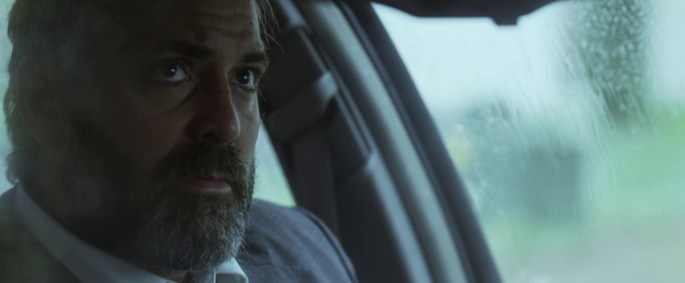
In the little screen time he has early on, George Clooney does an excellent job showing the rusty compass that his character lives his life by. The actor has improved and refined himself with every subsequent role he has done and relies more and more on what is going on behind his eyes than falling back on his good looks. His performance in Syriana goes beyond the obvious Method trappings – the weight gain and growing the thick beard – to his expressive eyes and how he uses them to convey Barnes’ world-weariness. This role is one of his strongest and his Academy Award for Best Supporting Actor was well-deserved. However, Clooney took one for the team in the worst way. During the harrowing scene where his character was tortured, Clooney was hurled to the floor more than 20 times. During one take, he hit his head and began experiencing severe back and head pain. Doctors later discovered that the actor had ruptured his spinal fluid sac and needed multiple surgeries.

Woodman’s first scene with his family is brief but effectively sets up the close bond he has wife his wife (Amanda Peet) and his two sons. One boy is not keen the pseudo-bacon he’s told to eat and so Woodman tries a piece to show that it’s good and fails miserably. Matt Damon does a good job of selling his priceless reaction shot and offering a light moment that immediately makes us empathize and like his character and his family. Jeffrey Wright delivers an understated, minimalist performance. When Holiday meets with the superiors in his firm, he appears nervous – he’s in the big leagues, swimming with the sharks – rich, powerful men as embodied by Dean Whiting (Christopher Plummer) and malevolent good ol’ boys politicians (played with scary conviction by Tim Blake Nelson and Chris Cooper).

One of the film’s central themes is the strained relationships between fathers and their sons. Barnes’ son resents all the moving around that they do as a result of his old man’s job and this robs him of a normal life. Woodman must cope with the tragic death of his little boy. Holiday copes with his alcoholic father who disapproves of his son’s work and the effect it has on his well-being.

Gaghan’s direction reflects the stories in the film. Everything isn’t spelled out. There are a lot of gray areas with morally and ethically ambiguous characters whose motivations aren’t entirely clear. If, at times, it is hard to follow all of the characters in this film this is done on purpose in order to illustrate just how hard it is to keep track of all the players in the Middle East oil trade and their numerous alliances, both obvious and secretive, with corporations and governments. Trying to make sense of it all can be a confusing and frustrating experience.
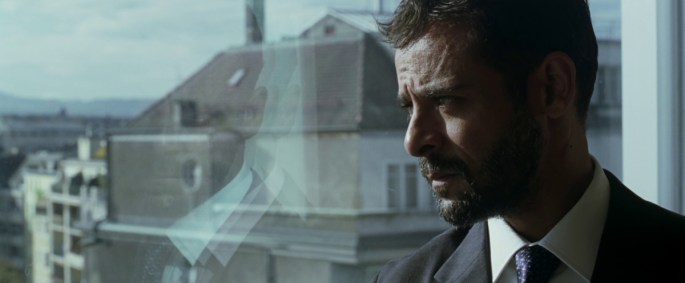
4845The timing of Syriana couldn’t have been more relevant as it exposed the dirty dealings between the U.S. government, American corporations and various oil-rich families in the Middle East. Reading between the lines, it also sheds light on the real reason why the U.S. is in Iraq. It isn’t to democratize its people, as the White House party line would have us all believe, but because of their abundant oil resources and the money Bush and his cronies made from it. While this is nothing new to anyone who is well-informed, this film does act as a decent primer to the uninitiated.

INCEPTION – A REVIEW BY J.D. LAFRANCE

INCEPTION

Ten years in the making, Inception (2010) was the culmination of Christopher Nolan’s career up to that point in time. This film mixed the ingenious plot twists of his independent film darling Memento (2000) with the epic scale of his Hollywood blockbuster The Dark Knight (2008). It took the heist genre to the next level by fusing it with the science fiction genre as a group of corporate raiders steal ideas by entering the dreams of their targets – think Dreamscape (1984) meets The Matrix (1999) as if made by Michael Mann. While Nolan and his films certainly wear their respective influences on their sleeve – and this one is no different (2001: A Space Odyssey, Blade Runner, Heat) – there is still enough of his own thematic preoccupations to make Inception distinctly his own. This film continues his fascination with the blurring of artifice with reality. With Inception, we are constantly questioning what is real right down to the last enigmatic image.

Dom Cobb (Leonardo DiCaprio) and his team extract thoughts of value from people as they dream. However, during his jobs, he is visited by his deceased wife Mal (Marion Cotillard), a beautiful femme fatale character that serves as an increasingly dangerous distraction from the task at hand. The film’s opening sequence does an excellent job establishing how Cobb and his team extract information from the dream of Saito (Ken Watanabe), a Japanese businessman, in a visually arresting sequence. He catches up with Cobb in the real world and offers him a new deal: plant an idea in Robert Fischer’s (Cillian Murphy) mind that will help break-up his father’s vast empire before it becomes too powerful, and do it in a way so that it seems like Fischer thought of it for it to work. This is something that has only been done once before and Cobb was the person that pulled it off but can he do it again? In exchange for completing the job, Saito will make the necessary arrangements so that Cobb can return home to the United States where his children live but where he is also wanted by the authorities in connection with his wife’s death. So, Cobb recruits a literal dream team of experts to help him pull off the most challenging job of his career.

Inception
delves into all kinds of aspects of dreams as evident in a scene early on where Cobb explains how they work, how to design and then navigate them. While there is a lot of exposition dialogue to absorb during these scenes, Nolan also keeps things visually interesting at the same time. This is arguably the most cerebral part of the film as he explores all sorts of intriguing concepts and sets up the rules for what we’ll experience later on – pretty heady stuff for a Hollywood blockbuster. And when he isn’t examining fascinating ideas, he’s orchestrating exciting and intense action sequences. There’s an incredible sequence where Nolan juggles three different action sequences operating on three different levels of dreams that are all impressively staged while also a marvel of cross-cutting editing. He anchors Inception with the character of Cobb and his desire to return home to his children while also dealing with the death of his wife. It gives the film an emotional weight so that we care about what happens to him. It also raises the stakes on the Fischer job.

Cobb continues Nolan’s interest in tortured protagonists. With Memento, Leonard Shelby tried to figure out who murdered his wife while operating with no short-term memory. Insomnia (2002) featured a cop with a checkered past trying to solve a murder on very little sleep. The Batman films focused on a costumed vigilante that waged war on criminals as a way of dealing with the guilt of witnessing his parents being murdered when he was a child. With The Prestige (2006), magician Robert Angier is tormented by the death of his wife and an all-consuming passion to outdo a rival illusionist. Inception’s Cobb also has a checkered past and is haunted by the death of loved one. Leonardo DiCaprio delivers what may be his finest performance to date, playing a complex, and layered character with a rich emotional life. Cobb must come to terms with what happened to his wife and his culpability in what happened to her. DiCaprio conveys an emotional range that he has not tapped into to this degree before. There’s a captivating tragic dimension to Cobb that the actor does an excellent job of expressing so that we become invested in the dramatic arc of his character.

Nolan populates Inception with a stellar cast to support DiCaprio. The indie film world is represented by the likes of Joseph Gordon-Levitt and Tom Hardy while also drawing from international cinema with Ken Watanabe and Cillian Murphy. Gordon-Levitt and Hardy, in particular, are stand-outs and their banter provides several moments of enjoyable levity during the course of this intense, engrossing film. And it wouldn’t be a Nolan film without his good luck charm, Michael Caine, making an appearance. As he has done in the past, Nolan plucks a once dominant actor from the 1980s, now languishing in relative obscurity – think Rutger Hauer in Batman Begins (2005) or Eric Roberts in The Dark Knight – and gives them a high-profile role. Inception gives Tom Berenger some well-deserved mainstream exposure after languishing in direct-to-video hell, reminding everyone what a good actor he can be with the right material.

Regardless if whether you like Inception or not, you’ve got to admire Nolan for making a film that is not a remake, a reboot, a sequel or an adaptation of an existing work. It is an ideal blend of art house sensibilities, with its weighty themes, and commercial conventions, like exciting action sequences. Capitalizing on the massive success of The Dark Knight, Nolan wisely used his clout to push through his most personal and ambitious film up to that point. With Inception, he created a world on a scale that he never attempted before and was able to realize some truly astonishing visuals, like gravity-defying fight scenes and having characters encounter a location straight out of the mind of M.C. Escher. It has been said that the power of cinema is the ability to transport you to another world and to dream with our eyes open. Inception does this. Nolan created a cinematic anomaly: a summer blockbuster film with a brain.

CAPTAIN AMERICA: THE WINTER SOLDIER – A REVIEW BY J.D. LAFRANCE

4110469-1460867178-img19

When we last saw Steve Rogers a.k.a. Captain America (Chris Evans), he had just helped save New York City from an alien invasion and was still acclimatizing himself to modern life having been frozen in ice since World War II as chronicled in Captain America: The First Avenger (2011). The sequel, The Winter Soldier (2014), takes place two years after the events depicted in The Avengers (2012) and sees Cap working as an agent of S.H.I.E.L.D., a top-secret spy organization that, among other things, deals with the fallout from the adventures of superheroes like Iron Man and Thor. However, as hinted at in The Avengers and the television show Agents of S.H.I.E.L.D., there is something rotten at the core of the spy organization and Cap soon finds himself not only embroiled in a vast conspiracy, but also confronting someone from his past he thought had died in the war. The result is a fantastic fusion of the super hero movie with the conspiracy thriller.

Cap and Black Widow (Scarlett Johansson) are now a team and as the film begins they intercept a covert S.H.I.E.L.D. ship in the Indian Ocean that has been hijacked by Algerian terrorists led by French mercenary Batroc the Leaper (Georges St-Pierre). In a nice touch, the filmmakers manage to transform Batroc, who was a pretty ridiculous villain in the comic books, into a bit of a badass. Afterwards, S.H.I.E.L.D. director Nick Fury (Samuel L. Jackson) lets Cap in behind the scenes, showing him three Helicarriers armed with state-of-the-art jet fighters that are linked to spy satellites created to anticipate global threats in a program known as Project Insight.

Cap is not at all comfortable with Fury’s secret project and the notion of creating a climate of fear that potentially robs people of their basic freedoms. However, when Fury suspects something is wrong with Project Insight he voices concern to senior S.H.I.E.L.D. official Alexander Pierce (Robert Redford). Immediately afterwards, Fury is attacked on the streets of Washington, D.C. by S.H.I.E.L.D. operatives and an enigmatic figure known as the Winter Soldier (Sebastian Stan). Fury barely escapes and finds Cap before being gravely injured. It’s up to Cap and Black Widow, along with the help of Sam Wilson (Anthony Mackie), a war veteran and post-traumatic stress disorder counselor that Cap befriends early on, to uncover the corruption rampant in S.H.I.E.L.D. and stop it.

Chris Evans does an excellent job of reprising his role of Captain America and providing layers to a character that is essentially a super strong boy scout who comes from a simpler time. He is now immersed in a convoluted conspiracy where he doesn’t know who to trust. As a result, he has to do a bit of soul-searching, which Evans handles well. He also has nice chemistry with Scarlett Johansson, especially when Cap and Black Widow go off the grid together and try to find the Winter Soldier. There’s a hint of sexual tension going on as two people with wildly different backgrounds and approaches to life are forced to look out for each other. Johansson finally gets some seriously significant screen-time than she did in Iron Man 2 (2010) and The Avengers and it’s nice to see her character fleshed out a bit more as well as giving her plenty of action sequences to kick ass in.

A film like this, which intentionally raises the stakes in comparison to the first one needs a credible threat that makes us feel like Cap and his allies are in real danger and the Winter Soldier does that. He rarely speaks, but looks cool and is extremely dangerous so that we anticipate the inevitable showdown between him and Cap. He isn’t some anonymous bad guy, but something of a tortured soul and the screenplay by Christopher Markus and Stephen McFeely (who also wrote the first film) offers some tantalizing details of his backstory and how it ties in with Cap’s past.

Markus and McFeely have crafted a solid script that is well-executed by directors Anthony and Joe Russo. They establish just the right rhythm and tone with well-timed lulls between action sequences that are used wisely to move the plot along and offer little moments of character development that keep us invested in the characters and their story. For example, there is a nice scene where Cap goes to an exhibit dedicated to his World War II exploits at the Smithsonian, which succinctly recaps his origin story in a rather poignant way that reminds us of his internal conflict of being stuck in the past while living in the present. One way he deals with this is befriending Sam and they both bond over being war veterans – albeit from very different eras. In addition, the script features several well-timed one-liners and recurring jokes that add moment of much-welcomed levity to an otherwise serious film.

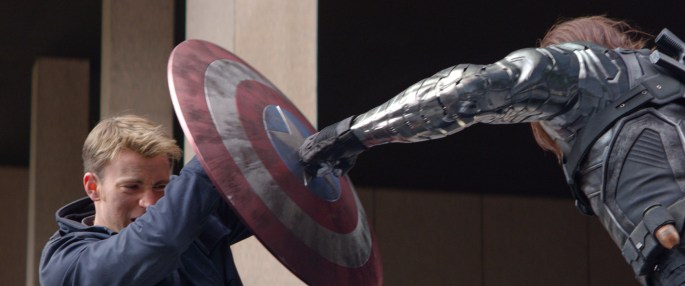
The action sequences are exciting and expertly choreographed with the exception of the opening boat siege, which takes place at night and involves way too much Paul Greengrass/Jason Bourne shaky, hand-held camerawork. Once the filmmakers get that out of their system and Cap takes on Batroc, the camera settles down and is a decent distance from the combatants so that we can see what’s going on. There is also an intense car chase involving an injured Fury in an increasingly bullet-ridden SUV that has the feel of the exciting car chase in William Friedkin’s To Love and Die in L.A. (1985) and a little later Cap takes out an elevator full of S.H.I.E.L.D. agents intent on neutralizing him that evokes an elevator scene in Brian De Palma’s Dressed to Kill (1980). The fights between Cap and the Winter Soldier are fast and frenetic, but never confusing as they convey the frighteningly deadly speed of the latter’s moves, so much so that I really felt like Cap was in some serious danger.

Drawing elements from writer Ed Brubaker and illustrator Steven Epting’s 2005 “Winter Soldier” storyline in the comic book, this film has a decidedly darker tone than The First Avenger as our hero is nearly killed on several occasions and his world is shaken to the very core as he uncovers all sorts of ugly secrets. In this respect, The Winter Soldier is reminiscent of paranoid conspiracy thrillers from the 1970s and this is acknowledged with the casting of Robert Redford who starred in two of the best films from that era – Three Days of the Condor (1975) and All the President’s Men (1976).

It is refreshing to see a sequel that isn’t merely content to rehash the first film. Where The First Avenger was essentially a mash-up of a super hero movie and war movie, The Winter Soldier is super hero movie and a political thriller with events that are a major game changer for the Marvel Cinematic Universe. In the past, S.H.I.E.L.D. had been the connective tissue that linked several of the films together that led up to The Avengers. It should be interesting to see how the events depicted in this film set the stage for Avengers: The Age of Ultron (2015). That being said, The Winter Soldier has its own self-contained story that is engrossing with a lot at stake for our hero and this in turn gets you invested in what is happening to produce a rare super hero movie with heart.

CAPTAIN AMERICA: THE FIRST AVENGER – A REVIEW BY J.D. LAFRANCE

cptamerica-trailer-197

The popular comic book superhero Captain America had his debut in March 1941 courtesy of Joe Simon and Jack Kirby who created him as a patriotic symbol in response to the actions of Nazi Germany in the years leading up to the United States’ involvement in World War II. Like any enduring comic book icon, Cap has undergone all kinds of changes over the years but as had few cinematic incarnations. He first appeared on film in a 1944 serial and then in a 1990 film that was so ill-conceived that it was released direct to home video in North America. One problem with the character is that his costume does not translate well to a live-action film. It didn’t help that at the time of the 1990 version, Marvel Comics, which owned the character, had little interest in cinematic adaptations of its titles until X-Men (2000) proved to be a surprise hit.

Since then, they’ve had a spotty track record with their properties. The Blade and Iron Man series were very successful but both Daredevil (2003) and Ghost Rider (2007) were box office and critical failures respectively. Part of the problem is the talent attached to these films. Getting the right director and cast that understand the characters and the worlds they inhabit is crucial and explains why the first two X-Men films were so good. For Captain America: The First Avenger (2011), the powers that be wisely hired Joe Johnston to direct. Since it was decided that the film be set during World War II who better to recapture that old school action/adventure vibe then the man who helmed The Rocketeer (1991) and Hidalgo (2004)? For the pivotal role of Captain America, Chris Evans was cast. He already had experience with superhero films playing the Human Torch in the awful Fantastic Four films and, as a result, was understandably reluctant to take on another comic book adaptation. The question remained, how would such an earnest, idealistic character translate in our cynical times and would movie-going audiences be able to relate to him? Judging by its opening weekend box office haul, quite well indeed.

Steve Rogers (Chris Evans) is a skinny weakling who just wants to do his part for his country during wartime but he’s wracked with too many health problems to join the army. So, he volunteers for a risky top-secret experimental program known as Project Rebirth run by Colonel Chester Phillips (Tommy Lee Jones at his crusty, ornery best) and Peggy Carter (charmingly played by Hayley Atwell). Rogers may not be physically strong but he’s brave, determined and willing to sacrifice himself for the greater good. Dr. Abraham Erskine (Stanley Tucci) and playboy inventor Howard Stark (Dominic Cooper) conduct the actual procedure that transforms Rogers into the perfect physical specimen, a Super Soldier complete with superior strength and agility.

Instead of putting him on the front lines where he wants to be, Rogers dons a corny costume (that pokes fun at previous cinematic incarnations), dubbed Captain America, and ordered to sell war bonds to the American public in a lame dog and pony show. While entertaining American troops in Italy, he hears that his best friend Bucky Barnes (Sebastian Stan) has been captured by Hydra, a research wing of the Nazis who are so ambitious that they split from the Germans for playing it too safe. With Peggy and Stark’s help, Rogers disobeys orders to rescue his friend and 400 prisoners of war. Meanwhile, Hydra leaders Dr. Arnim Zola (Toby Jones) and Johann Schmidt (Hugo Weaving) have discovered the Tesseract, a cosmic cube endowed with powerful magical energy that they harness so that it can be used to not only win the war but also take over the world. Schmidt was the first recipient of the Super Soldier formula and it transformed him into the Red Skull, a hideous-looking evil genius.

Hugo Weaving brings a suitably creepy menace to the role of the power hungry Red Skull aided in large part by the impressive and appropriately garish makeup job. Hayley Atwell is downright delightful as the brassy dame Peggy Carter who is more than capable of taking care of herself. The chemistry between her character and Rogers is nicely realized with snappy, slyly flirty dialogue reminiscent of a Howard Hawks film. The screenplay, written by Christopher Markus and Stephen McFeely, does a nice job of developing their relationship over time, keeping their romance simmering just under the surface for most of the film until its tragic conclusion that carries a surprising emotional resonance because we’ve become invested in them. After all kinds of supporting roles over the years, Chris Evans finally gets to prove that he has the chops to carry a big budget blockbuster. He brings a no-nonsense charisma to the role and conveys Cap’s idealism without coming across as forced or phony.

Joe Johnston brings the same old school Classic Hollywood vibe he brought to The Rocketeer complete with a refreshing lack of cynicism and irony as he delivers a straightforward action/adventure tale. And like with that previous film, he includes all sorts of nice comic book touches, like the introduction of the Howling Commandos, a ragtag group of soldiers that fought alongside Nick Fury in the comics and fight with Cap in the film. In particular, the actors who play Dum Dum Dugan (Neal McDonough) and Gabe Jones (Derek Luke) bear an uncanny resemblance to their comic book counterparts right down to how they look and act. Unlike Zack Snyder (Watchmen, Sucker Punch), who imposes too much of his personal style, Johnston understands that the film’s style should service the story – anything else is a distraction. He even employs Snyder’s trademark “speed-ramping” technique but in a way that fits seamlessly with the action sequences, which are exciting and expertly choreographed, devoid of schizophrenic editing. You always know who is fighting whom and where. Captain America may not reinvent wheel in terms of the comic book superhero genre but it doesn’t have to. It is a crowd-pleasing popcorn movie with nothing else on its mind but to tell an entertaining story.

PUNCHLINE – A REVIEW BY J.D. LAFRANCE

MSDPUNC EC010

The harsh reality of stand-up comedy is that for every Jerry Seinfeld that makes it, there are hundreds of comedians who don’t. There are comedians who work dead end jobs during the day and spend the rest of their time working comedy clubs in the hopes of getting that “big break” on a late night talk show or a role in a film or a television sitcom. Some of them have what it takes but most do not. David Seltzer’s film, Punchline (1988), is dedicated to and about these men and women who try to make us laugh. It also explores the dedication, the discipline, and the sacrifices that must be made in order to make it.
Steven Gold (Tom Hanks) is a struggling medical student who moonlights as a stand-up comedian. It quickly becomes evident that he is lousy at the former and excels at the latter. And yet, when he is given a chance at the big time, he cracks under the pressure. Lilah (Sally Field) is a dedicated housewife that also yearns to be a comic. She has the raw talent but not the command of craft that Steven possesses. At first, he doesn’t give Lilah the time of day but slowly they bond and he teaches her the fundamentals of stand-up comedy. “All you need is the right gags,” Steven tells her, and he’s right. Once Lilah has some decent material she discovers her natural gift of making people laugh. An uneasy friendship develops between the two and the personal conflicts they must resolve: Steven’s desire to make it big vs. his inability to do so and Lilah’s love of comedy vs. her love for her family.

David Seltzer wrote the first draft for Punchline in 1979 after becoming fascinated by comedy clubs while looking for someone to play a psychiatrist on a T.V. pilot that he was writing. He had a development deal with the movie division of ABC. Originally, the tone of the film was more good-natured a la Fame (1980) with more characters and less of an emphasis on Steven Gold. Bob Bookman, an executive, sponsored the script but left for Columbia Pictures. He bought the screenplay because Howard Zieff (Private Benjamin) was interested in directing it. When Zieff lost interest (he ended up doing Unfaithfully Yours in 1984), the script was buried for years.

In 1986, producer Daniel Melnick found the screenplay for Punchline among twelve other scripts collecting dust in the vaults of Columbia Pictures. Seltzer’s screenplay had gone through three changes of studio management because the executives didn’t like the mix of comedy and drama. They also didn’t like the Steven Gold character because they thought he was, according to Melnick, “obsessive, certainly self-destructive and could be considered mean-spirited.” The studio couldn’t get a major star to commit to the material and so Melnick decided to make the movie for $8 million and with no stars. Interim studio president Steve Sohmer didn’t like that idea and sent the script to Sally Field, who had a production deal with Columbia. Field agreed to star in and produce the film. Once she signed on, the budget was set at $15 million.

Field didn’t mind sharing the majority of the screen time with Tom Hanks and taking on the role of producer because, as she said in an interview at the time, “as a producer I am not developing films in which I can do fancy footwork. I don’t have to have the tour de force part.” New York comic Susie Essman and sitcom writer Dottie Archibald coached Field. The writer also served as comedy consultant for the film, recruiting fifteen comics to populate the comedy club Steven and Lilah frequent. Field’s research often mirrored her character’s as she remembered working “for about six months to find where Lilah’s comedy was, which is what my character was going through. So it was actually happening to both of us.” As one of the producers on the film, Field found working behind the scenes very demanding, disagreeing with Seltzer about the content of Lilah’s act and how much of it should be in the final cut. The filmmaker said, “Sally had a high degree of opinion and certainty about things. She ain’t the flying nun.”

Two months before the Punchline went into production, Hanks wrote a five-minute stand-up act and performed it at the Comedy Store in Los Angeles. As Hanks recalled, “It was pure flop sweat time, an embarrassment. That material lasted 1 minute 40 seconds, and it had no theme.” Hanks tried again and again, sometimes hitting three clubs a night. It took a month before the actor “didn’t sweat like a pig” on stage. By that point he had enlisted an old friend and comedy writer Randy Fechter and stand-up comic Barry Sobel to help him write his routine. Hanks ended up performing more than thirty times in clubs in Los Angeles and New York City.

The first half of Punchline is a fascinating look at the inner workings of stand-up comedy and what it takes to make it. In this respect, Seltzer’s film is an unflinching portrayal of this profession. As Steven tells Lilah, “It takes every night, six clubs a night, all night. It takes working stag parties and elk club parties where you’re opening for a fucking accordion player.” It is this kind of dedication that is clearly needed in order to be successful. Stand-up comic Sobel felt that the atmosphere of the film’s comedy club was very authentic. “There’s a lot of desperation in the movie on the part of a lot of the comedians, which I feel is on the nose of what it is to be a stand-up.”

The film’s weakness lies in Lilah’s family life. Except for a wonderfully choreographed sequence where Lilah has to rush to get dinner ready for her husband (John Goodman) and his guests before they get home, the moments that feature Lilah with her family are where Punchline loses its energy and becomes a maudlin drama. This aspect of the film just isn’t as fascinating as the parts dealing with the art of stand-up comedy.

Punchline
‘s best moments are when Steven’s manic presence dominates the screen. Tom Hanks’ characterization deftly shows how tragedy and comedy are entwined. In one scene, his character has a gig at a hospital where he entertains a group of patients and doctors. Hanks is genuinely funny as he works the crowd, making fun of people’s injuries so that they forget their own pain for a moment. The beauty of this scene is watching how Hanks interacts with his audience and how convincing he is as a stand-up comic. For the actor, the allure of doing stand-up comedy was “walking into a room of 400 people and taking them wherever you want for 20 minutes. Steven is god of his universe as long as he’s got a microphone in his hand.”

Hanks is also able to show us the darker side of his character in a brutal scene where he has a shot at being discovered and ruins it. Steven does his act at a club with a talent scout watching only to realize that his father, whom he fears and loathes, is in the audience. The look on Steven’s face before he does his act says it all — he knows he’s going to blow it but goes on anyway. The scene is so painful to watch because it is in such a sharp contrast to the hospital scene. To a deafening silence, Steven starts talking about his relationship with his father before breaking down and crying in front of the audience. It is an emotionally powerful scene that is tough to watch and one that the film is never able to surpass.

And this is due in large part to Hanks who goes all out with his performance by showing such a wide range of emotions that swing from euphoria to bitter resentment. It’s an unusual role for Hanks who usually plays nice guys. As the actor recalled in an interview, “He’s not a lovable goofball. His difficulties don’t make him a nicer character or a more sympathetic character but they do make him a darker character.” Under Steven’s very funny facade lurks a self-destructive, jealous person who will do anything to succeed. Is this what it takes to make it as a comedian? The film never really answers this question. Instead, it is left up to the audience to decide one way or the other.

Chairman of Columbia David Puttnam wanted to release Punchline during the Christmas of 1987 but the film wasn’t ready. Puttnam eventually left and Dawn Steel moved in and decided to release the movie after Big (1988) became a huge hit. Punchline grossed a respectful $21 million in the United States.

The best comedy is about yourself, your life, what you know, and finding what is funny in that. Punchline taps into this truism by showing that comedians not only comment on their own lives but what they see around them as well. This film is at its best when it shows us the inner workings of the stand-up comedy profession and how tough it really is. There is a ring of honesty to these scenes that the rather sappy happy ending cannot diminish.

PUBLIC ENEMIES – A REVIEW BY J.D. LAFRANCE

Public-Enemies-4-790022

Public Enemies (2009) marked Michael Mann’s fourth foray into American history with The Last of the Mohicans (1992), The Insider (1999), and Ali (2001) being his previous efforts. The director got his start making documentaries and always been interested in achieving absolute authenticity in the depiction of the professions that his protagonists practice, be it safecracking in Thief (1981) or serial killer profiling in Manhunter (1986). Born and raised in Chicago, it is easy to see what drew Mann to the story of John Dillinger, a famous bank robber during the 1930s. He and his crew were the best of the best at the time and so, he certainly fits the kind of protagonist Mann is drawn to.

Public Enemies begins in 1933 during the golden age of bank robbery and Mann wastes no time getting into it as he opens the film with an exciting escape from an Ohio prison orchestrated by Dillinger (Johnny Depp) and his crew. Soon after, we meet FBI agent Melvin Purvis (Christian Bale) in action as he takes down Pretty Boy Floyd (Channing Tatum) with a hunting rifle from an impressive distance. In no time at all, Mann has established the film’s protagonist and antagonist. They are smart, super efficient men of action that are single-minded in their respective goals.

Unable to get funding and criticized by his superiors, FBI Director J. Edgar Hoover (Billy Crudup) needs high-profile busts and enlists Purvis to find and stop the country’s Public Enemy No. 1 – John Dillinger. The more notorious he becomes the more this angers not just the FBI but also the Chicago mob because his actions put extra heat on them. There is a nice scene where he meets with a mob representative who basically tells him that he is a dying breed. The money he makes knocking over one bank, they make in one day through illegal gambling.

Mann demonstrates that he is a master at orchestrating action sequences. They are cleanly photographed and edited so that there is no confusion. You can always tell what is going on and who everyone is instead of the kamikaze, headache-inducing editing and slapdash camerawork in films by the likes of Michael Bay and McG. The shoot-out at Dillinger’s hide-out in Little Bohemia is the film’s show-stopping action sequence much like the bank heist in Heat (1995) and the nightclub shoot-out in Collateral (2004). It is powerfully executed and full of tension and excitement as well as an impressive display of firepower with the deafening blasts of tommy guns and shotguns.

Public Enemies reunited Mann with key collaborators, chief among them cinematographer Dante Spinotti who has shot his most memorable films (including Manhunter, The Last of the Mohicans, Heat, and The Insider). Mann has come under considerable criticism for making the move to digital cameras and even more so with Public Enemies because it is a period film and audiences are used to seeing them done on traditional film stock. However, it looks great with crisp, clear images, especially at night where there is an impressive depth of field. Certain scenes have a graininess to them inherent with digital cameras but, in this case, it gives a tangible, gritty texture that works. There are some truly beautiful shots in this film, like one in which a car carrying Dillinger and his crew hurtle down a road surrounded by a vast forest of trees that tower over them.

Mann is also reunited with composer Elliot Goldenthal who worked on Heat. Since The Last of the Mohicans (1992), Mann has relied on soundtracks comprised mostly of disparate tracks from various sources. Being a period piece, obviously Public Enemies really doesn’t lend itself to that kind of a soundtrack and Goldenthal expertly augments the drama that unfolds in various scenes, creating one of the best scores in a Mann film to date.

The attention to period detail is fantastic with classic trains, cars, and classic gangster iconography like tommy guns, fedoras and trenchcoats permeating the film. Mann really immerses us in the time period but not in a way that calls undo attention to itself. It’s just there in the background of every scene with vintage period architecture. Ever the perfectionist, Mann shot on location, often at the actual locations that Dillinger and his gang frequented. Whether you are consciously aware of this or not, the film just oozes authenticity.

Dillinger certainly enjoys the fruits of his labor but is always planning his next job. He follows his own personal code: he doesn’t kill unless absolutely necessary and doesn’t think about the future, living only in the present because he could easily end up in jail or dead. He is also very conscious of how he’s perceived by the public, enjoying the notoriety his exploits create. Johnny Depp portrays him as a very confident guy who is always in control. There is often this mischievous glint in his eye like he’s in on a private joke. Depp plays Dillinger with a lot of charm, like when he addresses the media while being booked in an Indiana jail. He knows how to work the crowd and the charismatic actor is excellent in this scene. However, Public Enemies is not afraid to point out that Dillinger is no hero. The man has no problem with killing someone if they got in his way but the film goes to great lengths to point out that he did so only when there was no other option. Dillinger was clearly a man who didn’t believe in wasting time, much like Frank, the safecracker in Thief. Depp inhabits the role with his customary dedication, adopting a specific voice, accent and effortless delivery of period lingo that sounds natural and genuine.

Christian Bale is quite good as the very determined Purvis. While Mann doesn’t create the balance of cop vs. robber as he did in Heat, Bale has a significant amount of screen-time in the film. Like other law enforcement figures in Mann’s films, Purvis uses state-of-the-art technology, for the time, to track Dillinger and his crew. As determined as Purvis is, Mann allows some humanity to seep in, like when he stops the brutal interrogation of Dillinger’s girlfriend Billie Frechette (Marion Cotillard) and personally helps her get cleaned up. It is this small moment that adds a welcome layer to his character.

There are all kinds of parallels between Public Enemies and Heat. In both films we are meant to sympathize with the bank robber. Also, the two leads only meet face-to-face in one scene. There is a climactic gun-battle where both sides take on significant casualties that alter the conclusion of the story. And, like McCauley in Heat, there is an inevitability to Dillinger’s life; that he will run out of time and luck; that Purvis and the FBI will close the net around him. That being said, Public Enemies is not a carbon copy of Heat. Personality-wise, Dillinger and McCauley are very different people with the former being a risk-taker and the latter being overly cautious. The same goes for the lawmen. Purvis is not the larger-than-life extrovert that Hanna is, but rather a no-nonsense man who gets the job done and that’s it. There’s even a loose cannon in the form of Baby Face Nelson (Stephen Graham) who is to Public Enemies what Waingro was to Heat. A psychopath that the bank robbers initially ally themselves with but end up cutting loose when he proves to be too unstable. Structurally, both films couldn’t be different as Mann continues to experiment with narrative structure in a fascinating way. This isn’t your typical, cookie-cutter A to B to C plotting, which may frustrate some (see Ali or Miami Vice) but if you the patience and can get into it, watching Public Enemies is a very rewarding experience.

NIXON – A REVIEW BY J.D. LAFRANCE

Nixon5

Oliver Stone’s film, Nixon (1995) portrays the American political process as an unpredictable system that politicians have no hope of ever fully controlling. The best they can do is keep it in check most of the time. This theory can be seen in its embryonic stage in JFK (1991) with President John F. Kennedy being assassinated by shadowy forces within the political system, but it was not until Nixon that Stone was able to fully articulate it. As film critic Gavin Smith observed, “Nixon is a historical drama about the constructing and recording of history, assembled as we watch.” Stone has created a unique version of the historical biopic that combines fact and speculation with a cinematic style that blends various film stocks in a seamlessly layered, complex narrative. This fractured, overtly stylized approach draws attention to the fact that we are watching a film. As Stone has said in an interview, “I don’t pretend that it is reality.” This, in turn, allows him to deliver his message with absolute clarity.

Like Citizen Kane (1941) before it, Nixon traces the dramatic rise and fall of a historical figure who tried so hard to be loved by all but ended up being infamous and misunderstood. While Orson Welles’ film was a thinly-veiled attack on newspaper tycoon, William Randolph Hearst, Stone paints an almost sympathetic portrayal of Richard Nixon (Anthony Hopkins). Stone may not like Nixon personally, but he does try to explore what motivated the man’s actions and really get inside his head. The director even throws in a stylistic nod to Kane as part of the opening credits play over a shot of a dark and stormy night at the White House. The camera moves through the fence in a way that evokes the opening of Welles’ film with Kane’s imposing estate. And like Welles’ film, Nixon employs a flashback device as Nixon listens to the Watergate tapes and reflects on his life, from his tough childhood in Whittier, California, to his beleaguered political career that culminates with his tumultuous stint in the White House.

The first real indication of Stone’s thesis of the political system as a wild, untamable animal comes when Nixon talks to FBI director J. Edgar Hoover (Bob Hoskins) at a horse race about running for President. There are all kinds of shots of horses snorting wildly – the first hint, visually, of what Stone is trying to get at. Hoover makes it known that he will support Nixon if he, in turn, supports him, and is willing to supply him with dirt on Robert Kennedy to help the cause. Hoover makes an intriguing comment when he tells Nixon, “I look at it from the point of view that the system can only take so much abuse. It adjusts itself eventually … But there are times there are savage outbursts.” He cites Martin Luther King’s promiscuity and continues, “Sometimes the system comes very close to cracking.” The implication in this scene is that Hoover is a significant cog in the United States political machine and one that Nixon must respect and work with.

The second significant example where Stone gives support to his thesis is when Nixon meets with Richard Helms (Sam Waterston), director of the CIA. Like Hoover, Helms is a powerful man within the system because he knows and protects so many of its dirty little secrets. They get to talking about Cuba and Nixon’s involvement to assassinate Fidel Castro, which Helms has evidence of via memos. He refers to it as “not an operation so much as an organic phenomenon. It grew. It changed shape. It developed appetites.” Helms is fiercely protective of his position and of the CIA, resisting Nixon’s request for incriminating documents. Where Hoover is portrayed as gruff and obvious, Helms is elusive and distant, played with icy intensity by Sam Waterston.

The third and most important example occurs when Nixon spontaneously meets with war protesters on the steps of the Lincoln Memorial. This is where Stone lays it all out and the film features a fascinating exchange between the President and a female protester (Joanna Going):

Protester: You can’t stop it can you? Even if you wanted to. ‘Cause it’s not you, it’s the system. The system won’t let you stop it.
Nixon: There’s more at stake here then what you want or what I want.
Protester: Then what’s the point? What’s the point of being President? You’re powerless!
Nixon: No. No, I’m not powerless. ‘Cause I understand the system. I believe I can control it. Maybe not control it totally but tame it enough to do some good.
Protester: Sounds like you’re talking about a wild animal.
Nixon: Maybe I am.

Of this scene, Stone has said that Nixon realizes that the system is “more powerful than he is. We can’t get into it that much, but we hint at it so many times – the military-industrial complex, the forces of money.” Stone’s film argues that Nixon really did want to institute change and make a difference in the world, but his own shortcomings, coupled with the complex infrastructure that is the United States political system, ultimately led to his downfall. Stone and the screenwriters conceived of the concept of the political system as “the beast,” which one of the film’s screenwriters Christopher Wilkinson described as “a headless monster that lurches through postwar history,” and served as a metaphor for a system of dark forces that resulted in the assassinations of the Kennedy brothers and Martin Luther King, and the Vietnam War, as well as helping Nixon’s rise to power and his fall from it. In an interview, Stone elaborated further. He saw “the beast” as a “system … which grinds the individual down … it’s a system of checks and balances that drives itself off: 1) the power of money and markets; 2) state power, government power; 3) corporate power, which is probably greater than state power; 4) the political process, or election through money, which is therefore in tow to the system; and 5) the media, which mostly protects the status quo and their ownership’s interests.”

Anthony Hopkins’ stunning portrayal of the former President humanizes this historical figure. From the way the film is shot and edited, we are seeing the events of U.S. history through Nixon’s perspective. This approach also helps in creating a sympathetic portrait of the man. Hopkins wisely does not opt for a Rich Little imitation but instead captures the essence and spirit of the man. He shows Nixon’s aggressive side, where he speaks in football metaphors and refers to himself in the third person, and also a vulnerable one in the scenes with his wife, Pat. It’s a wonderfully layered performance that Hopkins hasn’t equaled since because he hasn’t been given material and a director that has challenged him in quite the way that Stone did with Nixon.

Opposite Hopkins is Joan Allen as Pat Nixon. She more than holds her own with the Academy Award-winning thespian, portraying Pat as a long suffering yet incredibly strong-willed wife who has to sit by and watch her husband strive for unattainable goals. There’s a scene where she reacts in private to her husband losing the 1960 Presidential election to John F. Kennedy and she looks visibly upset, wiping away tears while trying to maintain her composure. In the following scene with her husband, Pat tells him about the toll his political career is taking on their family, which comes across as quite touching. Tears well up in Pat’s eyes as she consoles her husband while he looks tired and defeated. It’s a wonderfully intimate moment that humanizes both of them considerably. All of the scenes between Allen and Hopkins crackle with a kind of tangible intensity as we see the toll politics takes on them. This is not one of those token wife roles that is so often seen in these kinds of films. The well-written screenplay and Allen’s performance flesh out Pat Nixon into a three-dimensional character.

vlcsnap-00006

As always, Stone’s knack for casting is impeccable. Much like he did with JFK, Stone surrounds his leads with an impressive roster of big names in the supporting roles: James Woods, Ed Harris, Bob Hoskins, David Hyde Pierce, Paul Sorvino, Powers Boothe, J.T. Walsh, and, in a restored scene, Sam Waterston delivers a deliciously chilling performance as Richard Helms. These recognizable faces help one keep track of the historical figures that pop up throughout the film.

Originally, Stone had been developing two projects – the musical Evita (1996) and a film about Panamanian dictator Manuel Noriega. When they both failed to get made, he turned his attention to a biopic about Nixon with the president’s death in April 1994 being a key factor in the director’s decision. The project actually originated with Eric Hamburg, a former speechwriter and staff member of the House Foreign Affairs Committee, after having dinner with Stone. In 1993, Hamburg mentioned the idea to writer Steve Rivele with the concept being that they would incorporate all of Nixon’s misdeeds, both known and speculative. Hamburg encouraged Rivele to write a screenplay with his partner Christopher Wilkinson. They wrote a treatment in November 1993. In it was the concept of the political system as a beast and this is what convinced Stone to get involved. He immersed himself in research with the help of Hamburg.

Stone commissioned the first draft of the film’s screenplay from Rivele and Wilkinson and it was completed on June 17, 1994, the anniversary of the Watergate break-in. The script was based on research from various sources, including documents, transcripts and hours of footage from the Nixon White House. Early on, Rivele and Wilkinson hated Nixon but the longer they worked on the film, and “the more we knew about him, our contempt was slowly eroded to the point where we more than pitied him, we empathized with him.” Stone structured his film into two acts with the first one about Nixon’s loss of power and the second one about Nixon in power only to lose it again.

Stone pitched the project to Warner Bros. but, according to the director, they saw it “as a bunch of unattractive older white men sitting around in suits, with a lot of dialogue and not enough action.” They also didn’t agree with Stone’s choice to play Nixon – Anthony Hopkins. Instead, they wanted Tom Hanks or Jack Nicholson – two of Stone’s original choices and both of whom had passed on the role. Stone even met with Warren Beatty but the actor wanted to make too many changes to the script. Stone went with Hopkins based on his performances in Remains of the Day (1993) and Shadowlands (1993). The director remembered, “The isolation of Tony is what struck me. The loneliness. I felt that was the quality that always marked Nixon.” Upon meeting Stone for the first time, Hopkins saw the director as “one of the great bad boys of American pop culture, and I might be a fool to walk away.” He was convinced that to take on such a challenging role that would require him to “impersonate the soul of Nixon” by the scenes in the film when he talks about his mother and father. “That affected me,” he said. To prepare for the role, Hopkins watched a lot of documentary footage on Nixon. At night, he would go to sleep with footage playing so that it would seep into his subconscious.

Joan Allen auditioned for the role of Pat Nixon over a period of several months. During one of these auditions, she read opposite Beatty when he was briefly interested. After this audition, Beatty told Stone that he had found his Pat Nixon. She learned, through her research, that Pat was a strong person who had a difficult life. Allen based her performance on interviews with former Nixon aides, books about the First Lady and a Barbara Walters interview in the early 1970s. Stone, Hamburg, Hopkins, and Woods flew to Washington, D.C. and interviewed the surviving members of Nixon’s inner circle: lawyer Leonard Garment, Attorney General Elliot Richardson and Robert McNamara, a former Secretary of Defense under the Kennedy and Lyndon Johnson administrations. In addition, Stone hired Alexander Butterfield, a former secretary in the cabinet and special assistant to Nixon and who first revealed the existence of Nixon’s secret tapes of his oval office conversations, John Sears, former deputy White House counsel, and John Dean as consultants. To research their roles, Powers Boothe, David Hyde Pierce and Paul Sorvino met with their real-life counterparts, but J.T. Walsh decided not to contact John Ehrlichman because he threatened to sue the production after reading an early version of the script and was not happy with how he was portrayed.

Stone’s producing partner and financier Arnold Milchan had a deal with the director to make any film he wanted up to a budget of $42.5 million but refused to honor their agreement, saying that he would put up no more than $35 million because he felt Nixon was an uncommercial project. Stone refused to make the film with that budget and a week before shooting was to begin he approached Hungarian financier Andrew Vajna who had a co-financing deal with Disney’s Hollywood Pictures. At the time, Vajna was hoping to get some respectability in Hollywood and possibly an Academy Award and agreed to provide the $43 million budget. In order to cut costs, Stone leased the White House sets from The American President (1995).

Reportedly, there was a lot mischievous jokes exchanged between the actors on the set. Early on, Hopkins was intimidated by the amount of dialogue he had to learn, more of which was being added and changed all the time, and then Sorvino told him that “there was room for improvement” and that he would be willing to help him. According to James Woods, Sorvino told Hopkins that he was “doing the whole thing wrong” and that he was an “expert” who could help Hopkins. Sorvino took Hopkins to lunch and then afterwards the British thespian told Stone that he wanted to quit the production. The director managed to convince him to stay on. Hopkins remembered, “There were moments when I wanted to get out, when I wanted to just do a nice Knot’s Landing or something.” Woods also cracked several good natured jokes with Hopkins. He said, “I’d always tell him how great he was in Psycho. I’d call him Lady Perkins all the time instead of Sir Anthony Hopkins.”

What is perhaps most stunning about Nixon is the style of the film. Employing the editing techniques and innovative camerawork he perfected in JFK and Natural Born Killers (1994), Stone created a unique version of the historical biopic that combines actual documentary footage with fictional material and that blends various film stocks in attempt to shed light on a figure most people knew very little about. This fractured, overtly stylized approach suggests that we are seeing historical events through the prism of Nixon’s perspective. The film is not meant to be the definitive word on the man but rather, as Stone said in an interview, the “basis to start reading, to start investigating on your own.”

Stone had his editors in three different rooms with the scenes from the film revolving from one room to another, “depending on how successful they were.” If one editor wasn’t successful with a scene it went to another. Stone said it was “the most intense post- I’ve ever done, even more intense than JFK” because he was screening the film three times a week, making changes in 48 to 72 hours, rescreening the film and then making another 48 hours of changes.

Seven days before Nixon was to be released in theaters, the Nixon family issued a statement calling parts of the film “reprehensible” and that it was designed to “defame and degrade president and Mrs. Nixon’s memories in the mind of the American public.” The statement also criticized Stone’s depiction of Nixon’s private life and that of his childhood and his part in planning the assassination of Castro. This statement was actually issued by the Richard Nixon Library in Yorba Linda, California on behalf of the Nixon family based on a published copy of the script. Stone responded that his “purpose in making the film Nixon, was neither malicious nor defamatory,” and to attempt “a fuller understanding of the life and career of Richard Nixon – the good and the bad, the triumphs and the tragedies, and the legacy he left his nation and the world.” The attacks didn’t stop there. In a letter to Nixon’s daughters, Walt Disney’s daughter, Diane Disney Miller, said that Stone “has committed a grave disservice to your family, to the presidency, and to American history.”

vlcsnap-00004

Nixon is a powerful historical biopic – arguably the last great film Oliver Stone has made to date. It is also, coincidentally (or maybe not), the last film he and regular collaborator Robert Richardson made together. The legendary cinematographer was as much responsible for defining the distinctive style of Stone’s films as the director himself. Stone’s work has never been the same since they parted company. Nixon was also the last time he had enough juice in Hollywood to command such an impressive cast of actors. Admittedly, Hollywood has changed considerably since this film was made and Stone has had to adapt with the times but hopefully he has another great film like Nixon left in him.

JFK – A REVIEW BY J.D. LAFRANCE

JFK5

The assassination of American President John F. Kennedy is a watershed event in American history and one that has provoked people to question their own beliefs and those of their government. Yet, for such a highly publicized affair there are still many uncertainties that surround the actual incident. Countless works of fiction and non-fiction have been created concerning the subject, but have done little in aiding our understanding of the assassination and the events surrounding it. Oliver Stone’s film, JFK (1991) depicts the events leading up to and after the assassination like a densely constructed puzzle complete with jump cuts and multiple perspectives. Stone’s film presents the assassination as a powerful event constructed by its conspirators to create confusion with its contradictory evidence, to then bury this evidence in the Warren Commission Report, which in turn manifests multiple interpretations of key figures like Lee Harvey Oswald. JFK offers a more structured examination of the conspiracy from one person’s point of view where everything fits together to reveal a larger, more frightening picture implicating the most powerful people in the United States government.

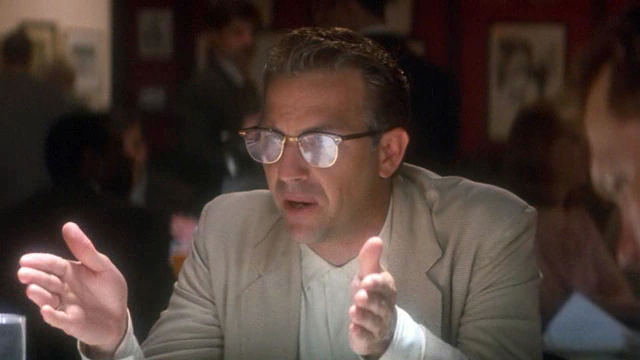
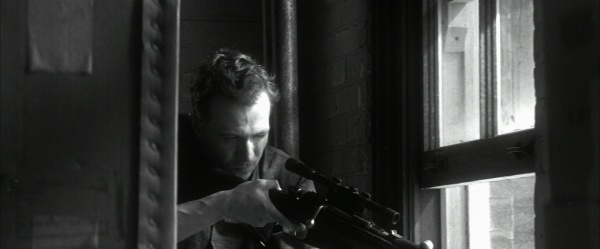
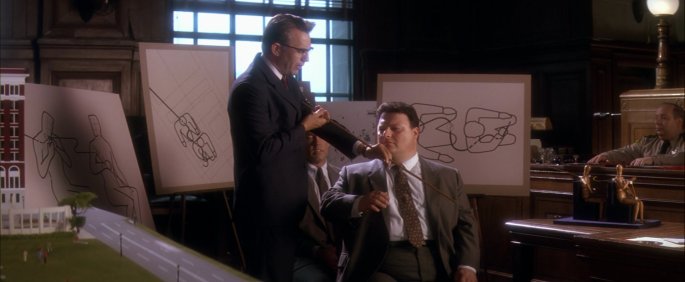
JFK presents the assassination of Kennedy as a powerful event constructed by its conspirators to create confusion with its contradictory evidence and then theorizes that the evidence was buried deep in the Warren Commission Report. Stone’s film filters a structured examination of two conspiracies, one to kill the President and one to cover it up, from one person’s point of view — Jim Garrison (Kevin Costner) — who then assembles all of the evidence at his disposal to reveal a larger, more frightening picture that implicates the most powerful people in the United States government. Stone saw his movie consisting of several separate films: Garrison in New Orleans against Clay Shaw (Tommy Lee Jones), Oswald’s (Gary Oldman) backstory, the recreation of Dealey Plaza, and the deep background in Washington, D.C.

While attending the Latin American Film Festival in Havana, Cuba, Stone met Sheridan Square Press publisher Ellen Ray on an elevator. She had published Jim Garrison’s book On the Trail of the Assassins. Ray had gone to New Orleans and worked with Garrison in 1967. She gave Stone a copy of Garrison’s book and told him to read it. He did and quickly bought the film rights with his own money. The Kennedy assassination had always had a profound effect on his life and eventually met Garrison, grilling him with a variety of questions for three hours. The man stood up to Stone’s questioning and then got up and left. His hubris impressed the director.

Stone was not interested in making a film about Garrison’s life but rather the story behind the conspiracy to kill Kennedy. To this end, he also bought the film rights to Crossfire: The Plot That Killed Kennedy by Jim Marrs. When Stone set out to write the screenplay, he asked Sklar to co-write it with him and distill the Garrison book, the Marrs book and all the research he and others conducted into a script that would resemble what he called “a great detective movie.” Stone told Sklar his vision of the movie: “I see the models as Z (1969) and Rashomon (1950), I see the event in Dealey Plaza taking place in the first reel, and again in the eighth reel, and again later, and each time we’re going to see it differently and with more illumination.”

Sklar worked on the Garrison side of the story while Stone added the Oswald story, the events at Dealey Plaza and the “Mr. X” character. To tell as much of the story as they could, Stone and Sklar used composite characters, a technique that would be criticized in the press, most notably the “Mr. X” character played by Donald Sutherland and who was a mix of several witnesses and retired Air Force colonel L. Fletcher Prouty, an adviser for the film.

600px-JFK_017

Stone ambitiously wanted to recreate the Kennedy assassination in Dealey Plaza and his producers had to pay the Dallas City Council a substantial amount of money to hire police to reroute traffic and close streets for three weeks. He only had ten days to shoot all of the footage. Getting permission to shoot in the Texas School Book Depository was more difficult. They had to pay $50,000 to put someone in the window that Lee Harvey Oswald was supposed to have shot Kennedy from. They were allowed to film in that location only between certain hours with only five people on the floor at one time: the camera crew, an actor, and Stone. Co-producer Clayton Townsend has said that the hardest part was getting the permission to restore the building to the way it looked back in 1963. It took five months of negotiation.

Filming was going smoothly until several attacks on the film and Stone began to surface in the mainstream media including the Chicago Tribune, published while the film was only in its first weeks of shooting. Five days later, the Washington Post ran a scathing article by national security correspondent George Lardner entitled, “On the Set: Dallas in Wonderland” that used the first draft of the JFK screenplay to blast it for “the absurdities and palpable untruths in Garrison’s book and Stone’s rendition of it.” The article pointed out that Garrison lost his case against Clay Shaw and claimed that he inflated his case by trying to use Shaw’s homosexual relationships to prove guilt by association. Other attacks in the media soon followed. However, the Lardner Post piece stung the most because he had stolen a copy of the script. Stone recalls, “He had the first draft, and I went through probably six or seven drafts.”

The film depicts the events leading up to and after the assassination as a densely constructed story complete with jump cuts, multiple perspectives, a variety of film stocks and the blending of actual archival footage with staged scenes dramatized by a stellar cast of actors. This blurring of reality and fiction by mixing real footage with staged footage makes it difficult to discern what really happened and what is merely speculation. Stone does this in order to create what he calls “a countermyth to the myth of the Warren Commission because a lot of the original facts were lost in a very shoddy investigation” and simulate the confusing quagmire of events as they are depicted in The Warren Commission Report. Stone creates different points of views or “layers” through the extensive use of flashbacks within flashbacks. Stone has said that he “wanted to the film on two or three levels — sound and picture would take us back, and we’d go from one flashback to another, and then that flashback would go inside another flashback . . . I wanted multiple layers because reading the Warren Commission Report is like drowning.” This technique conveys the notion of confusion and conflict within evidence.

Kevin Costner acts as the perfect mouthpiece for Stone’s theories. The auteur’s infamously forceful directorial approach to his actors pays off here as he reins in the actor’s usual tics and mannerisms. Stone was no dummy — he knew that by populating his film with many famous faces, he could make the potentially bitter pill that was his film, that much more palatable to the mainstream movie-going public. The rest of the cast is phenomenal. Gary Oldman’s delivers an eerily authentic portrayal of the enigmatic Lee Harvey Oswald. Tommy Lee Jones is note-perfect as the refined, self-confident businessman, Clay Shaw. Even minor roles are filled by such name actors as Vincent D’Onofrio, Kevin Bacon, Jack Lemmon, and Walter Matthau.

The film throws many characters at us and it is easier to keep track of them by identifying them with the famous person that portrays them. Stone was evidently inspired by the casting model of a documentary epic he had admired as a child: “Darryl Zanuck’s The Longest Day (1962) was one of my favorite films as a kid. It was realistic, but it had a lot of stars…the supporting cast provides a map of the American psyche: familiar, comfortable faces that walk you through a winding path in the dark woods.” Future biopics with sprawling casts, like The Insider (1999), and Good Night, and Good Luck (2005), and The Good Shepherd (2006) would use this same approach.

Seeing JFK now, one is reminded that first and foremost, it is a top notch thriller. There are so many fantastic scenes of sheer exposition that would normally come across as dry and boring but are transformed into riveting scenes in the hands of this talented cast. For example, the famous scene between Garrison and X (Sutherland) where the mysterious man lays out all the reasons why Kennedy was killed and how is not only a marvel of writing but also of acting as the veteran actor gets to deliver what is surely one of the best monologues ever committed to film.

capture91

JFK is an important film in the sense that it accurately portrays the assassination of Kennedy as a complex public event surrounded by chaos and confusion. It presents a main protagonist who exposes the conspiracy to be an intricately constructed coup d’état. Stone paints his canvas with broad brushstrokes and powerful images. JFK takes a larger, confrontational stance by boldly implicating the government in the conspiracy and the mainstream media in conspiring to cover it up. Stone is using the persuasive power of film to reach the largest number of people he can in order to wake them up and to reveal how they have been deceived by higher powers. There is no mistaking the importance of the assassination of Kennedy in American culture. Based on the excitement that surrounded Stone’s film, the American public is still greatly interested in the event with more and more people believing in a plot to kill Kennedy.

SIDEWAYS – A REVIEW BY J.D. LAFRANCE

MCDSIDE FE018
SIDEWAYS, Sandra Oh, Thomas Haden Church, Paul Giamatti, Virginia Madsen, 2004, (c) Fox Searchlight

Alexander Payne is part of an exciting wave of filmmakers who grew up during the 1970s and were subsequently influenced by the films from that era. His contemporaries include the likes of Wes Anderson, Paul Thomas Anderson, and David O. Russell to name but a few. And like his fellow filmmakers, Payne eschews the Hollywood trend of placing an emphasis on special effects and trendy actors in favor of character-driven, comedy-drama hybrids populated with character actors like Laura Dern, Matthew Broderick and Kathy Bates.

Payne’s About Schmidt (2002) continued his fascination with American cinema in the ‘70s by featuring one its biggest (and most prolific) stars, Jack Nicholson. His next film, Sideways (2004), continued the road movie motif from Schmidt and combined it with the buddy film. Jack Cole (Thomas Haden Church) is a failed actor about to be married. He decides to go on one last week of uninhibited fun with his best friend, Miles Raymond (Paul Giamatti), a grade school teacher and struggling author. They go on a wine-tasting tour through California’s Central Coast and squeeze in a bit of golfing as well.

Miles is an avid (nay-elitist) wine aficionado while Jack is completely ignorant of wine beyond what tastes good to him and what doesn’t. Miles is trying to get his book published with little success and he’s grown cynical and defeated as a result. Initially, he comes off as an unlikable loser not above stealing money from his mother. Jack counters Miles’ repressed nature by coming off as something of an instinctive kind of person who indulges in his raging id. He was on a hit television show… 11 years ago and is now relegated to doing voiceovers for commercials. Along the way, Jack and Miles meet Maya (Virginia Madsen), a beautiful waitress who Miles knows from way back when, and Stephanie (Sandra Oh), who works at a winery and catches Jack’s eye.

Jack and Miles are complete messes as human beings. They lack direction and are hypocrites. Miles says he’s an author but his book is going nowhere, while Jack is getting married but hits on anything in a dress. They are hardly a sympathetic pair. And yet Payne is able to get a lot of comedic mileage from them. Miles is a wine snob who rambles on about the taste, color, and so on, only to have Jack sum up his opinion simply, “I like it,” which comically deflates Miles’ pontificating. They have an intriguing dynamic. While they lie to others – Miles to Jack’s friends about the status of his novel and Jack being nice to Miles’ mother when he clearly wants to get back on the road – they are no pretenses between each other. These guys are getting to the stage in their lives where they’re looking back as opposed to looking ahead. Jack sees marriage as an institution that will stifle his freedom while Miles has a very negative outlook on life, finding any excuse not to ask Maya out despite obviously liking her because he assumes that it will go nowhere.

An interesting thing happens during the course of the film. At first, Miles starts off as an unsympathetic character while we warm up to Jack’s funny repartee as the charming rogue. Halfway through the film they flip roles and it’s Jack who is exposed as a pathetic womanizer and Miles becomes more sympathetic thanks to Maya’s influence. She humanizes him and is easily his intellectual equal. She knows her wine and this clearly impresses Miles. She’s smart and beautiful so why is she even wasting her time with a sad sack like Miles? She gets to know him beyond his looks and liquefies the pretension of his character. Maya pierces his wine-speak armor that he throws up all the time with her easy-going nature and Miles realizes that he doesn’t need to constantly impress her. There is a nice scene where they get to know each other and it is great to see two skilled actors getting a chance to act and really delve into their characters. In this scene, we finally see someone thaw out Miles and get him to open up, stop worrying and thinking so negatively. They use their mutual love for wine as a way to share their passions and aspirations with each other. It’s a beautifully realized scene because you are seeing two people starting to fall in love with each other. Like a fine wine, Maya allows Miles to breathe and he gets better as time goes on. She’s a romantic who is able to cut through his cynicism and soften his hard edges.

Fresh off the success of American Splendor (2003), Paul Giamatti is one of those actors who make it look effortless as he inhabits the characters he plays so completely. Miles is a neurotic mess; a depressed cynic who is definitely a half glass empty kind of guy. Giamatti is able to tap into his character’s deep reservoir of pain and anger. In a couple of shots early in the film, Payne hints at Miles’ past when he looks at old photographs in his mom’s room. They evoke happier times with his father (now out of the picture) and wife (now divorced). Giamatti’s sad expression in this moment conveys more than any words could. During the course of the film, we find out more about why Miles is so miserable and a lot of it has to do with self-loathing, which explains why he tries to sabotage things with Maya. In some ways, Miles is a variation of Giamatti’s take on the equally acerbic Harvey Pekar in Splendor.

Ever since the short-lived television sitcom Ned and Stacy, Thomas Haden Church has been an untapped resource and with Sideways he was given the role of his career. As Miles’ crass, philandering best friend, he plays Jack as a middle-aged frat boy who still calls women, “chicks.” Haden Church has never been afraid to play abrasive, bordering on unlikeable, characters and he expertly does the same here as a guy who presents a jovial façade but underneath lurks a lot of pain and an insensitive mean streak. Haden Church’s dead-panned delivery of smart-ass lines works well against Giamatti’s uptight straight man. Together, they make an excellent team. After years of playing supporting character roles, it’s great to see Haden Church and Giamatti starring in a film. They play so well off each other that you’d swear they’d acted together before. Haden Church and Giamatti are very believable as long-time friends from the way they interact with each other.

For years, Virginia Madsen has been biding her time in direct-to-video hell and so it is great to see her in a high profile role like this one. From The Hot Spot (1990) to Candyman (1992), she’s always been an interesting actress to watch and with Sideways, Madsen is given strong material to sink her teeth into and she delivers a nuanced performance. Sandra Oh has been quietly building a nice body of work over the years and was unfairly overlooked in the numerous awards that have been lavished on this film. Granted, of the four main cast members, she has the least amount of screen time but she makes every moment she has count.

Producer Michael London was a former Los Angeles Times journalist and studio executive who had become frustrated by the studio development process of shepherding a film from script to screen. He bought the rights to the unpublished semi-autobiographical novel Sideways by Rex Pickett with his own money and gave it to Alexander Payne to read in 1999 while the filmmaker was promoting Election. Payne found himself drawn to “the humanity of the characters” and how it tapped into his desire to make films about “people with flaws,” and “unfulfilled desires.” He was not a wine expert but always liked it and thought that the subculture would be fun to explore and act as a backdrop to the relationship between Jack and Miles. However, he was committed to making About Schmidt next and so he and London kept optioning the book over the years. Then, he and his long-time writing partner, Jim Taylor, wrote the screenplay for free. Payne and London drew up a budget and financed pre-production themselves thereby allowing themselves the kind of creative control they wanted. They only began approaching movie studios once they had the script, budget and a preferred cast in place. Four studios were interested with Fox Searchlight winning out.

Based on the reputation of his previous films, several big name actors campaigned for roles in Payne’s film. Both Brad Pitt and George Clooney were eager to play the role of Jack and met with the filmmaker but it ultimately came down to Thomas Haden Church and Matt Dillon. Edward Norton expressed an interest in playing Miles and Payne seriously considered him for the role. With the exception of Sandra Oh, his wife at the time, all the actors auditioned for Payne and London. Haden Church had auditioned for both Election and About Schmidt (narrowly losing out to Dermot Mulroney on the latter) and even though Payne did not cast him in those films, he had been impressed with the actor. When it came to Sideways, Payne felt that Haden Church “kind of is that character,” and cast him as Jack. At the time, he had moved away from acting and when he read the script in May 2003, thought to himself, “I have no shot at this whatsoever, but I have to answer the call of duty. If I get a chance, then I gotta take it.” When Paul Giamatti auditioned for the film, he had not read the whole script, just an excerpt – the scene where Miles talks about his love of Pinot Noir wine to Maya. The actor found Miles’ obsession with the wine to be “an interesting theme for this guy” who was constantly “striving for transcendence through the wine and the wine milieu, and it just keeps collapsing in on the guy because he’s such a wreck.” After casting Giamatti and Haden Church, Payne insisted that they spend some time together before filming, hanging out and practicing their dialogue so that characters’ friendship would be believable.

The setting of the story was very important to Payne as he brought a documentary sensibility to capturing the people that inhabit the area. Before shooting, he spent four months living in the wine country of California, taking notes so that it would be accurately depicted in his film. The actors spent two weeks of rehearsals with Payne, “shooting the shit and indulging in good food and wine,” according to Giamatti. With a budget in the range of $16-17 million, Sideways was shot over 54 days in the Santa Barbara area. For the look of the film, he drew inspiration from the photographic style of Hal Ashby’s The Landlord (1970), screening it for his director of photography, Phedon Papamichael (Moonlight Mile), in order to study the softness of colors and the lack of sharp, vivid lighting that he wanted in his own film.

Payne’s film harkens to Bob Rafelson’s classic character-driven films from the ‘70s, like Five Easy Pieces (1970) and The King of Marvin Gardens (1972), featuring prickly protagonists. Payne rejects traditional mainstream tastes in favor of presenting unsympathetic characters and a conclusion that refuses to wrap things up neatly. He even employs multiple split-screen montages and snap zooms, which were very much en vogue during the ‘70s. Miles is the voice of reason while Jack is the voice of fun in Sideways. However, Miles understands who he is and is honest with himself and his lot in life unlike Jack who continues to live a lie, or rather play a role. Jack lives in a bubble and they always break. Miles doesn’t have to worry about that because he bursts his bubble on a daily basis. These men are idiots and it is the women who are smart and truthful. The men lie, cheat and are forced to face the repercussions of their actions. This provides them with a chance at redemption as embodied in Miles who learns to loosen up and finally let someone new into his heart.

THE STREET FIGHTER – A REVIEW BY J.D. LAFRANCE

chiba12

Like many people of my generation in North America, the first exposure to The Street Fighter (1974), starring Sonny Chiba, was probably the brief clip shown in Tony Scott’s True Romance (1993), which was written by Quentin Tarantino, a big fan of Chiba, an actor who got his start appearing in science fiction and crime thrillers but is best known for his martial arts movies, chief among them The Street Fighter series. True Romance’s main character celebrates his birthday by going to see a Sonny Chiba triple feature at a local theater and there he meets the girl of his dreams. In explaining the allure of Terry Tsurgui – Chiba’s character in the film – he sums it up best by telling her, “Well, he ain’t so much a good guy as he is just one bad motherfucker. I mean, he gets paid by people to fuck guys up.” Based on the worldwide success of Enter the Dragon (1973), the Toei Company decided to release its own martial arts action films and the result was The Street Fighter. It would be this film that would make Chiba an international movie star. The film went on to garner a notorious reputation for its bone-crunching violence, which earned it an unprecedented X rating in North America – the first film to do so based solely on violence.

Terry Tsurgui (Chiba) is a mercenary hired by the Yakuza to free a convicted killer named Junjo (Masashi Ishibashi) from prison who is about to be executed. The man killed seven people with his fighting skills, which one prison guard says sarcastically, “He must think he’s Bruce Lee.” Terry enters the prison under the guise of a Buddhist priest (?!) and engineers quite a clever breakout by zapping Junjo with a move that induces paralysis thereby making him unfit for execution. It takes less than four minutes into the film and we get a pretty cool fight sequence in slow motion complete with funky sound effects that were the hallmark of 1970s era martial arts films. If that weren’t enough, a fantastic spaghetti western-esque theme song by way of Shaft-era Isaac Hayes plays over the opening credits sequence and off we go.

With his sidekick and comic relief Ratnose (Goichi Yamada), Terry hijacks the ambulance carrying Junjo en route to the hospital. When the man’s brother and sister are unable to pay up, Terry proceeds to mess them up, including sending the brother out a window to his death and selling the sister into prostitution. When Terry dares to ask for more money to kidnap a rich Japanese heiress in order to control her fortune, his employers decide to kill him because Terry knows too much. As we all know from these kinds of films that that is a fatal mistake and boy, does he make them pay.

Terry only really cares about money and asks a lot for his services. He is a gruff, no-nonsense kind of guy. The film wastes no time in establishing Terry’s badass credentials as he takes on more than six guys that stupidly try to ambush him in his apartment. There’s a wild-eyed intensity that is quite unnerving to his opponents. What Terry lacks in finesse, he more than makes up for in ferocity. Subtlety is certainly not his forte. For example, he attempts to tail his target in a car without caring about or knowing to follow from a discreet distance. For his troubles, the car he and Ratnose are in is grabbed by a construction vehicle and dropped off a bridge! However, Terry’s not invincible and gets his ass handed to him when he takes on the head of a karate school who knew his father. There’s no denying that Sonny Chiba has a unique screen presence and an intense stare that puts guys like Jean-Claude Van Damme and Steven Seagal to shame.

Goichi Yamada’s Ratnose is a character whose only purpose appears to be as comic relief (“Who do you think you’re talking to, Madame Butterfly?” he says to Terry at one point in reference to his lousy cooking skills), groveling and being endlessly insulted by Terry. However, he does get his self-sacrificing heroic moment in the sun and this selfless act draws a rare tear of emotion from Terry, which in a weird sort of way humanizes the film’s brutal protagonist.

The Street Fighter is chock full of great, cheesy B-movie dialogue intoned by a guy dubbing Terry’s voice trying to affect a gravely Clint Eastwood-esque vibe. One choice gem has Terry tell some assailants, “So I’m to die because I know who it is that controls the Yakuza here? Isn’t that mean and nasty?” Another gem comes when Junjo goes into an oxygen coma, collapses right before being executed and a prison official asks someone nearby, “You’re a lawyer – what must I do?” It is how this line is said – in stilted, badly done dubbing – that makes it funny. However, there are also some pretty cool lines, too, like when Junjo confronts Terry and tells him, “I’ve waited a long time to settle the score.” Terry replies dismissively, “Sorry, I’ve more urgent things right now.” How cool is that? Yeah, I’m not too busy completing a job to kick your ass right now… maybe later.

In The Street Fighter, Terry punches, kicks and viciously gouges his way through a series of brutal encounters. Among the scenes that earned the film an X rating are one in which Terry castrates a would-be rapist with his bare hands, which still manages to shock with its intensity and graphic nature even by today’s standards. Guys are punched so hard they spit out mouthful of teeth and spew judicious amounts of blood. But the film saves the best (and nastiest) move for the final showdown, an impressive battle as Terry proceeds to single-handedly decimate a tanker boat full of henchmen with a climactic fight on deck in the pouring rain.

Shigehiro Ozawa’s direction is appropriately dynamic with plenty of skewed camera angles, slow motion, black and white flashbacks and even an X-ray shot of Terry crushing a guy’s skull with his fist. How badass is that? He makes excellent use of the widescreen frame, especially during the fight scenes, letting them play out along the entire length of the frame.

When New Line Cinema picked up the film in North America, it was renamed The Street Fighter from its original title, which translated into the infinitely cooler sounding, Clash, Killer Fist! It earned an X rating for the gory violence and the studio re-edited the film significantly, cutting out 16 minutes in order to get an R rating. The Street Fighter was an international hit spawning two sequels, Return of The Street Fighter (1974) and The Street Fighter’s Last Revenge (1974) as well as a spin-off film, Sister Street Fighter (1974). None of them hold a candle to the one that started it all – a cult film that dispenses with niceties like political correctness and restraint for an unbridled romp through the criminal underworld led by Chiba’s unrepentant mercenary. For fans of down ‘n’ dirty martial arts movies, this one is pure catnip and a potent reminder of how good a decade the ‘70s was for the genre where you could have a mainstream masterpiece like Enter the Dragon along with no-holds barred carnage on display in The Street Fighter.