Tobe Hooper’s Lifeforce

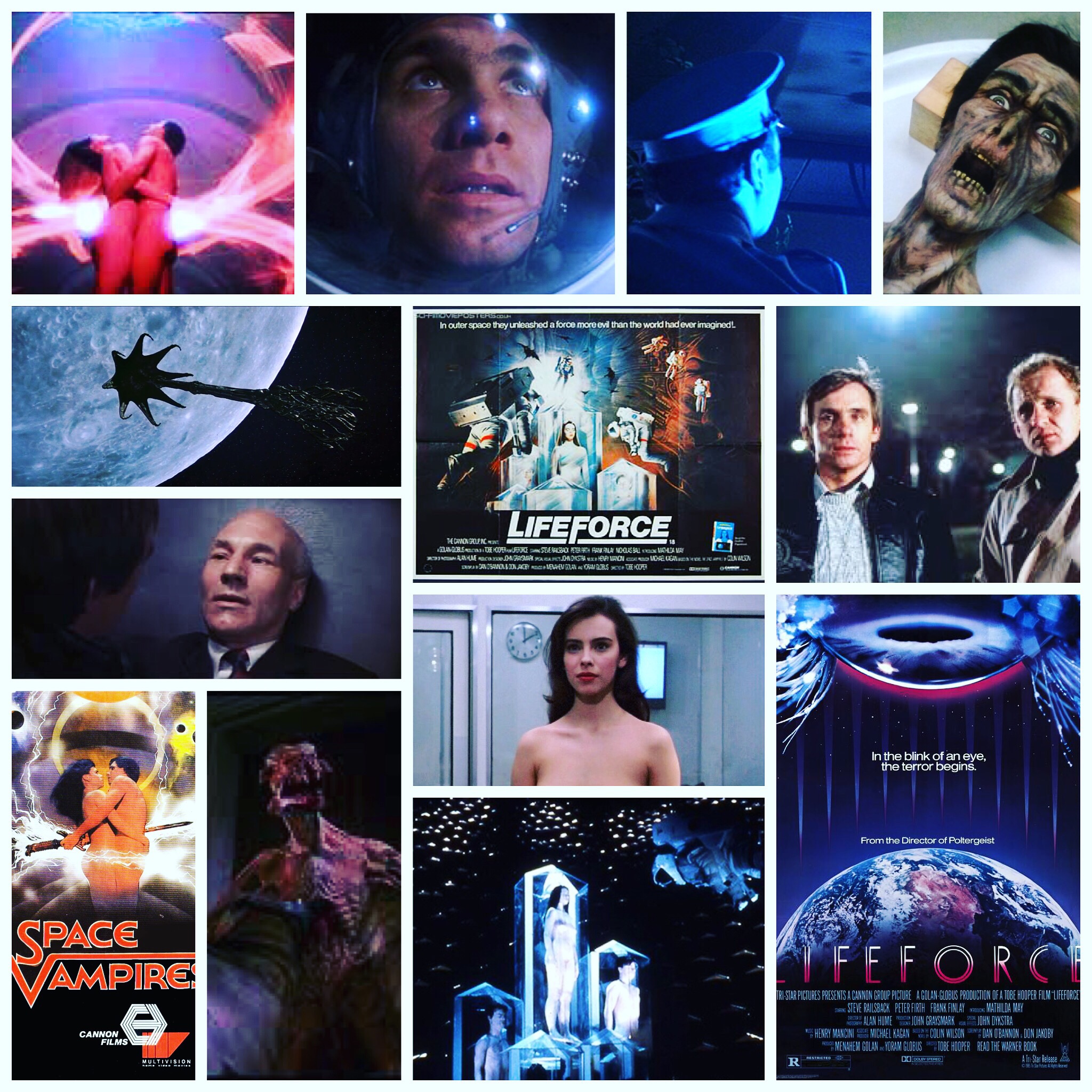
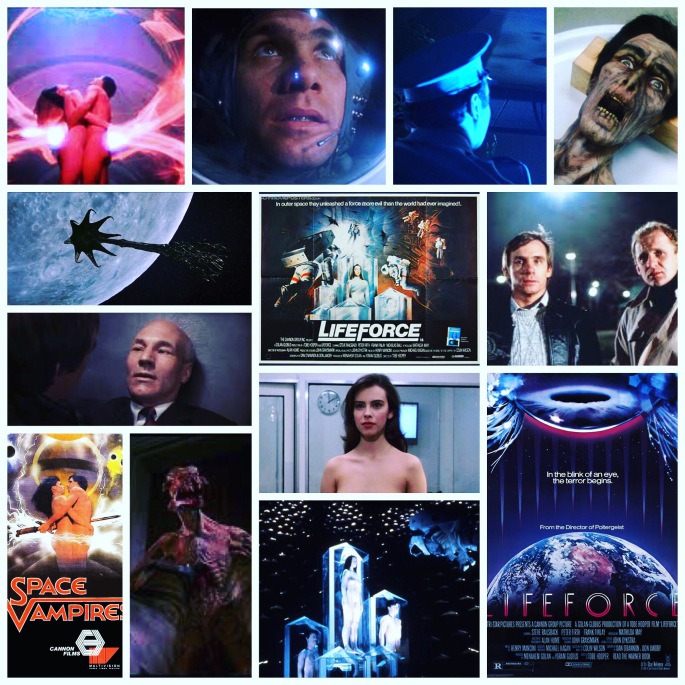
Tobe Hooper’s Lifeforce is the most dementedly unique horror SciFi mashup you’ll get. Based on a novel that’s literally titled ‘The Space Vampires’, the film is exactly that and more. It’s so out of it’s mind that at a certain point you have to surrender and bask in it, and grab the sides of the cart as it veers between all kinds of increasingly bonkers plot points. When a strange, rice kernel shaped object shows up in earth’s atmosphere, a team of exploratory astronauts led by intrepid Steve Railsback goes on up to investigate. What they find up there eclipses any weirdness aboard the Nostromo, Millennium Falcon or Event Horizon. Intergalactic vampires lie in creepy cryo suspension, just waiting for unlucky hosts to come along. Soon they’re exposed to earth and it’s a gory mad dash all over London to stope them from turning every earthling into zombies. Yes, that’s actually the plot, and despite how it sounds on paper, they really make it work. That’s mostly thanks to the screen shattering, ridiculously good special effects, especially in the opening aboard the alien’s strange, baroque vessel which is one of the most otherworldly and atmospheric sequences in any horror film ever. Once the action shifts back to earth it’s a pure shit show and near comedy of errors, with Railsback’s frenzied cosmonaut teaming up with a peppy British intelligence agent (Peter Firth), and even Patrick Stewart comes out to play as some vague scientific bro. There’s boundless imagination at work here, carried by sheer movie magic to contribute lasting, impressive images and create an entirely unique horror experience. Plus, how could a flick about space vampires not be amazing (we will not speak of Dracula 3000). A sci-Fi horror classic, an under-sung jewel of visual flights of fancy and practical effects laden nightmares.  

-Nate Hill

Urban Legend

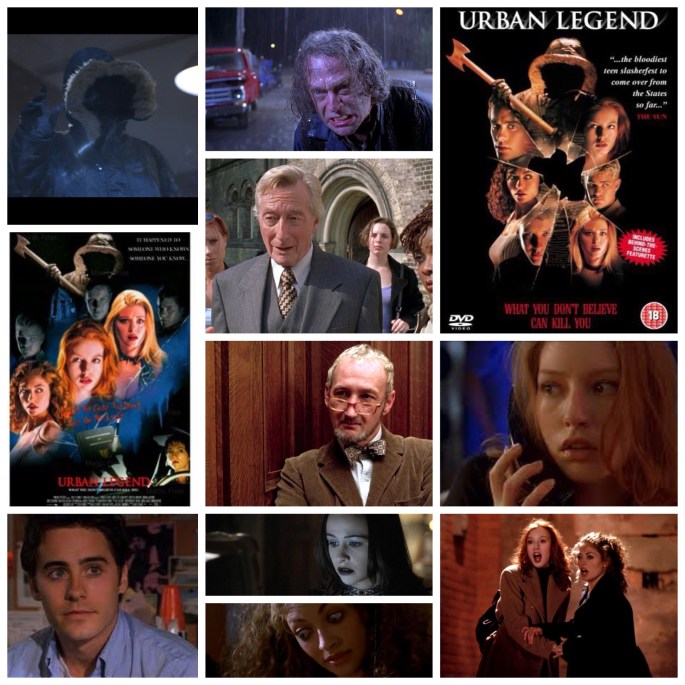
Urban Legend is pretty much like Scream, but a lot less meta and a bit more atmosphere, unfolding as you’d expect it to, with a group of college kids getting killed in bizarre circumstances that all relate to half whispered local myths. One of their professors is Freddy Krueger himself, Robert Englund, and who better to lay down the tongue in cheek groundwork than such a familiar face and expressive, dynamic presence like him. Looking back on this it’s fairly shocking how terrific of a cast it has and how it’s been mostly forgotten in the annals of slasher archives. Jared Leto, Alicia Witt, Rebecca Gayheart, Joshua Jackson, Tara Reid, Natasha Gregson Warner and Danielle Harris headline as the varied campus rats, with Harris a standout as the obnoxious bitchy goth stereotype, far from her timid Jamie Lloyd in the Halloween films. There’s a prologue cameo from horror vet Brad Dourif as well as appearances from Loretta Devine, Julian Richings, Michael Rosenbaum and a priceless John Neville, getting all the best lines as the college’s salty Dean. The kills are all done in high 90’s style, the story takes a Scream-esque twisty turn in the third act and as far as atmosphere goes, it pretty much outdoes the ol’ ghostface franchise. Spooky good time. 

-Nate Hill

Denis Villeneuve’s Blade Runner 2049: Thoughts from Nate Hill


As I settled in to watch Denis Villeneuve’s Blade Runner: 2049 in a thundering imax theatre, I truly did not know what to expect. I’d successfully avoided spoilers up until that point, done a scant bit of reading hither and thither on a surface level, and obviously been privy to the mind boggling, overwhelmingly positive buzz that’s been flowing forth since the first critics were screened. ‘Masterpiece’, ‘Movie even of the century’ and ‘instant classic’ were some of the lofty adulations that were being hurled around right out of the gate, and it’s not often a sequel to such a long worshipped, culturally influential bombshell of a science fiction film has been welcomed so eagerly and almost unanimously praised. There’s been a gulf of time between Ridley Scott’s 1982 neon fever dream, which is indeed a masterpiece and one of my favourite films of all time, and the shoes to fill have never, ever been bigger. So, does it live up to the original? Is it better? Worse? Pandering fan service or bold pioneer trek into new galaxies of thematic and tonal exploration? The answers to those questions are somewhat more complicated than yes, no or similar succinct absolutes. I can say, however, that Villeneuve’s near three hour machine-dream is one of the most beautiful, ambitious, thoughtful, well wrought films I’ve ever seen, a staggering achievement in all arenas and indeed a piece of cinema they’ll be talking about for years to come. It’s a masterpiece on its own terms, blending elements of the original which we all loved, but bravely surging forward into it’s own brand new chapter of this world, a little bleaker and more austere than the poetic lullabies of Scott’s L.A., yet no less wondrous or sumptuous a creation. This is a world where quite a bit of time has passed since the initial story, and the environment these characters dwell in has shifted along with it. Los Angeles is wearier, emptier and less of a gong show than we remember, yet the buzzing life that we recall catching fleeting glimpses of between monolithic, impossibly gigantic skyscrapers is still there, that endless nocturnal hum has thrived through into a new age. So too have replicants, now far more advanced, under the label and stewardship of Niander Wallace (Jared Leto) and his mega corporation. Ryan Gosling plays a young blade Runner, a profession, it seems, that has not run out of supply in demand. Under the very stern watch of LAPD Captain Joshi (Robin Wright, terrific) he navigates a meticulously paced detective story that, yes, eventually leads him to missing former Blade Runner Rick Deckerd, played by Harrison Ford in one staggeringly well pitched performance. That’s all I’ll really be specific about in terms of plot, because it’s a gorgeously wrapped present that should be opened corner by corner, inch by inch until the viewer has actively and emotionally seen the big picture, a thoughtful process that challenges the audience and should be the standard not just for science fiction, but for big budget films in general. While Blade Runner 1982 was a visual and musical feast for the senses and still maintains that edge over it’s sequel, 2049 has a cerebral and multifaceted patchwork quilt of themes, questions and notions that play across the screen like a ballet of auroral, magnificent wonders, layered, ponderous cinema with an emotional weight and resonance that took me right off guard, a quality that although present in 1982, wasn’t quite as developed as what we get here. Hans Zimmer’s score is every bit the thundering piece you’d expect and is brilliant, a slightly industrialized departure from the lyrical, ethereal tones of Vangelis, but equally as captivating. I could go on, but I’ll let you see the thing for yourself and paint your own picture. I’ll say this: Blade Runner 1982 is the rainbow coloured light shone through a prism, abstract, illusory and trancelike. 2049 is the prism itself, the source of the light and the place where it’s understood from a more conscious, waking-life perspective, and that’s the closest I can get to explaining just how different these films are from each other. One is a dream poem, the other is a deep methodical meditation, but both are vital halves of the mythology. However you look at it, Villeneuve’s 2049 is astounding, achingly beautiful work on every level, not to mention the work of everyone’s favourite unsung maestro, cinematographer Roger Deakins. This is an important film, as it may just hasten the exodus of brainless big budget fluff and help Hollywood enter a golden age of well crafted, intelligent blockbuster films once again. One can dream.

-Nate Hill
B Movie Glory: Ernest Dickerson’s Surviving The Game


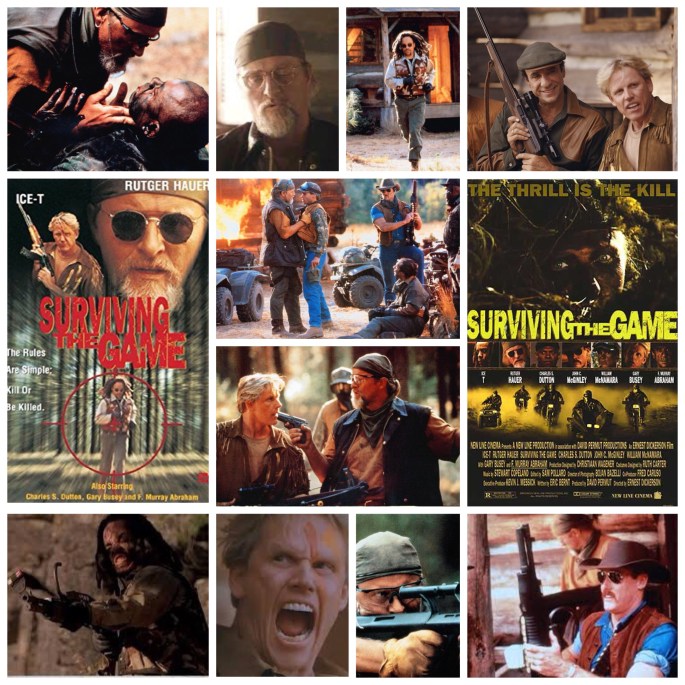
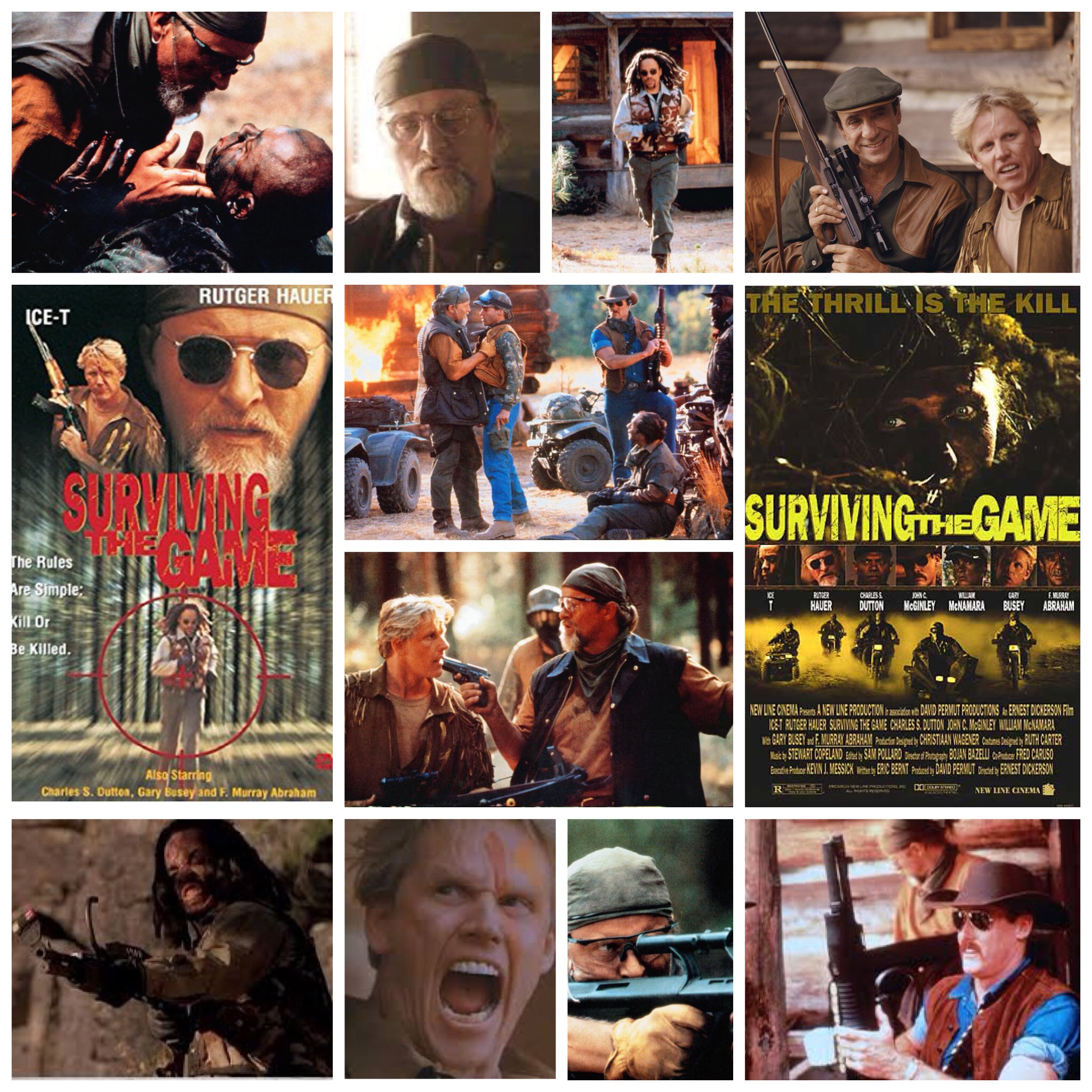
There’s a whole bushel of ‘Most Dangerous Game’ films out there, tweaked versions of the same motif in which human beings are hunted for sport, and often large sums of money as well. Surviving The Game is probably the most bombastic and excessive one (John Woo’s Hard Target is the way to go if you want something slicker), but it’s a hoot of a flick, a dingy, mean spirited exploitation piece with an eccentric cast and thrills right up to the last scene. Ice T stars here under a giant heap of dreadlocks, playing a grumpy homeless man who is approached by an alleged social worker (Charles S. Dutton, intense) and offered help in the form of some vague rehab program way out in the woods. Soon he’s out in the woods at the remote retreat run by a sinister ex military Rutger Hauer, joined by other oddballs from all walks of life including F. Murray Abraham and a hopelessly coked out Gary Busey, who chews enough scenery that those giant teeth of his actually go to good use. This is no sabbatical though, as Ice soon finds out, and before he knows it he’s scrambling through the wilderness for his life as Hauer & Co. pursue him with a giddy amount of heavy artillery. The film isn’t interested in the morality or ethics of it’s concept, it’s here for a down n’ dirty romp and not much else, as long as you’re in popcorn mode you’ll get a kick out of it. Hauer is intense as ever, with some inspired costume choices and that ever present half smirk that signals danger and violence aren’t far off the horizon. Busey is certifiably, completely off his head, spouting monologues that weren’t even in the script (Hauer’s autobiography provides hilarious behind the scenes insight) and staring down everything that moves in true loosey Busey fashion. Throw in a manic John C. McGinley as well and you’ve got just about as much crazy as the film can handle. The combat hunting scenes really are impressive and thrilling, well staged stunts against a wilderness backdrop and raucous gunplay all round. An oddball of a flick, in the best way. 

-Nate Hill

Pet Cemetary II


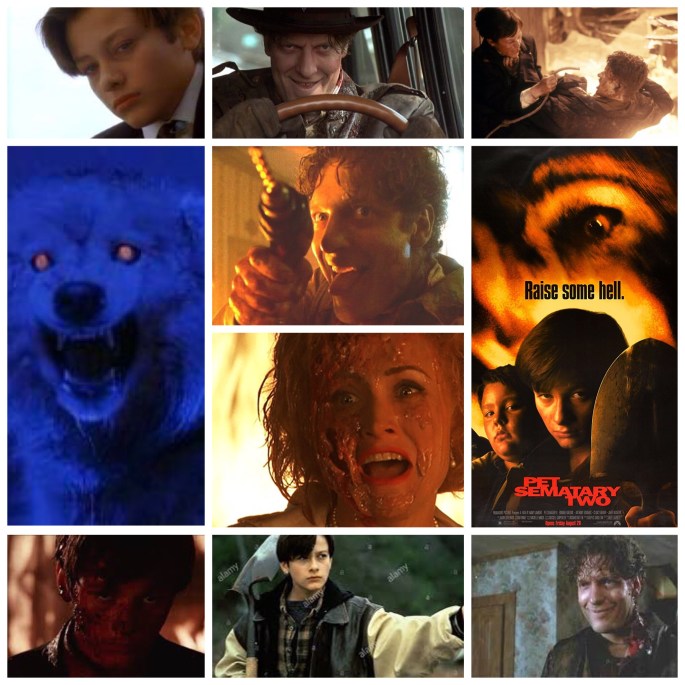
Pet Cemetery II never gets much love or accolades, and while the first isn’t a bad effort, the sequel kind of blows it out of the water by being just bonkers crazy in general. Edward ‘John Connor’ Furlong plays an unfortunate youngster who stumbles into the same macabre Indian burial ground, causing all manner of havoc in his small town. The real asset the film has is actor Clancy Brown, a huge talent who has an utter ball as Sheriff Gus Gilbert, a nasty prick who gets much worse when some ghostly entity takes up residence inside him and stirs shit up. Imagine the farmer with the alien in him from the first Men In Black only more scarily rambunctious and you’ll have some idea. Brown’s performance is a deranged opus of physical comedy and hyped up lunacy. “ Why did you dig up my mom’s body?” asks his bewildered stepson (Jason McGuire) “Because I wanted to fuck her!!” growls Clancy in retort. Such is the demented level of dark comedy that gets served up alongside the gore, which in itself is plentiful as well. It’s a sequel and as such isn’t based on a Stephen King book like the first, but it still manages to finds a writing groove and gruesome set pieces, including a spectacularly ooey gooey third act. Cool stuff.
-Nate Hill

Stephen King’s Gerald’s Game


Stephen King’s Gerald’s Game is exactly what horror/thrillers should aspire to be: devilishly well written, engagingly acted, crisply directed and scary enough to wake the dead. Presented on the Netflix platform with their trademark lack of marketing (they tend to hurl out content willy nilly, sans fanfare), it’s just shown up and is already one of the best horror films I’ve seen all year. Carla Gugino and Bruce Greenwood give encore performances and the best work of their careers as a couple who make their way to a cottage in the country, trying to spice up the ol’ marriage. When Brucie has a nice heart attack mid-foreplay (he popped a few of those magic blue pills), Carla is stuck handcuffed to the bed in the middle of nowhere, with no one for company except a mangy stray dog that begins to take chunks out of dead Bruce. So begins a fiercely internal, visceral psychological survival story, a brutal chamber piece that delves into her twisted childhood, troubled marriage and churns forth a tale to curl the pain on the cabin walls. There’s hallucinations, inner monologues, squirm-inducing gore, elliptical mind games and a pseudo-twist ending that had me shuddering into the couch. Gugino has never been more intense, believable or varied in her work, turning this character into something potent and tangible, bringing her past trauma and fight for survival to screaming life. Greenwood is smart, witty and so darkly funny it’s tough now to picture him as the stoic, emotionally shut off archetype he usually has embodied before this film. Additional work from ET’s now eerily grown up Henry Thomas and Twin Peak’s ginormous Carel Stryucken (terrifying here) adds class and distinction. The show belongs to Carla and Bruce, and what a show they put on, feasting on the rich, textured dialogue and playing sandbox in the story that uses depth, character and genuine menace to lasso us right in. In a year that’s seen at least one King novel unforgivably bastardized, and one other given the solid yet flawed and incomplete treatment, it’s reassuring to find one that comes up pretty much perfect in every way. Kudos to Netflix, the two leads and everyone else involved. 
-Nate Hill

B Movie Glory: Stephen Norrington’s Death Machine 

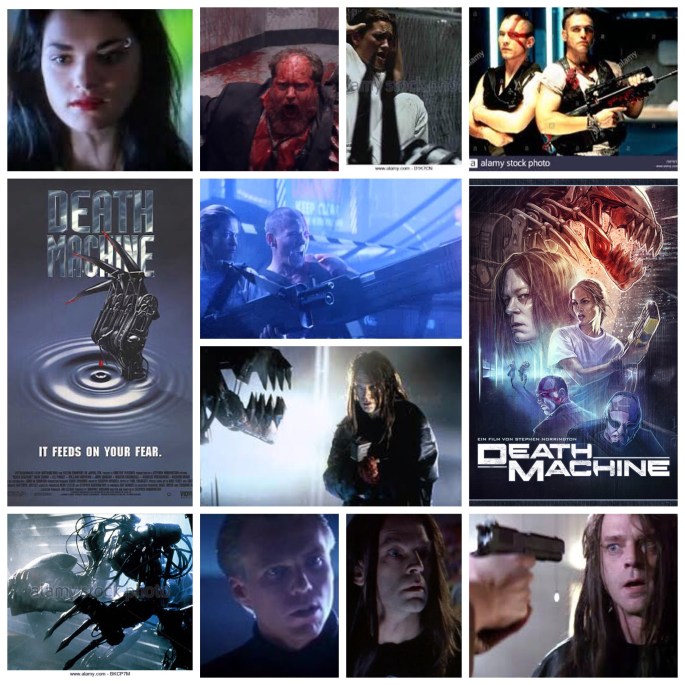
Stephen Norrington’s Death Machine whips up a knowing, near meta grind-house schlocker that harvests names, ideas and actors from other well know horror classics and churns out a wonderful little pastiche that’s clearly in love with every project influencing it, as well as the genre. In a giant m, imposing corporate high rise, the collective minds of future tech enterprise brainstorm the next best thing, but all of the are bested by creepy, psychotic designer Jack Dante (Brad Dourif) an antisocial lunatic who has designed an appropriately razor-adorned monster equipped with cunning AI, primed to tear the building, and everyone in it, to shreds. This includes the looney board of directors who all bear names lovingly similar to that of various creative minds in the horror/sci-Fi industry. Scott Ridley (The always maniacal Richard Brake), Sam Raimi (The Machinist’s master of everything unsettling, John Sharian) John Carpenter (William Hootkins) and even a pair of characters called Weyland and Yutani, all references are here and they’re not subtle whatsoever, part of the film’s charm. Dourif’s moniker is no doubt based on Gremlin’s pioneer Joe Dante, and speaking of Brad, he’s a flat out beastly delight as he turns loose a mechanical nightmare of a creation for all to be sloppily slaughtered by at some point. Bureaucracy is lampooned between decapitations and corn syrup gore, the film is never short of dark humour to garnish it’s violent pandemonium. The film is displayed a lot like Alien, and the creature itself looks not unlike a bionic xenomorph with the ability to change into all sorts of elaborate shapes, all the better to hunt you down through the tight crawl spaces and narrow ducts that made up most of 1989’s cinematic architecture. Director Norrington would go on to make his own horror classic in 1998’s Blade, and here he earns his stripes as both a vetted disciple of the genre and a thrifty low budget wizard. Watch out for Rachel Weiss, of all people, as a random board member who’s seen briefly. A howlin’ good time. 

-Nate Hill

M. Night Shyamalan’s The Sixth Sense

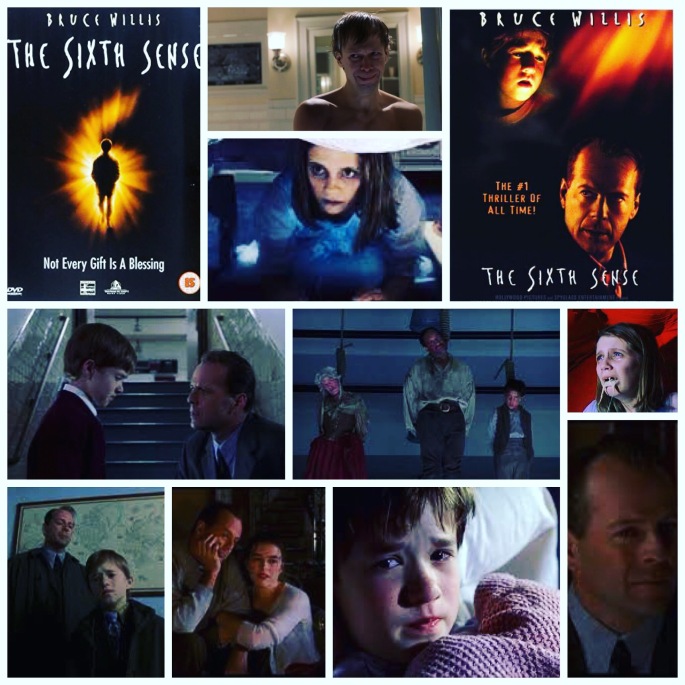
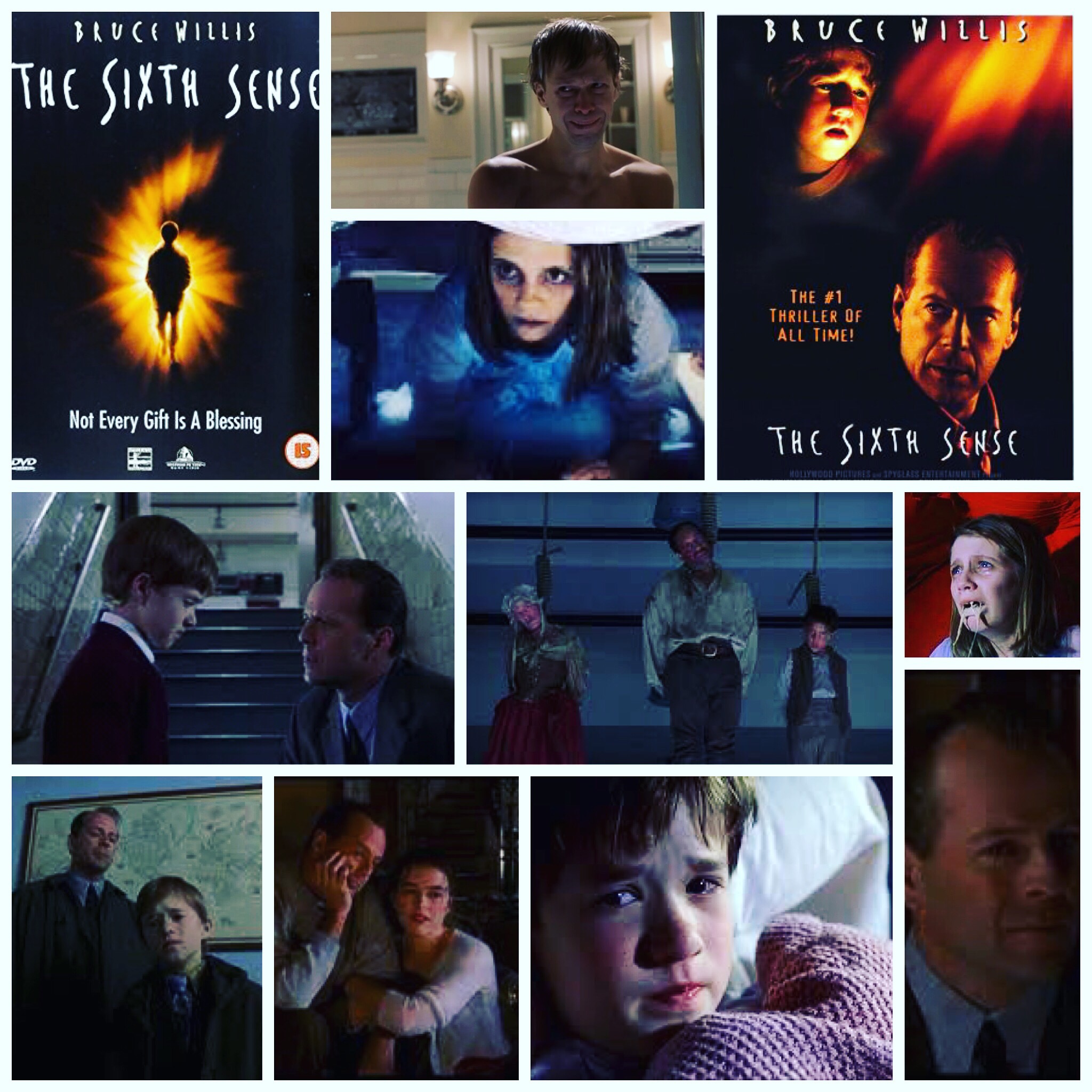
M. Night Shyamalan’s The Sixth Sense produces the kind of rarely attained fear that we always seek out in this genre, that creeping cold dread that has you clammy and your nerves jagged, where you know you’ll be looking over your shoulder as you walk down the dark hallway to your room later that night. That’s the best kind to me, stemming from well made, atmospheric ghost stories as opposed to all this gore-hound nonsense you see these days (can you believe they’re making another fucking Saw flick? Actually from a dollar sign perspective I can, but still). This one is a veritable haunted house of apparitions and phantasms, all witnessed by a disturbed Haley Joel Osment, who would look even more worried if he could see himself now as a twenty-something walking play-dough potato. He can see dead people, as he intensely whispers to Bruce Willis’s lonely child psychologist in the film’s now showcase moment, and not all of them like to keep their distance. Willis is traumatized from a tragedy years before involving an unstable former patient (Donnie Whalberg), and treads hesitantly with this new kid. A bond is formed, however, and with it comes the desire to help. The frequent paranormal sightings range from grisly, bemusing, shocking, tragic and often downright terrifying, especially one involving a very young, gaunt Mischa Barton invading a couch fort Osment has made to try and get some peace and quiet. The plot is carefully composed and directed by Shyamalan in a magician behind the curtain fashion, the veil gradually drawn with every beat until we’re presented with a staggering twist ending that has become legend since the film’s release back in the days before such a conclusion could be found in every fourth title on the thriller shelf of Blockbuster. Such is the power of storytelling though, and the potency of innovation to inspire others. It’s also great fun to watch the film multiple times and spot the breadcrumb trail of clues leading towards the outcome, clues that you wouldn’t have picked up on before. Along with Barton, who is terrific, there’s nice work from Toni Colette, Trevor Morgan, Kadee Strickland and Olivia Williams as well. You may know the ending even if you haven’t seen the film before, as we do after all live in the age of spoilers, snitches and online hoo-hah, but there’s more to be had than the shock of that, it’s a mesmerizing journey there with a darkly enchanted aura from start to flabbergasting finish. Remains Shyamalan’s best to this day. 

-Nate Hill

B Movie Glory: The Sender


The Sender is godawful Z-Grade SciFi with cloying, grating intentions, a script with War Of The World’s type ambitions that was given an allowance of like ten bucks to come into fruition, and the result is a windows 98 screensaver with a fraction of a pulse. It’s a shame because they scored two dope actors in Michael Madsen and R. Lee Ermey, but as good as they are they’re both sheepishly notorious for appearing in bottom feeding diarrhea like this to put food on the table. Madsen strains his tear ducts as the sympathetic father whose adorable daughter has mysterious connections to extraterrestrial activity from years before. He’s on the run from all kinds of government folks including Ermey’s gonzo, overzealous military asshole, a one dimensional fire and brimstone go-getter who hunts them six ways to Sunday. That’s about all you’ll get, besides cameos from Dyan Cannon and golden oldie Robert Vaughn, as well as some Fisher Price worthy UFO effects and an all round lack of pride in the craft from everyone involved. Poo.

-Nate Hill

John Carpenter’s The Ward


John Carpenter’s The Ward isn’t a particularly remarkable film, and it’s certainly not a very scary one, but there are aspects that I really enjoyed, one of which being the excellent original score, which Carpenter actually didn’t compose himself, for once. The film gets off to a great eerie start with opening credits that are the most evocative sequence of the whole thing, leading into the tale of one seriously disturbed chick (Amber Heard) who finds herself in a whacko mental institution, plagued by the ghost of a restless former patient. A befuddled Doctor (Jared Harris) knows more than he let’s on, of course, and her fellow patients are similarly tormented by the phantom. Here’s the thing: it’s well plotted, acted and executed, save for one thing: it’s never scary. Not once do the hairs on the back of your neck stand to attention, and a horror film should have that. I loved the psychological sudoku of an ending, but even there there was no creep factor to be found. Her fellow patients all have parts to play, including Danielle Panabaker, Laura Leigh Claire, Mamie Gummer and a standout Mika Boorem who steals the show from Heard right in the final act. Works as a thriller, padded with atmosphere here and there, but could have done with a better dose of chills to sweeten the deal. 

-Nate Hill