KEVIN MACDONALD’S BLACK SEA — A REVIEW BY NICK CLEMENT

1

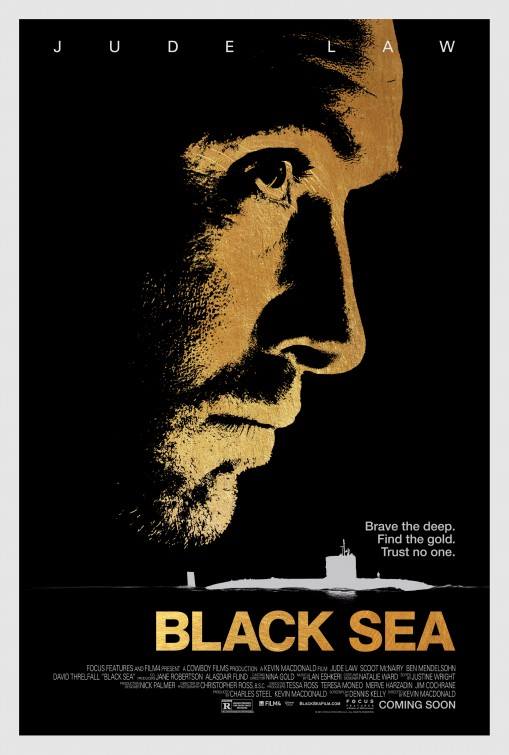
Kevin Macdonald has had an extremely interesting directorial career. Cutting his teeth on documentaries (One Day in September, Touching the Void, Life in a Day, Marley), he’s transitioned to feature films, and over the last 10 years he’s made a career out of making solid, unpretentious dramas (The Last King of Scotland, The Eagle, State of Play, How I Live Now) that don’t find a big enough audience in theaters. They’re smart, they look good, the material is adult-minded, the budgets are medium sized, and his narratives don’t feature superheroes, giant special effects, or easily marketable elements. His most recent film, Black Sea, fits right into this mold. Every time I notice that this one is airing on one of the movie channels, I have to join it in progress; movies like this are my bread and butter.
2

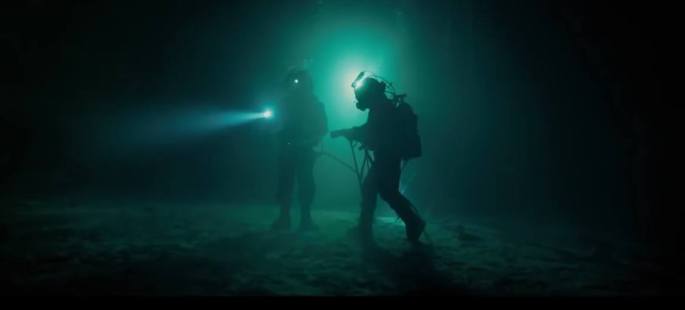
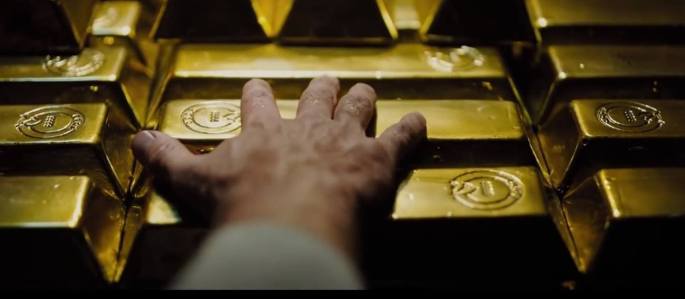
Dennis Kelly’s sturdy screenplay cleverly combines two popular genres – the submarine movie and the heist picture – and tells a swift, suspenseful, just-believable-enough story that hooks you from the first scene and keeps you in its firm grasp for two entertaining hours. Jude Law leads a gang of submariners, divers, and technicians in an effort to salvage buried Nazi gold that’s been sitting on the ocean bed inside of a WWII-era German U-boat. They gain access to an extremely weathered submarine that they carefully navigate to the U-boat, grab the gold, and that’s when greed kicks in, people start getting killed, issues flare up with the battered sub, and it becomes a guessing game of who will make it back up to the surface for a breath of fresh air.
4

This is a movie of sweaty, greasy, unshaven faces, with lots of smoke and steam filling the frame, peppered with great underwater photography and some excellent, claustrophobia inducing shots inside the hull of the sub. Macdonald’s direction is muscular but never overpowering and he’s just as concerned with motivation as he is with violent spectacle. While nothing revolutionary, Black Sea is content to tell a simple, engrossing tale of deceit and exciting action, with a seething resentment for the upper-class buried within the hardscrabble mindsets of its grizzled characters. Manly and macho and brimming with testosterone, this fits snugly alongside undemanding but capable genre entries like Jonathan Mostow’s U-571 and Kathryn Bigelow’s underrated K-19: The Widowmaker.
3

SCOTT STEWART’S DARK SKIES — A REVIEW BY NICK CLEMENT

2

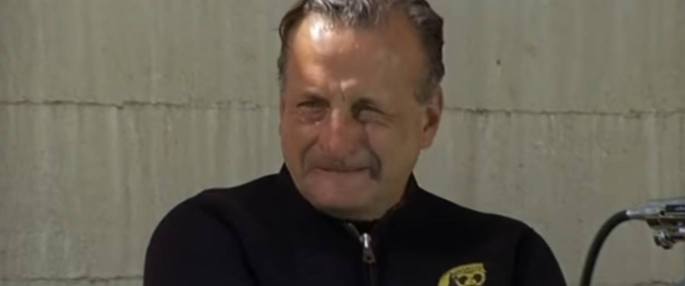
I’m a sucker for a good extraterrestrial narrative, and the supremely wicked Dark Skies, which was released to ho-hum reviews and weak box-office back in 2013, is one of the more enjoyable genre offerings in recent memory. This is an intimately scaled sci-fi horror thriller with engaging performances from Keri Russell and Josh Hamilton as suburban parents who are being visited, along with their children, by something spooky in the night. J.K. Simmons is very effective as the alien hunter who helps them solve the mysteries that are plaguing their house. Written and directed by Scott Stewart and produced by the now-on-fire Blumhouse Productions, the film has an absolutely chilling and upsetting final scene, which really drives a stake through the heart of any parent who might be watching. The crafty cinematography is by David Boyd, while Joseph Bishara provided the ominous musical score and was in perfect tandem with Peter Gvodas’ sharp editing. Dark Skies isn’t groundbreaking, but sometimes a nasty and efficient little chiller is all that’s required.

3

S. CRAIG ZAHLER’S BONE TOMAHAWK — A REVIEW BY NICK CLEMENT

2

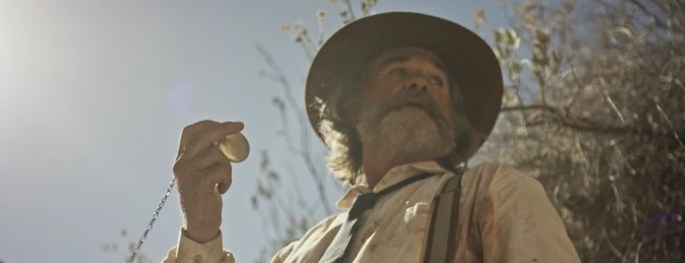
Bone Tomahawk is a gruesome western-horror hybrid that has ice-water running through its cinematic veins. Terse, blunt, and very, very cruel, the film was written and directed by S. Craig Zahler (who also contributed to the creepy musical score), and clearly shows a filmmaker in total command of his story and craft. The phenomenal ensemble cast includes Kurt Russell, Patrick Wilson, Richard Jenkins, Matthew Fox, David Arquette, Michael Pare, Fred Melamed, James Tolkan, and Sid Haig, with everyone strutting their gruff and macho stuff. Cinematographer Benji Baski’s strong visual sense is a huge plus, the costumes by Chantal Filson are appropriately grubby and lived-in, and the desolate production design by Freddy Waff aids in the overall sense of menace that the script affords. The film pivots in the third act into truly nightmarish territory, which might lose some viewers, but for those with strong stomachs and an affinity for down and dirty narratives, this will be a shock to the system, and a reminder that unpretentious and thoroughly ass-kicking genre filmmaking still exists just outside the margins of the Hollywood studio system.

1

MIKE NICHOLS’ THE DAY OF THE DOLPHIN — A REVIEW BY NICK CLEMENT

3

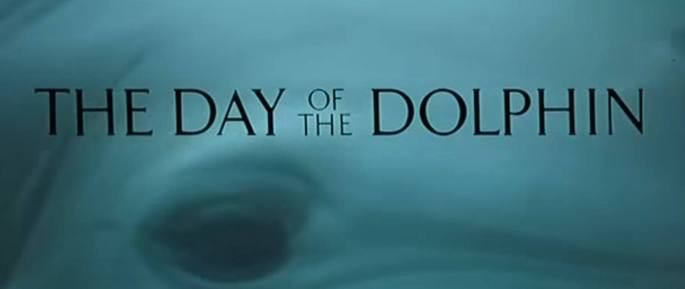
I am not exactly sure why I’ve become so obsessed with the lethargic 1973 odd-ball flick The Day of the Dolphin. Directed by Mike Nichols, written by Buck Henry, and starring a visibly annoyed George C. Scott as a dolphin trainer/scientist who has to deal with a shady group of terrorists who steal his prized dolphins with the intention of using them as a vessel for bombs in order to kill the president while he’s on his yacht, the film seems to want to be multiple things at once, with not one particular strand ever feeling fully formed. Paul Sorvino shambles around in the background as some sort of covert government operative, George Delerue’s score is rather amazing, William Fraker’s widescreen cinematography is strong and always visually interesting, and yet, there’s so little true suspense ever generated, and the entire film just feels silly rather than serious, which I can’t imagine was the intention by the creative team.

2

And yet, I’m still drawn to this movie like bees are drawn to honey, and I just can’t fully articulate why this is. Roman Polanski and Franklin Schaffner were at various points considered for the directing job, while Nichols apparently claimed that filming The Day of the Dolphin was extremely challenging. Reviews were mixed and the film was a non-starter at the box-office but it certainly worth watching, if for nothing else than observing the seemingly irritated George C. Scott and some really fun footage of dolphins splashing around in the water. This is film is currently OOP on DVD (very expensive copies can be found on Amazon) and oddly enough, there’s a seemingly new listing for a new DVD release, but without a street date listed at Amazon. The Day of the Dolphin is ripe for a Blu-ray from a boutique label, like Criterion, Kino Lorber, Shout! Factory, Olive, or Twilight Time.

1

PAUL VERHOEVEN’S ELLE — A REVIEW BY NICK CLEMENT

3

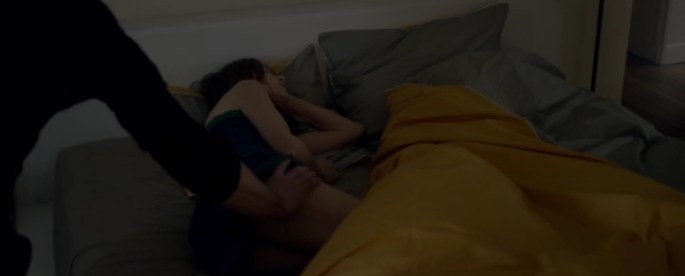
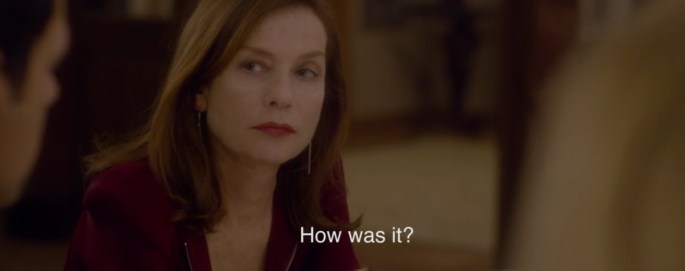
Last year, people kept saying stuff like “Paul Verhoeven is BACK with Elle!,” and yes, true, he had a new movie get released last year, and it is in fact a brilliant piece of work on multiple levels, but I’d argue that he never WENT anywhere in the first place. Hollywood simply became uninterested in making his brand of films, and instead of whoring himself out for the all-mighty pay-check, he decided to do other things, and get European financing for the cinematic stories that he’s felt inclined to tell after his last studio production, 2000’s Hollow Man (2006’s Black Book and Elle are his only two films in the last 17 years). He’s always been a premiere satirist, and is a filmmaker who has a tremendous sense of craft and command over his directorial choices. And with Elle, he’s made his most provocative film in years, with the truly amazing Isabelle Huppert dropping a challenging and empowering performance, playing a hugely complex character where nothing can ever truly be fully understood.

2.jpg

David Birke’s mischievous, witty, and psychologically probing screenplay, which was an adaptation of Philippe Djian’s novel Oh…, never lets anyone off the hook, and paints an exasperatingly dark portrait of a woman whose life is forever altered by the past, and who is trying to make sense of a very strange future. Stephane Fontaine’s shadowy and elegant cinematography made terrific use of subjective camera placement, and in one notable moment, got old-school-swervy in a way that recalls Verhoeven’s past cinematic glories. Job ter Berg’s exacting editing only allows for the perfect amount of visual information to be given in any given sequence, establishing a perfect rhythm with Anne Dudley’s unnerving and mysterious musical score. Oh yeah, and the film is also unexpectedly and darkly funny, which was easily the most surprising element to a film that has a lot of surprises in store for the viewer; if all you’ve seen is the trailer, then there’s plenty of stuff that will take you off guard, not the least of which being the film’s perverse sense of black comedy.

1

JONATHAN MOSTOW’S BREAKDOWN — A REVIEW BY NICK CLEMENT

2

Breakdown is a top-notch thriller that Hitchcock would have loved, and a film I’ve watched a ton of times and will never get tired of revisiting. This is easily director Jonathan Mostow’s best film; it’s extremely tense stuff, with a nasty, economical, and devious screenplay that he co-wrote with Sam Montgomery. Kurt Russell’s fantastic performance is one of my personal favorites from this most versatile and underrated actor, and the invaluable 90’s character actor J.T. Walsh dropped one of his signature baddie performances, but note how his character is shaded just enough; this guy was so great in everything he appeared in and always a treat to watch. Kathleen Quinlan was perfect as the damsel in distress. This is a nightmarish thrill-ride, shot with verve and energy by Douglas Milsome, crisply edited by Derek Brechin and Kevin Stitt, with a logical-enough finale, even if it doesn’t plumb the depths of darkness in the way that something like the original The Vanishing did. This is one of the more underrated studio thrillers from the late 90’s, and a title that’s way overdue for a Blu-ray upgrade. Basil Poledouris’ supremely effective and riveting musical score is the icing on the cake.

1

DANIEL ESPINOSA’S LIFE — A REVIEW BY NICK CLEMENT

2

Despite a generic title and trailers that felt fairly derivative, the new sci-fi horror thriller Life, from director Daniel Espinosa (Safe House, Snabba Cash, Child 44), takes its familiar genre ingredients and twists them just enough, never overstaying its welcome at a brisk hour and 40 minutes, and provides some solid late winter entertainment that arrives with a considerable mean streak running through its R-rated bones. Gorgeously shot by master cinematographer Seamus McGarvey and featuring a particularly awesome musical score by Jon Ekstrand, the beautifully designed film opens with a nearly 10 minute single-take opening shot stunner, before all hell breaks loose on an international space station that’s doing some potentially dangerous testing on the first alien life-form found on Mars. The trailers have done a very good job of hiding many of the film’s most explosive moments, so I’m hesitant to say much more than I already have, and while not mind-blowing, this is the sort of bluntly effective genre entertainment that gets the job done. Everyone in the sturdy cast sells the material like pros, with Jake Gyllenhaal and Rebecca Ferguson doing the heaviest of the lifting, while the final moments kick the movie up a full notch on the overall enjoyment scale. This is a surprisingly ruthless and effective piece of outer-space nastiness, with a killer of a finish.

3

JAN DE BONT’S SPEED — A REVIEW BY NICK CLEMENT

2

This is a totally smashing, R-rated action-adventure film, made back in the good-old-days-90’s before the obnoxious and lazy practice of smothering your film in needless, endless CGI became the new norm; no swirling vortexes in the sky to be found here! Joss Whedon and Graham Yost’s zippy and propulsive screenplay presents fully fleshed out characters that are sympathetic and still resemble actual human beings, while the villain that dominates the narrative is especially well-considered and performed by Dennis Hopper. Cinematographer turned director Jan de Bont never crafted a better film while sitting in the helmer’s chair, bringing his innate widescreen visual sense to each robust set-piece, with ace lenser Andrzej Bartkowiak doing some seriously muscular work behind the camera. The pulse-pounding musical score by Mark Mancina amps up the thrills to the max, with leading man Keanu Reeves dropping one of his signature performances, with Jeff Daniels, Sandra Bullock, Alan Ruck, Joe Morton, and many more all doing invaluable back-up work. I can vividly remember seeing this on the big screen on opening night, and how it sent shivers of excitement down my spine. And the best part – this is a movie that proudly holds up over 20 years later, casually brushing off the watered-down, PG-13 competition that has been plaguing the genre for years.

3

FRANCIS FORD COPPOLA’S TETRO — A REVIEW BY NICK CLEMENT

2

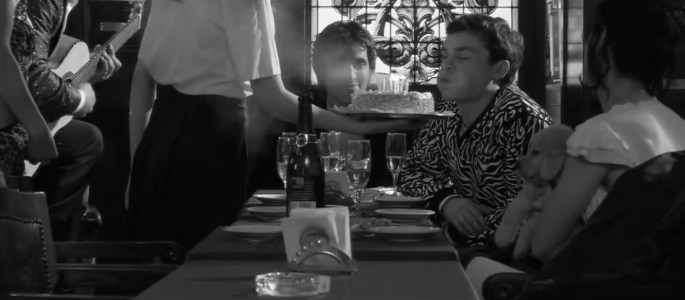
Tetro is a beguiling film, definitely underrated and rarely discussed; I think it’s one of Francis Ford Coppola’s most interesting and personal films that he’s ever crafted, and I love how the narrative and visual style work to cast this spell of heightened familial discord with a nearly dreamy aftertaste that sometimes makes you question everything you’re being presented with. Set in Argentina, Tetro dives into the lives of two Italian brothers who are natural born rivals, and how the artistic passions that are found in their family have come to define them as men and as artists. Shot in smoky, gorgeous black and white by the eclectic and painterly cinematographer Mihai Malaimare Jr. (his work here apparently caught the eye of Paul Thomas Anderson who drafted him for The Master), Tetro unfolds with a graceful sense of classical storytelling, with shades of noir thrown in to jazz up the background. Vincent Gallo and current flavor of the month Alden Ehrenreich were both superb as the quarreling brothers prone to verbal combat, while everyone in the mostly unfamiliar supporting cast all provided passionate performances. Coppola apparently wrote the script for Tetro while he was editing his divisive Youth Without Youth, and looked to independent European financiers to produce this esoteric yet still accessible piece of cinema.

3

BRIAN DE PALMA’S PASSION — A REVIEW BY NICK CLEMENT

2

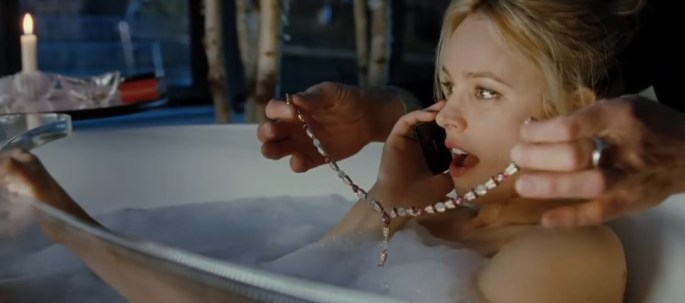
Brian De Palma’s sleazy, slick, and super-sexy neo-noir Passion from 2012 has all the director’s trademark ingredients: murder, deceit, jealousy, split-screens, Pino Donaggio, sapphic tendencies, stedicam shots that go on forever, dreams, twins, kink, 70’s, 80’s, and so much more. Rachel McAdams and Noomi Rapace absolutely killed it and clearly had lots of fun playing two highly sexualized women; they were both delectable pawns for De Palma to playfully mess around with. The film is a sort-of-remake of Alain Corneau’s 2010 thriller Love Crime, but with De Palma drastically changing the ending to his film. José Luis Alcaine’s shimmery cinematography took maximum advantage of the stylish production design and the gorgeous faces and bodies on display; his superb work with Pedro Almodovar no doubt left a strong impression on De Palma, as Alcaine’s innate understanding of how to light women is in full effect all throughout Passion, which was shot on 35mm film and mostly on location in Berlin. While not a masterpiece like Femme Fatale, Passion is an extremely fun and self-reflexive effort from the master of the macabre that shows that when provided the chance, he can still deliver over the top thrills with elegant visual panache.

3.jpg